Can You Legally Touch Your Home’s Wires?
 As a general rule of thumb, homeowners can legally perform minor, like-for-like electrical maintenance—such as swapping a standard light switch or outlet—without an electrical permit. However, touching concealed wiring, running new circuits, or upgrading your service panel without municipal authorization violates building regulations and triggers severe financial liabilities.
Tackling DIY projects around the house requires absolute clarity on what is legally permitted. Navigating municipal laws keeps your home safe from fire hazards and protects your investment.
- Minor Maintenance: Direct, like-for-like swaps of existing components usually do not require formal permits.
- Structural Upgrades: Altering existing circuit layouts, adding new lines, or touching panels mandates strict compliance.
- Regulatory Oversight: Working outside legal boundaries risks home insurance claim denials and severe municipal fines.
The Golden Rule of DIY Electrical Work
The golden rule of residential electrical work is straightforward: if a project involves adding new power capacity, extending wiring behind drywall, or altering your main electrical service panel, you must secure an official electrical permit. Never assume that minor DIY experience qualifies you to manage high-amperage modifications.
Violating this boundary introduces invisible hazards that can destroy property or cause injury:
- The Like-for-Like Boundary: Replacing a broken switch with an exact, same-amperage equivalent in the same box is typically exempt.
- Circuit Extensions: Adding even a single new outlet to an existing room requires pulling a permit and passing an inspection.
- Professional Accountability: When projects exceed basic component swaps, hiring a licensed electrical contractor is legally and structurally necessary.
Why Municipal Rules and the NEC Matter
National safety baselines do not automatically override local rules. Every city, county, or township operates under an Authority Having Jurisdiction (AHJ) that dictates how national safety guidelines are applied in your specific geographic region.
Understanding these institutional layers ensures your home modifications pass future real estate inspections:
- National Electrical Code (NEC): The benchmark standard governing safe electrical design, wiring methods, and material selection across the nation.
- Authority Having Jurisdiction (AHJ): Your local building department enforces specific regional codes and processes permit applications.
- Code Enforcement: Bypassing your local department can result in stop-work orders, retroactive penalties, or forced demolition of finished drywall.
Electrical Permitting Quick Reference Overview
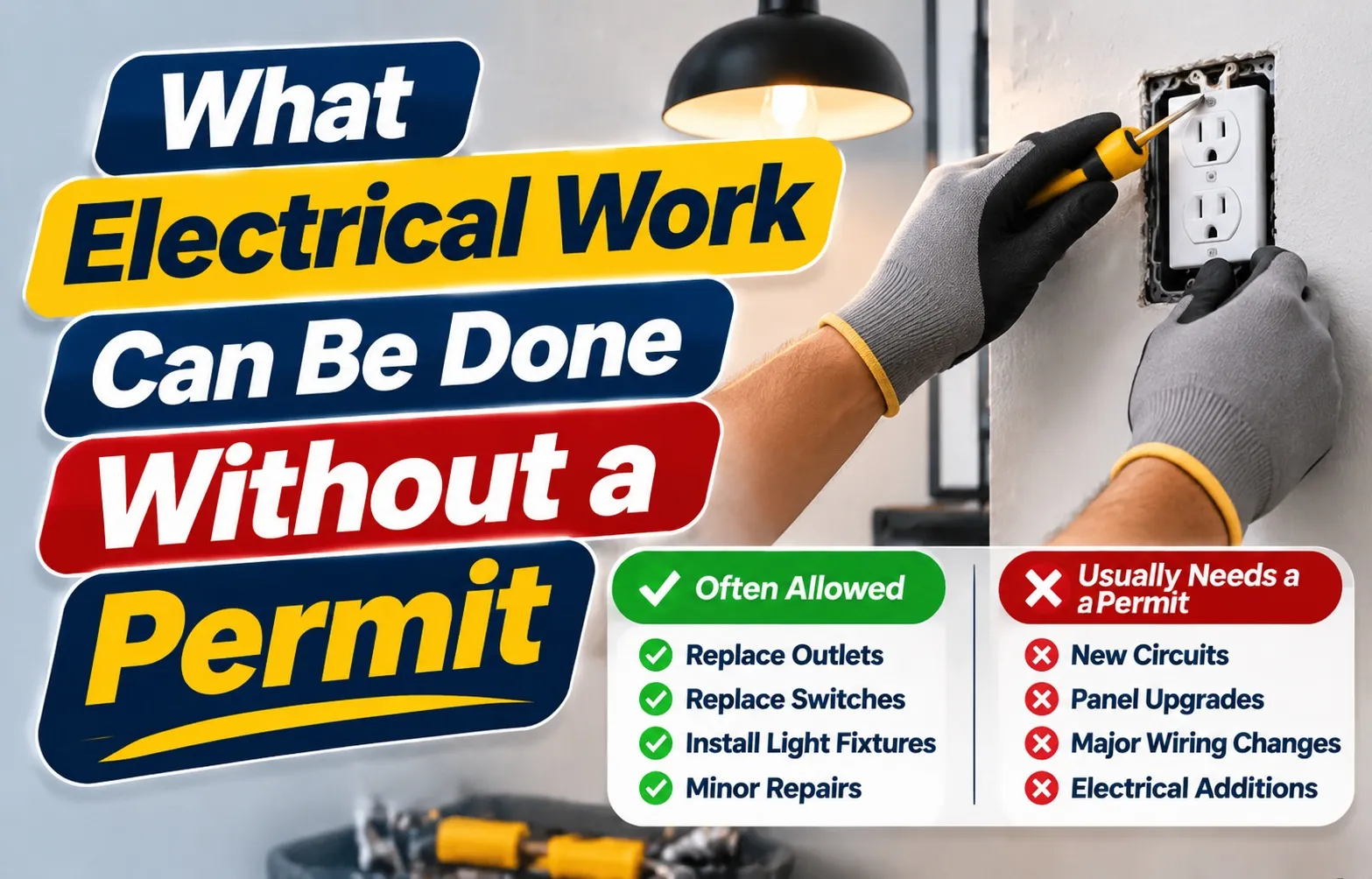
Determining whether your upcoming electrical project requires municipal approval depends entirely on whether you are executing a like-for-like replacement or introducing new power paths. Minor maintenance tasks that maintain the existing electrical footprint are universally exempt, whereas structural modifications demand a formal permit and inspection.
Evaluating your project scope before picking up tools prevents costly compliance violations. Use the reference matrix below to quickly identify which standard household modifications trigger legal oversight.
- Exempt Tasks: Direct component swaps that do not alter amperage or wiring layouts.
- Permit-Mandatory Tasks: Any work that extends circuits, adds new fixtures, or modifies the service panel.
- Inspection Triggers: Structural alterations that require verification by your local building department.
At-a-Glance Permitting Checklist for Homeowners
This comprehensive matrix compares common residential electrical projects against municipal permitting rules. Review these specific guidelines to ensure your maintenance workflow stays compliant with regional building codes.
What Electrical Work You Can Do Without a Permit
Homeowners can safely tackle minor maintenance tasks without municipal interference as long as the project adheres strictly to like-for-like replacement principles. Understanding these boundaries ensures your routine repairs remain compliant with local building codes without triggering formal inspection requirements.
Focusing on non-structural updates protects your household electrical safety while saving time and money on basic component upkeep.
- Maintenance Scope: Tasks must involve replacing existing components with identical ratings in the exact same location.
- Zero Amperage Alterations: Exempt projects cannot increase electrical load or introduce new wiring paths.
- Safety First: Always shut off main power breakers before handling any receptacle or switch replacement.
Like-for-Like Receptacle and Switch Swaps
Replacing worn-out electrical receptacles, standard toggle switches, or analog dimmer switches is universally permitted without a permit, provided you perform a direct like-for-like swap. The replacement device must match the exact amperage rating and wiring configuration of the original unit within the existing wall box.
Executing these quick swaps requires careful attention to terminal screws and grounding wires to prevent short circuits.
- Amperage Matching: Ensure a 15-amp switch is replaced with a 15-amp rated component, never an unverified higher load.
- Box Retention: Work must stay strictly inside the existing junction box without cutting drywall or pulling new cables.
- Smart Upgrades: Basic switch updates are exempt, provided they do not require altering hidden wall wiring for neutral paths.
Replacing Light Fixtures and Ceiling Fans (With Weight-Rating Warnings)
Swapping out outdated chandeliers, wall sconces, or ceiling fans is completely legal without a permit as long as you use an existing junction box and do not extend branch circuits. However, upgrading from a light fixture to a ceiling fan requires verifying that the ceiling box is fan-rated to support dynamic weight and vibration loads.
Ignoring ceiling box structural ratings can lead to catastrophic hardware failure and fixture detachment.
- Weight Verification: Standard lighting boxes cannot safely hold oscillating ceiling fans without heavy-duty structural bracing.
- Identical Mounting: Secure the replacement fixture directly to existing mounting hardware and supply leads.
- No New Runs: Hanging a fixture where no previous electrical box existed instantly mandates a formal wiring permit.
Simple Fuses and Circuit Breaker Cartridge Swaps
Replacing a blown screw-in fuse or swapping out an individual plug-in circuit breaker cartridge with an identical amperage rating is permitted as basic homeowner maintenance. You can safely restore power by inserting a direct replacement component that matches the exact manufacturer specifications of your existing electrical panel.
Never substitute a faulty breaker with a higher amperage rating, as this creates an extreme overheating and fire hazard.
- Exact Amperage Match: A 20-amp breaker must be replaced strictly with a new 20-amp unit designed for your panel model.
- Panel Safety: Wear insulated gear and verify main power status when opening service panels for minor component swaps.
- Defective Hardware: Only swap breakers that show signs of mechanical failure or internal tripping faults.
Low-Voltage Systems: Doorbells, Thermostats, and Phone Lines
Installing or servicing low-voltage wiring systems operating under 50 volts—such as smart thermostats, hardwired doorbell transformers, and intercom lines—does not require a building permit. Because these systems carry minimal electrical shock risk and operate independently of high-voltage branch circuits, homeowners can freely modify them.
Integrating modern low-voltage smart home devices is a straightforward, permit-free weekend DIY project.
- Thermostat Retrofitting: Upgrading to a digital smart thermostat using existing low-voltage wire bundles requires zero permits.
- Doorbell Transformers: Replacing a low-voltage transformer mounted near your service panel is exempt from municipal inspection.
- Voltage Threshold: Always confirm the system operates entirely on low voltage before bypassing standard permit rules.
Electrical Work That Always Requires a Permit
Any residential electrical project that alters structural components, increases main power load capacity, or extends wiring behind walls legally mandates a formal municipal permit, professional plan review, and safety inspection. Bypassing these protocols introduces extreme fire risks and invalidates building code compliance.
Navigating high-load modifications requires professional engineering calculations to ensure your home’s electrical infrastructure can safely handle heavy demands.
- Structural Safety: Projects involving new electrical pathways or main distribution panels must be reviewed by city inspectors.
- High-Amperage Risks: Heavy appliances and panel upgrades carry severe electrical shock and arc flash dangers if installed incorrectly.
- Mandatory Inspections: Local building departments enforce these rules to protect property value and public safety standards.
Running New Circuits or Extending Existing Lines
Executing a new circuit extension or running brand-new electrical cables behind walls, ceilings, or crawlspaces always requires a municipal building permit. Because these installations alter the overall electrical load distribution of your home, local code authorities must inspect the wire routing, box secureness, and breaker compatibility before walls are sealed.
Unpermitted wiring runs lack proper circuit protection calculations, leading to dangerous thermal overload conditions.
- Wall Penetrations: Cutting into drywall to pull new Romex cable or conduit mandates professional oversight and inspection.
- Load Balancing: New circuits require precise amperage calculations to prevent overloading existing residential service lines.
- Professional Compliance: Licensed electricians ensure wire sizing matches specific breaker ratings in accordance with safety codes.
Main Service Panel Upgrades and Subpanel Installations
Upgrading an outdated electrical service panel or installing a secondary subpanel is a major structural modification that always requires an official permit and utility company coordination. Because these components serve as the central nerve center for your entire property’s electrical grid, incorrect installation can cause catastrophic electrical fires or fatal shocks.
Panel replacements often require temporary power shutoffs and coordination with municipal utility providers.
- Capacity Expansion: Upgrading from 100-amp to 200-amp service panels demands detailed electrical load schematics and permits.
- Main Disconnects: Modern code compliance requires emergency exterior disconnects and proper grounding rods verified by inspectors.
- Subpanel Additions: Adding detached garage or workshop subpanels requires rigorous trenching, conduit, and breaker mapping.
Heavy-Duty Appliance Hookups (EV Chargers, Hot Tubs, and Generators)
Installing hardwired connections for high-amperage equipment such as an EV charger installation, backyard hot tub, or standby backup generator strictly requires an electrical permit. These specialized appliances draw continuous high electrical loads that can quickly overheat residential circuits if wiring gauges, dedicated breakers, and disconnect switches are improperly configured.
Ensuring these systems comply with manufacturer specifications protects both your expensive equipment and your home’s infrastructure.
- Continuous Load Demands: EV chargers and hot tubs require dedicated heavy-gauge wiring and GFCI safety breakers.
- Transfer Switches: Standby backup generators mandate interlock kits or automatic transfer switches inspected for grid safety.
- Hardwired Safety: Permanent high-draw appliance connections cannot safely utilize standard plug-in receptacles.
Major Kitchen, Bathroom, and Room Addition Remodels
Major home renovations, room additions, and extensive kitchen or bathroom remodels universally require comprehensive electrical permits due to complex moisture-proofing and circuit density rules. In wet zones, building codes mandate strict GFCI retrofit applications and dedicated small-appliance branch circuits to prevent ground faults and electrical shock hazards.
Failing to permit kitchen or bathroom electrical work is a primary red flag during real estate escrow inspections.
- Moisture Protection: Bathrooms and kitchens require specialized GFCI retrofits near all sinks, countertops, and wet areas.
- Appliance Density: Kitchen remodels require multiple dedicated 20-amp appliance circuits for refrigerators, microwaves, and ranges.
- Rough-In Reviews: Municipal inspectors must review open-wall rough-in wiring before drywall, tile, and cabinetry are installed.
Modern DIY Traps and Electrical Gray Areas
Many homeowners assume that minor tasks like swapping switches or upgrading outlets are risk-free because they do not require permits. However, aging residential wiring harbors complex technical nuances that frequently trip up DIYers, resulting in code violations, damaged electronics, or severe safety hazards.
Recognizing these hidden engineering constraints before starting a project prevents dangerous shortcuts and ensures full National Electrical Code compliance.
- Hidden Wiring Limitations: Older electrical boxes rarely contain the modern wiring bundles required for smart home technology.
- Grounding Realities: Upgrading legacy receptacles requires strict adherence to safety standards rather than cosmetic fixes.
- Code Violations: Overlooking subtle wiring requirements can invalidate home insurance policies and fail real estate inspections.
The Smart Switch Neutral Wire Trap in Older Homes
Many DIYers fail smart switch installations because older residential wiring lacks a dedicated neutral wire inside the switch box. Traditional mechanical switches only interrupt the hot wire, meaning standard switch boxes contain only line and load wires without a white neutral conductor required to power smart device radios.
Attempting to bypass this limitation by using ground wires as a neutral return path is a severe, illegal code violation that creates lethal shock risks.
- Switch Loops: Legacy wiring often routes only hot wires down to switch locations, omitting the neutral bundle entirely.
- No-Neutral Solutions: Use specialized smart switches explicitly rated to operate without a neutral wire if your wall box lacks one.
- Permit Implications: Running new cable to supply a proper neutral wire to a switch box changes the circuit and requires a permit.
Upgrading 2-Prong Outlets to 3-Prong (The GFCI Alternative vs. Illegal Code Hacks)
Upgrading an old 2-prong outlet to a 3-prong receptacle without an actual ground wire is a dangerous code violation, unless protected upstream by a GFCI device with proper warning labels. Connecting a 3-prong receptacle to an ungrounded box using homemade wire jumpers creates a false sense of security and exposes sensitive electronics to fatal surges.
The National Electrical Code provides specific, legal alternatives for retrofitting ungrounded circuits without pulling brand-new ground wires through every wall.
- GFCI Retrofit Option: Installing a GFCI receptacle or breaker on ungrounded circuits provides legal shock protection under NEC guidelines.
- Required Labeling: Upgraded ungrounded GFCI outlets must display official “No Equipment Ground” warning stickers to inform future occupants.
- Dangerous Hacks: Never twist ground wires to neutral bars or use unverified metal conduit paths without continuity testing.
The Hidden Dangers and Financial Fallout of Unpermitted Work
Bypassing municipal permitting rules for home improvements introduces massive financial and legal risks that extend far beyond simple building fines. Unpermitted electrical work creates hidden liability traps that can jeopardize your home insurance coverage, complicate real estate transactions, and trigger costly retroactive engineering teardowns.
Understanding the true cost of skipping building permits helps homeowners weigh the short-term convenience of DIY shortcuts against catastrophic long-term consequences.
- Insurance Exposure: Uninspected modifications create severe coverage vulnerabilities during property loss investigations.
- Resale Complications: Hidden electrical flaws frequently derail real estate closings and property valuations.
- Regulatory Penalties: Code enforcement agencies can impose heavy building fines and stop-work orders on illegal projects.
Home Insurance Claim Denials After Electrical Fires
If an unpermitted DIY electrical modification causes a household fire, insurance investigators routinely deny coverage upon discovering the code violation. Property insurers require that all structural and high-amperage electrical alterations comply with regional building laws and safety benchmarks outlined in official National Electrical Code guidelines.
When adjusters trace a fire back to uninspected wire splices or overloaded circuits, homeowners absorb 100 percent of the structural rebuilding costs out of pocket.
- Policy Clauses: Most homeowner insurance contracts include explicit exclusions for damages resulting from unpermitted or non-compliant construction.
- Investigation Triggers: Post-fire forensic audits examine burnt electrical panels and junction boxes to verify valid municipal permit issuance.
- Financial Liability: Denied claims leave property owners facing total financial loss without recourse from insurance carriers.
Real Estate Escrow Holdbacks, Inspections, and Buyer Walkaways
Unpermitted electrical upgrades are routinely flagged during standard home inspections, causing buyers to demand massive escrow holdbacks or walk away entirely from the purchase agreement. Title companies and real estate agents closely scrutinize DIY panel changes or uninspected circuit extensions during closing procedures.
Discovering unpermitted work late in a transaction destroys buyer trust and delays property transfers for months.
- Inspection Red Flags: Professional home inspectors easily spot unpermitted subpanels, exposed wiring, and improper box installations.
- Escrow Deductions: Buyers frequently require thousands of dollars held in escrow to hire licensed electricians to correct past DIY mistakes.
- Transaction Collapse: Major electrical code violations often cause nervous buyers to terminate purchase contracts completely.
Retroactive Permits: How They Work, Penalty Fees, and Forced Drywall Tear-Outs
Getting a retroactive permit after unpermitted work is already completed often requires paying steep penalty fees and hiring an inspector who can force you to tear down finished drywall. Code enforcement officers demand visual verification of hidden wiring methods, meaning finished walls may be destroyed to inspect wire gauges and junction boxes.
Attempting to legalize past work legally binds you to modern code requirements, which can trigger expensive systemic upgrades.
- Enforcement Penalties: Local building departments assess punitive fines and double permit fees for unpermitted work discovered after the fact.
- Destructive Inspections: Inspectors cannot certify concealed wiring without seeing it, forcing property owners to cut open pristine drywall and ceilings.
- Complete Remediation: Failed retroactive inspections require tearing out non-compliant installations and starting over with a licensed contractor.
Who Repairs the Drywall After Electrical Work?
Electricians generally do not patch sheetrock, repair wall openings, or handle finishing carpentry after cutting into walls to run new cables. Property owners must plan to hire a separate drywall contractor, a local handyman, or manage the sheetrock repair themselves as part of the project’s physical restoration phase.
Understanding the strict division of labor between electrical contractors and general repair crews prevents costly surprises when your wiring upgrade leaves behind open wall cavities.
- Electrical Scope: Licensed electricians focus strictly on wiring safety, load calculations, and electrical box installation.
- Physical Restoration: Wall patching, texturing, and painting fall outside standard electrical service contracts.
- Contractor Clarity: Always clarify cleanup expectations with your service provider before cutting into finished surfaces.
Do Electricians Patch Sheetrock? (Setting Expectations)
Licensed electricians almost never perform sheetrock repair or wall patching because their specialized licensing, tools, and insurance cover electrical systems rather than general carpentry or drywall finishing. Attempting to negotiate drywall restoration into an electrician’s contract usually results in higher bids or reliance on an external handyman.
Knowing this operational boundary helps homeowners budget correctly for complete home remodeling or rewiring projects.
- Specialized Trade: Electrical work requires master-level technical training that is entirely distinct from mudding and taping drywall.
- Separate Hiring: Plan to schedule a dedicated handyman or drywall specialist to close up wall openings after wiring is complete.
- Cost Projections: Always factor drywall patching expenses into your overall electrical upgrade budget to avoid unexpected out-of-pocket costs.
Managing Rough-In Inspections Before Closing Up Walls
Never patch wall openings or finish drywall until an official municipal rough-in inspection is fully completed and approved by your local building code inspector. Closing up wall cavities prematurely on uninspected wiring forces code enforcement officers to order destructive tear-outs, destroying your newly patched sheetrock.
Navigating the inspection timeline correctly ensures your project passes code on the first attempt without wasted remodeling effort.
- Inspection Mandate: Municipal building inspectors must physically view all open-wall wiring methods and junction box connections before they are covered.
- Premature Sealing Risks: Patching drywall before the inspector signs off can result in heavy building fines and forced wall demolition.
- Final Finish Phase: Only after receiving official inspection approval should you hire a contractor to begin sheetrock repair and painting.
How to Check Your Local Building Department Rules Safely
To check local electrical rules safely without triggering unneeded scrutiny, homeowners should review public municipal code exemption lists online or contact their building department anonymously with hypothetical project details. Understanding regional guidelines before submitting a formal application protects your property from unnecessary code enforcement.
Navigating municipal portals correctly ensures you gather accurate information while keeping your planned maintenance projects fully compliant.
- Anonymous Inquiries: Utilize public documentation or general phone inquiries before tying a specific address to code questions.
- Exemption Lists: Review official municipal code portals to find explicit text covering like-for-like maintenance allowances.
- Proactive Compliance: Knowing your jurisdiction’s exact requirements prevents costly mistakes during future home inspections.
Finding Your Local Authority Having Jurisdiction (AHJ)
Locating your precise Authority Having Jurisdiction (AHJ) is the first critical step in verifying whether your electrical project requires a permit. City and county building departments operate under localized municipal codes that often differ significantly from state or national baselines.
Navigating official municipal directories allows you to access up-to-date zoning and permitting rules tailored to your specific neighborhood.
- Municipal Portals: Search your city or county government website to locate the dedicated building and safety division.
- Jurisdiction Overlap: Confirm whether your property falls under city limits or county oversight to ensure you consult the correct agency.
- Exemption Documents: Look for downloadable PDF guidelines detailing specific residential electrical exemptions in your area.
Questions to Ask Your Building Department Without Flagging Your Property
When contacting your local building department, ask questions using broad, hypothetical scenarios rather than providing your home address or parcel number immediately. Phrasing your inquiry around general maintenance rules allows you to gather accurate code requirements without creating an active compliance file on your property.
Protecting your privacy during initial research ensures you can clarify guidelines safely before deciding whether to file a formal homeowner permit application.
- Hypothetical Framing: Ask customer service representatives, “What is the local policy regarding like-for-like switch and outlet replacements?”
- Address Withholding: Avoid giving your exact street address or property ID until you are ready to formally apply for a permit.
- Application Procedures: Inquire about the standard homeowner permit application process, fee structures, and required inspection milestones.
Frequently Asked Questions About Electrical Permits
Navigating municipal building requirements often raises complex legal and logistical questions for property owners. Reviewing direct answers to common queries helps ensure your home maintenance projects comply with regional regulations and safety standards.
Understanding these specific legal boundaries prevents costly compliance errors during DIY home improvements.
- Permit Eligibility: Rules regarding who can legally perform and inspect residential wiring vary significantly by state and city.
- Penalty Enforcement: Municipalities strictly penalize unpermitted modifications to protect community safety and property integrity.
- Contractor Limits: General handymen face strict legal restrictions regarding high-voltage electrical installations.
Can a homeowner pull their own electrical permit?
Yes, many local building departments allow a homeowner-occupant to pull a homeowner permit to perform electrical work on their primary residence. To qualify, you typically must own and live in the home, complete a detailed application, pass all required municipal inspections, and strictly follow the National Electrical Code.
Rental properties, commercial spaces, and multi-family dwellings almost universally prohibit owner-builder electrical permits and mandate a licensed electrician.
- Primary Residence Rule: Permits are generally restricted to houses where the applicant actually lives, excluding flip houses or rentals.
- Inspection Requirement: Homeowner-pulled permits still require rigorous rough-in and final inspections by official code enforcers.
- Liability Retention: Pulling the permit legally makes you fully responsible for safety code compliance and structural integrity.
What is the average fine for doing electrical work without a permit?
Fines for unpermitted electrical work vary heavily by municipality, typically starting at double the standard permit cost and escalating to thousands of dollars per violation. Beyond initial municipal penalties, code enforcement officers can issue strict stop-work orders or mandate expensive retroactive permit filings.
Unpermitted work discovered during property sales can also trigger immediate escrow holdbacks and legal disputes.
- Punitive Fees: Local governments assess double or triple permit fees as a penalty for uninspected construction.
- Retroactive Costs: Legalizing past work requires paying professional engineering fees and architectural review costs.
- Enforcement Orders: Building departments can legally order the complete teardown of non-compliant electrical installations.
Can a handyman legally perform electrical wiring?
Handymen are generally prohibited from performing electrical wiring or circuit modifications unless they hold a valid state or municipal electrical contractor license. While basic handyman licenses may cover minor property maintenance, running new circuits, installing subpanels, or hardwiring heavy appliances violates contractor regulations in most jurisdictions.
Hiring an unlicensed handyman for complex electrical tasks exposes property owners to severe insurance and legal liabilities.
- Licensing Boundaries: General handyman exemptions typically cover cosmetic repairs rather than structural electrical alterations.
- Contractor Mandates: State laws require dedicated electrical licensing for any work involving branch circuit extensions or panel upgrades.
- Insurance Vulnerabilities: Work performed by unlicensed handymen often voids manufacturer warranties and insurance protections.

Oscar Vance | Master Plumber & Drainage Expert
Meet Oscar Vance, a licensed master plumber sharing practical solutions on residential repairs, preventive maintenance, and thoughtful home upkeep.