Can You Do Electrical Work Without a License?
 Homeowners can legally perform minor electrical maintenance and basic non-structural device replacements without a professional license in many jurisdictions. However, this legal threshold depends heavily on whether the project involves existing branch circuits, adheres to the National Electrical Code (NEC), and complies with local municipal laws.
Understanding where the boundary lies between safe, legally permissible do-it-yourself tasks and mandatory professional intervention protects your property from severe fire and electrocution hazards.
The Core Legal Boundary: DIY vs. Professional Mandate
The distinction between permitted and prohibited electrical tasks rests entirely on the complexity and safety risks of the work. Minor maintenance that does not alter underlying wiring configurations or tap into service panels is widely permitted for property owners.
- Like-for-Like Swaps: Replacing an existing standard switch, dimmer, or outlet with an identical replacement part without modifying branch wiring.
- Cosmetic Fixes: Changing out cracked or dated switch cover plates and wall plates safely.
- Bulb and Fuse Changes: Swapping standard light bulbs and single household fuses in existing fixtures.
Conversely, any project that introduces brand-new wiring, modifies service entrance panels, or increases electrical load capacity crosses the legal threshold and strictly demands a licensed electrician.
When Homeowner Status Matters Most
Even when performing authorized minor electrical tasks, your legal standing as a DIY homeowner dictates whether the exemption applies to you. State and local building authorities enforce strict ownership and residency requirements.
- Primary Residence Rule: Homeowner exemptions almost exclusively apply to individuals who own and physically live in the single-family home where the work is conducted.
- Commercial and Rental Exclusions: Landlords, property investors, and commercial building owners cannot use homeowner exemptions and must always hire licensed professionals.
- Resale Intentions: Properties designated for immediate sale or flipping often face heightened regulatory scrutiny regarding unpermitted modifications.
Verifying your local municipal guidelines before picking up a screwdriver ensures you remain fully compliant with state licensing statutes and home insurance mandates.
What Electrical Work You CAN Do Without a License
Homeowners can safely tackle low-risk electrical tasks on their primary residence without a professional license, provided the work involves minor maintenance or direct equipment replacements. Knowing these specific boundaries prevents unnecessary service fees while maintaining compliance with local property safety standards.
Focusing exclusively on non-structural components and existing branch circuits ensures you stay firmly on the safe, legal side of do-it-yourself maintenance.
Like-for-Like Device Swaps (Outlets & Switches)
Replacing worn or outdated wall receptacles and switches without changing the underlying circuit wiring is legally permitted for homeowners in most jurisdictions. You must always match the exact electrical rating, amperage, and type of the original device.
- Single-Pole Switches: Swapping out standard toggle switches that control a single light or outlet from one location.
- Dimmers: Upgrading standard switches to manual dimmers that fit existing wall boxes and wiring layouts.
- GFCI Receptacles: Installing ground-fault circuit-interrupter receptacles in kitchens, bathrooms, or outdoor areas to upgrade shock protection on existing wires.
Always shut off power at the main circuit breaker and verify dead circuits with a reliable voltage tester before touching any terminal screws.
Changing Light Fixtures, Bulbs, and Fuses
Upgrading aesthetic lighting fixtures and handling routine bulb or fuse maintenance represents a core category of permitted homeowner electrical work. These tasks do not modify branch circuit infrastructure.
- Light Fixtures: Replacing hanging pendants, vanity lights, or ceiling fans directly onto an existing, structurally sound electrical box rated for the fixture weight.
- Bulbs and Fuses: Replacing burnt-out lamps and screwing in standard single household cartridge or plug fuses.
Never attempt to hang heavy chandeliers or fixtures if the ceiling junction box lacks secure bracing attached directly to structural framing.
Installing Plug-in Appliances and Smart Switches
Plugging portable equipment into permanent wall receptacles and configuring smart home automation hardware requires no professional licensing. These additions draw power from pre-existing, tested outlets.
- Plug-in Devices: Connecting refrigerators, microwaves, and electronics to standard wall outlets.
- Smart Home Gear: Installing plug-in smart dimmers, smart bulbs, and hub-controlled switches that do not alter permanent in-wall wiring.
Avoid overloading multi-outlet adapters or extension cords, as high-draw appliances can overheat branch circuits even when plugged into legal outlets.
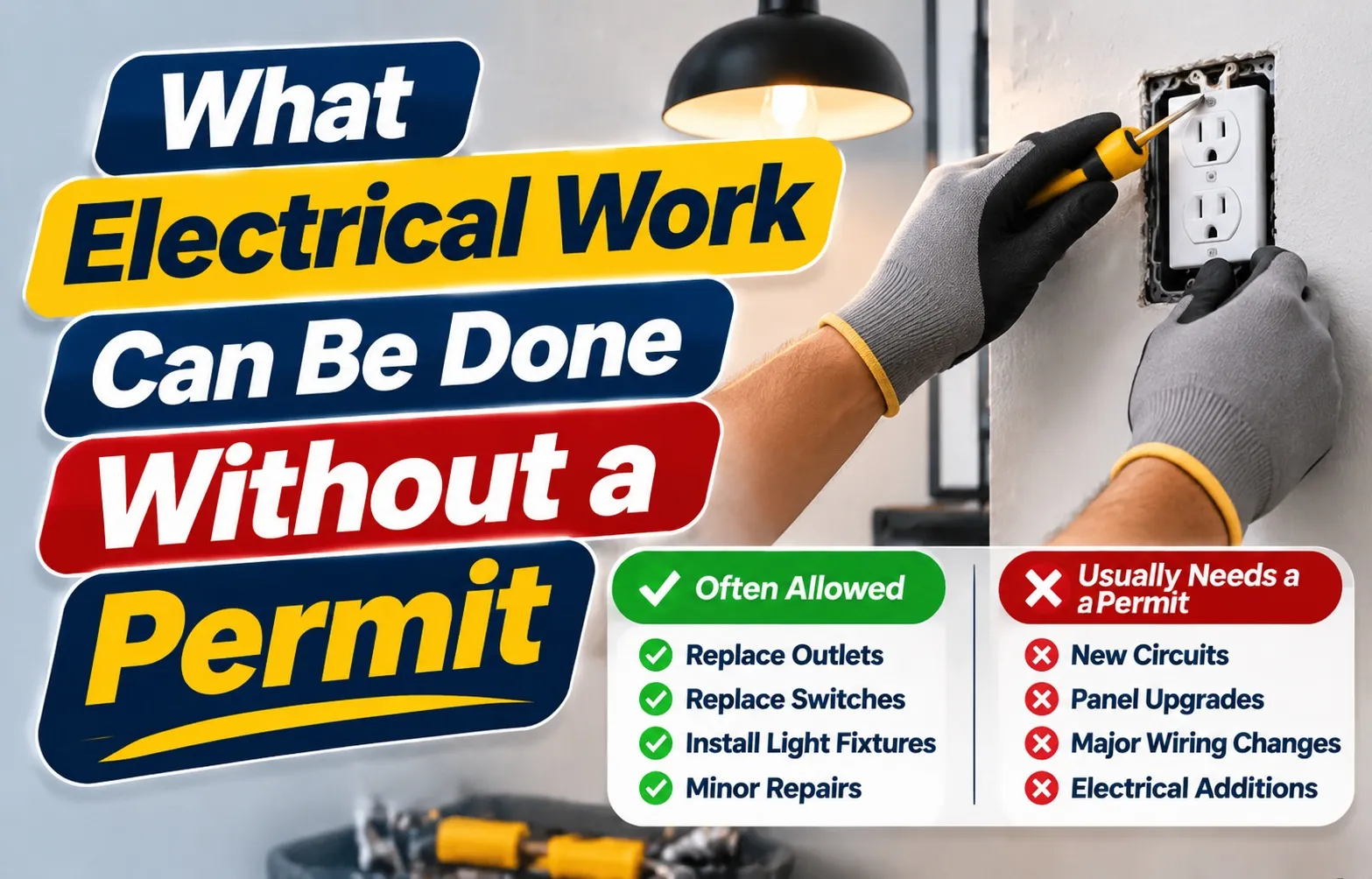
Quick Reference Matrix: Allowed vs. Prohibited Electrical Tasks
License vs. Permit: The Hidden Legal Trap Every Homeowner Misses
Legal permission to perform DIY repairs under a homeowner exemption does not mean local building rules disappear. Many homeowners mistakenly believe that avoiding professional licensing costs exempts them from securing an official electrical permit, opening them up to severe legal and financial penalties from local code enforcement.
The Difference Between a Pro License and a Municipal Permit
Understanding that a professional license and a municipal permit are two completely separate legal instruments is critical for property owners. A professional license certifies a contractor’s training and competency, whereas a municipal permit authorizes specific construction or electrical alterations on a designated property under local building codes.
- Professional License: Authorizes an individual or company to offer electrical services commercially or residentially based on state examinations and verified experience.
- Electrical Permit: Grants specific legal authorization from the city or county to execute targeted wiring or structural modifications on a single residential property.
- The Exemption Catch: Even when state statutes grant a homeowner exemption allowing you to bypass the professional license requirement, municipal building codes may still mandate a formal permit for specific upgrades.
Why Skipping a Permit Can Backfire During Inspections
Bypassing the permit process to save time or fees can trigger disastrous consequences during future home sales, insurance claims, or municipal audits. Local code enforcement actively monitors unpermitted building modifications, leading to severe penalties, heavy fines, or immediate stop-work orders.
- Stop-Work Orders: Code enforcement officers can issue immediate injunctions halting all property updates if unpermitted electrical modifications are discovered mid-project.
- Official Inspection Failures: Uninspected wiring lacks official verification of compliance with regional safety standards, creating extreme liability risks for occupants.
- Resale Complications: Prospective home buyers and real estate agents routinely uncover missing permits during title searches and escrow inspections, halting real estate transactions.
Rules in California, Texas, North Carolina, and Beyond
Electrical licensing rules change dramatically depending on geographic jurisdiction, local municipal ordinances, and state statutory limits. Treating state laws as a uniform national standard can lead to heavy fines, legal penalties, or invalid home insurance claims.
Analyzing key state regulations clarifies precisely how homeowner exemptions apply across different regional markets.
California’s $500 Labor & Material Threshold Rule
California enforces rigid legal restrictions through the Contractors State License Board (CSLB), making it strictly illegal for uncertified individuals to perform any electrical work where total combined labor and material costs exceed 500 dollars without a professional. Operating as an independent electrical contractor or executing major wiring upgrades without a specialized C-10 contractor license violates state law.
- The $500 Limit: Any repair or installation project totaling 500 dollars or more in combined parts and labor requires a licensed professional.
- C-10 License Requirement: Commercial entities and paid contractors must hold a valid C-10 classification to perform structural electrical installations.
- Owner-Builder Strictures: Even when utilizing owner-builder exemptions for minor work on a primary dwelling, local building departments enforce strict permit and inspection mandates.
Texas TDLR Exemptions and Licensing Guidelines
The state of Texas requires formal licensing for anyone performing electrical work, but carves out explicit allowances for property owners under specific conditions. Reviewing official guidelines on the Texas Department of Licensing and Regulation (TDLR) exemptions page highlights who qualifies for legal DIY work.
- The Homestead Provision: Texas Occupations Code Section 1305.003 exempts individuals from holding a state license only if they own and reside in the dwelling where the work is performed.
- Strict Exclusions: Rental properties, commercial buildings, and houses designated for immediate resale or flipping do not qualify for the homeowner exemption.
- Municipal Authority: Local cities can enforce stricter code enforcement standards and building permit requirements even when state licensing exemptions apply.
North Carolina and Utah Homestead Occupancy Rules
Both North Carolina and Utah strictly tie electrical DIY legality to primary residence occupancy and active property ownership. Attempting unpermitted or unlicensed modifications on investment properties or multi-family complexes breaches state building statutes and risks heavy municipal fines.
- Primary Residence Mandate: Homeowner exemptions apply exclusively to individuals who physically occupy the single-family residence as their main homestead.
- Multi-Family Restrictions: Duplexes, apartment units, and shared residential buildings are barred from uncertified DIY electrical modifications.
- Rental Property Laws: Landlords executing minor repairs on leased properties must hire licensed professionals or face severe code enforcement violations.
Strict Prohibitions: When You MUST Hire a Licensed Electrician
While minor cosmetic replacements are permitted under homeowner exemptions, certain high-voltage projects are universally prohibited for uncertified individuals. Attempting this heavy-duty work without a professional license creates lethal electrocution hazards, severe fire risks, and immediate building code violations.
Recognizing these high-risk boundaries ensures your home stays protected against catastrophic electrical failures and legal penalties.
Working Inside the Main Service Panel and Breakers
Opening main service entrance panels or swapping out main circuit breakers independently carries an extreme electrocution risk because utility power remains live inside the enclosure even when individual branch breakers are switched off. Uncertified modifications here can bypass vital safety protection and cause devastating electrical fires.
- Live Utility Feeds: Main bus bars remain energized at lethal amperages, making accidental contact instantly fatal without specialized high-voltage insulated gear.
- Arc Flash Dangers: Mistakes during panel work can trigger violent electrical explosions known as arc flashes, causing severe burn injuries and equipment destruction.
- Mandatory Licensing: Building codes universally require certified contractors and formal municipal permits for any service panel alteration, upgrade, or replacement.
Running New Wires Behind Walls and Ceilings
Fishing new wire gauge Romex cables through enclosed drywall and floor joists requires strict adherence to the National Electrical Code regarding box sizing, structural protection plates, and conduit requirements. Improperly routed or unrated wire installations can easily overheat behind walls undetected.
- Wire Sizing Compliance: Pairing incorrect wire gauge specifications with improper circuit breaker amperages causes thermal overloading and melts wire insulation.
- Concealed Hazards: Piercing or pinching cable sheathing during in-wall fishing creates hidden short circuits that spark structural fires over time.
- Escrow Audit Failures: Unpermitted in-wall wiring fails home real estate inspections instantly, resulting in expensive remediation and closing delays.
High-Amperage Upgrades (EV Chargers, HVAC, Subpanels)
Installing high-amperage equipment like electric vehicle charging stations, heavy HVAC units, or secondary subpanels requires complex electrical load calculations to ensure your home’s main service capacity can handle the continuous load. Overloading your existing residential grid without professional evaluation leads to systemic failures.
- Load Calculation Demands: Professional assessment is mandatory to determine if existing service capacity can support heavy continuous-draw appliances safely.
- Dedicated Circuit Requirements: High-draw equipment demands specialized heavy-gauge cabling and dedicated breakers to prevent thermal failure and constant tripping.
- Insurance Liabilities: Unpermitted high-amperage DIY installations completely void home insurance coverage if an electrical fire originates from the modification.
The Hidden Costs: Insurance Claims, Fines, and Home Resale Fails
Undertaking electrical modifications without proper professional oversight or official permits creates long-term financial vulnerabilities that far outweigh initial savings. Municipal code enforcement agencies and insurance carriers aggressively penalize unauthorized property alterations.
How Unpermitted DIY Work Voids Home Insurance Policies
Insurance providers routinely deny property damage payouts when an electrical fire or accident originates from unpermitted, unlicensed do-it-yourself modifications. Investigators audit municipal permit records following major incidents, leaving homeowners personally liable for all structural and medical damages if unauthorized electrical work caused the failure.
- Claim Denials: Policy clauses explicitly state that negligence or failure to comply with building codes invalidates coverage for resulting fires and damages.
- Personal Liability: Homeowners assume 100 percent of the financial burden for neighboring property damage or injuries caused by faulty unpermitted wiring.
- Forensic Audits: Post-fire investigators easily trace electrical fires back to improper splices or unpermitted panel upgrades during mandatory forensic evaluations.
Home Resale Nightmares: Escrow Holdbacks and Inspection Failures
Discovering unpermitted electrical modifications during a pre-purchase home inspection routinely halts real estate transactions, forcing sellers into expensive escrow holdbacks or emergency professional remediation. Professional home inspectors audit panel configurations and switch wiring, flagging missing permits directly to prospective buyers.
- Escrow Holdbacks: Buyers often demand thousands of dollars withheld from sale proceeds to cover the cost of retroactive permits and professional corrections.
- Municipal Code Fines: Local authorities can issue heavy retroactive fines and stop-work orders upon discovering unpermitted historical alterations on a residential property.
- Transaction Collapse: Unresolved electrical discrepancies frequently cause prospective buyers to walk away entirely during the closing contingency window.
Frequently Asked Questions
Addressing common long-tail queries and recurring regulatory questions provides clarity for homeowners navigating electrical repair projects. Understanding these specific rules prevents accidental code violations and legal penalties.
Can I replace a circuit breaker without a permit?
Replacing a circuit breaker or working inside the main service box requires a licensed professional and an official municipal permit. Main breaker panels remain directly energized by utility power lines, creating extreme electrocution and arc flash risks for anyone attempting uncertified service updates.
- Live Panel Hazards: Bus bars carry lethal unmetered voltage even when individual branch breakers are switched off.
- Mandatory Permits: Building departments strictly enforce code inspections for any modification involving service entrance panels.
- Insurance Vulnerabilities: DIY panel swaps completely invalidate property insurance coverage if an electrical fire occurs.
What is the fine for doing electrical work without a license?
Fines for performing unpermitted or unlicensed electrical work range from hundreds to several thousands of dollars depending on local municipal codes and state statutes. Code enforcement agencies can also mandate expensive retroactive permits, professional engineering audits, or complete removal of unauthorized installations.
- Code Violation Penalties: Municipalities issue direct financial fines and stop-work orders for unregistered alterations.
- Retroactive Costs: Homeowners face steep fees to hire certified electricians to inspect and legalize past unpermitted work.
- Escrow Deductions: Real estate transactions frequently suffer major financial holdbacks when unpermitted work is exposed during title audits.
Can a handyman perform electrical work legally?
General handymen are legally prohibited from performing complex electrical work unless they hold a valid, state-issued electrical contractor license. While general maintenance handymen can perform basic property upkeep, running new branch circuits or altering permanent wiring for hire violates state licensing laws.
- Contractor Licensing Limits: General handymen lack the specialized electrical credentials required for structural wiring installations.
- Commercial Restrictions: Paid service providers cannot legally utilize homeowner exemptions to execute uncertified electrical projects on client properties.
- Liability Risks: Hiring unlicensed handymen for high-voltage projects leaves property owners fully exposed to code violations and liability.

Oscar Vance | Master Plumber & Drainage Expert
Meet Oscar Vance, a licensed master plumber sharing practical solutions on residential repairs, preventive maintenance, and thoughtful home upkeep.