What Do Electrical Wire Colors Mean?
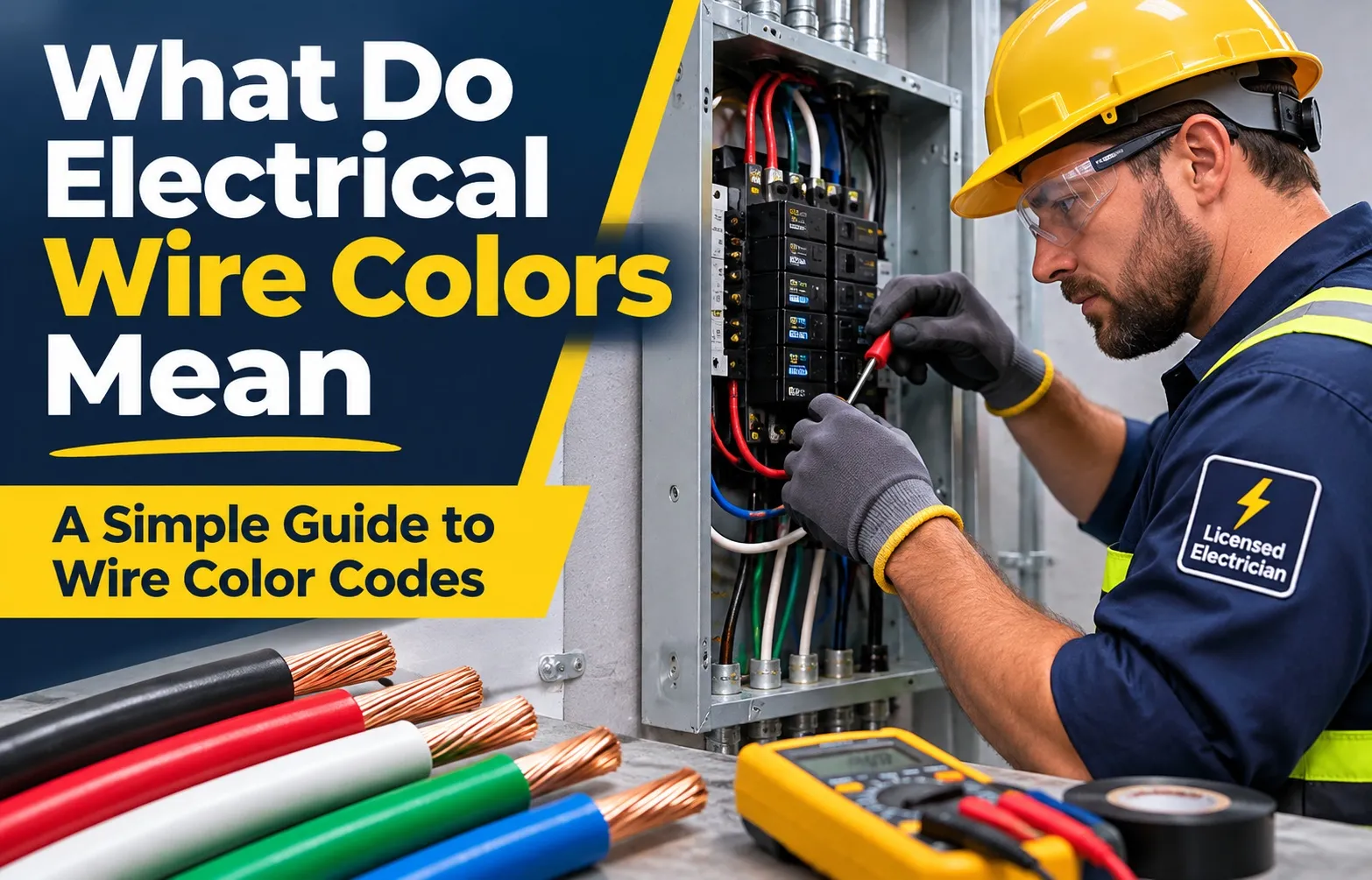 Electrical wire colors serve as a universal visual code designed to indicate the exact function, voltage level, and safety classification of every conductor within a circuit. Whether you are troubleshooting residential lighting or installing imported equipment, understanding these color codes prevents dangerous short circuits, electrical shocks, and installation failures.
The Core Rule of Electrical Wiring
Every electrical circuit relies on a closed loop system requiring specific wire roles to operate safely and efficiently. Conductors are strictly categorized by their function rather than random manufacturing choices, ensuring technicians and homeowners can identify live energy paths instantly.
- Hot Wires: These conductors carry live electrical current directly from the service panel or power source to outlets, switches, and lighting fixtures under high voltage.
- Neutral Wires: These conductors safely return unconsumed electrical current from the appliance or device back to the main service panel to complete the active circuit loop.
- Ground Wires: These protective safety conductors provide an immediate, low-resistance path to the earth, safely diverting accidental fault currents to prevent electrocution or electrical fires.
United States AC Wiring Standards (NEC Code)
North American electrical systems are strictly regulated by the National Electrical Code (NEC), which establishes uniform color-coding guidelines for residential and commercial circuits. Adhering to these standards ensures that electricians and homeowners can instantly identify active power sources, neutral return paths, and protective grounds across diverse electrical distributions.
Standard 120V/240V Residential Circuit Colors (Black, Red, White, Green/Bare)
Standard single-phase residential wiring uses specific conductor colors to route electricity safely from the breaker panel to individual outlets, fixtures, and appliances. In a typical 120V circuit or 240V split-phase system, each wire has a dedicated safety and functional assignment:
- Black Wires: Function as the primary hot leg, carrying live 120V electrical current from the service panel to switches and outlets.
- Red Wires: Act as secondary hot legs in 240V split-phase systems (such as electric ranges or dryers), or serve as switched traveler wires for ceiling fans and hardwired alarms.
- White or Grey Wires: Serve as the neutral conductor, returning unconsumed current from the appliance back to the main service panel to complete the circuit.
- Green, Green-with-Yellow, or Bare Copper Wires: Act as the equipment ground, providing a direct, low-resistance path to the earth to safely discharge fault currents.
Commercial 3-Phase Electrical Systems (208Y/120V and 480Y/277V)
Commercial and industrial facilities utilize three-phase power distribution to support high-power machinery and extensive lighting grids. The NEC mandates precise phase identification colors to prevent dangerous phase imbalances and electrical mismatches:
- 208Y/120V Systems: Utilize Black for Phase A, Red for Phase B, and Blue for Phase C, combined with a white neutral and a green or bare copper ground.
- 480Y/277V Systems: Employ high-voltage phase colors featuring Brown for Phase A, Orange for Phase B, and Yellow for Phase C, paired with a grey neutral and a protective ground.
For official regulatory compliance and code definitions, consult the National Fire Protection Association (NFPA) National Electrical Code reference page.
Europe & International AC Wiring Standards (IEC)
Electrical installations outside North America operate under the International Electrotechnical Commission (IEC) harmonized color scheme. This standardized framework ensures absolute safety and universal wire identification across the United Kingdom, the European Union, and numerous global markets for both residential and commercial electrical networks.
Harmonized IEC Single-Phase Color Codes (Brown, Blue, Green-and-Yellow)
Standard single-phase appliances and domestic circuits under IEC regulations utilize a distinct three-wire configuration. Recognizing these specific colors is critical when installing imported European equipment or troubleshooting modern international light fixtures safely.
- Brown Live Wire: Carries live electrical current directly from the power source to the appliance load.
- Blue Neutral Wire: Completes the circuit by returning unconsumed electrical current away from the connected device back to the source.
- Green-and-Yellow Protective Earth: Serves as the vital safety ground conductor, providing a low-resistance path to protect against electrical shock.
Multi-Phase IEC Systems (L1, L2, L3 Live Lines)
Industrial and commercial three-phase power distribution under IEC standards requires precise phase differentiation to maintain load balance and prevent system failures. Multi-phase configurations utilize distinct live conductor codes alongside standardized neutral and earth lines.
- L1 Line: Colored Brown to designate the first live phase conductor in heavy commercial circuits.
- L2 Line: Colored Black to designate the second live phase conductor in standard multi-phase setups.
- L3 Line: Colored Grey to designate the third live phase conductor, working alongside blue neutral and green-and-yellow protective earth lines.
The Cross-Wiring Dilemma: Mapping International Fixtures to US Homes
Installing imported electrical appliances or lighting fixtures—such as European LED drivers or ceiling fans built to IEC standards—into a North American home requires bridging different wiring codes. Incorrectly matching international conductors like brown and blue to domestic NEC boxes can cause equipment failure or severe electrical hazards.
How to Safely Map IEC Colors (Brown/Blue) to US NEC Wires (Black/White)
Mapping IEC standards to US NEC wiring relies entirely on matching conductor functions rather than colors. When performing an appliance installation or lighting fixture wiring project, you align live power, neutral return, and ground according to the exact functional role of each wire:
- Brown (IEC Live) to Black (US Hot): This connection routes the incoming active current from the wall box into the device’s primary power input.
- Blue (IEC Neutral) to White (US Neutral): This links the neutral return path back to the service panel to complete the electrical circuit loop.
- Green-and-Yellow (IEC Earth) to Green or Bare Copper (US Ground): This establishes the continuous safety fault path to protect against shocks.
Can You Connect Blue to Black or White? (Resolving Common PAA Confusion)
A frequent point of confusion during cross-wiring is whether a blue wire connects to a black or white wire. In US domestic wiring, blue is frequently designated as a traveler wire for 3-way switches, whereas in IEC wiring, blue is strictly a neutral conductor.
- Never connect an IEC blue neutral wire directly to a US black hot wire, as this triggers an immediate short circuit.
- Always connect an IEC blue wire to the US white neutral conductor to ensure safe current return.
- Carefully evaluate split-phase mapping when dealing with secondary red hot legs to avoid phase mismatches in lighting fixture wiring.
Step-by-Step Safety Rules When Mixing Wiring Standards
Successfully executing an IEC to NEC conversion demands rigorous safety checks before energizing any newly wired circuit. Taking methodical precautions prevents hazardous mistakes during international hardware integration:
- Always shut off power at the main circuit breaker and verify dead circuits with a non-contact voltage tester.
- Confirm that the imported device is rated for North American electrical parameters (120V/240V at 60Hz) before connecting.
- Secure all conductor junctions using properly sized, UL-listed wire connectors or lever nuts suited for mixed copper gauges.
DC (Direct Current) Wiring Color Codes: Solar, Automotive & Marine
Direct current (DC) systems—ranging from DIY solar power stations and off-grid RV upgrades to automotive wiring and marine electronics—rely on distinct color-coding standards. Unlike alternating current systems, DC wiring strictly differentiates between positive and negative polarity to prevent severe equipment damage and reverse connection hazards.
US & Automotive DC Conventions (Red Positive vs. Black Negative)
Standard North American automotive applications, hobbyist electronics, and portable power systems follow intuitive color conventions to maintain correct polarity. Ensuring proper connection between the energy source and components protects sensitive circuitry from electrical failure.
- Red Wires: Designate the positive terminal, carrying live DC current from the battery or solar charge controller to powered devices.
- Black Wires: Represent the negative terminal or chassis ground return path, completing the low-voltage DC circuit back to the power source.
American Boat and Yacht Council (ABYC) Marine DC Standards
Marine environments require specialized color codes due to the severe risks of saltwater corrosion and electrical confusion onboard vessels. The American Boat and Yacht Council (ABYC) mandates distinct DC wiring standards for boats and marine electronics to prevent dangerous cross-connections with AC circuits.
- Red Wires: Reserved exclusively for ungrounded positive DC main feeders and unswitched distribution circuits.
- Yellow Wires: Designated for negative DC return conductors, specifically chosen to avoid confusion with black AC hot wires commonly found in marine electrical panels.
International IEC DC Power Color Codes
Global industrial installations, telecommunications, and international renewable energy networks follow International Electrotechnical Commission (IEC) guidelines for DC power distribution. These harmonized standards ensure safe identification across complex multi-voltage DC architectures.
- Brown Wires: Indicate the positive live conductor in IEC DC power circuits.
- Grey Wires: Represent the negative return conductor in standard IEC DC layouts.
- Blue Wires: Serve as the mid-wire conductor in specialized three-wire DC configurations.
- Green-and-Yellow Wires: Function as the protective earth conductor, grounding system housings and enclosures safely.
Why You Should Never Trust Wire Colors Alone
Professional electricians frequently emphasize a golden rule: never trust a wire color alone. Older properties, historical retrofits, and improper amateur installations often violate standard color conventions, creating severe electrical safety hazards.
The Danger of Legacy and Improperly Installed DIY Wiring
Electrical standards have evolved significantly over decades, meaning legacy homes often feature outdated wiring that defies modern color codes. Unlicensed DIY modifications compound this risk by utilizing whatever scrap wire was available during past repairs.
- Non-Standard Switch Loops: Older installations frequently use white neutral wires as hot conductors without proper black marking tape, leading to unexpected shocks.
- Outdated Color Schemes: Pre-1970s properties may feature cloth-wrapped or unusual color combinations that do not match current NEC or IEC guidelines.
- Improper DIY Alterations: Amateur repairs often miswire receptacles, resulting in reversed polarity or floating grounds that bypass circuit protection.
How to Test Wires with a Multimeter and Non-Contact Voltage Tester
Before touching any conductor or starting a project, you must physically verify the circuit state using proper diagnostic tools rather than relying on visual assumptions. Implementing a strict testing protocol eliminates guesswork and prevents accidental short circuits or fault current injuries.
- Shut Off Power: Always switch off the main circuit breaker controlling the workspace before opening junction boxes or outlet covers.
- Non-Contact Voltage Tester: Sweep a non-contact tester across the bundle to scan for hidden voltage or stray current.
- Multimeter Verification: Use a digital multimeter set to AC voltage to test directly between hot, neutral, and ground conductors, confirming zero potential difference.
- Call a Licensed Electrician: If wire identities remain unclear, voltages fluctuate unexpectedly, or legacy wiring appears damaged, immediately consult a qualified, licensed electrician.

Home Improvement Researchers & Guides Editors
Meet the Nest Team, a collective of dedicated researchers, home improvement enthusiasts, and industry writers sharing practical guides, thorough category research, and trusted solutions for residential repairs and thoughtful home upkeep.