Instant Cost Summary
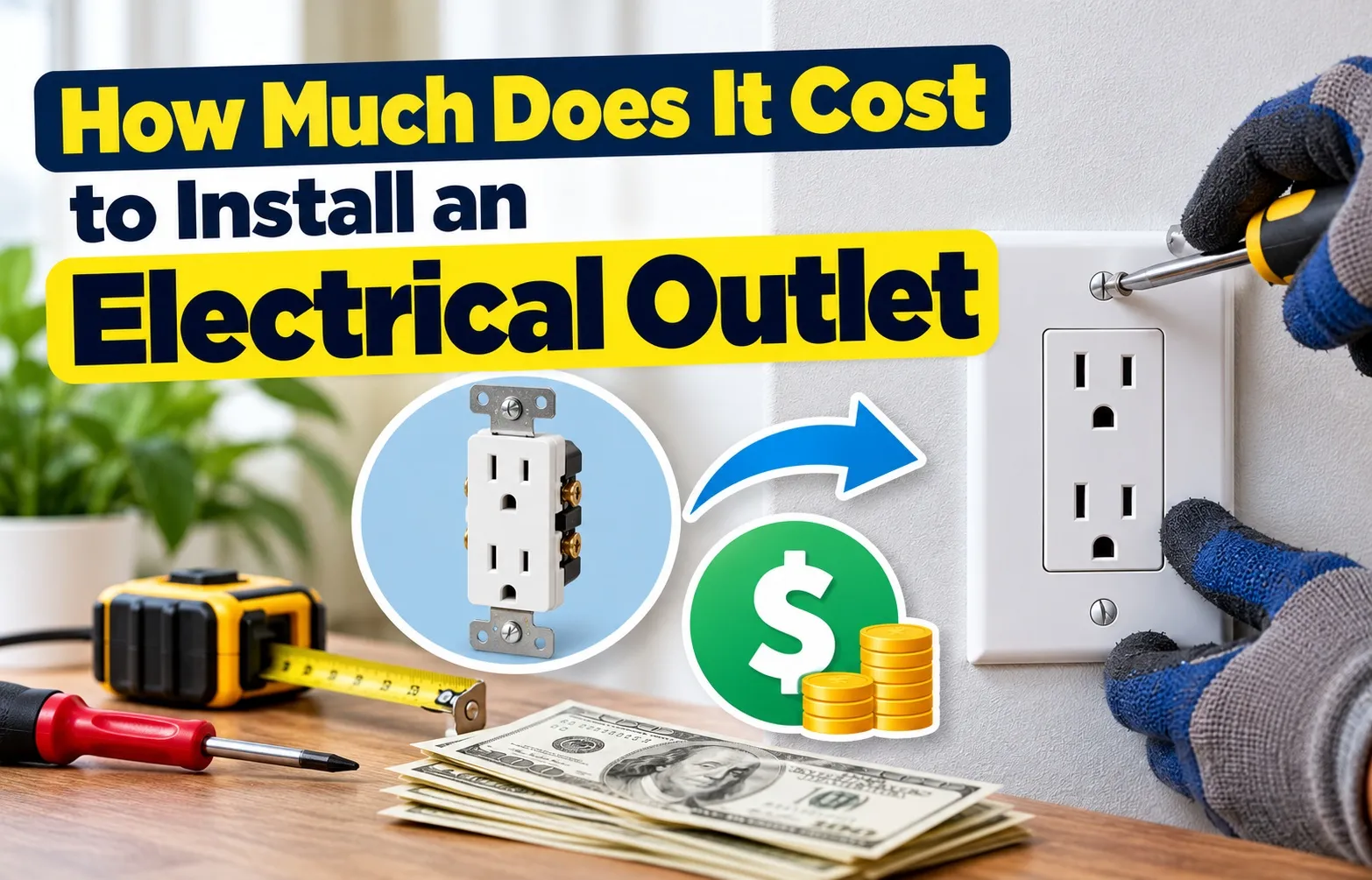 The national average cost to install an electrical outlet is $300, with total project expenses generally ranging from $100 to $450 per receptacle. A simple replacement of an existing outlet typically costs between $100 and $200, whereas running new wiring for a brand-new outlet location ranges from $250 to $500 or more depending on circuit complexity.
Average National Cost to Install an Electrical Outlet in 2026
Most homeowners spend approximately $300 per unit for professional outlet installation. Total expenses vary primarily based on labor rates, physical wall access, and whether your home requires updated electrical wiring.
- Standard Outlet Replacement: $100 to $200 (replaces an existing unit using current wiring).
- New Outlet Installation: $250 to $500 (requires running new wire through walls to the breaker panel).
- Specialized Outlet (GFCI/240V/Smart): $130 to $800+ (varies based on amperage, water protection, or high-voltage needs).
- Licensed Electrician Labor Rates: $50 to $150 per hour, often paired with a $100 to $200 minimum service call fee.
Because electricians charge a base trip fee to cover travel and dispatch, bundling multiple outlet installations into a single visit significantly reduces your per-outlet labor expense.
Comprehensive Cost Breakdown by Outlet Type
Installing or upgrading an electrical outlet involves specific hardware choices that directly impact material costs, labor complexity, and safety compliance. Understanding the distinct pricing and code requirements for each receptacle type ensures your project meets modern building standards while staying on budget.
Standard 120V Receptacles (15A / 20A)
Standard 120-volt receptacles cost between $100 and $250 installed, serving as the most common choice for general-purpose living spaces, bedrooms, and home offices. Modern installations require tamper-resistant receptacles featuring internal safety shutters to prevent children from inserting foreign objects.
- Cost Range: $100 – $250 per unit installed.
- Amperage Options: 15-amp for standard rooms; 20-amp for areas with higher continuous draw.
- Code Compliance: Must feature tamper-resistant shutters in all residential builds per current electrical safety standards.
GFCI Outlets (Kitchen, Bathroom, Garage & Outdoor Requirements)
Ground Fault Circuit Interrupter (GFCI) outlets range from $130 to $250 installed, providing vital protection against electric shock in moisture-prone zones. Mandated by the National Electrical Code (NEC) in kitchens, bathrooms, laundry rooms, garages, and exterior walls, these units instantly cut power when a ground fault is detected.
- Cost Range: $130 – $250 per unit installed.
- Primary Function: GFCI protection prevents severe electrical shocks near water sources.
- Location Mandate: Required within six feet of sinks, on all outdoor circuits, and inside unconditioned garages.
AFCI Outlets (Bedroom Fire Prevention Standards)
Arc Fault Circuit Interrupter (AFCI) protection costs between $150 and $400 installed, designed specifically to detect unintended electrical arcs that cause residential fires. While modern homes often integrate AFCI breakers at the main panel, standalone AFCI receptacles provide a reliable alternative for retrofitting older bedroom circuits.
- Cost Range: $150 – $400 per unit installed.
- Core Safety Role: AFCI breakers and receptacles shut down circuits instantly upon detecting hazardous sparking or damaged wiring.
- Code Requirements: Widely mandated by the NEC for all residential bedroom circuits and living areas in newer construction.
Smart Outlets & Built-in USB Ports
Smart and USB-integrated receptacles cost between $150 and $350 installed, upgrading standard wall boxes with modern convenience and remote automation capabilities. These upgrades include direct USB-A or high-output USB-C outlets alongside Wi-Fi or smart-home compatible relay switches.
- Cost Range: $150 – $350 per unit installed.
- Convenience: USB-C outlets eliminate bulky charging bricks for phones, tablets, and small electronics.
- Smart Integration: Wi-Fi enabled outlets allow remote voice control and scheduling through mobile home automation apps.
Heavy-Duty 240V Outlets (Dryers, RVs, and Level 2 EV Chargers)
High-voltage 240-volt circuits range from $300 to $800+ installed, delivering the heavy electrical load required for electric clothes dryers, kitchen ranges, workshop machinery, and Level 2 EV charging stations. This installation requires thicker copper wire gauges and a dedicated double-pole circuit breaker.
- Cost Range: $300 – $800+ depending on wire run length and amperage.
- Hardware Specs: Often utilizes heavy-duty configurations like a NEMA 14-50 receptacle for high-draw appliances and electric vehicles.
- Installation Complexity: Demands a dedicated 240-volt circuit routed directly back to the main electrical service panel.
Cost Drivers & Hidden Project Variables
While basic outlet hardware is relatively inexpensive, total project pricing depends on structural conditions, labor structures, and electrical system capacity. Accounting for these hidden variables prevents unexpected budget overruns during installation.
Electrician Labor Rates & The Minimum Trip Fee Factor
Licensed electricians charge hourly labor rates ranging from $50 to $150 per hour depending on geographic location, licensing tier, and project scope. Most electrical contractors also enforce a minimum trip charge or service fee of $100 to $200 for initial dispatch, which covers overhead and travel time regardless of job size.
- Hourly Costs: $50 – $100/hr for Journeyman electricians; $90 – $150/hr for Master electricians.
- Service Call Fees: The flat minimum trip fee applies to single-outlet installations, making it less cost-effective than bundling multiple tasks.
- Code Compliance: Professional work must meet safety criteria established under the National Electrical Code (NEC) standards.
Distance from Electrical Panel & Cable Fishing (Drywall vs. Plaster)
The total distance between your new receptacle and the main circuit breaker box directly influences overall labor time and material expense. Installing a new outlet requires running non-metallic sheathed cable (such as Romex wire) through wall framing, which varies in difficulty depending on wall construction materials.
- Standard Drywall Fishing: Running wire through open wall bays or modern drywall takes less time, keeping labor costs lower.
- Plaster & Lath Obstacles: Older homes with plaster walls, masonry, or tight insulation require specialized tools and additional labor to route wire without destructive damage.
- Material Usage: Long cable runs add $0.50 to $2.00 per foot in raw wiring costs, along with increased installation time.
Main Electrical Panel Upgrades & Subpanel Requirements
Adding new circuits requires sufficient physical space and electrical capacity within your existing main breaker panel. If your circuit breaker box is maxed out, obsolete, or lacks adequate amperage, expanding your system requires dedicated panel upgrades before new receptacles can be added.
- Subpanel Installation: Adding a 50-amp to 100-amp subpanel costs $500 to $1,500 when extra breaker slots are needed.
- Full Panel Upgrades: Upgrading an outdated 100-amp panel to a 200-amp service panel costs $1,500 to $4,000+.
- Panel Capacity Check: An electrician evaluates total home load to ensure the panel safely supports additional power demands.
Wall Repair, Patching, and Paint Restoration Costs
Electricians do not typically perform cosmetic finishing work if wall access holes are cut during cable routing. Budgeting for drywall restoration and surface finishing ensures your space is fully restored after installation.
- Minor Drywall Patching: Small cutouts and hole repairs cost $150 to $300 through a drywall specialist.
- Extensive Surface Repairs: Repairing multiple plaster cuts or long wire chases across walls and ceilings can range from $400 to $1,000+.
- DIY Touch-Ups: Homeowners can save on labor by handling minor spackling, sanding, and painting independently once electrical work passes inspection.
Special Use-Case Cost Guides
Specific installation locations require specialized hardware, unique box styles, and tailored wiring techniques to meet safety standards and aesthetic goals. Knowing the pricing details for common use cases helps you prepare for specialized installation requirements.
Cost to Install an Electrical Outlet Behind a Mounted TV
Installing an outlet behind a wall-mounted television typically costs between $150 and $350. This setup relies on a recessed outlet box that sets the power receptacle back into the wall framing, allowing flat-screen TVs and mounting brackets to sit completely flush against the drywall without pinching power cords.
- Standard Recessed Receptacle: $150 – $250 for a professional electrician to tap into a nearby circuit and install a recessed box.
- In-Wall Power Extension Kits: $100 – $200 for code-compliant DIY bridge kits that pass power through finished walls without cutting into existing branch wiring.
- TV Wire Management: Eliminates dangling wires and meets National Electrical Code standards by avoiding flexible power cords routed inside wall cavities.
Installing Weatherproof Outlets Outdoors and in Garages
Installing an outdoor or garage outlet ranges from $180 to $400 depending on siding material and wire run complexity. Exterior installations require specialized protective housings and sealed enclosures to safeguard connections against moisture, rain, and extreme temperature fluctuations.
- Weatherproof Bubble Covers: Required in-use covers protect connected plugs from rain and debris, adding $15 to $35 in hardware costs.
- GFCI & Wet-Location Mandates: Every exterior and garage outlet must feature built-in GFCI protection and tamper-resistant, weather-resistant (WR) receptacle construction.
- Siding & Masonry Cuts: Penetrating exterior brick, stucco, or stone adds 30 to 60 minutes of precise drilling labor to the project.
Adding Dedicated Outlets for Heavy Kitchen & Laundry Appliances
Adding a dedicated circuit and receptacle for high-draw appliances costs between $250 and $600. Major appliances like refrigerators, microwave drawers, dishwashers, and washing machines require an isolated power line straight from the breaker panel to prevent circuit overloads and nuisance breaker trips.
- Dedicated Circuit Wiring: Running direct Romex lines ensures single appliances receive uninterrupted current without sharing loads with surrounding outlets.
- Kitchen Countertop Standards: Kitchen small-appliance circuits mandate 20-amp wiring along with GFCI protection for sink proximity.
- Laundry Receptacles: Dedicated 120V 20-amp lines or heavy-duty 240V circuits ensure full capacity for washers, gas dryers, and electric laundry equipment.
The Trip Fee Hack & Project Bundling Strategy
Hiring an electrician to install or replace a single outlet is often an inefficient use of home maintenance funds due to standard contractor pricing models. Applying a strategic project bundling approach allows homeowners to reduce overall per-unit installation expenses significantly while maximizing service value.
Why Installing a Single Outlet is Financial Inefficiency
Electrical contractors enforce minimum trip charges or dispatch fees ranging from $100 to $200 simply to cover travel, fuel, and initial scheduling. When scheduling a technician for a single $15 receptacle installation, the service call fee forms the vast majority of your bill, inflating the effective cost per unit.
- Disproportionate Base Costs: A 30-minute replacement job can bill at $200+ total due to flat minimum dispatch thresholds.
- Sunk Travel Overhead: You absorb the full cost of truck roll fees and transit time for a minor task.
- Underutilized Billable Increments: Most electricians bill a full one-hour minimum regardless of how quickly a single-outlet job finishes.
How Bundling Multiple Outlets and Switches Cuts Costs by 40%
Grouping several electrical upgrades into a single contractor visit spreads the flat trip fee across multiple items. Once a licensed electrician is already on-site with tools unpacked and circuits mapped, swapping additional outlets or wall switches takes only 15 to 20 minutes each, dramatically lowering your average per-outlet rate.
Pre-Visit Preparation Checklist for Homeowners
Optimizing electrician efficiency before arrival reduces billable hours and ensures an uninterrupted workflow. Completing basic job prep allows technicians to focus exclusively on wiring work rather than diagnostic setup or moving furniture.
- Map Your Electrical Panel: Verify that circuit breaker labels accurately correspond to target rooms and outlets.
- Clear Work Areas: Move furniture, heavy appliances, and wall decor at least three feet away from target outlet boxes.
- Compile a Master Task List: Audit your entire home for loose switches, outdated ungrounded plugs, or buzzing dimmers to add to the single appointment.
- Pre-Purchase Fixtures (If Applicable): Have smart outlets, specialty USB receptacles, or custom faceplates ready on-site if your contractor allows client-supplied devices.
DIY vs. Hiring a Licensed Electrician
Deciding whether to attempt a DIY outlet replacement or hire a licensed electrician comes down to project scope, technical safety, and legal requirements. Understanding where simple maintenance ends and high-risk electrical work begins helps protect your property and ensures code compliance.
What Can You Safely DIY? (Swapping Outlets Like-for-Like)
Replacing an existing 120V outlet with a modern receptacle of the exact same voltage and amperage is a manageable task for experienced DIYers. This scope involves removing an old faceplate, disconnecting original terminal screws, and installing a modern tamper-resistant receptacle using established wiring paths without opening walls or modifying circuit breakers.
- Required Safety Gear: Always verify power is completely shut off at the main service panel using a calibrated non-contact voltage tester before touching any wiring.
- Like-for-Like Scope: Swapping a worn standard outlet, upgrading to a USB-integrated receptacle, or installing a point-of-use GFCI on existing wiring.
- Risk Level: Low to moderate, provided correct polarity is maintained and wire connections are properly torqued under terminal screws.
When a Licensed Electrician is Mandatory (New Circuits, 240V & Panel Work)
Complex electrical installations require formal electrician licensing, specialized training, and physical intervention inside high-voltage components. Attempting to route new Romex cable through wall framing, tap into main busbars, or wire heavy-duty appliances presents severe shock and structural fire safety hazards.
- Running New Lines: Fishing new wire across walls, adding branch circuits, or expanding outlet locations beyond an existing box.
- High-Voltage Outlets: Installing 240V circuits for Level 2 EV chargers, electric dryers, ranges, or workshop machinery.
- Service Panel Modifications: Adding new circuit breakers, installing subpanels, or upgrading main service capacity.
Electrical Permits, Local Building Codes, and Home Insurance Risks
Most municipalities require official electrical permits for any project that adds new wiring or alters existing circuit capacity. Failing to obtain required permits or completing uninspected work can create serious financial and legal complications when selling a home or filing property damage claims.
- Municipal Permits: Cities and counties enforce mandatory inspections for new circuit runs to ensure full National Electrical Code (NEC) compliance.
- Home Insurance Coverage: Insurance providers may deny damage claims stemming from electrical fires if unpermitted, non-code-compliant DIY work is identified as the root cause.
- Property Resale Complications: Unpermitted electrical work discovered during buyer home inspections often requires costly retrofits or professional re-certification before closing.
Frequently Asked Questions
Direct answers to common questions about electrical outlet installation costs, conversion rules, and permit requirements.
How much do electricians charge per outlet on average?
Electricians charge an average of $100 to $200 for a simple outlet replacement on existing wiring. Installing a brand-new outlet location that requires running new cable through walls typically costs between $250 and $500 per unit, while specialized 240V or heavy-duty outlets range from $300 to $800+.
Can you convert a standard 120V outlet to a 240V outlet?
No, you cannot directly convert a standard 120V outlet to a 240V outlet using existing 12-gauge or 14-gauge household wiring. A 120V to 240V conversion requires running a dedicated, heavier-gauge cable (such as 6 or 8 AWG) back to the main electrical panel and installing a double-pole circuit breaker to deliver high-voltage power safely.
How long does it take an electrician to install a new outlet?
Swapping an existing outlet box takes 20 to 40 minutes. Running a new line from an existing nearby circuit takes 45 to 90 minutes, whereas installing a completely new dedicated circuit from the main breaker panel typically requires 2 to 4 hours of labor time depending on wall access and distance.
Do I need a permit to add a new outlet to my home?
Replacing an existing outlet like-for-like generally does not require a municipal electrical permit. However, adding a new outlet location, running new in-wall cable, or installing a new circuit breaker mandates an electrical permit and subsequent inspection in most local building jurisdictions.

Oscar Vance | Master Plumber & Drainage Expert
Meet Oscar Vance, a licensed master plumber sharing practical solutions on residential repairs, preventive maintenance, and thoughtful home upkeep.