How to Get Rid of Ants in an Electrical Outlet
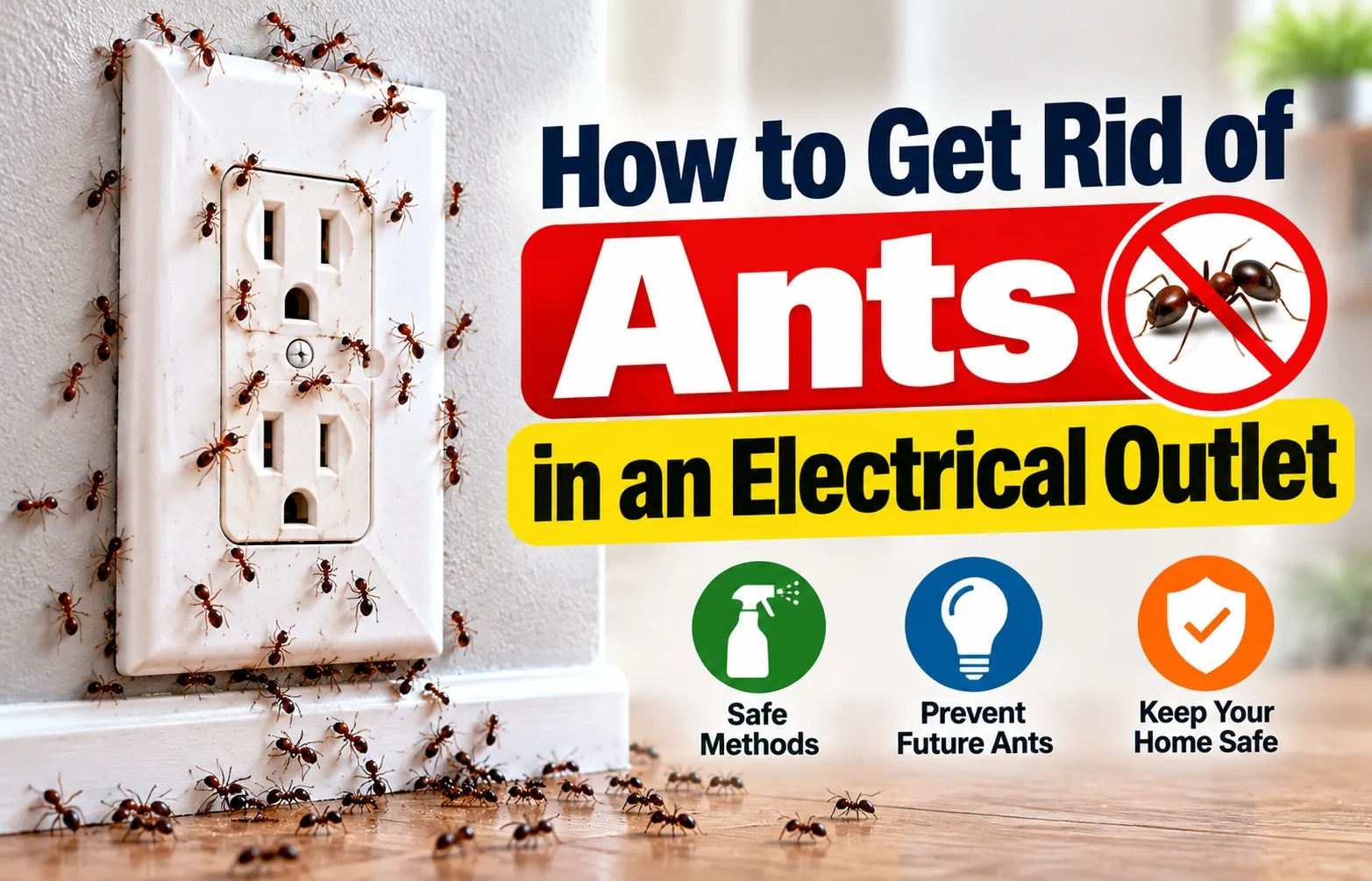 Discovering ants streaming out of a power outlet requires immediate caution to prevent severe electrical hazards. Liquids, metal objects, and live wiring create an extreme risk of short circuits, fires, or electrical shock. Turn off power at the main panel before taking action to keep your home safe.
Immediate Action Plan for Ants in Electrical Outlets
Handling an ant infestation inside an electrical box requires strict safety protocols before attempting any pest removal steps. Following a structured procedure eliminates the colony while protecting your home’s electrical system.
Emergency Safety Rule: Stop Before You Touch the Outlet
Never insert tools, spray liquid insecticides, or wipe a live power outlet with a damp cloth. Water and chemical sprays conduct electricity, creating an immediate fire hazard and direct shock risk.
- Shut off the circuit breaker: Locate your main breaker panel and turn off the switch supplying power to the affected room immediately.
- Verify zero power: Plug in a reliable circuit tester or a working lamp into the power outlet to confirm the current is fully cut off.
- Avoid liquid chemicals: Never use liquid sprays or aerosol insecticides directly on or around electrical wall sockets.
- Keep metal tools away: Do not use metal screwdrivers, knives, or wire probes inside an open electrical box.
4 Steps to Clear Ants Safely
Once you verify that power to the outlet is completely turned off, you can safely remove visible ants and eliminate the nest within the wall cavity.
- Cut the power: Switch off the correct breaker at the main electrical panel to eliminate the electrical shock hazard completely.
- Remove cover plate and vacuum: Unscrew the plastic faceplate and use a vacuum hose attachment to gently suck up visible ants, eggs, and debris.
- Apply non-conductive dust: Lightly puff dry, non-conductive powder such as food-grade diatomaceous earth around the outer edges of the junction box.
- Set external gel bait stations: Place slow-acting ant gel bait stations on the wall adjacent to the outlet so worker ants carry the bait back to kill the queen.
Step-by-Step Safe Elimination Protocol
Eliminating an active ant infestation requires a methodical approach that prioritizes electrical safety while targeting the colony hidden within the wall void. Proper handling prevents accidental shorts and ensures complete eradication.
Step 1: Cut the Power at the Breaker Box
Never bypass safety measures when dealing with electrical fixtures. Cutting power prevents lethal shocks during the cleaning process.
- Locate your home’s main electrical panel and identify the breaker corresponding to the target room.
- Switch the breaker completely to the “Off” position.
- Test the outlet using a non-contact voltage tester to verify zero electrical current.
Step 2: Remove Cover Plate & Vacuum Loose Ants
Clearing visible insects from the electrical box prepares the area for targeted treatments without risking damage to internal wiring components.
- Unscrew the plastic cover plate carefully using an insulated screwdriver.
- Examine the interior of the outlet box for trapped debris or clustering insects.
- Attach a narrow crevice tool or a soft vacuum hose attachment to gently extract live ants and loose eggs.
Step 3: Apply Dry Dusts (Diatomaceous Earth vs. Boric Acid)
Moisture-free powder treatments desiccate insects safely without introducing conductive liquids near internal electrical terminals.
- Select a safe non-conductive powder like food-grade Diatomaceous Earth.
- Use a manual powder duster to apply a very light coating around the perimeter of the electrical junction housing.
- Ensure the powder never cakes heavily onto exposed terminal screws or wire connectors.
Step 4: Deploy External Gel Baits (Terro/Mortein)
Poison baits achieve true colony elimination by exploiting the natural foraging habits of insect populations.
- Place commercial ant gel bait stations on the drywall directly adjacent to the socket frame.
- Allow foraging worker ants to feed on the bait and transport the toxic formula back to the queen within the deep wall void.
- Avoid placing sticky or wet bait formulas directly inside the electrical junction enclosure.
Emergency Troubleshooting: Accidental Liquid Sprays
Accidentally spraying liquid insecticide or household cleaner into a live electrical socket creates an immediate danger of short circuits, electrical fires, and personal injury. Prompt emergency action stabilizes the situation before permanent electrical damage occurs.
What Happens If You Spray Liquid Insecticide in an Outlet?
Liquid bug spray acts as a conductor when introduced into a live electrical box, causing immediate arcing between hot and neutral terminals.
- Immediate short circuit risk: Conductive liquids bridge live electrical connections, tripping circuit breakers or blowing fuses instantly.
- Arcing and fire hazard: Electrical current passing through liquid residue generates intense localized heat, melting internal plastic components and ignition risk.
- Accelerated electrical corrosion: Chemical insecticides corrode brass contacts and copper wiring, leading to intermittent power delivery or total outlet failure.
Immediate Emergency Recovery Steps (What to Do Right Now)
If liquid insecticide enters a power socket, execute these critical safety steps immediately to prevent structural damage or severe shock.
- Cut power at the main breaker panel: Shut off power to the affected circuit immediately without touching the outlet faceplate or nearby wall surface.
- Do not insert tools or towels: Never insert metal screwdrivers, paper towels, or cloths inside the socket openings to soak up the liquid while power is connected.
- Allow extended drying time: Keep the breaker off for at least 24 to 48 hours to allow complete evaporation of chemical moisture inside the wall cavity.
When to Replace the Outlet Box Entirely
In cases where liquid exposure causes physical damage, charred contacts, or internal corrosion, replacing the electrical fixture becomes necessary.
Why Ants Target Electrical Outlets
Ant infestations inside wall sockets are rarely random occurrences. Specific ant species are systematically drawn to electrical infrastructure due to physical microclimates, unique chemical trail buildup inside wall cavities, and sensitivity to electromagnetic forces.
Heat and Pheromone Accumulation in Wall Voids
Wall voids housing electrical wiring provide ideal nesting conditions that protect colonies from environmental harshness while offering consistent physical comforts.
- Thermal warmth: Active power outlets emit constant baseline heat from electrical loads, attracting queen ants seeking optimal temperatures for brood development.
- Insulation scent: Wire coatings made of soybean oil or synthetic polymers release organic chemical compounds that mimic natural food sources or nesting odors.
- Trapped pheromones: Enclosed junction boxes retain alarm and trail pheromones, prompting thousands of foraging workers to continuously reinforce the pathway into the wall socket.
Electromagnetic Fields and Specific Ant Species (Crazy Ants)
Certain invasive pest species display magnetoreception, actively pursuing electromagnetic fields (EMF) generated by live currents and contact points.
Species such as Tawny Crazy Ants (Nylanderia fulva) are notorious for swarming electrical equipment. When an individual ant touches a live contact and suffers an electric shock, it releases an emergency alarm pheromone. This chemical signal triggers surrounding nestmates to attack the terminal, resulting in hundreds of ants piling onto the contact point within minutes.
How Ants Cause Electrical Short Circuits and Fires
Mass ant accumulations inside electrical boxes quickly compromise delicate circuit components and insulation barriers.
Advanced Scenarios: Switches, Appliances, and Outdoors
Ants frequently expand their nesting pathways beyond standard indoor wall outlets. Addressing pest activity across light switches, major kitchen appliances, and exterior power fixtures requires targeted removal techniques tailored to each unique electrical housing environment.
Clearing Ants from Light Switches and Wall Junctions
Wall junctions and light switch enclosures provide vertical highways for ant colonies moving between floor levels and ceiling voids.
- Disconnect power: Turn off the circuit breaker dedicated to the specific lighting loop before inspecting the fixture.
- Remove the light switch plate: Unscrew the faceplate to expose the mounting box without disturbing internal wire connections.
- Vacuum and seal gaps: Extract loose ants using a vacuum attachment, then apply 100% silicone caulk around gaps between the drywall cutouts and the junction box to prevent future re-entry.
Dealing with Ants in Outdoor Electrical Sockets
Exterior power outlets and junction boxes are particularly vulnerable to moisture-seeking ant species and outdoor soil colonies.
- Inspect weatherproofing seals: Ensure the heavy-duty weatherproof cover gasket forms an airtight seal against the exterior wall siding.
- Apply non-conductive powder barriers: Lightly coat the lower lip of the outdoor junction box with food-grade Diatomaceous Earth to deter foraging trails.
- Seal exterior wall penetrations: Fill gaps around outdoor conduit entries using high-grade exterior silicone caulk or expanding foam.
Protecting Sensitive Household Electronics
High-end appliances, microwave control panels, and kitchen backsplash outlet setups are primary targets due to constant standby heat and food debris proximity.
Frequently Asked Questions About Ants in Electrical Outlets
Addressing common queries regarding ant infestations in power outlets helps home owners resolve pest problems safely while preventing electrical hazards and damage.
Is it safe to tape around an electrical outlet to keep ants out?
Taping over an active electrical outlet is unsafe and ineffective for pest control. Sealing faceplates with duct tape or painter’s tape creates distinct hazards without eliminating the nest within the wall.
- Heat retention risk: Heavy tape traps operational heat emitted by active wiring, creating a potential fire risk under heavy electrical loads.
- Trapping the infestation: Tape forces ants to find alternative exit routes, often driving them further into wall voids or out through neighboring light switches and baseboards.
- Safe alternative: Shut off power at the breaker, remove the plate, and apply silicone caulk around the junction box edges after removing the nest.
Can ants in an outlet actually cause a home fire?
Yes, large ant populations inside an electrical junction box can cause electrical fires. Accumulations of dead ants bridge live contacts, leading to short circuits, arc flashes, and overheating.
- Arcing hazards: Crushed ants touching live wire terminals create pathways for continuous electric arcs that can ignite plastic components.
- Acidic corrosion: Secretions like formic acid corrode copper wiring and terminal screws, increasing electrical resistance and heat generation over time.
- Insulation removal: Certain invasive species chew through wire sheathing, exposing raw copper lines directly to surrounding wall cavity insulation.
Does Dawn dish soap work for ants inside wall outlets?
While soapy water breaks down an ant’s protective exoskeleton on open surfaces, spraying Dawn dish soap liquid directly into an electrical outlet is extremely dangerous.
- Conductivity danger: Liquid soapy solutions conduct electricity readily, causing instant short circuits and severe shock risks if applied near live terminals.
- Internal corrosion: Liquid residue left inside a junction box corrodes metal contacts and leads to premature electrical failure.
- Proper application: Use dish soap mixtures exclusively to wipe down exterior wall surfaces and baseboards well away from electrical faceplates.
What will ants not walk across to enter a wall socket?
Ants naturally avoid certain physical barriers and sensory deterrents that disrupt their scent trails or irritate their outer cuticle.

Oscar Vance | Master Plumber & Drainage Expert
Meet Oscar Vance, a licensed master plumber sharing practical solutions on residential repairs, preventive maintenance, and thoughtful home upkeep.