Storm Drain vs Sewer Drain The Real Difference in Simple Terms
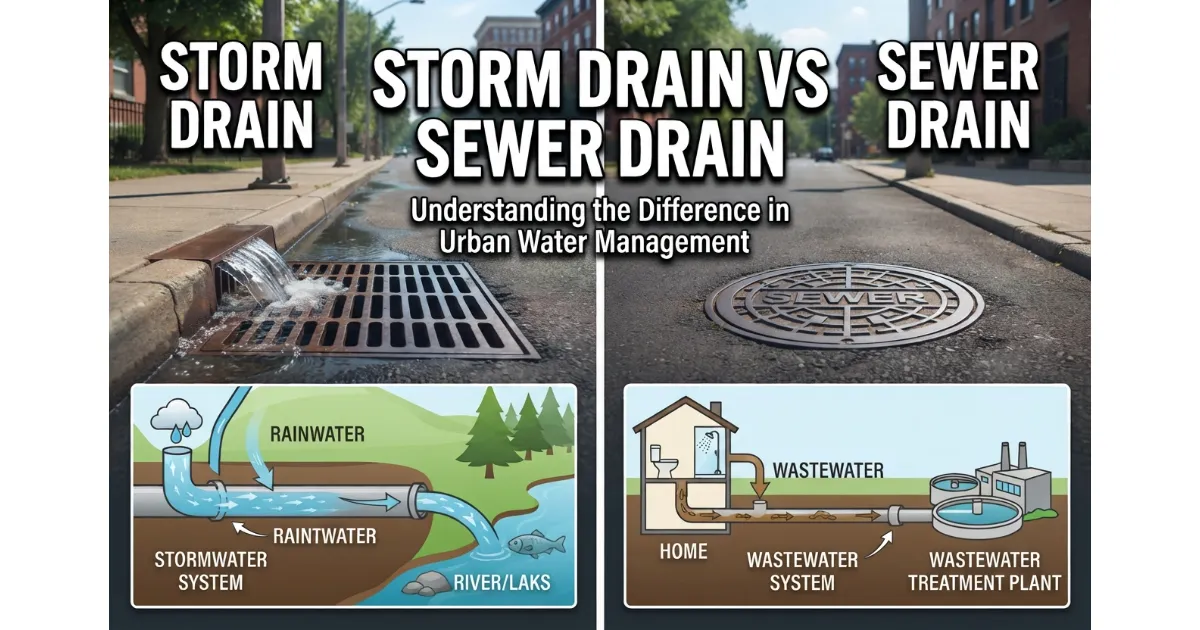
The core difference lies in where the water goes. Storm drains collect untreated rainwater and runoff directly from streets into local bodies of water like rivers and lakes. Sewer drains carry household wastewater from toilets and sinks to treatment plants for processing before release.
Why People Confuse the Two Systems
Both systems use underground networks of pipes and visible grates on streets, making them look identical to the untrained eye. Homeowners often assume all urban drainage leads to the same filtration facility, leading to dangerous dumping habits.
- Visual Similarity: Street grates and concrete channels look functionally similar above ground.
- Hidden Infrastructure: Both networks run deep beneath city streets, hiding their distinct destinations.
- Common Misconceptions: Public belief assumes municipal water systems share a single unified pipe network.
Key Operational Differences Between the Systems
Understanding how each system functions protects local ecosystems and prevents municipal plumbing backups. Each network is engineered for entirely different volumes, treatments, and environmental destinations.
- Storm Drain Function: Captures stormwater runoff from rain and snowmelt to prevent street flooding.
- Sewer Drain Function: Transports indoor wastewater from homes and businesses to a wastewater treatment plant.
- Environmental Impact: Stormwater enters waterways as untreated rainwater, meaning pollutants flow directly into nature.
- Safety Protocols: Sanitary sewer networks safely process and disinfect treated wastewater before environmental release.
What Is a Storm Drain?
Storm drains function as a critical municipal flood control infrastructure designed to capture and redirect heavy surface water. Without these engineered networks, severe rainstorms would quickly cause widespread street flooding, property damage, and severe traffic hazards.
- Managing Surface Water: Rapidly clearing rainwater from paved roadways and urban landscapes.
- Protecting Infrastructure: Preventing water pressure from cracking asphalt, eroding foundations, and undermining city roads.
- Managing Runoff: Collecting overflow generated across expansive impervious surfaces like parking lots and rooftops.
Where Does Storm Drain Water Actually Go?
Water entering a storm drain flows directly into local natural bodies of water via an underground pipe network, typically bypassing any treatment facility entirely. Regulated under strict MS4 permits, municipalities manage these systems to balance flood defense with environmental protection.
- Direct Waterways: Runoff exits the municipal system and empties directly into local creeks, rivers, and eventually the ocean [00:01:53].
- No Filtration: Unlike indoor plumbing, stormwater does not get processed at a wastewater plant before entering nature [00:01:53].
- Environmental Vulnerability: Whatever enters street grates goes straight into local ecosystems, making pollution prevention essential [00:02:40].
Common Pollutants Found in Storm Drains
Because storm systems are completely open to outdoor environments, they frequently accumulate hazardous everyday debris and chemical pollutants. Educated communities actively monitor curb inlets to stop pollutants from entering delicate natural habitats.
- Urban Debris: Litter, plastic bags, and organic yard waste swept up from streets during downpours [00:02:34].
- Automotive Fluids: Motor oil, antifreeze, and heavy metal particles washed off driveways and parking lots.
- Chemical Runoff: Excess lawn fertilizers, pesticides, and household detergents carried away by heavy rains.
What Is a Sanitary Sewer?
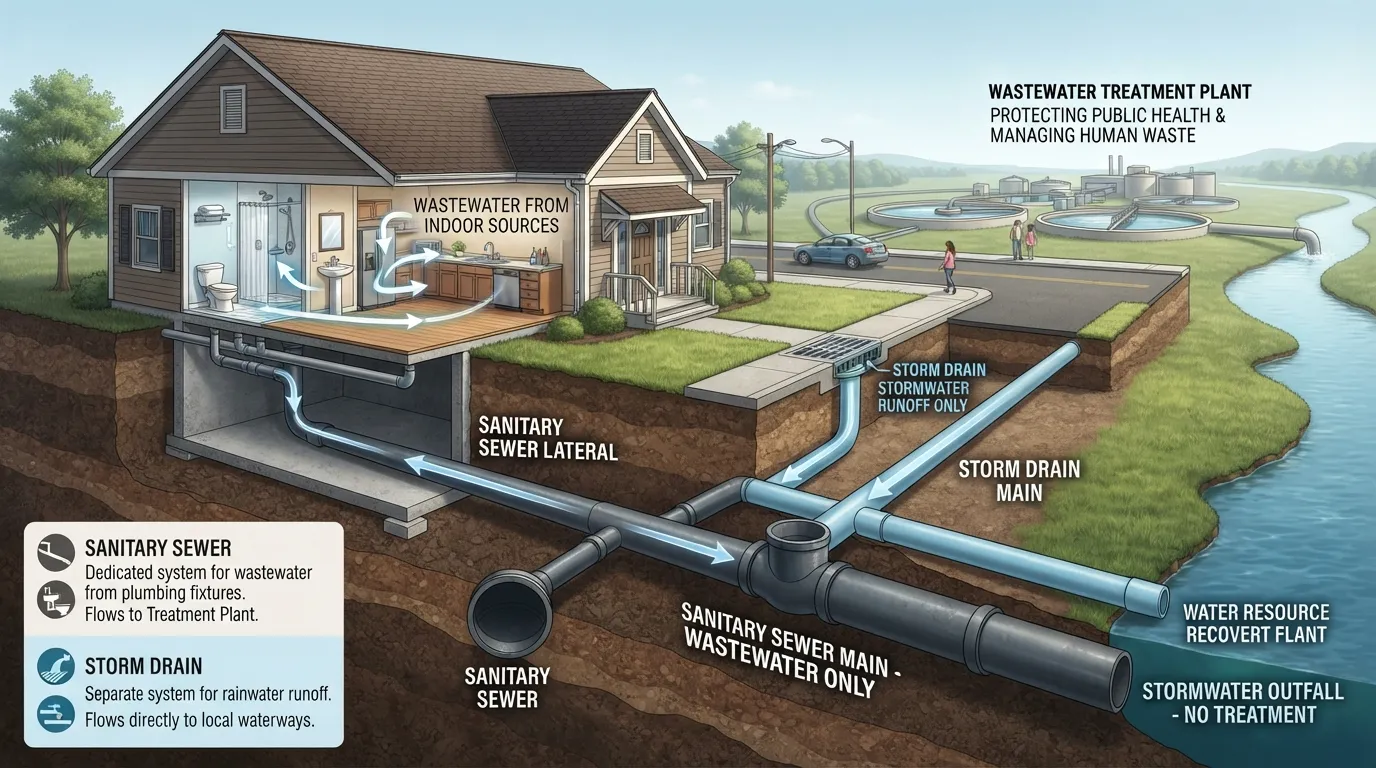
Sanitary sewers are closed, dedicated underground networks built exclusively to transport used water from indoor plumbing fixtures safely away from populated areas. This infrastructure prevents unsanitary conditions and safeguards public health by isolating harmful human waste and household greywater.
- Safe Waste Removal: Transporting biological waste and contaminated water away from residential and commercial properties.
- Odor and Pathogen Control: Containing hazardous gases and disease-causing bacteria within sealed underground piping networks.
- Dedicated Transport: Keeping indoor blackwater entirely separate from outdoor weather-driven runoff to maintain system integrity.
The Treatment Process From Home to Treatment Plant
Every drop of water going down indoor drains travels through private lateral lines into municipal mains, ultimately arriving at a specialized wastewater treatment facility. This rigorous multi-stage treatment ensures that raw sewage is thoroughly filtered, cleaned, and disinfected before any treated water discharge occurs.
- Fixture Collection: Wastewater from toilets/sinks/showers leaves the home via gravity-fed or pressurized private lines.
- Primary & Secondary Treatment: Facilities screen out physical debris, settle out solids, and use biological processes to break down organic impurities.
- Disinfection & Release: Water undergoes chemical or ultraviolet disinfection to eliminate pathogens before being safely returned to the environment.
Storm Drain vs Sewer Drain Side by Side Comparison Table
A direct comparison highlights why these two municipal networks must remain completely separate. This structured breakdown maps out their distinct operational properties.
Visual Identification What Do the Grates Manholes Look Like?
Recognizing surface access points helps you determine which drainage network runs beneath your local street. Municipalities use distinct structural designs and safety markings to tell them apart.
- Drain Grate: Open-slotted grates sit flush along curbs to capture fast-moving stormwater during heavy downpours.
- Manhole Cover Markings: Heavy iron lids often feature explicit stamps or text indicating whether they belong to the “Storm” or “Sanitary” system.
- Storm vs Sanitary Manhole: Storm access points lead to high-volume box culverts, while sanitary manholes connect to sealed pressurized piping.
The Third System Nobody Talks About Combined Sewers
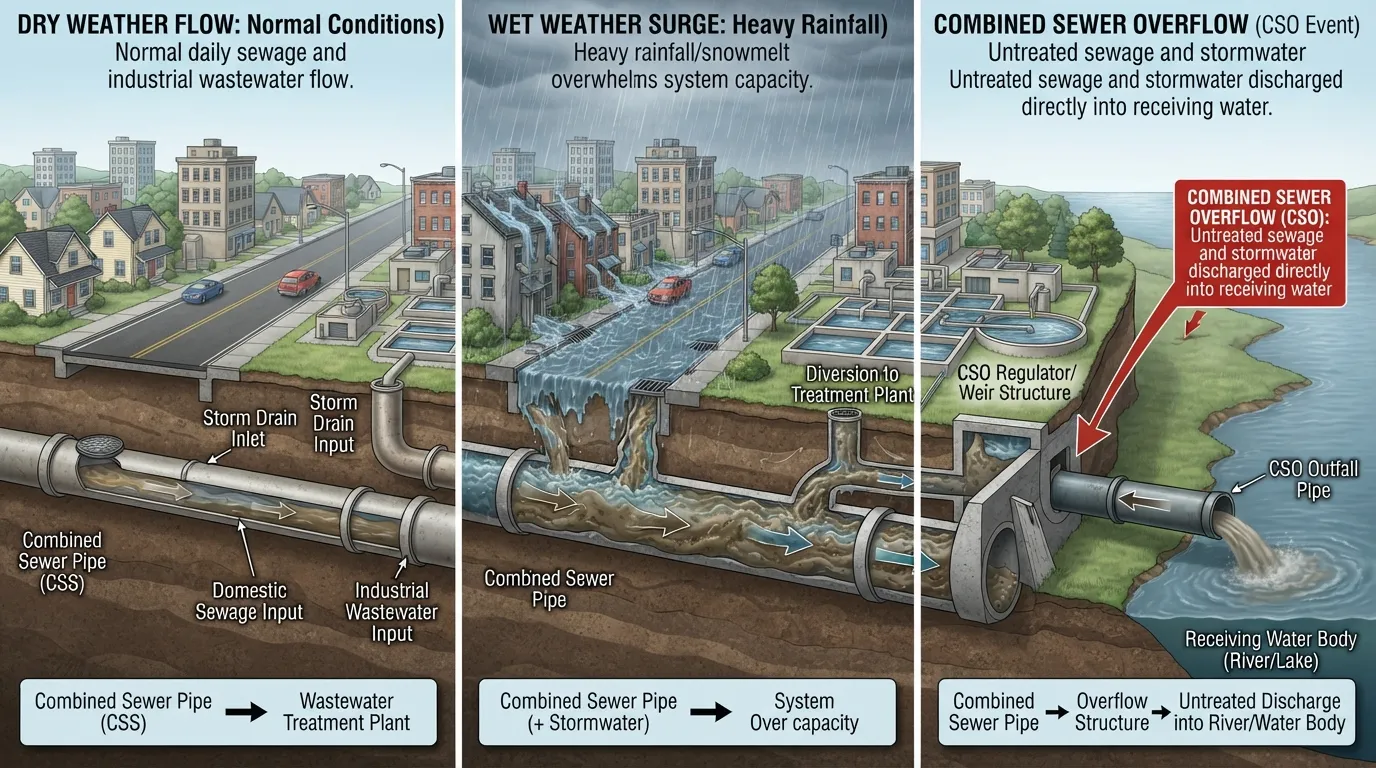
A combined sewer system is an older urban infrastructure design that collects both rainwater runoff and sanitary sewage within a single shared pipe network. Rather than separating stormwater from indoor plumbing, these legacy systems route everything together straight to a treatment facility during dry weather.
- Shared Piping: Single large underground conduits carry both household wastewater and street runoff.
- Legacy Infrastructure: Built primarily in the late 19th and early 20th centuries before modern environmental laws.
- Dual Operation: Functions efficiently during normal weather by sending all collected fluid to a processing plant.
Combined Sewer Overflow CSO Why It’s a Problem
During heavy storms, the sudden influx of water overwhelms the capacity of a combined sewer system, triggering a Combined Sewer Overflow (CSO) event. This forces the facility to discharge a dangerous mixture of raw sewage and untreated runoff directly into local waterways.
- System Overload: Excessive rainwater volume exceeds the physical holding capacity of treatment plants.
- Environmental Hazard: Unfiltered human waste and street pollutants flush directly into rivers and recreational lakes.
- Public Health Risk: Contaminated water creates severe swimming and fishing advisories in affected urban watersheds.
Which Cities Still Use Combined Systems?
Many historical metropolitan areas across North America and Europe still rely on these legacy networks because complete infrastructure replacement is prohibitively expensive. Modern municipalities manage these systems using massive underground retention tunnels and ongoing remediation updates.
- Older Urban Centers: Cities like New York, Chicago, and Philadelphia operate extensive historical combined networks.
- Regulatory Oversight: Environmental protection agencies mandate rigorous long-term control plans to reduce CSO frequency.
- Modern Upgrades: Engineering teams build giant storage basins to temporarily hold overflow water until treatment plants catch up.
How to Tell Which Drain You Have Homeowner’s Practical Guide
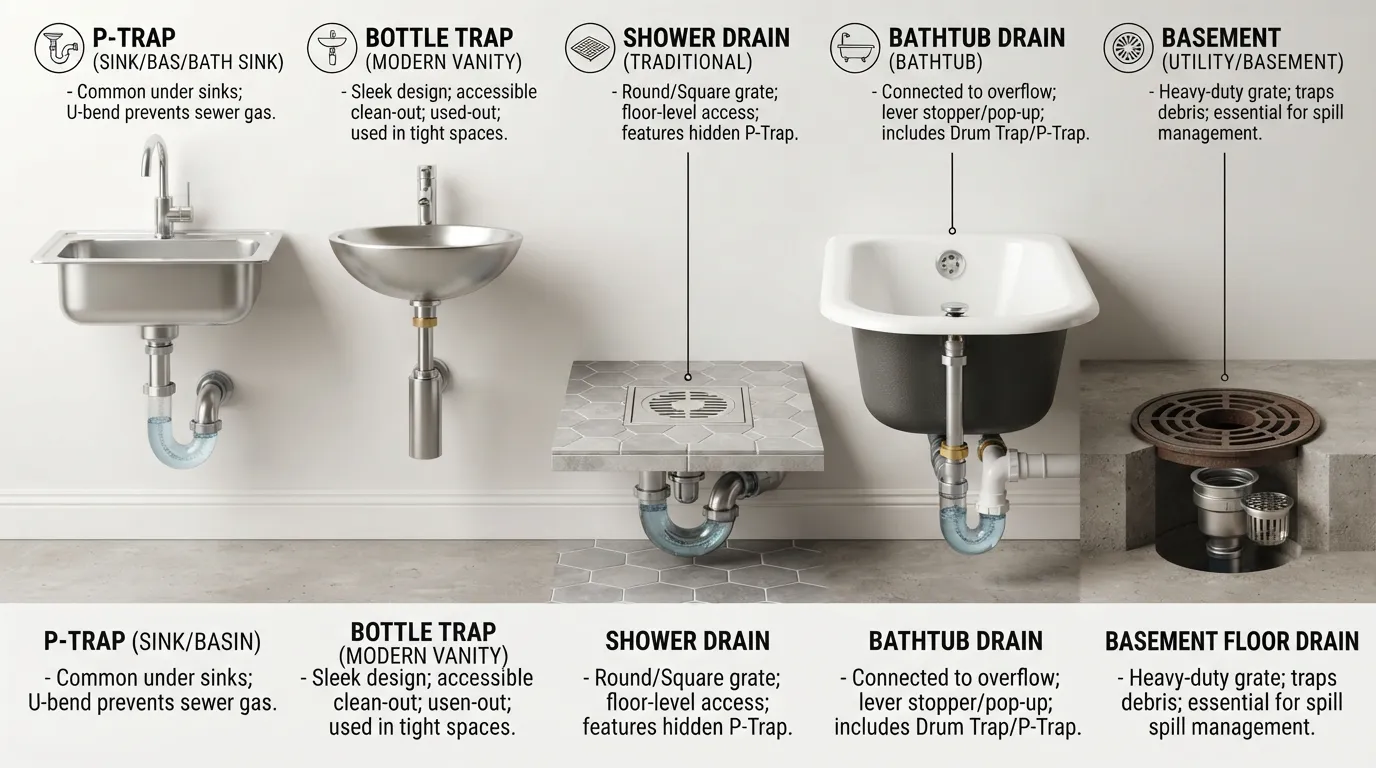
Determining your home’s drainage layout prevents accidental illegal dumping and protects your property from basement flooding. Homeowners can verify their pipe configurations by observing property layouts, inspecting property maps, or performing controlled flow tests.
- Review Property Plans: Check your municipal or builder-provided plumbing blueprints to trace your lateral lines.
- Inspect Cleanouts: Locate your main cleanout access pipe in the basement or yard to see where wastewater exits.
- Consult City Records: Contact your local public works department to confirm whether your street utilizes separated or combined lines.
Sump Pumps & Downspouts Which System Should They Go To?
Directing roof runoff or groundwater into the wrong pipe network can overload your indoor plumbing and violate local housing codes. Both sump pumps and roof downspouts must discharge strictly into storm systems or daylight yards rather than sanitary sewers.
- Downspout Placement: Extend roof spouts at least five feet away from your foundation to direct water toward surface storm paths.
- Sump Pump Routing: Hook up discharge hoses to surface drainage or street storm connections to avoid adding excess volume to indoor plumbing.
- Legal Compliance: Check municipal ordinances, as routing clear water into sanitary lines often carries heavy fines.
When to Call a Professional Plumber vs. Your City
Knowing who is responsible for a drainage failure saves you from paying out-of-pocket for public infrastructure repairs. Homeowners manage private property lines, while municipal crews maintain the main lines running beneath the public street.
- Private Property Issues: Hire a licensed plumber if backups happen exclusively inside your fixtures or private yard lateral.
- Municipal Line Failures: Contact the city if street grates overflow, manholes bubble up, or multiple neighbors experience identical backups.
- Professional Inspection: Request a camera scope to pinpoint whether a clog or break sits on your side of the property line.
What You Should Never Put Down a Storm Drain
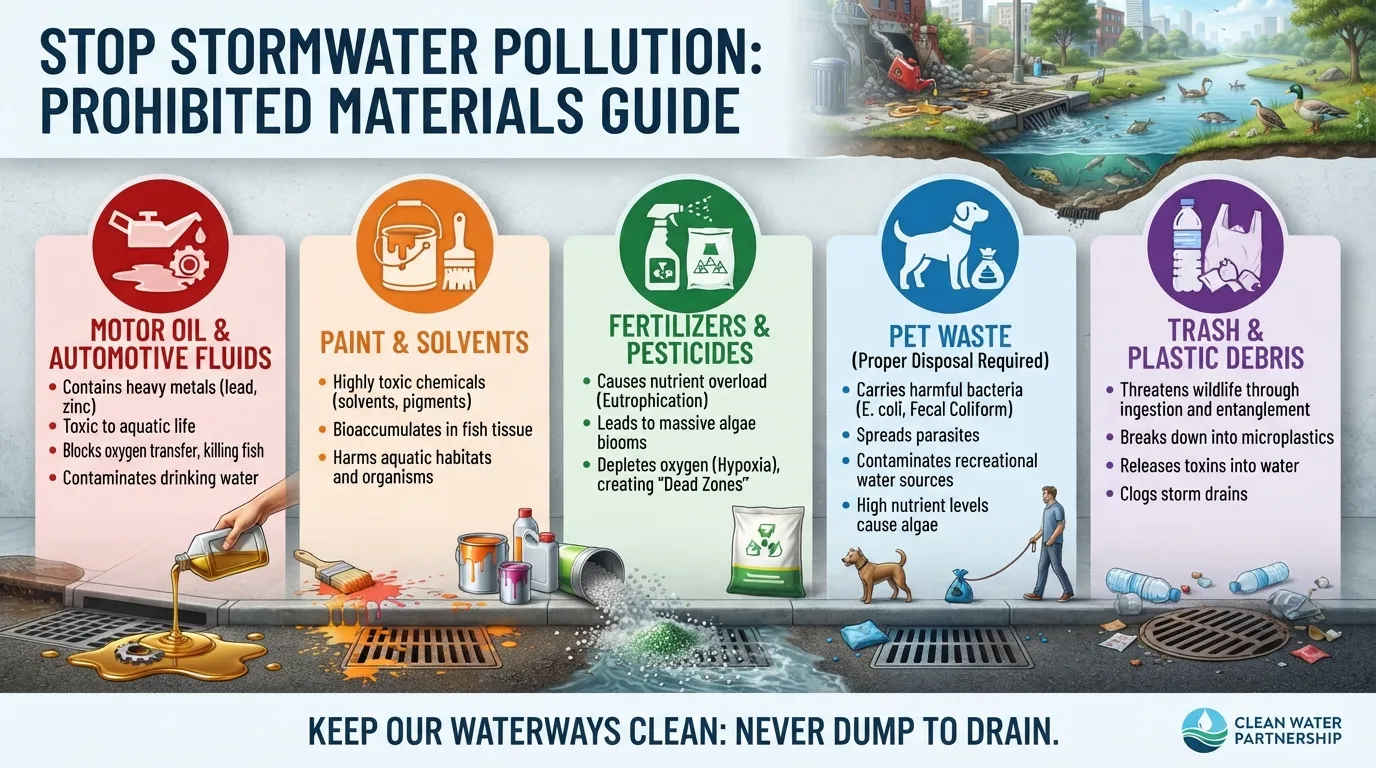
Releasing hazardous household items into street grates causes immediate, toxic damage to local ecosystems. Municipal regulations classify dumping these substances as an illegal discharge, carrying heavy environmental fines.
- Motor Oil: Automotive fluids coat waterways, starving aquatic life of oxygen and poisoning wildlife.
- Paint and Solvents: Chemical paints introduce toxic compounds directly into nature without filtration.
- Pesticides and Fertilizers: Excess garden chemicals trigger massive, suffocating algae blooms in local lakes.
- Detergents and Yard Waste: Soaps and decaying leaves introduce high nutrient loads that disrupt aquatic ecosystems.
Does Sewage Go Into Storm Drains?
Raw sewage never belongs in a storm drain. Because storm networks lead directly to open waterways without treatment, routing sewage or indoor greywater into them creates a severe biological health hazard.
- Unfiltered Pathogens: Human waste introduced into storm systems brings raw bacteria and viruses straight into public rivers.
- Plumbing Violations: Hooking indoor toilets or sinks to storm pipes violates local building codes and environmental laws.
- Direct Exposure: Children and pets playing near local creeks face immediate health risks from contaminated stormwater.
Can You Drain Pool Water or Stormwater Into the Sewer?
Routing swimming pool water or heavy property stormwater into a sanitary sewer is strictly prohibited in most municipalities. Doing so overloads treatment plants with clear water, while pool chemicals can destroy beneficial bacteria used in wastewater processing.
- Dechlorinating Pool Water: Pools must be de-chlorinated and emptied slowly onto lawns or approved storm channels, never down indoor drains.
- Overloading Treatment Plants: Dumping clear pool or rainwater into sanitary lines triggers plant backups and overflows.
- Alternative Drainage: Direct all surface runoff and clear discharge toward yard daylighting or municipal storm inlets.
Is It Illegal to Dump Into a Storm Drain? Fines & Legal Consequences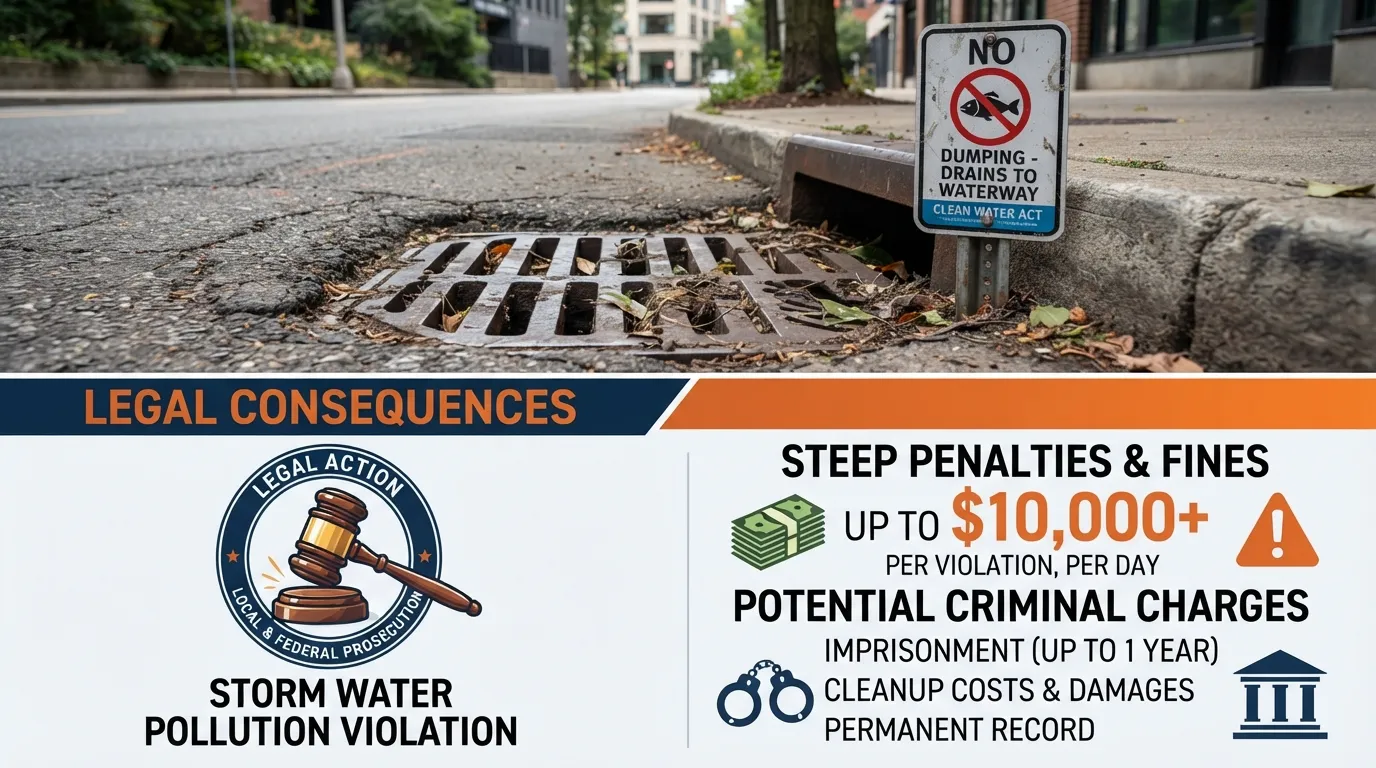
Yes, dumping yard waste like leaves and grass clippings down a street storm drain is strictly illegal in most municipalities. While organic debris seems harmless, decomposing leaves inside storm pipes rob local waterways of oxygen and clog subterranean flood control channels.
- Nutrient Overload: Rotting plant matter releases high levels of nitrogen and phosphorus into streams, sparking toxic algae blooms.
- Drainage Blockages: Accumulating leaves create severe localized street flooding during subsequent rainstorms.
- Code Violations: Local ordinances treat yard waste dumping as an illegal discharge equivalent to littering.
Real Fine Examples & Legal Framework Clean Water Act EPA Local Ordinances
Federal and local environmental laws strictly govern municipal drainage systems to protect public waterways from toxic contamination. Under the federal Clean Water Act regulated by the EPA, introducing unauthorized pollutants into a storm network is classified as an illicit discharge.
- Federal Penalties: Commercial and residential violators face steep daily civil fines under federal EPA enforcement guidelines.
- Municipal Citations: Local cities routinely issue individual fines ranging from hundreds to thousands of dollars per incident for illegal dumping.
- Criminal Liability: Severe or intentional industrial dumping violations can result in criminal prosecution and mandatory environmental remediation orders.
How to Report Illegal Dumping
Active community reporting helps municipal authorities catch polluters and protect fragile local watersheds from contamination. If you spot suspicious activity, quick action can prevent long-term ecological damage.
- Document the Incident: Take photos or record video safely, noting the exact location, time, and vehicle license plates if applicable.
- Contact Local Authorities: Reach out to your city’s public works department, environmental protection agency, or local water district hotline.
- Identify Red Flags: Report unusual chemical odors, soapy sheens, bright discolored water, or dead fish near storm outfalls.
Who Is Responsible for Storm Drains and Sewers?
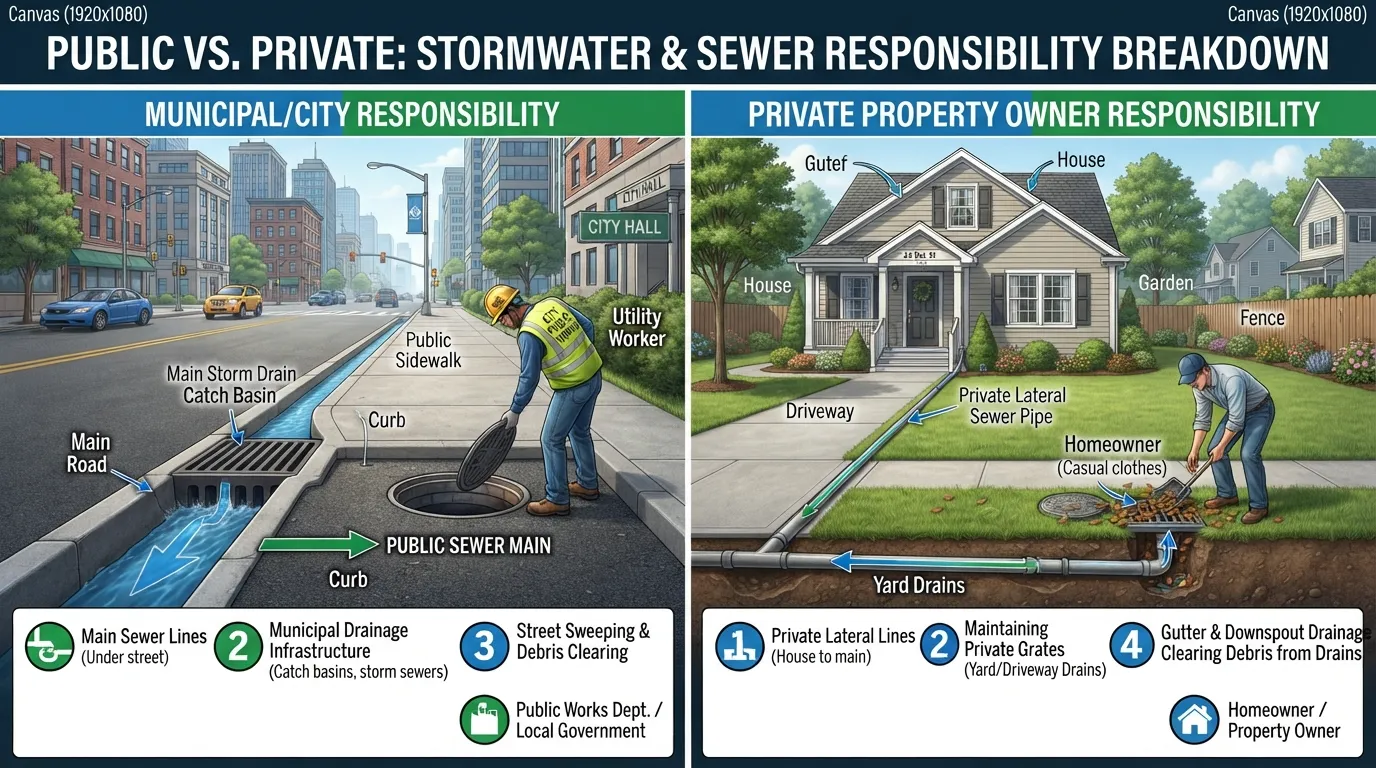
Infrastructure ownership is divided cleanly at your property line, separating public maintenance duties from private homeowner obligations. The municipal Department of Public Works or your local HOA maintains the main street lines, while property owners handle lateral connections.
- Public Infrastructure: The city manages street-level grates, main trunk lines, and regional wastewater treatment plants.
- Private Lateral Lines: Homeowners are legally responsible for clearing and repairing the private pipes connecting their house to the main street mains.
- Shared Property Zones: Townhomes and shared complexes often have explicit homeowner association bylaws defining drainage maintenance responsibilities.
How Often Should Storm Drains Be Cleaned?
Municipalities typically clean public storm systems once or twice a year, while private catch basins require seasonal maintenance. Sticking to a consistent maintenance schedule prevents severe clogs and protects against sudden property flooding during heavy storms.
- Municipal Cleanouts: Cities flush main storm lines and clear street grates annually before peak autumn leaf fall and spring storm seasons.
- Commercial Catch Basins: Parking lot and commercial property drains require professional vacuum cleaning every 6 to 12 months.
- Residential Inlets: Homeowners should manually clear yard grates and driveway drains monthly and immediately after major windstorms.
Storm Drain vs French Drain vs Septic System Don’t Confuse These
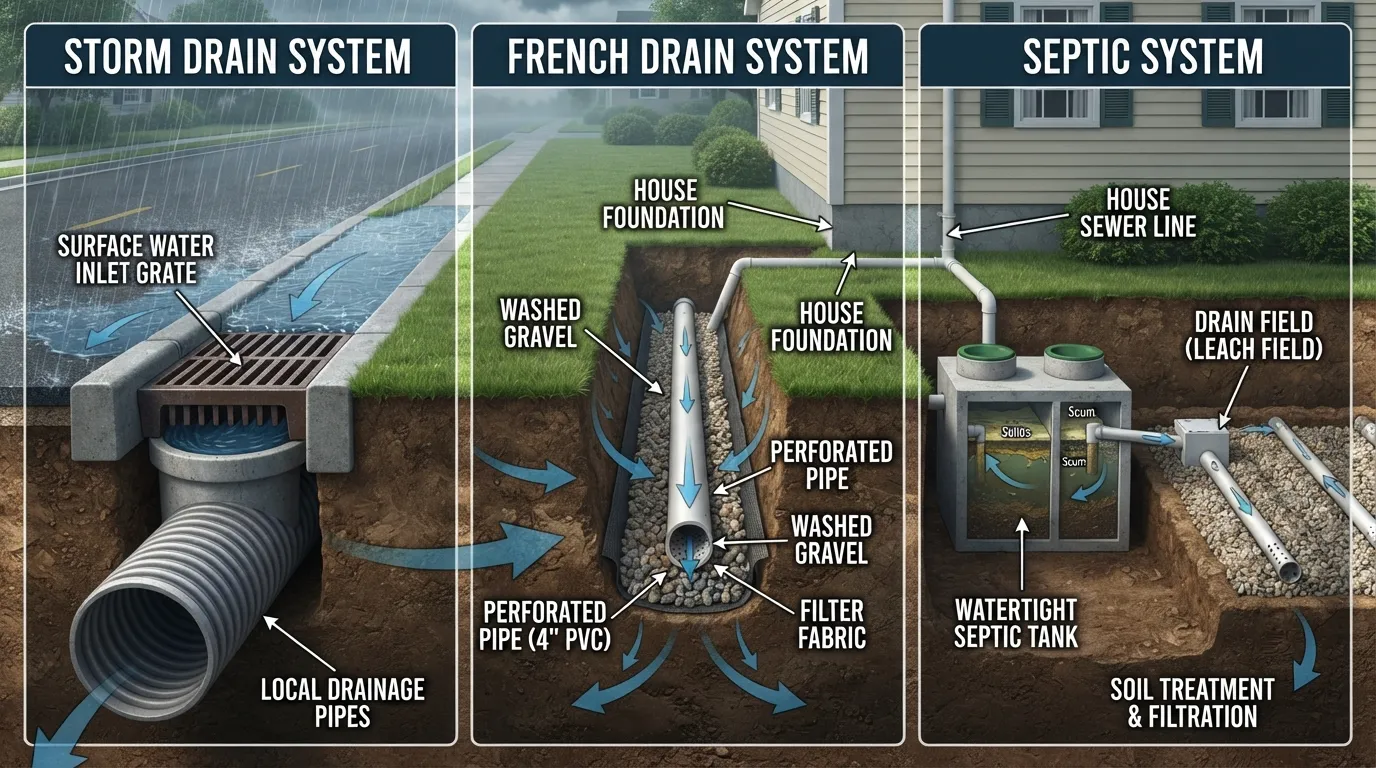
A French drain is a specialized landscape drainage solution engineered to redirect surface water and groundwater away from building foundations. Unlike a municipal storm drain that handles entire street networks, a French drain uses a perforated pipe surrounded by gravel to collect and disperse water locally.
- Design Structure: A trench filled with gravel and a sloped, holed pipe that captures water along its entire underground length.
- Primary Function: Relieving hydrostatic pressure against basement walls and preventing soggy patches in residential yards.
- Destination Difference: Water collects in the gravel bed and safely percolates into the surrounding soil or flows toward a daylight discharge point, completely separate from city systems.
Septic Systems vs Sanitary Sewers
While both systems handle indoor household wastewater, a sanitary sewer routes waste to a centralized public facility, whereas a septic system treats wastewater locally on private property. Properties without municipal utility access rely entirely on an underground septic tank and a dedicated drain field.
- Decentralized Treatment: Septic tanks break down solid waste biologically underground before filtering liquid effluent through surrounding soil.
- Location Independence: Commonly installed in rural or suburban areas where municipal sewer infrastructure is unavailable.
- Maintenance Obligations: Property owners must pump tanks every 3 to 5 years and protect their drain fields from heavy vehicle weight to prevent system failure.
Common Problems Clogged Drains Flooding & Sewer Backups
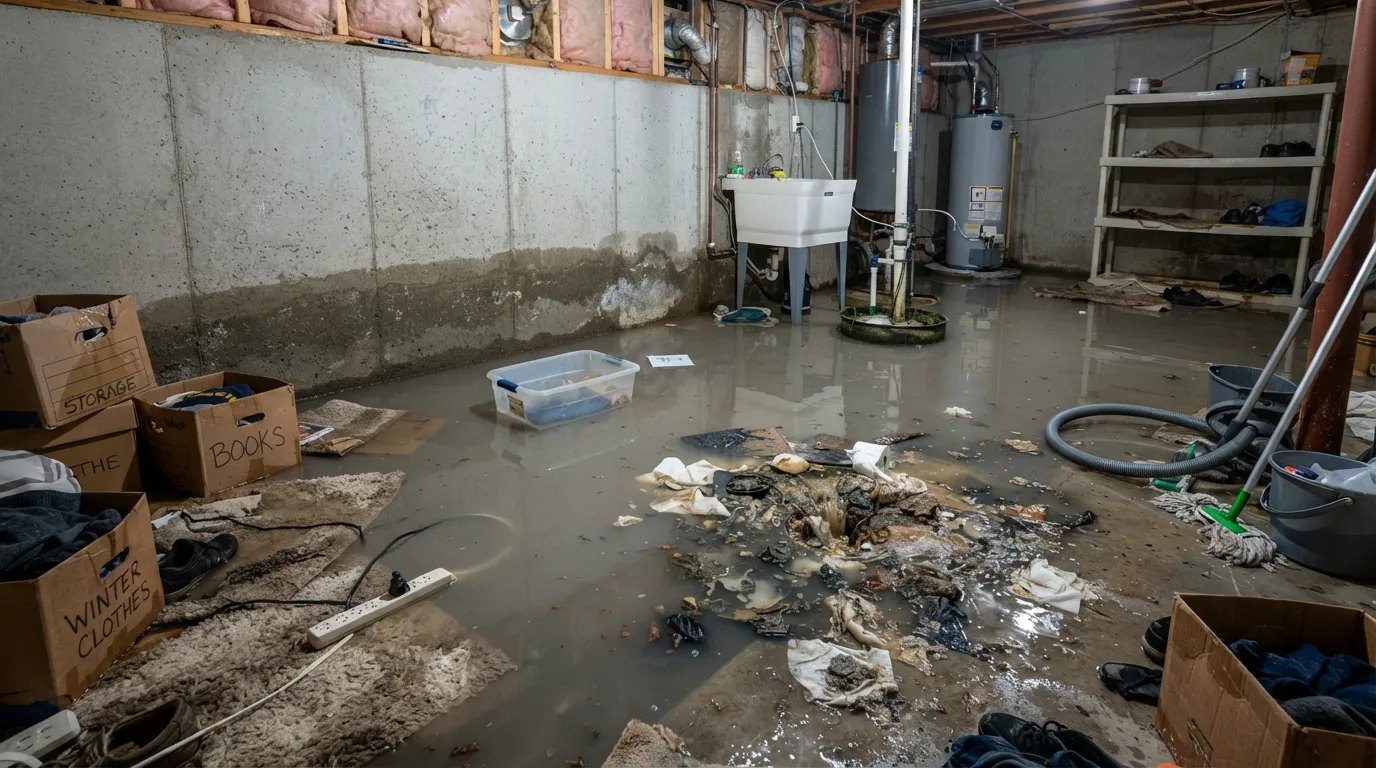
Storm drain clogs manifest outdoors as standing water, pooling around curb inlets, and sluggish runoff after a storm. Catch basins packed with debris stop rainwater from draining properly, creating localized hazards.
- Surface Flooding: Large puddles forming around street grates, driveways, or low-lying yard areas during light rain.
- Slow Yard Drainage: Water taking hours or days to recede after rainfall stops completely.
- Debris Accumulation: Visible blockages composed of packed leaves, plastic trash, and silt choking the metal grate openings.
Signs of a Sanitary Sewer Backup
Sanitary line failures present interior health hazards with foul odors and contaminated wastewater rising through indoor plumbing fixtures. Catching these warning signs early prevents catastrophic property damage and raw sewage exposure.
- Gurgling Drains: Strange bubbling or gurgling sounds coming from toilets or tubs when running water elsewhere.
- Multiple Fixture Backups: Water or raw waste backing up into shower basins or floor drains when flushing the toilet.
- Foul Sewage Odors: Persistent, sulfur-like sewer smells lingering around indoor drains or basement utility rooms.
Cost to Install or Repair a Storm & Sewer Line
Repairing or replacing underground drainage lines varies widely based on depth, location, and whether excavation or trenchless methods are required. Spot repairs typically range from $600 to $3,800, while full lateral replacements can run between $3,000 and $7,000+ depending on linear footage and surface restoration.
- Spot Repairs: Fixing localized cracks or root damage typically costs $600 to $1,050 for a targeted section.
- Trenchless Rehabilitation: CIPP pipe lining ranges from $60 to $250 per linear foot, minimizing extensive yard excavation.
- Full Line Replacement: Traditional open-trench replacement averages $2,500 to $7,000+ for residential lines depending on hardscape obstacles.
Environmental Impact Stormwater Pollution & Wildlife Safety
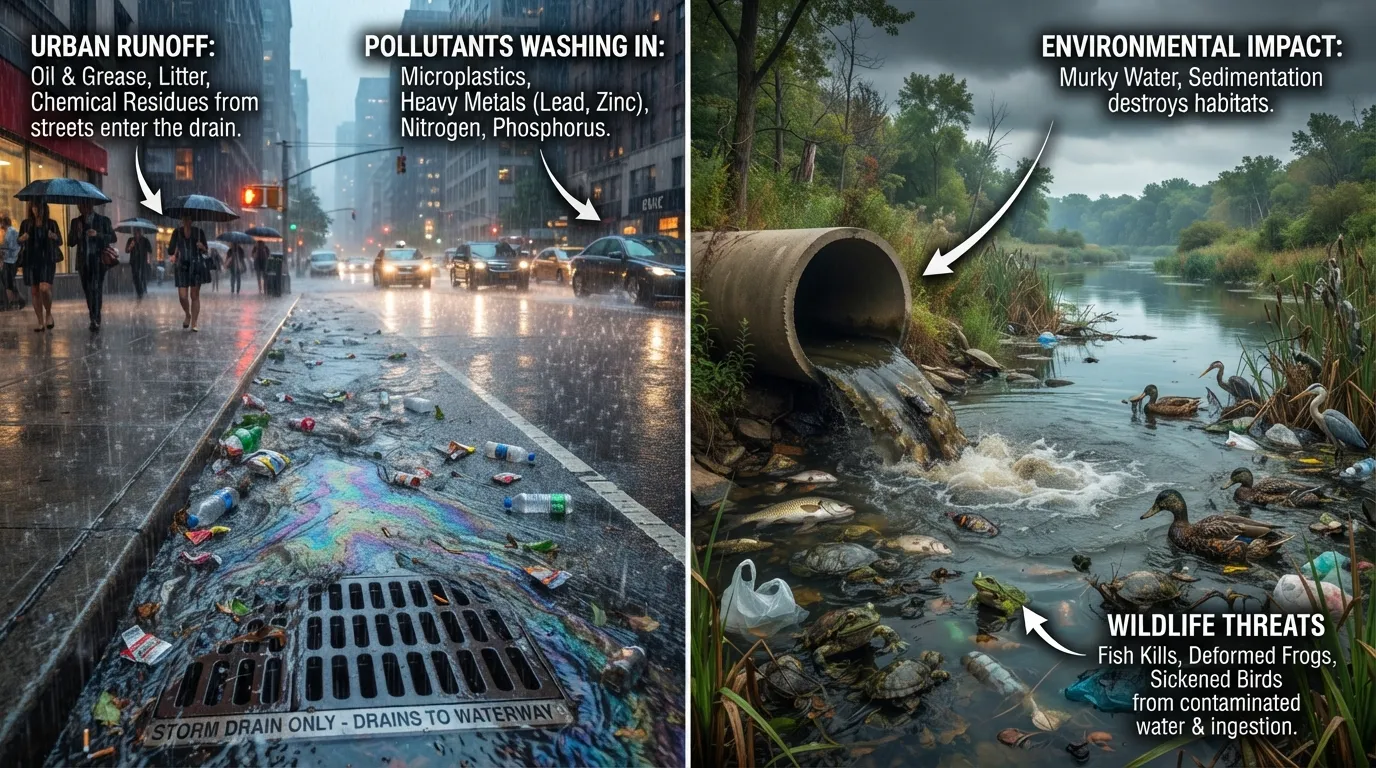
The single greatest problem with stormwater runoff is nonpoint source pollution, which sweeps urban toxins, heavy metals, and litter directly into natural waterways without filtration. Because storm networks bypass treatment facilities entirely, this widespread contamination degrades entire aquatic ecosystems and poisons drinking water reservoirs.
- Unfiltered Chemical Transport: Rain washes accumulated oils, pesticides, and road salt straight into fragile lakes and rivers.
- Habitat Degradation: Silt and heavy debris smother aquatic spawning grounds, killing fish and beneficial bottom-dwelling organisms.
- Algal Blooms: Nutrient runoff from fertilizers triggers massive plant growth that suffocates oxygen levels in local aquatic habitats.
Wildlife & Pet Safety Around Storm Drains
Open storm grates present hidden physical dangers to free-roaming wildlife, neighborhood pets, and curious young animals. Wide bar spacings and deep drop-offs turn standard street inlets into dangerous traps.
- Animal Entrapment: Small pets, ducklings, and frogs frequently slip through wide grate bars and become trapped in concrete vaults.
- Toxic Ingestion: Animals drinking standing stormwater face poisoning from concentrated chemical pollutants and automotive fluids.
- Preventative Measures: Communities install wildlife ramps and specialized grates while urging residents to cover open catch basins securely.
Frequently Asked Questions
Are Sewer and Storm Drains the Same?
No, they are completely separate systems designed for entirely different purposes. Storm drains collect untreated rainwater runoff from streets and carry it directly to local waterways, while sanitary sewers transport used wastewater from indoor plumbing fixtures to a treatment plant.
- Distinct Destinations: Storm water enters nature untreated; sewer water undergoes rigorous biological and chemical processing.
- Separate Infrastructure: Municipalities use distinct underground pipe networks to prevent treatment facilities from overflowing.
Are Storm Drains Connected to Sewers?
In modern separated municipal infrastructure, storm drains and sanitary sewers are never connected. However, older metropolitan areas historically utilized combined sewer systems that merge stormwater and household sewage into a single shared pipe.
- Modern Separation: Current civil engineering standards mandate independent routing to protect public health and local ecosystems.
- Legacy Exceptions: Older cities still rely on combined networks that can trigger overflow events during heavy storms.
Are Storm Sewers and Sanitary Sewers Ever Connected?
Yes, but only in legacy combined sewer systems found in older urban areas. In these rare networks, both types of water flow into the same trunk lines, which works fine during dry weather but creates contamination risks during heavy rainstorms.
- Combined Systems: Shared conduits route household waste and street runoff together to a treatment plant.
- Overflow Risks: Severe storms can overwhelm these legacy systems, causing raw sewage mixtures to discharge into rivers.
Are Roof Drains Connected to Sewers?
Roof downspouts should connect to surface storm drainage, daylight yards, or local storm systems rather than sanitary sewers. Routing clear rainwater into sanitary lines overloads indoor plumbing and violates local building and housing codes.
- Code Compliance: Municipalities strictly prohibit directing clear roof runoff into indoor wastewater lines.
- Basement Protection: Proper downspout extensions prevent water from pooling near home foundations and flooding basements.
How Can I Hide My Sewer Drain in My Yard?
You can conceal ugly yard cleanouts or utility pipes using smart landscaping techniques while maintaining quick accessibility for plumbing maintenance. Never permanently seal or bury cleanout caps beneath concrete or heavy structures.
- Decorative Covers: Use lightweight, vented faux rocks or garden ornaments designed specifically to conceal cleanout pipes.
- Strategic Planting: Surround the area with ornamental grasses or perennial shrubs that provide easy access when plumbing service is needed.
How Can I Prevent Blockages in Drains and Sewers?
Preventing blockages requires disciplined household habits and regular seasonal maintenance across both indoor fixtures and outdoor yard inlets. Simple preventive steps protect your home from costly emergency backups.
- Indoor Habits: Never pour cooking grease down sinks or flush items labeled as flushable wipes.
- Outdoor Upkeep: Keep street grates and yard catch basins clear of fallen leaves, trash, and heavy debris year-round.
Key Takeaways Conclusion
Understanding the fundamental boundaries between municipal drainage networks protects your property, preserves local ecosystems, and prevents expensive plumbing emergencies. Respecting these system limits ensures proper urban sanitation and environmental safety.
- Separated Systems: Storm drains handle untreated rainwater runoff directly into nature, while sewer drains route indoor wastewater to treatment plants.
- Environmental Protection: Never dump chemicals, oil, or yard waste into storm grates to avoid toxic ecological damage and heavy federal fines.
- Property Responsibility: Homeowners maintain private lateral lines, while municipalities manage public streets, main trunk lines, and regional treatment facilities.

Oscar Vance | Master Plumber & Drainage Expert
Meet Oscar Vance, a licensed master plumber sharing practical solutions on residential repairs, preventive maintenance, and thoughtful home upkeep.