Can You Use RID-X in Regular Plumbing?
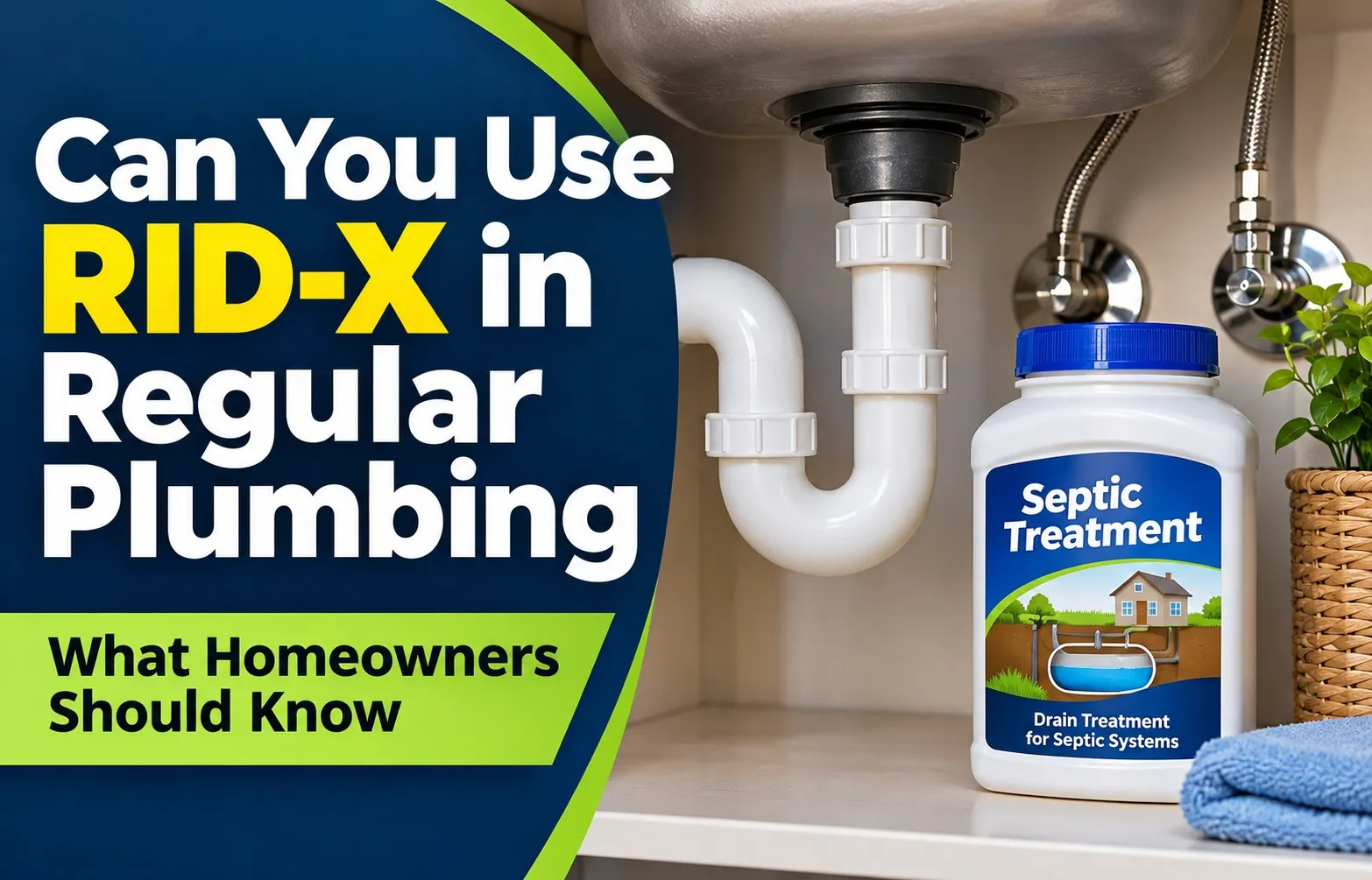 You can safely pour or flush RID-X into regular plumbing connected to a municipal sewer system without causing corrosion or melting your pipes. Because the product uses natural bacteria and biological enzymes rather than harsh chemicals, it will not damage PVC, ABS, copper, or cast iron drain lines. However, using RID-X in city plumbing is entirely ineffective for maintaining pipes or preventing blockages, making it an unnecessary expense for non-septic homes.
Can You Use RID-X in Regular Plumbing?
RID-X is formulated strictly as a continuous biological maintenance additive for septic tanks, not as an active drain cleaner for household pipes. While the formula is completely non-corrosive and safe for all standard residential plumbing materials, its application in city-connected drains provides no operational benefit.
Understanding how RID-X interacts with standard home fixtures comes down to three basic factors:
- Chemical Safety: It contains zero caustic lye, sulfuric acid, or harsh agents, ensuring your PVC, copper, and cast iron pipes remain completely unharmed.
- Biological Target: The enzymes and bacterial cultures require stagnant waste layers inside a sealed septic tank to settle, germinate, and digest solid organic mass.
- Functional Reality: In regular municipal plumbing, normal daily water usage flushes the active bacteria down the main sewer line within seconds before any enzymatic digestion can occur.
Why Homeowners Live Under the “Septic vs. Sewer” Misconception
Many homeowners confuse septic tank maintenance with routine residential drain cleaning due to overlapping marketing terms like “organic waste breakdown” and “pipe protection.” This leads to frequent misuse of septic additives in standard municipal sewer setups.
The confusion typically stems from a basic misunderstanding of how waste travels once it leaves your household drains:
- Municipal Sewer Systems: Rely on continuous water flow, gravity, and municipal treatment facilities to move household waste away rapidly without requiring localized bacterial breakdown inside the home’s pipe network.
- Septic Systems: Depend on an isolated underground holding tank where bacteria must actively break down solids over weeks and months to prevent the tank from overflowing into the drainfield.
The Science of Failure: Why RID-X Does Not Work in City Sewer Lines
RID-X fails in municipal plumbing because it lacks the crucial element of retention time required for biological activity to take effect. While septic tanks act as dark, undisturbed incubation chambers where organic waste can rest for days or weeks, city plumbing operates under high-flow fluid dynamics that flush substances away almost instantly.
The Retention Time Principle: Incubation Chamber vs. Rapid Flow
The core mechanism behind septic tank additives relies heavily on fluid retention time to allow bacterial cultures to multiply and break down solids. In a residential home connected to a municipal sewer system, this retention time is entirely absent due to the physics of standard drainage.
The fundamental structural differences between the two systems include:
- Septic Holding Tanks: Provide a static environment where water and waste separate into layers, giving specialized bacteria hours or days to digest organic matter undisturbed.
- City Sewer Pipes: Feature rapid, pressurized, and gravity-fed fluid dynamics that push wastewater through household pipes and into the municipal main line within seconds.
- System Dilution: The massive volume of daily water usage in a city home instantly dilutes any concentration of enzymes before they can establish contact with pipe walls.
Bacterial Digestion Requirements: How Bacteria Colonize Organic Waste
Successful biological degradation depends on active bacteria successfully colonizing organic waste surfaces through sustained, long-term contact. In a proper septic environment, anaerobic digestion thrives because bacterial cultures can anchor themselves and multiply directly on floating scum and settled sludge layers.
Without a stable environment, the digestion process breaks down entirely:
- Surface Attachment: Bacteria require stationary organic targets to adhere to and form active colonies capable of secreting specialized waste-eating enzymes.
- Environmental Stability: Changes in water temperature, chemical exposure from household soaps, and rapid flushing prevent bacterial strains from stabilizing inside standard PVC or cast iron pipes.
- Lack of Substrate: Regular drain lines rarely contain the thick, stagnant sludge blankets necessary to sustain the multi-stage bacterial life cycles found in septic environments.
Why Flushed Enzymes Leave Your System Before Working
Digestive enzymes introduced into a residential toilet or sink are carried away by normal household water usage before they can break down accumulated grease or soap scum. Because the municipal main line moves wastewater continuously toward city treatment plants, any introduced treatment is evacuated long before it can perform its intended function.
The timeline of a flushed enzyme treatment highlights why municipal use is ineffective:
- Application Phase: Powder or liquid RID-X is flushed down a toilet or poured down a sink drain into the household plumbing network.
- Immediate Evacuation: The next flush of a toilet or run of a faucet washes the active components past the P-trap and into the municipal main line within seconds.
- Municipal Transport: The enzymes are carried miles away into public wastewater treatment facilities, leaving household pipes completely unaffected by the treatment.
Material Compatibility & Pipe Safety Breakdowns
A primary concern for homeowners considering RID-X for regular plumbing is whether the formula will chemically react with or damage domestic drainage lines. Because RID-X utilizes non-corrosive biological enzymes and natural bacterial spores rather than volatile acids or alkaline bases, it poses zero chemical risk to standard plumbing materials. However, improper application of dry powdered formulas can introduce physical obstruction risks within household P-traps.
Pipe Material Reaction Matrix: PVC, ABS, Cast Iron, and Copper
Unlike chemical drain openers that generate aggressive exothermic reactions, biological treatments are completely inert when contacting common plumbing alloys and polymers. The active bacteria target organic carbon bonds exclusively, leaving synthetic and metallic pipe walls unaffected.
RID-X vs. Chemical Drain Cleaners: Corrosive Acid vs. Biological Enzymes
The distinction between biological septic additives and conventional chemical drain unblockers comes down to how each product attempts to clear organic mass. Chemical cleaners rely on aggressive molecular destruction, whereas biological formulations utilize targeted enzymatic digestion.
Evaluating chemical safety parameters shows a stark contrast in pipe preservation:
- Chemical Openers (Lye/Sulfuric Acid): Use high-heat exothermic reactions and extreme pH shifts to dissolve hair and grease. These corrosive chemicals frequently melt PVC joints, crack porcelain fixtures, and eat through corroded cast iron pipes.
- Biological Formulas (RID-X): Rely on cellulase, lipase, protease, and amylase enzymes to digest starches, fats, and paper fibers. They operate at a neutral pH and generate no heat, ensuring total pipe safety.
Can Overusing RID-X Cause Sludge Clumping or Toilet Pipe Backups?
While RID-X will not corrode pipes, pouring excess dry powder directly into small household drains presents a physical clumping hazard. If dry granular formulas are dumped into fixtures with low water flow or pre-existing slow drains, the powder can settle inside the P-trap and harden into a dense sludge barrier.
To avoid introducing a mechanical powder blockage into regular plumbing, observe these safety practices:
- Dissolve Before Pouring: Always pre-mix dry powdered treatments in a bucket of warm water to fully suspend particles before pouring them down a fixture.
- Flush Thoroughly: Follow any application with sufficient water to clear the P-trap and move the solution into the larger branch line.
- Never Use in Clogged Pipes: Avoid pouring dry powders into completely standing water, as the lack of flow guarantees settling and compaction at the base of the drain.
What to Do If You Bought RID-X by Mistake (Safe Disposal & Usage)
If you accidentally purchased RID-X while living in a home connected to a city sewer system, you do not need to throw it directly into the trash or fear damaging your home’s drainage infrastructure. Because the formula consists entirely of natural bacteria and enzymes, it can be safely processed through municipal wastewater facilities. However, disposing of large amounts of dry powder down household fixtures requires proper preparation to avoid creating physical blockages inside your plumbing.
Can You Safely Flush Leftover RID-X Down a City Toilet?
You can safely flush leftover RID-X down a regular city toilet, provided it is introduced gradually with adequate water. The toilet line features the largest drain diameter in a residential home, making it the safest entry point for evacuating unused biological products into the municipal main line.
When clearing out an accidental purchase through your toilet, keep these key factors in mind:
- Wastewater Facility Safety: Municipal water treatment plants utilize biological filtration systems, meaning flushed enzymes and harmless bacteria are easily processed without environmental harm.
- Main Line Passage: The large 3-inch or 4-inch waste pipe attached to your toilet minimizes the risk of powder accumulation compared to narrow sink or shower drains.
- Batch Disposal: Never dump an entire multi-month box or large concentrated liquid dose down the bowl in a single flush, as high concentrations of concentrated powder can settle at the base of the toilet trap.
Step-by-Step Dilution Protocol to Prevent Sink and Toilet Line Clogs
To safely evacuate dry powdered RID-X through household drains without creating physical sludge buildup, follow this controlled dilution procedure before flushing.
Adhere to this step-by-step protocol to clear the product safely through your plumbing:
- Pre-Mix in a Bucket: Pour one cup of powdered product into a standard bucket filled with warm (not hot) tap water to ensure complete particle suspension.
- Stir Thoroughly: Agitate the mixture until the dry granules fully dissolve into a uniform liquid suspension, eliminating raw clumps.
- Pour Into Main Fixture: Slowly pour the slurry directly into the toilet bowl rather than narrow sink drains or fixtures with standing water.
- Perform Immediate Pipe Flushing: Flush the toilet immediately and run additional water for 30 to 60 seconds to push the solution completely past your home’s main lateral line.
Alternative Safe Disposal Methods for Unused Powder and Liquid Packs
If you prefer not to pour unused product down your household drains, several alternative disposal methods allow you to discard dry boxes or liquid packs responsibly without risking your plumbing.
Consider these non-plumbing disposal options for leftover products:
- Standard Household Trash: Sealed, dry powder packets or securely capped liquid bottles can be placed directly into your regular municipal trash bins for standard landfill disposal.
- Outdoor Composting: Because RID-X contains natural digestive enzymes designed to break down organic matter, small amounts of dry powder can be mixed into outdoor garden compost piles to help break down yard waste.
- Neighbor or Septic Gift: Unopened boxes can be passed along to friends, family, or neighbors who rely on active septic systems, where the product can perform as intended.
City Plumbing Alternatives: What Plumbers Actually Recommend
Because RID-X is designed for continuous biological breakdown inside septic tanks rather than fast-flowing residential pipes, licensed plumbers recommend specialized alternatives for city homes. To clear organic slime, hair, and grease in municipal plumbing, homeowners should rely on line-maintenance enzymatic drain cleaners or mechanical tools that target waste buildup inside P-traps and branch lines immediately.
Product Comparison: RID-X vs. Bio-Clean vs. Green Gobbler
Understanding the difference between septic tank additives and city-appropriate drain maintainers prevents wasted money and ensures effective pipe care. Specialized enzymatic drain cleaners formulated for home plumbing adhere quickly to pipe walls to digest organic accumulation despite regular water usage.
Preventive Maintenance: Clearing Organic Slime, Soap Scum, and FOG (Fats, Oils, Grease)
Maintaining residential drains connected to a city sewer line requires targeted strategies designed to eliminate specific waste types before they turn into full blockages. As highlighted in plumbing community insights like the DoItYourself Community Forum Discussion, standard pipe lines respond best to dedicated maintenance products rather than septic treatments.
Licensed plumbers recommend the following preventive maintenance routine for non-septic drains:
- Overnight Enzymatic Gels: Apply specialized enzymatic drain cleaner gels into kitchen and bathroom sinks right before bedtime to give beneficial bacteria 6 to 8 hours of quiet contact time inside the P-trap.
- FOG Management: Never pour fats, oils, or grease down kitchen sinks. Dispose of hot cooking grease in sealed containers to prevent hard coating along the main lateral pipe.
- Routine Hot Water Flushes: Flush kitchen drains weekly with hot tap water to soften accumulating grease coatings and wash away lingering food residue.
Mechanical Tools vs. Biological Solutions: When to Snake, Jet, or Pour
Biological and chemical treatments are designed exclusively for preventive line maintenance—not for clearing complete physical blockages. When a drain stops flowing entirely, mechanical intervention becomes necessary to restore full pipe capacity.
Use this practical guide to choose between mechanical tools and liquid solutions:
- Use a Mechanical Drain Snake (Auger): When dealing with active water backups, localized hair clogs in shower drains, or solid obstructions stuck inside the P-trap.
- Use Professional Hydro-Jetting: When main sewer lines suffer from thick mineral scale, severe grease buildup, or heavy tree root intrusion that liquid treatments cannot dissolve.
- Use Line-Maintenance Enzymes: Pour non-corrosive maintenance gels monthly only after clearing active clogs to keep pipe walls smooth and free of organic slime.
Frequently Asked Questions
Is RID-X good for household drain pipes?
RID-X is safe for household drain pipes, but it provides no practical benefit for regular plumbing connected to city sewers. Because the formula relies on prolonged standing water inside a septic tank to work, normal daily water use washes the active bacteria away before it can clean your pipes.
Will RID-X damage a city sewer main line?
RID-X will not damage a city sewer main line or household pipes because it is entirely bacteria- and enzyme-based. Unlike harsh chemical cleaners containing lye or acid, it is completely non-corrosive and safe for PVC, ABS, copper, and cast iron materials.
Is there something better than RID-X for regular sink and toilet drains?
Yes, bio-enzymatic drain cleaners specifically formulated for pipe maintenance, such as Bio-Clean or Green Gobbler, are much better than RID-X for city drains. These products are designed to cling to pipe walls and digest organic slime, hair, and soap scum under high-flow household conditions.
How long does RID-X take to work if left standing in a P-trap?
RID-X requires hours of undisturbed contact in standing water to germinate and digest organic matter, which rarely happens inside a active P-trap. If left overnight without water running, it may slightly soften surface slime, but dry powder left in standing water risks settling and causing a physical clog.
What do licensed plumbers recommend to keep city drains clear?
Licensed plumbers recommend using a mechanical drain snake for active blockages and applying professional enzymatic drain gels overnight for routine maintenance. To prevent recurring clogs, plumbers advise keeping fats, oils, and grease out of sinks and performing weekly hot water flushes.

Oscar Vance | Master Plumber & Drainage Expert
Meet Oscar Vance, a licensed master plumber sharing practical solutions on residential repairs, preventive maintenance, and thoughtful home upkeep.