How Long Does Plumbing Last in a House?
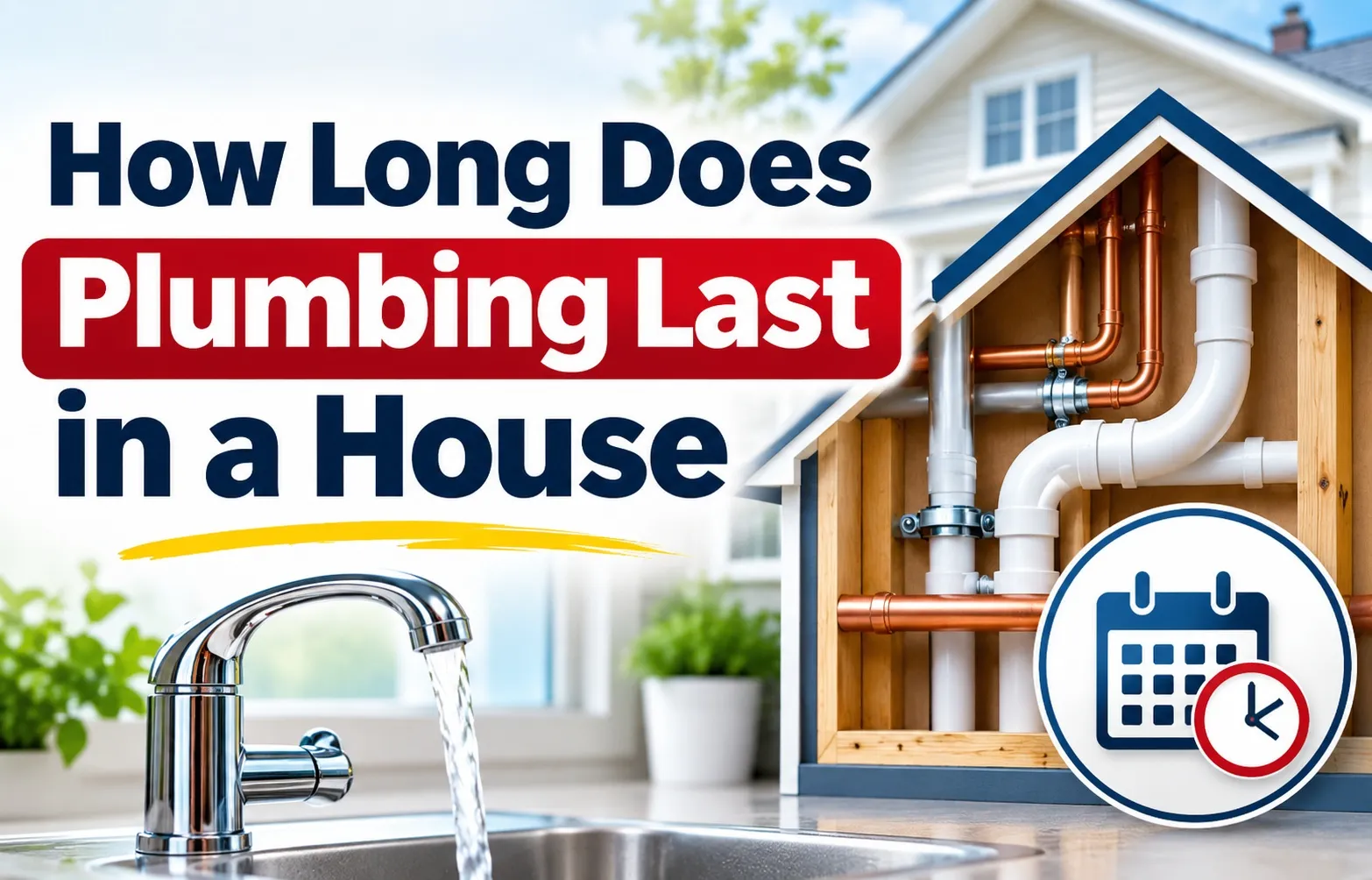 Residential plumbing systems generally last between 50 and 100+ years, depending primarily on the pipe material installed, local water chemistry, and surrounding soil conditions. While main structural lines made of copper or cast iron can endure for nearly a century, interior supply pipes, plastic lines, and fixtures require monitoring as they reach their specific service limits.
Supply Pipes vs. Drain Lines: Key Longevity Differences
Freshwater supply lines operate under continuous hydraulic pressure, typically between 40 and 80 PSI. This constant pressure makes supply lines particularly vulnerable to sudden bursts, joint friction wear, and internal pipe erosion.
The waste drain system relies on gravity rather than pressure to transport wastewater away from the home. Because drain lines are larger in diameter and experience lower mechanical stress, their durability is governed by chemical exposure and material degradation rather than pressure spikes:
- Supply Lines (Copper, PEX, CPVC): Degrade faster under hard water conditions, high water pressure, low pH levels, or excessive municipal chlorine treatment.
- Drain Lines (Cast Iron, PVC, ABS): Exposed to household chemicals, food grease, and sewer gases, leading to eventual bottom-channel corrosion in metal lines or joint seal failures in plastic networks.
- Water Main Connections: The incoming main line life expectancy relies heavily on external factors such as freeze-thaw cycles, tree root invasion, and ground shifting around the municipal tie-in.
Deep-Dive Lifespan Breakdown by Pipe Material
Every plumbing material possesses a distinct chemical composition and structural threshold that dictates how it ages under daily water usage. Understanding the material science behind pipe degradation helps homeowners anticipate structural failures before catastrophic water damage occurs.
Supply Line Longevity (Copper, PEX, Galvanized Steel, CPVC)
Pressurized supply lines face continuous mechanical stress and chemical exposure from minerals and sanitizing agents in municipal water supplies. Different supply materials react to these conditions through specific wear patterns:
- Copper: Highly durable and naturally resistant to bacteria, but vulnerable to acidic water pitting and dezincification over 50 to 70 years, which wears down brass fittings and thinning pipe walls.
- Cross-linked Polyethylene (PEX): A flexible plastic option lasting 40 to 50 years, though it is sensitive to UV light exposure and certain harsh chemical sanitizers found in treated well or city water.
- Galvanized Steel: Iron coated in protective zinc that eventually erodes after 20 to 50 years, triggering severe internal scaling, mineral blockages, and progressive water pressure loss.
- Chlorinated Polyvinyl Chloride (CPVC): Rigid plastic piping capable of handling hot water distribution, though it becomes brittle over time and can warp or fracture under extreme thermal spikes.
A critical chemical hazard in older supply networks is galvanic corrosion. This destructive electrochemical reaction occurs when dissimilar metals—such as a copper pipe directly touching a galvanized steel pipe—react in the presence of water, causing rapid metal deterioration unless a dielectric union is installed.
Drain, Waste, and Vent (DWV) System Lifespan (Cast Iron, PVC, ABS)
Drain, waste, and vent lines operate under gravity rather than high pressure, shifting the primary focus of degradation to chemical erosion and structural settling. While metal and plastic drain lines handle wastewater daily, their lifespans vary based on environmental stressors:
- Cast Iron: Heavy-duty metal pipes that can endure for 75 to 100 years. However, bottom-channel corrosion caused by acidic household waste and sewer gases eventually eats through the pipe invert.
- PVC (Polyvinyl Chloride): The modern standard for sanitary drainage, offering smooth interior walls that resist clogs and lasting 50+ years when properly supported and pitched.
- ABS Plastic: A rigid, black petroleum-based polymer commonly used for drain networks. It offers high impact resistance in cold weather, though improper solvent welding can lead to joint failures over decades.
Outdated & Defective Plumbing Materials to Identify Immediately
Certain historical piping materials pose severe structural and health hazards, requiring immediate professional replacement regardless of how long they have been installed:
- Lead Pipes: Commonly found in homes built before 1986. Lead leaches directly into drinking water, posing acute neurological health risks that demand an immediate full-house repipe.
- Polybutylene (“Poly-B”): Widely used gray or blue flexible plastic piping installed between 1978 and 1995. Poly-B reacts poorly to chlorine disinfectants in municipal water, causing microscopic micro-fractures that lead to sudden, catastrophic pipe ruptures.
Regional & Environmental Factors That Accelerate Plumbing Aging
National averages for pipe longevity rarely tell the full story. Environmental conditions, localized soil composition, and water chemistry can reduce a system’s actual service life by half, causing pipes in one region to fail decades earlier than identical systems installed elsewhere.
How Water Chemistry (pH, Hardness, and Chlorine) Destroys Pipes
The chemical profile of your municipal or well water acts as a continuous internal stressor on supply lines. Even small variations in mineral composition or treatment chemicals drastically alter pipe degradation rates:
- Hard Water Mineral Buildup: High concentrations of calcium and magnesium create heavy scale accumulation inside metal pipes. While mild scaling offers a thin protective barrier, excessive hard water restricts flow, increases friction, and accelerates joint wear.
- Acidic Water pH (Pin-Hole Pitting): Water with a pH below 6.5 aggressively leaches metals from copper piping. A copper supply line designed to last 70 years in balanced water can develop pinhole leaks in as few as 20 years when exposed to acidic well water or mineral-rich aquifers.
- Disinfectant Additives: High municipal chlorine and chloramine levels deteriorate internal rubber seals, gaskets, and plastic polymers like PEX and CPVC, weakening pipe walls from the inside out.
Coastal vs. Inland Lifespans (Florida & California Soil Acid Effects)
External soil chemistry and atmospheric moisture present severe threats to buried main lines and drain networks, particularly in coastal states like Florida and California:
- Soil Acidity and Moisture: Buried cast-iron drain lines and galvanized steel service pipes are vulnerable to external corrosion when installed in acidic, damp soil. Highly acidic ground chemistry eats away the outer pipe wall, causing channel failure long before internal erosion sets in.
- Coastal Salt Air Exposure: Airborne ocean salts accelerate oxidation on exposed copper lines, brass valves, and water heaters located in unconditioned spaces like garages, outdoor utility closets, or crawlspaces.
- High Water Tables: Coastal regions with high groundwater levels subject buried drainage pipes to constant exterior moisture and ground shifting, increasing joint separation risk in cast-iron and clay pipe networks.
Water Pressure Spikes & Thermal Expansion Fatigue
Unmanaged mechanical forces inside the home accelerate wear across all piping materials, shortening overall system lifespan through continuous physical stress:
- High PSI Wear: Water pressure exceeding 80 PSI subjects pipe walls, soldered joints, and appliance connections to extreme structural strain. Over time, high PSI causes microscopic joint weakening and premature fitting failure.
- Water Hammer Shockwaves: Sudden shutoffs from fast-closing solenoid valves (found in washing machines and dishwashers) send high-velocity pressure waves through supply lines. This shockwave creates mechanical vibration that loosens mounting straps and fatigue-cracks rigid metal pipes.
- Thermal Expansion Fatigue: As water heats up inside closed plumbing systems, it expands. Without an expansion tank to absorb excess volume, repetitive thermal expansion and contraction cycles stress CPVC, PEX, and copper joints, leading to hairline fractures over years of daily heating cycles.
Lifespans of Water Heaters, Valves, and Fixtures
A home’s plumbing system relies on numerous mechanical appliances, control valves, and end-point fixtures that age faster than structural supply and drain lines. Managing these non-pipe components ensures total system reliability and prevents localized leaks from escalating into structural damage.
Tank vs. Tankless Water Heater Life Expectancy
Water heaters are under continuous thermal stress and mineral exposure, making them one of the earliest major plumbing components requiring replacement in any residence:
- Traditional Tank Water Heaters: Last between 8 and 12 years on average. The primary failure point is internal tank rust caused by anode rod degradation. Sacrificial anode rods attract corrosive elements away from the steel lining; inspecting and replacing this rod every 3 to 5 years can effectively double the tank’s operational service life.
- Tankless Water Heaters: Provide an extended lifespan of 20+ years. Because they heat water on demand rather than storing it continuously, tankless systems experience less internal corrosion. However, annual flushing is required to prevent scale buildup on the tankless heat exchanger in hard water areas.
Faucets, Sinks, Shower Valves, and Toilet Components
Terminal fixtures and internal trim kits contain moving parts and soft seals that gradually wear out under daily use and mineral friction:
- Faucets and Shower Valves: Quality brass-bodied faucets and mixing valves last 15 to 20 years. Individual internal faucet cartridges, O-rings, and rubber washers typically require replacement every 5 to 10 years to resolve drips and maintain handle smooth control.
- Sinks and Porcelain Fixtures: Vitreous china toilets, pedestal sinks, and cast-iron basins last 50+ years, often outliving the home’s original piping. Stainless steel kitchen sinks similarly last 20 to 30 years.
- Toilet Internal Valves and Flappers: While the porcelain body remains intact for decades, the internal fill valve and rubber toilet flapper valve degrade within 3 to 5 years due to continuous water exposure and chemical toilet bowl cleaners.
Main Shut-Off Valves and Pressure Reducing Valves (PRVs)
Control valves safeguard your home against unexpected pressure spikes and allow immediate system isolation during emergencies:
- Main Water Shut-Off Valves: Older gate valves tend to stick, freeze, or suffer stem packing leaks after 10 to 20 years of disuse. Modern brass ball valves offer significantly higher reliability, lasting 25 to 50 years with minimal maintenance.
- Pressure Reducing Valves (PRVs): Designed to regulate incoming municipal line pressure down to safe indoor levels (40 to 60 PSI). Internal diaphragms and springs wear down after 7 to 12 years; a failing PRV leads to silent pressure surges that stress fixture seals and supply lines.
6 Critical Warning Signs Your House Plumbing Needs Replacement
Determining whether to perform localized repairs or invest in a full home repipe comes down to identifying widespread structural degradation across your system. Early detection through visual inspections and performance monitoring helps homeowners address aging infrastructure before minor failures turn into catastrophic property damage.
Homeowners can perform a quick diagnostic check across exposed piping in basements, utility closets, and crawlspaces using this warning sign checklist:
- Visual Inspection: Look for flaking rust, chalky deposits, or discolored crust on exposed pipes and joints.
- Water Quality Check: Watch for brownish tinting in hot water or metallic odors during morning tap runs.
- Pressure Testing: Monitor for persistent flow drop-offs when running multiple fixtures simultaneously.
- Structural Signs: Note unexplained floor dampness, wall discolouration, or musty odors near drain lines.
Discolored, Rusty, or Foul-Tasting Tap Water
Water coming out of taps with a yellow, reddish, or brown tint indicates active internal pipe degradation. Flaking oxidized rust inside aging galvanized steel pipes breaks free into the water stream, contaminating drinking water and staining porcelain fixtures. Persistent metallic or earthy tastes often signal advanced pipe wall decay or internal bacterial biofilm buildup in decaying lines.
Frequent Pinhole Leaks and Mysterious Damp Spots
Experiencing recurring pinhole leaks—especially within short timeframes—is a strong indicator of systemic pipe breakdown rather than isolated wear. Acidic water chemistry and velocity erosion create pinhole breaches in copper supply lines, while subterranean slab leaks manifest as unexplained warm spots on flooring, unprompted water meter movement, or damp drywall baseboards.
Unexplained Drops in Water Pressure Across Multiple Fixtures
A gradual or sudden decline in flow rate across several rooms points to internal pipe restriction rather than a clogged faucet aerator. As galvanized steel pipes age, internal scaling and mineral buildup narrow the interior pipe diameter, severely restricting water volume throughout the home.
Visible Corrosion (Blue-Green Crust or Flaking Rust)
Exposed supply pipes under sinks, near water heaters, and in unfinished basements offer clear visual indicators of pipe condition:
- Copper Corrosion: Appears as a powdery or crusty blue-green patina around soldered joints, shut-off valves, and pipe lengths, signaling active chemical oxidation and imminent wall perforation.
- Steel and Iron Corrosion: Manifests as heavy, flaking reddish-brown rust scales around threaded connections and pipe bodies, indicating severe metal loss and structural weakening.
Hydraulic Banging Noises (Water Hammer) and Sewer Odors
Persistent physical noises and persistent gas odors point to structural integrity failures in both supply and drain lines:
- Water Hammer Shock: Loud banging noises inside walls when valves close rapidly reflect severe water hammer shock waves, which stress aging solder joints and accelerate fitting failure over time.
- Sewer Odors and Bellies: Sewer gas smells inside living spaces suggest cracked cast-iron vent stacks or a sunken sewer line belly underground, where sagging pipes trap waste and break gravity seal traps.
Cost of Replacing Plumbing in a House (Repiping Guide)
Whole-house repiping represents a major financial investment, with total costs depending on the overall square footage, accessibility of existing lines, local labor rates, and the chosen piping material. Labor constitutes the largest single expense, typically accounting for 60% to 70% of the total project quote.
Average Repiping Costs by House Size (1,000 to 3,000+ Sq Ft)
Repiping estimates vary proportionally with a home’s size and total fixture count. The following standard cost bands reflect typical turnkey installation pricing, including rough-in labor, materials, permit fees, and standard system testing:
- 1,000 Sq Ft Home: $3,000 to $5,000 for PEX; $6,000 to $10,000+ for copper.
- 1,500 Sq Ft Home: $4,000 to $8,000 for PEX; $8,000 to $15,000+ for copper.
- 2,000 Sq Ft Home: $5,000 to $10,000 for PEX; $10,000 to $20,000+ for copper.
- 3,000+ Sq Ft Home: $8,000 to $14,000+ for PEX; $16,000 to $25,000+ for copper.
Material Cost Comparison: PEX vs. Copper Repiping
The choice between modern synthetic materials and traditional metallic piping significantly drives raw material and labor per linear foot:
Rigid copper lines require open wall channels and soldered elbow fittings at every directional turn, increasing labor hours. Consequently, professional drywall repair costs—which can add $800 to $2,000+ depending on wall damage—must be factored into total copper project budgets.
What Is the Cheapest Way to Repipe a House?
Selecting Cross-linked Polyethylene (PEX) is the most budget-friendly method for whole-house plumbing retrofits. PEX tubing is highly flexible, allowing plumbers to fish continuous lines through wall cavities and floor joists using minimal access holes.
To further optimize whole-house repipe costs without compromising installation quality, consider these practical strategies:
- Utilize PEX-A or PEX-B Tubing: Avoid rigid metallic pipe runs wherever local code permits to save up to 40% on total material and labor expenditures.
- Bundle Wall Repairs Separately: Contract a specialized drywall repair technician rather than paying plumber hourly labor rates for patching, texturing, and painting access holes.
- Schedule During Open Remodels: Coordinate pipe replacement with planned bathroom or kitchen renovations to access hidden plumbing without making standalone demolition cuts.
Insurance & Home Warranty Coverage for Plumbing Replacement
A critical source of confusion for homeowners experiencing pipe failures is determining whether financial protection exists through standard property coverage. While insurance policies cushion against the aftermath of water disasters, they operate under strict structural guidelines regarding maintenance and gradual deterioration.
What Standard Homeowners Insurance Covers (Sudden Water Damage)
Standard carrier policies cover consequential property loss resulting from an instant, unexpected failure within the supply or drain network:
- Sudden and Accidental Water Damage: If a copper pipe or PEX joint experiences an immediate burst, insurance pays for structural repairs, wall demolition, carpet extraction, and secondary mold remediation.
- Consequential Dwelling Restoration: Coverage extends to replacing ruined drywall, hardwood subflooring, and damaged cabinetry triggered directly by the sudden water escape.
- Water Backup Rider Coverage: If an optional sewer backup rider is attached to the policy, losses from clogged main sewer lines or surcharging municipal drains are reimbursed up to specific endorsement limits.
What Insurance Denies (Age, Wear-and-Tear, Polybutylene)
Property policies explicitly separate sudden disaster events from long-term building maintenance responsibilities. Homeowners must understand standard carrier policy exclusions:
- Gradual Wear and Tear Exclusion: Insurance companies strictly refuse to pay for replacing old, corroded, or mineral-clogged pipes themselves. The physical plumbing repair (replacing the leaking pipe section) is always an out-of-pocket homeowner expense.
- Neglect and Slow Leak Exclusions: Claims involving active leaks that show evidence of existing for weeks or months (such as rotten subflooring or long-standing mold) are routinely denied due to unaddressed maintenance issues.
- Defective and High-Risk Material Restrictions: Many top insurance carriers refuse to write new policies—or outright drop existing coverage—for residences containing polybutylene supply lines or un-lined galvanized steel, unless a complete whole-house repipe is completed.
For more detailed policy rules regarding property damage exclusions, review the official Insurance Information Institute policy guidelines.
How to Document Plumbing Age for Coverage Claims
Navigating an active insurance claim or applying for home coverage requires proper documentation of your home’s structural piping condition:
- Professional Plumbing Inspections: Schedule periodic video camera inspections of underground sewer lines and exposed main supply manifolds to verify system integrity before leaks develop.
- Itemized Maintenance Records: Retain dated receipts for anode rod replacements, pressure reducing valve calibrations, and water heater flushes to prove proactive care during claim reviews.
- 4-Point Inspection Reports: When purchasing older homes, ensure a licensed inspector verifies pipe materials, system age, and leak-free performance to prevent unexpected policy denials upon closing.
Proactive Maintenance Checklist to Double Your Plumbing’s Lifespan
Preventative care is the most cost-effective strategy for extending the life of your home’s plumbing system. Implementing a routine maintenance routine minimizes internal mechanical stress, prevents chemical corrosion, and allows homeowners to identify minor vulnerabilities before they cause costly structural leaks.
Following a targeted preventative checklist helps protect both high-pressure supply lines and gravity-fed drain networks from premature failure:
- Maintain incoming water pressure strictly between 40 and 60 PSI: High pressure stresses pipe joints, water heater tanks, and internal fixture valves.
- Install a whole-house water softener if hardness exceeds 7 GPG: Removing excess calcium and magnesium prevents scale buildup in copper supply lines and appliance heating elements.
- Perform sacrificial anode rod replacement every 3 to 5 years: Replacing this protective rod prevents internal steel tank rust, effectively doubling water heater lifespan.
- Eliminate harsh chemical drain cleaners entirely: Chemical drain solvents generate intense exothermic reactions that corrode cast iron lines, melt glue joints, and weaken PVC/ABS pipes.
Water Quality Control (Softeners & Whole-House Filtration)
Controlling water chemistry inside supply lines reduces internal wall wear and chemical degradation. Hard water containing high concentrations of calcium and magnesium deposits crusty scale inside pipe walls, restricting water flow and increasing internal friction.
Installing a whole-house water softener neutralizes these mineral deposits, protecting copper solder joints, PEX fittings, and appliance heat exchangers. Additionally, whole-house carbon filtration systems strip out aggressive municipal chlorine and chloramines, preventing premature plastic polymer degradation in CPVC and PEX lines.
Pressure Management (Installing a PRV)
Unregulated incoming water pressure is a primary cause of premature joint fatigue and appliance line failure. Municipal water mains frequently run at pressures exceeding 90 to 100 PSI, which far surpasses safe residential operating thresholds.
Installing a dedicated Pressure Reducing Valve (PRV) near your main shut-off valve keeps indoor static pressure at a safe setting of 50 to 60 PSI. Pair your PRV with a properly sized thermal expansion tank at the water heater to absorb pressure surges caused by daily water heating cycles.
Drain Care: Avoiding Chemical Cleaners & Grease Build-Up
Maintaining gravity-fed drain, waste, and vent (DWV) systems requires avoiding abrasive chemicals and grease buildup. Commercial caustic drain openers rely on harsh acid or lye formulations that eat away at old cast-iron pipe bottoms and degrade rubber drain couplings.
Safer, long-term drain maintenance methods protect your sewer lines and household drainage pipes:
- Use Enzymatic Drain Cleaners: Natural organic enzymes break down hair, soap scum, and sludge buildup without harming plastic or metal drain pipes.
- Dispose of Cooking Fats Properly: Never pour kitchen grease or oils down sink drains; grease solidifies inside cold sewer pipes, creating stubborn blockages that trap corrosive sewer gases.
- Schedule an Annual Plumbing Inspection: A comprehensive annual checkup by a licensed professional verifies PRV calibration, inspects main valve operation, and catches hidden pinhole leaks before water damage occurs.
Frequently Asked Questions
When should house plumbing be replaced?
House plumbing should be replaced when pipes exceed their expected service life—typically 20 to 50 years for galvanized steel or polybutylene, and 50+ years for copper or cast iron. You should also replace system piping immediately if you experience frequent pinhole leaks, persistent low water pressure, discolored tap water, or visible blue-green crust and rust flaking on exposed lines.
When did builders stop using copper pipes in homes?
Builders did not stop using copper entirely, as copper remains an approved material in modern plumbing code standards; however, its dominant residential use began declining significantly in the late 1990s and early 2000s. The industry experienced major copper replacement trends favoring flexible PEX (cross-linked polyethylene) due to lower raw material costs, ease of installation, and immunity to acid-pitting pinhole leaks.
What is the 135 rule in plumbing code?
The 135 rule in plumbing code requires installing an accessible cleanout fitting whenever a horizontal drainage pipe makes directional turns accumulating to more than 135 degrees (such as a 90-degree bend combined with a 45-degree fitting). Adhering to this design standard prevents excessive waste turbulence, maintains proper gravity flow, and ensures drain-cleaning cables can navigate the line during future maintenance.
Can a shower and toilet share the same drain line?
Yes, a shower and toilet can share the same main branch drain line provided the system is sized correctly according to local plumbing code standards and utilizes proper wet venting. In a compliant wet-vented layout, the shower drain connects downstream of the toilet or enters a shared branch where air displacement prevents the toilet flush from siphoning water out of the shower P-trap.
What is considered top out in residential plumbing?
In residential construction, “top out” (or rough-in top-out) refers to the project phase where all internal supply lines, drain pipes, waste branches, and vent stacks are fully installed through the wall framing and roof penetrations before drywall is closed. A mandatory top-out inspection occurs at this stage, testing the system under water or air pressure to verify leak-free joints, proper drain slope rules, and code compliance.

Oscar Vance | Master Plumber & Drainage Expert
Meet Oscar Vance, a licensed master plumber sharing practical solutions on residential repairs, preventive maintenance, and thoughtful home upkeep.