Understanding Your Home’s Climate Engine
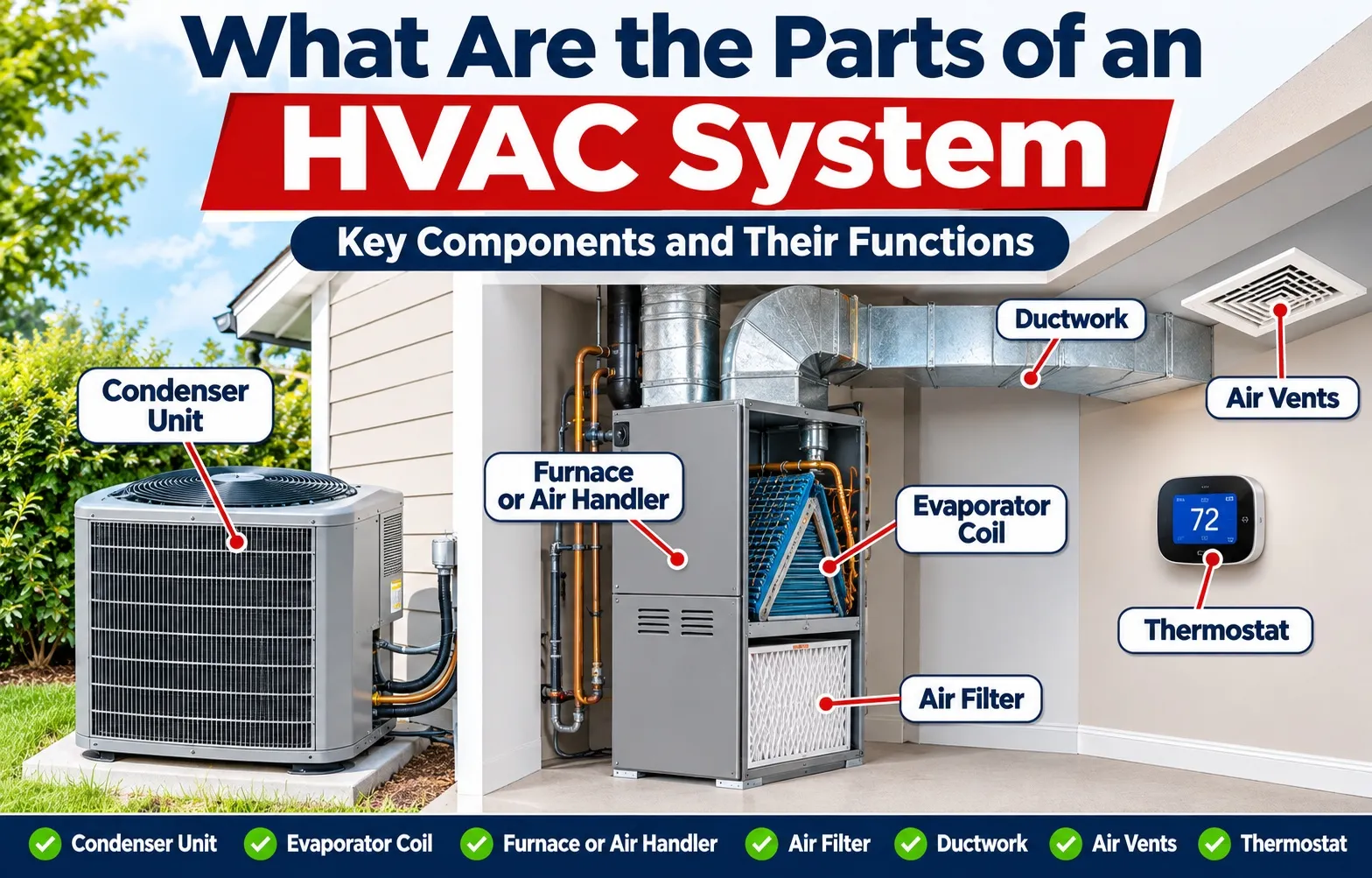 A residential HVAC system is an integrated network of mechanical, electronic, and distribution elements engineered to regulate indoor temperatures, control humidity levels, and maintain optimal indoor air quality throughout changing seasons.
Operating as your home’s central climate engine, it combines heating, ventilation, and air conditioning into a unified setup designed to keep your living environment comfortable and energy-efficient year-round.
The 5 Core Components Every HVAC System Shares
While specific models vary between gas furnaces, electric heat pumps, and packaged rooftop units, every standard residential HVAC setup relies on five foundational components to function correctly.
- The Thermostat: Acts as the digital command center, monitoring ambient room temperatures and signaling the system when to cycle heating or cooling on or off.
- The Heating Unit: Generates and distributes warmth during colder months using a furnace, boiler, or reversible heat pump mechanism.
- The Cooling Unit: Extracts heat and humidity from indoor air through an outdoor condenser unit and indoor evaporator coil working in tandem.
- The Blower Motor and Air Handler: Pushes and pulls conditioned airflow across heat exchangers and coils, distributing it evenly through interior spaces.
- The Ductwork Distribution Network: A series of insulated metal or flexible channels that delivers conditioned air to individual rooms and returns stale air back to the system.
Recognizing how these five core elements work together provides a solid foundation for diagnosing common mechanical failures and scheduling proper preventative maintenance.
The Control & Command Center
The thermostat functions as the intelligent command center of your HVAC system, continuously monitoring indoor temperatures and translating your comfort preferences into precise low-voltage electrical signals that trigger heating, ventilation, or cooling cycles.
Modern climate control relies heavily on advanced tech options rather than simple manual dials to optimize household energy efficiency and comfort.
- Programmable Models: Automate daily temperature setbacks for times when the home is unoccupied to reduce monthly utility costs.
- Smart Thermostats: Utilize machine learning, geofencing, and remote mobile access to automatically adapt to behavioral habits and weather shifts.
- Low-Voltage Communication: Safely transmits 24-volt electrical instructions from the wall unit to the main equipment relays to initiate system startup.
Control Boards and Relays: Managing Electrical Timing and Safety
The system control board and internal relays act as the electronic nervous system, orchestrating electrical timing, managing voltage staging, and enforcing crucial safety limits to prevent equipment damage during heavy-demand cycles.
When the thermostat issues a command, this internal electronic circuitry ensures each mechanical component activates in the correct, safe sequence.
- Voltage Staging: Regulates power delivery so multi-stage compressors and blowers ramp up smoothly rather than drawing sudden electrical spikes.
- Safety Limit Switches: Continuously monitor internal operating temperatures and pressures, immediately cutting power if overheating or restrictions are detected.
- System Relays: Function as heavy-duty electromagnetic switches that handle high-voltage power paths to motors and igniters upon receiving low-voltage triggers.
The Heating Components
Furnaces and boilers serve as the primary thermal engines in residential climate control, burning fossil fuels or utilizing electric resistance to generate and distribute interior warmth during freezing winter conditions.
While forced-air furnaces push warmed air through ductwork, hydronic boilers heat and circulate water through residential radiators or radiant floor loops.
- Natural Gas and Propane Furnaces: Highly efficient forced-air units that combust gas rapidly to heat indoor spaces through integrated blowers.
- Oil-Fired Furnaces: Depend on an on-site storage tank and a specialized atomizer nozzle to generate high-temperature thermal output.
- Residential Boilers: Heat water or produce steam, delivering consistent, silent warmth without relying on duct distribution networks.
The Heat Exchanger: Safe Heat Transfer
The heat exchanger acts as a critical safety barrier inside gas and oil furnaces, absorbing thermal energy from hot combustion gases while keeping toxic fumes entirely isolated from your indoor living environment.
As burners ignite, these heavy-duty metal chambers heat up, transferring warmth directly to the circulating air stream driven by the indoor blower motor.
- Thermal Conduction: High-grade steel or aluminized metal walls transfer heat efficiently without mixing air streams.
- Combustion Gas Isolation: Dangerous exhaust byproducts, including carbon monoxide, are safely contained and routed outdoors through flue pipes.
- Structural Integrity: Regular maintenance is essential to prevent micro-cracks caused by continuous thermal expansion and contraction over years of service.
The Reversible Heat Pump: Heating and Cooling in One
A reversible heat pump provides versatile year-round climate control by utilizing a specialized reversing valve to flip the standard refrigeration cycle, extracting ambient thermal energy from outdoor air even during cold weather.
Instead of burning fuel to create heat, it moves existing thermal energy from the outdoors into your home with exceptional electrical efficiency.
- Refrigeration Cycle Reversal: Reversing valves redirect fluid flow so the outdoor coil absorbs heat while the indoor coil releases it.
- Ambient Heat Extraction: Can harvest usable warmth from outdoor air environments even when temperatures drop below freezing.
- All-in-One Efficiency: Eliminates the need for a separate furnace by handling both winter heating and summer cooling requirements.
The Cooling & Refrigeration Cycle
The compressor acts as the mechanical heart of your outdoor condenser unit, pressurizing and pumping refrigerant through the entire closed-loop system to continuously transfer unwanted indoor heat outside. Without this heavy-duty pump driving vapor movement, the cooling cycle cannot initiate or maintain household temperature drops.
Housed securely within the exterior cabinet, it transforms low-pressure refrigerant gas into a high-pressure, high-temperature vapor before sending it onward to release its thermal load.
- Pressure Elevation: Compresses vapor to raise its internal temperature well above outdoor air, allowing heat to discharge easily.
- Energy Consumption: Typically consumes the largest share of electrical power during the home air conditioning process.
- Scroll vs. Reciprocating: Modern residential units predominantly utilize quiet, high-efficiency scroll designs for smooth, continuous refrigerant flow.
Condenser and Evaporator Coils: The Heat Exchange Duo
The condenser and evaporator coils form the vital heat exchange duo that absorbs unwanted indoor warmth and expels it into the outside atmosphere, changing the refrigerant state continuously between liquid and gas. These specialized copper or aluminum tubing assemblies maximize thermal transfer surface area across both indoor and outdoor boundaries.
As refrigerant moves between these two distinct environments, it alters ambient temperatures to cool your living spaces efficiently.
- Evaporator Coil (Indoor): Allows cold liquid refrigerant to absorb heat and humidity from indoor air blown across its finned surface.
- Condenser Coil (Outdoor): Releases the gathered thermal energy outside, turning high-pressure gas back into a dense liquid state.
- Thermal Optimization: Tightly packed metal fins ensure rapid heat exchange with minimal restriction to airflow or energy loss.
For additional manufacturer specifications regarding these components, you can explore the official Carrier HVAC Parts Resource.
Expansion Valves (TXV) and Refrigerant Fluid
Thermal expansion valves (TXV) and specialized refrigerant fluid work together to regulate pressure drops and temperature changes just before the fluid enters the indoor coil for maximum heat absorption. The expansion valve acts as a precise metering device, drastically dropping the pressure of liquid refrigerant so it flashes into a freezing cold mist.
This rapid pressure change is what prepares the fluid to pull thermal energy out of your home.
- Thermal Expansion Valve (TXV): Dynamically adjusts fluid flow based on evaporator temperature to maximize system efficiency under varying loads.
- Refrigerant Fluid: A specialized chemical compound engineered to cycle seamlessly between liquid and gas states at extremely low boiling points.
- Heat Absorption Phase: Low-pressure liquid enters the indoor coil, rapidly drawing heat out of circulating household air streams.
Airflow, Delivery & Indoor Air Quality
The air handler houses the critical blower motor responsible for driving conditioned air through your home’s distribution network. Modern high-efficiency systems utilize variable-speed ECM blower motors that dynamically adjust airflow to maintain consistent temperatures, reduce energy consumption, and ensure whisper-quiet operation.
These advanced indoor units coordinate closely with evaporator coils to manage moisture levels and maintain steady airflow pressure across all seasonal cycles.
- Variable-Speed ECM Technology: Automatically ramps fan speed up or down to match precise heating and cooling demands.
- Blower Wheel Assembly: A balanced centrifugal fan wheel that forcefully pushes air through residential duct channels.
- Indoor Air Handler Cabinet: Insulated housing that contains the blower motor, electronic controls, and indoor coil assembly.
Ductwork and Ventilation (Supply vs. Return Ducts)
Ductwork serves as the vascular network of your HVAC system, channeling heated or cooled air from the central unit to every room. A balanced layout of supply and return ducts ensures proper pressure equilibrium and prevents airflow restrictions throughout the home.
Properly sealed and insulated duct channels prevent energy loss in unconditioned spaces like attics and crawlspaces.
- Supply Ducts: Deliver conditioned, temperature-regulated air directly into individual living spaces and bedrooms.
- Return Ducts: Pull stale indoor air back toward the air handler to be filtered, reheated, or re-cooled.
- Flexible Ducting: Corrugated, insulated aluminum and plastic tubing designed for easy routing through tight ceiling and wall spaces.
Vents, Registers, and Grilles
Vents, registers, and grilles act as the terminal interface points where conditioned air enters your living spaces or cycles back into the equipment. Adjusting and keeping these openings clear is essential for balancing room-by-room temperatures and maintaining airflow efficiency.
Damper-controlled registers allow homeowners to manually fine-tune airflow volume across different zones of the house.
- Supply Registers: Wall or floor grilles featuring adjustable louvers to direct airflow patterns into specific rooms.
- Return Grilles: Open faceplates mounted on walls or ceilings that protect return duct openings and hold primary air filters.
- Airflow Balancing: Proper adjustment prevents static pressure buildups that strain blower motors.
Essential Air Quality & Safety Parts (Air Filters, Condensate Drains, Capacitors)
Air quality and safety components protect both your family’s health and the HVAC equipment itself from premature failure. Elements like high-MERV filters, condensate drain lines, and electrical capacitors manage airborne contaminants, moisture removal, and power delivery.
Neglecting these support parts frequently leads to system lockouts, water damage, or compressor burnout.
- Air Filters & MERV Ratings: Screen out dust, pollen, and pet dander from return air before it reaches sensitive internal coils.
- Condensate Drain Line & Pan: Collects and carries away moisture removed from humid indoor air during the cooling cycle.
- Capacitors and Contactors: Store and deliver electrical surges required to kick-start heavy compressor and fan motors.
The Financial & Failure Insights: Costs and Lifespan
Electrical capacitors and contactors are statistically the most common parts to fail on a residential HVAC system, typically wearing out due to extreme summer heat stress, continuous electrical cycling, and power surges that degrade their internal insulation over time.
Because these components handle massive electrical loads every time the compressor or fan motor starts up, they experience rapid physical wear compared to mechanical tubing or structural metal.
- Run and Start Capacitors: Small cylindrical components that store and release electrical energy to kick-start motors; prone to bulging or burning out during heatwaves.
- Contactors: Heavy-duty electrical switches that send high-voltage power to the outdoor unit when triggered by the thermostat; prone to pitted contacts and arc burns.
- Common Failure Indicators: A sudden clicking noise from the outdoor unit, a humming sound without fan rotation, or an AC unit that stops blowing cold air entirely.
What is the Most Expensive Part to Replace?
The compressor stands as the most expensive single mechanical component to replace in an HVAC unit, with total repair bills frequently ranging from $1,500 to $2,500 or more depending on equipment size, refrigerant type, and technical labor requirements.
Because the compressor acts as the heart of the refrigeration cycle, replacing it involves evacuating the entire refrigerant charge, flushing lines, brazing new lines, and recharging the system.
- High Labor Intensity: Requires specialized technician certifications, heavy equipment handling, and extensive system downtime.
- Refrigerant Costs: Modern eco-friendly refrigerants add significant material expenses to any major component replacement.
- Warranty Considerations: If a compressor fails within 5 to 10 years, parts warranties may cover it, but labor costs usually remain the homeowner’s responsibility.
Understanding the $5000 Rule (Repair vs. Replacement)
The $5,000 rule is a practical financial guideline used by homeowners and HVAC professionals to determine whether a failing heating and cooling unit should be repaired or completely replaced based on equipment age and repair expenses.
To apply this rule, multiply the age of your HVAC system in years by the estimated cost of the current repair. If the resulting figure exceeds $5,000, investing in a brand-new system is financially wiser than fixing old equipment.
- The Formula in Action: A 10-year-old unit needing a $600 repair equals 6,000 ($600 x 10 years), making replacement the smarter long-term investment.
- Average HVAC Lifespan: Most standard residential systems are designed to operate efficiently for 10 to 15 years with proper maintenance.
- Repair vs. Replace Threshold: Once equipment crosses the 12-year mark, recurring component failures signal that you are approaching the end of the system lifespan.
Troubleshooting HVAC Symptoms by Failing Part
AC Blowing Warm Air? Check These Parts First
When your air conditioning system starts blowing warm air through the supply vents, it usually indicates a breakdown in the refrigeration loop or restricted airflow across the indoor coil.
Troubleshooting HVAC performance issues starts by checking a few specific mechanical suspects before calling for emergency technician dispatch.
- Frozen Evaporator Coil: Caused by severely restricted airflow from a dirty air filter or low refrigerant levels, forming ice that blocks heat absorption.
- Outdoor Fan Motor Failure: If the outdoor fan stops spinning while the compressor runs, heat cannot dissipate from the condenser coil, causing the system to blow warm air.
- Faulty Outdoor Capacitor: Prevents the compressor from engaging entirely, meaning the system runs only the indoor fan without any active cooling.
Strange Noises or Clicking Sounds: Relays and Capacitors
Unusual acoustic symptoms—such as rapid clicking, loud buzzing, or heavy metallic grinding—often point directly to failing electrical relays, worn-out capacitors, or failing motor bearings.
Recognizing these auditory warnings helps you address minor electrical issues before they cause total system lockouts.
- Rapid System Clicking: Typically indicates a failing contactor or low voltage supply struggling to hold the electromagnetic switch closed.
- Loud Electrical Humming: A classic sign of a stuck or failing run capacitor that lacks the electrical energy required to kick-start the compressor or blower motor.
- Screeching or Grinding Noises: Points to worn-out metal sleeve bearings inside the blower motor or outdoor fan assembly needing immediate lubrication or replacement.
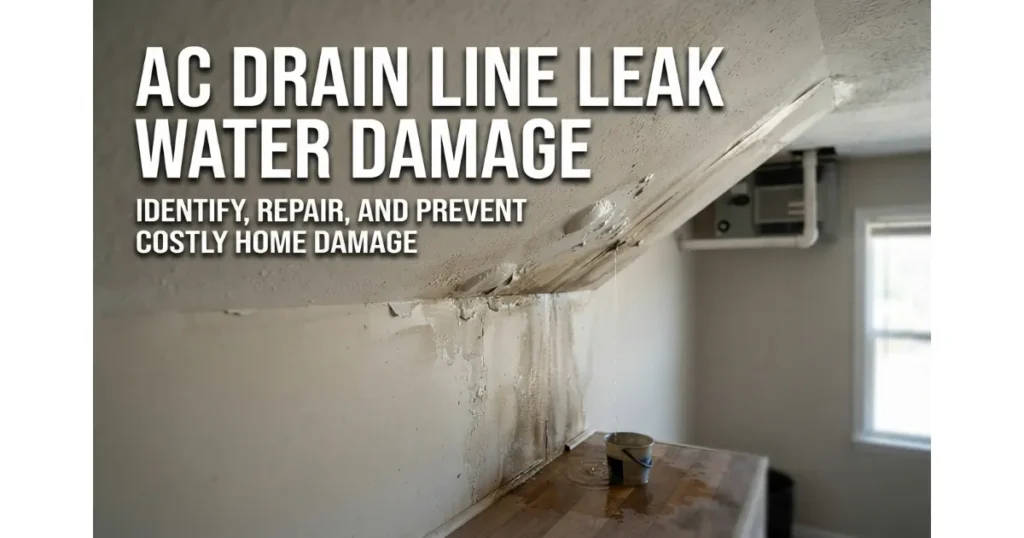
Water Leaks Around the Indoor Unit
Pooling water or persistent moisture leaks around your indoor air handler are almost always tied to drainage blockages or structural condensation issues within the system.
Addressing these leaks promptly prevents costly structural damage to subflooring, drywall, and ceilings.
- Clogged Condensate Drain Line: Algae, dust, and sludge buildup block the PVC drain pipe, causing water to back up and overflow the auxiliary drain pan.
- Cracked Condensate Pan: Aging plastic or rusted metal drain pans develop hairline fractures that slowly leak water during heavy summer cooling cycles.
- Improper Duct Insulation: Uninsulated supply ducts passing through humid attic spaces sweat heavily, dripping condensation onto the exterior of the air handler cabinet.

Oscar Vance | Master Plumber & Drainage Expert
Meet Oscar Vance, a licensed master plumber sharing practical solutions on residential repairs, preventive maintenance, and thoughtful home upkeep.