Can You Put Bathroom Mats in the Dryer?
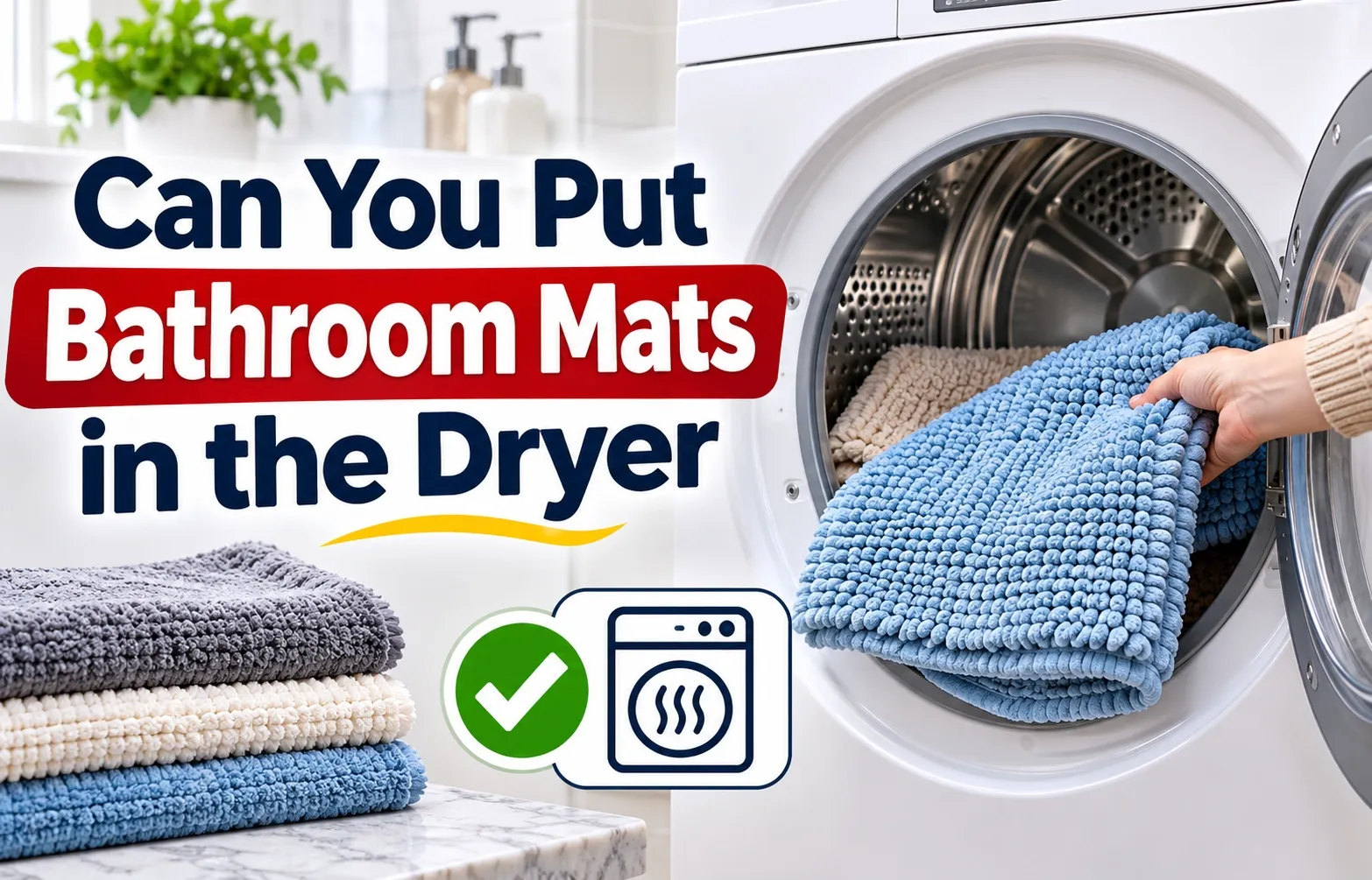 Yes, you can put bathroom mats in the dryer, but only if they are made of 100% cotton, chenille, or synthetic fibers without a rubber or non-skid backing. Rugs with rubber, latex, or vinyl backings should never be exposed to medium or high heat, as heat causes the non-slip material to melt, crack, and potentially damage your dryer.
The 5-Second Material Test: Can Your Bath Mat Handle Dryer Heat?
Before placing any bath rug into your machine, perform a quick 5-second check to confirm its fabric type and backing material. Practicing proper laundry dryer safety prevents permanent heat damage to your floor coverings and protects your home appliances.
- Check the Care Label Symbols: Look for the square icon containing a circle. A single dot inside the circle means tumble dry low, while a circle with an “X” through it means do not put in the dryer.
- Inspect the Backside: Flip the mat over. If you see a smooth, shiny, or rubberized non-skid coating, keep it away from heat. Plain woven undersides are generally safe for machine drying.
- Feel the Core Layer: Squeeze the mat firmly. If it has a thick, squishy core that retains shape slowly, it contains memory foam, which degrades rapidly under high drum temperatures.
Material-by-Material Dryer Compatibility Guide
Understanding how different fiber constructions and backing materials respond to machine drying is essential to prevent permanent shrinkage, structural breakdown, and ruined non-slip grips on your bathroom floor coverings.
Cotton & Chenille Bath Rugs: Safe Drying Parameters
100% cotton and woven chenille loops tolerate machine drying exceptionally well when tumbled on a low-heat setting, though controlling drum temperature is critical to avoid excessive fiber shrinkage and corner curling.
- Select Low Heat: Use low or medium-low heat settings to preserve the natural softness and plush volume of cotton loops.
- Prevent Over-Drying: Remove mats while slightly damp and air-dry flat to eliminate fabric distortion.
- Preserve Dyes: Lower temperatures prevent fading and protect natural fibers from premature wear.
Synthetic & Polyester Mats: Heat Tolerances & Shrinkage Control
Synthetic and polyester floor rugs resist water retention efficiently and handle moderate heat far better than natural fibers, making them ideal for quick-cycle drying when kept away from excessive thermal exposure.
- Faster Cycle Times: Polyester fibers resist deep moisture absorption, requiring significantly shorter tumble times.
- Avoid High Heat: Keep settings low to prevent synthetic backing threads from melting and fusing together.
- Maintain Texture: Low heat prevents the plastic-based pile from becoming coarse or matted over time.
Rubber, Latex, & Vinyl-Backed Mats: Why Heat is the Enemy
Rubber, latex, and vinyl-backed mats face severe structural failure when exposed to high heat, as thermal energy exceeding 130°F (54°C) rapidly breaks down chemical bonds, causing melting, cracking, and delamination.
- Thermal Degradation: High heat causes the non-slip backing to warp, flake, and shed sticky rubber residue inside the dryer drum.
- Delamination Risks: Excessive heat accelerates delamination, permanently separating the rubber layer from the top fabric surface.
- Air Fluff Only: Always choose a zero-heat air-fluff setting or line drying for any mat featuring a rubberized gripper backing.
Memory Foam Bath Mats: Protecting the Core Structure
Polyurethane memory foam bath mats require strict protection against high heat because excessive thermal exposure induces severe cell wall degradation, melting the internal cushioning matrix and ruining the rug’s shape.
- Cell Wall Breakdown: High drum temperatures cause open-cell polyurethane to melt, deform, and lose its supportive cushioning memory permanently.
- Internal Tearing: Machine drying memory foam often leads to internal tearing and uneven lumps that cannot be flattened.
- Air-Dry Mandate: Always air dry memory foam mats completely on a flat surface away from direct mechanical heat sources.
The Hidden Hazards: Dryer Damage & Fire Risks
Putting rubber-backed or synthetic non-slip bath mats into a hot dryer is not just a laundry mistake—it poses genuine risks to your home appliances and household safety. Understanding how thermal breakdown affects your machine helps protect costly dryers, like Samsung or LG tumble dryers, from severe operational damage.
Why Rubber-Backed Rugs Are an Appliance & Fire Hazard
Rubber, latex, and vinyl backings degrade rapidly when subjected to direct heating elements inside a dryer drum. As the drum turns, the deteriorating rubber flakes off into tiny, sticky particles that spread throughout the machine.
- Ignition Risks: Loose rubber crumbs that fall through the drum perforations can come into direct contact with electric heating coils or gas burners, creating a high-risk fire hazard.
- Mechanical Wear: Sticky latex residue coats the interior surface of the dryer drum, causing friction that wears down drum seals, rollers, and drive belts prematurely.
- Overheating Hazards: Rubber debris sticking to internal temperature sensors distorts heat readings, causing the dryer to run hotter than intended and risking electrical shorts.
How Melted Rubber Clogs Dryer Vents & Lint Traps
As rubber particles break off from bath mats during high-heat tumbling, they do not simply gather safely inside the mesh lint filter; they actively bypass lint screen housing and migrate deep into your ventilation system.
- Airflow Blockage: Melted latex particles combine with standard fabric lint, creating dense, sticky clogs along the walls of the exhaust pipe and severe airflow blockage.
- Exhaust Vent Failure: Restricted airflow prevents moisture from escaping, resulting in longer drying cycles, severe overheating, and potential burnout of thermal fuses.
- Lint Filter Damage: Hot, gummy rubber embeds into the fine mesh of your lint filter, permanently ruining the screen and requiring a replacement assembly.
Emergency Steps: What to Do If Rubber Melts Inside Your Dryer Drum
If a rubber-backed rug accidentally goes through a heated dryer cycle and leaves a melted mess across your dryer drum, follow this step-by-step recovery protocol using common household items to restore your appliance safely.
- Unplug the Unit & Let It Cool: Disconnect power to your appliance completely and allow the internal drum to cool to room temperature before attempting any clean-up.
- Apply Softening Solvent: Saturate a microfiber cloth with standard rubbing alcohol (isopropyl alcohol) or warm white vinegar. Press the soaked cloth against the stuck rubber patches for 2 to 3 minutes to dissolve adhesive bonds.
- Gently Scrap Away Residue: Use a flat, non-abrasive plastic scraper, wooden spatula, or old credit card to gently lift the softened rubber off the metal drum surface. Never use razor blades or metal knives, as they will scratch the drum coating and cause rust.
- Wipe & Deodorize: Clean the entire drum surface with fresh soapy water to remove remaining chemical residue, then leave the dryer door open for 30 minutes to air out completely.
- Inspect the Exhaust Line: Check the interior of your lint trap and outer vent line for stray rubber flakes before running your next load.
Hygiene & Cross-Contamination: The Laundry Rules
Always wash and dry bathroom floor mats completely separately from bath towels, face cloths, and kitchen linens. Bathroom rugs collect high concentrations of trapped moisture, foot bacteria, hair, and floor debris, making dedicated wash and dry cycles essential for maintaining household hygiene standards.
Should You Wash and Dry Bath Mats with Regular Towels?
Mixing bath mats with personal towels or kitchen linens creates a direct pathway for cross-contamination during both the washing and drying phases. While it may seem convenient to combine heavy fabrics into a single load, doing so compromises personal sanitation and ruins towel texture.
- Dedicated Loads Only: Separate floor coverings from items that come into direct contact with your face, body, or food preparation surfaces.
- Load Balance Issues: Heavy, water-logged bath mats cause uneven weight distribution in tumble dryers, leading to excessive friction and wear on delicate towel fibers.
- Manufacturer Standards: Appliance manufacturers and textile experts recommend isolated laundry cycles for heavy floor coverings, as outlined in Whirlpool’s official laundry care guidelines.
Bacteria, Hair, and Fiber Transfer: The Hygiene Breakdown
Bathroom mats act as a filter for floor dust, shed hair, dead skin cells, and microscopic moisture droplets. Combining them with other household items in warm, damp environments triggers unpleasant hygiene issues.
- Bacteria Transfer: Microorganisms trapped in rug fibers easily transfer onto bath towels and washcloths during lower-temperature wash cycles and tumbling.
- Lint & Hair Shedding: Heavy rubber-backed or chenille mats shed dense lint and trapped loose hair, which firmly embeds into plush bath towel loops.
- Odor Retention: Trapped dampness and floor grime carried over from unwashed mats can leave freshly laundered towels smelling musty even after drying.
Sanitizing Bath Mats Safely Without Destroying Fabrics
Relying on high heat settings to sanitize bathroom rugs often leads to melted rubber backings and ruined memory foam cores. You can achieve deep, hygienic cleaning using safe alternative sanitizing methods.
- Use Phenolic Laundry Sanitizers: Add a bleach-free laundry sanitizer to your rinse cycle to eliminate 99.9% of bacteria without relying on fabric-damaging high temperatures.
- Add Distilled White Vinegar: Pour half a cup of distilled white vinegar into the fabric softener compartment to naturally neutralize odors and break down detergent buildup without harming rubber coatings.
- Choose Oxygen Bleach for Whites: Use color-safe oxygen bleach for light-colored cotton mats to lift stains and refresh fibers safely on low-heat or line-dry cycles.
How to Safely Dry Bath Mats
Drying your bathroom mats safely requires a clear, controlled process to protect delicate backings, preserve fabric softeness, and extend the lifespan of your floor coverings. Follow these steps to dry your mats efficiently while avoiding heat damage.
Step 1: Interpret the Care Tag Symbols Correctly
Before throwing any rug into the drum, inspect the care label symbols attached to the edge. Knowing how to read these standardized icons prevents costly laundry mistakes.
- Square with Circle: Represents machine drying capability. If empty, tumble drying is allowed.
- Dots Inside the Circle: Indicates safe maximum temperature. One dot means tumble dry low (delicate heat), two dots mean medium heat, and three dots mean high heat.
- Crossed-Out Circle/Square: A black “X” through the tumble dry icon means do not place the mat in a dryer under any circumstances.
- Lines Under the Square: One line signifies a permanent press cycle; two lines indicate a gentle or delicate cycle.
Step 2: The Pre-Dry Shake and Moisture Check
Proper preparation before starting the machine significantly reduces drying time and protects your dryer’s mechanical components.
- Vigorous Outdoor Shake: Shake the wet mat firmly outdoors or over a tub to release trapped surface lint, loose fibers, and pet hair before heat treatment.
- Check Water Retention: Squeeze the center of heavy cotton or memory foam mats. If water actively drips out, run an extra spin-only cycle in your washing machine to extract excess water first.
- Inspect Rubber Integrity: Quickly check for existing cracks or peeling along rubber backings. If the backing is already damaged, skip the machine entirely and line dry.
Step 3: Dialing in Dryer Settings (Air Fluff vs. Low Heat)
Matching your appliance settings to your mat’s exact material threshold is the single most important factor in preventing non-skid degradation and melted latex.
- Air Fluff / No Heat Cycle: Mandatory for rubber-backed, vinyl, latex, or memory foam mats. This setting circulates room-temperature air to strip moisture without raising drum temperatures.
- Low Heat / Delicates Cycle: Ideal for 100% cotton, chenille, or plain synthetic microfiber mats without non-skid coatings. Keep heat below 120°F (49°C).
- Timed Drying: Set a strict timer for 20 to 30 minutes rather than using auto-sensor cycles, which can overheat synthetic fibers once surface moisture drops.
Step 4: Speeding Up the Cycle with Dryer Balls or Dry Towels
You can accelerate moisture removal and lower overall cycle times without increasing heat settings by using simple mechanical drying hacks.
- The Clean Towel Trick: Toss one clean, dry bath towel into the drum alongside your damp mat for the first 15 minutes. The dry towel acts as a moisture sponge, cutting initial drying time in half.
- Add Wool Dryer Balls: Insert 3 to 4 wool dryer balls to continuously separate heavy mats during rotation, maximizing warm airflow between fiber layers.
- Avoid Dryer Sheets: Never use liquid fabric softeners or dryer sheets with bath mats, as wax coatings clog absorbent fibers and break down non-slip backings.
How to Dry Bath Mats Without a Dryer (Especially in Winter)
Air drying bath rugs indoors during cold, humid, or rainy seasons requires strategic airflow management to prevent heavy fabrics from retaining moisture for extended periods. Implementing targeted indoor drying techniques accelerates evaporation while protecting non-skid backings from heat damage.
Fast Indoor Air-Drying Techniques for Cold or Rainy Months
When outdoor line drying is impractical due to freezing temperatures or high humidity, creating an active drying zone indoors ensures rapid moisture removal without relying on appliance heat.
- Position a Box Fan Directly: Hang your mat over a sturdy indoor drying rack or shower rod and point a box fan directly at the damp pile to maintain continuous air circulation across both sides.
- Utilize a Dehumidifier: Place a portable dehumidifier in a closed laundry room or bathroom alongside the hanging mat to draw ambient moisture out of thick cotton or memory foam cores.
- Elevate for Under-Rug Ventilation: Drape the mat with the rubber backing facing outward first, then flip it after a few hours so both the top fibers and non-skid underlayer receive equal airflow.
Preventing Mold, Mildew, and Musty Odors on Thick Mats
Damp bath mats left in unventilated areas become ideal breeding grounds for mildew and musty smells within 24 to 48 hours. Proper environmental controls ensure clean, hygienic results.
- Avoid Flat Surface Drying: Never lay wet bath rugs flat on carpet or hardwood floors, as trapped moisture damages flooring underneath and stalls air evaporation.
- Maintain Room Temperature: Keep the drying area warm and well-ventilated; cold, stagnant air slows down moisture extraction and invites fungal growth.
- Pre-Treat with Vinegar: Spritzing a light mist of diluted white vinegar onto damp fibers before air drying neutralizes potential odor-causing bacteria naturally.
How to Restore Softness to Air-Dried Bath Mats
Air drying can sometimes leave cotton and chenille fibers feeling stiff or scratchy due to undisturbed fiber alignment during evaporation. Restoring that original plush, cloud-like texture takes just a few moments.
- 5-Minute No-Heat Air Fluff: Place the fully air-dried mat into your dryer on a 100% cold “Air Fluff” or “No Heat” cycle with two wool dryer balls for 5 minutes to separate and soften stiff fibers safely.
- Manual Hand-Brushing: Use a clean laundry brush or wire pet slicker brush to gently sweep against the nap of dry cotton or synthetic fibers, lifting matted pile instantly.
- Vigorous Shake: Give the completely dry rug a firm shake outdoors to loosen compressed loops and reintroduce natural bounce.
Frequently Asked Questions
How to Quickly Dry a Bath Mat Without High Heat?
To dry a bath mat quickly without applying high heat, run an extra spin cycle in your washing machine to extract surplus water. Afterward, hang the mat over a clothes drying rack with a box fan pointed directly at the fibers, or toss it in the dryer using the no-heat air fluff cycle alongside a dry bath towel.
Can You Dry a Bath Mat with a Rubber Back on Low Heat?
No, you should avoid using low heat on rubber-backed bath mats. Even low dryer temperatures can cause latex and rubber backings to overheat, leading to peeling, cracking, or melting over time. To ensure optimal non-skid floor mat care and prevent dryer vent clogs, stick exclusively to zero-heat air fluff settings or hang them to air dry.
How Often Should Bathroom Floor Mats Be Washed and Dried?
You should wash and dry bathroom floor mats every 1 to 2 weeks under normal household use. However, if your bathroom experiences high foot traffic, stays consistently humid, or if multiple family members share a single space, increase the washing frequency to once a week to prevent bacterial buildup and musty odors.
What Should You Do If Your Rubber-Backed Rug Starts Flaking?
If your rubber backing starts peeling or flaking in small isolated patches, you can trim away the loose particles and continue air drying it safely. However, if widespread flaking leaves large areas exposed, discard and replace the mat immediately. Flaking rubber loses its anti-slip safety grip and releases loose debris that can damage washing machines and clog dryer exhaust vents.

Oscar Vance | Master Plumber & Drainage Expert
Meet Oscar Vance, a licensed master plumber sharing practical solutions on residential repairs, preventive maintenance, and thoughtful home upkeep.