The Golden Rule of Bathroom Freshness: Neutralize Before You Scent
 To keep a bathroom smelling fresh permanently, you must chemically neutralize odor-causing molecules before introducing any fragrance. Spraying heavy perfumes over stale air merely layers synthetic scents on top of volatile organic compounds (VOCs), creating a heavier, unpleasant odor once the initial mist settles.
True odor control relies on two distinct phases: eliminating the source bacteria or trapping airborne gases, followed by adding light, breathable aromatics. Skipping the neutralization step is the primary reason most store-bought air fresheners fail within twenty minutes.
Odor Masking vs. Odor Neutralization (Why Sprays Fail)
Commercial aerosol sprays and plug-in warmers rely on odor masking, which floods your olfactory receptors with concentrated synthetic fragrances to temporarily block bad smells. Because these products do not break down sulfur or ammonia compounds, the underlying bathroom odor remains active in the air.
For households dealing with fragrance sensitivity or chronic headaches, synthetic aerosols often create secondary indoor air quality issues. Switching to hypoallergenic deodorizers and porous absorbers solves the root problem without irritating respiratory pathways.
- How Odor Masking Works: Disperses heavy chemical esters and propellants into the air to overpower your sense of smell while leaving odor-causing particles intact on surfaces.
- How Odor Neutralization Works: Uses alkaline powders, porous carbon, or biological enzymes to chemically bind, absorb, or digest organic waste molecules so they can no longer emit gas.
- Air Quality Impact: Natural absorbers reduce airborne volatile organic compounds (VOCs) rather than adding new synthetic chemicals to poorly ventilated small spaces.
Instant & Daily DIY Hacks to Keep Your Bathroom Smelling Fresh
Maintaining a continuously pleasant bathroom aroma does not require expensive, chemical-laden plug-ins or commercial aerosol sprays. By leveraging natural ingredients like baking soda, essential oils, and botanical bundles, you can effortlessly neutralize unwanted odors and create a clean, inviting atmosphere every single day.
The Toilet Paper Tube Essential Oil Trick
Releasing a fresh, subtle aroma every time someone pulls a sheet is surprisingly simple with the cardboard tube hack. Applying a few strategic drops of high-grade essential oil directly to the inner cardboard core turns your toilet paper roll into a passive, long-lasting room freshener without any extra gadgets or electricity.
- Exact Drop Count: Apply 3 to 5 drops of your preferred essential oil to ensure a pleasant scent throw that is not overpowering in a small space.
- Best Oil Selections: Choose crisp, purifying oils such as eucalyptus, lemongrass, or lavender to combat mustiness and neutralize lingering bathroom odors effectively.
- Crucial Safety Warning: Always apply the oil strictly to the inside cardboard core and allow it to dry completely; never drip oil directly onto the tissue paper that touches the skin.
Countertop Baking Soda & Clove Scent Jars
Crafting a DIY countertop scent jar combines the powerful odor-absorbing qualities of alkaline sodium bicarbonate with warm botanical notes. This low-maintenance setup continuously captures airborne volatile organic compounds while releasing a gentle, spa-like fragrance into your bathroom environment.
- Exact Recipe Ratios: Combine half a cup of baking soda with 10 drops of sweet orange or peppermint essential oil and a handful of whole cloves in a small open glass jar.
- Weekly Maintenance Routine: Gently shake or stir the jar once a week to redistribute the essential oils and expose fresh baking soda granules to the air.
- Replacement Timeline: Toss out the mixture and refresh the jar completely every 30 days to maintain maximum odor-adsorption efficiency.
Shower Steam Eucalyptus Bundles
Hanging a fresh or preserved botanical bundle in your shower transforms your daily routine into an aromatic, luxury steam room experience. As hot shower water creates rising steam, it warms the plant matter and releases natural therapeutic compounds directly into the bathroom air.
- Preparation Technique: Lightly bruise the stems of your fresh or preserved eucalyptus using a rolling pin before assembly to rupture the cellular walls and release stored plant juices.
- Hanging Placement: Secure the bundle tightly behind your showerhead using waterproof twine, ensuring it stays out of the direct high-pressure water stream while catching ambient steam.
- Active Mechanism: The high heat and humidity vaporize cineole, a natural essential compound in eucalyptus that purifies the air and clears respiratory pathways.
DIY Before-You-Go Toilet Spray
Creating your own pre-poop barrier spray bridges a major practical gap by trapping embarrassing odors right beneath the water’s surface before they ever escape into the room. This simple chemical trick forms an essential oil film over the toilet bowl water that seals foul gases down below.
- Practical Recipe: Mix distilled water, a tablespoon of witch hazel or rubbing alcohol, half a teaspoon of vegetable glycerin, and 20 to 30 drops of citrus essential oils in a small spray bottle.
- Application Method: Mist the surface of the toilet bowl water 3 to 5 times immediately before sitting down to create an instant surface barrier spray layer.
- Odor Trapping Mechanism: The dense essential oil layer catches organic vapor molecules at the water line, neutralizing them instantly upon contact.
Hidden Cotton Ball Diffusers & Trash Can Deodorizers
Concealing oil-soaked cotton balls in overlooked corners provides a stealthy and highly effective way to keep confined spaces smelling wonderful. Directing passive fragrance toward hidden hotspots eliminates bad smells right at their most common breeding grounds without cluttering your countertops.
- Trash Can Placement: Drop two essential oil-soaked cotton balls at the bottom of your wastebasket beneath the plastic liner to neutralize damp trash odors continuously.
- Hidden Bathroom Zones: Tuck discrete cotton balls behind the toilet base, inside storage baskets, or at the bottom of the toilet brush holder for continuous ambient freshness.
- Familiar LSI Integration: Use tea tree or peppermint oils in these damp, dark zones to double as a natural DIY air freshener and mild mold deterrent.
How to Make Your Bathroom Smell Like a Luxury Spa
Transforming an ordinary bathroom into a five-star retreat requires layering clean, botanical scent notes with strict textile hygiene. Luxury hotels achieve their signature fresh ambiance by avoiding sugary, artificial aerosols in favor of continuous passive diffusers and crisp, mineral-rich aromatics.
Reed Diffusers vs. Soy Wax Candles (Best Placement & Scent Notes)
Reed diffusers outperform electric plug-ins because they deliver a steady, flameless fragrance 24 hours a day without overheating synthetic oils. Pairing a high-end diffuser for constant background freshness with clean-burning soy wax candles during evening baths creates an authentic, multi-layered spa atmosphere.
- Top Hotel Bathroom Scents: Choose grounded, gender-neutral scent profiles such as white tea, bergamot, cedarwood, and sandalwood rather than heavy floral or vanilla perfumes.
- Optimal Diffuser Placement: Position reed diffusers on an open vanity shelf or tank tray where natural air currents circulate scent molecules across the room; flip the rattan reeds once a week to refresh the throw.
- Candle Burning Safety: Burn lead-free soy wax candles on a flat, heat-resistant tray away from hanging towels, trimming the cotton wick to a quarter-inch before each use to prevent black soot.
Shower Steamers & Aromatherapy Bombs
Shower steamers turn a routine morning rinse into an invigorating aromatherapy session by utilizing hot water mist to vaporize concentrated essential oils. Unlike bath bombs, these fizzy tablets are formulated specifically for standing showers and will not leave slippery oil residues on your tub floor.
- Correct Floor Placement: Set a eucalyptus or menthol steamer on the shower floor just outside the direct downward spray so ambient splashes dissolve the tablet slowly over ten minutes.
- Maximizing Vapor Release: Close the bathroom door and run hot water for 60 seconds before stepping in to build a warm steam pocket that carries the botanical vapors upward.
The Hotel Towel & Linen Freshness Secret
Sour, musty bath towels are one of the most overlooked causes of persistent bathroom odor, even in freshly scrubbed spaces. When damp cotton fibers hold onto detergent residue, mildew bacteria multiply rapidly every time the fabric gets wet.
- Ditch Liquid Fabric Softener: Commercial softeners coat towel loops in a waxy silicone film that causes fabric softener buildup, trapping moisture and odor-causing bacteria deep inside the weave.
- The White Vinegar Strip Wash: Wash bath towels and fabric bath mats in hot water with one cup of distilled white vinegar (and zero detergent) once a month to dissolve residue and reset absorbency.
- Immediate Drying Rule: Always hang damp towels spread fully flat across a heated towel bar or wide rod rather than bunched on a single hook so air circulates through the fabric completely.
Deep-Cleaning Hidden Odor Sources (Why It Still Smells Bad Even After Cleaning)
When a bathroom continues to smell musty or foul immediately after scrubbing the sink and toilet, the odor is almost always trapped inside plumbing lines, porous caulk, or damp ventilation hardware. Eliminating persistent smells requires targeting hidden bacterial colonies and mechanical air-seal failures that surface cleaners never reach.
Flush Out Biofilm in Sink and Shower Drains
Sink and shower drains accumulate a thick layer of biofilm composed of hair, dead skin cells, toothpaste, and soap scum that breeds sulfur-producing bacteria. Standard liquid bleach runs straight past vertical pipe walls without dissolving this organic sludge, allowing foul drain odors to rise back into the room.
- Clear Physical Hair Traps: Remove the sink stopper or shower drain cover and pull out trapped hair clumps using a plastic drain snake before applying any cleaning solution.
- Trigger the Alkaline-Acid Reaction: Pour half a cup of baking soda directly down the drain, followed immediately by one cup of distilled white vinegar, and cover the opening with a wet cloth for 10 minutes to force the foaming action against pipe walls.
- Flush and Apply Enzyme Soak: Pour a kettle of boiling water down the drain to melt soap grease, then finish with an overnight bio-enzyme drain treatment to digest remaining organic biofilm.
Fix Dry P-Traps & Floor Drain Sewer Gas
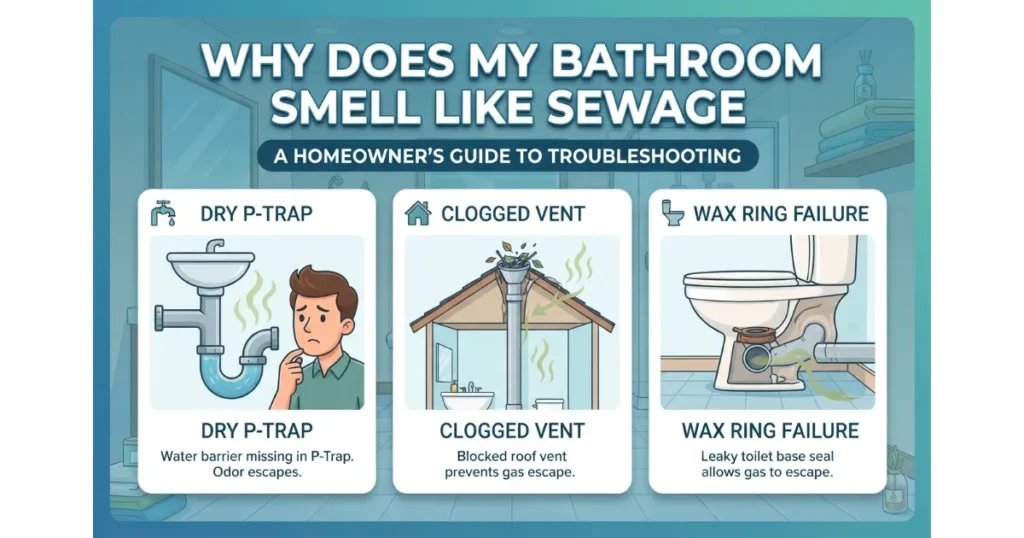
If your bathroom smells like raw sewage despite spotless surfaces, check rarely used guest showers, tubs, or floor drains for a dried-out P-trap water seal. Every drain pipe curves into a U-shaped bend designed to hold standing water that blocks toxic sewer gas from entering your home.
- Why the Seal Fails: In guest bathrooms or basement floor drains that go unused for weeks, standing trap water evaporates completely, leaving an open pathway for methane and hydrogen sulfide gases.
- The 30-Second Water & Mineral Oil Fix: Pour two cups of clean tap water down the dry drain to refill the U-bend, then add one tablespoon of food-grade mineral oil on top to form an evaporation-proof barrier that keeps the trap sealed for months.
Sanitize the Toilet Base, Hinges, and Wax Ring
Lingering urine odors almost always originate from microscopic droplets trapped beneath toilet seat hinges or under the porcelain base where standard mops cannot reach. If an earthy, sewage-like smell persists around the floor after sanitizing the bolts, the underlying toilet wax ring may have failed.
- Deep-Clean Seat Bolts and Crevices: Unsnap the quick-release toilet seat hinges, spray the plastic bolts and the base seam with 3% hydrogen peroxide, let it bubble for five minutes to oxidize uric acid crystals, and wipe clean.
- Inspect Silicone Caulk and Wax Seals: Check whether the toilet rocks slightly when pushed or if discolored moisture seeps from the bottom edge; a compressed or cracked toilet wax ring breaks the floor seal and must be replaced to stop sewer odor leaks.
Eliminate Mildew in Exhaust Fans, Shower Curtains, and Bath Mats
Trapped humidity feeds active mildew spores inside porous bathroom textiles and dust-choked ceiling vents, generating a heavy, damp basement smell. According to EPA guidelines on indoor moisture and mold control, keeping relative humidity below 60% through proper exhaust ventilation is essential to stop microbial growth on damp surfaces.
- Clear Dust-Clogged Exhaust Fans: Turn off the circuit breaker, pull down the ceiling fan grille, and vacuum packed lint off the fan blades so the unit maintains full exhaust fan CFM airflow during hot showers.
- Weekly Textile Sanitization: Machine-wash fabric shower curtain liners and bath mats every seven days in warm water with baking soda, and scrub blackened silicone caulk lines with a hydrogen peroxide paste to kill embedded mildew spores.
The Bathroom Freshness Maintenance Schedule
Keeping a bathroom smelling clean long-term comes down to consistent moisture management rather than marathon weekend scrubbing sessions. Following a structured preventive cleaning schedule stops mildew bacteria from establishing colonies in damp textiles and drains while keeping passive deodorizers active.
Daily, Weekly, and Monthly Odor-Prevention Checklist
Breaking bathroom maintenance into quick daily, weekly, and monthly habits ensures proper humidity control without overwhelming your routine. Use the structured checklist below to maintain a continuous bathroom ventilation routine and keep odors from ever building up.
- Daily (30 Seconds): Run your exhaust fan for at least 20 minutes after every hot shower to clear humid air, hang wet bath towels spread completely flat on the rod, and drape damp bath mats over the tub edge to dry.
- Weekly (15 Minutes): Spray and wipe down the toilet base, seat hinges, and surrounding floor tiles; launder bath mats and hand towels in hot water; add 3 to 5 fresh drops of essential oil inside the cardboard toilet paper roll.
- Monthly (20 Minutes): Flush sink and shower drains with baking soda and hot water, pour fresh water into unused guest drain P-traps, replace open countertop baking soda jars, and vacuum dust off the bathroom exhaust fan cover.
Frequently Asked Questions
What is the best scent for a bathroom?
Crisp, clean botanical scents and bright citrus notes work best in bathrooms because they cut through heavy humidity rather than clashing with dampness. Top-performing aromatics include eucalyptus, lemon, peppermint, lavender, and white tea, all of which create a fresh, spa-like atmosphere without feeling overly sweet or suffocating.
- Best Invigorating Notes: Eucalyptus, peppermint, and lemongrass for a clean, steam-room ambiance.
- Best Calming Notes: Lavender, white tea, and bergamot for a subtle, hotel-inspired freshness.
How can I make my bathroom smell good without air freshener?
You can keep a bathroom smelling fresh without commercial air fresheners by combining passive odor absorbers with consistent airflow. Place open jars of baking soda or porous bamboo charcoal bags near the vanity to trap airborne molecules, hang fresh eucalyptus in the shower, and run your exhaust fan after every shower.
- Passive Odor Traps: Activated bamboo charcoal bags and open baking soda jars absorb odors continuously without releasing synthetic chemicals.
- Natural Aromatics: Fresh shower eucalyptus and essential oil drops inside the toilet paper roll provide gentle, flame-free fragrance.
How do I get rid of a poop or fart smell in the bathroom immediately?
To eliminate bathroom waste odors within seconds, switch on the exhaust fan immediately and use the sulfur match odor trick by striking a wooden match and blowing it out, as burning sulfur neutralizes foul hydrogen sulfide gases. Alternatively, mist an essential oil barrier spray onto the toilet water before using the bathroom.
- Instant Gas Neutralization: Strike one wooden match to burn off airborne odor compounds immediately.
- Preventative Barrier: Spray 3 to 5 mists of a citrus essential oil spray onto the water surface before sitting down to trap odors underwater.
Why does my bathroom smell like sewage even when it’s clean?
A spotless bathroom smelling like raw sewage typically indicates a dried-out P-trap in an unused sink or floor drain, a blocked roof plumbing vent pipe, or a deteriorated toilet wax ring. When any of these plumbing barriers fail, sewer gases escape directly into your bathroom air.
- Dried P-Trap Seal: Pour two cups of water and one tablespoon of mineral oil down rarely used drains to restore the water barrier.
- Vent or Wax Ring Failure: Check for a rocking toilet base (indicating a broken wax ring) or gurgling drains caused by a clogged plumbing vent pipe.

Home Improvement Researchers & Guides Editors
Meet the Nest Team, a collective of dedicated researchers, home improvement enthusiasts, and industry writers sharing practical guides, thorough category research, and trusted solutions for residential repairs and thoughtful home upkeep.