High Installation Sensitivity & Heat-Welded Seam Failures
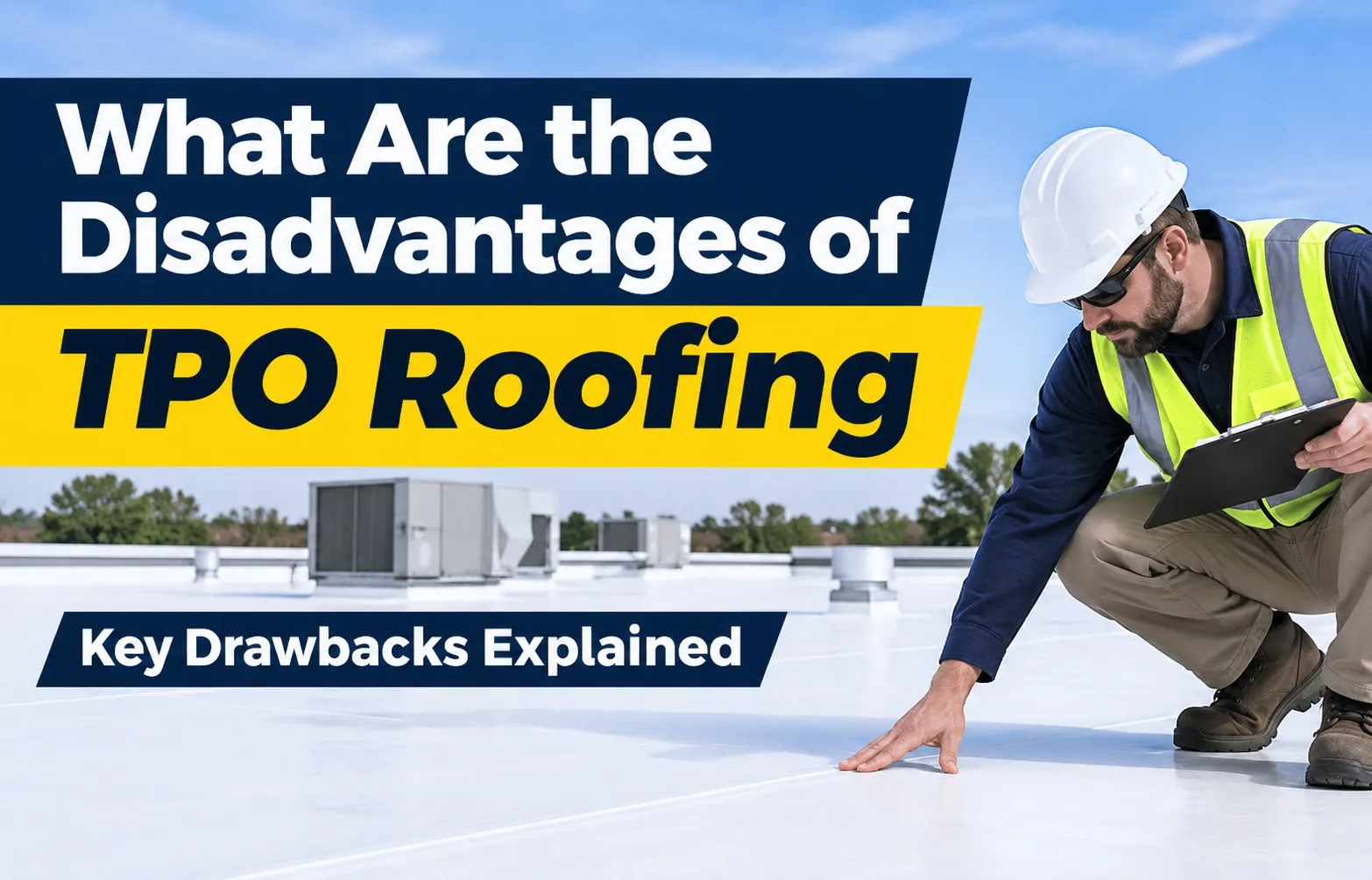 Thermoplastic polyolefin (TPO) roofing membranes rely heavily on precision hot-air welding to bond adjacent sheets together. Unlike traditional mechanically fastened or ballasted systems, TPO seams form a monolithic sheet only when the thermoplastic layers melt and fuse correctly under strict thermal and mechanical parameters.
The Narrow Temperature Window for Hot-Air Welding
Successful TPO installation requires ambient temperatures strictly between 50°F and 100°F. When roofing contractors attempt to weld membranes outside this window without specialized equipment adjustments, the molecular bonding fails, resulting in what professionals call a “cold weld.”
- Cold Welds: Occur when the automatic robotic welder is set too fast or the air temperature is too low, creating a superficial bond that looks intact from the top but peels apart under minimal stress.
- Overheating: Excessively high temperatures scorch the reinforcing polyester scrim inside the membrane, thinning the top ply and causing premature cracking.
- Delayed Delamination: Cold welds often survive the initial pressure test after installation, only to separate under seasonal thermal cycling months or years later.
Thermal Expansion, Contraction, and Bridging at Parapet Walls
Commercial buildings experience constant structural movement due to daily and seasonal temperature fluctuations. TPO membranes possess a high coefficient of thermal expansion, meaning the sheets expand in the summer heat and contract during winter freezes.
- Bridging Effects: When sheets contract rapidly, tension pulls the membrane taut across internal corners, creating an unsupported bridge over the transition angle.
- Flashing Failure Points: Parapet walls, roof penetrations, and HVAC curbs absorb high shear stress as the membrane pulls away from flashing details.
- Fastener Backout: Thermal cycling can loosen base plates and fasteners beneath the deck, allowing wind uplift to lift the membrane and tear seams apart.
How to Spot a Bad Seam Before It Leaks
Property owners and building inspectors cannot rely on a visual glance alone to verify roof integrity. Catching installation errors early requires hands-on diagnostic checks using specialized field tools.
- The Seam Probe Technique: Run a blunt-nosed metal seam probe along every welded edge with moderate hand pressure to identify hidden voids or unbonded pockets.
- Fishmouth Detection: Look for wrinkled wrinkles or openings at overlapping seam intersections, known as fishmouths, which serve as direct entry points for wind-driven moisture.
- Destructive Coupon Testing: Cut small test samples from initial startup welds each morning to physically peel and inspect the weld width for proper TPO fusion.
Inconsistent Manufacturer Quality & Patching Compatibility Issues
Unlike standardized rubber roofing materials, thermoplastic polyolefin (TPO) does not rely on a single industry-wide chemical formula. Every roofing manufacturer produces its own proprietary polymer blend, which creates sharp variations in long-term weathering, flexibility, and future repairability.
Proprietary Polymer Blends & Filler Variations
Major manufacturers including Carlisle, Elevate (formerly Firestone), and Johns Manville engineer their sheets using distinct ratios of polypropylene plastic and ethylene-propylene rubber. To reduce production costs and meet fire ratings, factories also mix different mineral fillers into the top and bottom plies.
- Talc Fillers vs. Calcium Carbonate: Higher concentrations of inexpensive calcium carbonate fillers accelerate moisture absorption and surface chalking compared to higher-grade talc or specialized mineral stabilizers.
- UV Stabilizer Packages: Each brand uses proprietary antioxidant and ultraviolet light stabilizer additives, meaning two 60-mil TPO roofs installed side by side can age at drastically different rates.
- Cross-Brand Welding Risks: Welding a Johns Manville repair patch onto an Elevate membrane often produces an inconsistent melt flow, compromising seam strength at the transition point.
The Pre-2008 “Bad TPO” Era vs. Modern ASTM D6878 Standards
TPO earned a controversial reputation among veteran roofing contractors due to widespread membrane failures occurring in the early-to-mid 2000s. Early formulations lacked sufficient heat and UV stabilizers, causing roofs in high-solar regions to shatter and craze within five to seven years of installation.
- Outdated Fire-Retardant Chemistry: Older membranes used brominated flame retardants that reacted negatively with ultraviolet rays, rapidly degrading the polymer chain.
- Modern ASTM D6878 Revisions: Today’s commercial membranes must satisfy stricter ASTM D6878 standard specifications, which mandate rigorous accelerated heat-aging and weathering tests before products reach the market.
- Identifying Legacy Roofs: Building owners evaluating an existing roof installed prior to 2008 should inspect around rooftop HVAC exhausts, where accelerated thermal cracking reveals outdated chemical formulations.
Why Repairing Old TPO With New Sheets Often Fails
Even when contractors match the exact original brand, patching a weathered TPO roof with brand-new material presents severe adhesion hurdles. Over years of sun and weather exposure, the top surface of the existing membrane undergoes chemical cross-linking and membrane oxidation.
- Surface Contamination Barrier: Oxidized polymers, embedded atmospheric dirt, and chalking residue prevent fresh TPO sheets from achieving true molecular fusion under a hot-air welder.
- Mandatory Abrasion Prep: Technicians must aggressively scrub the aged membrane with specialized weathered-membrane cleaners and abrasive pads before attempting any heat weld.
- Brittle Substrate Cracking: Applying high welding heat to an aged, stiffened sheet frequently causes the surrounding old membrane to split immediately adjacent to the new patch edge.
Vulnerability to Extreme Heat, UV Rays, and Premature Chalking
Although thermoplastic polyolefin (TPO) membranes are marketed heavily for their white, heat-reflective surfaces, intense solar radiation and high ambient temperatures remain primary catalysts for premature membrane failure. In hot southern climates, sustained thermal loads break down polymer stabilizers faster than manufacturers anticipate.
Surface Chalking, Crazing, and Micro-Cracking in Southern Climates
Continuous exposure to intense ultraviolet (UV) radiation oxidizes the top weathering layer of a TPO sheet, causing the surface to erode into a white powdery residue known as surface chalking. Once the top polymer ply thins past its protective threshold, structural cracking begins.
- Crazing and Micro-Cracking: Prolonged UV exposure dries out the membrane’s plasticizers and stabilizers, producing spiderweb-like surface fractures called crazing that deepen into full-depth cracks.
- Solar Magnification Hotspots: Sunlight reflecting off nearby glazed windows, metal parapet caps, or polished rooftop HVAC ductwork concentrates radiant heat onto localized roof zones, literally cooking the top ply down to the internal reinforcing polyester scrim.
- Scrim Wicking Moisture: Once micro-cracks expose the woven polyester scrim, rainwater wicks along the fibers deep inside the sheet, causing delamination and internal rot.
- Thermal Shock Stress: Rapid temperature drops from sudden summer afternoon thunderstorms contract superheated membranes instantly, accelerating crack propagation around rigid fasteners.
Loss of Solar Reflectance Index (SRI) Over Time
Building owners frequently select white TPO to lower summer cooling bills and satisfy municipal “cool roof” energy codes. However, the real-world Solar Reflectance Index (SRI) drops sharply within the first few years of service.
- Dirt and Pollutant Retention: As surface chalking roughens the once-smooth thermoplastic finish, airborne soot, pollen, and industrial pollutants embed directly into the micro-pits.
- Eroding Energy Savings: A weathered, gray-streaked TPO roof absorbs significantly more solar heat than its initial lab-tested rating, forcing rooftop air conditioning units to run longer cycles.
- High Maintenance Costs: Restoring the membrane’s original reflectivity requires periodic, low-pressure detergent washing, adding unexpected operational expenses over the roof’s lifecycle.
Susceptibility to Punctures, Hail, and Foot Traffic Damage
Single-ply thermoplastic polyolefin membranes are inherently vulnerable to mechanical impacts and physical wear. Choosing a thinner membrane specification to reduce initial construction costs dramatically increases the risk of severe punctures from hailstorms, wind-blown debris, and routine maintenance foot traffic.
Why Standard 45-Mil TPO Punctures Easily
Standard 45-mil TPO provides minimal physical barrier protection against sharp point loads, making budget-driven installations highly susceptible to weather extremes and accidental jobsite damage. Understanding membrane thickness differences is essential for long-term roof survivability.
- Thickness Traps (45-Mil vs. 60-Mil vs. 80-Mil): While 45-mil sheets meet baseline building code requirements for low-slope roofs, their thin top ply offers virtually no safety margin against heavy hail impacts or dropped contractor tools. Upgrading to 60-mil or 80-mil significantly improves puncture resistance.
- Severe Hail Damage: High-velocity hailstorms can bruise or fracture the brittle top polymer layer and compress the underlying insulation board, creating hidden cracks that manifest as chronic leaks months later.
- Jobsite Tool Drops: Sharp utility knives, screwdrivers, and unsecured metal fasteners dropped by service technicians easily shear straight through thinner TPO membranes.
The Cost of Skipping Walk Pads Around Rooftop Units
Regular maintenance foot traffic around commercial rooftop equipment exerts intense compressive pressure that crushes rigid insulation boards and stretches the overlying membrane until it splits. Without designated protection, human activity destroys the roof from above.
- Polyiso Insulation Board Compression: Frequent technician foot traffic compresses the soft polyiso insulation underneath the membrane, creating permanent depressions that pool standing water and stress the surrounding sheet.
- Friction and Scuffing: Repeated foot pivots and shoe grit wear down the smooth top weathering layer, exposing the underlying reinforcing polyester scrim to accelerated UV degradation.
- Mandatory Walkway Protection: Omitting dedicated rubber walkway pads around HVAC service panels, access doors, and condenser units guarantees premature mechanical damage and voids comprehensive warranty coverage.
Chemical Incompatibility & Hidden Warranty Exclusions
Thermoplastic polyolefin (TPO) membranes exhibit severe chemical incompatibility with petroleum products, animal fats, and vegetable oils. Furthermore, manufacturer warranties contain strict fine-print exclusions regarding drainage and chemical exposure that leave commercial building owners financially liable for premature roof failures.
Why Restaurants & Commercial Kitchens Destroy TPO Roofs
Because TPO is manufactured from hydrocarbon-based polyolefins, the membrane actively absorbs fats, oils, and grease rather than repelling them. Installing TPO on food-service buildings or manufacturing facilities with oil-mist exhausts routinely causes catastrophic membrane breakdown within five to ten years.
- Animal Fats & Kitchen Exhaust Grease: Rooftop exhaust fans discharge vaporized animal fats and cooking oils directly onto the surrounding membrane, triggering a chemical reaction that softens and swells the polymer sheet into a spongy, blistered mass.
- HVAC Lubricants & Coil Cleaners: Leaking compressor oils, diesel exhaust from nearby generators, and harsh acidic or alkaline HVAC coil cleaners rapidly strip away UV stabilizers and embrittle the sheet.
- Automatic Warranty Voidance: Almost every major TPO manufacturer explicitly excludes damage caused by animal fats, greases, and petroleum solvents from warranty coverage, forcing restaurant owners to pay out of pocket for full tear-offs.
Ponding Water & The 48-Hour Warranty Trap
Inadequate roof slope leads to chronic ponding water, which degrades heat-welded seams and triggers one of the most common warranty exclusions in commercial roofing. Industry standards define ponding water as any standing water that remains on the roof surface more than 48 hours after precipitation ends.
- The 48-Hour Rule Loophole: If poor structural drainage or compressed insulation allows puddles to linger past 48 hours, manufacturers classify the condition as a design flaw rather than a material defect, immediately voiding coverage in those zones.
- No Dollar Limit (NDL) Warranty Fine Print: Even expensive No Dollar Limit (NDL) warranties routinely deny leak claims if inspectors find dirt rings, algae growth, or silt deposits proving persistent standing water around failed seams.
- Accelerated Solar Magnification: Evaporating puddles leave behind dark organic dirt rings that absorb excess solar heat, baking the underlying TPO membrane and accelerating seam delamination.
Shorter Proven Lifespan Compared to EPDM, PVC, and BUR
While thermoplastic polyolefin (TPO) systems frequently boast aggressive manufacturer marketing claims of 30-year lifespans, real-world field data reveals a significantly shorter operational reality. Understanding how TPO stacks up against established alternatives like EPDM rubber roofing, PVC roofing, Modified Bitumen (torch down), and Built-Up Roofing (BUR) is essential for evaluating long-term lifecycle cost.
Realistic TPO Life Expectancy (15 to 20 Years vs. Marketing Claims)
Most commercial TPO roofs achieve a dependable service life of 15 to 20 years before requiring major restoration or total replacement. Environmental exposure, thermal cycling, and membrane thickness dictate how quickly these systems degrade.
-
- Climate-Driven Degradation: Intense solar loads in southern regions accelerate stabilizer depletion, reducing a 45-mil sheet’s functional lifespan closer to 12-15 years.
- Initial Cost vs. Lifecycle Cost: Although upfront installation costs are attractive, frequent mid-life repairs and premature replacement cycles inflate the true lifecycle cost over a 30-year building horizon.
- Warranty Realities: Standard manufacturer warranties often exclude ponding water, mechanical punctures, and chemical contamination, leaving property owners unprotected when premature failures occur.
TPO vs. EPDM vs. PVC vs. Modified Bitumen
Comparing single-ply and multi-ply commercial roofing options highlights critical trade-offs in seam integrity, chemical durability, and impact resistance.
Disadvantages of TPO on RVs and Low-Slope Residential Roofs
While TPO dominates commercial construction, applying it to mobile recreational vehicles or low-slope residential structures introduces unique vulnerabilities that catch owners off guard.
- RV TPO Roof Challenges: Constant highway vibration, low tree branch impacts, and rapid thermal expansion cause an RV TPO roof to wrinkle and split prematurely along radius corners.
- Chalking Streaks and Adhesion Failures: Weathered RV membranes shed white chalky residue that stains vehicle siding. Furthermore, applying an elastomeric roof coating over aged TPO frequently results in total peeling because the coating cannot bond to oxidized plasticizers.
- 2/12 Residential Pitch Limitations: On low-slope residential 2/12 roof pitches, thermal movement and visible heat-welded seams lack the architectural aesthetic homeowners expect, while increasing leak risks around tight residential roof valleys.
How to Minimize TPO Disadvantages: Buyer & Contractor Checklist
Building owners can significantly reduce the risk of premature leaks and warranty denials by enforcing strict technical specifications before construction begins. Controlling material grade, attachment methods, and installer qualifications eliminates the most common failure points associated with thermoplastic polyolefin systems.
5 Non-Negotiable Specs to Put in Your Roofing Contract
To protect your investment and achieve maximum service life, include these mandatory contract clauses before signing any commercial roofing agreement.
- Upgrade Membrane Thickness to 60-Mil or 80-Mil: Reject baseline 45-mil bid proposals, which tear easily under foot traffic and hail. Specifying a minimum 60-mil or heavy-duty 80-mil membrane thickness provides a thicker top weathering ply over the internal scrim, extending UV resistance by five to eight years.
- Specify Fleece-Backed TPO in Hail-Prone Climates: Require a fleece-backed TPO sheet over high-density cover boards in regions prone to severe storms. The integrated polyester fleece backing acts as a shock absorber that prevents hailstones and dropped HVAC tools from fracturing the roof substrate.
- Choose Fully Adhered Over Mechanically Attached Systems: Mechanically attached sheets billow during high winds, stressing fasteners and pulling at heat-welded seams. A fully adhered installation bonds the entire membrane directly to the roof substrate, eliminating wind flutter and reducing thermal bridging at parapet walls.
- Hire Only a Manufacturer-Certified Contractor: Verify that your installer holds active master-level certification from your chosen brand (such as Carlisle, Elevate, or Johns Manville). Certified crews undergo audited heat-welding training and are legally authorized to issue valid No Dollar Limit (NDL) warranties.
- Mandate Daily Destructive Seam Testing & Walk Pads: Require the contractor to perform morning startup test welds and log seam-probe inspections across 100% of field seams. Additionally, require factory-approved walkway pads around all roof hatches, condenser units, and exhaust fans to prevent insulation crushing.
Frequently Asked Questions About TPO Roofing Problems
What is the realistic life expectancy of a TPO roof?
A properly installed commercial TPO roof typically lasts 15 to 20 years, despite marketing claims of 30 years. Real-world TPO life expectancy depends heavily on membrane thickness, installation quality, and climate:
- 45-mil sheets: Average 12 to 15 years in high-UV southern regions.
- 60-mil to 80-mil sheets: Regularly achieve 18 to 22 years when installed by manufacturer-certified crews.
What is better, a TPO or PVC roof?
PVC roofing is superior for durability, chemical resistance, and proven longevity, whereas TPO is better strictly for upfront budget savings. PVC offers stronger heat-welded seams, higher flexibility in freezing temperatures, and total resistance to restaurant grease and oils, making it the preferred choice for demanding commercial facilities.
Can you pressure wash or recoat a TPO roof?
You should never use a high-pressure washer on a TPO roof, as concentrated water jets can slice open heat-welded seams and strip away protective top-ply stabilizers. Instead, clean the membrane using low-pressure rinsing and mild non-abrasive detergents.
- Recoating Limitations: Applying a silicone or acrylic TPO roof coating requires specialized chemical primers to overcome low surface energy and prevent peeling.
- Primer Adhesion: Without an approved TPO primer adhesion step, elastomeric coatings delaminate within a single seasonal cycle.
How long can water sit on a TPO roof before causing damage?
Standing water should never sit on a TPO roof for more than 48 hours after rainfall stops. Under commercial roofing standards, water lingering past this 48-hour threshold is classified as ponding water, which accelerates UV magnification, stresses seam welds, and voids most manufacturer warranties.
Is TPO roofing worth it for a residential flat roof?
TPO is worth considering for a residential flat roof only if your primary goals are lowering cooling costs and minimizing upfront installation expenses. Residential flat roof costs for TPO typically range from $5.50 to $8.50 per square foot, though homeowners should weigh its industrial white appearance and strict contractor welding requirements against EPDM or modified bitumen alternatives.

Home Improvement Researchers & Guides Editors
Meet the Nest Team, a collective of dedicated researchers, home improvement enthusiasts, and industry writers sharing practical guides, thorough category research, and trusted solutions for residential repairs and thoughtful home upkeep.