Detailed Breakdown of Popular Metal Roofing Color Families
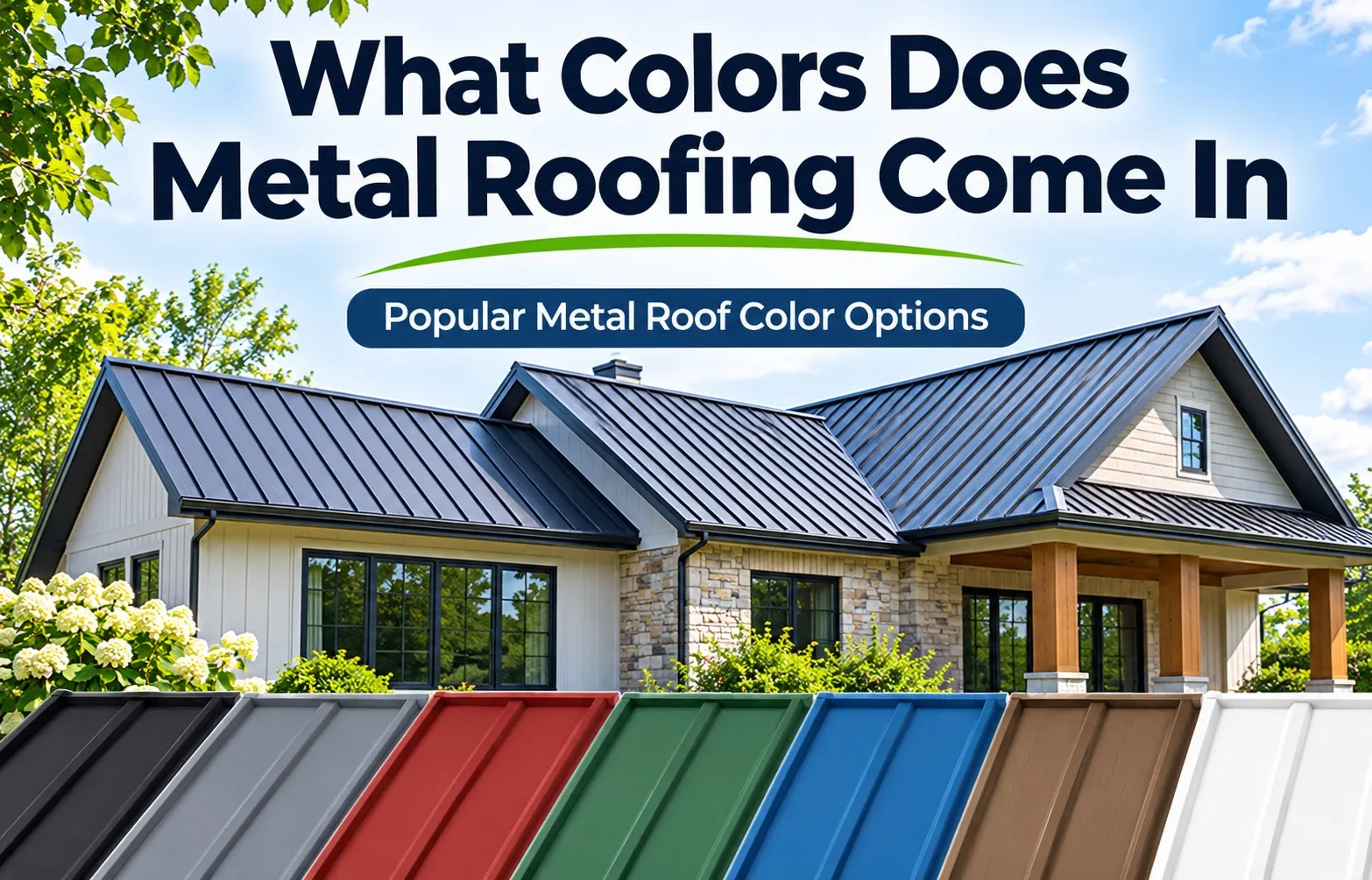 Choosing the right metal roof color requires understanding how specific shade names, pigment technologies, and gloss levels perform across different architectural styles. Examining industry-standard color charts reveals how each category shapes curb appeal and long-term visual performance.
Grays and Charcoal (The Most Versatile Modern Neutrals)
Grays and charcoals offer exceptional design flexibility, bridging traditional architecture with clean contemporary lines. Specific shades like Slate Gray, Ash Gray, Dove Gray, and Charcoal Gray dominate residential installations because they mask environmental dust and pollen better than pure white or stark black.
- Charcoal Gray: Currently holding the position as the number one residential metal roofing choice due to its high-end stone aesthetic.
- Slate and Ash Grays: Mid-tone neutrals that soften high-contrast white or light stone siding without washing out exterior trim details.
- Dove Gray: A light, cooling neutral that reflects more solar radiation while maintaining a sleek, modern finish.
Matte Black and Deep Blacks (Contemporary & Farmhouse Favorites)
Deep black metal roofs have surged in popularity alongside modern farmhouse and industrial architecture trends. Utilizing a low-gloss matte finish is crucial for black standing seam panels to control harsh sunlight reflections and minimize visual flaws.
- Oil Canning Reduction: Matte finishes diffuse direct sunlight, helping to obscure minor panel waviness, known as oil canning, that can occur across broad roof planes.
- High-Contrast Aesthetics: Pairs exceptionally well with bright white board-and-batten siding, natural cedar posts, and large glass windows.
- Advanced Pigmentation: High-grade matte blacks use infrared-reflective ceramic pigments to absorb less solar heat than standard black paint systems.
Bronze, Brown, and Earth Tones (Warm, Traditional Appeal)
Earth tones provide a grounded, organic aesthetic that harmonizes naturally with heavily wooded lots, brick exteriors, and stone masonry. Popular options listed on standard Kynar color charts include Dark Bronze, Medium Bronze, Mansard Brown, and Sierra Tan.
- Dark Bronze: A rich, near-black brown that offers a softer alternative to pure black on traditional brick or stone homes.
- Medium Bronze and Mansard Brown: Traditional tones that complement warm wood sidings, cedar shakes, and rustic mountain cabins.
- Sierra Tan: A light earthen hue that blends into desert and arid landscapes while providing excellent thermal reflection.
Natural Metallics and Bare Finishes (Industrial & Timeless Looks)
Bare and metallic coatings deliver an authentic industrial or historic appearance at a fraction of the cost of precious metals. This category includes Mill-Finish Galvalume, Pre-Weathered Galvalume, Champagne, Silver Metallic, and aged Copper looks.
- Cost Efficiency: Mill-finish Galvalume steel serves as the single cheapest metal roofing option because it requires no specialized colored paint coil coating steps during manufacturing.
- Protective Alloy: Galvalume combines aluminum and zinc coatings over a carbon steel core, preventing red rust while maintaining a bright, spangled metallic sheen.
- Pre-Weathered Finishes: Factory-treated to look like aged zinc or weathered steel immediately upon installation, eliminating years of uneven natural oxidation.
Bold Reds, Blues, and Greens (Coastal, Rustic & Historic Statements)
Architectural statement colors add distinct personality, regional character, or historic authenticity to specialized builds. This palette features Regal Blue, Regal Red, Forest/Hartford Green, and Terra Cotta.
- Coastal and Colonial Styles: Regal Blue and Colonial Red are frequently selected for coastal beach houses, colonial revivals, and barn-style structures.
- Historic and Mountain Settings: Hartford and Forest Greens blend seamlessly into heavily forested properties or historic Victorian rooflines.
- UV Considerations: Bold organic pigments require premium resin protection to prevent premature fading under intense ultraviolet exposure.
Metal Roof Color & Exterior Pairing Matrix
Pairing a metal roof with your home’s exterior material requires evaluating color undertones, architectural style, and visual contrast to maximize curb appeal and long-term resale value. The right combination bridges roof and wall finishes seamlessly, creating a cohesive aesthetic that elevates the entire property structure.
Choosing complementary shades prevents visual clashing and ensures your investment enhances property valuation. Below is an exhaustive exterior pairing matrix designed for brick, fiber cement, stucco, and vinyl exteriors.
Matching Undertones: Warm vs. Cool Exteriors
Master color undertones by anchoring warm exterior materials like red brick or tan stone with bronze, copper, or earth-toned metal roofs. Conversely, pair cool exterior facades like gray vinyl siding or bright white fiber cement with charcoal, slate blue, or matte black roofs for balanced harmony.
Ignoring undertone matching is the number one cause of exterior design discordance. Professional color theory dictates that mixing warm and cool spectra haphazardly creates harsh visual tension.
- Warm Undertone Strategy: Red, brown, and tan surfaces thrive alongside bronze, burnished slate, and dark copper panels, enhancing natural earth tones.
- Cool Undertone Strategy: Blue-gray, stark white, and cool taupe exteriors look exceptional under charcoal gray, metallic zinc, or deep slate blue standing seam roofs.
Evaluating your color choices under natural daylight conditions is essential before final installation. Small sample chips viewed against your actual brick exterior or stucco finish prevent costly aesthetic regrets.
Paint Finishes & Coating Systems: What Controls Fading & Gloss?
PVDF coatings, such as Kynar 500 or Hylar 5000, deliver superior 35-to-40-year fade and chalk resistance by utilizing a fluoropolymer resin structure that locks out ultraviolet radiation. Budget-friendly Silicon-Modified Polyester (SMP) options offer decent initial durability, but degrade significantly faster under harsh solar exposure.
Choosing the correct resin system determines whether your metal roof retains its original hue for decades or requires premature repainting. Understanding molecular bonding differences prevents costly maintenance errors down the line.
- PVDF Performance: Composed of 70% fluoropolymer resin, Kynar formulations resist chalking, fading, and chemical corrosion exceptionally well.
- SMP Trade-Offs: SMP coatings blend polyester with silicone, providing hard finishes at a lower initial cost but with accelerated color degradation over time.
- Warranty Differences: Premium PVDF systems typically back color retention with 30-to-40-year warranties, whereas SMP options usually cap fade guarantees at 20 to 30 years.
Which Metal Roof Colors Fade the Fastest vs. Least?
Inorganic ceramic pigments found in charcoals, bronzes, and deep earth tones fade the least because their molecular structures withstand intense UV degradation. Conversely, bright organic pigments like vivid reds and blues break down rapidly under direct sunlight, resulting in accelerated chalking.
Color longevity relies heavily on the pigment chemistry rather than simply the paint shade name or marketing title. Selecting chemically stable mineral components preserves aesthetic value across extreme climate variations.
- Inorganic Ceramic Pigments: Formulated from stable metal oxides, shades like charcoal, dark bronze, and forest green maintain exceptional color stability for generations.
- Organic Pigments: Vibrant primary colors depend on complex carbon compounds that break down under continuous photon bombardment from ultraviolet rays.
- Chalking Prevention: Superior resin-pigment binding prevents microscopic powder residue from forming on the surface during prolonged weather exposure.
Glossy vs. Matte (Low-Sheen) Finishes
Low-gloss matte finishes scatter incoming sunlight evenly, effectively hiding minor surface oil-canning and installation scratches while cutting harsh glare. High-gloss options maximize light reflection initially, but accentuate panel imperfections and show wear patterns much faster.
Sheen selection significantly impacts both the visual texture and the practical maintenance requirements of architectural metal roofing. Modern engineering favors low-sheen aesthetics for contemporary residential styling.
- Sunlight Reflection: Matte finishes diffuse solar radiation, reducing neighborhood glare without sacrificing total solar reflectance values.
- Scratch and Imperfection Masking: Textured low-sheen surfaces conceal microscopic scuffs and minor panel waviness far better than polished alternatives.
- Aesthetic Modernity: Low-gloss profiles deliver an upscale, sophisticated architectural appearance resembling natural slate, zinc, or weathered timber.
How Metal Roof Color Affects Energy Efficiency & Climate Performance
Light-colored metal roofs—such as white, silver, and light stone—reflect up to 70% or more of incoming solar radiation, dramatically reducing interior cooling loads and air conditioning expenses in hot regions. Conversely, dark charcoal and black roofs excel in northern latitudes by absorbing solar energy to accelerate winter snow shedding and prevent heavy ice dam buildup.
Aligning your roof shade with your regional climate dictates long-term energy efficiency and utility cost savings. Choosing an incompatible color profile for extreme weather conditions can strain HVAC infrastructure unnecessarily.
- Hot and Arid Climates: Highly reflective light finishes minimize peak attic temperatures, cutting summertime cooling costs significantly.
- Cold and Snowy Climates: Darker exterior shades absorb solar heat, aiding natural snow slides and reducing manual roof clearing demands.
- Thermal Comfort: Proper climate-matching stabilizes indoor ambient temperatures across seasonal transitions.
How Cool Roof Infrared Pigments Make Dark Roofs Energy-Efficient
Advanced pigment science features specialized infrared-reflective compounds that allow dark bronze, forest green, and charcoal roofs to meet rigorous energy efficiency standards. By reflecting invisible near-infrared light instead of trapping it as sensible heat, these coated metal panels deliver high Solar Reflectance Index (SRI) scores without requiring a bright white surface.
Homeowners can verify certified solar reflectance and thermal emissivity ratings for specific manufacturer colors by consulting the official Cool Roof Rating Council (CRRC) Rated Products Directory. Utilizing certified directories ensures your investment satisfies local building energy codes and qualifies for potential utility rebates.
- Infrared Reflectance: Specialized metal oxide pigments bounce away invisible solar heat waves while preserving deep aesthetic color integrity.
- Thermal Emissivity: High emissivity ratings allow any absorbed heat to radiate away rapidly into the atmosphere after sunset.
- Building Code Compliance: Certified cool roofing materials help meet stringent municipal energy mandates effortlessly.
How to Choose Your Final Metal Roof Color
Never rely on digital catalog photos or online roof visualizers to make your final color decision because computer screens distort color calibration, sheen, and light reflection. Always order physical metal sample chips and evaluate them outdoors against your actual siding at 9:00 AM, 1:00 PM, and 5:00 PM.
Natural daylight alters color perception dynamically throughout the day, making physical test panels indispensable for avoiding costly mistakes. Digital tools provide a helpful starting point, but they cannot replicate real-world pigment interaction.
- Morning Light (9:00 AM): Low-angle sunlight highlights cooler blue or gray undertones in metallic panels.
- Noon Glare (1:00 PM): Direct overhead rays test the true reflectance and sheen performance of low-gloss finishes.
- Evening Shade (5:00 PM): Warm golden hour light deepens earth tones, charcoals, and bronze shades significantly.
Checking HOA Rules, Glare Ordinances & Cost Differences
Always review your neighborhood Homeowners Association (HOA) covenants and local municipal glare ordinances before purchasing, as unapproved shades or highly reflective metallic panels can result in mandatory fines or costly replacements. Additionally, recognize that custom or specialty paint batches typically increase material costs by 10% to 20% compared to standard stock options.
Securing prior written approval eliminates legal friction and ensures compliance with community architectural standards. Balancing budget constraints with aesthetic preferences requires understanding how stock inventory pricing compares to custom formulations.
- HOA Compliance: Submit physical metal swatches directly to your architectural committee to secure formal pre-approval.
- Glare Ordinances: Highly reflective or polished metal finishes are restricted in specific municipalities to prevent blinding neighbor reflections.
- Stock vs. Custom Colors: Standard manufacturer stock colors ship faster and reduce project budgets, whereas custom metallic blends carry surcharges and longer lead times.
Frequently Asked Questions About Metal Roofing Colors
What is the most popular color for metal roofs?
Charcoal gray, matte black, and dark bronze currently stand as the most popular choices for modern residential metal roofs, providing sophisticated curb appeal that complements diverse architectural styles. These neutral tones dominate contemporary installations due to their high versatility and timeless elegance.
- Charcoal Gray: Balances modern aesthetics with soft, understated elegance.
- Matte Black: Delivers high-end contrast and dramatic visual depth.
- Dark Bronze: Offers warm earth tones ideal for traditional and transitional homes.
What is the cheapest color of metal roofing?
Unpainted Galvalume or mill finish steel represents the absolute cheapest option for metal roofing because it completely bypasses factory coil coating processes. Standard stock colors like classic white, light gray, and burnished slate follow closely as budget-friendly pre-painted alternatives.
- Unpainted Galvalume: Eliminates paint surcharges while offering strong aluminum-zinc corrosion protection.
- Standard Stock White: Mass-produced factory colors that maintain lower material procurement costs.
- Light Gray: Commonly available stock shade minimizing special order and freight fees.
What color metal roof increases home value the most?
Timeless neutral shades like charcoal, slate gray, and dark bronze maximize home resale value by appealing to the broadest pool of potential buyers and maintaining architectural compatibility across market shifts. High-end neutral metal roofs ensure seamless exterior coordination for future property owners.
- Broad Market Appeal: Neutral tones match nearly any siding, brick, or stone combination.
- Perceived Durability: Premium neutral finishes signal long-term structural integrity and minimal maintenance.
- Standing Seam Integration: Enhances high-end standing seam metal roof investments effectively.
What is the best color for a metal roof on a white modern farmhouse?
Matte black, charcoal gray, and aged Galvalume serve as the premier color choices for a white modern farmhouse, creating a striking yet balanced high-contrast aesthetic. These dark hues anchor bright white lap siding or board-and-batten exteriors effortlessly.
- Matte Black: Creates a bold, crisp contrast against stark white siding.
- Charcoal Gray: Softens the stark contrast while preserving contemporary farmhouse styling.
- Aged Galvalume: Introduces an organic, weathered metallic texture suited for modern rustic builds.
Can you repaint a metal roof if you want to change the color later?
You can successfully repaint a metal roof to change its color later by applying specialized acrylic or elastomeric metal roof coatings after thorough surface preparation and priming. Professional recoating extends the service life of aging panels while updating exterior aesthetics.
- Surface Preparation: Thorough cleaning, washing, and rust removal ensure proper coating adhesion.
- Specialized Primers: Rust-inhibitive bond coats prevent peeling and protect against degradation.
- Elastomeric Coatings: Provide flexible weatherproofing, UV protection, and custom color choice flexibility.
Home Improvement Researchers & Guides Editors
Meet the Nest Team, a collective of dedicated researchers, home improvement enthusiasts, and industry writers sharing practical guides, thorough category research, and trusted solutions for residential repairs and thoughtful home upkeep.