Diagnostic Matrix & Instant Identification
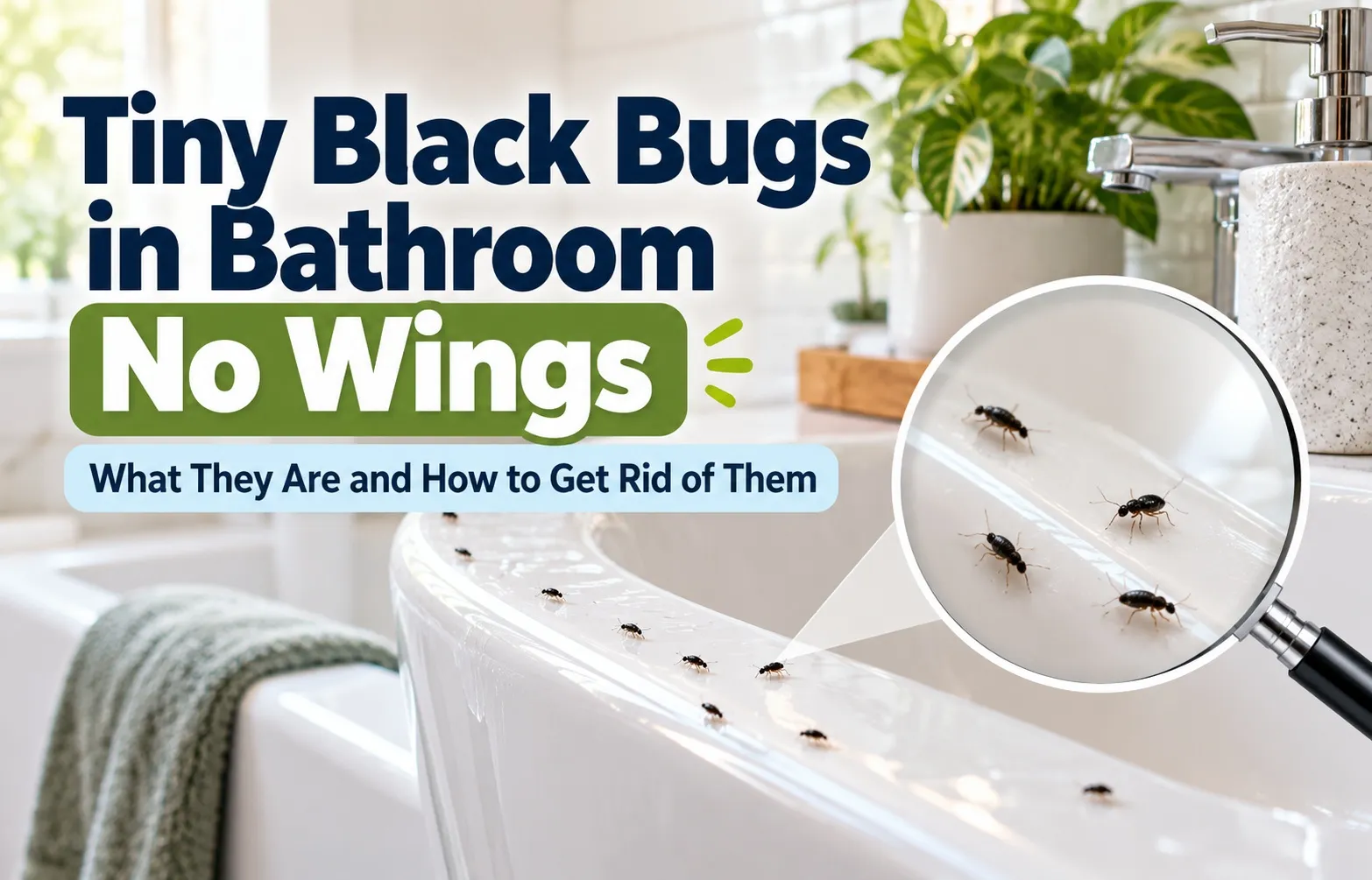 Finding tiny black bugs in bathroom with no wings usually points to five common household moisture pests: springtails, booklice, silverfish nymphs, drain fly larvae, or mold mites. Identifying the specific insect immediately relies on observing its physical shape and movement mechanics.
Fast Pest Identification: What Are These Tiny Wingless Black Bugs?
When dark specks appear around sinks, showers, or tile lines, homeowners often mistake them for dirt or lint. However, these wingless insects are drawn inside by excessive humidity, organic sludge, or invisible mildew growth.
Diagnostic Checklist: Identifying Your Bathroom Bug in 3 Seconds
To pinpoint the exact pest without specialized tools, perform a quick 3-second visual check based on these key behavioral traits:
- The Touch Test (Jumping vs. Crawling): Touch near the bug with a paper towel. If it launches into the air instantly, it is a springtail using its furcula. If it crawls away slowly without leaping, it is likely a booklice, carpet beetle larva, or mold mite.
- The Speed Test (Darting vs. Sluggish): Watch how fast the pest moves across tiles. Rapid, erratic darting indicates a silverfish nymph, whereas steady, slow movement indicates booklice or beetle larvae.
- The Surface Check (Drain vs. Dry Wall): If tiny dark worm-like creatures linger exclusively inside sink drains, drain traps, or shower grates, they are drain fly larvae feeding on biofilm sludge rather than fully formed adult insects.
- The Texture Check (Black Pepper Specks): Pests that gather in clusters resembling spilled poppy seeds or black pepper around tub caulking are almost always springtails or mold mites thriving on hidden mildew.
The Top 5 Bathroom Pests (Detailed Identification & Behavior)
Understanding which specific pest has invaded your bathroom requires examining physical structures, body dimensions, and behavioral traits. Identifying these five common non-flying bathroom insects helps target the root cause of the infestation immediately.
1. Springtails: The Jumping Black Pepper Specks
Springtails (Collembola) are extremely tiny, measuring between 1/16 and 1/8 of an inch in length. Their coloration ranges from translucent white and light brown to jet black, often making a group of them look like a sprinkle of coarse black pepper around wet tub fixtures.
Their defining feature is a unique tail-like jumping appendage called a furcula located beneath their abdomen. When startled or touched, the furcula snaps against the surface, catapulting the wingless insect several inches into the air.
- Primary Characteristics: Soft-bodied, oval shape, lack wings entirely.
- Movement Mechanics: Instantaneous launching/leaping mechanism using the furcula.
- Micro-Habitat: High-moisture zone near tile grout, leaky faucets, damp bath mats, and window sills with mold spores.
2. Booklice (Psocids): Microscopic Mold-Feeders
Booklice, commonly referred to as psocids, are soft-bodied insects measuring approximately 1/16 to 3/16 of an inch long. They exhibit color shifts ranging from pale, translucent yellow-gray to dark charcoal brown depending on their age and species.
Unlike springtails, booklice do not possess a jumping mechanism and move by crawling quickly across damp surfaces. They rely entirely on environments with a relative humidity above 58% to prevent fatal dehydration and to feed on microscopic fungal growth.
- Primary Food Source: Microscopic mold, mildew spores, starchy wallpaper paste, and damp drywall residue.
- Structural Features: Prominent thread-like antennae, enlarged head capsule, narrow thorax.
- Behavior: Fast, scuttling movement along baseboards, under vanity sinks, and across damp plaster walls.
3. Silverfish Nymphs: Fast-Moving Teardrop Scavengers
Immature silverfish (nymphs) lack the fully developed metallic sheen of adults, appearing as tiny, dark brown or greyish wingless insects. They range in size from 1/8 to 1/4 of an inch and feature a distinct tapered, teardrop body shape.
Silverfish nymphs are strictly wingless nocturnal scavengers that move in erratic, fish-like darting bursts across bathroom tile floors. They are easily identified by three long, thread-like bristles extending directly from the tip of their tail section.
- Key Visual Cues: Tapered body, long antennae, three distinct silverfish rear bristles at the abdomen tail end.
- Hiding Spots: Dark, undisturbed crevices, hollow baseboards, behind wall mirrors, and under bath vanities.
- Feeding Habits: Carbohydrate scavengers that feed on hair, fallen dander, glue, and wet paper products.
4. Drain Fly Larvae: Dark Worm-like Pipe Inhabitants
Homeowners often confuse drain fly larvae with wingless adult bugs because they crawl across shower basins and sink basin rims without flying. These dark, legless, worm-like creatures measure 1/8 to 3/8 of an inch long and feature a distinct dark stripe across their upper body.
It is vital to recognize that drain fly larvae are non-flying worm-like developmental forms of flying adult drain flies (Psychodidae), not fully grown wingless insects. They develop directly inside p-trap larvae zones, feeding on stagnant organic matter until pupation.
- Physical Appearance: Slender, cylindrical body with a dark brown to black head capsule and no visible legs.
- Movement Mechanics: Slow, wriggling, or crawling motion along wet ceramic surfaces immediately adjacent to drains.
- Habitat Focus: Biofilm sludge, organic hair clogs, and decomposing matter inside shower P-traps and overflow pipes.
5. Carpet Beetle Larvae & Nuisance Ants: The Creeping Scavengers
Carpet beetle larvae are small, oval, non-flying pests measuring 1/16 to 1/8 of an inch long. They feature a distinct brownish-black body covered in dense, bristly hairs, giving them a fuzzy appearance as they creep along bathroom baseboards.
Nuisance ants, such as little black ants or sugar ants, are frequently found scouting bathroom counters for moisture or soap residue. Unlike larvae, adult ants have three distinct body segments, elbowed antennae, and travel in organized, linear trailing paths.
- Carpet Beetle Larvae Target: Hair and keratin scavengers that feed on shed human hair, pet fur, and natural fiber bath rugs.
- Nuisance Ant Target: Drawn to water drops near sinks, sweet toothpaste caps, and damp bath towel piles.
- Distinguishing Trait: Carpet beetle larvae crawl continuously in solitude, whereas ants travel in distinct structural foraging lines.
Safety, Health Risks & Myth Busting (Addressing Fear & Anxiety)
Discovering unexpected insects in a personal sanitation space often causes immediate anxiety regarding bites, structural damage, or personal hygiene. Fortunately, the vast majority of wingless dark insects found near bathroom fixtures pose zero direct physical harm to human occupants.
Do Tiny Black Bathroom Bugs Bite or Cause Rashes?
Springtails, booklice, silverfish, and drain fly larvae are completely non-biting bathroom pests. None of these common moisture-seeking insects possess chewing mouthparts designed to pierce human skin, nor do they carry venom or stingers to inflict wounds.
Furthermore, these wingless bugs do not transmit dangerous blood-borne pathogens or spread infectious diseases. If you are experiencing physical bites or distinct skin welts, the source is likely an external pest such as fleas, bed bugs, or outdoor mosquitoes rather than typical bathroom moisture insects.
- Biting Risk: Zero. None of the primary non-flying bathroom pests feed on human blood or tissue.
- Disease Transmission: They do not vector infectious diseases or transfer dangerous bacteria to humans.
- Pet Safety: Safe for domestic pets; ingesting them carries no toxic or parasitic health risks to cats or dogs.
Am I Dirty? Uncovering the Cleanliness Myth
Finding tiny wingless bugs near your tub, toilet, or vanity sink is not a sign of poor housekeeping or inadequate personal hygiene. These pests are attracted exclusively to micro-moisture, humidity, and decaying organic matter—factors present even in meticulously sanitized homes.
Sanitation myths often lead homeowners to over-scrub with harsh chemical agents unnecessarily. In reality, these insects thrive wherever damp building materials exist, such as unsealed tile grout, slow-draining P-traps, or condensation under water tanks.
- Primary Attraction Driver: Ambient indoor humidity, trapped water, and invisible fungal spores.
- Clean Home Infestations: Brand-new construction homes often attract booklice and springtails due to drying plaster and damp concrete slab moisture.
- Proper Solution Focus: Moisture management and environmental control rather than aggressive cleaning products alone.
Understanding Skin Sensations: Mold Mites vs. Psychological Crawling
Many individuals report feeling a prickling or “crawling” sensation on their skin after spotting tiny specks on bathroom tiles. This phenomenon is frequently a biting illusion caused by environmental factors rather than actual insect attacks.
High humidity environments that support springtails and booklice also promote invisible fungal growth. Microscopic mold spores and airborne allergens settling on bare skin can trigger mild skin irritation, itchiness, or minor localized rashes, which are easily mistaken for insect bites.
- Mold Allergies & Irritation: Microscopic fungal spores can cause real physical skin redness, itching, and respiratory discomfort.
- Tactile Sensitization: Heights of stress combined with visual anxiety often create a heightened awareness of normal skin nerve sensations.
- Microscopic Mites: While mold mites (Tyrophagus putrescentiae) can multiply rapidly on damp surfaces, they feed on mold, not humans, and cause mild allergic reactions at worst.
Root Cause Analysis Why Are They in Your Bathroom?
Wingless pests do not appear in a bathroom by random chance. Their sudden presence indicates specific micro-climates, structural vulnerabilities, and hidden moisture sources that create an ideal survival habitat.
Micro-Moisture Traps: Leaks, Grout, and Hydrostatic Pressure
Bathrooms are inherently wet spaces, but damage to physical seals allows water to accumulate behind walls and beneath floors. This creates protected breeding grounds where tiny insects multiply without disturbance.
- Silicone Caulking Decay: Worn or cracked bathtub and sink caulk traps water underneath, fostering hidden mold growth that attracts booklice and springtails.
- Unsealed Tile Grout: Porous grout lines absorb shower moisture, keeping sub-surface wall cavities damp for extended periods.
- P-Trap Leaks: Slow, hidden leaks underneath vanity cabinets or shower drains saturate wood framing and sub-floor moisture.
- Hydrostatic Pressure: Ground moisture migrating upward through concrete slabs can keep baseboards consistently damp, inviting crawling scavengers.
What Are They Eating? Microscopic Mold, Soap Scum, and Biofilm
Beyond water access, these pests require a steady nutrient supply. They feed heavily on organic residues and microscopic fungi that accumulate on damp bathroom surfaces.
- Fungal Spores: Invisible mildew and fungal spores growing on drywall or tile act as the primary nutritional base for springtails and booklice.
- Soap Scum Buildup: Residue from bar soaps, shampoos, and body washes provides rich organic food sources for crawling insect larvae.
- Organic Sludge & Biofilm: Slimy deposits inside sink overflows and drain pipes feed drain fly larvae and tiny scavengers.
- Hair and Skin Dander: Shed human hair and skin cells trapped in bath mats or tile crevices supply essential keratin and proteins.
Indoor Humidity & Poor Ventilation Factors
High atmospheric moisture is the single most important factor keeping these pests alive. Without adequate air circulation, moisture lingers in the room long after showers end.
- Relative Humidity Levels: Sustained relative humidity above 58% allows soft-bodied insects to absorb moisture directly from the air, preventing dehydration.
- Exhaust Fan CFM Deficiencies: Undersized or neglected exhaust fans fail to exhaust steam efficiently, leaving walls and ceilings saturated.
- Stagnant Air Pockets: Bathrooms lacking cross-ventilation or windows trap warm moisture against cold tile surfaces, accelerating condensation and mold colonization.
Surface-Specific Elimination Blueprint (Targeted Remedies)
Eliminating wingless bathroom pests requires targeted action tailored to where they congregate. Generic pest control methods often fail because different bathroom surfaces require distinct mechanical and non-toxic treatments.
How to Clear Bugs from Sinks, Showers, and Floor Drains
Drains are prime breeding spots for drain fly larvae and moisture-seeking scavengers because organic sludge accumulates inside P-traps. Pouring liquid bleach down the drain is ineffective because it runs past thick biofilm without breaking it down.
To eliminate drain pests completely, follow this two-step mechanical and organic cleaning protocol:
- Step 1: Mechanical Debridement: Remove the drain cover and use a flexible drain snake or stiff wire brush to physically scrape away hair clogs, soap scum, and organic sludge clinging to the pipe walls.
- Step 2: Baking Soda and Vinegar Flush: Pour 1/2 cup of baking soda down the drain, followed immediately by 1 cup of white vinegar. Cover the drain opening for 15 minutes as the fizzing reaction loosens remaining debris, then flush with boiling water.
- Step 3: Enzymatic Biofilm Removal: Apply a commercial enzymatic drain cleaner nightly for 3 consecutive nights. The live enzymes consume organic buildup, destroying the larvae’s food source completely.
Eliminating Bugs Around Baseboards, Tile Grout, and Toilet Tanks
Springtails and booklice frequently hide in tight cracks along tile grout lines, under baseboards, and behind condensation-covered toilet tanks. Treating these areas requires safe, long-acting mechanical barriers rather than harsh chemicals.
Apply these physical control measures to eliminate crawling pests in dry wall and floor junctions:
- Isopropyl Alcohol Spray: Mix equal parts 70% isopropyl alcohol and water in a spray bottle. Spray directly on active bugs for an instant, non-toxic contact kill that evaporates without damaging grout or paint.
- Food-Grade Diatomaceous Earth: Using a hand duster, apply a thin layer of food-grade diatomaceous earth into cracks behind baseboards and under vanity cabinets. This natural powder dehydrates crawling insects by absorbing their protective outer waxy layer.
- Silicone Re-Caulking: Strip old, cracked caulk around the base of toilets and tub rims. Clean the area with alcohol, allow it to dry fully, and apply fresh mold-resistant silicone sealant to permanently eliminate entry points.
Treating Damp Bath Mats, Towels, and Vanity Cabinets
Fabrics and wooden vanity interiors trap moisture and skin dander, creating ideal feeding grounds for carpet beetle larvae and silverfish nymphs.
Implement these fabric and cabinet hygiene routines to clear hidden pests:
- High-Heat Laundry Wash: Wash all bath mats, fabric shower curtains, and towels in hot water (at least 130°F / 54°C) and dry them on high heat for 30 minutes to kill all life stages of insects and mold spores.
- Elevated Fabric Drying: Hang bath mats over towel bars immediately after use rather than leaving them flat on ceramic tile floors where moisture stays trapped.
- Vanity Cabinet Cleanout: Empty under-sink cabinets, vacuum up stray hair and debris with a HEPA vacuum, and wipe down surfaces with a diluted vinegar solution to eliminate fungal growth.
Why Chemical Insect Sprays Fail (And What to Use Instead)
Homeowners often fall into the “pesticide trap”—repeatedly spraying commercial aerosol insecticides whenever bugs appear. This approach fails long-term because synthetic sprays only kill visible surface bugs while leaving the underlying moisture source untouched.
Because soft-bodied pests like springtails and booklice reproduce rapidly in high-humidity micro-climates, chemical sprays do not provide lasting protection. Overusing synthetic insecticides inside enclosed bathrooms can also lead to indoor chemical exposure and potential pesticide resistance.
- Root Cause Failure: Pesticides do not remove standing water, fix P-trap leaks, or eliminate mold spores, allowing new generations to hatch continuously.
- Non-Toxic Pest Control Alternatives: Rely on environmental controls—such as lowering room humidity below 50%, mechanical vacuuming, physical caulking, and food-grade diatomaceous earth—to eliminate non-flying bathroom pests permanently.
Long-Term Prevention & Environmental Control Plan
Preventing wingless bathroom pests permanently requires transforming your bathroom into an environment where soft-bodied insects cannot survive. Eliminating excess moisture and sealing potential entry points provides effective, long-term preventative pest control without recurring chemical treatments.
Moisture Control: Setting Target Humidity Levels Below 50%
Soft-bodied insects such as booklice and springtails rely on ambient moisture to prevent fatal dehydration. Maintaining relative humidity below 50% systematically desiccates these pests and halts the growth of microscopic mold spores that feed them.
Follow this structured 7-day action plan to achieve structural drying throughout your bathroom environment:
- Day 1 (Leak Audit): Inspect vanity P-traps, supply lines, and toilet valves for hidden drips; repair immediately.
- Day 2 (Dehumidifier Placement): Install a portable dehumidifier in or near the bathroom, running it continuously until the ambient humidity drops below 50% RH.
- Day 3 (Deep Surface Dry): Wipe down wet tile surrounds, tub ledges, and vanity tops immediately after use with a dedicated microfiber squeegee or towel.
- Day 4 (Grout & Sealant Inspection): Scrape away compromised, moldy caulking along baseboards and tub edges, allowing exposed joints to dry completely.
- Day 5 (Fabric Elevation): Remove heavy floor rugs and replace them with fast-drying mats that are hung over shower rods after every use.
- Day 6 (Airflow Optimization): Keep the bathroom door open when unoccupied to encourage continuous cross-ventilation.
- Day 7 (Baseline Verification): Use a digital hygrometer to confirm that relative humidity remains consistently at or below 50% during peak usage hours.
Re-Caulking and Sealing Bathroom Entry Points
Insects frequently enter living spaces through gaps in wall cavities, baseboards, and plumbing penetrations. Sealing these micro-voids prevents pests from crawling out from sub-floor areas into your clean fixtures.
- Mildew-Resistant Silicone Sealant: Apply 100% waterproof, mildew-resistant silicone sealant along tub surrounds, shower trays, and sink backsplashes to block moisture penetration.
- Plumbing Escutcheon Plates: Seal gaps where drain lines and water pipes enter walls behind vanities using expanding foam or caulk.
- Baseboard Perimeter Sealing: Run a continuous bead of caulk along the bottom edge of wooden baseboards to close off void spaces above concrete slabs.
For more details on differentiating pest types during structural inspections, refer to the Better Termite Identification Guide.
Bathroom Exhaust Fan Maintenance & Clean-Air Routines
An underperforming ventilation system traps humid air inside the bathroom, accelerating fungal growth and creating optimal breeding conditions for pest larvae. Proper maintenance ensures optimal exhaust fan CFM performance.
- Post-Shower Ventilation Rule: Run your exhaust fan during showers and leave it operating for 20 to 30 minutes post-shower to fully exhaust airborne water vapor.
- Exhaust Fan Timer Upgrades: Replace standard light switches with a digital countdown timer or humidity-sensing wall switch to automate exhaust cycles.
- Filter and Grille Cleaning: Vacuum dust and lint off the exhaust fan cover grill quarterly to maintain proper airflow efficiency and ventilation capacity.
Frequently Asked Questions
Get quick, direct answers to common questions about non-flying dark bathroom insects, immediate kill methods, and long-term prevention strategies.
What kills tiny mites and springtails immediately?
Spraying direct contact kills like 70% isopropyl alcohol, diluted dish soap, or neem oil solutions instantly eliminates tiny mites and springtails on contact by destroying their protective outer membranes. However, long-term control requires lowering room humidity below 50% to prevent new generations from hatching.
Can tiny black bugs crawl from the bathroom into my bed?
No, tiny bathroom pests like springtails, booklice, and drain fly larvae will not migrate or establish infestations in your bed. They require high humidity, damp surfaces, and mold spores to survive, unlike bed bugs which actively seek human hosts in dry sleeping quarters.
What essential oils or natural smells repel tiny bathroom bugs?
Peppermint oil, tea tree oil, and eucalyptus sprays act as natural deterrents that temporarily repel springtails and silverfish due to strong aromatic compounds. While effective for short-term deterrence, essential oils do not eliminate underlying moisture, mold sources, or active breeding sites inside pipes and wall cavities.
When should you call a professional exterminator?
You should contact a professional exterminator if wingless insects persist after 14 days of drying and sealing efforts, or if you spot signs of structural timber rot. Persistent infestations often indicate hidden plumbing leaks inside wall cavities or beneath sub-flooring that require professional inspection.

Oscar Vance | Master Plumber & Drainage Expert
Meet Oscar Vance, a licensed master plumber sharing practical solutions on residential repairs, preventive maintenance, and thoughtful home upkeep.