Do All HVAC Systems Have Fresh Air Intake?
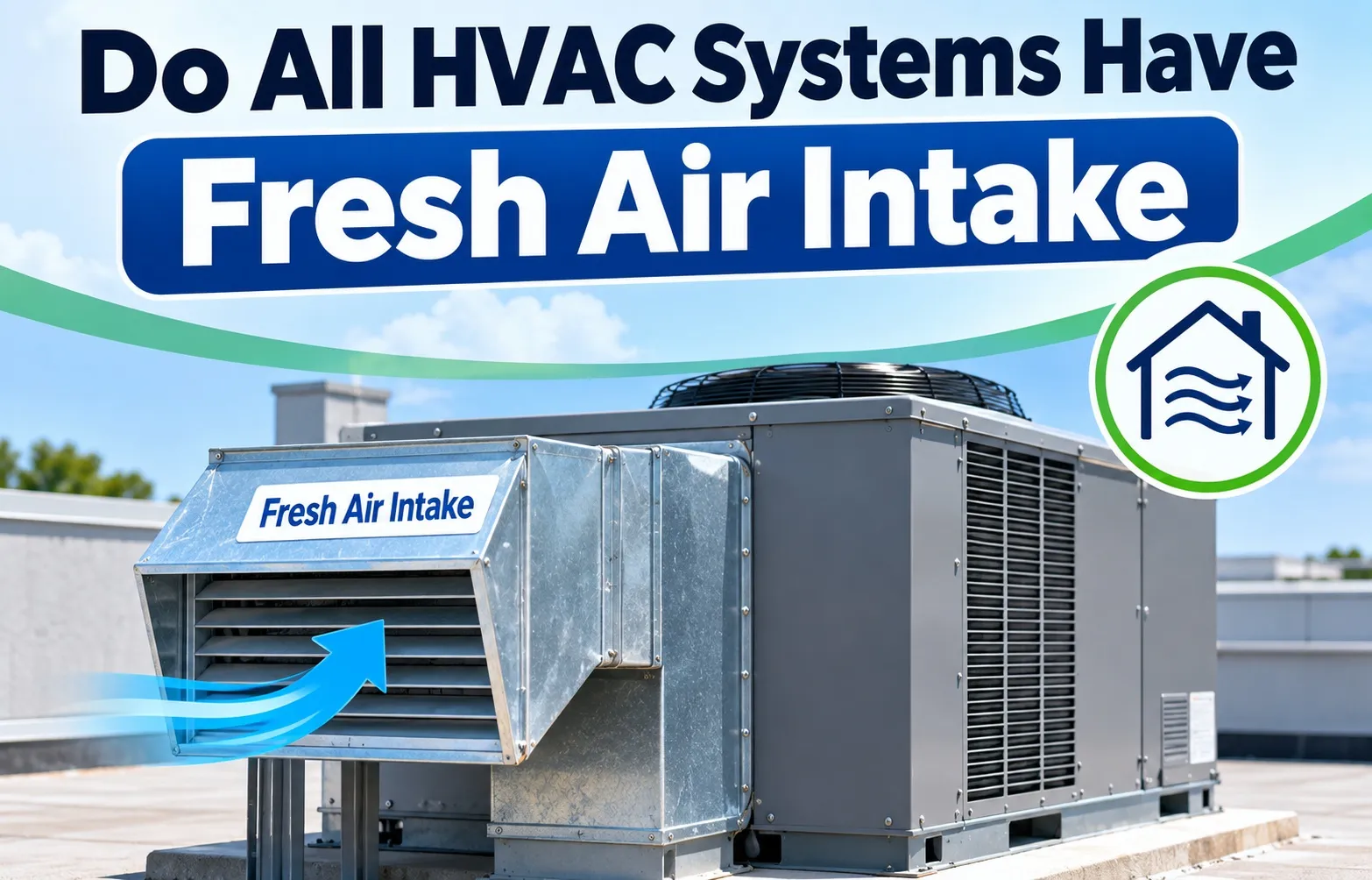 No, not all HVAC systems have a fresh air intake. Most standard residential heating and cooling setups are closed-loop systems designed solely to recirculate existing indoor air through your ductwork rather than pulling in fresh air from outside.
Do All HVAC Systems Have a Fresh Air Intake?
Standard central air conditioners and furnaces in most homes do not draw in outdoor air. Instead, the air handler unit (AHU) pulls air from inside your home through return vents, filters it, heats or cools it, and redistribute it into your living spaces.
While standard systems rely on recirculating indoor air, dedicated mechanical ventilation can be integrated into residential setups:
- Standard Residential HVAC: Recirculates 100% indoor air continuously through a closed-loop system to maintain room temperatures efficiently.
- Systems with Fresh Air Intakes: Utilize specialized intake ducts connected to the return air plenum to introduce measured amounts of outdoor air.
- Modern Energy-Efficient Homes: Frequently combine central heating and cooling with dedicated mechanical ventilation to protect indoor air quality (IAQ).
Recirculation vs. Mechanical Ventilation
Understanding how your air moves makes it easier to evaluate your home’s ventilation needs and overall indoor air quality. Traditional central units focus entirely on thermal comfort, whereas mechanical ventilation focuses on air exchange.
Here is a direct comparison of how recirculating systems operate alongside mechanical fresh air intake setups:
Fresh Air Intake vs. Combustion Air Intake
Many homeowners confuse fresh air ventilation intakes with furnace combustion air intakes, but they serve completely different purposes. Mixing up these two components can create severe indoor air quality issues or cause serious safety hazards in your home.
Combustion Air Intake Pipes (Safety for Gas Furnaces)
A combustion air intake is a dedicated pipe—typically made of white PVC—that runs directly from the outside into your fuel-burning furnace or water heater. Its sole job is to supply external oxygen directly into the burner chamber to support safe fuel combustion.
Without a dedicated combustion intake, fuel-burning equipment pulls air from inside your home, which can cause key hazards:
- Carbon Monoxide Risk: Inadequate oxygen leads to incomplete fuel burning, producing dangerous levels of odorless carbon monoxide ($\text{CO}$).
- Negative Pressure & Backdrafting: Fuel burners starving for air can draw toxic exhaust gases back down the chimney flue into your living space.
- Strict Safety Codes: Local building codes strictly regulate combustion intakes to guarantee proper burner ventilation regardless of home insulation tightness.
Fresh Air Ventilation Intake (Health & Breathability)
Unlike a combustion intake, a fresh air ventilation intake brings clean outdoor air directly into your living areas. It consists of a 4-to-6-inch duct that connects an exterior wall hood to your central HVAC system’s return plenum.
This setup actively improves your home’s indoor environment in several ways:
- Air Handler Unit Integration: The fresh outdoor air enters the return plenum, mixes with recirculated house air, and passes through your system’s filter.
- Living Area Distribution: Once filtered and thermally conditioned (heated or cooled), the fresh air is evenly pushed into every bedroom and living space through your supply registers.
- Pollutant Dilution: Introducing clean outdoor oxygen lowers carbon dioxide levels and flushes out indoor chemical fumes, dust, and cooking odors.
Safety Warning: Why Blocking the Wrong Pipe Is Dangerous
Homeowners sometimes cover exterior intake pipes during extreme winter cold to prevent cold drafts. However, capping or blocking an outdoor intake without knowing its specific function poses immediate health hazards.
Never seal a PVC intake pipe on the exterior of your home. If cold drafts are entering through a fresh air duct, adjust the mechanical damper inside the ductwork rather than physically blocking the outside vent hood.
Home HVAC vs. Car AC: Why Is There No “Recirculate” Button at Home?
One of the most common misconceptions about home cooling stems from vehicle dashboards. Drivers are used to pressing a simple recirculation button in their cars, leading many to assume their residential wall thermostat performs the exact same function for their house.
The Car AC Analogy Demystified
Cars have a dedicated “recirculate” button because automobile cabins are extremely small, airtight spaces that can quickly cycle between 100% outside air and 100% cabin air using simple electromechanical flaps. Opening or closing these flaps instantly changes where the climate control system pulls its air.
Residential homes rely on fundamentally different architecture to manage airflow for several practical reasons:
- Ductwork and Spatial Volume: Houses contain thousands of cubic feet of space, requiring fixed duct configurations rather than instantaneous flap switches on a control board.
- Motorized Fresh Air Dampers: When a home HVAC system is equipped to bring in outside air, it relies on an inline motorized fresh air damper or a pressure-balanced barometric damper mounted inside the ductwork near the air handler.
- Automated Mechanical Control: Instead of manual dashboard buttons, residential fresh air dampers operate on automated timers, smart controllers, or fixed mechanical balance settings to maintain air exchange safely.
Thermostat Settings: “Auto” vs. “On” vs. “Circulate”
Adjusting settings on your home wall thermostat controls fan motor operation, not outdoor air intake doors. Confusing thermostat fan modes with fresh air intake is a frequent mistake among homeowners.
If you want to control how much outdoor air enters your home, you must adjust the physical mechanical damper installed on your return duct or upgrade to an automated ventilation controller connected to your system’s motorized damper.
How to Check If Your HVAC Has a Fresh Air Intake
Homeowners can easily determine whether their heating and cooling system includes a dedicated fresh air intake by performing a quick physical inspection of their indoor air handler, return ductwork, and exterior walls without paying a technician.
Step 1: Inspect the Indoor Air Handler & Return Plenum
To begin your air handler inspection, head down to your basement, utility room, or attic where your furnace or air handler is located. Look closely at the large sheet metal ductwork, specifically focusing on the return air plenum right before it enters the main cabinet.
- Locate Auxiliary Flex Ducts: Search for a smaller secondary pipe—typically a 4-inch to 6-inch insulated flex duct—tied directly into the larger return trunk line.
- Trace the Pathway: This auxiliary pipe is designed to bridge an outside wall penetration straight into your return airflow system, allowing fresh air injection during blower cycles.
- Check for Simple Connections: Standard retrofit systems often feature a straightforward open pipe running from an exterior wall cap into the return side of the HVAC unit.
Step 2: Locate Exterior Wall Vents & Hoods
Walk around the exterior perimeter of your home near where your HVAC unit or furnace closet is situated to inspect outdoor wall caps. Look for an intake hood that draws outside air into the house, making sure not to confuse it with nearby exhaust vents.
- Identify Fresh Air Hoods: Exterior intake hoods usually feature a louvered screen or wire mesh to prevent leaves, debris, and rodents from entering the duct.
- Distinguish from Exhaust Vents: Dryer vents, bathroom exhaust fans, and high-efficiency furnace PVC exhaust pipes push warm air out, whereas an intake hood actively pulls air inward.
- Verify Proximity: If you spot a dedicated passive fresh air intake grille located on an exterior wall near your HVAC equipment zone, trace its interior path to confirm a link to your return duct.
Step 3: Identify Motorized or Barometric Dampers
Examine the inline hardware attached along any secondary outdoor ducting to see how incoming airflow is managed. Modern and sophisticated systems feature specialized mechanical or electronic controls to regulate when outside air enters your home.
- Barometric Dampers: Look for a counterweighted metal flap or weighted arm that swings open automatically based on pressure differentials inside the return duct.
- Motorized Fresh Air Dampers: Advanced setups use an electronic actuator motor wired to a control board or thermostat to open and close the intake valve on a timed schedule.
- Fresh Air Damper Controls: Check your system wiring or wall control panel for dedicated ventilation settings that dictate how frequently outside air is introduced into the living space.
Modern HVAC Systems & Fresh Air Solutions (HRVs & ERVs)
While older homes relied on natural air leaks through drafty doors and windows for ventilation, modern home construction is designed to be tightly sealed for maximum energy efficiency. To maintain healthy indoor air quality (IAQ) without wasting energy, newer homes depend on balanced mechanical ventilation systems.
Why Tight-Sealed Modern Homes Need Dedicated Intakes
Advanced insulation, spray foam, and high-efficiency windows create an airtight thermal envelope that keeps conditioned air inside. However, without mechanical fresh air intake, this seal prevents natural air exchange and traps harmful contaminants indoors.
Without an adequate air exchange rate, sealed homes accumulate several indoor pollutants:
- Volatile Organic Compounds (VOCs): Off-gassing from furniture, paints, building materials, and household cleaning products stays trapped inside.
- Elevated Carbon Dioxide ($\text{CO}_2$): Human respiration increases indoor $\text{CO}_2$ concentration, leading to fatigue, headaches, and poor sleep quality.
- Uncontrolled Relative Humidity: Cooking, showering, and breathing release moisture that cannot escape, raising humidity levels and inviting mold growth.
Heat Recovery Ventilators (HRV) vs. Energy Recovery Ventilators (ERV)
To bring in fresh outdoor air without forcing your central air conditioner or furnace to work overtime, modern systems use specialized heat exchangers known as HRVs or ERVs.
Both systems transfer energy between incoming outdoor air and outgoing exhaust air, but they handle moisture differently:
ASHRAE 62.2 Building Code Requirements
Building standards now mandate specific ventilation rates for residential properties to safeguard occupant health. Reviewing official EPA Indoor Air Quality guidance outlines how outdoor air enters structures through natural, mechanical, and infiltration processes.
Under the national ASHRAE 62.2 standard, modern residential ventilation rules mandate:
- Continuous Mechanical Ventilation: New construction must feature a whole-building ventilation system capable of delivering continuous fresh outdoor air based on square footage and bedroom count.
- Targeted Local Exhaust: Kitchens and bathrooms must have dedicated exhaust fans to vent moisture and cooking pollutants directly outdoors.
- Verified Air Exchange Rates: Mechanical fresh air intake dampers, HRVs, or ERVs must be calibrated by HVAC installers to hit minimum required cubic-feet-per-minute ($\text{CFM}$) airflow targets.
Seasonal Management: Summer Humidity vs. Winter Cold
Managing your fresh air intake seasonally is critical to keeping your energy bills low and protecting your home from moisture damage. Because extreme outdoor temperatures and humidity levels fluctuate throughout the year, keeping your intake set to a single position year-round can lead to comfort issues.
Should Fresh Air Intake Be Closed in the Summer?
You should generally restrict or adjust your fresh air intake during hot, humid summer months rather than leaving it fully open. Drawing in warm, moisture-laden outdoor air forces your central air conditioner to work significantly harder to cool and dehumidify your home.
Improper summer intake management introduces several risks to your home environment:
- Increased Relative Humidity: Bringing in humid summer air raises indoor relative humidity levels above the recommended 50% threshold, creating optimal conditions for mold growth inside ductwork and on drywall.
- Higher Cooling Costs: Your AC unit must expend extra energy removing moisture (latent heat load) before it can effectively lower the indoor air temperature (sensible heat load).
- Decreased System Efficiency: Overworking the compressor to combat outdoor heat and humidity reduces energy efficiency and causes unnecessary wear on equipment components.
Managing Fresh Air Intakes in Extreme Winter
During freezing winter weather, introducing sub-zero outdoor air directly into your return ductwork can create noticeable cold drafts and cause temperature imbalances across your living spaces.
To balance indoor air freshness with heating efficiency during winter, consider the following strategy:
- Partially Restrict Manual Intakes: Partially closing your manual fresh air damper reduces the volume of freezing air entering the furnace plenum, preventing sudden drops in supply air temperature.
- Prevent Condensation and Frost Build-up: Over-ventilating cold outdoor air can overly dry out your indoor space, while under-ventilating can cause moisture to freeze inside exhaust vents and outdoor intake hoods.
- Utilize Heat Recovery: If your system uses an HRV, ensure the core defrost cycle is functioning properly so incoming sub-freezing air is pre-heated by outgoing warm air before reaching your living space.
Setting Your Fresh Air Damper Correctly
Adjusting your mechanical fresh air damper seasonally requires only a few minutes and ensures balanced airflow year-round. Whether your system uses a barometric damper or a manual lever, maintaining proper settings guarantees clean air without sacrificing comfort.
To execute a proper damper adjustment, locate the locking wingnut or position dial on your fresh air duct, rotate the lever to match the target seasonal opening percentage, and tighten the screw to lock the damper in place.
Frequently Asked Questions
Here are answers to the most common questions homeowners ask about HVAC air circulation, fresh air intakes, and ventilation upgrades.
Does running central AC bring in outside air?
No, running a standard central AC does not bring in outside air. Conventional central air conditioning systems operate as closed loops that draw indoor air through return vents, pass it over a cold evaporator coil to remove heat and moisture, and recirculate that same cooled air back into your home.
Unless your system is equipped with an optional central AC outside air intake duct, an HRV, or an ERV, no fresh outdoor air enters your living space while the air conditioner runs.
How do I turn off the fresh air intake on my HVAC?
To turn off the fresh air intake on your HVAC system, locate the fresh air intake duct attached to your return plenum or air handler cabinet and follow these steps:
- Manual Dampers: Loosen the wingnut or locking lever on the outside of the duct, turn the handle to the “Closed” or perpendicular position, and retighten the nut.
- Motorized Dampers: Turn off the power switch on your inline ventilation controller, or adjust your smart thermostat settings to disable automated fresh air ventilation.
- Mechanical Intakes: Never block the exterior intake hood with tape or expanding foam; always adjust the control damper inside the ductwork to preserve system safety.
Can I leave recirculation on all the time in my home?
Yes, you can leave indoor air recirculation running continuously by setting your thermostat fan switch to “ON,” but doing so without introducing fresh air can lead to stale indoor conditions.
Continuous recirculation provides distinct pros and cons for homeowners:
- Benefits: Keeps indoor air constantly passing through your air filter, captures floating dust and pet dander, and eliminates hot or cold spots between rooms.
- Drawbacks: Does not replenish oxygen or lower indoor $\text{CO}_2$ levels, which can cause indoor air quality to degrade over time in tightly insulated homes.
How much does it cost to add a fresh air intake to an existing HVAC system?
The total fresh air intake installation cost typically ranges between $300 and $3,500, depending on the complexity of the ventilation solution you choose:

Oscar Vance | Master Plumber & Drainage Expert
Meet Oscar Vance, a licensed master plumber sharing practical solutions on residential repairs, preventive maintenance, and thoughtful home upkeep.