How Do You Grow a Plumbing Business?
 Growing a plumbing business requires moving past word-of-mouth referrals by building a predictable customer acquisition engine, optimizing operational efficiency, and establishing recurring revenue streams. Scaling from a solo operator to a multi-truck enterprise demands structured systems for local visibility, rapid lead capture, and disciplined financial tracking.
The 5-Step Growth Framework at a Glance
Success in plumbing contraction and service operations follows a sequential roadmap. Executing these five core pillars in order ensures long-term profitability and sustainable market expansion.
- Know your numbers: Calculate your true breakeven rate and billable hour targets before adjusting pricing models.
- Get found locally: Dominate map packs and organic search results using an optimized Google Business Profile and hyper-local SEO.
- Capture every lead: Implement missed-call text-back software and instant booking tools to prevent prospective clients from calling competitors.
- Build repeat revenue: Launch recurring plumbing maintenance plans to secure predictable cash flow during seasonal slumps.
- Systemize and hire: Document standard operating procedures (SOPs) before recruiting your first lead technician.
Who This Guide Is For
Every phase of plumbing company growth requires a distinct operational focus. Identifying your current stage helps you prioritize the right strategies for immediate ROI.
- Solo Operators: Focus heavily on local SEO, transparent flat-rate pricing, and capturing missed phone calls to transition out of the truck.
- Small Teams (2-5 Technicians): Prioritize dispatch software, automated review collection, and basic standard operating procedures to maintain service quality.
- Established Companies (5+ Technicians): Scale through structured technician recruiting, recurring maintenance membership agreements, and multi-channel marketing campaigns.
What Actually Slows Plumbing Growth
Many plumbing contractors stall out despite high demand because hidden operational bottlenecks drain profitability. Recognizing these pitfalls prevents wasted marketing spend and cash flow crunches.
- Unprofitable Pricing: Charging by the hour instead of utilizing flat-rate pricing often fails to cover vehicle overhead, fuel, and equipment maintenance.
- Missed Opportunities: Failing to answer incoming emergency service calls instantly sends high-intent customers straight to competitors.
- Operational Chaos: Relying on memory instead of documented SOPs leads to inconsistent customer experiences and high technician turnover.
Know Your Numbers: Pricing and Profit Before Marketing
Scaling a plumbing business requires mastering unit economics before investing heavily in digital marketing campaigns. Without a precise financial baseline, increased lead generation only accelerates financial losses and operational stress.
How to Calculate Your Breakeven Hourly Rate
Your breakeven hourly rate dictates the absolute minimum charge required to cover operational expenses without generating profit. To calculate this correctly, divide your total monthly overhead by your total billable hours.
- Total Monthly Overhead: Sum all fixed and variable expenses including truck notes, insurance, software, marketing, tools, and shop rent.
- Billable Hour Reality (~55%): A technician working a 40-hour week only averages about 22 billable hours (roughly 55%) due to driving, diagnostics, supply runs, and administrative delays.
- The Core Formula: Breakeven Rate = Total Monthly Expenses ÷ Monthly Billable Hours per Technician.
Worked Example: A 3-Technician Shop
The following financial model illustrates realistic figures for a growing plumbing business running three service trucks. These estimates outline how overhead and billable output determine the true breakeven threshold.
Material Markup and Target Margins
Parts and equipment sales must generate secondary revenue to buffer against slow service cycles and warranty call-backs. Sustainable plumbing businesses maintain strict structural margins across all inventory.
- Material Markup: Aim for a 110% markup on parts to cover warehousing, warranty liabilities, and shipping costs.
- Gross Margin Targets: Maintain a gross margin of 55% or higher on total job revenue after subtracting direct labor and materials.
- Net Profit Goals: Target a 20% to 25% net profit margin after all overhead, payroll, and taxes are settled.
Hourly vs Flat-Rate vs Good-Better-Best Pricing
Choosing the right pricing structure directly influences customer psychology, average ticket size, and technician efficiency in the field.
Revenue Goals Backwards
Working backward from a financial target removes guesswork from annual marketing and dispatch quotas. Calculating exact job volume ensures sales pipelines stay adequately fueled.
- The Core Equation: Required Jobs = Revenue Target ÷ (Close Rate × Average Ticket Size).
- Tracking Close Rates: Monitor dispatch-to-close metrics closely; a drop from 70% to 50% immediately signals quoting or technician sales training gaps.
- Boosting Average Ticket: Utilizing camera inspections and diagnostic add-ons naturally lifts overall ticket sizes without increasing lead acquisition costs.
Why Plumbing Businesses Struggle to Hold Margins
Many contractors watch profits evaporate due to unforeseen job complications, rework liabilities, and inaccurate initial quoting. Securing your margins requires systematic safeguards against common profit leaks.
- Unexpected Job Issues: Corroded piping or hidden code violations can turn a routine repair into a loss leader if change orders are not immediately executed.
- Unpaid Callbacks: Warranty revisits due to improper initial installations destroy gross profit margins very quickly.
- Underquoting: Guessing job costs instead of referencing a validated flat-rate price book guarantees margin erosion on complex projects.
Is Plumbing a Profitable Business? What the Money Really Looks Like
Plumbing remains one of the most consistently lucrative service industries due to non-negotiable consumer demand and essential infrastructure maintenance needs. When operated with structured pricing, efficient routing, and strict overhead control, established plumbing businesses routinely generate net profit margins between 15% and 25%.
Is Plumbing a Profitable Business?
Plumbing is exceptionally profitable because it combines high emergency demand with specialized technical labor that cannot be outsourced or automated. Profitability scales dramatically as operations shift from a single solo truck to a multi-truck enterprise utilizing flat-rate pricing and recurring service agreements.
- High Service Demand: Burst pipes, failing water heaters, and backed-up sewer lines require immediate remediation, allowing for premium emergency pricing.
- Strong Materials Markup: Incorporating standard markups on replacement hardware, valves, and fixtures adds a reliable secondary income stream alongside labor charges.
- Resilient Business Model: Plumbing needs remain constant across economic downturns, protecting well-run companies from severe market recessions.
Can a Plumber Make $200,000 a Year?
Earning $200,000 or more per year is entirely achievable, though the pathway differs significantly between skilled field technicians and business owners. According to official US wage data, master technicians working overtime or commission structures can approach high six-figure earnings, but true wealth typically requires business ownership.
- Employee & Commission Techs: Top-tier service technicians working for commission-based companies can cross $100k to $150k with strong sales skills and emergency shift premiums.
- Owner-Operators: Solo operators who manage their own overhead efficiently and maintain a high average ticket size frequently net over $150k annually.
- Multi-Truck Owners: Business owners who transition out of the truck to manage dispatch, marketing, and team scaling regularly exceed $200,000 to $500,000+ in net company profits.
What Types of Plumbing Work Make the Most Money?
Certain plumbing services yield significantly higher gross profits due to low material costs relative to high labor charges or emergency urgency factors. Diversifying your service offerings across high-margin specialties maximizes overall company revenue.
Are Plumbers Becoming Millionaires?
Building a million-dollar net worth in the plumbing sector is common for entrepreneurs who scale past the single-truck phase. Transforming a trade skill into a structured commercial asset creates substantial long-term enterprise value.
- Asset Valuation: Multi-truck plumbing businesses with recurring maintenance contracts command strong valuation multiples when sold to private equity or larger regional consolidators.
- Fleet Expansion: Scaling from one truck to a fleet of five or more shifts the owner’s role from labor execution to executive leadership and asset management.
- Recurring Revenue: Implementing membership clubs for annual drain flushes and water heater checkups builds predictable enterprise cash flow.
Plumbing vs HVAC: Which Pays Better?
Both trades rank among the most lucrative home service sectors, though they feature different operational dynamics and equipment cost profiles.
- Ticket Size & Equipment: HVAC replacements generally carry higher initial ticket prices due to expensive condenser units and complex ductwork installations.
- Emergency Frequency: Plumbing benefits from a higher volume of urgent, year-round emergency calls (e.g., sewage backups and burst pipes) that drive immediate high-margin revenue.
- Cross-Training Advantage: Many successful modern contractors cross-train technicians in both plumbing and HVAC to maximize seasonal revenue across all weather conditions.
Your Growth Roadmap by Stage: Solo Small Crew Multi-Truck
Scaling a plumbing business requires shifting your operational focus as you cross critical capacity thresholds. The strategies that fuel a solo operator differ entirely from the systems needed to manage a multi-truck fleet with dispatchers and customer service representatives.
Stage 1: Solo Operator 0-1 truck
As a solo operator, your primary objective is maximizing billable hours while laying down digital roots that generate inbound calls without constant cold outreach.
- Core Priorities: Lock in profitable flat-rates, aggressively gather Google reviews on every job, optimize your Google Business Profile, and turn every initial customer into a repeat client.
- Common Mistakes: Undercharging out of fear of losing bids, working without emergency after-hours premiums, and failing to answer the phone while under a sink.
- First 90-Day Focus: Perfect your local map pack ranking, establish a reliable local accountant, and secure clean, professional truck lettering.
Stage 2: Small Crew 2-5 technicians
Transitioning to a small crew moves your role from a technician turning wrenches to a working manager who oversees field quality, scheduling, and customer communication.
- Core Priorities: Implement basic field service dispatch software, document core standard operating procedures (SOPs), hire your first support technician, and diversify lead generation beyond word-of-mouth.
- Common Mistakes: Hiring too quickly without vetting cultural and technical fit, or failing to enforce consistent pricing sheets across all technicians.
- Operational Shift: Introduce automated review-request texts immediately after job completion to build social proof on autopilot.
Stage 3: Multi-Truck 5+ trucks
Operating five or more trucks demands a fully systemized enterprise where daily dispatch, customer service, and financials are managed by specialized staff rather than the owner.
- Core Priorities: Hire a dedicated Customer Service Representative (CSR) or dispatcher, appoint a service manager, track granular KPIs, and aggressively build recurring maintenance agreements.
- Common Mistakes: Micromanaging daily dispatches instead of focusing on high-level financial health, cash flow forecasting, and commercial B2B contract acquisition.
- Strategic Expansion: Secure long-term commercial property management contracts to guarantee predictable monthly service revenue.
Which Bottleneck Do You Have?
Identifying your current business bottleneck points you directly to the operational solutions needed to unblock your growth trajectory.
Starting From Zero: Can You Open a Plumbing Business With Little Money or 5 Years’ Experience?
Launching a plumbing venture requires meeting strict legal prerequisites before taking your first service call, regardless of your starting capital.
- Licensing Requirements: Most jurisdictions mandate a licensed Master or Journeyman plumber of record to legally pull permits and operate a contracting business.
- Insurance & Bonding: General liability insurance, commercial auto coverage, and surety bonds are mandatory to protect your assets and win commercial trust.
- Minimum Startup Checklist: Secure a reliable service vehicle, basic hand and power tools, a dedicated business phone number, and a merchant account for credit card processing.
Get Found Locally: Google Business Profile Reviews and Local SEO
Dominating local search results is the fastest way to drive inbound emergency calls and high-margin service requests. Securing top visibility on Google Maps establishes instant trust and positions your plumbing business as the premier authority in your service area.
Set Up and Optimize Your Google Business Profile
Your Google Business Profile (GBP) serves as your primary digital storefront and acts as the gatekeeper to local map pack rankings. Optimizing every section maximizes your appearance in high-intent local searches.
- Primary Category: Select “Plumber” as your core category, and add secondary categories like “Plumbing Contractor” or “Water Heater Repair Service.”
- Service Areas: Precisely define the neighborhoods and zip codes you cover rather than stretching unrealistic distances.
- Visual Assets: Upload high-resolution photos of branded service trucks, uniformed technicians, and clean job completions weekly.
- Active Engagement: Populate the Q&A section with common customer queries and publish weekly updates detailing seasonal promotions.
How to Get More Google Reviews Consistently
Review velocity and average star ratings heavily influence local map rankings and consumer conversion rates. Automating review collection immediately following job completions ensures a steady influx of social proof.
- Timing is Everything: Send an SMS review request within 30 minutes of completing a successful service call while the homeowner is still satisfied.
- SMS Request Script: “Hi [Name], thanks for choosing [Company Name] today! If you were happy with our service, could you take 30 seconds to leave us a quick review here: [Link]?”
- Technician Incentives: Implement bonuses or SPIFFs for technicians who successfully get their name mentioned positively in public reviews.
- Negative Review Protocol: Respond professionally within 24 hours, acknowledge their frustration offline, and resolve the issue quickly to protect your reputation.
Local SEO Basics for Plumbers
Local search engine optimization ensures that when a homeowner searches for emergency plumbing services, your website and map listing appear at the top.
- NAP Consistency: Ensure your Business Name, Address, and Phone number match identically across your website, GBP, and all external directories.
- Citation Building: List your business on verified local directories such as Yelp, YellowPages, Angi, and the Better Business Bureau.
- Service-Area Pages: Create dedicated landing pages for each major suburb or city you service, tailored with hyper-local keywords.
- Keyword Targeting: Integrate geographic modifiers naturally, combining core services with your target operating cities (e.g., “emergency drain cleaning in Austin”).
How to Build a Service Area Page That Ranks
Generic city pages fail to rank because they lack unique, valuable content tailored to that specific geographic location. A high-converting service area page requires localized context and clear conversion paths.
- Localized H1 Heading: Feature the city name prominently in the main title (e.g., “Licensed Plumber in [City Name]”).
- Local Infrastructure Context: Mention local water hardness issues, common regional pipe materials, or municipal permit requirements to demonstrate local expertise.
- Embedded Map and Proof: Include a localized Google Map embed along with reviews and project photos from customers in that specific town.
- Clear Call to Action: Place an instant click-to-call phone button and online booking form above the fold.
Community and Reputation Channels
Expanding your digital footprint beyond standard search engines builds deep community trust and captures word-of-mouth momentum online.
- Nextdoor & Facebook Groups: Monitor local neighborhood feeds actively to recommend solutions when residents ask for trusted service provider recommendations.
- Reddit Communities: Participate in local and trade-focused forums by offering genuine, expert advice without spamming promotional links.
- Local Sponsorships: Sponsor youth sports teams or community events to secure valuable local backlinks and community goodwill.
Tracking What Works
Investing in marketing without tracking attribution leads to wasted advertising budgets and unoptimized campaigns. Implementing rigorous call tracking identifies your most profitable acquisition channels.
- Dynamic Call Tracking: Use dedicated phone numbers for your website, Google Business Profile, and print ads to isolate exactly where leads originate.
- Intake Question: Train customer service representatives to always ask, “How did you hear about us?” on every incoming call.
- ROI Audits: Review customer acquisition costs quarterly to shift budget away from underperforming channels and double down on top performers.
Capture and Convert Every Lead
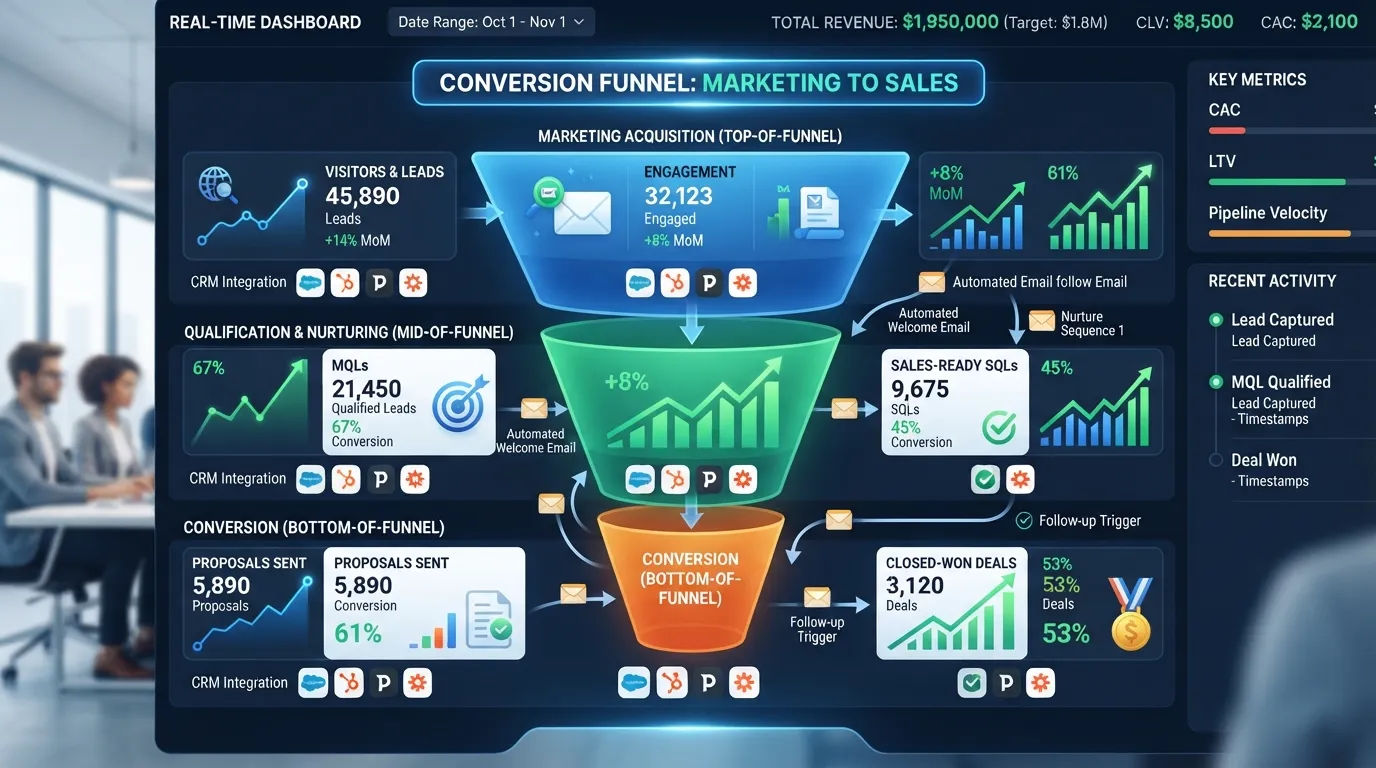 Generating plumbing leads requires significant time and financial investment, making rapid capture and conversion critical for profitability. Failing to answer phone calls or letting high-intent web inquiries sit unaddressed hands valuable revenue directly to your competitors.
Build a Website That Converts
Your plumbing website should function as a 24/7 conversion machine rather than an exhaustive digital brochure. Visitors searching for urgent plumbing solutions need instant clarity and frictionless ways to book service.
- Prominent Contact Elements: Place a click-to-call phone number and a high-contrast “Schedule Now” button in the sticky header of every page.
- Instant Trust Badges: Display state license numbers, bonding credentials, liability insurance certificates, and 5-star review widgets above the fold.
- Lightning-Fast Mobile Speed: Ensure your site loads in under three seconds on mobile devices, where over 80% of emergency plumbing searches originate.
- Streamlined Messaging: Avoid cluttered service lists on the homepage; instead, focus on core emergency offerings and clear calls to action.
Missed-Call Text-Back: How It Works and Why It Saves Jobs
When a homeowner experiences a burst pipe or overflowing toilet, they will rarely leave a voicemail; they simply call the next contractor on Google. A missed-call text-back system eliminates lost opportunities instantly.
- How It Works: The moment your phone line misses an incoming call, automation software immediately triggers a text message to the caller’s mobile phone.
- Sample Automated Script: “Hi there! Sorry we missed your call at [Company Name]. We are out clearing a line right now—how can we help with your plumbing emergency today?”
- Why It Saves Jobs: Engaging leads via SMS within 60 seconds captures homeowners before they dial a competing plumbing service.
Phone Handling Script for Booking Calls
Customer service representatives and dispatchers must guide callers with confidence, empathy, and control. Turning raw inquiries into booked appointments requires a structured intake framework.
- Empathy & Urgency: “I understand how stressful an active leak is; let’s get someone out to protect your home right away.”
- Qualifying Questions: Determine the exact scope of the issue, whether water can be shut off safely, and if immediate dispatch is required.
- The Closing Pivot: “We have an emergency technician available between 2:00 PM and 4:00 PM today. Shall I lock that slot in for you?”
Quote Follow-Up System
Many high-ticket plumbing quotes—such as repipes or tankless water heater installations—do not close on the spot. A disciplined automated follow-up sequence prevents proposals from slipping through the cracks.
- 24-Hour Follow-Up: Send a polite email or text asking if they have any questions regarding the estimate or financing options provided.
- 3-Day Value Add: Share a brief educational message explaining the long-term cost savings of completing the repair now versus waiting.
- 7-Day Limited Incentive: Offer a seasonal maintenance discount or waived diagnostic fee if they approve the quote within the week.
Online Booking and Digital Payments
Modern consumers expect the same seamless digital convenience from home service providers that they experience with ride-sharing or e-commerce platforms.
- Frictionless Scheduling: Integrate an online booking widget directly onto your website and Google Business Profile so clients can select available time slots independently.
- On-Site Digital Payments: Equip field technicians with mobile card readers and invoicing apps to collect payment immediately upon job completion, protecting cash flow.
- Automated Receipts: Send digital invoices and paid receipts via email or text instantly to enhance professionalism and encourage repeat business.
Paid Lead Sources: Local Services Ads and Google Ads for Plumbers
While organic search and local SEO build long-term authority, paid advertising delivers immediate, high-intent call volume. Balancing paid acquisition channels accelerates customer acquisition and keeps your service trucks consistently dispatched.
Local Services Ads vs Google Search Ads vs Organic
Choosing the right acquisition channel depends on your immediate cash flow, competitive landscape, and budget flexibility.
Setting a Realistic Ad Budget
Allocating capital to advertising requires tracking precise unit metrics to ensure your cost per lead translates into profitable closed jobs.
- Cost Per Lead (CPL): Monitor the average amount spent to acquire a phone call or form submission through LSAs and PPC campaigns.
- Cost Per Booked Job: Calculate your true acquisition cost by factoring in your dispatch-to-close conversion percentage.
- Budget Allocation: Dedicate 8% to 12% of total projected monthly gross revenue to marketing and paid advertising when scaling actively.
Emergency vs Scheduled Work: Which to Advertise?
Structuring your ad spend around specific service types optimizes return on investment and aligns with seasonal demand spikes.
- Emergency Campaigns: Allocate higher bids to urgent keywords (e.g., “emergency plumber near me” or “burst pipe repair”) to capture immediate, high-ticket calls.
- Scheduled Service Campaigns: Promote profitable installations like tankless water heaters or repiping during off-peak hours with targeted landing pages.
- Negative Keyword Filtering: Exclude low-intent or DIY search terms (e.g., “how to fix a leaky faucet”) to prevent wasted click spend.
Common Ad Mistakes That Waste Money
Many plumbing companies burn through advertising budgets rapidly due to poor campaign structure and unoptimized tracking.
- Sending Traffic to the Homepage: Directing paid clicks to a general homepage instead of a dedicated, high-converting service page drastically lowers conversion rates.
- Ignoring Call Tracking: Failing to track which specific keywords or ad groups generate revenue leads to misallocated budgets.
- Lack of Speed-to-Lead: Paying for clicks or calls that go unanswered or route to voicemail during peak operational hours.
Build Repeat Revenue: Maintenance Plans Add-On Services and B2B
Transitioning from a break-fix plumbing business to a predictable, recurring-revenue model stabilizes cash flow through seasonal slow periods. Diversifying your service offerings transforms one-off emergency calls into lifelong client relationships.
How a Maintenance Membership Plan Works
A structured maintenance agreement secures upfront cash flow while keeping your trucks booked during shoulder seasons. Memberships incentivize routine upkeep by offering priority dispatch, waived diagnostic fees, and annual safety inspections.
- Pricing Tiers: Structure plans from a basic residential tier (e.g., $15–$25 per month) covering annual water heater flushing and plumbing safety audits, to premium tiers covering whole-home plumbing warranties.
- Recurring Revenue Example: Securing 200 active members at $20 a month generates $4,000 in predictable monthly baseline revenue before a single service call is dispatched.
- Customer Lifetime Value: Membership models significantly increase lifetime customer value by ensuring homeowners call you first for remodels, upgrades, and emergency repairs.
High-Value Add-Ons: Water Filtration Leak Detection Water Heater Flushing
Maximizing revenue per dispatch relies on offering high-value preventative solutions during routine service visits. Integrating these add-ons protects home infrastructure while increasing average ticket sizes.
- Water Filtration Systems: Offer whole-home water softeners, reverse osmosis systems, and sediment filters to address hard water and contaminant issues.
- Proactive Leak Detection: Install smart leak detection sensors and automatic main water shut-off valves to prevent catastrophic property damage.
- Water Heater Flushing: Sell annual sediment flushes as part of routine maintenance to extend equipment lifespan and improve energy efficiency.
Commercial and B2B Channels: Property Managers HOAs Restaurants
Expanding beyond residential service calls into commercial contracts creates high-volume, reliable revenue streams with predictable scheduling.
- Property Managers & Landlords: Secure preferred-vendor agreements to handle multi-family housing units, rental properties, and quick tenant turnover plumbing repairs.
- Homeowners Associations (HOAs): Contract with community associations for common-area maintenance, line jetting, and community irrigation backflow testing.
- Restaurants & Food Service: Target local commercial kitchens for routine grease trap cleaning, hydro-jetting, and emergency commercial water heater repairs.
Referral Program Design
Word-of-mouth remains one of the lowest-cost customer acquisition channels when systematized correctly through a structured referral framework.
- Incentive Structure: Reward existing clients with account credits, gift cards, or discounts on future maintenance visits for every successful referral.
- Automated Follow-Up: Trigger automated post-job SMS and email sequences 48 hours after service completion asking clients to share your contact details with neighbors.
Upselling Without Being Pushy
Technicians should act as trusted advisors rather than aggressive salespeople by focusing on education and home safety documentation.
- The Diagnostic Script: “Mr./Mrs. Homeowner, while servicing your main line today, I noticed your pressure regulator is failing and running at 110 PSI. Left unaddressed, this can rupture your water heater tank. Would you like me to go over options to replace it today before it fails?”
- Visual Evidence: Show customers clear photos or videos taken with inspection cameras so they can see the wear and tear firsthand, allowing them to make an informed decision without feeling pressured.
Systemize Operations: SOPs Dispatch and Job Delivery
Scaling a plumbing enterprise requires replacing chaotic daily improvisation with standardized operational procedures (SOPs). Documenting every workflow ensures consistent service quality, protects gross margins, and eliminates owner dependency as your truck fleet expands.
The 5 SOPs Every Plumbing Company Needs
Operating a multi-technician plumbing business efficiently demands written protocols that cover the entire customer service lifecycle from intake to payment.
- Dispatch Criteria: Standardize how emergency calls are triaged, assigned, and routed to ensure the right technician arrives with appropriate parts.
- Pre-Stocked Trucks: Mandate daily inventory checks so service vehicles leave the shop fully equipped with standard fittings, valves, and repair materials.
- Job Execution Checklist: Establish step-by-step diagnostic and installation procedures that every technician must follow on-site.
- Mobile Job Documentation: Require mandatory before-and-after photo capture and digital inspection reports for every repair.
- Payment Collection Protocol: Enforce strict rules requiring invoice presentation, customer approval, and payment collection before the technician leaves the property.
Truck Stocking Checklist
Running out of basic supplies mid-job kills profitability and frustrates homeowners waiting for parts runs. A standardized replenishment checklist prevents costly downtime.
- Fittings and Pipe: Maintain a complete inventory of standard PEX, copper, PVC, and black iron fittings, couplings, and connectors.
- Valves and Cartridges: Keep common angle stops, ball valves, and popular faucet cartridges stocked in designated bins.
- Repair Consumables: Ensure ample supply of PTFE tape, pipe dope, flux, solder, torch fuel, and sealing compounds.
- Safety Gear: Verify that fire extinguishers, eye wash stations, GFCI extension cords, and PPE are fully stocked and inspected weekly.
Reducing Callbacks and Protecting Margins
Warranty callbacks destroy labor efficiency and eat away at gross profit margins very quickly. Implementing rigorous quality control standards prevents costly return trips.
- Mandatory Pressure Testing: Require secondary pressure tests on all newly installed supply lines and water heaters before wrapping up a job.
- Peer Quality Audits: Periodically audit completed jobs across your technician team to ensure compliance with local plumbing codes and company standards.
- Root Cause Analysis: Track the exact reasons behind every callback to identify recurring training gaps or faulty installation habits.
Field Service Software: What to Look For
Transitioning away from paper schedules and manual billing requires investing in robust field service management (FSM) software designed for trade contractors.
- Real-Time Dispatching: Look for drag-and-drop calendar boards that optimize geographic routing and technician scheduling.
- Integrated Price Books: Ensure the software supports customizable flat-rate pricing guides and good-better-best presentation tools.
- Mobile Invoicing & Payments: Verify that technicians can build quotes, collect signatures, and process credit card payments directly from a mobile app.
- Automated Customer Communications: Choose platforms that send automated booking confirmations, technician tracking texts, and post-job review requests.
Hire Train and Keep Good Technicians
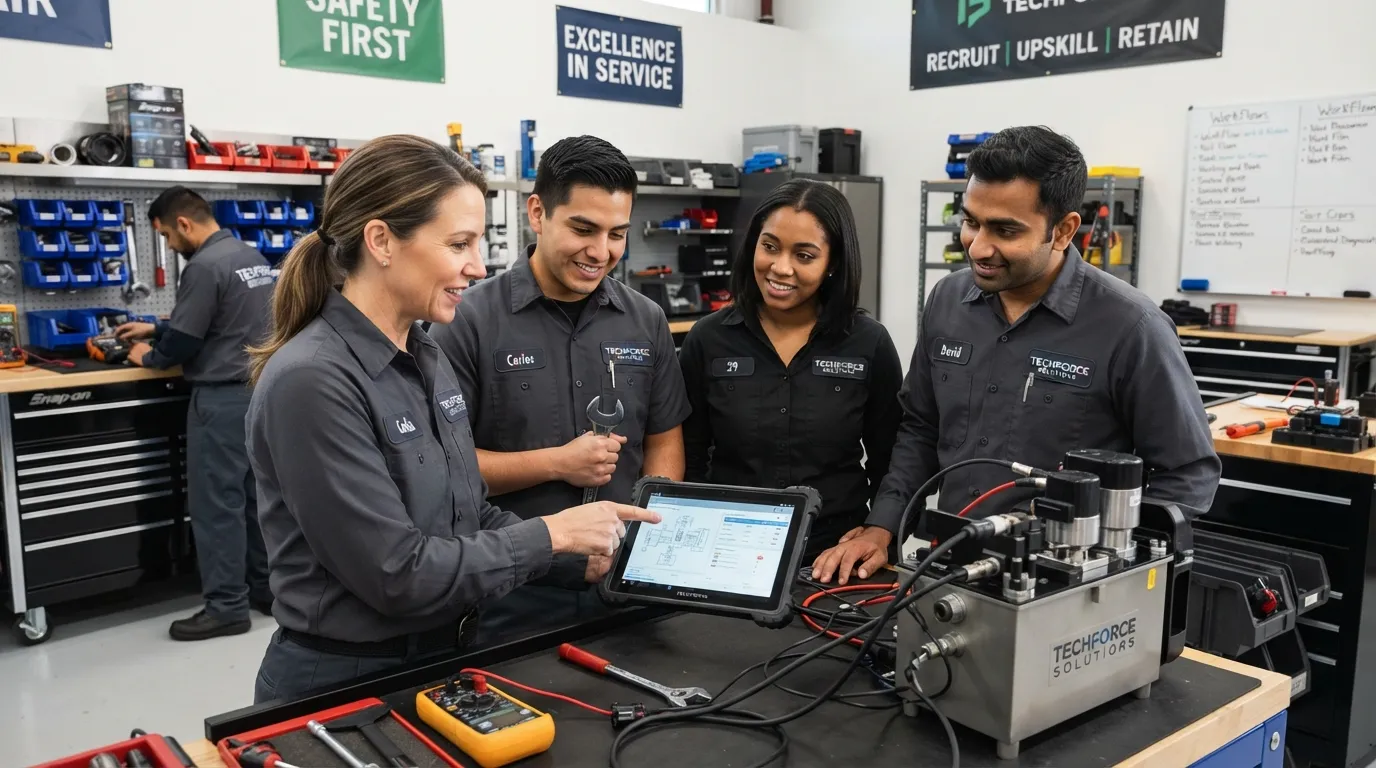 The greatest bottleneck to scaling a plumbing business is not lack of demand—it is finding, training, and retaining skilled labor. Overcoming the plumbing workforce shortage requires moving away from reactive hiring toward a structured talent pipeline and competitive compensation model.
When to Make Your First Hire
Transitioning from a solo operator to managing a team requires hitting specific financial and operational milestones to ensure sustainable cash flow.
- Revenue Threshold: Consider hiring your first full-time apprentice or technician when your personal utilization rate consistently exceeds 80% to 90% week over week.
- Turned-Down Work: Track the number of emergency calls and scheduled jobs you are forced to turn away due to scheduling capacity.
- Administrative Relief: If you are spending more time managing logistics and paperwork than billing hours on tools, it is time to expand.
Where to Find Technicians and Apprentices
Relying solely on generic online job boards rarely yields high-quality plumbing talent. Proactive recruitment requires a multi-channel outreach strategy.
- Trade Schools & Technical Colleges: Partner with local vocational programs and community colleges to recruit eager pre-apprentices entering the workforce.
- Employee Referral Programs: Incentivize your current top-performing technicians with cash bonuses for bringing in reliable journeymen or qualified apprentices.
- Local Outreach & Networking: Build relationships with local union halls, military transition programs, and independent supply house counter staff.
Pay Structure: Hourly Commission Flat-Rate Bonus
Choosing the right compensation structure balances technician income stability with company profitability and productivity incentives.
- Hourly Pay: Provides stability for new apprentices during training, but offers low incentive for efficiency and speed on service calls.
- Commission Pay: Directly ties earnings to revenue generated per ticket, driving motivation but potentially encouraging high-pressure sales tactics.
- Flat-Rate Performance Bonus: Combines a solid base hourly wage with tiered bonuses for completed jobs, high customer review scores, and zero callbacks.
Training and Retention
Hiring skilled technicians is only half the battle; keeping them engaged requires ongoing mentorship and clear career advancement pathways.
- Structured Onboarding: Implement a 30-day ride-along program to instill company standards, software navigation, and flat-rate pricing presentation.
- Technical Up-Skilling: Provide regular paid training sessions covering advanced diagnostics, tankless water heater maintenance, and smart home plumbing integrations.
- Clear Career Ladders: Establish transparent milestones for progressing from a junior helper to lead technician, complete with corresponding wage increases.
Building a Culture That Reduces Turnover
Top-tier plumbing talent leaves toxic or unorganized shops for companies that respect their time, family life, and professional growth.
- Respect On-Call Rotations: Implement fair, rotating on-call schedules with adequate rest periods to prevent severe technician burnout.
- Equipped Take-Home Trucks: Provide well-maintained, fully stocked service vehicles that technicians can take home to streamline morning dispatches.
- Open Communication: Hold weekly team huddles to celebrate wins, review customer feedback constructively, and listen to field-level operational pain points.
The KPIs That Show If Your Business Is Really Growing
Flying blind without tracking financial and operational metrics leads to stagnant growth and compressed profit margins. Monitoring key performance indicators (KPIs) empowers plumbing business owners to make proactive decisions based on real-time data rather than guesswork.
8 KPIs to Track Monthly
Tracking this core set of metrics each month provides complete visibility into your marketing efficiency, field productivity, and overall company profitability.
Simple Weekly Dashboard Template
Reviewing a streamlined weekly dashboard keeps your operational momentum high and prevents small issues from turning into major financial losses.
- Lead Volume & Source: Total calls received, booked jobs, and breakdown by marketing channel (LSA, PPC, Organic, Referral).
- Technician Utilization: Billable hours versus total clock hours logged by each field technician.
- Cash Flow Snapshot: Weekly gross revenue, accounts receivable outstanding, and payroll expenses.
How to Read the Numbers and Decide What to Fix
Data is only valuable when paired with decisive operational adjustments to correct declining performance indicators.
- Low Close Rate Fix: If close rates drop below 65%, review technician sales training, flat-rate presentation sheets, and customer financing options.
- High Callback Rate Fix: When callbacks spike, implement mandatory pressure tests, supervisor ride-alongs, and enhanced technical training.
- High CPL Fix: If customer acquisition costs climb, audit your negative keyword lists, landing page conversion rates, and local map pack rankings.
Local Angle: Growing a Plumbing Business in Florida Texas and Your State
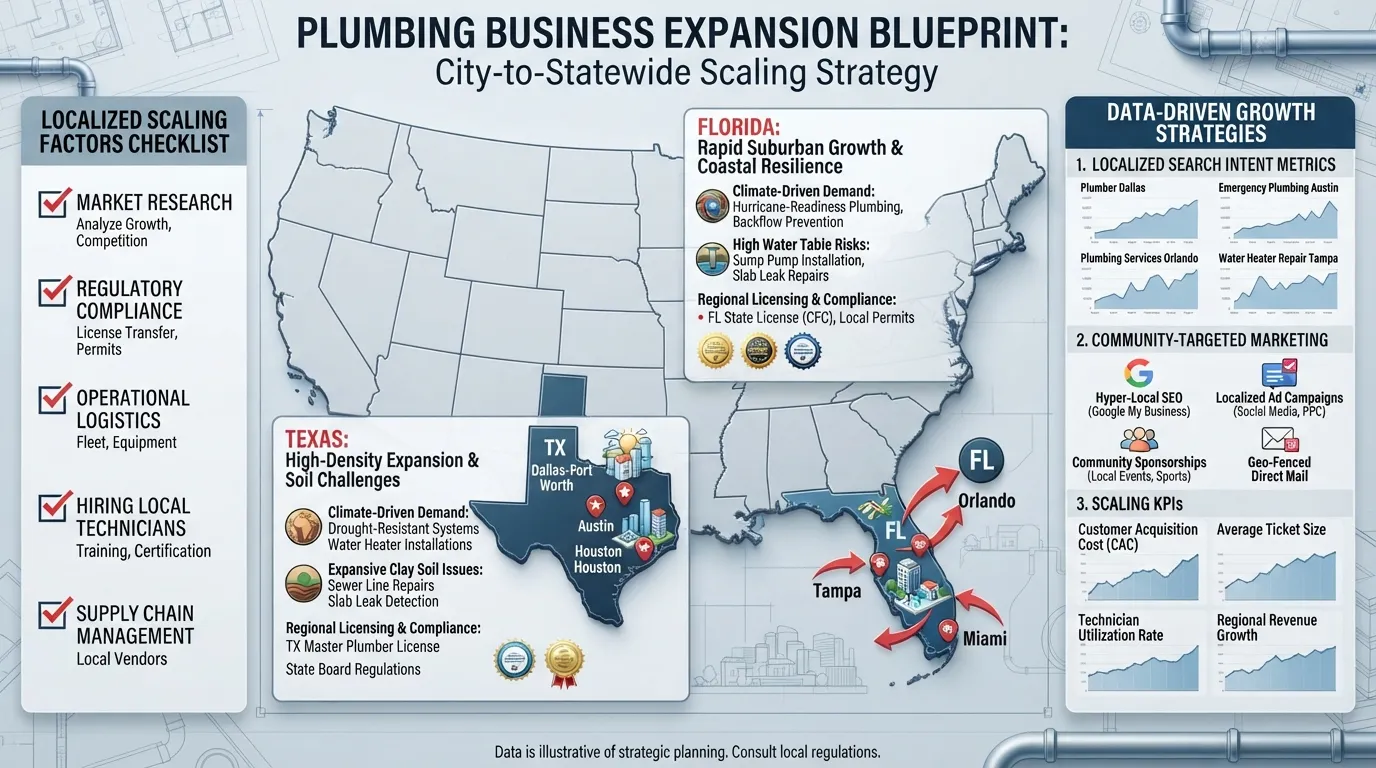 While the fundamentals of plumbing operations remain consistent, state-specific licensing regulations, climate challenges, and housing market dynamics heavily influence growth strategies. Tailoring your business model to regional conditions maximizes profitability.
Florida: Seasonality Competition Licensing Basics
Operating a plumbing business in the Sunshine State involves unique climate demands and strict regulatory oversight by the state licensing board.
- Seasonal Demand: Hurricane season drives urgent storm drainage, sump pump, and water damage calls, while winter tourism boosts commercial hospitality plumbing needs.
- High Competition: Rapid population growth attracts high numbers of competing contractors, making Google Local Services Ads and reviews crucial for differentiation.
- Licensing Basics: Contractors must navigate the Florida Department of Business and Professional Regulation (DBPR) to secure certified or registered plumbing licenses.
Texas: Licensing, Market Size Growth Areas
Texas offers massive commercial and residential expansion opportunities, governed by rigorous state licensing tiers enforced by the Texas State Board of Plumbing Examiners (TSBPE).
- Licensing Structure: Technicians progress through strict apprentice, tradesman, journeyman, and master plumber licensing tiers before operating independently.
- Market Size: Booming metropolitan hubs like Austin, Dallas-Fort Worth, and Houston provide constant new construction and major residential repiping demand.
- Climate Considerations: Severe winter freeze events (e.g., Winter Storm Uri impacts) create massive surges in emergency burst pipe repairs and preventative insulation services.
How to Research Your Own State’s Requirements
Entering a new geographic market or launching a startup requires verifying local regulatory compliance before dispatching trucks.
- Identify the State Board: Locate your state’s official plumbing licensing board or department of labor to confirm credentialing prerequisites.
- Check Reciprocity Agreements: Determine whether your current out-of-state journeyman or master license qualifies for expedited licensing reciprocity.
- Verify Local Permits: Contact municipal building departments to understand local commercial and residential plumbing permit fees and inspection timelines.
Plumbing Growth FAQ
Get direct answers to the most common questions regarding plumbing business scaling, marketing strategies, profit margins, and operational best practices.
How can I get more business in plumbing?
To secure more plumbing business, optimize your Google Business Profile for local map packs, invest in Local Services Ads (LSAs) for immediate calls, and implement a consistent review-collection system. Pairing high-intent paid search campaigns with a responsive answering service ensures you never miss urgent emergency leads.
How do plumbers find clients?
Plumbers acquire clients through a mix of digital and local marketing channels. Primary customer sources include Google Search Ads, local SEO map rankings, community word-of-mouth referrals, and B2B partnerships with local property managers, realtors, and commercial establishments.
What’s a good profit margin for a small plumbing business?
A healthy net profit margin for a small plumbing business typically ranges between 15% and 20% after all operating expenses, truck costs, and owner salaries are paid, while gross margins on labor and materials should consistently target 60% or higher.
Which plumbing jobs are the most profitable for small businesses?
High-margin plumbing jobs include whole-home repiping, tankless water heater installations, sewer line hydro-jetting, trenchless pipe repairs, and specialized installations like whole-home water filtration and advanced leak detection systems.
How can a small plumbing business become more profitable without compromising quality?
You can increase profitability without cutting corners by shifting from hourly billing to flat-rate pricing guides, upselling preventative maintenance agreements, improving route density to reduce fuel waste, and enforcing strict truck inventory controls.
How much does a drain-cleaning business make and is it easy to start?
A dedicated drain-cleaning startup requires relatively low initial equipment costs compared to full-scale plumbing operations and can generate significant revenue per truck. While relatively easy to launch with a proper jetter and camera rig, long-term success depends on efficient routing and high search visibility.
Will AI replace plumbers?
Artificial intelligence will never replace plumbers because physical, hands-on trade skills require manual dexterity in unpredictable environments. However, AI plays a major supportive role in modern operations by powering automated customer scheduling, dynamic routing, and fast estimate generation.
What pays better, HVAC or plumbing?
Both trades offer exceptional earning potential, though plumbing often features higher emergency callout rates and lower initial equipment overhead per truck. The highest-earning trade ultimately depends on your local market demand, pricing structure, and business execution.
What state is best for plumbers?
Fast-growing states with booming housing markets and favorable weather conditions—such as Texas and Florida—are among the best for plumbers due to constant new construction demand, population growth, and regional climate challenges like freeze events or hurricanes.

Oscar Vance | Master Plumber & Drainage Expert
Meet Oscar Vance, a licensed master plumber sharing practical solutions on residential repairs, preventive maintenance, and thoughtful home upkeep.