Gravity vs Pressure Assisted Toilet
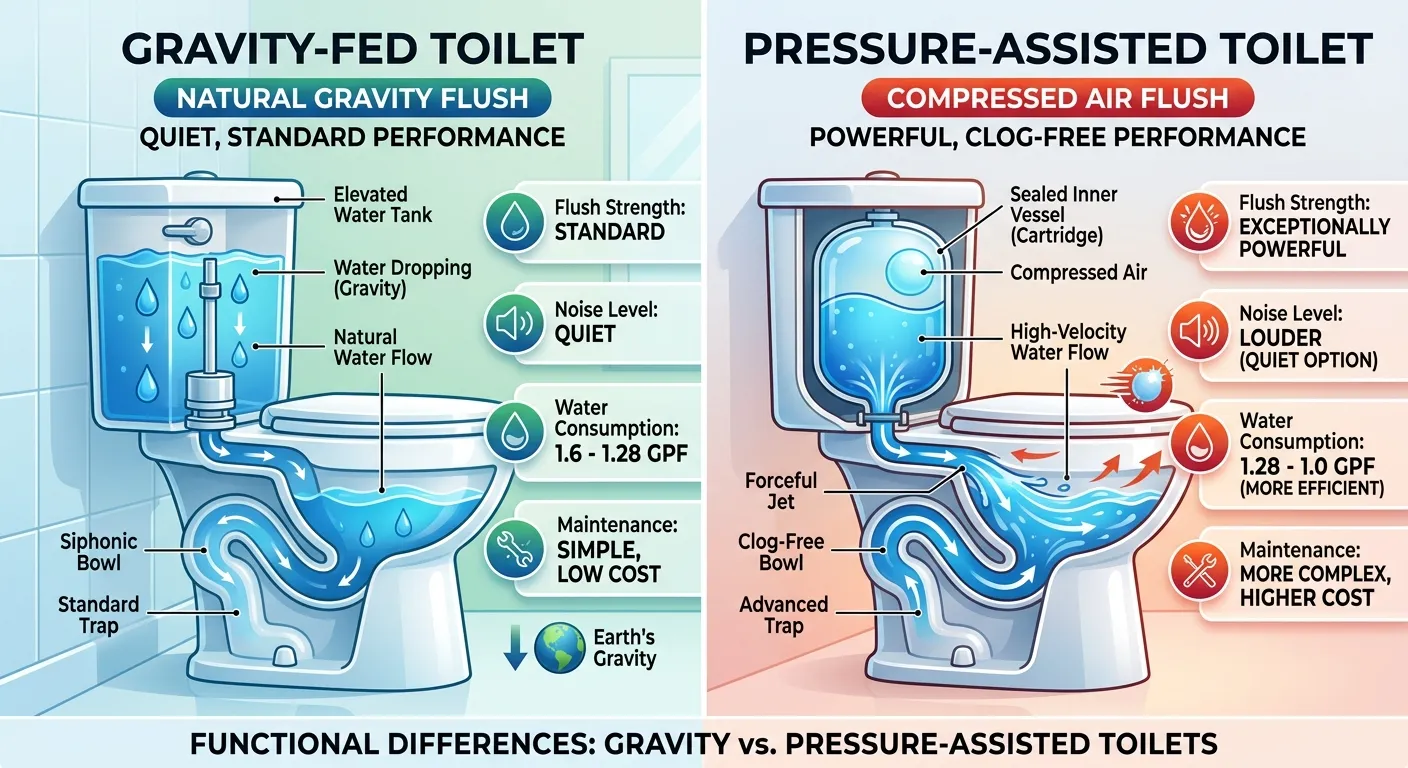
Gravity toilets rely exclusively on natural earth gravity and a traditional siphon tank to pull waste down, whereas pressure-assisted toilets use a sealed inner vessel compressed by incoming water pressure to forcefully push waste away. Choosing between the two impacts your bathroom’s noise level, water efficiency, and overall flushing power.
Gravity vs Pressure Assisted Toilet
Understanding the core mechanics of each flush mechanism helps homeowners choose the right fixture for their plumbing requirements. While gravity models are the standard choice for residential homes, pressure-assisted systems are engineered for high-performance needs.
- Gravity Toilet: Uses a standard siphon action driven by water weight, offering a quieter flush, simpler internal components, and easier maintenance.
- Pressure-Assisted Toilet: Features a specialized sealed tank that traps air and compresses it using water line pressure, resulting in a powerful, high-velocity jet that eliminates clogs.
- Water Consumption (GPF): Both options are available in high-efficiency 1.28 GPF (gallons per flush) models, though pressure systems maximize every drop through forced propulsion.
Key Performance Comparisons
Evaluating operational differences ensures long-term satisfaction based on household size and plumbing architecture.
- Noise Level: Gravity toilets operate quietly, making them ideal for powder rooms and master suites, while pressure-assisted units produce a sharp, loud whoosh during activation.
- Maintenance & Repairs: Gravity models use universal replacement parts like flappers and fill valves that are inexpensive and easy to fix. Pressure-assisted toilets require proprietary tank replacement cartridges that can be costly and complex to service.
- Upfront Investment: Pressure-assisted toilets and their replacement components carry a significantly higher price tag compared to traditional gravity counterparts.
How Gravity Toilers Work
A gravity flush toilet operates primarily on natural earth gravity and a well-engineered tank-to-bowl water transfer. When the flush handle is triggered, it lifts a flapper valve, allowing stored water to rush rapidly into the bowl to clear waste effectively.
The Siphon Jet Mechanism Explained
The core cleaning power of a gravity flush toilet relies on a siphon jet mechanism that creates a powerful suction effect. As water enters the bowl from the rim and the siphon jet hole at the bottom, it quickly fills the trapway to trigger a siphon pull that drags waste down the drain line.
- Natural Water Pressure: Operates strictly using standard household water pressure to refill the tank, eliminating the need for any internal booster pumps.
- Siphon Action Initiation: The sudden volume of water entering the trapway forces air out, creating a vacuum that evacuates the bowl contents smoothly.
- Trapway Design: Features a curved internal channel engineered to optimize water flow dynamics and prevent clogs without mechanical assistance.
Flapper Fill Valve Tank Design
Gravity toilets utilize a straightforward assembly of mechanical parts that work in sequence to control water release and replenishment. This minimalist internal layout ensures that maintenance remains simple and cost-effective over the fixture’s lifespan.
- Flapper Valve: A flexible rubber seal at the bottom of the tank that lifts when the handle is pressed, releasing the stored water volume into the bowl below.
- Fill Valve: Regulates the incoming water supply from your home pipes, refilling the tank to the precise designated waterline after every flush.
- Tank Design: Positioned directly above the bowl in gravity systems, utilizing vertical elevation to maximize the downward kinetic energy of the water.
How Pressure Assisted Toilets Work
A pressure-assisted toilet utilizes a specialized inner tank system that harnesses your home’s incoming water line pressure to compress trapped air. When activated, this compressed force unleashes a high-velocity flush that aggressively sweeps waste away, virtually eliminating clogs.
The Compressed Air System Explained
The mechanics of a pressure-assisted toilet rely on physics rather than simple gravity to accelerate water movement. As water fills the hidden tank after a flush, it forces air into a confined space, compressing it tightly inside the vessel until it reaches peak pressure.
- Line Pressure Utilization: Connects directly to municipal or well water pressure to charge the enclosed system efficiently.
- High-Velocity Discharge: Releases water at speeds up to three times faster than standard gravity models, producing an intense scouring action.
- Air-Water Balance: Uses an internal air inducer port to maintain the correct ratio of air to water during every automated recharge cycle.
Role of the Sealed Inner Tank Flushmate style Mechanism
Popularized by industry pioneers like Flushmate, the sealed inner vessel acts as the powerhouse of the entire assembly. Unlike traditional open-top porcelain tanks, this heavy-duty plastic or metal container isolates the pressurized environment completely.
- Sealed Inner Vessel: Keeps air and water under constant pressure readiness so the toilet is always prepared for an immediate heavy-duty flush.
- Mushroom Cap Valve / Cartridge Assembly: Acts as the primary control gate that opens instantly when the flush handle triggers the actuator, dumping the pressurized charge.
- Sweat-Free Exterior: Because the cold water is safely trapped inside the sealed inner plastic canister, the outer porcelain tank rarely forms condensation or “sweats” in humid weather.
Gravity vs Pressure Assisted Full Comparison Table
Comparing these two toilet systems side-by-side helps homeowners weigh performance advantages against budget and maintenance requirements. This comprehensive overview breaks down the critical differences in flushing power, operating sound, and upkeep.
Comparison Table Overview
Analyzing these parameters clarifies which toilet architecture fits specific household demands. While gravity models prioritize simple maintenance, pressure-assisted options focus heavily on raw velocity and clog prevention.
- Efficiency Balance: Both types meet strict water conservation standards, but pressure systems extract more cleaning force from minimal water volumes.
- Structural Differences: Gravity tanks remain open to the elements, whereas pressure units seal the water inside a heavy-duty inner canister.
Pros and Cons of Gravity Toilets
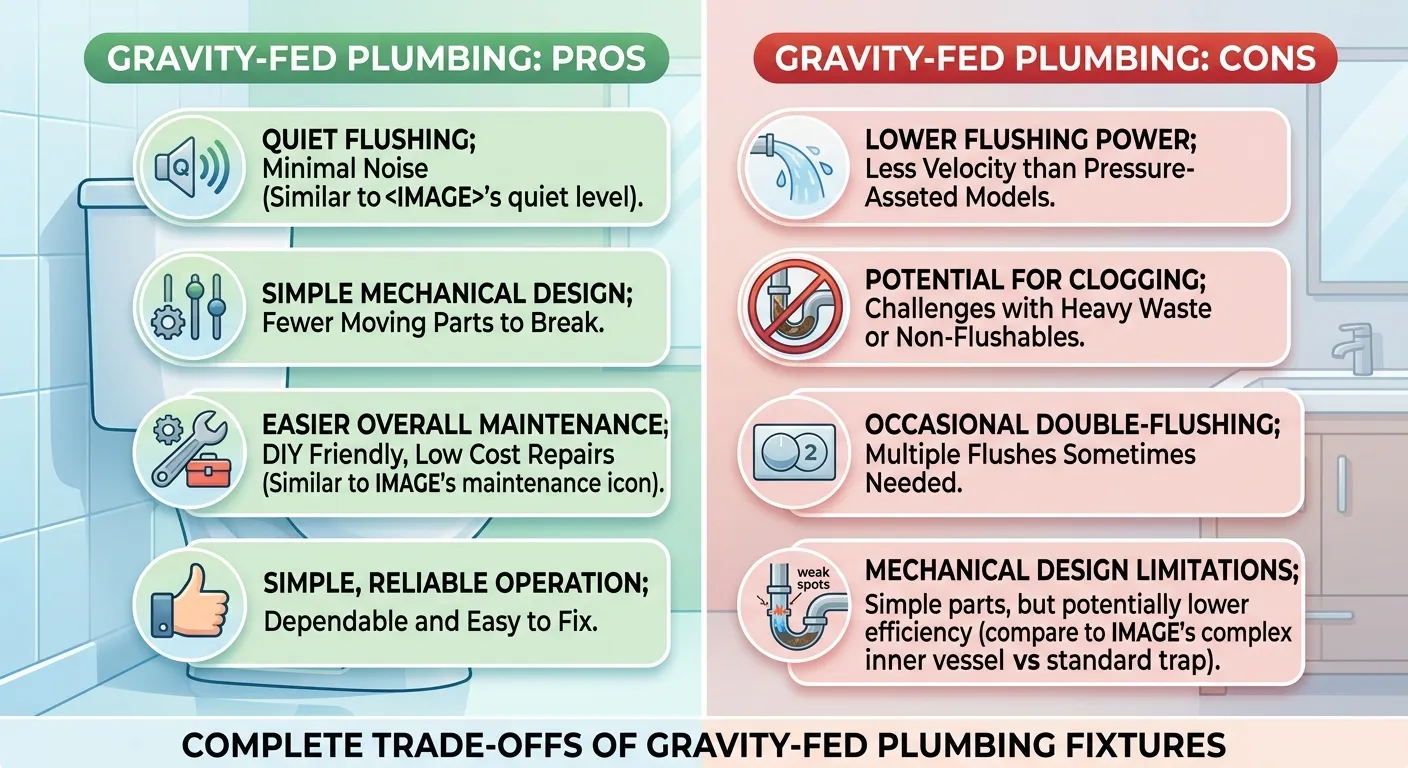
Gravity toilets remain the most popular choice in residential bathrooms due to their reliability, low cost, and quiet operation. Weighing their inherent advantages against potential drawbacks ensures you select a model that matches your daily household needs.
Quiet Operation Affordability Easy DIY Repairs
Gravity-fed systems offer unmatched user convenience when it comes to routine upkeep and budget-friendly installation. Their straightforward engineering means homeowners can easily troubleshoot most common issues without hiring a professional plumber.
- Quiet Operation: Water flows smoothly and quietly into the bowl, making these toilets ideal for master suites and guest bathrooms where noise reduction matters.
- Affordability: Generally priced between $120 and $300, gravity toilets cost significantly less upfront than high-tech pressure-assisted models.
- Easy DIY Repairs: Internal components like flappers, flush levers, and fill valves are universally available at hardware stores and can be replaced in minutes.
Disadvantages Higher Water Usage Clogging Risk
While reliable, traditional gravity mechanics come with certain performance limitations, particularly regarding waste clearance power and water volume management.
- Higher Water Usage: Many standard gravity models consume 1.6 GPF (gallons per flush) or more, which may result in higher utility bills over time compared to high-efficiency alternatives.
- Clogging Risk: The gentle siphon pull can occasionally struggle with heavy solid waste or excessive toilet paper, leading to occasional blockages that require a plunger.
- Tank Sweating: The cold water stored directly in the outer porcelain tank often causes condensation to form during humid summer months.
Pros and Cons of Pressure Assisted Toilets
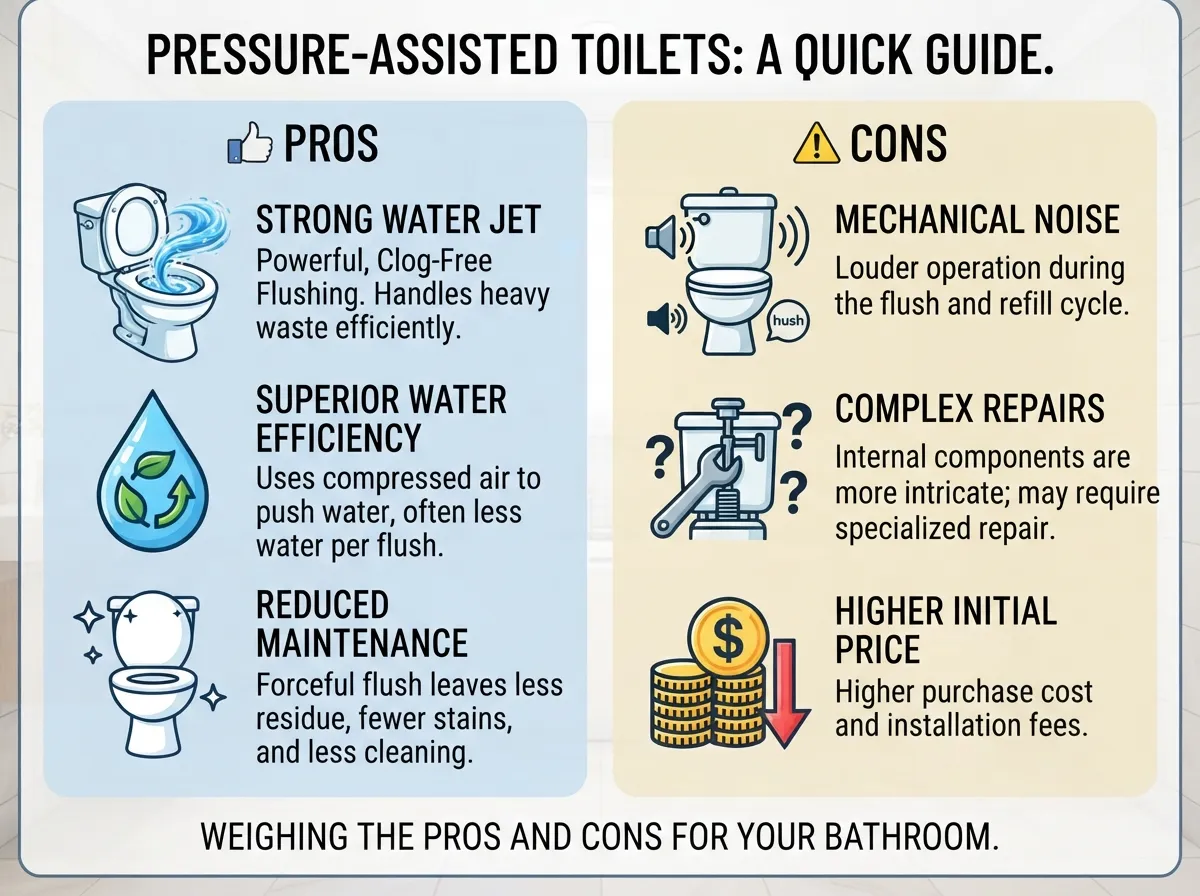
Pressure-assisted toilets are engineered for high-performance households, commercial spaces, and multi-user bathrooms that demand maximum waste removal power. Evaluating their distinct benefits and drawbacks will help you determine if the investment aligns with your lifestyle.
Powerful Flush, Water Efficiency No Tank Sweating
The innovative pressurized chamber inside these fixtures delivers exceptional cleaning capabilities that surpass traditional residential toilets. Their advanced fluid dynamics provide heavy-duty performance while conserving utility resources.
- Powerful Flush: The compressed air mechanism creates an aggressive high-velocity jet that completely eliminates recurring clogs and keeps the bowl exceptionally clean.
- Water Efficiency: Highly optimized models consume between 1.1 and 1.4 GPF (gallons per flush), maximizing cleaning force while conserving water resources.
- No Tank Sweating: Because the cold water is safely contained within a sealed inner plastic vessel, the outer porcelain shell never develops messy condensation rings in humid weather.
Loud Noise Higher Cost Specialized Repairs
Despite their impressive cleaning strength, pressure-assisted systems introduce specific operational trade-offs that buyers should consider before purchasing.
- Loud Noise: The sudden release of compressed air creates a sharp, powerful whoosh that can be disruptive if the bathroom is located directly next to a bedroom.
- Higher Cost: Ranging typically from $400 to $700 or more, these units carry a steep upfront price tag compared to standard gravity alternatives.
- Specialized Repairs: Fixing internal malfunctions often requires purchasing proprietary replacement tanks or cartridges rather than inexpensive universal plumbing parts.
Common Problems With Each Toilet Type
Every toilet architecture encounters distinct mechanical challenges over its lifespan. Understanding these typical failure points helps homeowners diagnose issues quickly and plan for necessary maintenance or component replacements.
Pressure-Assisted Toilet Problems Valve Failure Water Hammer Noise Seal Leaks
Because pressure-assisted systems operate under heavy mechanical stress and high internal pressures, their components can experience specialized faults that differ greatly from standard gravity units.
- Valve Failure: The internal cartridge or flush valve can wear out over time, causing the vessel to lose its air charge or fail to shut off properly.
- Water Hammer Noise: Rapidly closing valves within the high-pressure water supply line can trigger loud pipe banging, known as a water hammer effect.
- Seal Leaks: High pressure places immense strain on internal rubber gaskets and tank seals, leading to potential leaks that require specialized repair kits.
Gravity Toilet Problems Weak Flush Over Time Flapper Wear
Gravity-fed toilets feature simpler designs, but they are still prone to wear-and-tear issues that typically degrade their flushing performance or cause constant running water.
- Weak Flush Over Time: Mineral and hard water sediment buildup inside the rim holes and siphon jet can gradually restrict water flow, reducing flushing strength.
- Flapper Wear: Rubber flappers warp, degrade, or accumulate slime over months of use, creating a loose seal that causes the toilet to run continuously.
- Fill Valve Malfunctions: Aging fill valves can stick open or fail to shut off at the correct waterline, resulting in water constantly spilling into the overflow tube.
GPF Regulations 1.28 vs 1.6 GPF Explained
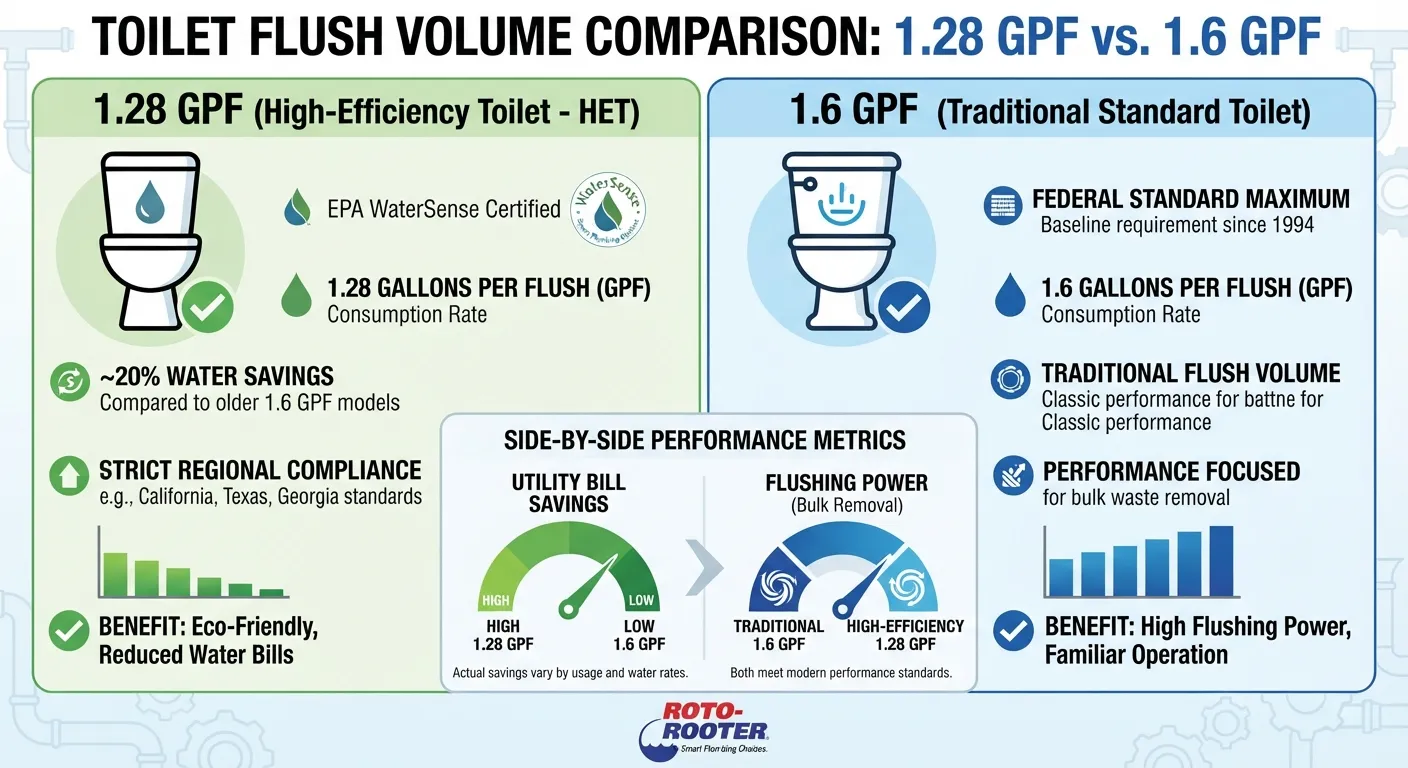
Understanding gallons per flush (GPF) ratings clarifies how environmental mandates and engineering improvements have reshaped modern bathroom fixtures. Federal and state standards have systematically reduced water usage while challenging manufacturers to maintain or improve clearing performance.
Why 1.6 GPF Became 1.28 GPF
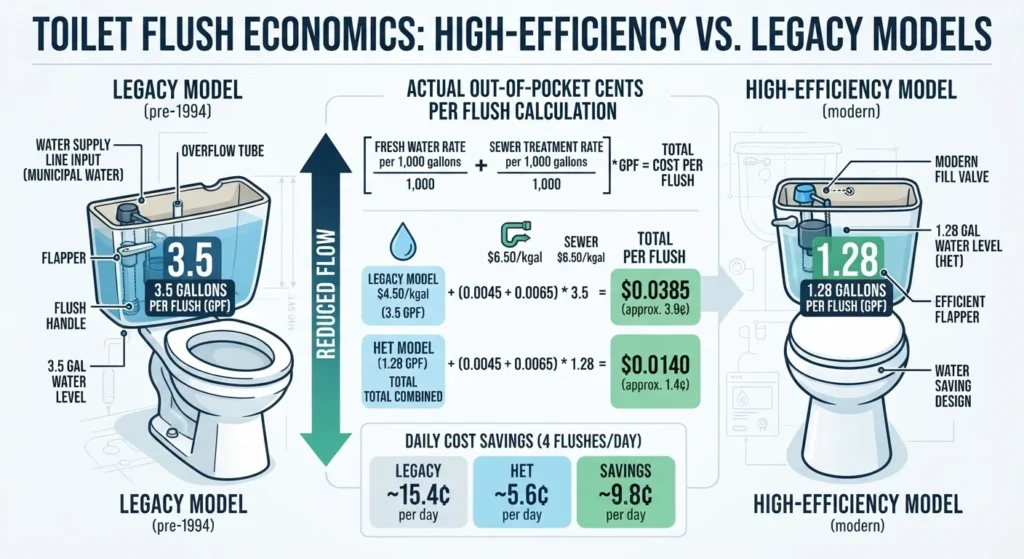
The evolution of toilet efficiency traces back to sweeping federal legislation designed to curb municipal water waste across the United States. Prior to the mid-1990s, standard toilets consumed anywhere from 3.5 to 7 gallons per flush.
- The 1994 Mandate (1.6 GPF): Prompted by the Energy Policy Act of 1992, federal law required all new residential toilets manufactured after 1994 to operate on a maximum of 1.6 GPF.
- The Birth of WaterSense (1.28 GPF): In 2007, the U.S. Environmental Protection Agency (EPA) launched the WaterSense program, setting a high-efficiency standard of 1.28 GPF to drive conservation even further.
- State-Level Adoption: As highlighted in regulatory insights from the International Association of Certified Home Inspectors, numerous states subsequently adopted strict codes requiring 1.28 GPF or lower for new construction and replacements.
Is 1.28 GPF Enough for a Strong Flush?
A common consumer concern is whether reducing water volume compromises clearing strength, but modern hydrodynamic design has largely eliminated this trade-off. Advanced trapway glazing and optimized siphon jets ensure that lower-volume models perform exceptionally well.
- Engineering Precision: A 1.28 GPF toilet relies on velocity and specialized internal trapway design rather than raw water weight to clear waste cleanly in a single try.
- The Role of Pressure-Assistance: Many 1.28 GPF models incorporate pressure-assisted systems to maximize kinetic force, easily passing rigorous Maximum Performance (MaP) testing standards.
- Long-Term Utility Savings: Transitioning from an older 1.6 GPF or legacy 3.5 GPF toilet to a 1.28 GPF model substantially reduces household water consumption without sacrificing day-to-day reliability.
Which Toilet Has the Strongest Flush?
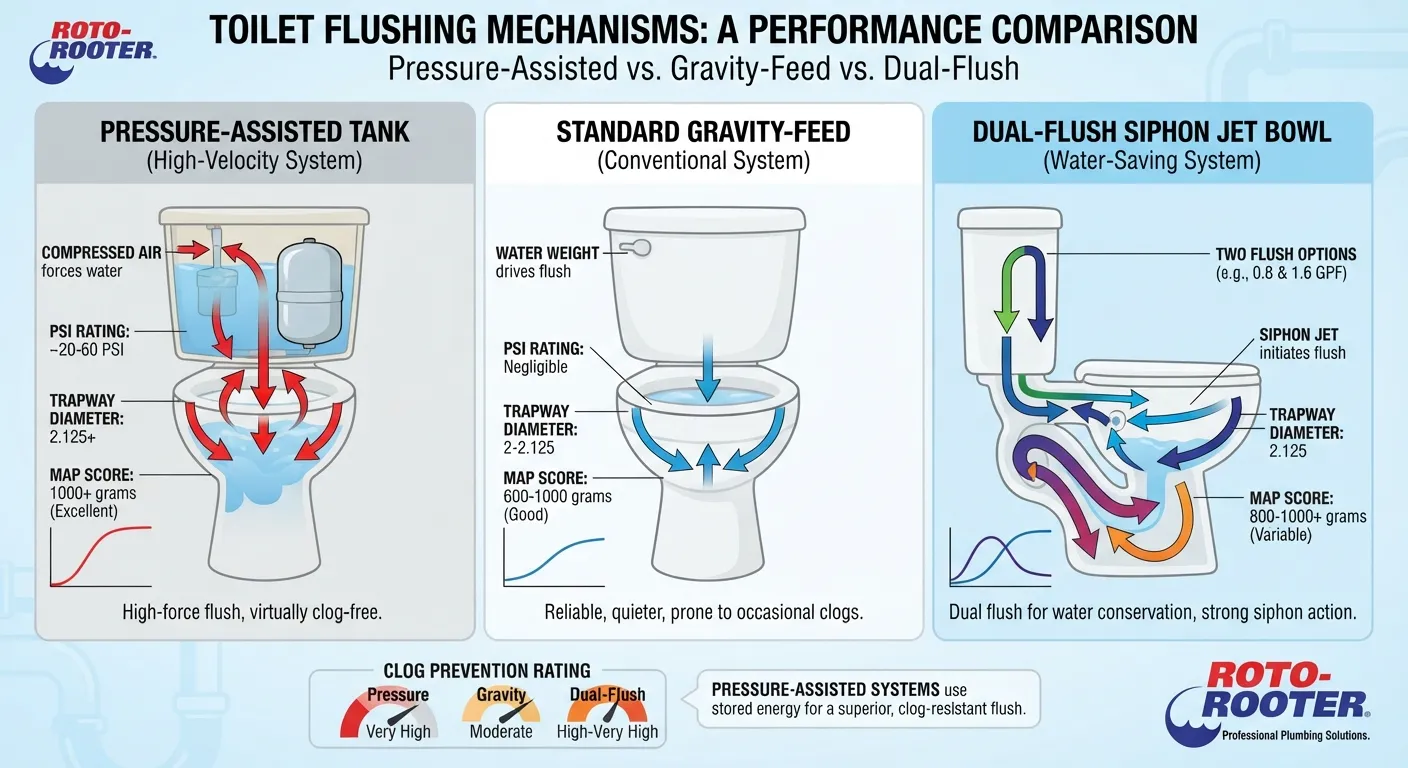
Pressure-assisted toilets consistently deliver the strongest and most reliable flush on the market, frequently outperforming gravity models in heavy waste elimination. While raw water volume matters less today, specialized mechanical propulsion ensures absolute clog resistance.
Flush Power Comparison by GPF and MaP Score
Evaluating toilet strength relies on Maximum Performance (MaP) testing scores, which measure the exact gram weight of solid waste a fixture can clear in a single flush. High-performance pressure-assisted units and advanced gravity models score exceptionally high on these standardized tests.
- Pressure-Assisted Dominance: Pressure systems use compressed air to expel water with high velocity, easily clearing 800 to 1,000+ grams of waste even at lower water volumes like 1.0 or 1.28 GPF.
- High-End Gravity Models: Premium gravity toilets equipped with wide, fully glazed trapways and powerful siphon jets can also achieve top-tier MaP ratings above 800 grams.
- Understanding MaP Scores: Any toilet scoring above 600 grams is considered capable of handling normal residential loads, while scores of 800 grams and higher represent elite, commercial-grade flushing power.
Best Brands Comparison Kohler vs TOTO vs Flushmate
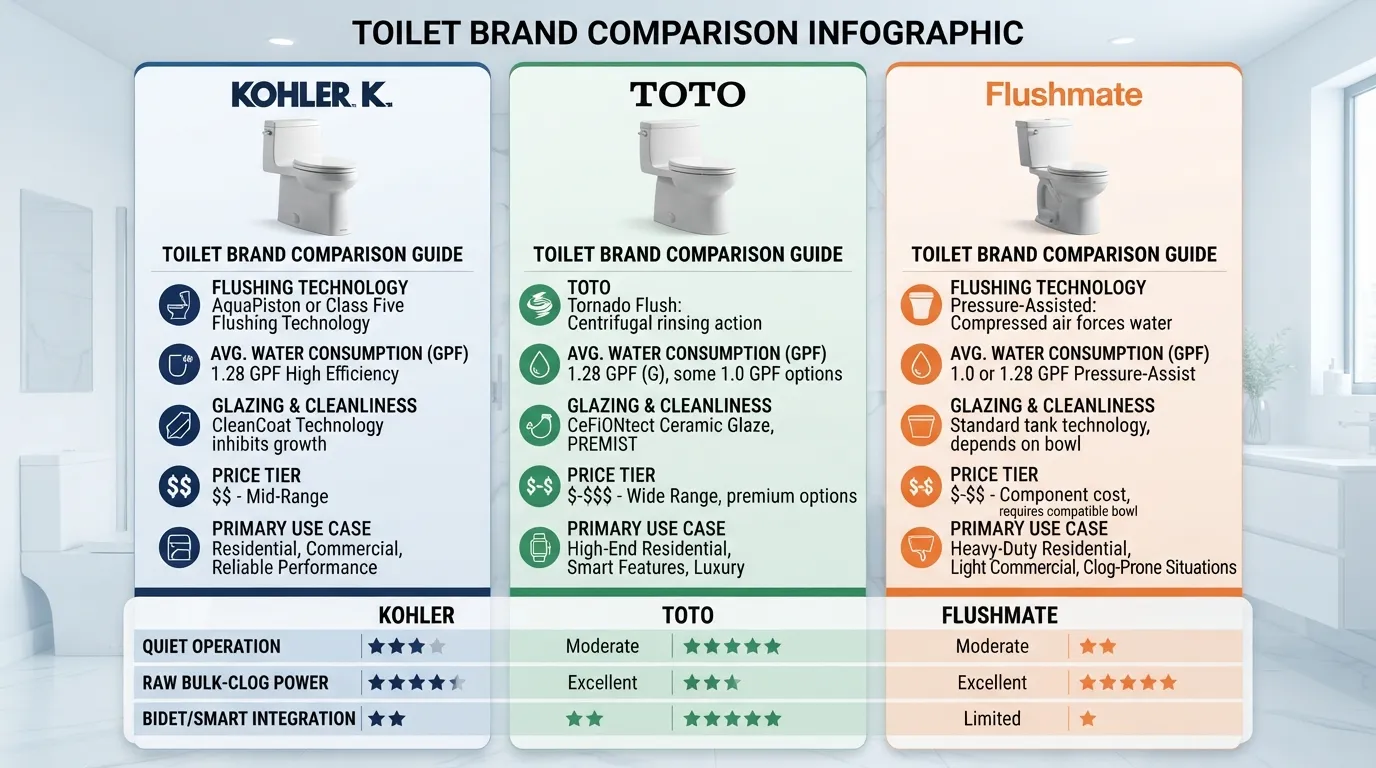
Navigating top-tier plumbing brands helps narrow down your selection based on reliability, flushing technology, and manufacturer warranties. Each leading manufacturer brings unique engineering strengths to the gravity and pressure-assisted market.
Kohler: Best For Gravity Systems
Kohler is widely recognized for its robust construction, classic aesthetic options, and reliable traditional gravity-flush performance. Their innovative technologies like Class Five and Revolution 360 ensure exceptional bowl cleanliness without relying on noisy compressors.
- Design Variety: Offers an extensive selection of one-piece and two-piece toilets that seamlessly fit transitional, modern, and traditional bathroom styles.
- Solid Warranty: Backed by dependable limited lifetime warranties on vitreous china components and comprehensive customer support networks.
- Ease of Maintenance: Utilizes universally accessible internal parts, making DIY part replacements straightforward for everyday homeowners.
TOTO: Best For Hybrid Efficiency
TOTO stands out as an industry leader in engineering precision, advanced sanitation glaze, and high-efficiency hybrid flushing performance. Their signature G-Max and Tornado Flush systems maximize water velocity while maintaining quiet operation.
- Tornado Flush Technology: Utilizes dual nozzles to create a centrifugal washing action that cleans the bowl more thoroughly than rim holes.
- CeFiONtect Glaze: Features an ultra-smooth ion barrier glaze that prevents microscopic debris and waste from sticking to the porcelain surface.
- Water Conservation: Excels at delivering superior clearing strength at lower water volumes, often exceeding EPA WaterSense efficiency benchmarks.
Flushmate Equipped Models: Best For Pressure-Assist
Flushmate does not manufacture complete toilets, but rather supplies the industry-standard pressure-assisted vessel utilized by various top brands like Kohler, American Standard, and Gerber. Their technology represents the gold standard for heavy-duty commercial and residential power.
- Unmatched Clog Resistance: Engineered specifically to eradicate recurring clogs through aggressive compressed air propulsion.
- Brand Partnerships: Integrated seamlessly into high-performance product lines from major plumbing manufacturers seeking robust power.
- Durability: Built with heavy-duty materials designed to withstand high operational pressures over decades of continuous household use.
Which One Should You Choose? Scenario Based Decision Guide
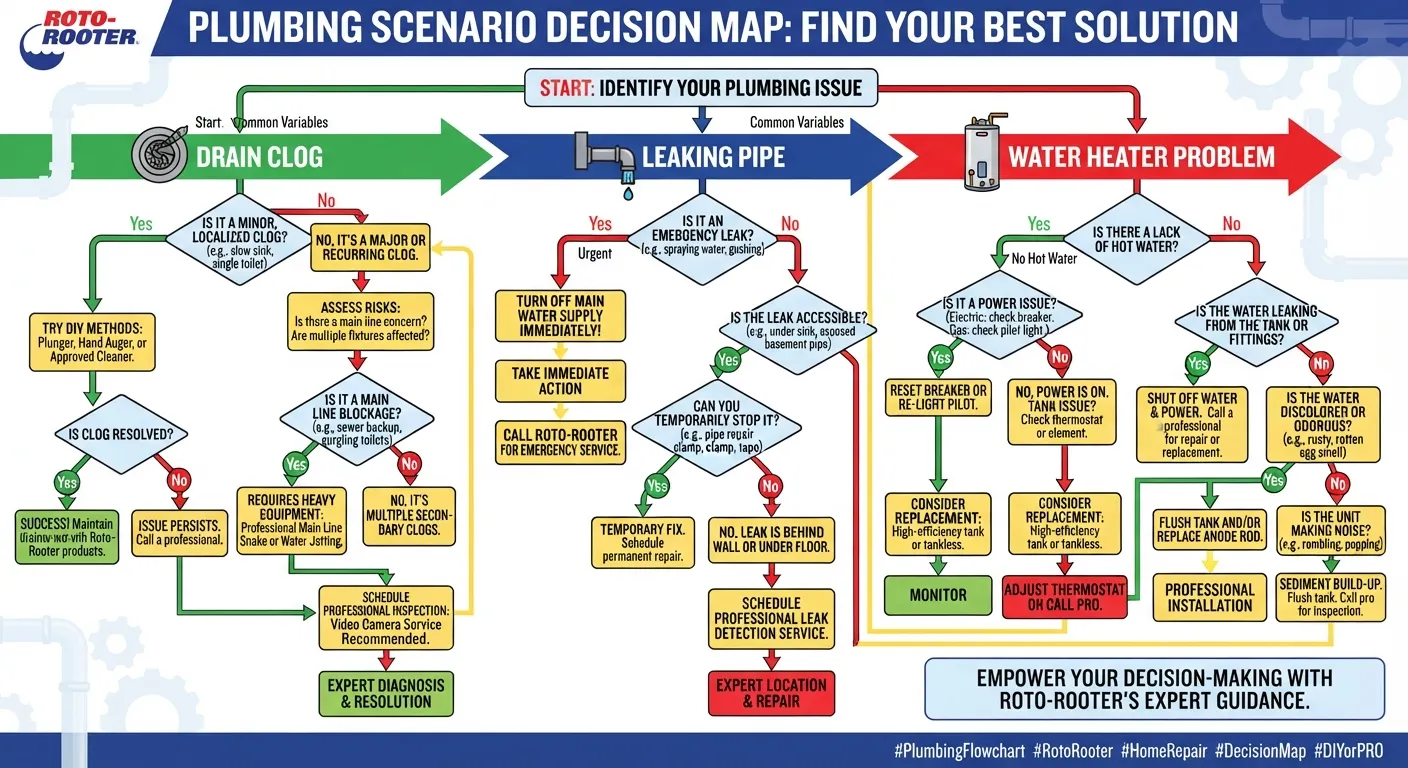
Selecting the ideal toilet depends heavily on your household size, local plumbing setup, and noise tolerances. Evaluating these specific everyday scenarios ensures your investment matches your home’s unique demands.
Best for Family High Traffic Bathrooms
High-traffic family bathrooms experience frequent daily use and require a fixture that balances endurance with reliable waste disposal. Pressure-assisted toilets or high-performance gravity models excel in these bustling environments by minimizing maintenance headaches.
- Consistent Performance: Handles back-to-back usage seamlessly throughout peak morning and evening routines without hesitation.
- Stain Resistance: Advanced bowl designs keep porcelain cleaner under heavy use, reducing manual scrubbing frequency.
Best for Guest Rooms or Noise-Sensitive Areas
Guest bathrooms and powder rooms located near bedrooms or living spaces benefit significantly from the quiet, gentle operation of gravity toilets. Their subtle flushing sound avoids startling resting guests or family members during late-night visits.
- Acoustic Comfort: Operates quietly without the sudden, sharp whoosh associated with compressed air vessels.
- Budget-Friendly Upkeep: Ideal for low-frequency rooms where complex maintenance features are unnecessary.
Best If You Have a History of Clogging
Homes plagued by recurring plumbing blockages should opt for pressure-assisted systems or top-tier high-MaP gravity units. The aggressive velocity of compressed air nearly eliminates the need for a bathroom plunger.
- Maximum Clearing Force: Forces dense waste and heavy paper through the trapway instantly in a single push.
- Peace of Mind: Reduces the daily stress of potential overflow issues in busy households.
Best for Septic Tank Systems
Gravity toilets are generally the safer and more compatible choice for homes operating on private septic tanks. Because they use standard water volumes and predictable siphon actions, they integrate smoothly with biological decomposition processes.
- Septic Harmony: Avoids the high-velocity turbulence that can occasionally disrupt delicate solid-liquid layering inside older septic tanks.
- Water Balance: Maintains predictable fluid levels that align with rural drainfield absorption rates.
Can You Flush During a Power Outage? Septic + City Water
A common consumer concern is whether modern toilets will operate when electricity or municipal power fails. Fortunately, both gravity and pressure-assisted toilets remain fully operational during standard grid blackouts.
- Gravity Functionality: Relies entirely on mechanical leverage and water weight, meaning it will flush as long as there is water in the tank.
- Pressure-Assisted Reliability: Uses municipal or well water line pressure and trapped air pressure rather than electric pumps, ensuring uninterrupted operation during outages.
Frequently Asked Questions
Addressing common user questions clarifies lingering doubts and captures high-intent search queries related to toilet mechanics and performance.
Are pressure-assisted toilets worth it?
Pressure-assisted toilets are worth the investment if your household struggles with frequent clogs or if you manage a high-traffic family bathroom. Their superior waste clearing power and resistance to bowl stains outweigh the higher upfront cost for demanding environments.
Which is better, gravity flush or pressure-assisted flush?
Neither system is universally better; the right choice depends on your specific priorities. Gravity toilets offer quieter operation, lower costs, and easier DIY repairs, whereas pressure-assisted models excel in raw flushing force and clog prevention.
Is 1.28 gallons per flush good for a toilet?
Yes, 1.28 GPF is considered the gold standard for modern water-efficient toilets. Thanks to EPA WaterSense guidelines and advanced hydrodynamic designs, these models conserve water significantly without sacrificing flushing strength.
Do low-flush toilets clog drains?
Modern low-flush toilets engineered with fully glazed trapways and optimized siphon jets do not clog drain lines. Clogs typically only occur in older low-flow models or if excessive amounts of non-flushable items are improperly discarded down the drain.
Can I flush my toilet during a power outage with a septic tank?
You can flush both gravity and pressure-assisted toilets during a power outage as long as your home maintains water pressure. Because these systems rely on mechanical gravity, line pressure, and compressed air rather than electrical pumps, home blackouts will not disrupt their operation.
Conclusion Final Verdict
Choosing between a gravity and a pressure-assisted toilet ultimately comes down to balancing your household’s need for raw flushing power against your budget and noise preferences. Evaluating how each system aligns with your daily routine ensures long-term satisfaction with your bathroom upgrade.
Final Verdict Gravity or Pressure-Assist?
Gravity toilets remain the ideal choice for most residential homes, offering quiet operation, affordable replacement parts, and reliable everyday performance. They fit seamlessly into master baths, guest rooms, and septic systems where heavy-duty commercial force is unnecessary.
- Choose Gravity If: You want a quiet, budget-friendly fixture with easy DIY maintenance and standard plumbing compatibility.
- Choose Pressure-Assist If: Your household battles chronic clogs, requires maximum waste clearance, or manages a bustling family bathroom that demands elite reliability.

Oscar Vance | Master Plumber & Drainage Expert
Meet Oscar Vance, a licensed master plumber sharing practical solutions on residential repairs, preventive maintenance, and thoughtful home upkeep.
Pingback: What Is a Fair Price for Replacing a Toilet? 2026 Cost