What Can & Cannot Go in a Septic Tank
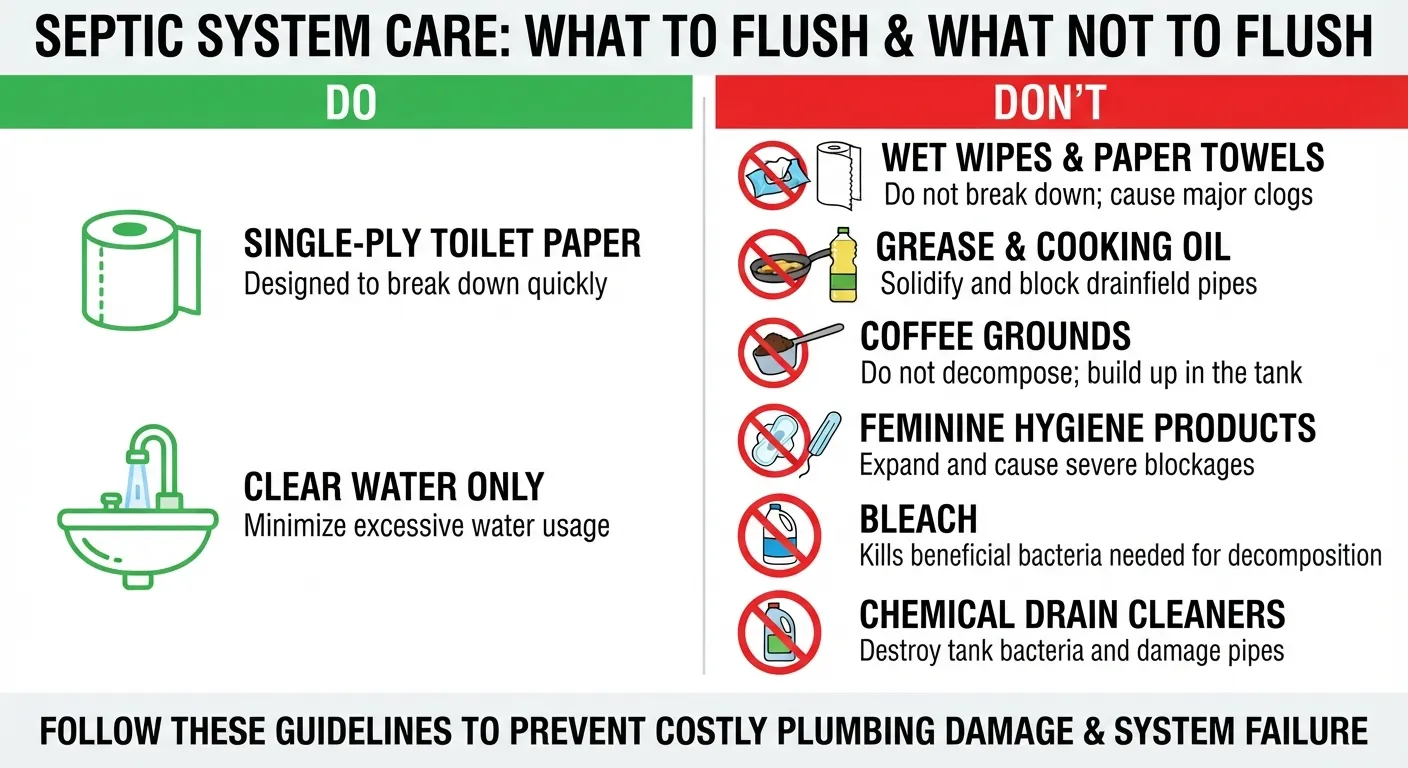
A healthy septic tank should receive exclusively human waste, water, and septic-safe toilet paper. Introducing harsh chemicals, non-biodegradable items, or grease disrupts the delicate bacterial balance required to break down solids effectively.
What Should Only Go Into a Septic Tank
Maintaining the biological integrity of your underground wastewater system relies entirely on managing what enters your drains. Only organic human waste and specific paper products dissolve quickly enough to prevent clogs and drain field failures.
- Human Waste: Natural organic waste that breaks down easily via anaerobic bacterial action.
- Water: Standard household wastewater from showers, washing machines, and sinks that is properly balanced.
- Septic-Safe Toilet Paper: Fast-dissolving paper products explicitly manufactured to disintegrate rapidly in wastewater.
How a Septic System Works
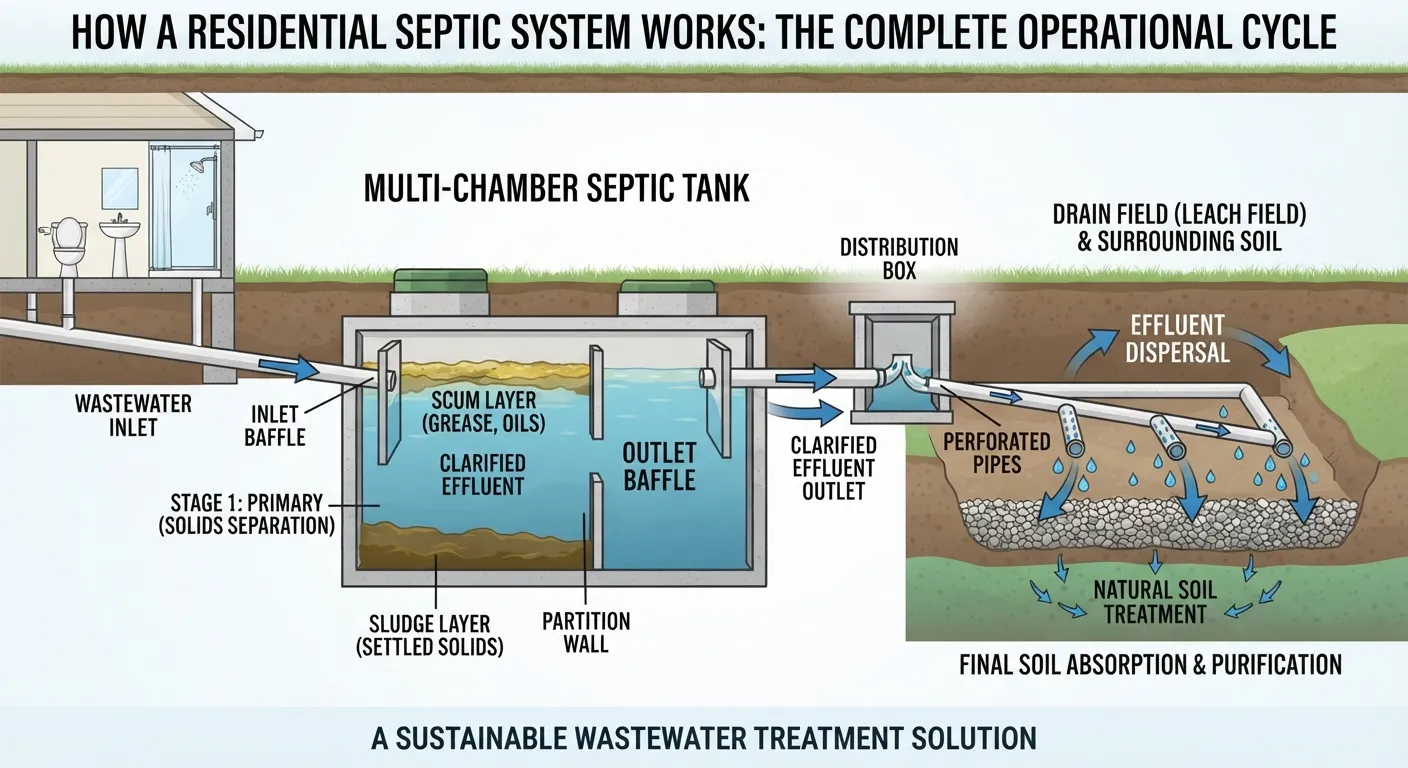
A residential septic system operates as an onsite underground wastewater treatment facility. Wastewater separates inside the tank, where natural biological processes digest organic matter before the liquid effluent filters safely into the surrounding soil via the drain field.
The Role of Bacteria in Breaking Down Waste
Anaerobic bacteria inside the septic tank are vital for liquefying solid organic waste. Without this active microbial ecosystem, solid waste accumulates rapidly, overwhelming the tank’s capacity and requiring much more frequent professional pumping.
- Scum Layer: Fats, oils, and grease float to the top of the tank, forming a solid floating barrier.
- Sludge Layer: Heavier solid particles sink to the bottom, where bacteria break them down into a dense sludge.
- Effluent Zone: The partially clarified liquid layer resides in the middle, ready to flow out to the drain field.
Why the Drain Field Gets Damaged Easily
The drain field relies on aerobic soil microbes and porous gravel trenches to filter pathogens and absorb treated liquid safely. When non-biodegradable items or harsh chemicals bypass the tank, they clog the soil pores and destroy the biological balance required for filtration.
- Soil Clogging: Grease, oils, and non-fibrous wipes block soil pathways, preventing wastewater absorption.
- Hydraulic Overloading: Excessive water use or chemical flushes saturate the trench beds, causing sewage backups.
- Permanent Failure: Once a drain field’s soil becomes completely sealed by sludge or grease, complete system replacement is often the only remedy.
Wipes & Paper Products You Should Never Flush
Flushing non-disintegrating paper goods and synthetic wipes is one of the leading causes of residential septic tank failure. Unlike standard toilet paper, these materials do not break down in water and will quickly create massive clogs.
Flushable Wipes and Baby Wipes Why They’re Not Actually Flushable
Even if labeled as flushable, wet wipes and baby wipes are constructed from woven synthetic fibers that resist water degradation. They accumulate in the tank, wrap around internal baffles, and block outlet pipes.
- Synthetic Composition: Plastics and polyester blends prevent natural bacterial decomposition.
- Pump Damage: Tough fibers tangle tightly around sewage ejector and effluent pump impellers.
- Outlet Blockages: Accumulating wipes form thick mats that prevent liquids from reaching the drain field.
Paper Towels and Facial Tissues
Paper towels and facial tissues are engineered to remain strong and absorbent even when thoroughly soaked. This high wet strength means they will not dissolve inside a septic tank, acting more like cloth rags in wastewater.
- High Wet-Strength Resiliency: Retains structural integrity instead of breaking down into pulp.
- Rapid Sludge Accumulation: Settles at the bottom of the tank, taking up crucial storage capacity.
- Inlet Line Clogs: Tends to catch at pipe joints and bends between the home and the tank.
Feminine Hygiene Products Tampons & Pads
Feminine hygiene products are specifically designed to absorb liquid and expand significantly. Inside a septic system, they absorb moisture, swell up, and create absolute blockages that require professional plumbing intervention.
- Super-Absorbent Materials: Expands upon contact with water, sealing off pipe openings.
- Non-Biodegradable Polymers: Contains cotton and plastic components that bypass bacterial breakdown entirely.
- Costly Backups: Triggers sudden bathroom backups and system alarm activations.
Diapers
Disposable diapers combine super-absorbent gel polymers with heavy plastics and cloth-like backings. Flushing them introduces heavy foreign debris that instantly halts system functionality.
- Polymer Expansion: Absorbs gallons of liquid, swelling to many times its original size.
- Severe System Choke: Instantly plugs inlet baffles and blocks wastewater flow.
- Emergency Pumping Required: Demands immediate professional extraction to clear the main lines.
Food & Kitchen Waste That Damages Septic Systems
Kitchen sinks and garbage disposals are often treated as open trash chutes, but introducing food waste severely burdens a septic system. Fats, oils, and solid food particles bypass standard filtering, accelerating sludge buildup and inviting major system failures.
Cooking Grease Fats and Oil
Cooking fats, oils, and grease (FOG) are among the most destructive elements you can introduce to a septic system. Because grease does not mix with water, it floats to the top of the tank and forms a hardened scum layer that blocks liquid flow.
- Solidification: Cools and solidifies inside plumbing pipes, creating stubborn indoor clogs.
- Baffle Obstruction: Thickens the scum layer, preventing effluent from exiting into the outlet tee.
- Drain Field Sealing: Coats soil particles in the drain field, stopping wastewater from filtering into the ground.
Coffee Grounds
Coffee grounds are completely non-biodegradable in a wastewater environment and will never break down. Instead, they act like fine abrasive sand that settles directly at the bottom of the septic tank.
- Sludge Accumulation: Adds inert, heavy particulate matter that rapidly fills up tank volume.
- Pipe Abrasion: Settles in pipe bends and scours plumbing walls over time.
- Filter Plugging: Contributes to the thickening sludge blanket that requires more frequent tank pumping.
Food Scraps Even With a Garbage Disposal
Having a garbage disposal does not mean your septic tank can handle food scraps. Disposals shred food into smaller pieces, but these organic solids still require bacterial digestion, which dramatically increases the biological load.
- Increased Pumping Frequency: Doubles or triples the rate of sludge accumulation inside the tank.
- Incomplete Breakdown: Starches, rinds, and heavy food waste do not decompose quickly enough under anaerobic conditions.
- Bacterial Overload: Overwhelms the natural microbial balance, leading to souring tanks and foul odors.
Chemicals Medications & Household Products to Avoid
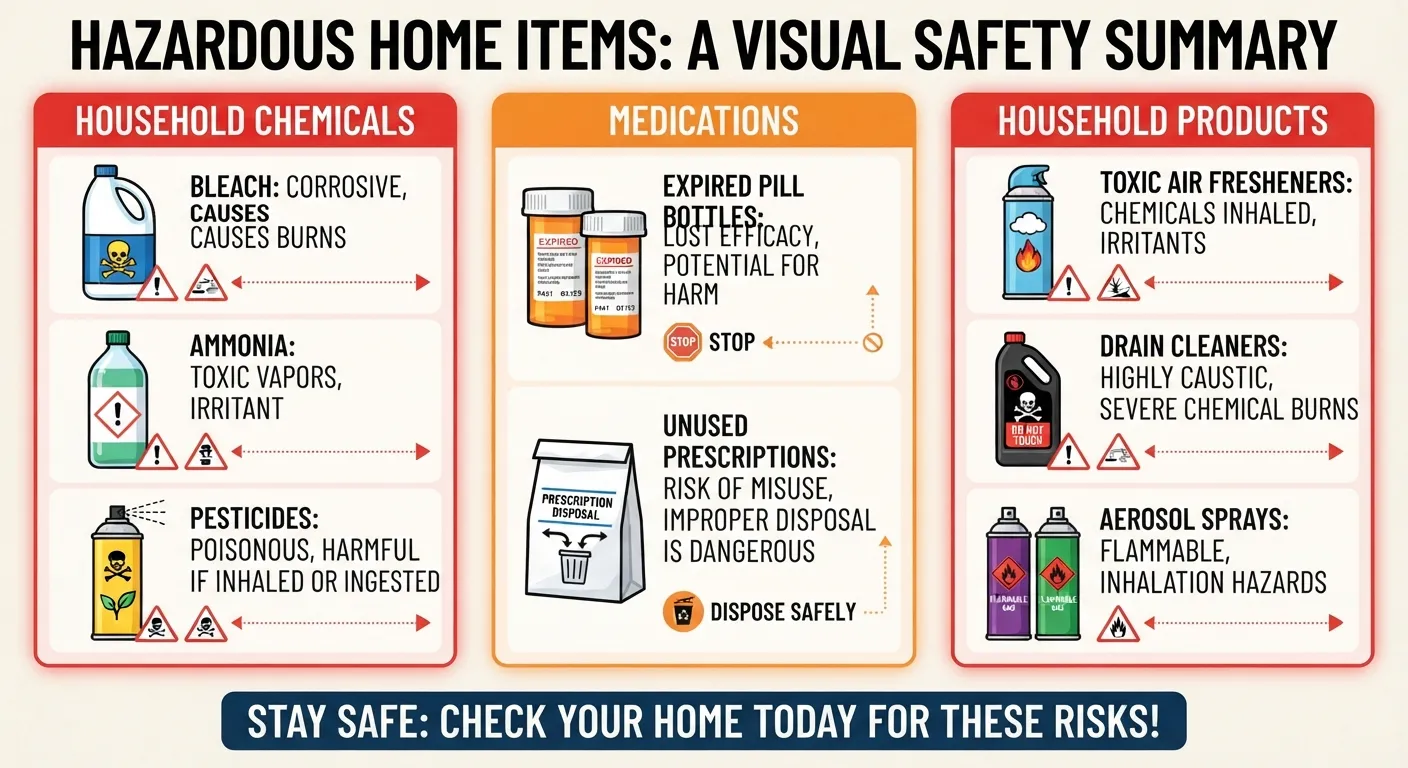
Pouring chemicals, medications, and harsh cleaning solutions down household drains destroys the delicate biological ecosystem inside your septic tank. These substances kill beneficial bacteria, leaving organic waste undigested and threatening local water sources.
Harsh Chemical Drain Cleaners
Chemical drain openers rely on strong acids or lye to dissolve clogs, but they do not stop once the clog is cleared. These caustic agents flow directly into your septic tank, wiping out the necessary bacteria and damaging the physical structure of the tank.
- Bacterial Eradicators: Destroys active anaerobic bacteria needed to break down solid waste.
- Tank Corrosion: Strong chemical reactions can crack older concrete or plastic septic tanks.
- Drain Field Toxicity: Unneutralized chemicals flush out into the soil, killing the biological filter in your drain field.
Antibacterial Soaps and Heavy Bleach Use
Frequent use of heavy bleach and strong antibacterial cleaning products introduces antimicrobial agents into your wastewater. While disinfecting your home surfaces, these products disrupt the microbial balance required for optimal septic function.
- Microbial Die-Off: Kills off helpful bacteria that liquefy solids.
- Slow Breakdown: Causes solid waste accumulation to spike drastically.
- System Imbalance: Triggers foul odors and reduces overall treatment efficiency.
Pharmaceuticals and Medications Groundwater Risk
Flushing leftover prescription drugs, over-the-counter medications, or vitamins down the toilet introduces persistent chemical compounds into your wastewater treatment system. Septic tanks cannot filter or break down pharmaceutical compounds, allowing them to pass straight into the soil and local aquifers. According to the Environmental Protection Agency (EPA), introducing chemicals and medications compromises the natural purification process and poses a direct contamination threat to surrounding groundwater supplies.
- Aquifer Contamination: Chemicals seep untreated through the drain field into underground water tables.
- Environmental Toxicity: Harms local ecosystems, wildlife, and well-water quality.
- Unfiltered Compounds: Bacterial action in standard tanks is completely ineffective against modern pharmaceuticals.
Paint, Thinners Motor Oil Pesticides Antifreeze
Automotive fluids, oil-based paints, thinners, and hazardous lawn chemicals are strictly prohibited from entering a septic system. These hazardous materials represent high-strength pollutants that ruin wastewater systems instantly.
- Immediate Kill Switch: Instantly sterilizes the tank’s biological community.
- Soil Poisoning: Permanently ruins the permeability and safety of the surrounding drain field earth.
- Regulatory Hazards: Violates environmental safety codes and triggers costly hazardous material remediation.
Miscellaneous Items People Forget About
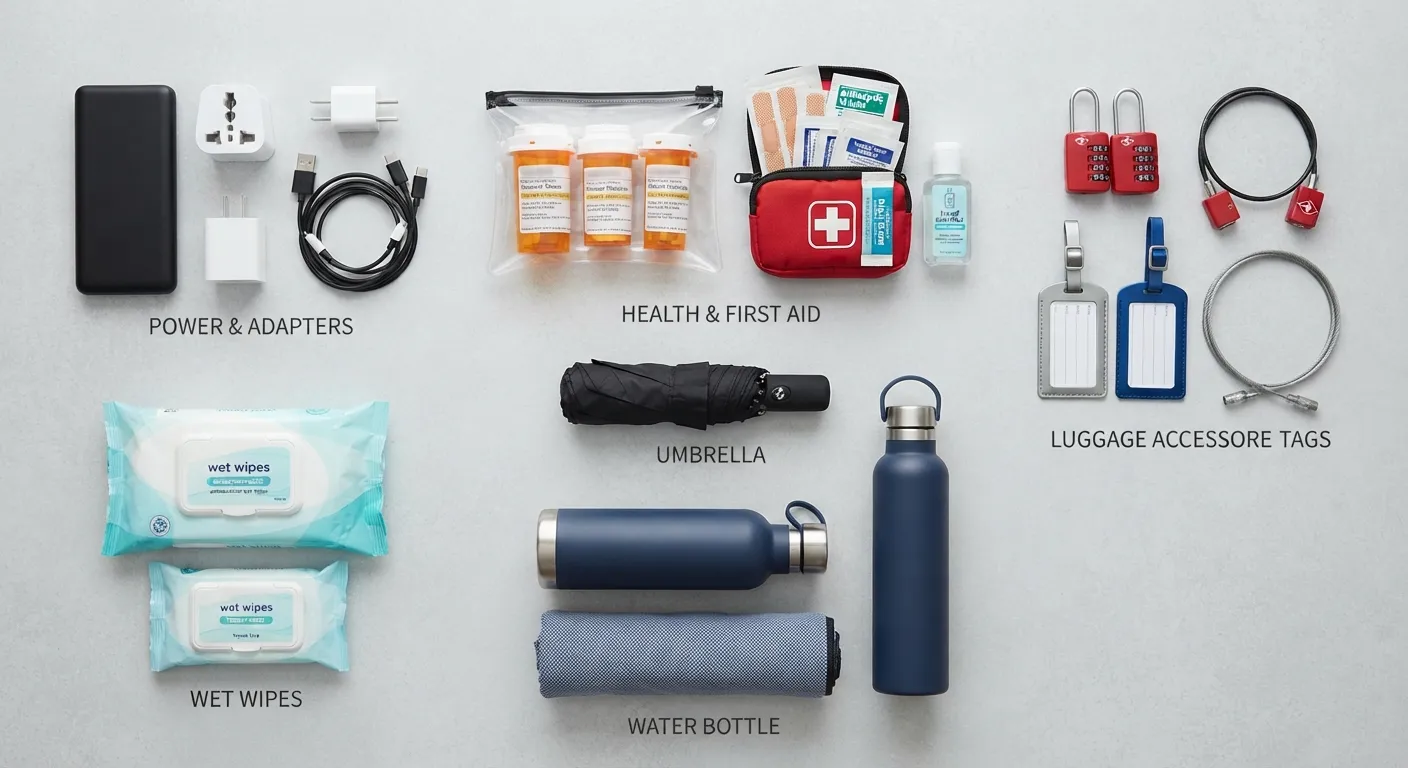
Many household items slip down drains or get flushed out of convenience, despite being entirely unsuitable for septic disposal. Even products marketed as natural or biodegradable can cause severe mechanical jams and system failure over time.
Cat Litter Even Flushable or Biodegradable Types
Cat litter is designed to absorb moisture and clump tightly, a feature that makes it disastrous for household plumbing and septic tanks. Even brands labeled as flushable or biodegradable will not dissolve safely in standing wastewater.
- Clumping Action: Forms dense, cement-like blockages inside pipes and septic tank compartments.
- Inert Minerals: Clay-based litters add heavy, undigested sediment that accelerates sludge accumulation at the tank bottom.
- Parasite Risks: Can introduce harmful pathogens like Toxoplasma gondii into the wastewater treatment cycle.
Cigarette Butts and Dental Floss
Small debris items like cigarette butts and dental floss are frequently tossed into toilets without a second thought. Both materials resist degradation and pose specific mechanical threats to system components.
- Non-Biodegradable Filters: Cigarette filters contain synthetic plastics and chemical residues that remain intact indefinitely.
- Tough Nylon Floss: Dental floss is made of fibrous synthetic strands that wrap around pump impellers and create dense traps for other debris.
- System Jamming: Contributes to chronic, slow-running drains and unexpected mechanical failures.
Specific Product Verdicts Is It Safe or Not?
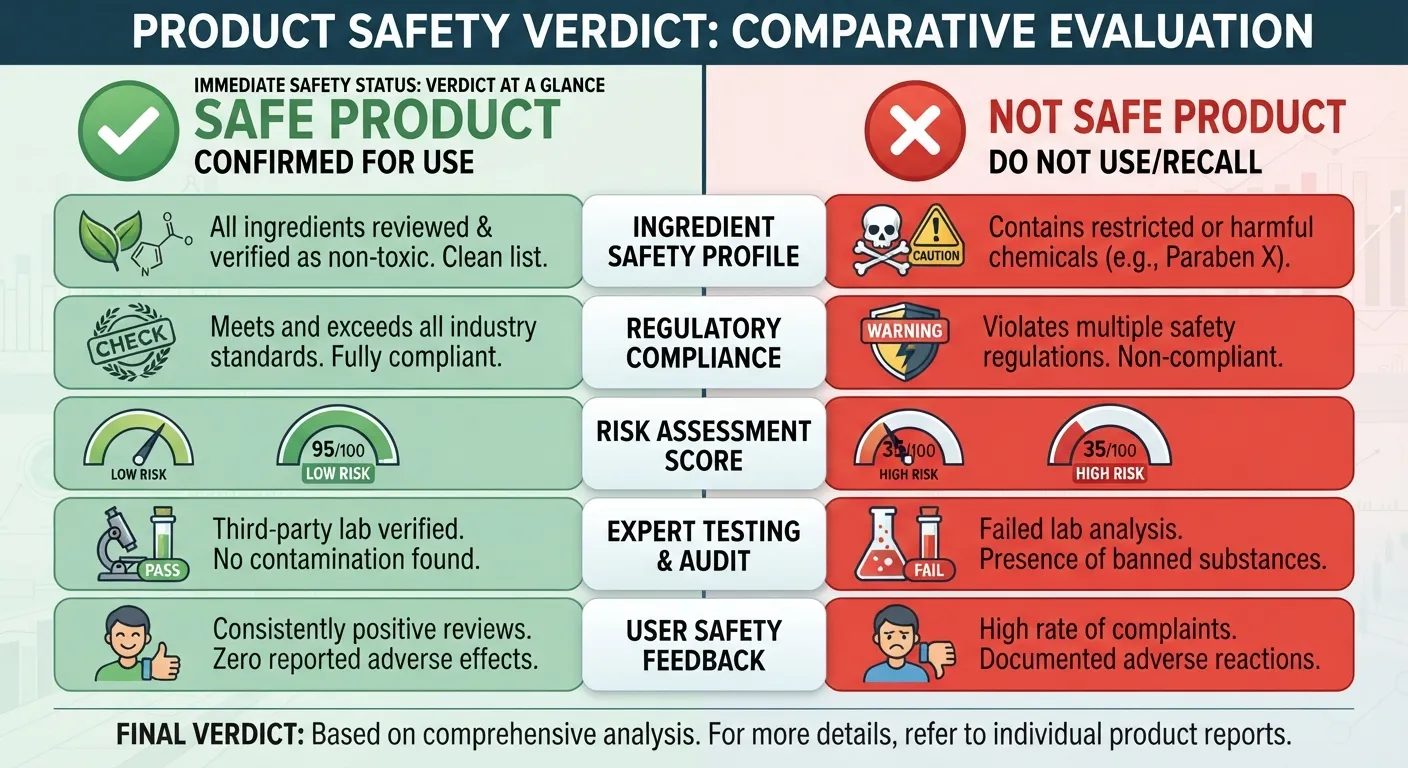
Homeowners frequently wonder about the safety of common household cleaners, laundry supplies, and natural additives. Evaluating each substance individually prevents accidental damage to your septic tank’s microbial environment.
Is Dawn Dish Soap OK for Septic Systems?
Verdict: Safe in moderation. Standard Dawn dish soap is generally safe for septic systems when used for normal hand-washing dishes. However, excessive amounts of grease-cutting surfactants can temporarily foam or disrupt surface tension, so heavy daily usage should be balanced.
- Surfactant Breakdown: Breaks down grease effectively without killing essential anaerobic tank bacteria.
- Moderation Required: Excessive sudsing from industrial volumes can occasionally cause minor drainage bubbling.
What Does Vinegar Do to a Septic System?
Verdict: Safe in moderate amounts. Distilled white vinegar is a popular natural cleaner that neutralizes safely in standard volumes. Because it dilutes quickly through household graywater, normal cleaning use will not harm your tank’s bacterial balance.
- Mild Acidity: Dilutes rapidly through plumbing lines before reaching the main tank environment.
- Eco-Friendly Cleaning: Provides a harsh chemical alternative that preserves system health.
What Does Baking Soda Do to a Septic Tank?
Verdict: Safe and beneficial. Baking soda acts as a mild alkaline buffer that helps maintain optimal pH levels inside the septic tank. It can neutralize acids from food waste and minimize unwanted odors without harming bacteria.
- pH Buffering: Stabilizes internal tank chemistry to support active bacterial digestion.
- Odor Reduction: Naturally absorbs and neutralizes foul-smelling sulfur gases in drains.
What Does Epsom Salt Do to Septic Tanks?
Verdict: Generally safe, but mostly unnecessary. While putting Epsom salt down the drain will not damage your septic tank, popular myths claiming it clears grease or eliminates the need for pumping are scientifically unfounded.
- Inert Mineral Content: Dissolves harmlessly into the wastewater without stimulating bacterial growth.
- Myth vs. Reality: Does not replace regular mechanical sludge pumping or clear blocked pipes.
What Laundry Detergent Is Bad for Septic Systems?
Verdict: Powder detergents and heavy softeners are bad. Laundry powders often rely on clay fillers or chemical binders that do not dissolve entirely, settling at the bottom of the tank as thick sludge. Liquid detergents with low suds and no heavy fragrances are much safer options.
- Clay Fillers in Powder: Solidifies into heavy sediment that rapidly fills up available tank space.
- Fabric Softener Residues: Coats internal components and soil pores with waxy chemical films.
How Many Loads of Laundry Can You Do in a Day With a Septic Tank?
Verdict: Spread loads out instead of washing all at once. Doing three or four consecutive loads of laundry in a single day can hydraulically overload a standard septic tank, stirring up sludge and pushing solids directly into the drain field.
- Hydraulic Shock: Excess water volume forces untreated suspended solids out of the tank too quickly.
- Pacing Strategy: Limit washes to one load per day or space them out by several hours to allow proper settling.
What You SHOULD Put In or Use With a Septic System
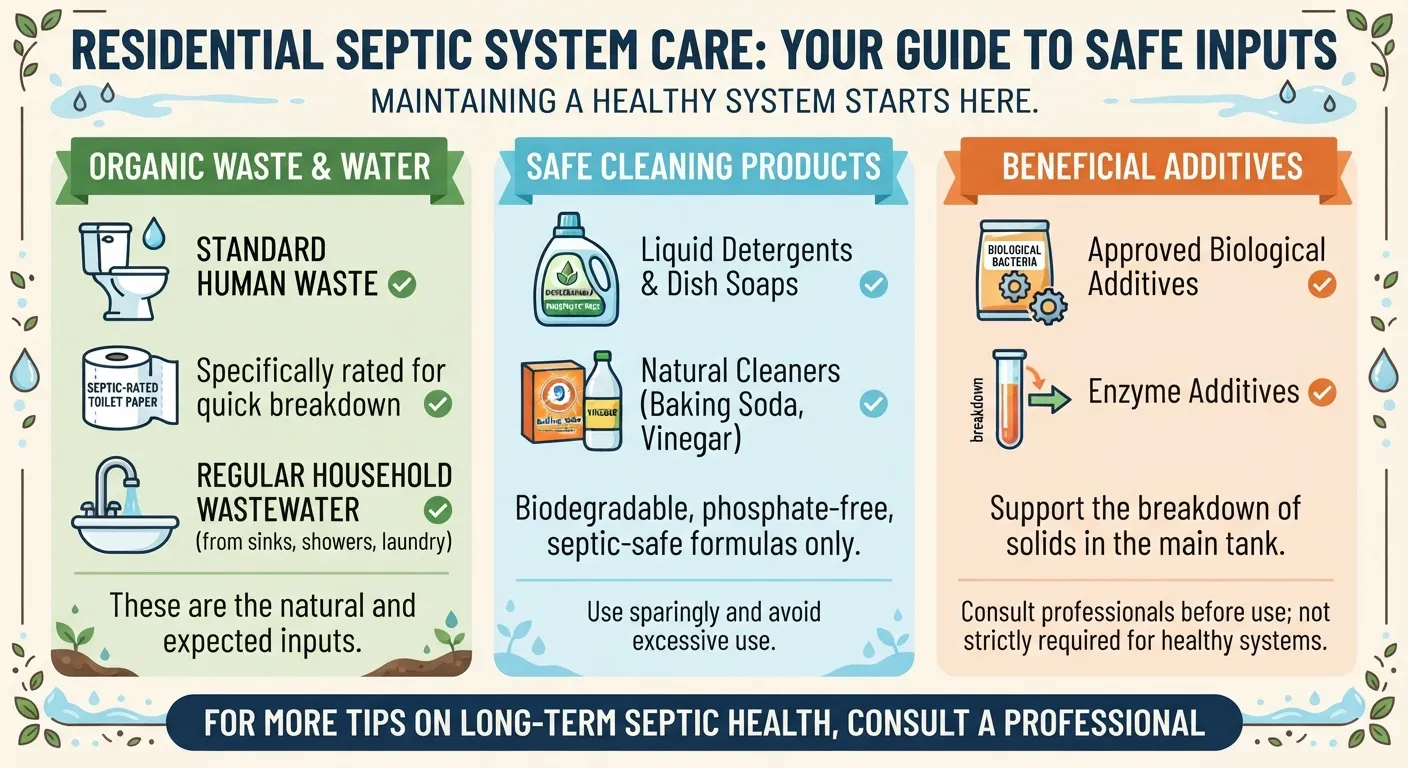
Maintaining a healthy, long-lasting septic system requires proactive habits focused on supporting biological activity. Using explicitly approved paper goods, gentle cleaning agents, and proper additives ensures your tank processes waste efficiently without premature failure.
Toilet Paper What to Look For
Using certified septic-safe toilet paper is critical because these products are engineered to disintegrate rapidly upon contact with water. Look for packaging labels that explicitly indicate compatibility with septic and sewer systems.
- Rapid Dissolution: Breaks down into a fine pulp within seconds to prevent clogs in inlet pipes.
- Single-Ply or Specialized Multi-Ply: Manufactured without dense chemical glues or reinforced synthetic fibers.
- Eco-Friendly Certification: Often bears labels from independent testing organizations confirming quick structural breakdown.
Cleaning Products
Switching to dedicated septic-safe and eco-friendly household cleaners protects the vital microbial colonies inside your tank. These specialized formulas clean effectively without relying on harsh bleaches, ammonia, or heavy antibacterial agents.
- Biodegradable Formulations: Breaks down naturally in wastewater without accumulating toxic residues.
- Bacterial Protection: Preserves the anaerobic bacteria required for continuous solid waste digestion.
- Safe Graywater Discharge: Prevents harmful chemical compounds from contaminating the surrounding soil and groundwater.
Natural Bacteria Enzyme Additives
While a properly functioning septic system maintains its own bacterial balance, natural bacteria and enzyme additives can help support systems handling heavy household usage. These supplements introduce targeted microbial strains to accelerate organic waste breakdown.
- Enzyme Boosters: Speeds up the liquefaction of proteins, fats, and starches inside the tank.
- Maintenance Support: Helpful after periods of heavy household activity or necessary antibiotic use.
- Odor Mitigation: Helps minimize unpleasant sulfur odors escaping from floor drains or vent stacks.
DIY Tips to Help Break Down Solids Naturally
Managing solid accumulation in a septic system requires careful adherence to proven biological maintenance practices. While numerous home remedies and commercial additives promise effortless tank upkeep, understanding which methods actually aid waste breakdown prevents costly system damage.
Simple Home Remedies Yeast Enzyme Packets
Many homeowners experiment with adding baker’s yeast or commercial bio-enzymatic packets directly down the toilet to boost waste digestion. While specialized commercial enzyme treatments can offer minor supplementary help during periods of heavy household use, they cannot replace standard mechanical sludge pumping.
- Commercial Enzyme Supplements: Introduce targeted bacterial strains that assist in breaking down complex grease and protein compounds.
- Yeast Limitations: Adding raw yeast packets provides minimal benefit because healthy septic tanks already cultivate robust native anaerobic bacteria naturally.
- Usage Frequency: Over-supplementing with commercial additives can sometimes disrupt natural biological equilibrium if used too aggressively.
What NOT to DIY Common Myths Debunked
Attempting unverified DIY septic hacks can cause severe, irreversible damage to your wastewater infrastructure. Relying on folklore instead of proper mechanical maintenance is the primary cause of premature drain field collapse.
- Flushable Chemical Bombs: Never dump caustic commercial tank-clearing chemicals down drains hoping to dissolve accumulated sludge.
- Gasoline or Diesel Flushes: Pouring petroleum products into toilets to “clean” the system will sterilize the tank and poison local groundwater.
- Skipping Professional Pumping: No DIY additive or home remedy can eliminate the need for professional pumping every three to five years.
Warning Signs Your Septic System Is Already Damaged
Recognizing the early warning signs of septic system failure can save you thousands of dollars in emergency repairs and property damage. When internal clogs, biological overload, or drain field saturation occur, the system typically exhibits distinct physical symptoms.
Slow Drains and Gurgling Sounds
When multiple plumbing fixtures throughout your home begin draining slowly or emitting gurgling sounds, it often signals an obstructed main sewer line or a heavily overloaded septic tank. Air trapped in the pipes escapes through plumbing traps as wastewater struggles to reach the tank.
- Multiple Fixture Clogs: Simultaneous sluggishness in sinks, tubs, and toilets points to a main system issue rather than a localized pipe clog.
- Pumbing Gurgling: Bubbling sounds in toilet bowls when running the washing machine indicate restricted airflow and drainage.
- Venting Issues: Pressure imbalances caused by full tanks or blocked inlet baffles slow overall water evacuation.
Bad Odor Near the Tank or Drain Field
Persistent sulfur or sewage smells lingering around your yard, septic tank lid, or drain field indicate that untreated wastewater is failing to process correctly. Escaping gases suggest a venting failure, a broken pipe, or severe biological stagnation.
- Yard Odors: Foul smells outdoors often indicate that effluent is surfacing or pooling near the ground level.
- Indoor Smells: Sewer gas odors inside the home can point to cracked vent stacks or dry plumbing P-traps.
- Bacterial Die-Off: A souring, chemically imbalanced tank will produce intense gassy stenches.
Standing Water or Backups
The appearance of soggy ground, bright green grass patches, or standing puddles above your drain field is a classic sign of complete soil saturation or drain field failure. Left unaddressed, this will quickly lead to wastewater backups inside your home.
- Soggy Drain Fields: Unfiltered effluent rising to the surface signals that surrounding soil pores are permanently clogged.
- Basement Backups: Sewage backing up into lowest-level floor drains or showers requires immediate emergency intervention.
- Lush Grass Growth: Unusually vibrant or spongy grass over the tank or drain lines reveals leaking nutrient-rich wastewater.
How to Know When a Septic Tank Is Full
Every septic tank requires periodic pumping to remove accumulated sludge and scum layers before they escape into the drain field. Tracking household usage and inspecting sludge levels annually prevents catastrophic system overflows.
- Pumping Schedule: Most standard residential tanks need professional extraction every three to five years depending on household size.
- Sludge Dip Testing: Professional service providers use a sludge-judge tool to measure solid depths inside the active tank compartments.
- Water Usage Factors: Homes with high occupancy or garbage disposals require more frequent inspection intervals.
Region Specific Considerations

Geographic location, local climate patterns, and regional soil compositions significantly influence how efficiently a septic system treats wastewater. Homeowners must adapt their maintenance schedules and usage habits to align with environmental conditions specific to their local area.
Why Soil Type and Climate Matter for Septic Care
The rate at which wastewater filters through a drain field depends entirely on local soil permeability and regional water tables. Heavy clay soils, frequent heavy rainfall, or freezing winter temperatures alter soil absorption rates, making proper waste management even more critical.
- Clay vs. Sandy Soils: Dense clay soils require slower wastewater loading to prevent pooling, whereas sandy soils filter rapidly.
- High Water Tables: Regions with shallow water tables demand stricter pollutant control to protect local drinking water sources.
- Regional Regulations: Local environmental health departments enforce specific setback distances and pumping frequencies based on regional conditions.
Frequently Asked Questions
Homeowners frequently have lingering questions regarding daily maintenance, product safety, and system capabilities. Reviewing these common inquiries helps clarify best practices for keeping your wastewater system operating smoothly.
What’s the Worst Thing for a Septic Tank?
Non-biodegradable items like baby wipes, feminine hygiene products, and disposable diapers are among the worst things to introduce because they create severe physical blockages. Additionally, pouring large volumes of cooking grease, harsh chemical drain cleaners, or motor oil down drains will destroy the bacterial ecosystem and ruin the drain field.
- Synthetic Wipes: Tangle around pumps and fail to break down.
- Harsh Chemicals: Eradicate essential anaerobic bacteria instantly.
Can You Put Too Much Water in a Septic Tank?
Yes, introducing excessive amounts of water in a short time frame can hydraulically overload the system. This sudden surge forces suspended solids out of the tank prematurely, clogging the drain field and causing sewage backups.
- Hydraulic Shock: Stirs up the sludge blanket inside the tank.
- Water Conservation: Space out heavy water-using chores like laundry across multiple days.
What Should You Not Do Around a Septic Tank?
Never park vehicles, build structures, plant large trees, or install heavy hardscaping over your septic tank or drain field. Weight compression can crush underground pipes or tanks, while deep tree roots can penetrate and damage component lines.
- Vehicle Weight: Compresses soil and can fracture buried concrete or plastic tanks.
- Root Intrusion: Aggressive plant roots seek out moisture and crack drain field pipes.
Are All Toilet Tissues Septic Tank Safe?
No, not all toilet paper brands are safe for septic systems. Heavy-duty, quilted, or multi-ply luxury toilet papers often dissolve very slowly, adding unnecessary solid volume and contributing to potential clogs.
- Dissolution Test: Check that paper breaks down rapidly into fine pulp in standing water.
- Certified Safe: Look for explicit manufacturer labeling indicating septic system compatibility.
What Will Ruin a Septic Tank Permanently?
Permanently ruining a septic system usually results from catastrophic drain field failure caused by grease clogs, un-pumped sludge overflow, or chemical poisoning of the soil. Once a drain field’s soil pores are completely sealed or poisoned, full system replacement is often required.
- Soil Clogging: Grease and fine solids sealing off earth absorption pathways.
- Chemical Sterilization: Toxic automotive fluids or industrial solvents permanently killing soil biology.
Conclusion Key Takeaways
Proper septic system maintenance relies entirely on mindful everyday habits, regular professional pumping, and strict adherence to what is allowed down your drains. Protecting your underground wastewater infrastructure prevents costly repairs and extends the lifespan of your entire property.
Final Recap The Golden Rule of Septic Care
The single most important rule for septic ownership is straightforward: if it did not originate from your body or dissolve into rapid pulp, it does not belong in your toilet or drains. Respecting your system’s biological boundaries guarantees years of trouble-free operation.
- Stick to the Basics: Limit drain inputs strictly to water, human waste, and certified septic-safe toilet paper.
- Avoid Harsh Toxins: Keep heavy chemical cleaners, oils, medications, and non-biodegradable wipes completely out of the system.
- Schedule Maintenance: Commit to professional tank inspections and pumping every three to five years to safeguard your drain field.

Oscar Vance | Master Plumber & Drainage Expert
Meet Oscar Vance, a licensed master plumber sharing practical solutions on residential repairs, preventive maintenance, and thoughtful home upkeep.