Copper Today Lead in the Past
 Copper (Cu) is the primary element utilized in modern metal plumbing pipes due to its exceptional durability and corrosion resistance. Lead (Pb) was heavily relied upon in historical infrastructure—giving plumbing its very name—until severe health hazards were recognized. Furthermore, many modern piping systems consist of advanced plastic compounds rather than metallic elements.
At a Glance
- Today: Copper (Cu) serves as the primary metallic element for durable modern plumbing pipes.
- Historically: Lead (Pb) was widely utilized in ancient and early water distribution systems.
- Plastic Pipes: Advanced polymer compounds like PEX and PVC frequently replace traditional metals in contemporary construction.
- Why It Matters: Tracking these material shifts ensures drinking water safety, regulatory compliance, and informed infrastructure maintenance.
Why Is It Called Plumbing
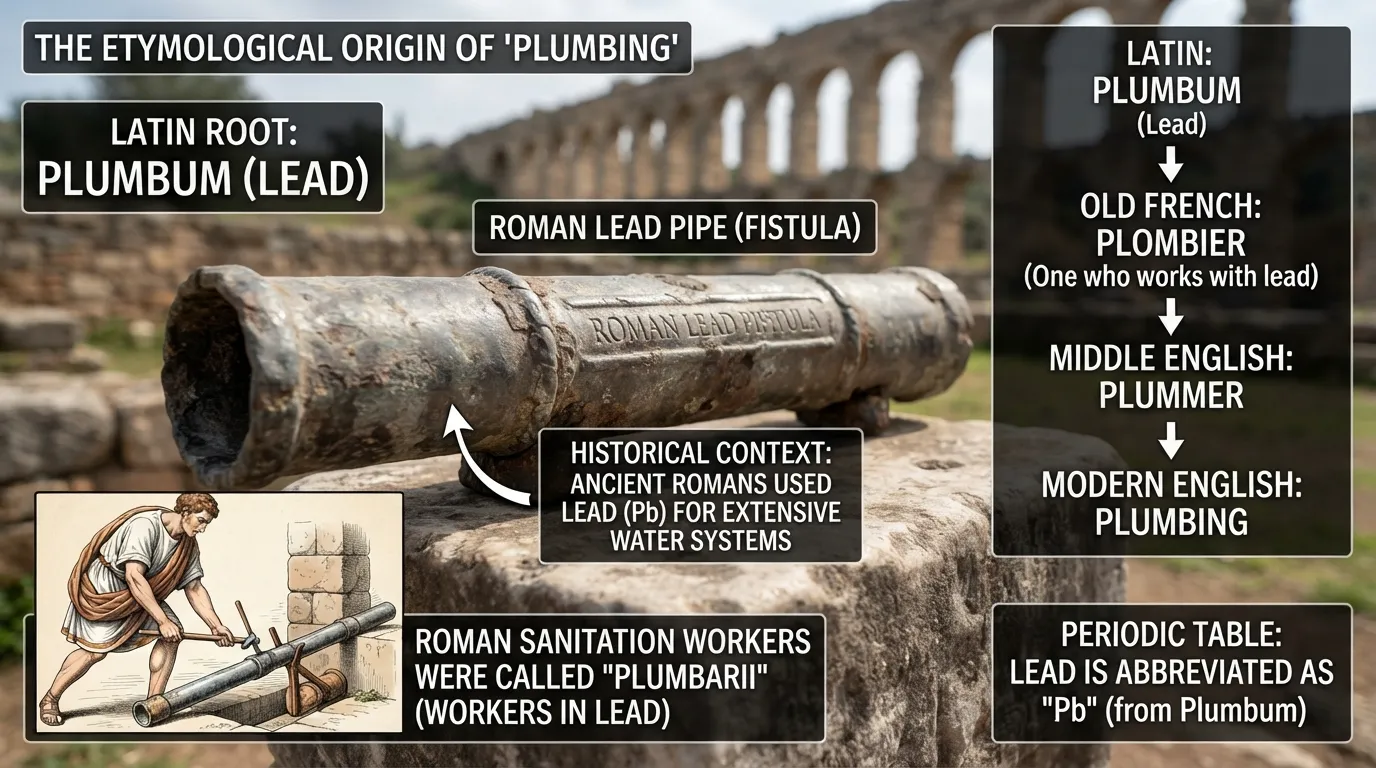 The English word plumbing derives directly from the Latin word plumbum, which translates to lead. This ancient linguistic root explains why the chemical symbol for lead on the periodic table is Pb. Ancient Roman water distribution systems relied heavily on sheet lead to construct aqueduct linings and water lines.
Because Roman artisans worked extensively with this metal, craftsmen who installed and repaired these systems became known as plumbarii. Over centuries, that occupational title evolved into the modern word plumber.
Why Lead Was Used in Early Pipes
Early engineers and builders favored lead for water transport because it possessed unique physical properties that made fabrication straightforward. Its remarkable malleability allowed workers to easily bend, shape, and join pipes without sophisticated modern welding tools.
- Malleability: Lead could be easily hammered and cast into custom shapes for complex routing.
- Corrosion Resistance: It forms a protective oxide layer that resists certain forms of water corrosion over time.
- Abundance: Plentiful natural deposits made it an accessible and economical material for large-scale Roman infrastructure.
Is Lead a Metal or a Nonmetal?
Lead is unequivocally a heavy metal situated in the carbon group of the periodic table, identified by the atomic number 82. It exhibits classic metallic characteristics such as high density, luster when freshly cut, and electrical conductivity, though it is exceptionally soft compared to other metals.
Unlike structural transition metals like iron or copper, lead is remarkably pliable and ductile. However, due to its well-documented toxicity and cumulative health risks, its use in residential water supply lines has been entirely phased out globally.
Why Copper Is the Main Element in Modern Plumbing Pipes
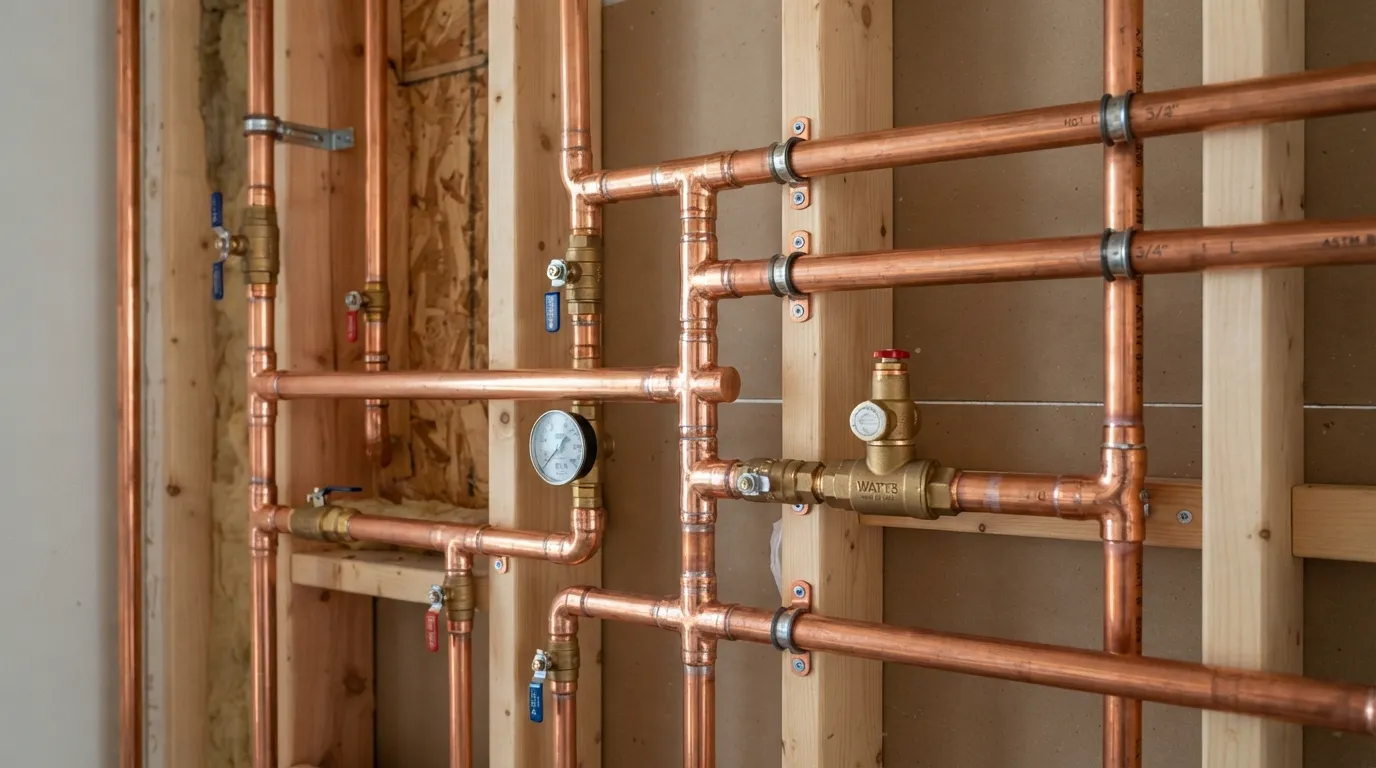 Copper (Cu), element atomic number 29, serves as the backbone of modern drinking water supply lines due to its superior durability. When exposed to water and oxygen, it forms a protective internal layer or outer patina (verdigris) that naturally arrests further chemical degradation, allowing systems to last for decades.
This remarkable structural integrity ensures that copper plumbing networks routinely outlast building materials like rigid plastics or galvanized steel. Minimal maintenance is required over a lifespan that frequently exceeds fifty years.
- Patina Formation: A stable oxide coating forms naturally inside and outside the pipe wall to block further decay.
- Chemical Resilience: Resists scaling, organic growth, and standard municipal water treatment chemicals without breaking down.
Handles Heat and Water Pressure
Copper pipes easily withstand extreme temperature swings and high internal water pressures, making them uniquely suited for both hot and cold supply lines. Their structural strength prevents expansion failures that plague lesser materials during rapid thermal fluctuations.
High burst strength ratings mean copper can handle severe residential and commercial pressure spikes safely without structural deformation or joint blowout.
- Thermal Stability: Retains dimensional stability across freezing temperatures and high-temperature water parameters.
- Pressure Rating: Safely handles standard residential pressures ranging from 40 to 80 psi and higher industrial loads.
Natural Antimicrobial Properties
Copper exhibits intrinsic antimicrobial properties that help inhibit bacterial growth within drinking water supply lines. While it does not substitute for municipal water treatment or filtration, its metallic ions naturally disrupt bacterial cell membranes on contact.
This biological characteristic helps maintain higher water hygiene standards inside closed residential plumbing distribution networks compared to organic materials.
- Oligodynamic Effect: Metallic ions actively suppress certain waterborne pathogens and microbial populations.
- Safety Standard: Provides a passive, chemical-free layer of protection for everyday household water use.
Easy to Join
Professional plumbers prefer copper because it can be quickly and securely joined using reliable techniques like soldering, brazing, or mechanical compression fittings. Both rigid straight lengths and flexible tubing options allow workers to navigate tight architectural spaces with ease.
Established installation methods ensure permanent, leak-proof joints that stand the test of time under continuous mechanical load.
- Soldering and Brazing: Creates seamless, molecular-level bonds with brass fittings using torch heat and filler metal.
- Mechanical Fittings: Compression and push-to-connect options allow fast repairs without open flames.
Copper Pipe Types and Where They’re Used
Copper pipes are categorized into three main wall-thickness grades—Type K, Type L, and Type M—each designed for specific pressure requirements and structural locations. Selecting the correct classification ensures compliance with local building codes and optimal system longevity..
Elements vs Compounds vs Alloys: What Pipes Are Really Made Of
Pure chemical elements function independently on the periodic table without chemical bonding to other elements. In plumbing, copper (Cu) and lead (Pb) serve as standalone elements, while zinc and iron are applied as protective coatings or structural bases rather than pure standalone pipes.
Pure elements maintain uniform chemical properties throughout their structure. While copper serves as the premier element for fluid transport, other elements play supporting roles in pipe durability.
- Copper (Cu): Utilized in its pure elemental form for reliable, long-lasting residential water distribution lines.
- Lead (Pb): Historically mined and shaped as a pure metallic element before toxicity risks halted its use.
- Zinc (Zn): Applied as a protective elemental coating on steel pipes to prevent rust via galvanization.
Alloys: Brass and Steel
Alloys are homogeneous mixtures created by melting and combining two or more metallic elements to enhance strength, ductility, or corrosion resistance. Unlike single elements, brass combines copper and zinc, whereas steel blends iron with carbon, making them structural solutions rather than pure elemental conduits.
Alloys provide enhanced mechanical properties that pure elements cannot achieve alone. They are engineered to handle high torque, structural loads, and pressure variations.
- Brass: An alloy primarily composed of copper and zinc, prized for its machinability in valves and threaded fittings.
- Steel: An alloy of iron and carbon, often galvanized with zinc, historically used for rigid home framing and drain lines.
Plastic Pipes: Compounds, Not Elements
Modern plastic pipes are synthetic polymer compounds built from complex chains of carbon, hydrogen, chlorine, and other molecules rather than raw metallic elements. These engineered compounds offer lightweight flexibility, chemical inertness, and freedom from metallic corrosion or mineral scale buildup.
Polymer-based piping materials have transformed modern residential and commercial plumbing. Each type is formulated for specific temperatures and structural pressures.
- PVC: Polyvinyl chloride compound combining carbon, hydrogen, and chlorine for drains and vent stacks.
- PEX: Cross-linked polyethylene compound providing exceptional flexibility for modern hot and cold supply runs.
- CPVC and ABS: Chlorinated PVC handles hot water supply, while ABS serves durable underground drainage.
Comparison Table: Pipe Material Classifications
Are Water Lines Copper or Brass?
Main residential water supply lines are predominantly constructed from copper tubing, whereas brass is used primarily for structural fittings, adapters, and valves. Because brass is an alloy of copper and zinc, it provides the rigid, machinable strength required to connect different pipe segments securely.
Understanding the distinction between these two copper-based materials helps clarify system layouts. Tubing routes water across distances, while fittings manage directional changes and control flow.
- Copper Supply Lines: Flexible or rigid copper pipes deliver the actual volume of water safely across building floors.
- Brass Connectors: Threaded brass valves and elbows tie copper, PEX, and fixtures together securely without cracking under stress.
Why They Were Replaced and Why It Matters Today
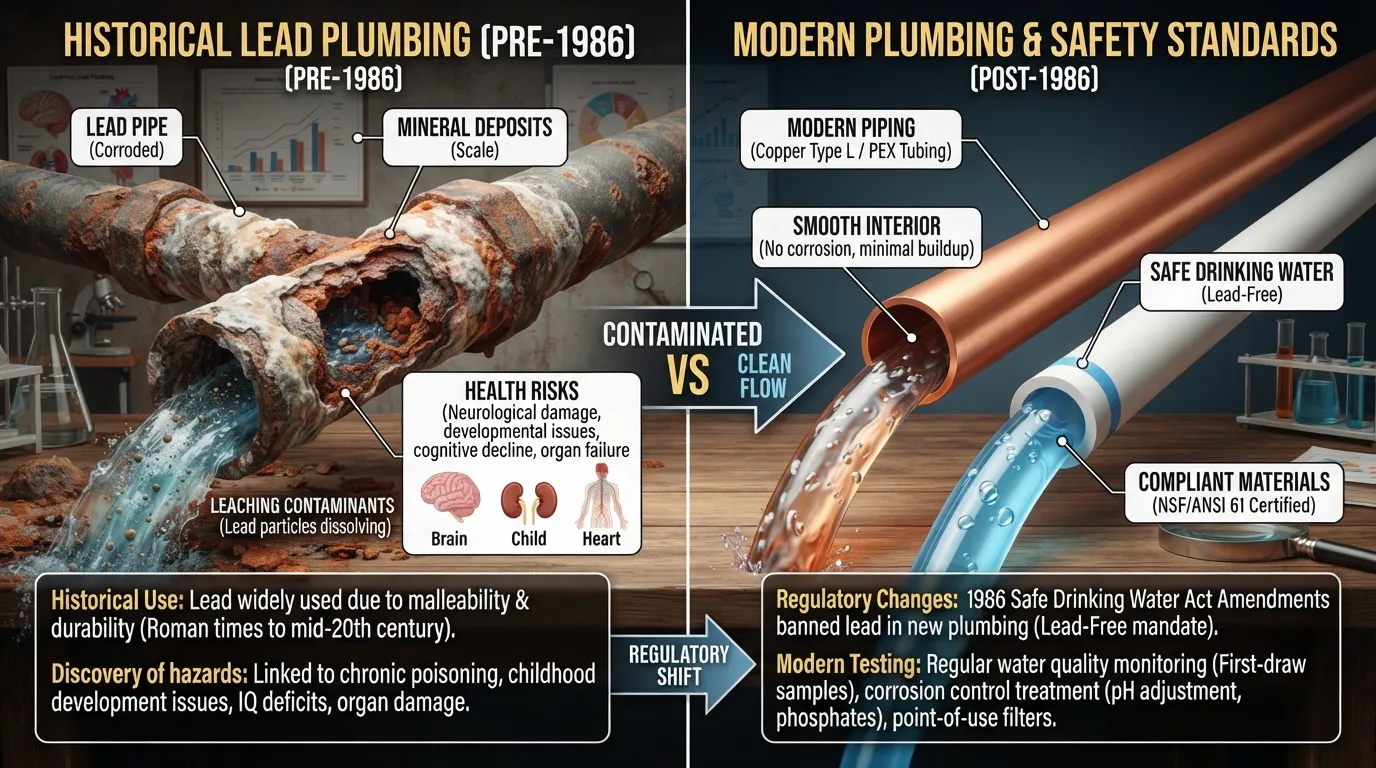 Lead is a potent toxic metal that poses serious health risks when it leaches into drinking water supplies. Over time, chronic ingestion can lead to severe neurological damage, cardiovascular issues, and developmental delays, particularly in young children and infants.
Because lead accumulates in bodily tissues over extended periods, public health organizations emphasize that no exposure level is entirely safe. Consequently, removing legacy lead infrastructure remains a top priority for modern municipal water management.
Which Homes May Still Have Lead Pipes or Lead Solder
Homes built before the mid-1980s are significantly more likely to contain legacy lead components in their internal or service connection lines. While full lead pipes were commonly installed decades ago, lead-based solder was also frequently used to join copper pipes prior to federal bans.
Properties featuring older private service lines or legacy interior joints can experience accelerated metal leaching if local municipal water chemistry becomes acidic or corrosive.
- Lead Service Lines: Underground pipes connecting municipal water mains directly to older residential structures.
- Legacy Solder Joints: Copper pipe networks assembled with lead-heavy joining compounds before the 1986 Safe Drinking Water Act amendments.
What to Do If You Suspect Lead
If your home was constructed before 1986 or you notice discolored water, taking proactive verification steps is essential to safeguard household health. Certified water testing laboratories can analyze tap samples accurately for trace heavy metal contamination.
Homeowners can review EPA guidance on lead in drinking water for detailed mitigation strategies, or coordinate directly with local water utilities and licensed plumbers to inspect service line materials.
- Water Testing: Order an independent certified lab kit to evaluate precise lead concentrations at your tap.
- Utility Inquiry: Contact your local municipal water department to check public record data regarding your neighborhood service line material.
- Professional Inspection: Hire a licensed plumber to audit interior pipe networks and identify legacy solder or brass fixtures.
Why Plumbers Moved Away From Lead and Partly From Copper
Plumbing professionals transitioned away from lead entirely due to mounting toxicological evidence and strict modern building codes. At the same time, the industry continues to diversify material choices beyond traditional copper to accommodate varying water chemistry profiles and cost considerations.
While copper remains a premier choice for durability, modern installation practices incorporate flexible cross-linked polymers and certified lead-free brass components to ensure absolute safety and compliance.
Other Elements You’ll Find in Plumbing: Zinc Iron and More
Zinc functions primarily as a sacrificial anti-corrosion coating on galvanized steel pipes, protecting the underlying iron base from premature rusting. However, decades of water exposure cause this protective layer to erode from the inside out, leading to heavy mineral buildup and restricted water flow.
While once common in mid-century homes, galvanized pipes are largely obsolete in modern water distribution because of internal clogging and water discoloration issues.
- Sacrificial Protection: Zinc corrodes preferentially to shield the structural steel beneath, but protection diminishes over time.
- Internal Clogging: Mineral scaling and rust buildup severely choke water pressure inside aging galvanized lines.
Iron: Cast Iron Drain and Waste Pipes
Iron forms the heavy-duty structural foundation for cast iron drain and waste pipes, valued for its exceptional durability and superior acoustic dampening. Unlike rigid plastics, heavy iron walls absorb the sounds of wastewater rushing down multi-story stacks, creating a remarkably quiet home environment.
Though largely replaced by PVC and ABS in modern vertical stacks due to weight and cost, cast iron remains standard in commercial buildings and high-end residential construction for noise reduction.
- Acoustic Control: Dense iron material absorbs vibration and minimizes the noise of moving wastewater.
- Structural Strength: Offers incredible impact resistance for underground and exterior burial applications.
Where Each Material Is Typically Used
Plumbing systems divide materials strictly by function, assigning different elements and compounds to supply lines, drainage networks, and venting paths. Matching the right material to its specific job ensures safe pressure handling, proper waste removal, and long-term structural integrity.
Understanding these functional zones helps property owners evaluate repairs, remodels, and regulatory requirements effectively.
- Supply Lines: High-pressure copper and PEX deliver clean drinking water throughout the building.
- Drain-Waste-Vent (DWV): Gravity-fed PVC, ABS, and cast iron safely transport wastewater away and equalize atmospheric pressure.
The Magnet Test
A standard household refrigerator magnet provides a quick diagnostic tool to differentiate iron-based metals from non-ferrous elements like copper and lead. Ferromagnetic metals will attract the magnet firmly, while non-magnetic materials will cause it to fall off immediately.
Testing your pipes helps separate steel water lines from soft copper tubing or polymer alternatives without requiring specialized tools.
- Steel and Iron: Magnets will stick strongly to galvanized steel and cast iron pipes due to their high iron content.
- Copper, Lead, and Plastics: Magnets will slide right off copper tubes, lead lines, PVC, and PEX because they are non-ferrous or synthetic.
The Scratch Test for Lead
If a pipe is dull gray and fails the magnet test, a careful scratch test can help confirm whether it is soft lead or another metal. Because lead is exceptionally soft compared to steel, it yields easily when gently scraped with a flathead screwdriver or coin.
Exercise extreme caution if you suspect lead. Scratch gently in a tiny, inconspicuous spot, avoid creating airborne dust, and do not aggressively sand or disturb legacy lead lines.
- Lead Indicator: A gentle scratch on a lead pipe reveals a shiny, silver mark that looks like a pencil drawing on soft metal.
- Steel Indicator: Galvanized steel will resist scratching and show a hard gray subsurface rather than soft metallic shavings.
When to Call a Plumber Instead
When pipe materials remain hidden behind finished walls, buried underground, or inconclusive after visual checks, hiring a licensed professional is the safest course of action. Plumbers possess specialized inspection cameras and diagnostic tools to evaluate complex building networks.
Professional assistance is particularly crucial if you suspect active lead service lines or notice sudden pressure drops and discoloration in your drinking water.
- Inaccessible Piping: Hidden junction points and subterranean entry lines require expert auditing equipment.
- Uncertain Results: If scratch and magnet tests yield ambiguous findings, certified contractors can verify material safety accurately.
Copper vs PEX: What Do New Homes Use?
Modern residential construction overwhelmingly utilizes cross-linked polyethylene (PEX) tubing for domestic water supply lines rather than traditional rigid copper. PEX has become the industry standard for new builds due to its superior installation flexibility, faster labor times, and significantly lower upfront material costs.
This widespread adoption allows contractors to snake continuous polymer lines through walls and floor joists with far fewer individual fittings, dramatically reducing the risk of hidden joint leaks.
Why Did Plumbers Move Away From Copper Tubing?
Plumbing professionals have steadily shifted away from copper due to high commodity price volatility, the labor-intensive nature of soldering, and vulnerability to localized pinhole leaks in aggressive water chemistry. PEX eliminates the need for open-flame torch work inside finished wall cavities.
Additionally, flexible polymer tubing bends easily around corners, eliminating dozens of elbows and soldered joints that traditionally represented weak points in aging metallic systems.
- Labor Efficiency: Continuous runs reduce installation hours and minimize connection points.
- Cost Stability: Synthetic polymers insulate projects against wild fluctuations in global metal commodity markets.
- Freeze Tolerance: PEX expands elastically when water freezes inside, reducing burst risks compared to rigid copper.
What Is the Downside to PEX Plumbing?
Despite its versatility, PEX has specific operational limitations, including extreme sensitivity to ultraviolet (UV) radiation, making it unsuitable for outdoor exposure or sunlight storage. Certain water chemistry profiles and high chlorine levels can also accelerate degradation if manufacturer specifications are ignored.
Furthermore, PEX requires specialized expansion or crimping tools for secure fitting installation, and its soft polymer walls are susceptible to damage from rodents if left unprotected.
- UV Degradation: Direct sunlight rapidly breaks down polymer structures, restricting PEX strictly to indoor or subterranean use.
- Rodent Vulnerability: Mice and rats can chew through plastic lines, making proper routing and sleeving critical in crawlspaces.
- Chemical Limits: High concentrations of free chlorine sanitizers can degrade certain PEX formulations over long operating cycles.
Can You Bury PEX Directly in the Ground?
PEX can be buried directly in the ground only if the specific tubing product is explicitly rated for subterranean installation by the manufacturer and approved by local plumbing codes. Many underground applications require protective conduit sleeving to prevent soil compaction and chemical interaction.
Always review manufacturer technical guidelines and consult your local building authority to verify whether trench-laid PEX lines require continuous sleeve protection.
- Manufacturer Rating: Ensure the stamped tubing specification explicitly permits earth burial and direct-contact service.
- Conduit Protection: Protective sleeves shield flexible polymers from sharp rocks, backfill pressure, and burrowing pests.
How Long Does PEX Last Underground?
When properly installed according to manufacturer specifications and local code requirements, underground PEX systems generally carry an estimated design lifespan of 40 to 50 years. Actual longevity depends heavily on soil chemistry, operating water temperatures, and internal pressure stability.
While accelerated laboratory testing indicates exceptional durability, subsurface environmental factors mean lifespans should be viewed as estimated projections rather than unconditional guarantees.
Should I Use 3/4 or 1/2 PEX?
Plumbing design typically dictates using 3/4-inch PEX for main supply trunks and high-demand manifold feeds, while 1/2-inch PEX is reserved for individual fixture branch lines. Sizing depends entirely on peak flow rates, fixture distance, and required water pressure.
Consulting a licensed plumber ensures your layout maintains proper volumetric flow without starving downstream fixtures of water pressure during simultaneous household use.
- Main Trunks (3/4″): Delivers high-volume water from the main meter or water heater to central distribution hubs.
- Branch Lines (1/2″): Feeds individual sinks, toilets, and shower valves where smaller volume demands apply.
Can You Run PEX Directly to a Shower Valve?
Building codes typically permit running PEX directly to a shower valve, provided you maintain adequate anchoring and follow the valve manufacturer’s specific instructions. Many professional plumbers prefer inserting a short, rigid copper stub-out loop at the shower valve to ensure secure anchoring against handle torque.
Always verify valve manufacturer guidelines, as certain brass mixing bodies require specific thermal transition fittings or rigid anchoring to prevent movement during handle operation.
Copper vs PEX Quick Comparison Table
Frequently Asked Questions
What element on the periodic table makes plumbing pipes?
Copper (Cu), with the atomic number 29, is the primary chemical element used to manufacture modern metal plumbing pipes. While lead (Pb) was used historically, modern piping also relies on synthetic polymer compounds like PEX and PVC rather than standalone periodic table elements.
Which metal element is used to make water pipes?
Copper is the primary metal element utilized for residential water supply pipes due to its outstanding corrosion resistance and durability. Lead was historically used for centuries until toxicity concerns led to a total ban, while zinc and iron are used primarily as coatings or structural alloys.
Why is lead called “plumbum” and what does that have to do with plumbing?
Lead derives its chemical symbol Pb from plumbum, the ancient Latin word for the metal. Because Roman water systems relied heavily on sheet lead, workers who installed these lines were called plumbarii, which directly evolved into the modern English word plumber.
Is lead a metal or a nonmetal?
Lead is classified as a heavy metallic element situated in the carbon group of the periodic table with atomic number 82. It exhibits classic metallic traits, such as a high density and lustrous sheen when cut, though it is exceptionally soft and malleable.
Is PVC an element?
PVC is not a chemical element, but rather a synthetic polymer compound constructed from chains of carbon, hydrogen, and chlorine atoms. Unlike raw elemental copper, PVC is manufactured via chemical polymerization, making it a robust, non-metallic material ideal for drainage and venting.
Is brass an element?
Brass is not a pure chemical element; it is a durable metallic alloy created by melting and combining copper and zinc. This mixture provides superior machinability and strength, making brass the preferred material for threaded plumbing fittings, adapter nuts, and control valves.
Is copper safe for drinking water?
Copper is completely safe and widely approved for drinking water supply lines when installed with lead-free solder. It offers natural antimicrobial properties and long-term corrosion resistance, though highly acidic water chemistry may require treatment to prevent trace leaching.

Oscar Vance | Master Plumber & Drainage Expert
Meet Oscar Vance, a licensed master plumber sharing practical solutions on residential repairs, preventive maintenance, and thoughtful home upkeep.