What Is a Main Line in Plumbing?
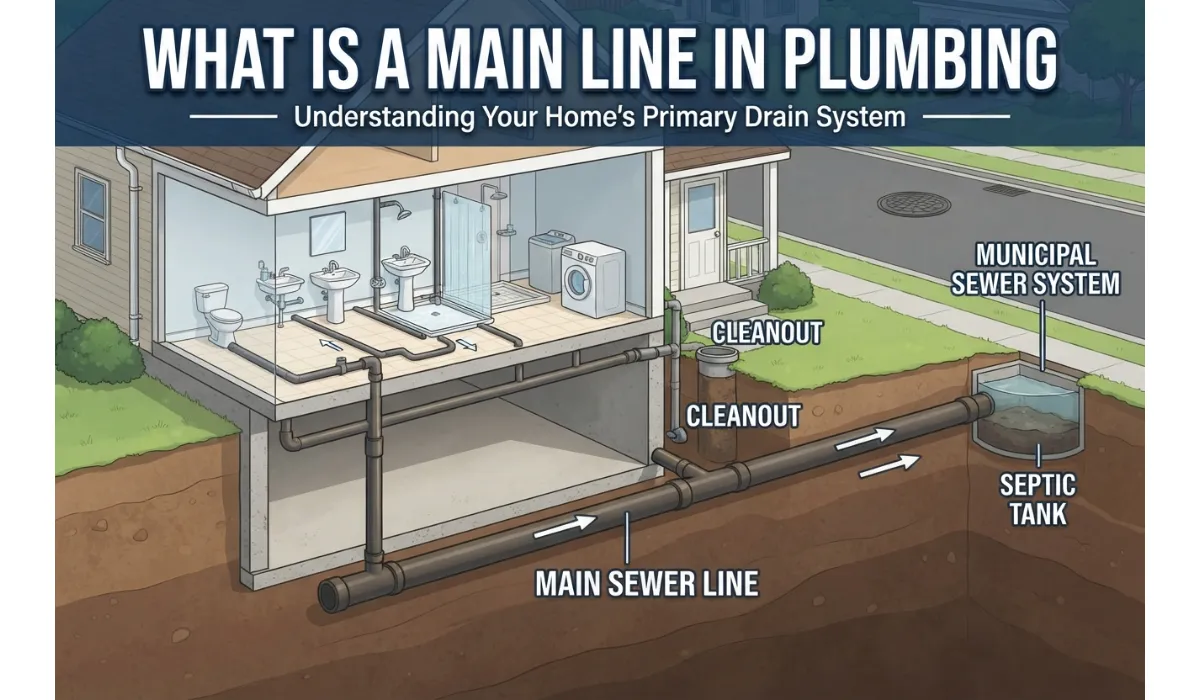 The main line in a plumbing system refers to the primary conduit connecting your entire residential network to municipal services or private sanitation systems. Depending on the context, it designates either the high-pressure pipeline delivering fresh water or the gravity-fed drainage network removing wastewater.
Homeowners must distinguish between these systems to diagnose clogs, leaks, or pressure drops accurately. Knowing which network requires attention prevents costly repairs and protects structural integrity.
The Two Main Lines in Your Home
Residential plumbing relies on two distinct primary pipelines that operate independently to manage indoor water flow and sanitation. Each serves a critical function under different pressure dynamics:
- Main Water Supply Line: Operates under high pressure to transport clean municipal water or well water from the street source directly into your home’s distribution grid.
- Main Sewer/Drain Line: Functions via gravity to collect all greywater and blackwater from household fixtures and discharge it downward into the municipal sewer or septic tank.
- Flow Direction: Supply lines push pressurized clean water inward and upward, whereas drain lines carry wastewater outward and downward toward disposal points.
Why the Term Confuses Homeowners
Plumbers, home inspectors, and real estate listings frequently use the phrase “main line” interchangeably without specifying whether they mean water supply or drainage. This ambiguity causes significant confusion during property inspections or emergency plumbing repairs when immediate clarity is required.
Because a blockage in the main sewer line results in sewage backups while a leak in the main water line causes property flooding, understanding this distinction is essential for effective home maintenance.
Main Line vs. Branch Line: How Your Plumbing Fits Together
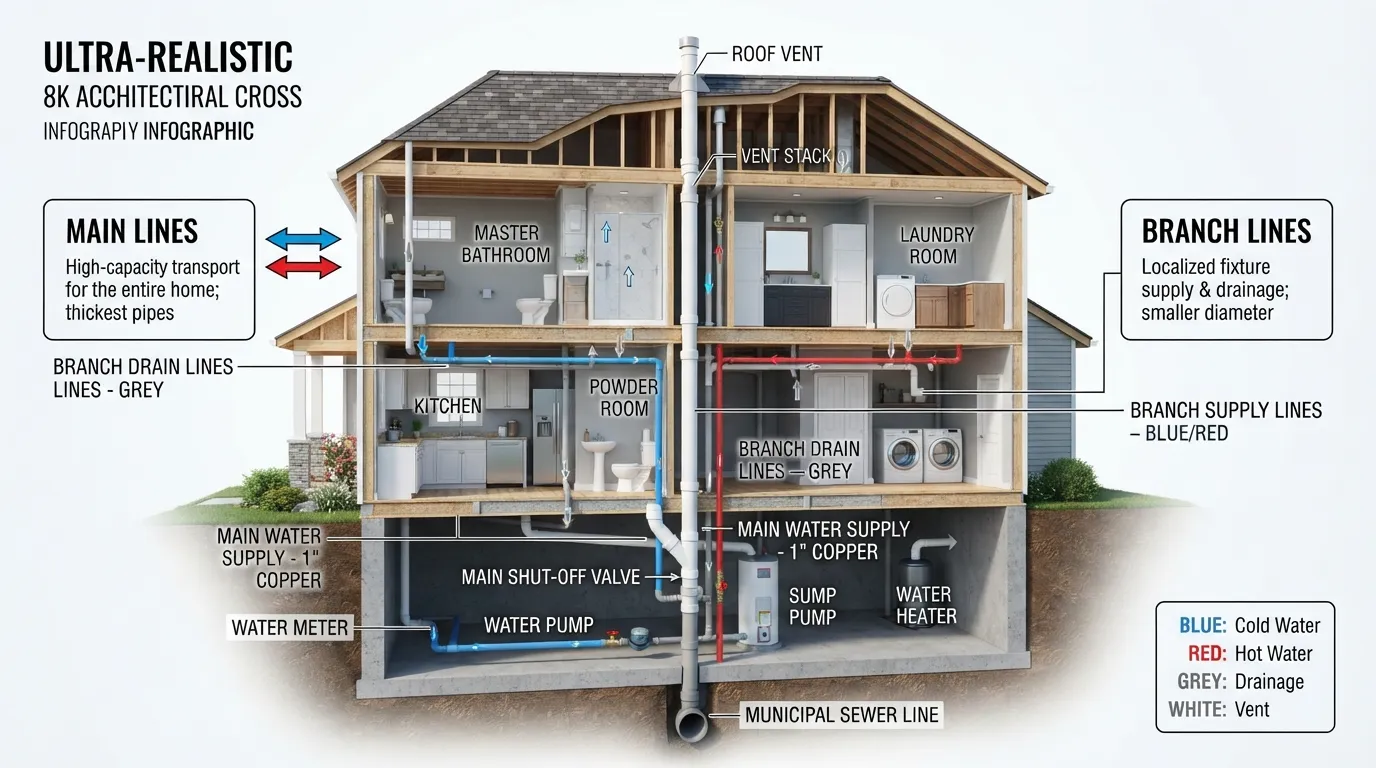 Branch lines are the secondary horizontal and vertical drain pipes that collect wastewater directly from individual fixtures like sinks, showers, toilets, and washing machines. These smaller pipes handle localized discharge before routing wastewater into the primary drainage network.
Because they serve specific rooms or appliances, branch lines rely on proper slope and connection to vent stacks to maintain smooth gravity flow and prevent sewer gas leaks.
How Branch Lines Feed Into the Main Line
Your home’s drainage network operates as an interconnected hierarchy, guiding water downward and outward through a precise step-by-step pathway. Sink and toilet pipes are directly connected through this progressive layout:
- Individual Fixtures: Sinks, toilets, and showers discharge wastewater into local branch drains.
- Branch Lines: These secondary conduits pool wastewater from multiple fixtures within a zone (like a bathroom group).
- Main Drain Line: Branch lines converge into the vertical main stack or horizontal main drain line running through the basement or crawlspace.
- City Sewer or Septic: The main line exits the foundation and carries all household wastewater to the municipal sewer or private septic tank.
Why One Clogged Fixture vs. Every Fixture Matters
The scope of a blockage instantly reveals whether the issue resides in a localized branch line or the central main line. A single-fixture issue means only one drain—such as a kitchen sink or guest toilet—backs up while all other home drains function normally, pointing directly to a localized branch obstruction.
Conversely, when multiple fixtures across different rooms (like a bathtub and washing machine simultaneously) back up or gurgle, the problem has escalated to the main drain line or vent stack, requiring immediate professional intervention.
The Main Sewer Line Drain Main Explained
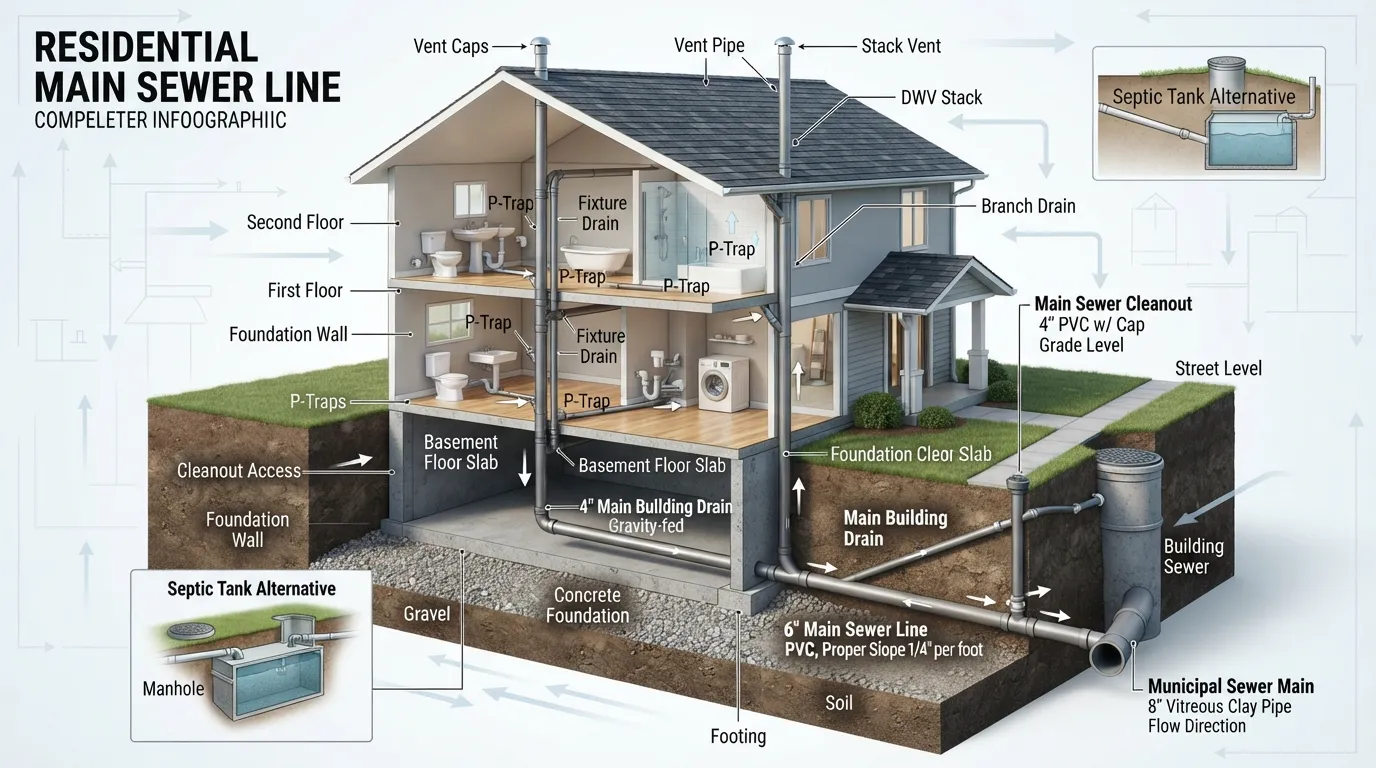 The main sewer line—frequently called the drain main or sewer lateral—serves as the primary artery for your entire property’s wastewater management. It collects both blackwater from toilets and graywater from sinks, showers, and laundry appliances, carrying everything safely away from the house.
Once wastewater enters this underground conduit, it travels entirely by gravity down toward the municipal street sewer or an on-site private septic tank system.
Size Slope and Depth Specifications
Standard residential main sewer lines are typically built using 3-inch to 4-inch diameter pipes to accommodate heavy simultaneous household discharge. According to standard local plumbing code requirements, horizontal drainage pipes must maintain a consistent slope or fall of at least 1/8 inch to 1/4 inch per foot to ensure proper scouring velocity.
Burial depth varies significantly by geographic region, ranging from just 12 inches in warm southern climates to over 5 feet deep in northern regions to prevent freezing during hard winter frosts.
What Is a Main Line Cleanout?
A main line cleanout is a capped vertical access pipe connected directly to your main drain line, typically located near the foundation exterior, in the basement, or in the yard. It provides plumbers with direct mechanical access to clear heavy blockages or inspect the interior pipe condition using specialized cameras.
Without an accessible cleanout, clearing a severe mainline obstruction often requires pulling toilets or cutting into interior finished walls.
Common Pipe Materials and Performance
Residential main sewer lines have been constructed from several distinct materials over the decades, each with unique advantages and lifespans:
- PVC & ABS Plastic: Modern standards featuring smooth interior walls that resist root intrusion and last 50 to 100+ years.
- Cast Iron: Common in mid-century homes; extremely durable structurally but susceptible to internal scaling and eventual bottom-side corrosion over 40 to 60 years.
- Vitrified Clay: Rigid ceramic pipe sections used heavily up through the 1970s; highly chemical-resistant but prone to cracking and root infiltration at mortar joints.
- Orangeburg (Bituminized Fiber): Pressed wood-pulp and tar pipes installed mid-century; notorious for blistering, collapsing, and failing completely within 20 to 30 years.
What a Plumber Sees in the Field
In the field, professional plumbers frequently uncover predictable material failures tied directly to a home’s age and construction era. In homes built before 1980, aging cast iron lines routinely develop rough interior scale that catches grease and toilet paper, while clay pipe joints invite aggressive tree roots seeking moisture.
By running high-resolution sewer cameras through the cleanout, technicians can immediately identify whether a struggling main line suffers from offset joints, structural collapses, or standard root blockages before recommending trenchless pipe relining or full excavation.
The Main Water Line Supply Main Explained
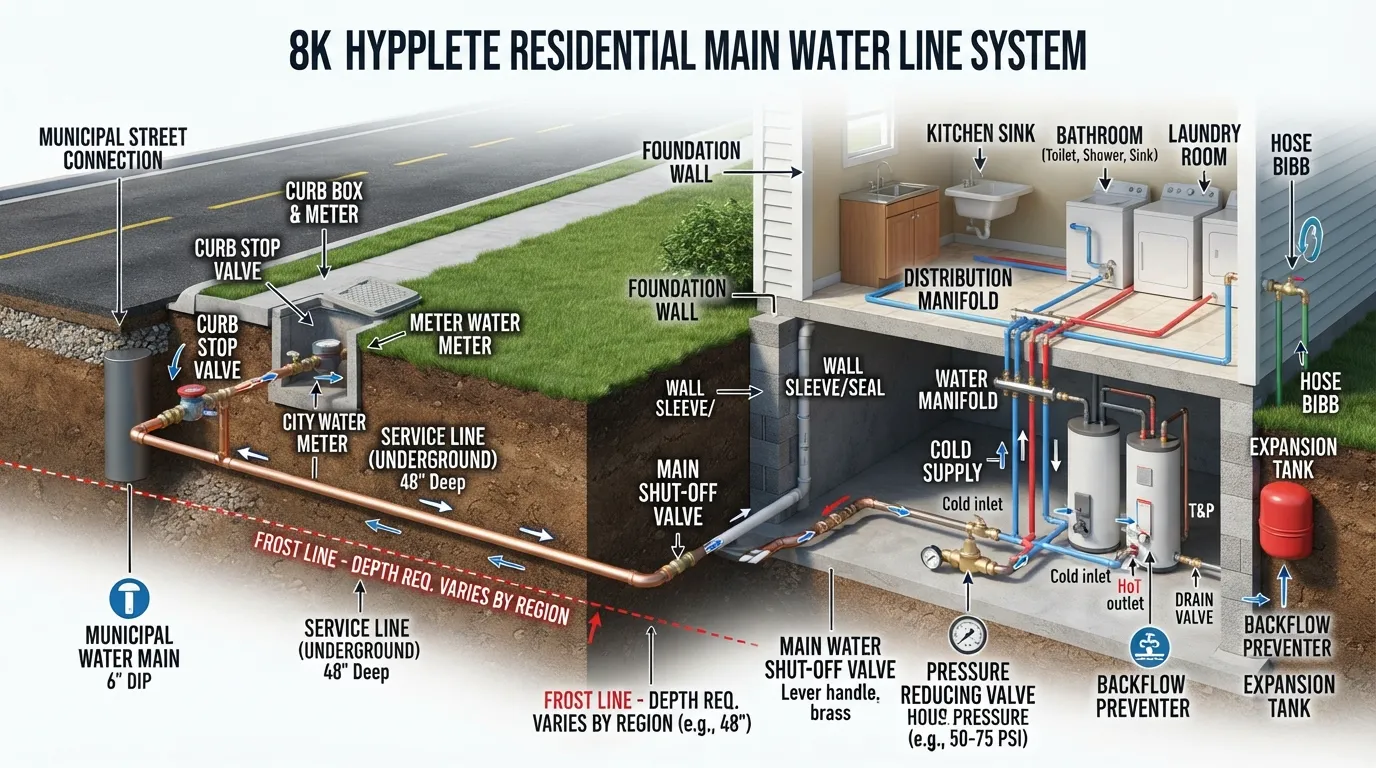 The main water line is the primary high-pressure conduit that brings fresh water from the municipal water supply or a private well directly into your home. Unlike drainage lines that rely on gravity, this supply line remains constantly pressurized to deliver water on demand to every fixture, appliance, and faucet.
Understanding this pipeline is essential because any damage or rupture between the street connection and your home will result in continuous, high-volume water loss and potential property flooding.
Water Meter and Main Shut-Off Valve
Your property’s water delivery system includes critical access points that monitor usage and control flow. The water meter tracks total household consumption, while the main shut-off valve gives you instant control to halt all incoming water during a plumbing emergency.
Every homeowner must locate these fixtures immediately. Not knowing where your main shut-off valve is located can turn a minor plumbing leak into a catastrophic indoor flood.
How to Shut Off Your Water in an Emergency
When a pipe bursts or a major appliance fails, acting quickly to cut the water supply minimizes structural damage. Follow these simple steps to shut off your home’s water:
- Locate the main shut-off valve: Look where the water line enters your home—typically in the basement, crawlspace, garage, or near an exterior perimeter wall.
- Turn the valve handle: For ball valves, rotate the lever a quarter-turn so it sits perpendicular to the pipe. For gate valves, turn the wheel clockwise until it stops completely.
- Drain the remaining lines: Open the lowest faucets in your house (such as basement taps or outdoor spigots) to drain out any residual water trapped in the plumbing network.
- Locate the curb stop (if needed): If your indoor valve fails, use a specialized curb key at the street-side water meter box to shut off water at the municipal property line.
Main Water Line Materials and Lifespan
Main water supply lines utilize various robust materials designed to withstand continuous internal pressure over decades. Choosing the right material depends on soil chemistry, local water pH, and budget:
- Copper: The historical gold standard for underground and indoor supply lines, offering excellent corrosion resistance and a 50 to 70+ year lifespan.
- PEX (Cross-linked Polyethylene): A flexible, freeze-resistant, and cost-effective plastic piping system that lasts 40 to 50+ years.
- High-Density Polyethylene (HDPE): A durable, flexible black plastic commonly used for modern underground service lines, lasting 50 to 100 years.
- Galvanized Steel: Heavy zinc-coated steel pipes common in mid-century homes; prone to internal mineral scaling and rust, typically failing after 30 to 50 years.
Main Sewer Line vs. Main Water Line: Side-by-Side Comparison
How to Find Your Main Line
Locating your home’s main drain line starts by scanning the lowest level of your property for large-diameter vertical or horizontal piping. In homes with basements or crawlspaces, look for a 3-inch or 4-inch cast iron, PVC, or ABS pipe plunging straight down through the concrete floor or running horizontally toward the street-side foundation wall.
You can also identify the main drainage path by searching for a prominent cleanout cap—a threaded plug protruding from the floor or low on a wall—which marks the exact access point to your sewer lateral.
Finding the Main Water Line and Shut-Off
Your main water supply line enters the building envelope at a low point on an exterior wall facing the street or municipal water main. Trace incoming copper or plastic piping to locate the primary valve:
- Basement or Crawlspace Entry: Usually enters through the front foundation wall, positioned right before the water meter.
- Utility Room or Garage: Frequently clustered near the water heater, pressure regulator, or main electrical panel.
- Outdoor Meter Box: Housed in a concrete or plastic box embedded in the ground near the front property line or curb.
How to Tell What Your Pipes Are Made Of
Distinguishing your pipe materials helps you gauge replacement timelines and prepare for upcoming repairs. Use simple visual cues and non-destructive physical checks:
- Copper: Displays a bright metallic gold or dull brown patina; soft enough to scratch gently with a flathead screwdriver.
- PVC & ABS Plastic: Smooth, rigid polymer pipes colored bright white (PVC) or solid matte black (ABS).
- Cast Iron: Heavy, thick-walled metal pipes with a dark gray or rust-spotted exterior that strongly attracts a magnet.
- Galvanized Steel: Dull silver-gray metallic pipe that is rigid, threaded at joints, and also attracts a magnet.
Slab-on-Grade Homes and Alternative Layouts
Properties built directly on concrete slab foundations present unique challenges because underground lines are entirely encased beneath hardened concrete. Since you cannot physically trace pipes running through a crawlspace, you must locate them using alternative indicators:
- Locate the Utility Closet: Look inside interior utility rooms, garage corners, or laundry areas where vertical stub-ups emerge from the slab.
- Check Property Blueprints: Review original architectural or plumbing blueprints to track exact sub-slab utility entry points.
- Use Electronic Locators: Professional plumbers use acoustic listening devices or radio-frequency sondes pushed through cleanouts to map buried slab runs accurately.
Signs of a Main Line Problem
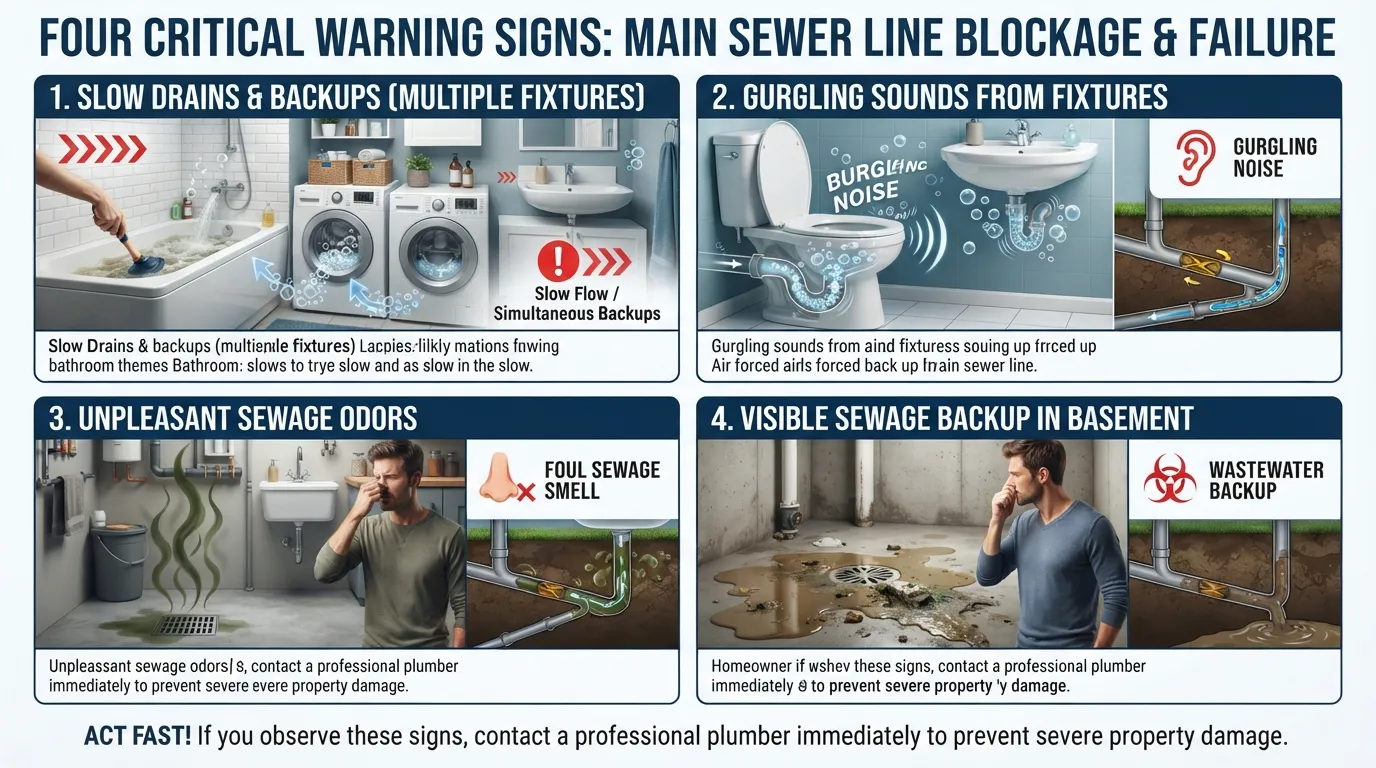 A failing main sewer line disrupts your home’s entire drainage network, manifesting as widespread symptoms rather than isolated fixture issues. Recognizing these early warning signs helps you prevent severe indoor sewage overflows:
- Multiple Simultaneous Backups: Water bubbling up through your basement floor drain when you run the washing machine or flush a toilet.
- Widespread Slow Drains: Multiple independent fixtures (such as the bathtub, kitchen sink, and bathroom lavatory) draining sluggishly at the same time.
- Gurgling Plumbing Noises: Toilet bowls or sink drains gurgling or bubbling when nearby appliances or upper floors drain water.
- Persistent Sewer Odors: Unpleasant gassy smells lingering around basement drains, yard cleanouts, or outdoor property areas.
Is It the Fixture or the Main Line?
Determining the source of a drainage problem requires a quick isolation test. If only one fixture—such as a single toilet bowl or kitchen sink—refuses to drain while all other showers and sinks in the house operate perfectly, the issue is strictly localized to that specific fixture or its immediate branch line.
However, if using one appliance (like running the dishwasher) causes water to back up into a completely unrelated fixture (like a bathtub), the obstruction resides deep within the main sewer line.
Signs of a Main Water Line Leak
An underground rupture or slow leak in your high-pressure main supply line can waste thousands of gallons without making a sound indoors. Watch for these structural indicators:
- Unexplained High Water Bills: A sudden, sharp spike in your monthly water consumption without any change in household habits.
- Sudden Low Water Pressure: Noticeable pressure drops across multiple showers, faucets, and appliances throughout the home.
- Soggy or Sunken Yard Spots: Unusually lush grass patches, persistent mud puddles, or soft sinkholes directly along the underground path connecting your home to the street meter.
- The Running-Meter Test: Shut off all indoor and outdoor faucets, then check your water meter dial; a spinning low-flow indicator confirms an active leak.
Signs of a Leak Behind the Wall
Supply or drain leaks hidden inside finished interior walls require swift action to prevent structural rot and hazardous mold growth. Key warning signs include:
- Unexplained Wall Stains: Discolored, peeling, or bubbling paint and sagging drywall panels.
- Musty Odors and Mold: Persistent damp smells or visible mold patches blooming along baseboards and drywall seams.
- Audible Water Movement: Faint sounds of hissing, dripping, or running water inside walls when all taps are completely closed.
Why Main Line Clogs Happen and Keep Coming Back
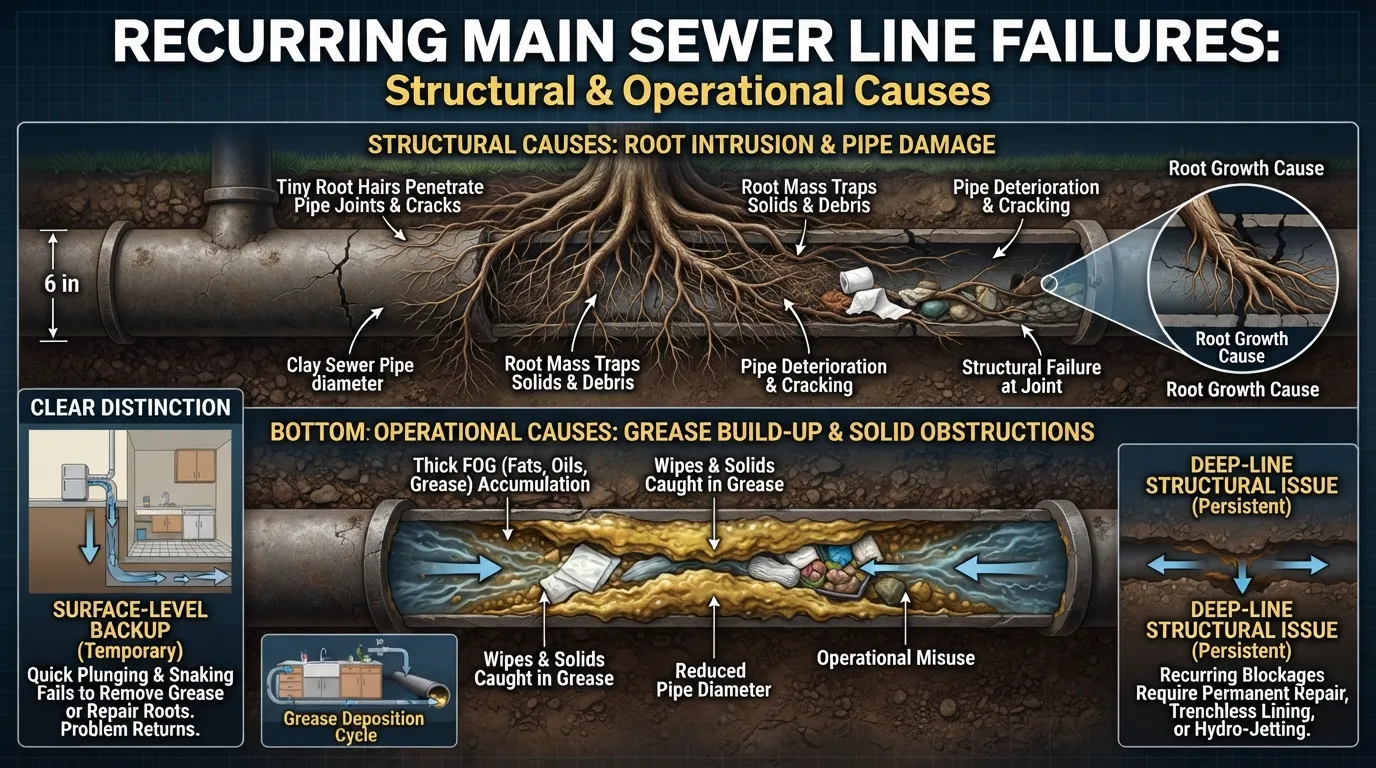 Main line blockages rarely appear out of nowhere; they usually result from the gradual accumulation of troublesome materials over months or years. Homeowners frequently introduce everyday items that destroy private sewer laterals:
- Grease and Cooking Oils: Pouring liquid fats down kitchen sinks causes them to solidify inside cold underground pipes, trapping paper and debris.
- “Flushable” Wipes: Unlike toilet paper, wet wipes, paper towels, and hygiene products do not disintegrate rapidly, forming dense rope-like clogs.
- Hair and Soap Scum: Congeals into stubborn, fibrous masses inside older drain lines, severely restricting wastewater flow.
- Tree Roots: Aggressive root systems infiltrate tiny pipe cracks or loose joints seeking moisture, completely choking the line from the inside.
Structural Causes of Chronic Blockages
When clearing a main line provides only temporary relief, physical damage or poor installation is usually to blame. Structural defects create permanent traps where debris naturally catches:
- Bellied or Sagging Pipes: Ground shifting causes sections of pipe to dip downward, creating a low pool where sludge and solids accumulate constantly.
- Cracked or Collapsed Lines: Earth movement, heavy surface vehicles, or old age can fracture brittle pipes, causing soil to collapse inward.
- Joint Offsets: Shifting soil separates pipe connections, creating sharp interior lips that snag toilet paper and waste.
- Corroded Cast Iron: Heavy interior scaling creates a rough, sandpaper-like surface that catches everything floating down the drain.
Why a Small Item Can Cause a Delayed Clog
Homeowners are often baffled when a pipe clogs months after an accidental flush. A foreign object—such as a child’s toy, food wrapper, or single wipe—does not always cause an immediate blockage.
Instead, the item snagged on a microscopic rough spot or grease patch long ago. Over time, hair, soap residue, and everyday waste continuously plastered against that initial snag until a massive, impenetrable obstruction finally sealed the pipe shut.
Real-World Case Study: Recurring Root and Bellied Pipe Failures
In a documented field case involving a 1960s suburban home, a homeowner cleared their main sewer line three times in a single year using standard drain snakes, only for the backup to return within weeks. A professional camera inspection revealed two concurrent problems: aggressive tree roots had invaded an offset clay pipe joint, and a 10-foot section of the line had bellied due to soil erosion.
The snake cleared a temporary hole through the roots, but the low sag immediately re-collected sludge. Permanent resolution required hydro jetting the roots, cutting out the bellied section, and replacing it with rigid PVC piping.
Can You Unclog the Main Line Yourself? DIY vs. Calling a Plumber
Tackling a main line blockage yourself is only practical if you have a designated accessible cleanout and the clog is minor or located near the entry point. Always prioritize safety before attempting any physical clearing: put on heavy-duty rubber gloves and eye protection to guard against toxic backflow.
If you own a heavy-duty motorized drain auger (snake) with a minimum 50-foot cable, you can carefully feed it through the outdoor or basement cleanout. Never force the cable if you hit a rigid obstruction, as rotating blades can pierce compromised or brittle pipes.
When to Stop and Call a Professional
Main line blockages frequently involve complex structural issues that require specialized equipment beyond standard hardware store tools. You should stop your DIY efforts immediately and call a licensed plumber if you encounter:
- Repeated Backups: Clogs that clear temporarily with a snake but return within days or weeks.
- Widespread Multi-Fixture Failures: Simultaneous backups across toilets, showers, and washing machines.
- Raw Sewage Overflow: Any standing blackwater or raw sewage pooling in your basement or yard.
- Suspected Pipe Collapse: Resistance that feels like solid earth or broken metal rather than soft debris or roots.
What a Plumber Will Do
Professional technicians utilize advanced industrial equipment to diagnose and resolve deep mainline obstructions safely and permanently. Their standard diagnostic and repair process includes:
- Sewer Camera Inspection: Threading a high-resolution waterproof camera down the cleanout to pinpoint the exact depth and cause of the blockage.
- Hydro Jetting: Blasting high-pressure water (ranging from 1,500 to 4,000 PSI) through the pipe to scour away grease, scale, and stubborn tree roots completely.
- Mechanical Rooter Service: Using heavy-duty rotating cutting blades to slice through dense root masses.
- Trenchless Repair or Replacement: Fixing cracked, bellied, or collapsed lines using trenchless pipe relining or targeted excavation without destroying your landscaping.
Why You Should Avoid Chemical Drain Cleaners on a Main Line
Pouring harsh chemical drain cleaners down your sinks or cleanouts to solve a main line clog is a dangerous mistake that often worsens the problem. These caustic liquids fail to cut through heavy tree roots or dense masses of flushable wipes.
Instead, the heavy chemicals pool in bellied sections or near the blockage, boiling up and causing severe chemical burns to skin and eyes when a plumber eventually opens the cleanout or pulls the line.
Main Line Repair and Replacement Costs
Main line repair and replacement expenses vary depending on whether you are servicing the pressurized water supply or the gravity-fed drainage network. Current industry benchmarks reflect standard project scopes and national averages:
- Main Sewer Line Replacement: Typically ranges from $1,388 to $5,323, with an average project cost around $3,319, or roughly $50 to $250 per linear foot.
- Main Water Line Replacement: Usually spans $647 to $2,834, averaging approximately $1,703 depending on excavation depth and distance from the municipal connection.
What Affects the Price
Several critical variables determine whether a main line project stays on the lower end of estimates or escalates significantly. Contractors evaluate site conditions and financial factors before issuing a final bid:
- Length and Depth: Longer runs from the street and deep burial requirements increase labor hours and heavy machinery usage.
- Pipe Material: Premium materials like copper or heavy-duty structural plastics drive up initial material expenses.
- Surface Obstructions: Excavating underneath concrete driveways, mature landscaping, or stone patios adds heavy restoration costs.
- Permits and Insurance: Mandatory municipal permits ($100 to $500) and insurance coverage terms affect out-of-pocket costs. Standard homeowner’s insurance policies typically exclude gradual wear-and-tear failures unless an underground service line endorsement was purchased.
Trenchless vs. Traditional Replacement
Choosing between trenchless technology and open-trench excavation depends on structural pipe damage and property layouts. Each method offers distinct operational trade-offs:
- Trenchless (Pipe Lining or Bursting): Costs $60 to $250 per linear foot; saves lawns and driveways by requiring only small access pits, but cannot fix severely collapsed or misaligned pipes.
- Open-Trench Excavation: Traditional dig-and-replace method ranging from $50 to $250 per linear foot plus restoration; necessary for severe structural collapses or shifting slopes.
Lifespan by Material
Understanding the expected durability of different pipeline materials helps homeowners budget for long-term maintenance or future replacements. The table below outlines approximate lifespans by material type:
Who Is Responsible for the Main Line: Homeowner or City?
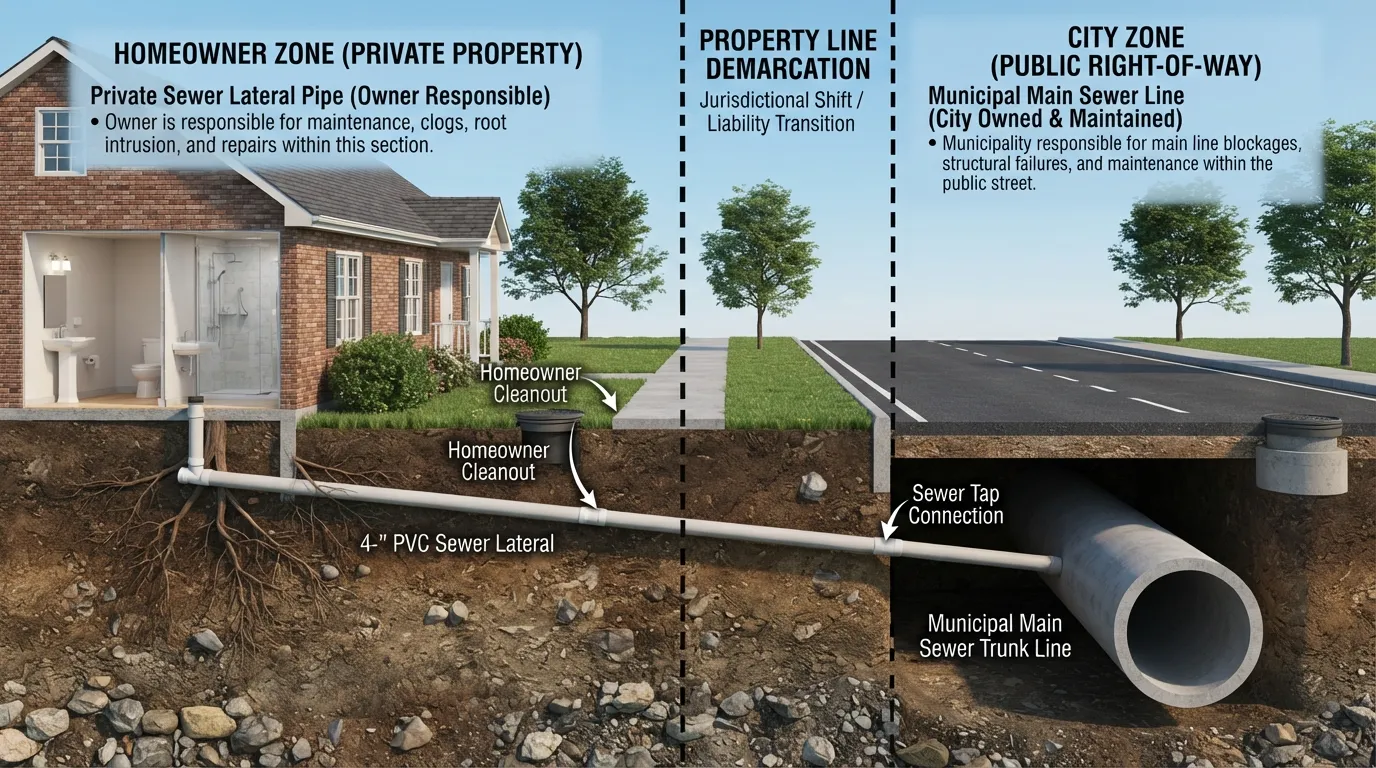 Property owners are generally responsible for the entire length of both the water supply and sewer lateral lines running underneath their private property. Your responsibility typically ends right at the property line, sidewalk, or curb connection where your private pipe taps into the municipal utility main.
However, if a failure occurs on city property or within the public main street line, the municipality or local utility district assumes full liability for repairs and maintenance.
How to Confirm for Your Address
Plumbing jurisdiction rules vary widely by city, county, and utility provider, meaning there is no universal cutoff point. To confirm the exact boundary where your liability begins and the city’s takes over:
- Contact Your Local Water or Sewer Authority: Call customer service or the engineering department to request your property’s specific utility service agreement.
- Review Property Survey Records: Check your original deed and property survey maps to identify municipal easements and utility right-of-way zones.
- Ask a Licensed Plumber: Experienced local plumbers frequently interact with municipal inspectors and can tell you where local jurisdictions draw the line.
Does Homeowner’s Insurance Cover It?
Standard homeowner’s insurance policies typically do not cover underground water or sewer line damage caused by normal wear and tear, root infiltration, or shifting soil. Coverage usually requires a specialized utility line endorsement or a separate service line protection rider.
Because policy terms, deductibles, and rider availability vary significantly by carrier and state, homeowners should consult their insurance agent directly to verify what underground plumbing perils are included in their coverage.
How to Maintain Your Main Line
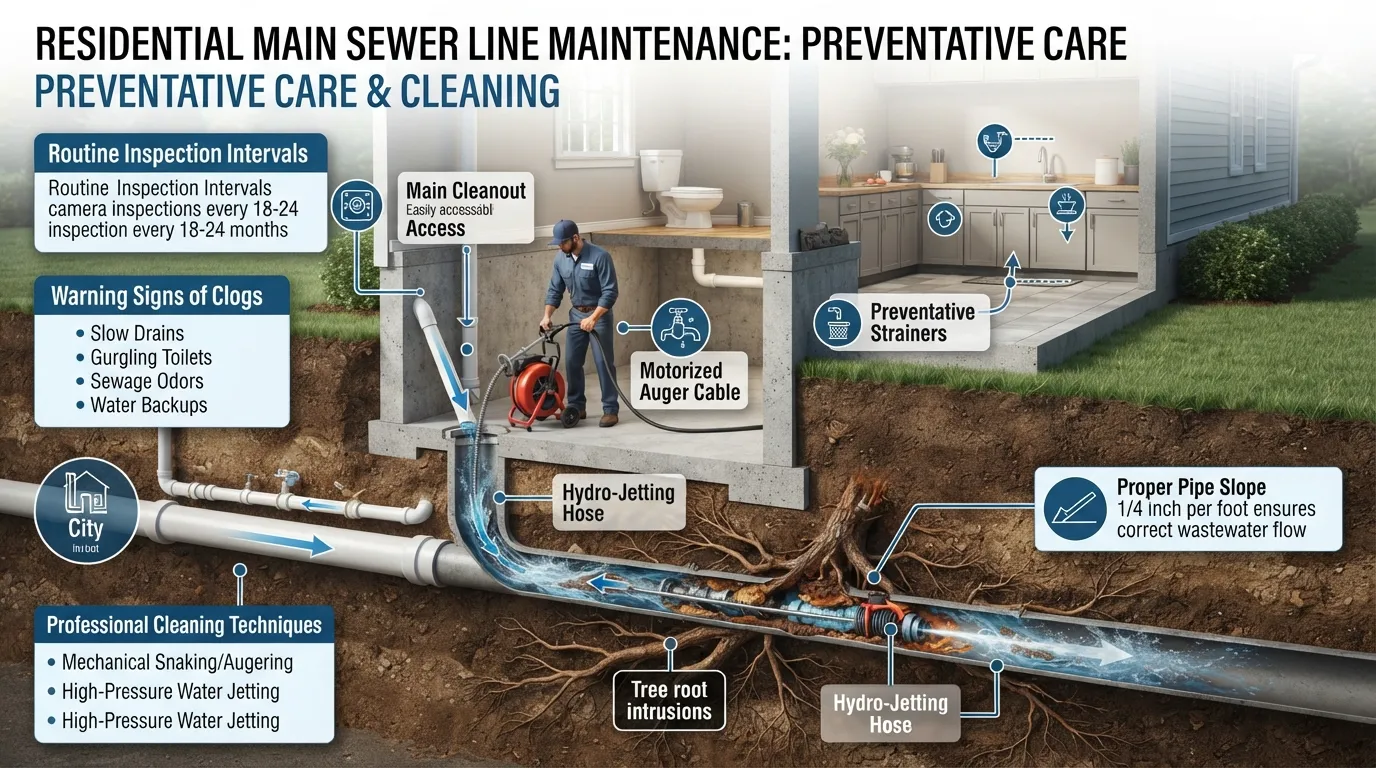 Preventive maintenance schedules for your main line depend heavily on your home’s age, pipe material, and proximity to large trees. While newer PVC systems rarely require routine snaking, properties with aging cast iron or clay pipes near mature trees benefit from a professional camera inspection every two to three years.
Homes with a history of recurring root intrusion or grease accumulation should schedule routine hydro jetting or mechanical cleaning every 12 to 18 months to prevent catastrophic backups.
What Never to Flush or Pour Down Drains
Protecting your main drainage network requires strict household discipline regarding what enters your sinks and toilets. Never flush or pour the following items down your plumbing:
- Cooking Grease and Oils: Solidifies inside cold underground pipes, trapping paper and waste.
- “Flushable” Wipes and Paper Towels: Do not disintegrate in water, weaving into dense blockages.
- Feminine Hygiene Products and Diapers: Expand heavily upon absorbing water, sealing off the pipe.
- Coffee Grounds and Cat Litter: Settle at the bottom of horizontal pipes and create heavy abrasive sludges.
Protecting the Line From Tree Roots
Tree roots naturally seek out moisture and nutrients leaking from microscopic pipe joints or small cracks. To minimize root intrusion, plant large trees and shrubs at least 15 to 20 feet away from your known sewer lateral path.
You can also use EPA-approved root-inhibiting foaming treatments or natural copper sulfate crystals down your cleanout annually to discourage root growth inside underground pipes.
A Simple Annual Homeowner Checklist
Routine self-audits help catch minor plumbing vulnerabilities before they escalate into major emergencies. Follow this simple annual checklist:
- Test Main Shut-Off Valves: Exercise your indoor water shut-off valve twice a year to ensure it turns smoothly and seals completely.
- Check the Water Meter: Perform a low-flow meter check with all indoor taps closed to confirm there are no hidden underground supply leaks.
- Inspect Basement Floor Drains: Pour a bucket of water down floor drains annually to refill dried P-trap barriers and block sewer gases.
- Clear Cleanout Zones: Keep outdoor cleanout caps clearly visible, accessible, and unobstructed by landscaping or mulch.
Frequently Asked Questions
What does main line mean in plumbing?
The main line refers to the primary pipeline connecting your home’s entire plumbing system to municipal services. It typically designates either the high-pressure main water supply line or the gravity-fed main sewer and drain line carrying wastewater away.
How do you tell if your main line is clogged?
A clogged main sewer line causes multiple independent fixtures to back up simultaneously, such as water bubbling up through your basement floor drain when flushing toilets or running laundry appliances. You may also notice widespread slow drains and gurgling noises.
How do I find my main drain line in my house?
Locate your main drain line by scanning the lowest level of your basement or crawlspace for a large 3-inch or 4-inch vertical pipe plunging through the concrete slab. You can also search for a threaded cleanout access cap near exterior foundation walls.
What does a main sewer line look like in a house?
A main sewer line inside a house appears as a thick 3-inch to 4-inch diameter pipe constructed of white PVC, black ABS plastic, or heavy gray cast iron. It runs horizontally or vertically toward the exterior foundation wall heading toward the street.
Can you unclog the main sewer line yourself?
You can clear minor main line clogs yourself using a motorized drain auger through an accessible cleanout. However, deep root intrusions, structural collapses, or severe sewage backups require professional hydro jetting and camera inspections.
How deep is a main sewer line buried?
Main sewer lines are typically buried anywhere from 12 inches deep in warm southern climates to over 5 feet deep in northern regions. This variable burial depth prevents freezing during hard winter frosts and ensures proper gravity flow.
How often should you have your main sewer line cleaned?
Properties with aging clay pipes or large trees nearby should schedule professional cleanings or camera inspections every 12 to 18 months. Newer PVC systems rarely require routine cleaning unless chronic grease or root intrusion issues exist.
How much does it cost to replace a main water line?
Replacing a main water supply line typically ranges from $647 to $2,834, with an average project cost around $1,703. Total expenses depend on excavation depth, trench length, pipe material, and landscaping restoration requirements.
How do you tell if a water pipe is broken underground?
An underground pipe break manifests as unexplained high water bills, sudden low indoor water pressure, and soggy or sunken sinkholes in your yard. Performing a running-meter test while all faucets are closed will confirm active leaks.
How can you tell if your toilet is clogged from the bowl or the pipes?
If only a single toilet fails to flush while all other home drains operate normally, the obstruction is isolated to the bowl or trap. If flushing causes water to bubble up in a bathtub or sink, the main drainage pipes are blocked.
Conclusion
Understanding your home’s main plumbing lines is essential for protecting your property against unexpected failures and costly water damage. Keep these core insights in mind:
- The Two Main Networks: Your home relies on a high-pressure main water supply line for fresh inflow and a gravity-fed main sewer line for wastewater outflow.
- Identification and Access: Knowing how to locate your cleanout caps and emergency shut-off valves gives you immediate control during a plumbing crisis.
- Recognizing Warning Signs: Widespread slow drains, gurgling noises, and simultaneous backups indicate a main line issue rather than a localized fixture clog.
- Professional Intervention: Deep root intrusions, structural collapses, and raw sewage backups require specialized diagnostic equipment and licensed plumbing expertise.

Oscar Vance | Master Plumber & Drainage Expert
Meet Oscar Vance, a licensed master plumber sharing practical solutions on residential repairs, preventive maintenance, and thoughtful home upkeep.