What Is a Check Valve in Plumbing?
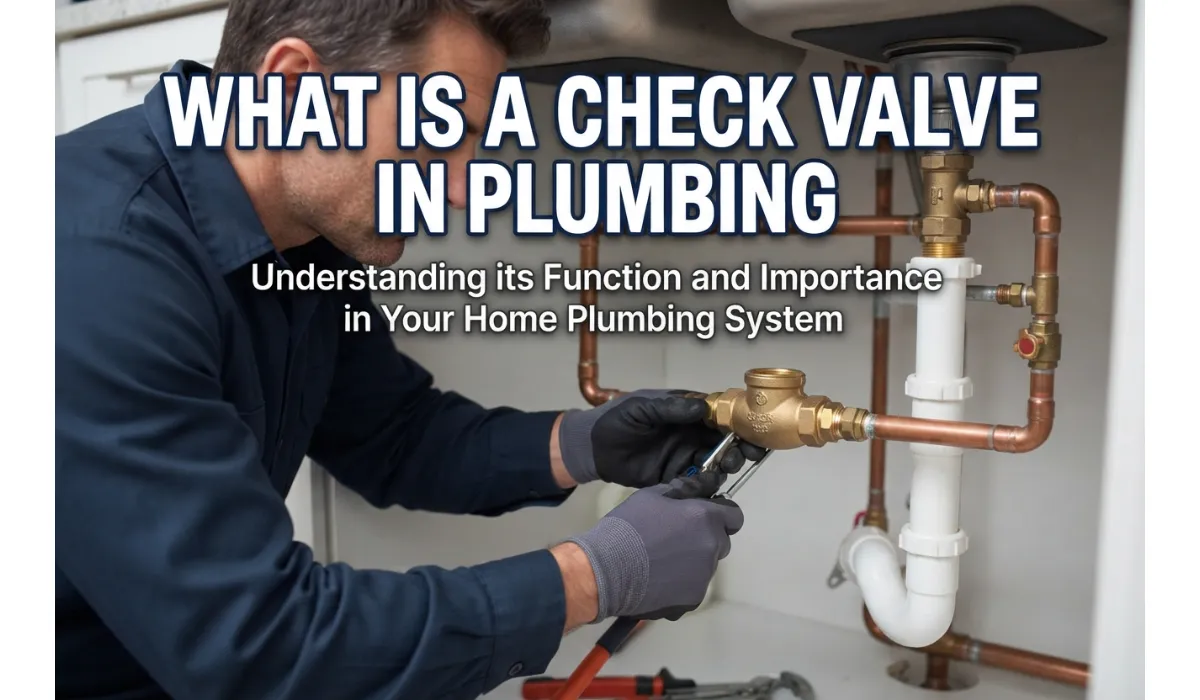 A check valve is a specialized mechanical one-way valve designed to let water flow forward through a pipe while automatically stopping any reverse flow. Operating entirely on differential pressure, it requires no external power source, manual handles, or electrical controls to function.
This automated flow regulation makes it an indispensable component for maintaining directional integrity across residential and commercial water networks.
Other Names You Might Hear
Plumbers, hardware suppliers, and system engineers often use different terminology depending on the region or specific industry application. Familiarity with these terms helps ensure you select the correct replacement parts for your plumbing system.
- Non-return valve: A common industry term emphasizing its core mechanical function of preventing media backtracking.
- One-way valve: A descriptive descriptor highlighting its unidirectional flow characteristics.
- Backflow check: Often referenced in municipal codes regarding the prevention of contaminated water entering clean supply lines.
Why It Matters in a Plumbing System
Integrating reliable check valves into your infrastructure protects clean water purity, safeguards sensitive pumps from water hammer, and prevents expensive equipment damage. Without them, pressure drops can cause dangerous cross-contamination or cause pumps to drain backward.
- In this guide you’ll learn: How check valves operate mechanically under various pressure conditions.
- In this guide you’ll learn: The key differences between swing, spring-loaded, and lift check valve designs.
- In this guide you’ll learn: Best practices for troubleshooting, maintenance, and proper installation orientation.
How Does a Check Valve Work?
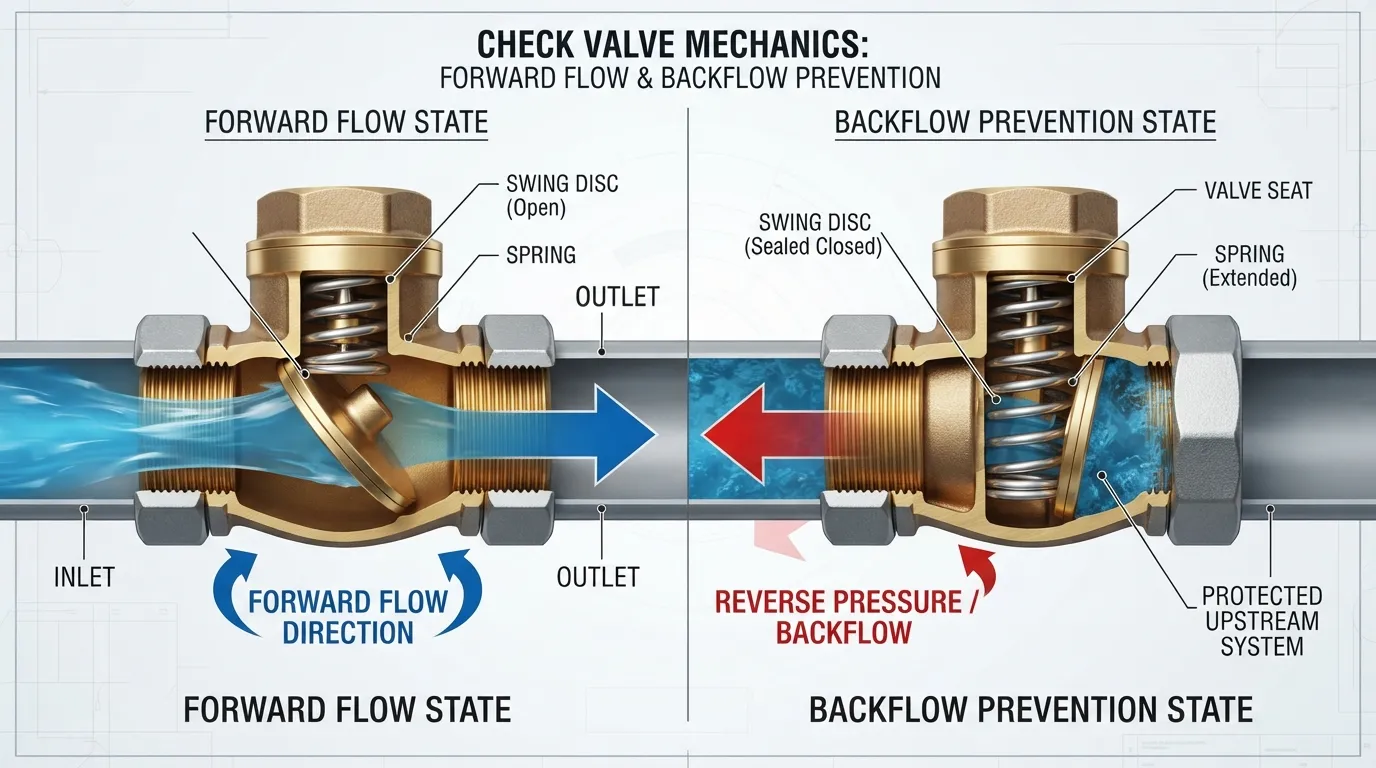
Understanding the mechanical sequence of a check valve helps clarify how it protects plumbing systems automatically. The internal mechanism responds dynamically to shifts in fluid pressure and directional flow.
- Forward pressure opens the disc or flapper: When water pressure at the inlet exceeds the downstream pressure, it overcomes internal resistance and pushes the internal disc, ball, or flapper away from the seat.
- Water flows freely: The valve remains open as long as continuous forward pressure pushes media through the pipeline in the intended direction.
- Flow stops or reverses: When the pump shuts off or supply pressure drops below the downstream level, forward movement halts instantly.
- Gravity, spring, or backpressure closes the seal: The internal component snaps, drops, or seats tightly back against the valve body, blocking any reverse flow completely.
Why It Needs No Power or Controls
Check valves operate entirely through differential pressure without requiring external motors, electronic actuators, or manual intervention. This self-contained automation makes them highly reliable across continuous-use environments.
- Self-operating mechanics: Fluid dynamics handle the opening and closing phases naturally.
- Pressure-driven response: The valve reacts instantaneously to pressure variations between the inlet and outlet ports.
- Automatic closure: Mechanical forces like spring tension or gravity engage the seal the moment flow reverses.
Check Valve Diagram
A standard check valve diagram illustrates several key internal structures working in tandem to regulate flow orientation. Identifying these components ensures proper selection and maintenance.
- Inlet and Outlet: Ports where fluid enters and exits the valve housing.
- Disc or Flapper: The moving barrier that blocks or permits passage.
- Valve Seat: The precision-machined mating surface that forms a tight watertight seal.
- Spring: Provides mechanical assistance for rapid closing in spring-loaded models.
- Flow-Direction Arrow: An exterior casting mark indicating correct installation orientation.
Check Valve Symbol in Plumbing Drawings
Plumbing schematics and blueprint diagrams represent check valves using standardized graphic symbols. To read a check valve symbol correctly, look for the triangle or arrow pointing in the authorized direction of fluid movement, which indicates that reverse flow is prohibited.
What Cracking Pressure Means
Cracking pressure refers to the absolute minimum upstream pressure required to force the check valve open and initiate flow. Selecting a valve with an appropriate cracking pressure rating prevents premature opening or restricted system performance.
Types of Check Valves
A swing check valve features a hinged flapper that swings open and closed on a pivot. It is best suited for larger pipe diameters and low-velocity flows where minimizing pressure drop is a priority.
Note that it should generally sit in a horizontal pipe, or in a vertical pipe with upward flow, strictly following the manufacturer’s instructions to ensure proper gravity-assisted sealing.
Spring-Loaded In-Line Check Valve
Spring-loaded check valves use an internal spring mechanism to push the disc or plug against the seat when forward pressure drops. This compact design closes quickly, prevents water hammer, and operates reliably in multiple installation orientations.
Lift Check Valve
A lift check valve relies on a guided disc, ball, or piston that lifts vertically off its seat when fluid moves forward. These models are common in higher-pressure industrial systems requiring robust, tight-shutoff capabilities.
Ball and Diaphragm Check Valves
Ball check valves use a free-floating or spring-retained sphere that rolls or lifts out of the way during flow. Diaphragm check valves utilize a flexible rubber membrane that flexes open under pressure, making both types ideal for wastewater, sump pumps, and chemical dosing applications.
What Is a Chemical Check Valve?
A chemical check valve is a specialized industrial or laboratory valve manufactured from corrosion-resistant polymers or exotic metals designed to handle aggressive reagents. It is not used in standard household plumbing applications.
For the full engineering classification of check valve designs, consult this check valve overview.
Where Are Check Valves Used in Plumbing?
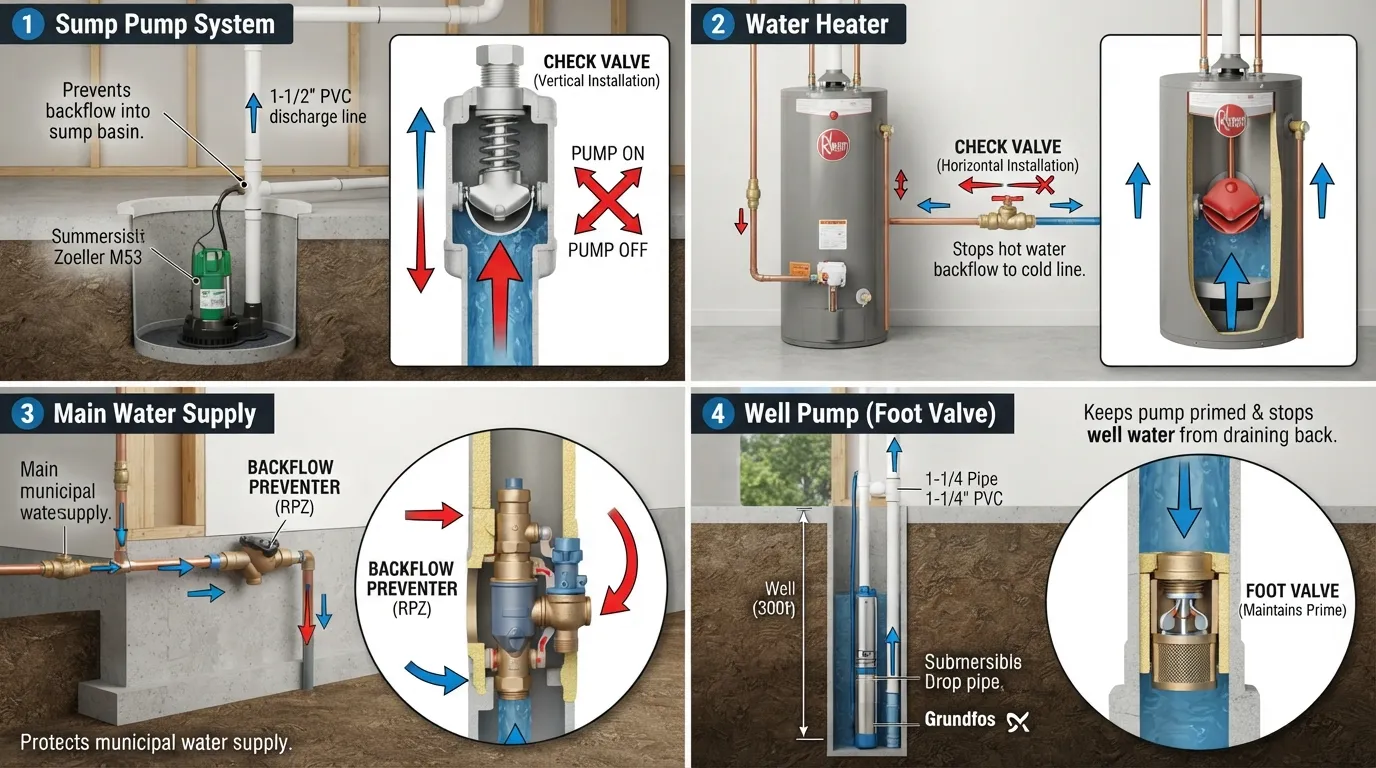 Check valves serve as a critical defense barrier in municipal and residential water networks, preventing contaminated water from siphoning back into the potable water supply. By maintaining unidirectional flow, they protect public health during sudden pressure drops or main line breaks.
- Potable water protection: Ensures household drinking water remains isolated from potential outside contaminants.
- Cross-connection safety: Installed near irrigation systems and chemical feeds to stop backwards migration.
Sump Pumps
In basement waterproofing systems, check valves stop pumped wastewater from falling back down into the sump pit once the motor shuts off. Without this vital component, gravity causes the trapped water to rush backward, forcing the pump to turn right back on and suffer from premature motor burnout due to short cycling.
Well Pumps and Pressure Tanks
Well water systems rely heavily on check valves to hold system pressure and keep the pump primed between pumping cycles. If a foot valve or check valve fails, water drains back down into the well, leading to loss of prime, dry-running hazards, and delayed water delivery at the tap.
Water Heaters and Boiler Lines
Thermal expansion and pressure surges in closed-loop water heating systems require strict flow management. Check valves prevent hot water from backing up into cold supply lines, though they must be paired with an appropriate expansion tank to manage pressure safely.
- Thermal protection: Restricts heated water from traveling backward into fragile supply pipes.
- System synergy: Works alongside temperature and pressure relief valves for comprehensive safety.
Irrigation and Sprinkler Systems
Landscape irrigation networks use multiple check valves to keep lateral lines filled with water between watering cycles. This prevents low-head drainage, where residual water leaks out of the lowest sprinkler heads and pools on lawns or walkways.
Sewer and Drain Lines
Specialized heavy-duty check valves—commonly referred to as backwater valves—are integrated into main sewer lines to prevent municipal sewage from backing up into basements during heavy storms or flooding events.
Aquarium and Small Pump Setups
In aquarium setups, small check valves are positioned along airline or water pump tubing to prevent water from siphoning backward into electrical air pumps during a power outage, protecting delicate equipment from water damage.
How a Check Valve Maintains Pump Prime
A check valve maintains pump prime by acting as a mechanical trap that locks fluid column weight above the pump intake. By sealing shut the moment the impeller stops, it keeps the suction line completely full of water so the pump can instantly draw fluid upon its next activation.
Where Should a Check Valve Be Installed?
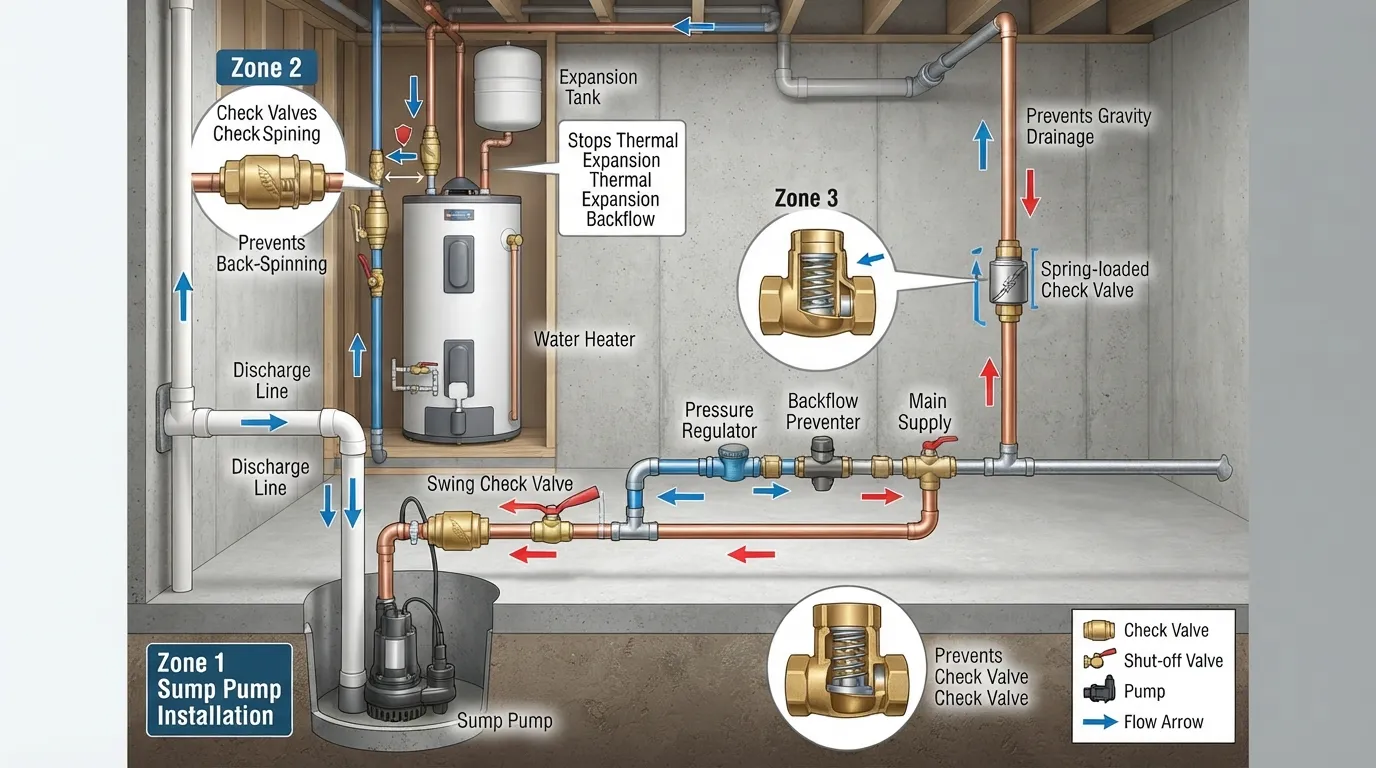 Every check valve features an arrow stamped directly onto its exterior body indicating the mandatory direction of fluid flow. Installing the valve backwards will completely block your water supply, rendering the system inoperable until corrected.
Always double-check that the arrow points away from the water source and toward the destination fixture or tank before securing your fittings.
Typical Installation Points
Strategic placement ensures maximum mechanical protection and prevents operational failure across various household applications. Common installation zones include:
- Sump pump discharge: Placed on the vertical discharge pipe roughly 12 to 18 inches above the pump pit outlet to minimize water hammer.
- Well systems: Installed immediately above the well pump or at the base of the suction line (as a foot valve) to retain prime.
- Water heater supply lines: Positioned on the cold water inlet line to isolate thermal expansion and prevent back-convection.
- Drain and backwater lines: Fitted into main lateral sewer pipes to block municipal backflow during heavy flooding.
Orientation Rules by Valve Type
Valve performance relies heavily on proper physical orientation relative to gravity and the pipe layout. Swing check valves generally require horizontal pipe runs or vertical runs with upward flow, while spring-loaded models can often mount in any position because mechanical tension drives the closure.
Always review the manufacturer’s technical manual before cutting pipe, as improper orientation will cause premature wear or failure to seal.
Keep It Accessible
Check valves contain moving internal parts that accumulate debris, wear out, or stick over time and will eventually require maintenance or replacement. Install union fittings on either side of the valve along with nearby shut-off valves to easily isolate and service the unit without tearing out entire plumbing runs.
Common Installation Mistakes
Avoiding frequent installation errors ensures long-term system reliability and protects downstream equipment from unexpected failures. Watch out for these pitfalls during setup:
- Backwards installation: Ignoring the flow arrow and halting all fluid movement.
- Mismatched orientation: Using gravity-dependent swing valves in horizontal or downward-flow configurations.
- Inaccessible placement: Burying the valve behind drywall or tight spaces without union fittings.
- Incompatible materials: Forcing dissimilar pipe connections without proper dielectric or transition fittings.
Do You Really Need a Check Valve?
 While not every household pipe requires a check valve, certain applications make them mandatory for safety, mechanical protection, and system efficiency. Omitting a check valve in these high-stakes scenarios can lead to equipment failure or property damage.
- Sump pump discharge lines: Essential for preventing discharged water from rushing back down into the basin and burning out the motor.
- Well water supply systems: Critical for holding system pressure and keeping the pump primed between operating cycles.
- Cross-connection risk zones: Necessary where clean potable lines interface with irrigation systems, boilers, or chemical feeds to protect drinking water.
When You May Not Need One
In standard municipal water supply lines where city pressure consistently pushes water in a single direction, internal backflow prevention at the main meter may already cover your needs. Local plumbing configurations, gravity-fed gravity drains, and specific appliance designs dictate whether an additional in-line check valve is redundant or necessary.
Check Valve and Local Plumbing Codes
Plumbing regulations vary significantly by region, municipality, and specific application. Always consult your local building code authority or hire a licensed plumber to verify whether backflow preventers or check valves are legally required for your specific plumbing upgrade.
Check Valve vs Backflow Preventer vs Double Check Valve vs Non-Return Valve
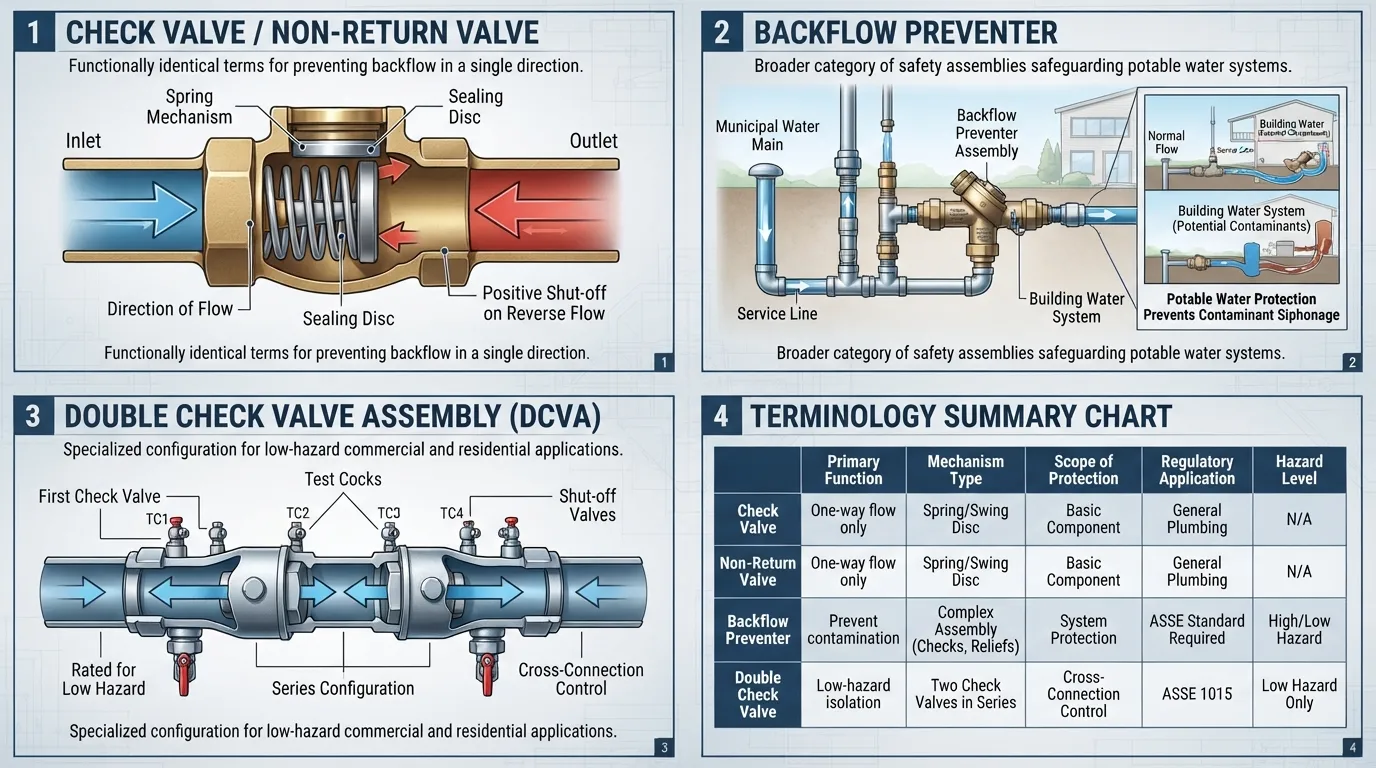 While people often use these terms interchangeably, there is an important technical distinction. A check valve is a simple mechanical component that permits unidirectional flow, whereas a backflow preventer is a certified assembly or engineered device specifically designed to protect potable water supplies from contamination.
Certified backflow preventers often feature test cocks, relief valves, and dual independent check mechanisms to meet strict health codes.
What Is a Double Check Valve and When Is It Used?
A double check valve assembly consists of two independent spring-loaded check valves housed within a single body, complete with shut-off valves and test cocks. It is typically used in low-hazard commercial and residential applications, such as lawn irrigation systems or fire sprinkler lines, to provide redundant backflow protection.
Can You Install Two Check Valves Instead of a Double Check Valve?
Generally, you cannot simply string two standalone check valves together and treat them as an approved double check valve assembly. Certified assemblies are engineered, laboratory-tested, and legally mandated to meet specific performance and testing criteria under local plumbing codes.
Check Valve vs Non-Return Valve
There is no functional difference between a check valve and a non-return valve. “Non-return valve” is simply an alternative regional or marine engineering term used to describe a valve that prevents fluid from backtracking.
Check Valve vs a Regular Valve
Regular valves—such as gate valves, ball valves, and globe valves—are manual shut-off devices operated by a handle or wheel to start, stop, or throttle flow. In contrast, a check valve operates entirely automatically using fluid pressure dynamics without any human or electrical intervention.
Where an Air Release Valve Fits
An air release valve is an entirely different device used to vent trapped air pockets out of high points in a piping system. It prevents air locks and pressure surges, whereas a check valve is strictly dedicated to controlling directional fluid flow.
Signs of a Bad Check Valve and How to Test It
Recognizing early symptoms of check valve failure prevents catastrophic equipment damage, property flooding, and unexpected utility disruptions. When internal components degrade, stick, or accumulate debris, several distinct warning signs appear:
- Water hammer: Loud banging noises or pipe vibrations occurring immediately after a pump shuts off, caused by unhindered reverse fluid slamming against closed lines.
- Short cycling: A sump pump or well pump turning on and off rapidly because water drains back through a faulty valve and triggers the float switch again.
- Reverse flow or pooling: Water backing up into equipment reservoirs, appliance housings, or discharge basins where it shouldn’t be.
- Pressure loss: Gradual drops in system pressure on well networks or pressurized lines, resulting in delayed water delivery at fixtures.
- Constant running or leaking: Pumps struggling to maintain prime, or continuous fluid leakage bypassing the seal due to a worn or warped valve seat.
How to Test Check Valve Safely
Verifying whether a check valve is operational requires a methodical diagnostic procedure to isolate flow issues safely without risking water damage or personal injury.
- Turn off power and water supply: Isolate the electrical circuit powering the pump and shut off any incoming pressurized water lines before inspecting hardware.
- Listen after shutoff: Activate the pump or system, let it run, and listen closely to the pipe immediately after it turns off. Hearing or feeling water rushing backward indicates a failed seal.
- Isolate and inspect: Close upstream and downstream isolation valves (or use union fittings) to isolate the check valve section.
- Check physical movement: Remove or visually inspect the internal flapper, disc, or spring mechanism to verify that it moves freely and seals tightly against the valve seat without obstructions.
Safety First
Always prioritize personal safety when working on residential plumbing or pressurized lines. De-energize all electrical equipment to prevent shock hazards, relieve trapped system pressure before loosening fittings, and call a licensed professional if you encounter severe pipe corrosion, inaccessible joints, or complex system leaks.
How to Check If a Zone Valve Is Working
It is common for homeowners to confuse a check valve with a motorized zone valve, which is typically found in hydronic heating systems. While a check valve operates passively via pressure differential to block reverse flow, a zone valve uses an electric motor or actuator to actively open or close a pathway based on thermostat signals. If your heating loops are failing to warm specific rooms, inspect the zone valve’s electrical wiring and actuator motor rather than looking for a mechanical backflow failure.
Common Problems and Disadvantages of Check Valves
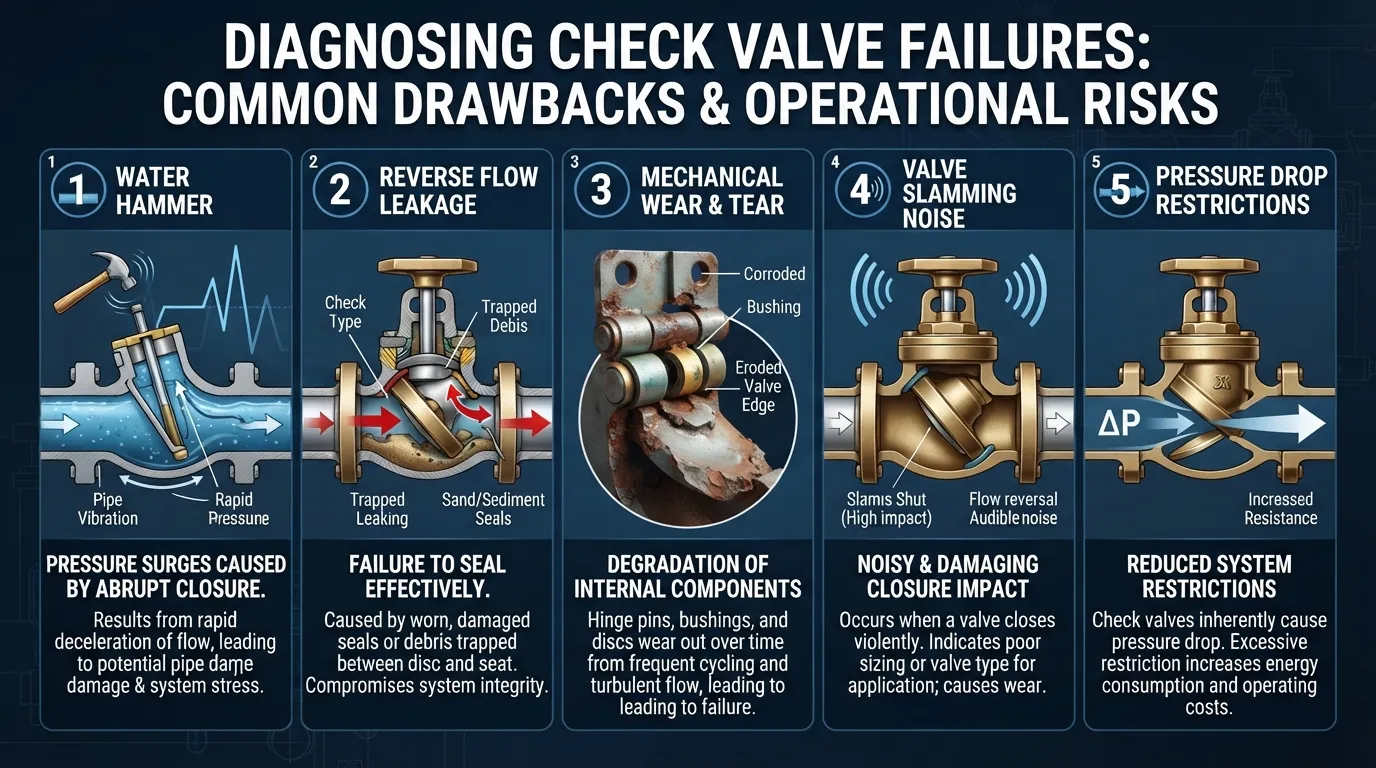 Even though check valves have no motors or electronic components to burn out, they operate under continuous physical stress and can experience operational failures over time. Being aware of these frequent issues helps you diagnose plumbing faults quickly.
- Debris jamming the seal: Sediment, mineral scale, or solid particulate matter gets trapped between the disc and the valve seat, preventing a complete seal and allowing continuous leakage.
- Worn or corroded parts: Metal hinges, springs, and plastic flappers degrade or rust over extended periods of exposure to aggressive water chemistry.
- Valve chatter and slamming: Rapid flow fluctuations cause the internal disc to vibrate or slam violently against the seat, leading to annoying noise and component fatigue.
- Improper sizing: An oversized valve fails to open fully, causing turbulence, while an undersized valve creates severe flow restrictions.
- Mismatched application: Installing a gravity-dependent swing valve in an incompatible orientation or flow configuration.
Disadvantages to Know About
While check valves are essential for protecting plumbing infrastructure, they also introduce a few inherent trade-offs that system designers and homeowners should consider.
- Inherent pressure drop: Forcing fluid through a mechanical resistance mechanism reduces downstream water pressure slightly across the system.
- Noise and water hammer: Rapidly closing valves can generate shockwaves in rigid piping runs if not equipped with damping features or expansion control.
- Component wear over time: Moving internal parts experience constant mechanical friction and will eventually require inspection or replacement.
- Limited backflow protection: A standard standalone check valve does not qualify as a certified backflow prevention assembly for high-hazard cross-connections.
How to Reduce Problems
You can significantly extend the lifespan of your check valves and minimize recurring maintenance headaches by implementing proactive engineering and upkeep strategies.
- Correct sizing: Match the valve diameter and flow rating precisely to your pipe specifications and pump capacity to prevent turbulence and wear.
- Choose silent or spring-loaded designs: Opt for spring-assisted or silent check valves in systems prone to water hammer to ensure rapid, cushioned closure.
- Periodic inspection: Schedule routine visual checks and cleanings—especially in sump systems or mineral-heavy well water lines—to clear out sediment before it causes a jam.
Check Valve Lifespan Replacement and Cost
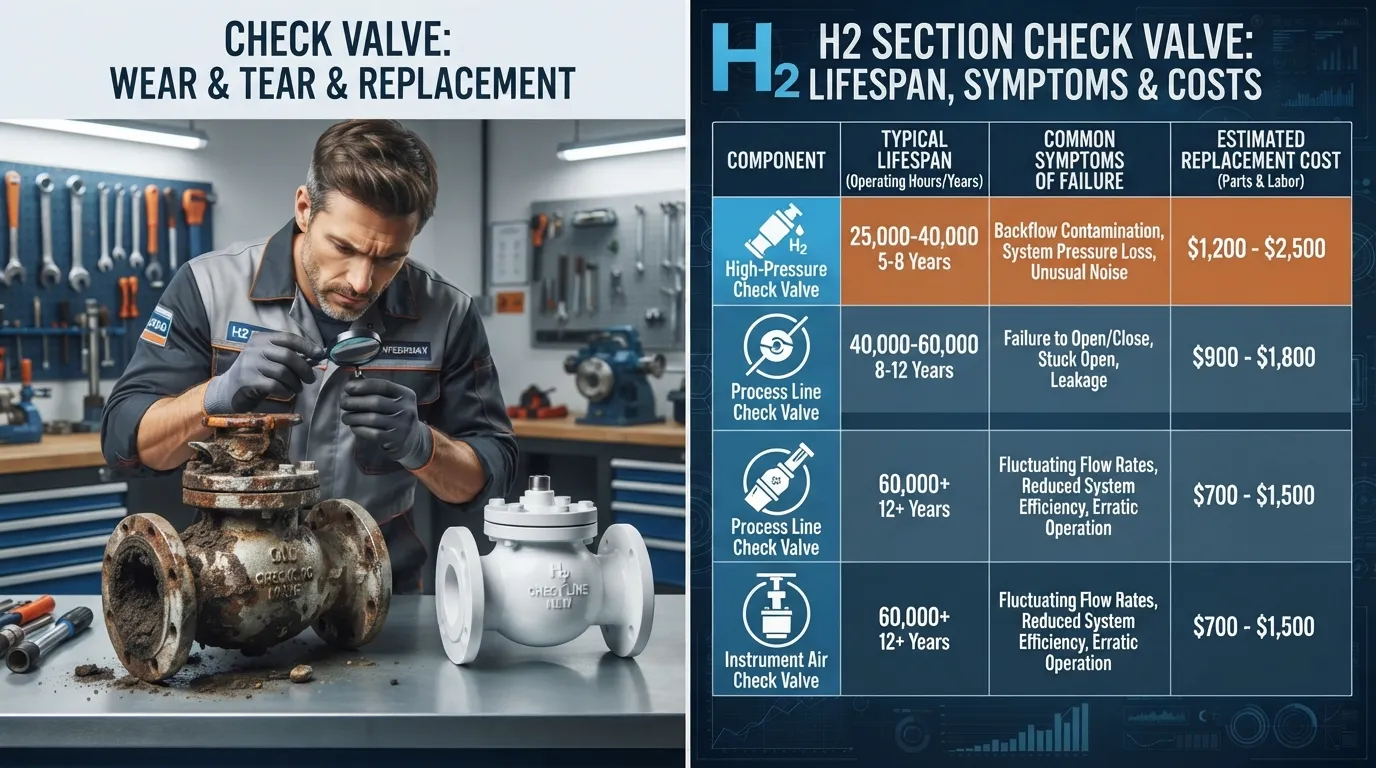 The average lifespan of a residential check valve typically ranges from 5 to 15 years, though high-quality brass or stainless steel models can endure significantly longer under ideal conditions. Lifespan is heavily influenced by local water quality, mineral content, operating pressure, and daily activation frequency.
Systems exposed to heavy sediment, abrasive well sand, or aggressive water chemistry will experience accelerated wear on internal seals and springs, often shortening the effective operational window.
How Often Should You Replace It?
Check valves do not operate on a strict calendar replacement schedule; instead, they should be inspected annually and replaced based on actual physical condition. Look for signs of sluggish closing, persistent water hammer, or minor leaks during routine plumbing maintenance checks.
If a check valve begins sticking or failing to hold pressure cleanly, replacing it immediately prevents secondary damage to expensive pumps and water heaters.
Can a Check Valve Be Cleaned?
Yes, many check valves can be successfully disassembled and cleaned if the failure is caused by trapped debris, mineral scale, or sediment blocking the valve seat. Soak removable plastic or metal parts in a mild descaling solution to clear buildup.
However, if internal rubber seals are cracked, hinges are warped, or metal components show deep corrosion pitting, cleaning will not restore integrity and full replacement is necessary.
Check Valve Replacement Cost
The cost to replace a check valve varies depending on the specific application, valve material, accessibility, and your geographic region. Standalone plumbing replacement parts are relatively inexpensive, typically ranging from $15 to $75.
When hiring a licensed plumber for professional installation, total costs—including diagnostic time, labor, and new fittings—generally range from $150 to $400 for standard residential repairs, though complex configurations or heavy-duty commercial lines may cost more.
DIY vs Hiring a Plumber
Replacing an accessible PVC check valve on a sump pump discharge line is a straightforward weekend project for confident DIYers equipped with proper pipe cutters and PVC cement. However, you should leave the job to a licensed professional if:
- The valve is located on main pressurized potable lines, gas-adjacent systems, or complex well networks.
- Cutting into old galvanized or corroded metal piping risks cracking adjacent infrastructure.
- Local building codes require certified backflow testing or permits for the specific plumbing modification.
Frequently Asked Questions
What is the purpose of a check valve in plumbing?
The primary purpose of a check valve is to allow water to flow freely in one designated direction while automatically preventing any reverse flow. This mechanical protection safeguards pumps, prevents backflow contamination, and maintains system pressure without requiring external power.
Is a check valve the same as a non-return valve?
Yes, a check valve and a non-return valve are completely identical devices that share the exact same mechanical function. “Non-return valve” is simply an alternative engineering or regional term used in marine and heavy industrial plumbing.
What is the difference between a check valve and a backflow valve?
A check valve is a single internal component that stops reverse flow, whereas a backflow preventer is a certified, comprehensive assembly engineered to protect potable water supplies from contamination. Backflow prevention devices often incorporate dual check mechanisms and test cocks to satisfy public health codes.
Do I need a check valve on my sump pump?
Yes, a check valve is practically essential on a sump pump discharge line to prevent pumped water from rushing back down into the basin. Without it, the water triggers short-cycling, which forces the motor to run continuously and burn out prematurely.
Which way does a check valve go?
A check valve must always be installed with its exterior flow arrow pointing away from the water source and toward the destination fixture or drainage outlet. Installing it backward will completely block fluid movement and shut down your water system.
Can a check valve be installed vertically?
Yes, many check valves can be installed vertically, provided the fluid flows upward and matches the manufacturer’s operational guidelines. However, gravity-dependent swing valves generally require horizontal runs or specific vertical upward flow orientations to seal correctly.
How do I know if my check valve is bad?
Common signs of a failing check valve include loud water hammer noises after shutoff, pumps short-cycling repeatedly, and water leaking backward through the system. You can test it by listening for fluid trickling back through the pipe immediately after the pump turns off.
What is the use of a check valve in an aquarium?
A check valve in an aquarium prevents water from siphoning backward through airline tubing into electrical air pumps during a power outage. This simple safety device protects sensitive electronic equipment from water damage and short circuits.
When should a double check valve be used?
A double check valve assembly should be used in low-hazard commercial and residential cross-connection zones, such as lawn irrigation systems or fire sprinkler lines. It provides redundant backflow protection to ensure that non-potable water never mixes with clean municipal drinking supplies.
Conclusion
- What it does: A check valve acts as an automated one-way gate, permitting forward fluid movement while instantly stopping any harmful reverse flow without requiring external power or manual controls.
- The main types: Options range from swing and spring-loaded designs to lift, ball, and diaphragm models, each tailored to specific pipe diameters, pressures, and media types.
- Where it goes: Essential installation zones include sump pump discharge lines, well systems, water heater supply pipes, and irrigation networks to maintain pressure and protect equipment.
- How to spot failure: Warning signs such as loud water hammer, pump short-cycling, or pressure loss indicate a worn seal or trapped debris that requires inspection or cleaning.
- When to call a plumber: Professional help is recommended for complex pressurized lines, structural piping repairs, or installations that must comply with strict local backflow codes.
Proper check valve selection, correct orientation following the flow arrow, and routine annual inspections are vital for safeguarding your plumbing infrastructure. For complex installations, main supply modifications, or projects that must strictly meet local building and safety regulations, always consult a licensed plumber.

Oscar Vance | Master Plumber & Drainage Expert
Meet Oscar Vance, a licensed master plumber sharing practical solutions on residential repairs, preventive maintenance, and thoughtful home upkeep.