Average Cost to Unclog a Drain Cost Snapshot
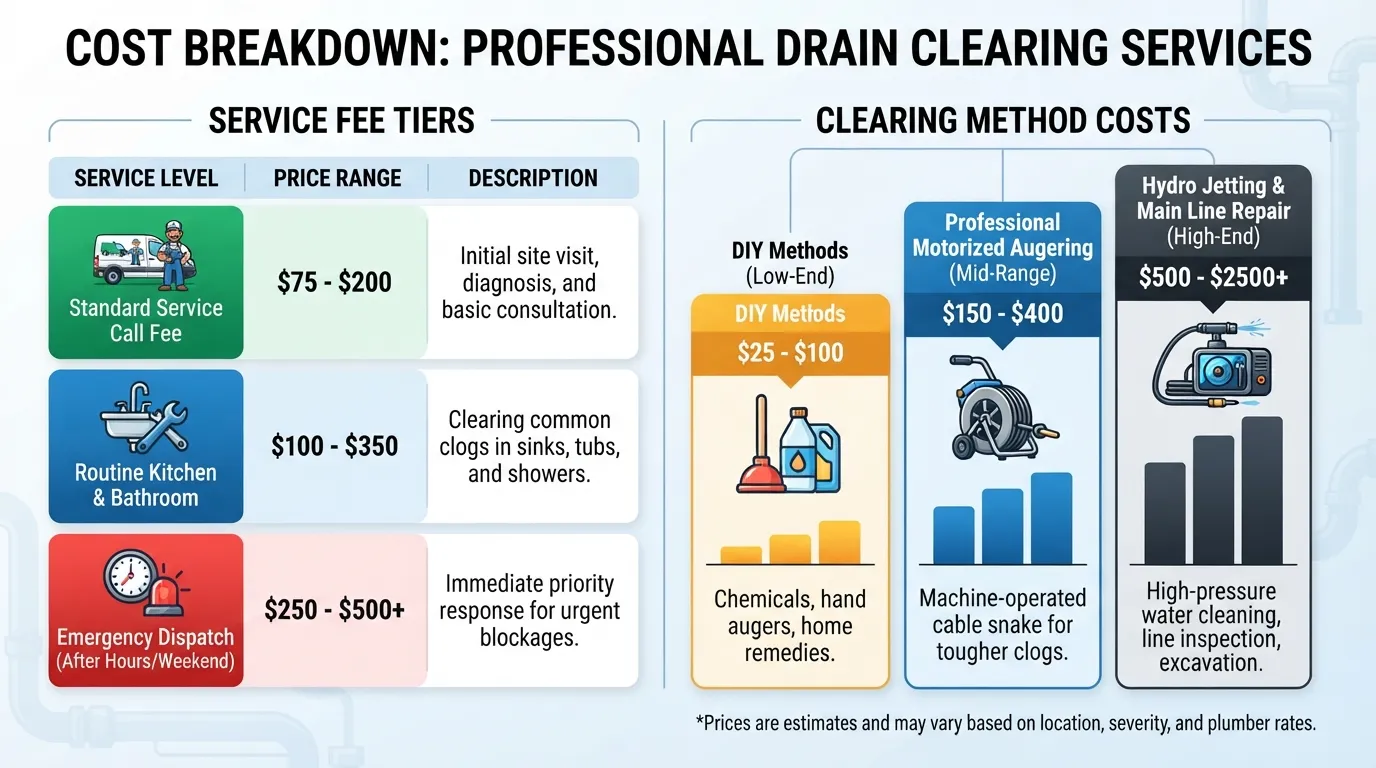 The average cost to unclog a drain typically ranges from $100 to $350, with most homeowners spending around $200 for standard professional service calls. Total pricing varies based on the severity of the blockage, the specific plumbing fixture involved, and labor rates in your local region.
National Average Cost Range
Professional plumber fees for a standard drain cleaning service generally fall within a predictable baseline spectrum. Minor clogs in localized fixtures like sinks or tubs require minimal time, keeping expenses on the lower end of the pricing scale.
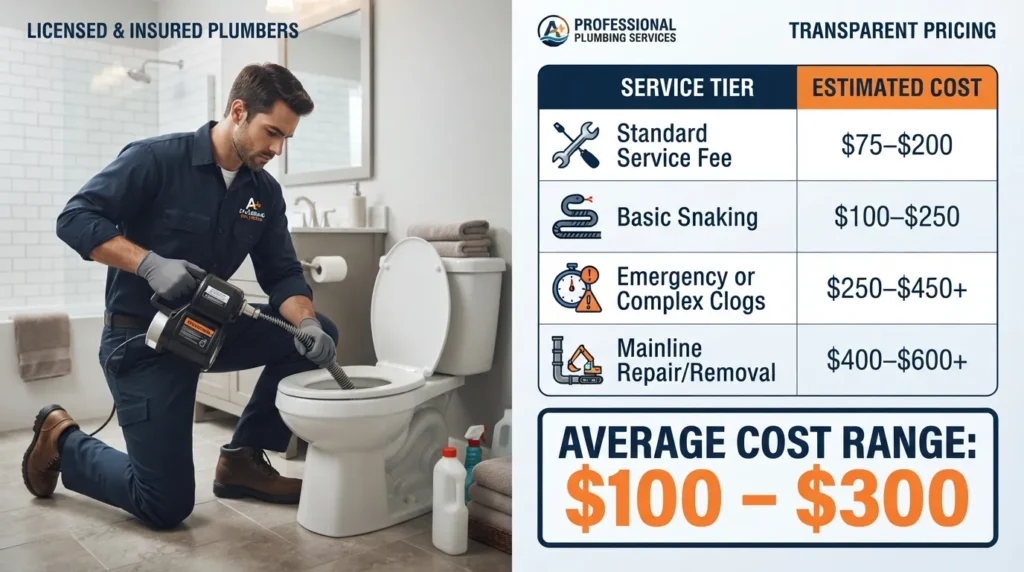
- Standard Service Call Fee: $75 to $200 just for the diagnostic visit and minor snaking.
- Typical Total Range: $100 to $350 for complete clearing of routine kitchen or bathroom blockages.
- Emergency Rates: $250 to $500+ if you require after-hours, weekend, or holiday emergency dispatch.
Low-End vs High-End Cost Breakdown
Project expenses shift dramatically depending on whether the blockage is a simple surface obstruction or a severe structural issue deep within the main sewer line. Specialized equipment requirements also dictate where your final invoice lands.
- Low-End ($50 – $125): DIY chemical solutions, manual hand-snaking, or minor plunger work on surface-level hair and soap scum clogs.
- Mid-Range ($150 – $350): Standard motorized auger or drain snake deployment by a licensed plumber for stubborn kitchen sink or toilet obstructions.
- High-End ($400 – $1,200+): Advanced hydro jetting, main sewer line rooter services, or excavation work required for broken or collapsed pipes.
What Affects the Cost to Unclog a Drain?
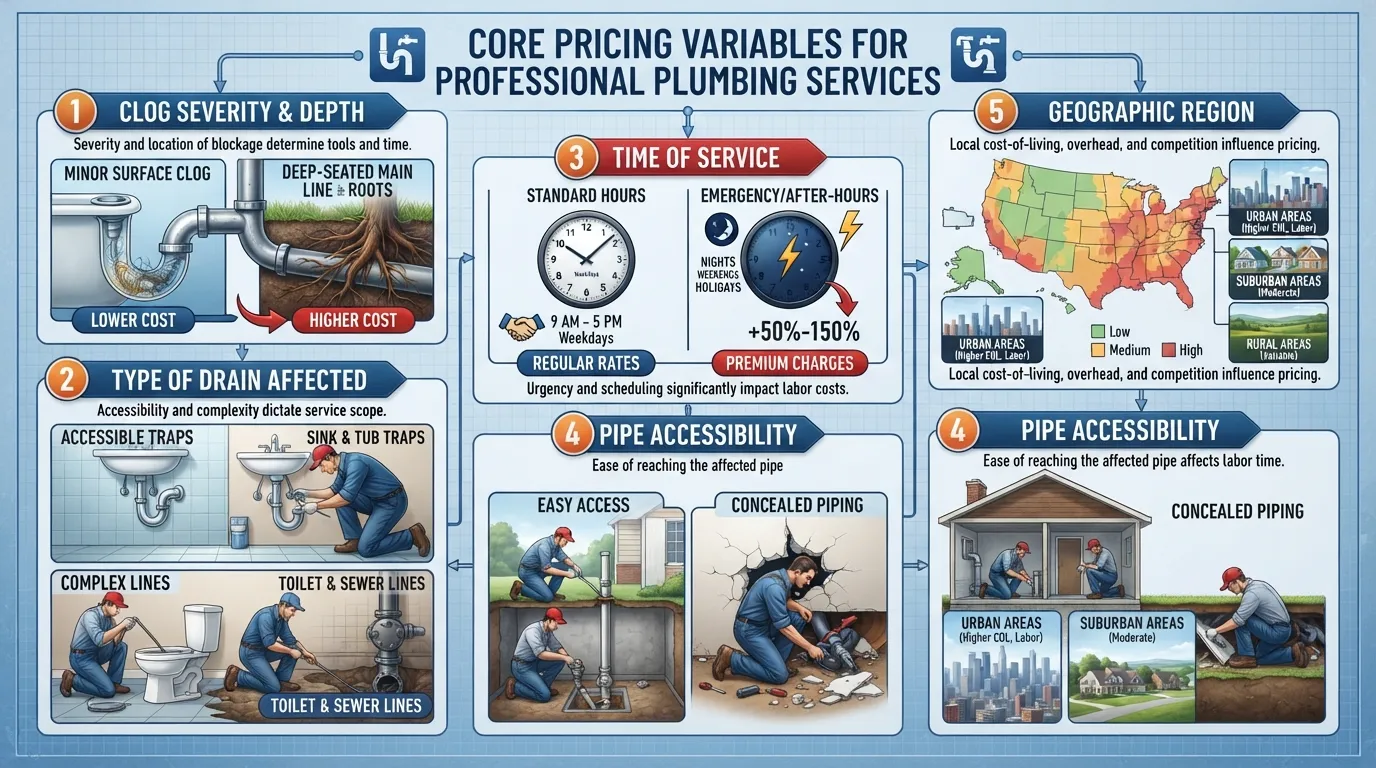
Plumbing service costs fluctuate based on several operational factors that dictate the time, equipment, and labor required to resolve the issue. Understanding these core variables helps you evaluate estimates and anticipate potential extra charges before booking a technician.
Severity & Location of the Clog
The complexity and depth of the blockage directly dictate the final labor time and machinery needed. Surface-level debris takes minutes to clear, whereas deep-seated obstructions demand intensive diagnostic work.
- Minor Blockages: Surface hair, grease, or soap buildup near the drain opening is cleared quickly with basic hand tools.
- Deep Main Line Clogs: Tree root intrusion or structural collapse requiring video camera inspections and hydro jetting.
- Diagnostic Time: Locating hidden obstructions increases overall billable hours for the attending technician.
Type of Drain Affected
Different household fixtures feature unique configurations, pipe diameters, and accessibility constraints that alter clearing complexity. Kitchen lines choked with grease require different methods than standard bathroom sinks.
- Sinks and Tubs: Generally faster and less expensive due to accessible P-traps and standard pipe widths.
- Toilets: Often require specialized augers (closet augers) to navigate porcelain traps without causing damage.
- Main Sewer Lines: Heavy-duty equipment like industrial rooters or high-pressure water jets are mandatory, driving up costs.
Time of Service Emergency vs Scheduled
Scheduling a routine service call during standard business hours keeps labor rates at baseline levels. Calling a technician outside normal operating hours incurs premium emergency surcharges.
- Standard Hours: Weekday appointments are charged at normal hourly or flat-rate service fees.
- After-Hours and Weekends: Emergency dispatch fees often double or triple standard hourly labor costs.
- Holidays: Premium holiday rates apply for immediate, urgent plumbing interventions.
Accessibility of Pipes
Plumbing lines hidden behind finished walls, beneath concrete slabs, or in tight crawlspaces require extra physical effort to reach. Technicians must invest additional time cutting drywall or navigating confined areas to access cleanouts.
- Accessible Cleanouts: Readily available outdoor or basement cleanout ports allow rapid equipment setup.
- Concealed Piping: Blockages located behind walls or under flooring require invasive access methods.
- Crawlspaces and Attics: Restricted movement areas slow down the repair process and increase labor charges.
Your Geographic Region
Local economic conditions, state licensing requirements, and regional cost-of-living standards heavily influence contractor pricing. Metropolitan areas with higher living costs naturally feature steeper hourly plumber rates than rural towns.
- High-Cost-of-Living Metros: Urban service providers charge higher rates to offset overhead and travel expenses.
- Rural Markets: Lower operational overhead often translates to more affordable local labor pricing.
- Travel Surcharges: Plumbers traveling long distances to remote properties may add a mileage fee.
Cost to Unclog a Drain by Drain Type
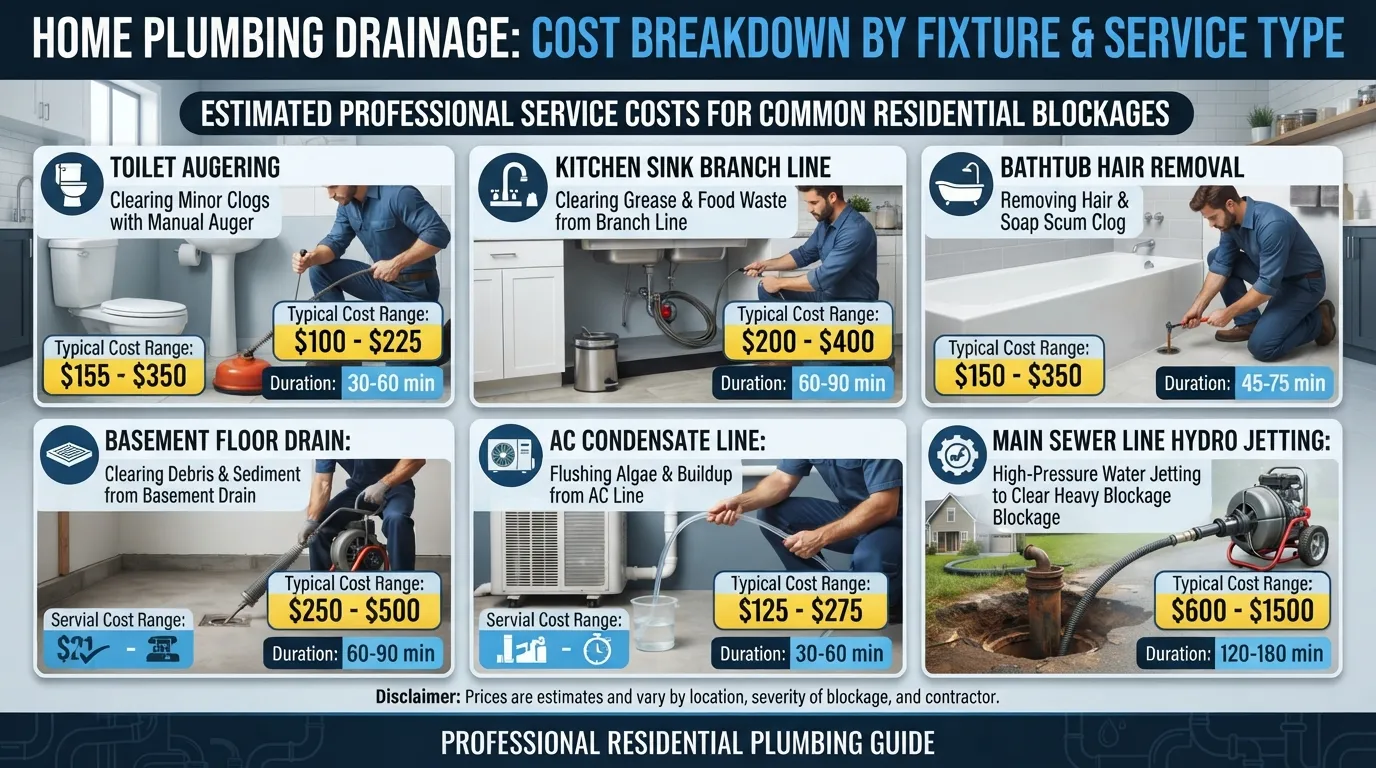
Different plumbing fixtures across your property demand specialized tools, cleaning chemicals, or mechanical clearing techniques. Reviewing costs by specific drain type helps pinpoint exact budgeting expectations for your specific household issue.
Toilet Drain Unclog Cost
Clearing a clogged toilet generally ranges from $100 to $250 depending on whether the blockage is trapped inside the porcelain trap or down in the wax ring and floor flange. Standard augmentations easily resolve most paper and waste obstructions.
- Standard Toilet Augering: $100 to $200 using a specialized closet auger to protect the bowl finish.
- Severe Blockage / Removal: $250 to $450 if the toilet must be physically detached from the floor to clear a trapped foreign object.
Kitchen Sink Drain Unclog Cost
Kitchen sink blockages typically stem from heavy accumulations of cooking grease, food particles, and soap scum bonding inside the P-trap or branch lines. Professional cleaning for these lines runs between $100 and $275.
- P-Trap Cleaning & Snaking: $100 to $175 for basic disassembly, manual clearing, and re-sealing.
- Branch Line Snaking: $200 to $350 when the clog extends past the wall fitting into the main kitchen stack.
Bathtub or Shower Drain Cost
Bathtub and shower blockages are predominantly caused by dense hair mats combined with body oils and soap residue binding together. Plumbers usually resolve these issues for $100 to $250.
- Pop-Up Assembly Clearing: $100 to $175 for removing hair directly from the stopper mechanism and trap.
- Drum Trap or Deep Line Snaking: $200 to $300 for older homes featuring complex under-tub drum traps.
Main Sewer Line Unclog Cost
Main sewer line clogs affect multiple household fixtures simultaneously and represent the most critical plumbing blockages. Clearing these heavy municipal connections typically costs between $250 and $800.
- Standard Main Line Rooter: $250 to $500 using heavy-duty steel cables to punch through roots or sludge.
- Hydro Jetting Integration: $600 to $1,200 for high-pressure water blasting that completely scours pipe interior walls.
Basement Drain Unclog Cost
Basement floor drains prevent indoor flooding by capturing excess water, but they frequently collect silt, debris, and sediment over time. Clearing a backed-up basement drain usually costs $150 to $350.
- Sediment Snaking: $150 to $250 to clear localized dirt and debris clogging the trap primer.
- Backwater Valve Inspection: $300 to $500 if the backup is caused by a jammed or failing check valve.
AC Drain Line Unclog Cost
Air conditioner condensate lines frequently clog due to algae, mold, and dust sludge buildup during heavy summer usage cycles. Professional clearing or flush maintenance generally ranges from $75 to $200.
- Line Flushing and Vacuuming: $75 to $150 for clearing the PVC condensate drain pipe and pan.
- Float Switch Replacement: $150 to $250 if the backup tripped and ruined the safety shut-off switch.
Cost by Method Snaking vs Hydro Jetting vs Camera Inspection
Professional drain cleaning methods vary greatly in technology, effectiveness, and price point. Choosing the right technique depends entirely on the nature of your obstruction and the long-term health of your piping infrastructure.
Standard Drain Snaking: Cost & When It’s Used
Drain snaking utilizes a flexible steel cable with an auger head to punch through or retrieve localized blockages. It is the most common and affordable method for clearing routine household clogs in sinks, showers, and toilets.
- Average Cost: $100 to $250 per service call depending on line accessibility.
- Ideal Use Cases: Single-fixture blockages caused by hair, toilet paper, or localized grease buildup.
- Limitations: Pokes a hole through the clog rather than cleaning the pipe walls, often leaving residue behind for future clogs.
Hydro Jetting: Cost & When It’s Necessary
Hydro jetting blasts water at pressures ranging from 1,500 to 4,000 PSI through a specialized multi-directional nozzle, completely scouring the interior pipe walls. It cleans away grease, mineral scale, and stubborn tree roots entirely.
- Average Cost: $400 to $1,200 depending on line length and severity of buildup.
- Ideal Use Cases: Heavy grease accumulation in commercial or residential kitchens, severe tree root intrusion, and chronic recurring clogs.
- Limitations: Cannot be used safely on severely compromised, cracked, or fragile clay and Orangeburg pipes.
Camera Inspection: Cost & Purpose
A sewer camera inspection uses a waterproof fiber-optic camera pushed through the plumbing line to display real-time video footage of the interior pipe condition. This diagnostic step prevents guesswork and targets the exact location of structural damage.
- Average Cost: $150 to $400, though often bundled with major hydro jetting or repair packages.
- Ideal Use Cases: Diagnosing mysterious slow drains, locating broken lines, or verifying that a line is completely clear after cleaning.
- Limitations: Requires a cleanout access point to enter the plumbing system.
Snaking vs Hydro Jetting Side-by-Side Comparison Table
Signs You Need Hydro Jetting Instead of Snaking
Recognizing when standard mechanical snaking is no longer enough saves homeowners from paying multiple service fees for temporary fixes. Upgrading to high-pressure cleaning becomes essential under specific operational conditions.
- Recurring Clogs: If the same drain backs up repeatedly within weeks of being snaked.
- Multiple Fixture Backups: Water bubbling up in a bathtub when you flush the toilet or run the kitchen sink.
- Heavy Grease or Scale: Kitchen lines or older cast iron pipes coated with hardened interior buildup.
Does Hydro Jetting Have Any Disadvantages? Q&A format
While hydro jetting is the gold standard for deep cleaning sewer lines, it does carry specific limitations and risks if performed on compromised infrastructure. A pre-inspection is mandatory to prevent structural damage.
- Risk to Fragile Pipes: High-pressure streams can rupture severely corroded, cracked, or root-damaged clay and cast iron pipes.
- Higher Upfront Cost: It is significantly more expensive than basic snaking, making it overkill for minor hair clogs.
- Requires Professional Operation: Improper handling by an untrained operator can force water backward or shatter residential pipe joints.
How Much Does Roto-Rooter Charge to Snake a Drain?
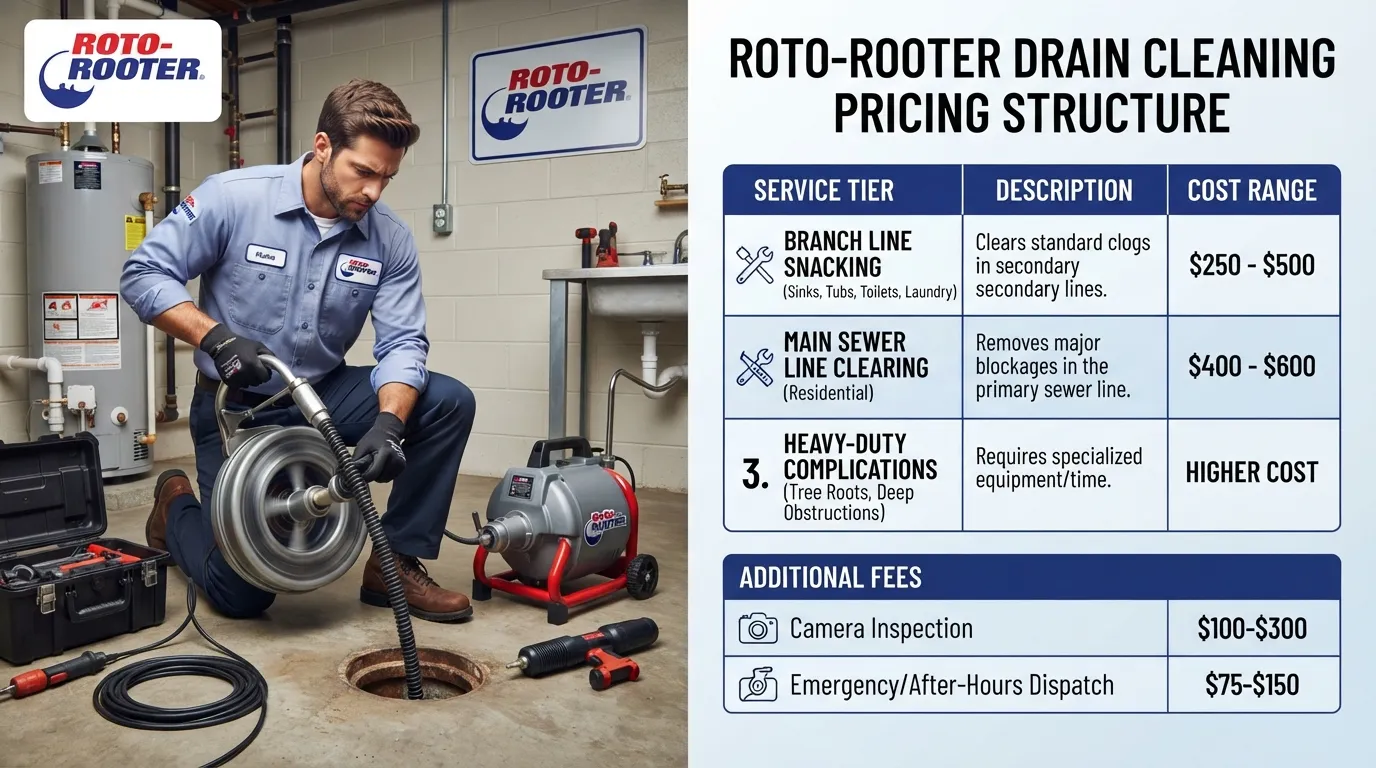
Roto-Rooter typically charges between $150 and $350 to snake a standard residential drain, though prices vary depending on your location, time of day, and the severity of the blockage. As a major national franchise, their baseline pricing often sits slightly higher than independent local operators due to brand overhead and round-the-clock dispatch availability.
Average Pricing
National franchise pricing structures depend heavily on fixed service call fees coupled with hourly or task-based labor rates. Unclogging standard fixtures like a kitchen sink or bathroom drain generally falls within predictable cost thresholds.
- Standard Drain Snaking: $150 to $350 for routine sink, tub, or toilet clearings during normal business hours.
- Main Sewer Line Clearing: $300 to $600 for motorized augering of main property lines.
- Emergency Service Surcharges: Expect an extra 30% to 50% premium for after-hours, weekend, or holiday dispatch calls.
National Chain vs Local Independent Plumber Cost Comparison
Choosing between a nationwide brand like Roto-Rooter and a local independent plumbing contractor involves weighing cost against brand accountability and availability. Understanding how their fee structures differ helps you make an informed hiring decision.
- Pricing Consistency: National chains offer standardized pricing and written warranties, whereas local independents may provide more flexible, lower-cost negotiations.
- Overhead and Rates: Local plumbers often maintain lower hourly rates ($75 to $150/hr) compared to corporate franchise models ($125 to $250/hr).
- Availability: Large chains provide 24/7/365 emergency dispatching that smaller local shops may not staff consistently.
Does Offer Hydro Jetting?
Roto-Rooter provides full-scale hydro jetting services alongside their traditional rooter and snaking methods. High-pressure water jetting through a national provider typically ranges from $500 to $1,200 depending on line length, pipe material, and regional labor adjustments.
- Comprehensive Cleaning: Utilized for heavy grease, sludge, and complete tree root removal inside main sewer lines.
- Pre-Service Inspection: Technicians mandate a camera inspection prior to jetting to verify pipe structural integrity.
- Warranty Protection: Corporate services usually include a limited workmanship guarantee on cleared lines.
DIY vs Professional Should You Snake the Drain Yourself?
Tackling a stubborn blockage on your own can save you an immediate $100 to $250 service fee, but it requires the right tools and caution to avoid worsening the problem. Knowing when a simple DIY auger suffices versus when to call a professional plumber prevents costly pipe damage.
Cost of a DIY Drain Snake Tool Purchase Cost
Investing in basic homeowner plumbing tools is remarkably affordable compared to paying a service call for minor maintenance. Most hardware stores carry entry-level gear that pays for itself on the very first use.
- Plastic Zip Hair Snakes: $3 to $7 for flexible barbed strips ideal for clearing bathroom sink and shower hair clogs.
- Handheld Drum Auger: $20 to $45 for a manual 15-to-25-foot cable snake housed in a plastic or metal drum.
- Heavy-Duty Drill-Powered Augers: $40 to $80 for units that attach to a standard power drill for extra torque.
When DIY Snaking Is Safe
DIY snaking is safe and effective when dealing with localized, minor obstructions in modern, sturdy plumbing lines. Recognizing these ideal scenarios ensures you do not risk harming fragile home infrastructure.
- Single Fixture Slow Downs: Backups isolated exclusively to one bathroom sink, tub, or toilet.
- Surface Hair and Soap Scum: Easily reachable blockages located within the immediate P-trap or pop-up assembly.
- Modern PVC Piping: Newer plastic drain lines that resist the cracking risks associated with older metal or clay pipes.
When to Stop and Call a Professional
Certain plumbing symptoms indicate a complex, deep-seated issue that requires professional diagnostic machinery and expertise. Pushing past your limits can rupture lines or flood your living space with wastewater.
- Multiple Fixtures Backing Up Simultaneously: Water bubbling up in the shower when you flush the toilet points to a main sewer line blockage.
- Total Drainage Failure: Complete blockages that do not budge after multiple careful passes with a hand auger.
- Foul Sewage Odors or Surges: Gurgling sounds or raw sewage backing up from floor drains demand immediate licensed intervention.
Best Liquid Chemical Drain CleanersDo They Work?
Commercial liquid chemical drain cleaners offer a quick fix for minor organic surface grease, but professional plumbers universally advise caution regarding their frequent use. Harsh chemicals can accelerate pipe deterioration and create severe health hazards.
- Lye and Acid-Based Cleaners: Effective at dissolving hair and grease, but generate intense heat that can warp PVC pipes or melt wax rings.
- Eco-Friendly Enzymatic Cleaners: Safe for regular monthly maintenance using natural bacteria to digest organic buildup slowly without pipe damage.
- Baking Soda and Vinegar: A mild, non-corrosive DIY effervescent remedy that helps loosen light grease films but fails against dense structural clogs.
Real-World Example When Cost Goes Above Average
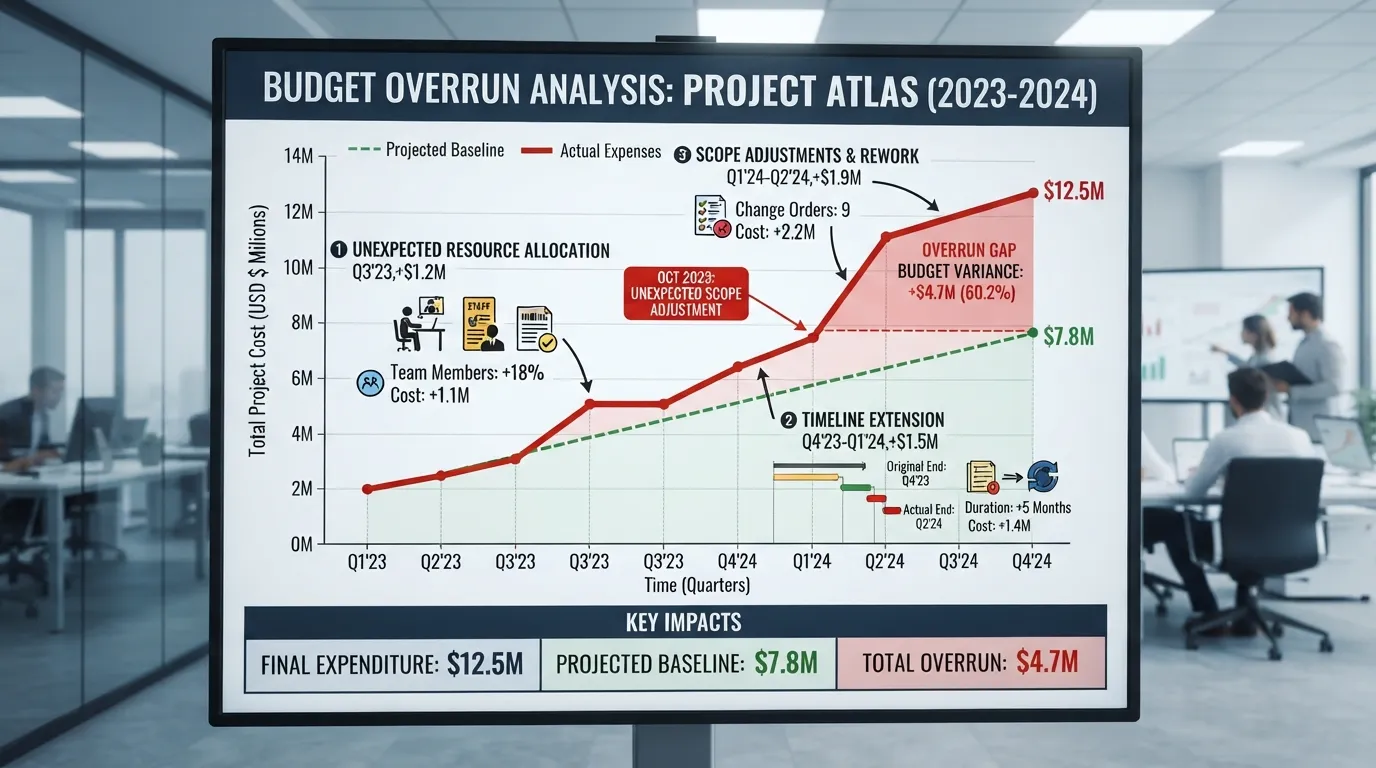
While standard sink or toilet clogs usually cost between $100 and $350 to resolve, complex home plumbing issues can easily escalate past $800 when hidden structural problems are uncovered. Understanding how a routine service call turns into a major project helps you prepare financially for unforeseen property emergencies.
Case Example: When a Simple Clog Costs $800+
Consider a frequent scenario reported by homeowners dealing with what appears to be a slow kitchen sink. An initial $150 service call for snaking often reveals that the obstruction is actually deep within the main sewer line due to structural pipe shifting or heavy tree root infiltration.
- Initial Diagnostic Visit: $150 standard dispatch and minor snaking attempt that fails to clear the recurring backup.
- Sewer Camera Inspection Fee: $250 to visually pinpoint the root cause behind drywall or underground.
- Main Line Hydro Jetting & Rooter: $500+ to completely scour thick root masses and hardened grease out of the primary property line.
- Total Combined Invoice: Reaching $800 to $900+ for a comprehensive repair sequence, as outlined in national contractor data compiled by Angi.
Lessons Homeowners Can Learn From Real Situations
Navigating unexpected high-cost plumbing bills teaches valuable lessons about preventive maintenance and contractor communication. Implementing a few safeguards protects your budget from sudden shocks.
- Always Ask for Upfront Pricing: Confirm whether the quote includes diagnostic fees, travel surcharges, and potential camera inspections before work begins.
- Watch for Warning Signs: Multiple fixtures draining slowly simultaneously usually indicate a main line issue rather than a simple localized trap clog.
- Incorporate Routine Prevention: Utilizing monthly enzyme treatments and hair catchers drastically reduces the risk of expensive emergency interventions.
Hidden Fees & Trip Charges Explained
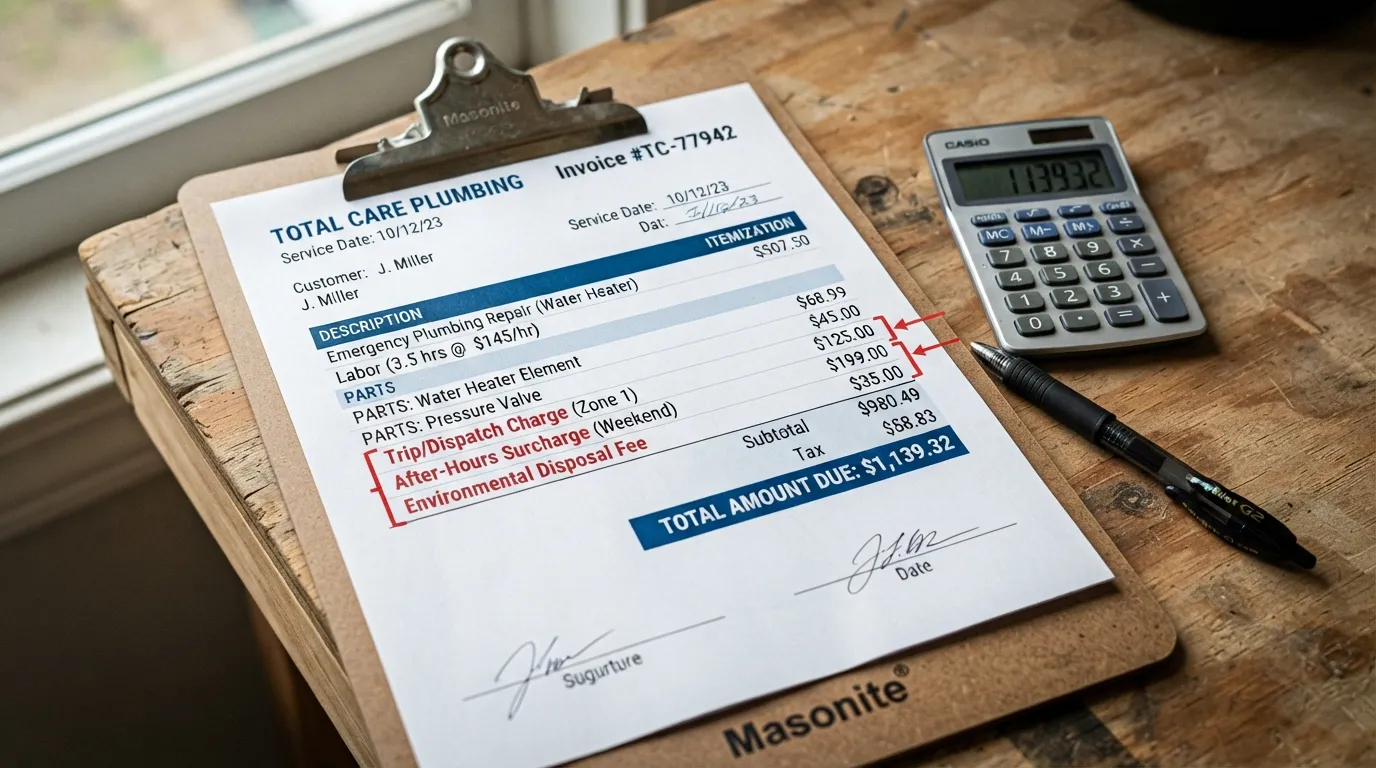
Plumbing invoices often include line items beyond basic hourly labor or flat-rate clearing charges, catching many homeowners off guard. Understanding standard industry service fees ensures you can spot inflated quotes and negotiate transparent billing.
What Is a Service Trip Fee?
A trip fee—often called a service call or diagnostic fee—covers the plumber’s travel time, vehicle fuel, and the initial inspection required to evaluate your plumbing problem. Most contractors charge this flat rate just for showing up at your property.
- Typical Cost Range: $75 to $200 depending on your distance from the contractor’s headquarters.
- Diagnostic Purpose: Pays for the technician’s time to troubleshoot the issue before any actual physical repair or snaking begins.
- Separate From Labor: Usually billed independently of the hourly labor rate or equipment fees needed to unclog the drain.
When Trip Fees Are Waived or Credited
Many reputable plumbing companies offer policy incentives that reduce or eliminate upfront trip fees under specific business conditions. Knowing these policies helps you lower your total out-of-pocket expenses.
- Repairs Approved On-Spot: Contractors frequently credit the trip fee directly toward the total cost of the completed repair or cleaning job.
- Promotional Offers: Seasonal marketing campaigns by local or national companies often advertise free diagnostic visits for new customers.
- Service Contract Memberships: Enrolling in a plumbing maintenance plan usually waives all dispatch and emergency call-out fees.
How to Avoid Being Overcharged
Protecting yourself from surprise invoice markups requires clear communication and upfront confirmation of all potential fees before a technician starts work. Establishing written boundaries eliminates billing ambiguity.
- Get Clear Estimates in Writing: Ask for a comprehensive written breakdown covering trip fees, hourly labor, and extra equipment charges before authorizing work.
- Confirm Fee Absorption Policies: Explicitly ask if the service call fee is rolled into the final repair price or charged as an extra line item.
- Get a Second Opinion: For expensive major repairs like main line replacements, consult a second independent plumber to benchmark pricing fairness.
How Often Should You Hydro Jet Your Sewer Line?
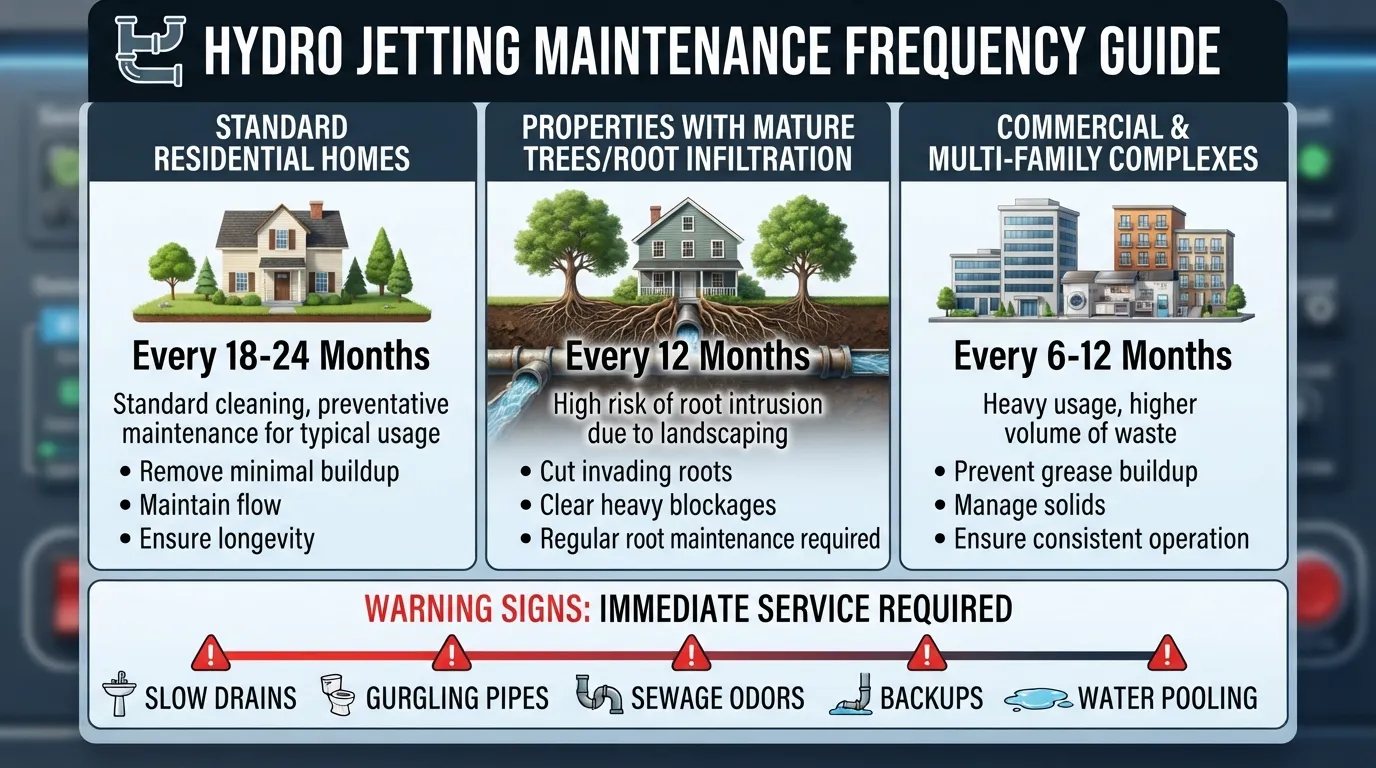
Routine hydro jetting is not typically required for standard residential properties with healthy plumbing lines, but proactive maintenance helps prevent catastrophic backups. Scheduling periodic high-pressure cleanings depends heavily on your property’s environmental factors and pipe usage history.
Recommended Hydro Jetting Frequency
Most residential properties only need a professional hydro jetting service every 18 to 24 months as part of preventive sewer maintenance. However, certain high-risk households require much more frequent professional intervention to maintain clear drainage.
- Standard Residential Homes: Every 2 to 3 years to scour away minor mineral scale and prevent unexpected grease buildup.
- Homes with Heavy Tree Root Intrusion: Every 12 to 18 months to cut back aggressive roots before they crack pipe joints.
- Commercial Kitchens & Multi-Family Units: Every 6 to 12 months due to heavy daily grease output and high-volume usage.
Signs Your Drain Needs Maintenance Cleaning
Waiting for a complete mainline blockage to occur often leads to costly property damage and emergency surcharges. Recognizing early warning signs allows you to schedule maintenance cleaning before total failure strikes.
- Sluggish Draining Across Multiple Fixtures: Sinks and showers taking longer than usual to empty simultaneously.
- Intermittent Gurgling Sounds: Air bubbles escaping through toilet bowls or P-traps when running washing machines or dishwashers.
- Unpleasant Odors: Persistent sulfur or sewage smells drifting up from floor drains or outdoor cleanout ports.
How Long Does It Take a Plumber to Clear a Clog?
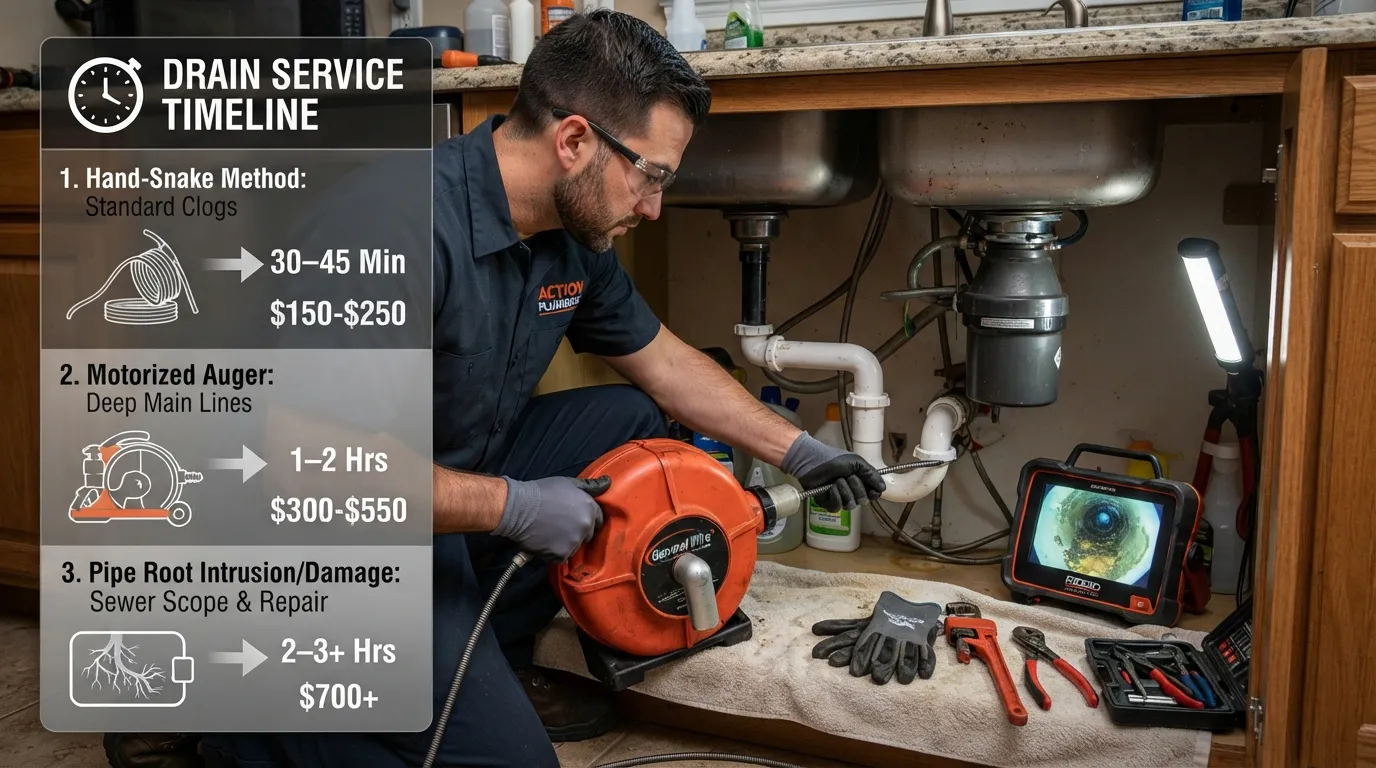
Most standard plumbing drain clearing jobs take between 30 minutes and 2 hours to complete from the moment the technician arrives. The exact duration depends entirely on the location of the fixture, the accessibility of the cleanout, and the complexity of the blockage.
Average Time for Simple Clogs
Localized blockages in standard household fixtures require minimal setup time and are resolved very quickly by a skilled technician using basic equipment.
- Sink and Tub Clogs: 30 to 45 minutes for basic P-trap disassembly or hand-snaking.
- Toilet Augering: 15 to 30 minutes for standard closet auger applications and flow testing.
- Shower Drain Hair Removal: 30 minutes for surface and trap clearing.
Average Time for Main Line or Hydro Jetting Jobs
Complex obstructions involving main sewer lines, heavy grease accumulation, or stubborn root masses demand advanced machinery and extensive diagnostic steps.
- Main Line Snaking / Rooter: 1 to 2 hours for locating cleanouts, setting up heavy cabling, and clearing long runs.
- Sewer Camera Inspection: 30 to 60 minutes for feeding the fiber-optic line and reviewing footage.
- Full Hydro Jetting Service: 2 to 4 hours for complete high-pressure pipe scouring and final system testing.
Frequently Asked Questions
Homeowners often have specific, lingering questions regarding pricing structures, chemical safety, and diagnostic signs when facing drain blockages. Reviewing these direct answers helps clarify common plumbing uncertainties.
How to tell if your main drain line is clogged?
Main drain line clogs affect multiple fixtures throughout your entire home simultaneously rather than a single isolated sink or tub. Look for warning signs like water bubbling up in your bathtub when you flush the toilet, or multiple household drains emptying very slowly at the same time.
- Multi-Fixture Backups: Water rising in showers or floor drains when laundry appliances or toilets run.
- Gurgling P-Traps: Distinct bubbling or gurgling sounds echoing from bathroom or kitchen sinks during drainage.
- Unpleasant Odors: Foul sewage smells escaping from indoor floor drains or exterior cleanout caps.
How much does it cost to unclog a kitchen sink?
Clearing a clogged kitchen sink typically ranges from $100 to $350 depending on whether the obstruction is localized inside the P-trap or located deep within the branch lines. Basic hand-snaking or trap cleaning sits on the lower end, while motorized augering of grease-choked wall lines costs more.
- P-Trap Service: $100 to $175 for manual disassembly, cleaning, and re-sealing.
- Branch Line Snaking: $200 to $350 for deeper grease and food particulate blockages.
What acid do plumbers use to unclog drains?
Professional plumbers rarely rely on harsh household acids because they can rapidly corrode metal pipes, damage PVC joints, and create hazardous toxic fumes. Instead, licensed technicians use mechanical augers, industrial hydro jetting, or commercial-grade sulfuric acid formulations strictly designed for emergency commercial applications.
- Sulfuric Acid Treatments: Professional-grade chemical solutions that generate extreme heat to dissolve heavy organic blockages.
- Safety Precautions: Handled with protective gear due to severe chemical burn and toxic vapor risks.
- Preferred Alternative: Hydro jetting is almost always preferred over chemical acids to protect pipe integrity.
How much does it cost to unclog a kitchen drain?
Unclogging a standard kitchen drain generally costs between $100 and $350. The final price varies based on whether the grease and food blockage requires basic snaking or intensive high-pressure hot water jetting.
- Standard Snaking: $100 to $250 for clearing standard food and grease clogs.
- Hydro Jetting: $400 to $800 if heavy grease buildup coats the entire interior of the kitchen waste line.
How much money does it cost to call a plumber to fix a clogged toilet?
Calling a professional plumber to fix a clogged toilet costs between $100 and $250 during standard business hours. Prices increase to $250 or more if the toilet must be unbolted from the floor to remove a trapped foreign object.
- Standard Closet Auger: $100 to $200 for routine paper and waste clogs.
- Toilet Removal and Reset: $250 to $450 if physical extraction of an obstructed item is required.
Which liquid works best to unclog a kitchen sink drain?
Enzymatic liquid cleaners work best for routine, safe monthly maintenance by using natural bacteria to digest organic grease films slowly. For active minor clogs, a hot water flush combined with baking soda and vinegar offers a safe DIY alternative to harsh commercial chemicals.
- Enzymatic Cleaners: Safely break down organic oils and food sludge without damaging pipe walls.
- Baking Soda and Vinegar: A mild effervescent home remedy that helps loosen surface grease films.
- Mechanical Action: Liquid solutions rarely fix dense physical clogs; physical snaking is usually required.

Oscar Vance | Master Plumber & Drainage Expert
Meet Oscar Vance, a licensed master plumber sharing practical solutions on residential repairs, preventive maintenance, and thoughtful home upkeep.