Pros and Cons of Roofing Over Existing Shingles
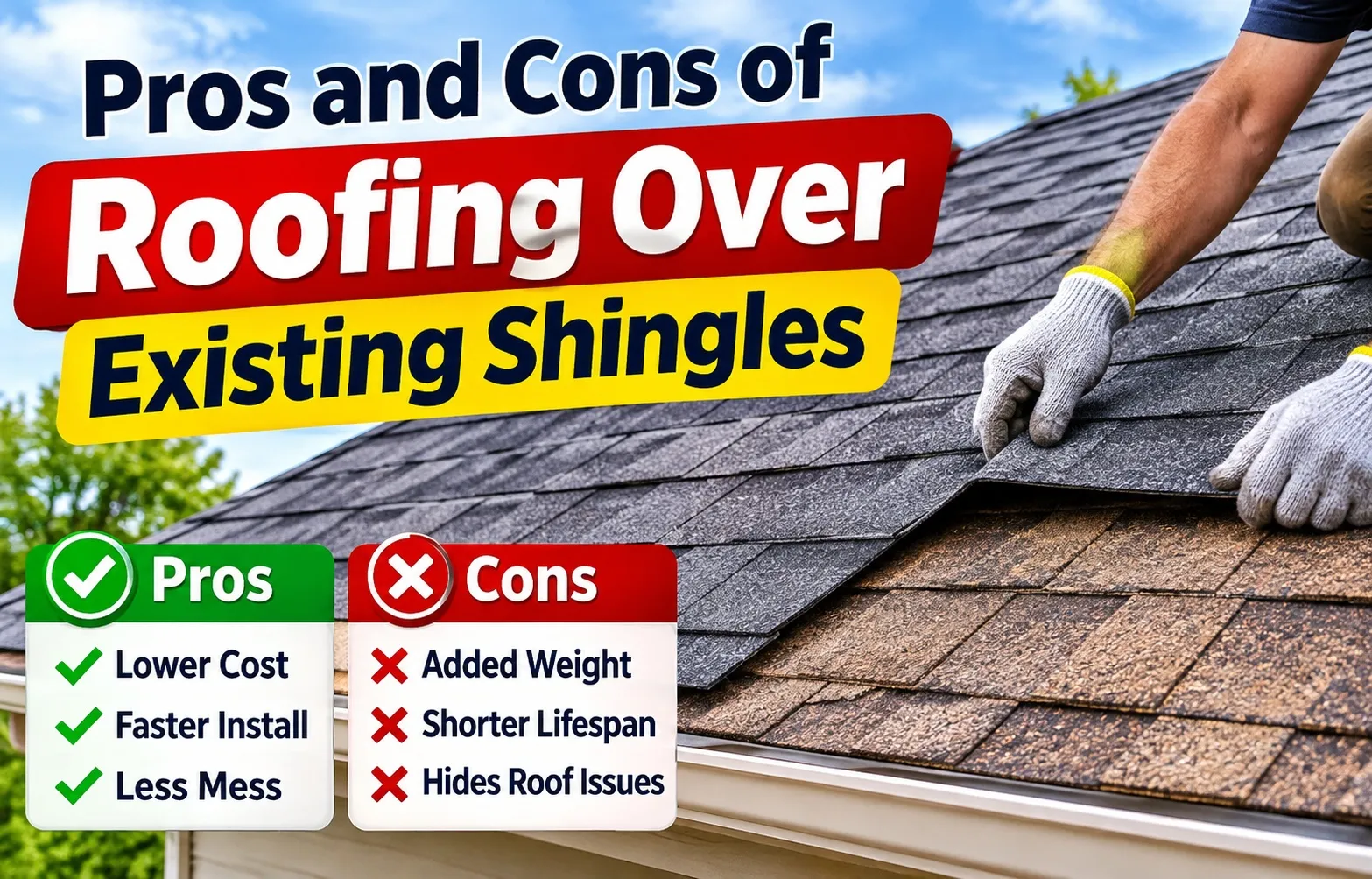 Roofing over existing shingles—commonly known as a roof overlay or recover—is a viable method to lower upfront installation costs, but it requires specific structural conditions to succeed. While laying new asphalt shingles directly over an old layer eliminates demolition labor and landfill fees, it hides underlying wood deck damage and accelerates thermal degradation.
Evaluating an overlay versus a complete tear-off comes down to balancing immediate cash savings against long-term roof performance, warranty protections, and building code compliance.
The 30-Second Summary: Roof Overlay vs. Complete Tear-Off
A roof overlay saves homeowners roughly 15% to 25% on initial project costs by skipping the labor-intensive tear-off stage. However, this process doubles the structural weight on your roof rafters, prevents visual inspection of the underlying plywood decking, and reduces the expected lifespan of the new shingles by 30% to 50% due to trapped heat.
By contrast, a complete tear-off removes all existing asphalt shingles down to the bare wooden deck. This allows roofers to repair rotted sheathing, install modern ice and water shields, and preserve full manufacturer warranties.
- Upfront Savings: Overlaying reduces immediate costs, while tear-offs require higher upfront investment for demolition and disposal.
- Roof Deck Inspection: Overlaying leaves hidden deck rot untouched; tear-offs ensure complete structural integrity verification.
- Longevity & Performance: New shingles laid over old ones typically last 7 to 15 years, whereas a complete replacement lasts 20 to 30+ years.
- Industry Standards: The Asphalt Roofing Manufacturers Association (ARMA) standards recommend a full tear-off whenever the existing layer shows severe curling, sagging, or moisture degradation.
Financials Upfront Savings vs. Long-Term Costs
Choosing a roof overlay over a complete tear-off immediately slashes initial project expenses by eliminating heavy demolition and hauling charges. However, evaluating the true economic impact requires analyzing long-term replacement cycles rather than just the initial contractor estimate.
Understanding roofing labor costs, disposal fees, and future removal penalties reveals whether an overlay delivers true return on investment (ROI) or simply defers a larger financial burden.
Upfront Cost Breakdown: Labor, Disposal, and Dumpster Fee Savings
An asphalt shingle overlay reduces immediate project costs by roughly 15% to 25% because crews bypass the arduous teardown phase entirely. Labor expenses drop sharply when workers do not have to pry up thousands of old nails, strip deteriorated shingles, and load them into bins.
Furthermore, avoiding a complete tear-off eliminates several fixed overhead fees associated with waste management and site cleanup:
- Dumpster Rental Fees: Multiple heavy-duty roll-off dumpsters are typically required to haul away tons of old roofing material, saving hundreds of dollars in rental costs.
- Landfill Disposal Fees: Municipalities and waste facilities charge weight-based tipping fees for asphalt shingle debris, which are completely avoided during an overlay.
- Cost Per Square Savings: Standard roofing measurements are calculated in squares (100 square feet), where labor and disposal savings compound quickly across large surface areas.
The Double Tear-Off Trap: Future Removal Costs Explained
While an overlay saves money today, it creates a heavy financial penalty when the roof eventually reaches the end of its shortened lifespan. Stripping a double layer of asphalt shingles requires twice the labor intensity and generates double the volume of heavy debris.
Future disposal costs escalate dramatically during a double tear-off due to specific industry and environmental factors:
- Doubled Landfill Tipping Fees: Hauling two complete layers of heavy asphalt shingles substantially increases municipal disposal tax weights.
- Extended Labor Hours: Specialized heavy-duty shovels and extra crew hours are mandatory to strip multi-layered nail bonds from the wooden decking.
- Deferred Maintenance Expenses: Saving money now by overlaying often results in paying for a complex, high-cost multi-layer removal sooner than anticipated.
2,000 Sq. Ft. Home Case Study: 10-Year Cost Comparison (Overlay vs. Tear-Off)
To understand the long-term financial impact, consider a standard residential roof replacement on a 2,000 to 2,200 square foot home. A full replacement with a tear-off might cost $12,000 upfront, whereas an overlay on the same home could reduce the initial invoice to $9,500—saving $2,500 today.
However, factoring in lifespan differences alters the long-term economic outlook significantly:
- Overlay Lifecycle: Trapped heat degrades new shingles prematurely, forcing a complete double-layer tear-off and total replacement within 10 years at a cost of $16,000.
- Full Tear-Off Lifecycle: Quality architectural shingles installed on a clean, inspected deck last 25 years without requiring premature intervention.
- The Long-Term Financial Net: The homeowner who chose the cheap overlay ends up paying significantly more over a 15-year window, while the tear-off investor enjoys uninterrupted protection and optimal ROI.
Detailed Pros of Roofing Over Existing Shingles
Opting for a roof overlay provides distinct financial and operational advantages under the right structural conditions. For homeowners working within tight budgets or strict timelines, placing new asphalt shingles directly over a sound single layer delivers immediate practical benefits.
Understanding these reroofing benefits helps homeowners determine whether a cost-effective roofing strategy aligns with their current property goals and short-term financial plans.
Lower Upfront Investment (15% to 25% Overall Savings)
The primary advantage of an asphalt shingle overlay is the immediate reduction in total project expenditure. By bypassing the labor-intensive tear-off process, contractors can pass significant cost savings directly to the property owner.
Key financial savings during an overlay project include:
- Reduced Demolition Labor: Roofing crews skip days of manual stripping, significantly lowering the overall billable labor hours.
- Zero Waste Hauling Charges: Skipping the removal phase eliminates expensive roll-off dumpster rentals and heavy debris transit costs.
- Lower Landfill Fees: Omitting old shingle disposal avoids weight-based municipal tipping fees at local waste management facilities.
Faster Installation and Minimal Home Disruption
A complete roof tear-off can turn a home into an active construction zone for several days. A roof overlay streamlines the installation timeline, allowing crews to complete the work in a fraction of the time required for a full replacement.
The operational efficiency of a fast roof installation provides noticeable advantages for residents:
- Same-Day Project Completion: Most residential overlays are completed within a single day, minimizing noise disruption for work-from-home homeowners.
- Less Noise Pollution: Skipping heavy-duty shingle scrapers and tear-off tools creates a quieter working environment overall.
- Streamlined Crew Management: Smaller installation teams can execute the job without staging extensive demolition equipment on the driveway.
Zero Landscape and Property Damage (No Debris Falling)
Standard roof replacements carry an inherent risk of falling debris damaging gutters, flower beds, outdoor furniture, or AC units. A debris-free installation protects your home’s exterior throughout the construction process.
Property protection benefits during an overlay include:
- Preserved Landscaping: Delicate shrubbery and flower beds remain safe from falling asphalt fragments and wooden splinters.
- No Stray Nails on Driveways: Eliminating old nail removal prevents stray fasteners from scattering across lawns or damaging vehicle tires.
- Effortless Job Site Clean-Up: Post-project cleanup is virtually non-existent, as crews handle only clean, incoming roofing materials.
Secondary Weather Barrier During Installation
During a traditional tear-off, the home’s interior is completely exposed to sudden rainstorms or harsh winds while the wood decking is bare. Leaving the original layer intact maintains an operational shield against unexpected weather events.
Secondary leak protection features include:
- Continuous Water Resistance: The old shingle layer acts as a temporary waterproof membrane while the new shingles are being nailed into place.
- No Exposure Risk: Sudden rain showers during installation will not penetrate into the attic space or ruin ceiling drywall.
- Thermal Shield Maintenance: The existing underlayment and shingle combination keeps the attic insulated against outdoor temperature spikes while work is underway.
The Hidden Cons & Long-Term Risks of Roof Overlays
Placing a second layer of shingles over an existing roof conceals critical structural vulnerabilities, accelerates material aging, and introduces heavy load strain. While upfront savings are attractive, long-term risks often outweigh short-term financial gains.
Evaluating these potential hazards helps homeowners understand why professional contractors often recommend a full tear-off over a quick overlay.
Concealed Wood Decking and Flashing Rot
Laying new shingles directly over an old roof prevents any inspection of the underlying wooden sheathing, ice and water shield, and metal flashing. This leaves existing plywood deck rot, soft spots, and active slow leaks completely hidden beneath the new protective surface, allowing moisture damage to spread unchecked.
Hidden structural deterioration poses severe risks to your home’s integrity:
- Unseen Flashing Failures: Aging metal flashing around chimneys, valleys, and vent pipes cannot be properly re-sealed or replaced during an overlay.
- Silent Sheathing Decay: Plywood deck rot continues to silently weaken roof support boards, eventually causing visible interior sagging.
- Trapped Moisture: Installing a new layer over damp wood seals in moisture, accelerating mold growth and framing rot.
Thermal Entrapment: How Heat Shortens Shingle Lifespan (7–10 Years vs 20+)
Adding a second shingle layer traps excessive thermal energy and humidity between the old and new layers. This thermal degradation cooks the asphalt oils out of the new shingles prematurely, slashing their expected multi-decade lifespan down to just 7 to 10 years.
The thermodynamics of double-layer roofing create accelerated wear patterns:
- Severe Heat Buildup: Trapped heat and humidity elevate roof surface temperatures significantly, baking the asphalt compound until it becomes brittle.
- Premature Shingle Failure: Thermal stress causes excessive curling, blistering, and rapid granule loss on newly installed architectural shingles.
- Lost Investment: Standard 25-to-30-year shingle warranties fail to deliver promised longevity when thermal entrapment destroys the material early.
Structural Weight Strain: Dead Load vs. Live Load Math
A standard square of asphalt shingles weighs approximately 250 pounds. Installing a second layer doubles this weight burden, adding over 500 pounds of static dead load per square onto the existing roof framing, rafters, and supporting walls.
Managing structural weight limits is critical for building safety:
- Safe Load Capacity: Roof load capacity must account for both dead loads (shingled framing) and live loads (heavy snow accumulation or wind forces).
- Excessive Rafter Strain: Extra weight places continuous stress on wooden rafters, causing structural sagging or ceiling drywall cracking over time.
- Building Code Limits: International building codes strictly restrict residential roofs to a maximum of two layers because a third layer exceeds safe structural weight engineering limits.
Voided or Restricted Shingle Manufacturer Warranties
Most major roofing material manufacturers explicitly state in their terms that installing their products over an existing layer voids the primary product warranty. Consequently, homeowners lose financial protection against premature cracking, blistering, or wind damage failure.
Understanding manufacturer policy restrictions is essential:
- Warranty Void Clauses: Manufacturers refuse coverage when heat entrapment and poor ventilation cause premature shingle decay on multi-layer roofs.
- Exclusion of Defect Protections: Material replacement guarantees do not apply if failure is attributed to improper installation over an existing shingle bed.
- Out-of-Pocket Liability: Homeowners must cover 100% of repair and replacement costs if manufacturing defects arise on an unapproved overlay roof.
Home Inspection Red Flags and Buyer Negotiation Roadblocks
Multi-layer roofs routinely trigger red flags during real estate home inspections, creating severe negotiation roadblocks when selling a property. Buyers and home inspectors immediately recognize double-layer roofs as an impending costly expense.
Real estate complications associated with double-layer roofs include:
- Inspection Demands: Home inspectors flag double layers, frequently requiring sellers to reduce their asking price or pay for an expensive double tear-off before closing.
- Transaction Delays: House sales face prolonged negotiations or cancellations when buyers demand a fully certified single-layer roof installation.
- Future Resale Penalties: Prospective buyers recognize that a double layer means they will face doubled disposal and labor costs during their own future ownership.
Technical Rules Shingle Compatibility & Building Codes
Executing a roof overlay requires strict adherence to trade specifications and local building codes. Layering incompatible shingle types or using improper fastening methods leads to immediate structural telegraphing, premature blow-offs, and building code violations.
Understanding shingle compatibility rules, International Building Code (IBC) mandates, and fastener specifications ensures your roof installation remains safe and structurally compliant.
Architectural vs. 3-Tab: What Can You Overlay?
Shingle profile geometry dictates whether an overlay will lay flat or distort over time. Installing heavy architectural shingles over old 3-tab shingles is allowable only when the existing 3-tab layer is completely flat, single-layered, and uncurled. The thicker, dimensional cuts of architectural shingles help mask the seams of the flat 3-tab surface beneath.
However, specific combinations are strictly prohibited by roofing contractors due to geometric misalignment:
- 3-Tab Over Architectural (Prohibited): You cannot install flat 3-tab shingles over dimensional architectural shingles. The uneven surface causes severe telegraphing, leaving gaps where wind-driven rain can penetrate.
- Architectural Over Architectural (Not Recommended): Layering dimensional shingles over dimensional shingles creates severe ridges and valleys, preventing proper nail seating and seal strip contact.
- Curling 3-Tab Base (Prohibited): Placing any new shingle profile over cupped, clawed, or curling 3-tab shingles causes the new upper layer to inherit those deformities within months.
The 2-Layer Maximum Limit: International Building Code (IBC) Rules
Building codes strictly govern the number of shingle layers permitted on residential structures. Under the International Building Code (IBC) and International Residential Code (IRC), a residential roof is restricted to a maximum of two layers of asphalt shingles.
Key regulatory compliance rules include:
- The 2-Layer Maximum Rule: If a roof already features two layers of shingles, a complete tear-off down to the wooden decking is legally mandatory before installing new roofing.
- The 25% Roofing Repair Rule: In many jurisdictions, if more than 25% of a roof section is damaged or requires repair within a 12-month period, the entire roof must be brought up to current code standards, often triggering a full replacement.
- Roof Pitch Requirements: Overlay installations require a minimum slope of 2:12 or 4:12 depending on manufacturer specs, ensuring water sheds properly over the thicker double profile.
Fastener Length & Nail Penetration Requirements for Double Layers
Standard roofing nails measure 1-1/4 inches, which is sufficient for securing a single layer of shingles and underlayment to the wooden sheathing. However, nailing through a double layer requires longer fasteners to guarantee structural deck grip against heavy wind uplift.
Proper mechanical fastening for a double-layer roof requires:
Failing to use extended nail lengths during an overlay invalidates installation standards and leaves the upper shingle layer highly vulnerable to severe blow-offs during storm conditions.
Brand Warranty Breakdown GAF, Owens Corning, CertainTeed
Generic claims about warranty coverage often mislead homeowners during a roof overlay decision. While major shingle manufacturers may not automatically void every material policy for a second-layer installation, they impose strict qualification criteria and heavy coverage exclusions that significantly restrict your financial protection.
Understanding how top brands like GAF, Owens Corning, and CertainTeed handle reroof applications helps clarify the critical distinction between a limited manufacturer defect coverage and a comprehensive contractor warranty.
GAF Layering Warranty Rules
GAF, manufacturer of the widely installed Timberline series, permits overlay installations under restricted terms, but alters the terms of their extended warranty programs. To maintain basic GAF Timberline warranty coverage over an existing roof layer, the underlying structure must meet stringent flatness and moisture guidelines.
Key GAF warranty limitations for overlay applications include:
- Ineligibility for System Plus & Golden Pledge Warranties: GAF’s top-tier, non-prorated system warranties require a complete tear-off down to the bare deck and the installation of all certified GAF accessory products (such as leak barriers and starter strips).
- Exclusion of Substrate-Related Failures: If new GAF shingles blister, crack, or fail due to heat trapped by the old layer or movement in an uninspected deck, the claim will be denied.
- Prerequisite Surface Conditions: Basic warranty protection remains valid only if the existing roof is a single layer of smooth, flat 3-tab shingles free of active leaks or structural deck deflection.
Owens Corning Overlay Coverage Limitations
Owens Corning allows its popular Duration series shingles to be installed over a single existing layer of asphalt shingles, provided the installation adheres strictly to their published technical bulletins. However, laying over old materials significantly limits the scope of their standard limited warranty protections.
Specific Owens Corning policy constraints on reroofs include:
- Thermal Degradation Exclusions: Owens Corning explicitly excludes material failures resulting from improper roof deck ventilation or extreme heat accumulation caused by secondary underlying shingle layers.
- SureNail Technology Wind Restrictions: While Owens Corning Duration shingles feature a patented SureNail fastening zone, maximum wind resistance warranty ratings are compromised if nails fail to achieve full, unyielding penetration into solid wooden sheathing through the extra layer.
- Accessory Protection Loss: Total Protection Roofing System warranties are unavailable for overlays because key component layers, such as specialized self-adhered ice and water shields, cannot be applied directly to bare wooden decking.
CertainTeed Wind and Material Warranty Restraints on Reroofs
CertainTeed manufactures high-performance architectural shingles such as the Landmark series. While CertainTeed accepts recover applications under specific structural conditions, their warranty documentation outlines significant restraints regarding wind speed coverage and manufacturing defect claims.
Essential CertainTeed warranty factors for overlay installations include:
Relying solely on a brand’s limited material warranty during an overlay leaves substantial gaps in coverage. A separate contractor warranty rarely covers the labor required to strip two full shingle layers if premature thermal failure or concealed deck rot occurs.
Step-by-Step Diagnostic – Is Your Roof Eligible for an Overlay?
Determine whether your roof can safely receive an overlay by conducting a systematic structural diagnostic. Skipping this inspection risks trapping moisture, overloading rafters, and failing local building code requirements.
A rigorous evaluation protects your investment and ensures your home meets the structural prerequisites for a successful shingle recovery.
The 5-Point Self-Inspection Checklist (Curling, Sagging, & Leaks)
Evaluating your roof’s physical condition requires a systematic inspection from both the ground and the attic space. Look for curling shingle edges, uneven roof decking, sagging rooflines, and active attic leaks before deciding on a roof overlay installation.
Review these critical failure points to determine if your roof is a candidate for a second layer:
- Curling Shingle Edges: Check if asphalt tabs are cupped, clawed, or brittle, which indicates severe granule loss and advanced material aging.
- Uneven Roof Decking: Scan roof planes for visible dips, waves, or warped plywood sheets that signal rotted underlying lumber.
- Sagging Roofline: Inspect the structural peak and eaves for any visible sinking, which reveals severe rafter strain or compromised roof framing.
- Active Attic Leaks: Enter the attic space during daylight or after heavy rain to check for water stains, damp insulation, or mold growth.
- Drip Edge Inspection: Examine perimeter metal flashings to ensure rainwater drains clear of the fascia and soffit without pooling or rotting wood.
How to Check Your Roof’s Current Layer Count
Confirming your roof’s current layer count is a mandatory safety step because building codes strictly prohibit a third layer of asphalt shingles. Inspecting exposed gable edges or rakes reveals the exact thickness of your existing roofing system.
Perform this simple layer verification process before hiring a contractor:
- Gable Edge Examination: Walk to the gable or rake edge of your home where the roof overhangs and examine the side profile of the shingles.
- Measure Layer Thickness: Count the visible steps in thickness; a single layer measures about 1/8 to 1/4 inch, while a double layer looks significantly thicker.
- Perform a Double Layer Check: Inspect around roof penetrations or peel back a rubber plumbing vent boot carefully to view the exact layer stack-up along the deck.
Professional Deck Soundness Testing
Professional contractors perform specialized deck soundness testing to ensure underlying plywood can support an overlay. Walking the roof surface reveals spongy or soft spots that require immediate sheet replacement before any reroofing begins.
Contractors utilize specific diagnostic methods to verify deck integrity:
- Foot-Traffic Deflection Test: Walking gently across the roof surface allows contractors to feel for bouncy, spongy, or yielding areas between underlying rafters.
- Probing Soft Wood: Technicians use an awl or nail probe around chimneys, valleys, and skylights to test for rotted, moisture-compromised sheathing.
- Attic Sheathing Assessment: Inspecting the underside of the plywood decking from inside the attic uncovers dark water staining, wood delamination, or softening fibers.
Frequently Asked Questions About Roof Overlays
Homeowners evaluating a roof overlay often encounter specific technical and regulatory questions regarding performance, insurance implications, and building codes. Addressing these common queries provides clear, actionable guidance for making an informed decision.
Here are direct, authoritative answers to the most frequently asked questions about layering shingles over an existing roof.
How long does a roof overlay last compared to a full replacement?
A roof overlay typically lasts 7 to 15 years, depending on attic ventilation, local climate conditions, and the condition of the base shingle layer. Trapped heat and humidity between the two layers accelerate thermal degradation, causing premature drying, blistering, and granule loss.
By comparison, a complete tear-off and replacement down to a clean, sound wood deck yields an expected roof overlay lifespan of 20 to 30+ years, allowing new architectural shingles to perform to their full manufacturer specification.
Is it cheaper to roof over existing shingles?
Yes, roofing over existing shingles is cheaper upfront, saving homeowners roughly 15% to 25% on initial project costs. This immediate savings comes from skipping the demolition phase, which eliminates tearing labor, roll-off dumpster rentals, waste hauling, and landfill tipping fees.
However, an overlay is often more expensive in the long run. When the roof eventually fails, you must pay for a doubled tear-off and disposal cost to remove both layers down to the bare decking.
Can you install metal roofing over existing asphalt shingles?
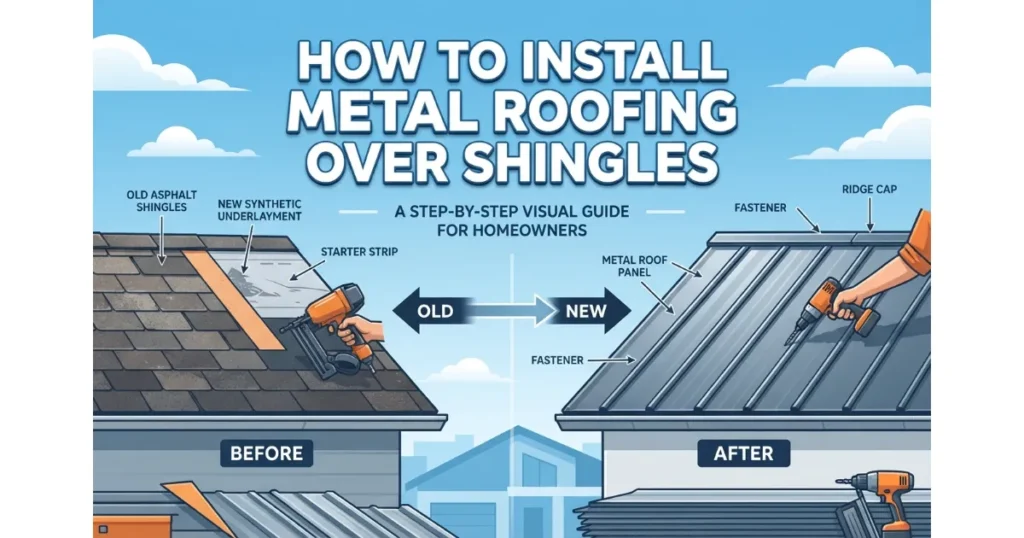
Yes, installing metal roofing over existing asphalt shingles is a common, effective practice when executed with proper furring strips and synthetic underlayment. Metal panels are significantly lighter than asphalt shingles, minimizing structural load concerns while creating a durable weather shield.
When installing a metal roof over shingles, contractors typically erect wood furring strips (battens) over the old layer to create a flat, ventilated air gap that prevents trapped moisture from corroding the back of the metal panels.
What is the 25% rule for roofing in building codes?
The 25 percent rule roofing mandate in many regional building codes requires that if more than 25% of a total roof area is damaged, torn off, or replaced within a 12-month period, the entire roofing system must be brought into compliance with current building code standards.
In practice, if a storm damages more than a quarter of an existing multi-layer or deteriorating roof, insurance claims and local building inspectors will often mandate a complete tear-off and full replacement rather than localized repairs or a partial overlay.
Why do home insurance companies dislike multi-layer roofing?
Home insurance companies view multi-layer roofing as a high-risk factor because hidden wood deck rot, soft spots, and compromised flashing cannot be inspected or verified without a full tear-off. Multi-layer roofs are also more prone to wind blow-offs and severe hail damage due to longer fasteners and uneven shingle seating.
During a home insurance roof inspection, policy underwriters may impose strict insurance coverage limits, increase annual premiums, or refuse to write a new policy entirely until the property owner completes a full tear-off replacement down to a single, certified layer.

Oscar Vance | Master Plumber & Drainage Expert
Meet Oscar Vance, a licensed master plumber sharing practical solutions on residential repairs, preventive maintenance, and thoughtful home upkeep.