What Does TPO Stand For in Roofing?
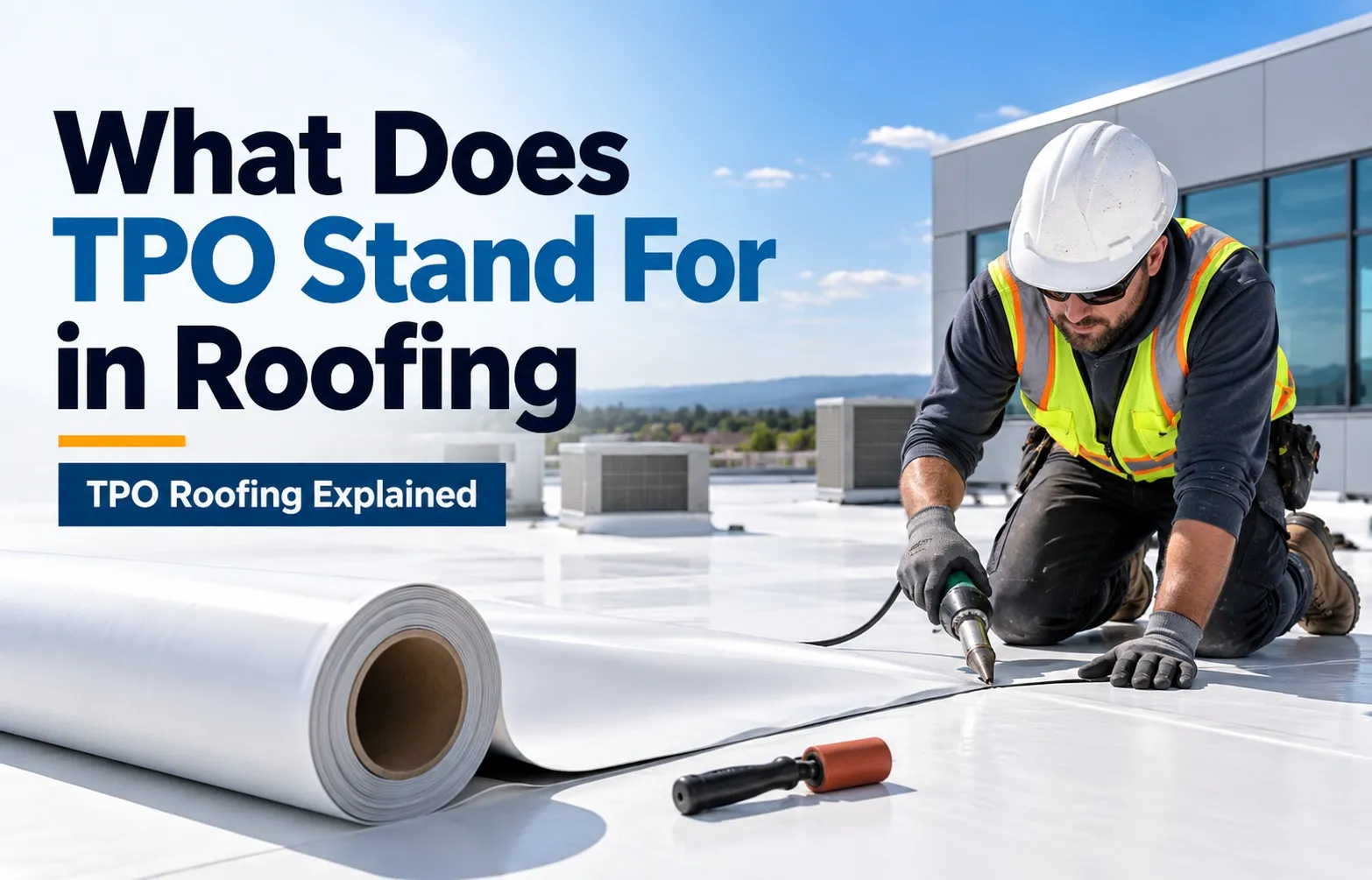 In the commercial and residential construction industries, TPO stands for Thermoplastic Polyolefin. It is a widely used single-ply membrane roofing material specifically engineered for flat roofs and low-slope roofing applications.
Synthetically manufactured by combining ethylene-propylene rubber with polypropylene, TPO provides exceptional resistance against ultraviolet light, chemical exposure, and mechanical punctures. Property owners and contractors frequently choose this material because it combines the flexibility of rubber with the heat-weldable durability of plastic.
TPO Roofing Meaning & Full Form Explained
The term Thermoplastic Polyolefin describes the polymer blend that gives this single-ply membrane its unique performance characteristics:
- Thermoplastic: Refers to the material’s ability to become soft and pliable when heated, and solidify when cooled. This allows seams to be melted and fused together using hot-air welding techniques to create a continuous watertight bond.
- Polyolefin: Refers to the underlying family of polymers—specifically a blend of polypropylene (a rigid thermoplastic polymer) and ethylene-propylene rubber (an elastomeric compound).
Unlike traditional built-up roofs (BUR) or modified bitumen that rely on hot asphalt or adhesives at the seams, TPO rolls are rolled out and heat-welded along the overlap areas. As a certified GAF TPO single-ply membrane system demonstrates, this heat-welding process creates seam strength that exceeds the tear resistance of the membrane itself.
Additionally, TPO functions as an industry-standard “cool roof” option. Because it is naturally manufactured in white, tan, or light gray shades, it reflects thermal solar radiation away from the building rather than absorbing heat, significantly lowering summer HVAC and cooling utility costs.
Quick Snapshot: TPO Roofing Specs at a Glance
To help you evaluate if this membrane fits your structural requirements, the core performance specifications are summarized below:
What is TPO Roofing Made Of?
TPO roofing membranes derive their structural resilience and durability from a sophisticated three-ply composite design engineered to withstand extreme weathering, thermal stress, and ultraviolet radiation. Understanding this multi-layer composition helps distinguish high-performance single-ply systems from lower-grade alternatives.
The 3 Core Layers of a TPO Membrane
A standard thermoplastic polyolefin sheet is manufactured by calendering and laminating three distinct functional layers into a single cohesive membrane:
- Top Weathering Layer: The uppermost compound blended with specialized UV stabilizers and fire retardants to reflect solar radiation, resist chemical exposure, and prevent premature cracking.
- Polyester Reinforcement Scrim: A high-density fabric mesh (polyester reinforcement scrim) sandwiched between the top and bottom plies, providing exceptional tensile strength and dimensional stability against wind uplift.
- Bottom Base Layer: A flexible lower compound optimized to withstand sub-roof moisture and ensure a uniform surface during hot-air heat-welded seams installation.
Thickness Matters: 45-Mil vs. 60-Mil vs. 80-Mil TPO
Membrane thickness is the primary determinant of long-term durability, puncture resistance, and warranty duration. Choosing the correct gauge is critical for building performance:
- 45-Mil TPO: The thinnest standard grade, generally suited for lightweight or low-budget applications with minimal rooftop traffic.
- 60-Mil TPO: The industry standard for commercial buildings, offering a balanced combination of flexibility, puncture resistance, and a 20- to 25-year lifespan.
- 80-Mil TPO: A heavy-duty membrane engineered for extreme weather regions, severe hail zones, or commercial roofs requiring frequent maintenance foot traffic.
Substrates & Decking: Can You Install TPO Directly on Plywood or OSB?
Preparing the roof deck correctly before membrane installation is essential for structural stability, long-term adhesion, and manufacturer warranty coverage. Many premature single-ply roof failures stem directly from improper substrate preparation or installing TPO over incompatible deck material.
Can TPO Go Directly on Plywood or OSB?
While bonding adhesive can technically adhere a TPO membrane directly to smooth plywood or OSB, manufacturers generally recommend against applying TPO straight onto bare wood sheathing.
Direct installation onto a wood roof deck introduces several distinct risks:
- Substrate Imperfections & Telegraphing: Knots, uneven panel joints, and exposed fastener heads telegraph directly through the thin membrane, creating friction points that cause tears or premature wear.
- Moisture & Off-Gassing Issues: Bare wood sheathing retains atmospheric moisture. Trapped moisture under a fully adhered TPO membrane creates vapor pressure, causing blistering, air pockets, and adhesive failure.
- Thermal Performance & Code Requirements: Most commercial building codes require a thermal barrier or rigid insulation board—such as high-density polyisocyanurate (HD ISO cover board)—between the wood deck and the TPO membrane to enhance fire resistance and thermal insulation.
7/16 OSB vs. 1/2 or 3/4 Plywood for Roof Sheathing
Choosing the right sheathing material directly impacts fastener holding power, roof rigidity, and resistance to sagging over time.
Do You Glue Down or Mechanically Fasten TPO Roofing?
TPO roofing systems are attached using three primary attachment methods, depending on slope, wind load requirements, and budget constraints:
- Fully Adhered Systems (Glued Down): The membrane is bonded to the cover board using specialized liquid bonding adhesive or solvent-based contact cement. This provides a clean aesthetic, maximum wind uplift resistance, and eliminates billowing.
- Mechanically Fastened Systems: Fasteners and heavy-duty stress plates are screwed into the roof deck along the membrane edge before the next sheet overlaps and heat-welds over them. This is the fastest, most economical method for large commercial roofs.
- Ballasted Systems: The single-ply membrane is laid loose over insulation boards and held in place by washed river rock or concrete pavers. While cost-effective, ballasted systems add significant dead weight to the roof structure.
Pros and Cons of TPO Roofing Systems
Evaluating a thermoplastic polyolefin roofing system requires weighing its economic and energy performance against real-world installation vulnerabilities. While commercial property owners frequently choose TPO for its cost-effectiveness, understanding common field failures ensures long-term roof integrity.
Top Advantages of TPO Roofing
TPO roofing delivers exceptional cost-efficiency and high energy efficiency, making it a leading choice for commercial flat roofs. Its reflective white surface drastically lowers interior cooling loads, while heat-welded seams provide robust watertight protection against moisture infiltration.
- Exceptional Energy Efficiency: High solar reflectance index (SRI) ratings reflect solar radiation away from the building, significantly reducing summer HVAC electricity consumption and cooling utility costs.
- Strong Chemical Resistance: The membrane withstands exposure to animal fats, greases, industrial pollutants, and common rooftop chemicals without breaking down.
- Cost-Effective Installation: Compared to EPDM or PVC systems, TPO offers a lower price per square foot while maintaining a sleek, modern commercial appearance.
Hidden Downsides and Common Failure Points
Despite its widespread popularity, TPO systems carry notable hidden risks, including potential seam failure from improper hot-air welding and thermal expansion stresses. Real-world field reports highlight that low-tier membranes can experience premature UV degradation, chalking, and vulnerability to severe weather punctures.
- Thermal Expansion and Contraction: Extreme daily temperature swings cause the membrane to expand and contract, placing continuous physical stress on perimeter flashings and joints.
- Hot-Air Seam Welding Risks: Seam integrity relies entirely on the contractor’s precision. Incorrect welder temperatures or inadequate pressure lead to hidden voids and eventual seam failure.
- Top Coat Chalking and UV Degradation: Lower-grade budget membranes can suffer from premature surface chalking as the protective weathering layer erodes under intense solar exposure, escalating long-term maintenance costs.
TPO vs. EPDM vs. PVC Roofing Membranes
When selecting a single-ply commercial or residential flat roof system, comparing TPO against alternative membranes—such as EPDM rubber and PVC—is essential for balancing upfront costs, weather performance, and maintenance requirements.
Single-Ply Comparison: TPO vs. EPDM Rubber vs. PVC
Each single-ply roofing material belongs to a distinct chemical family, which directly influences its installation method, heat reflectivity, and resistance to environmental stressors:
- TPO (Thermoplastic Polyolefin): A thermoplastic blend offering heat-welded seams and high solar reflectivity at a competitive price point, making it the fastest-growing commercial flat roof option.
- EPDM (Ethylene Propylene Diene Termonomer): A traditional thermoset synthetic rubber membrane known for extreme durability, black or white aesthetic options, and installation via tape or adhesive seams rather than hot-air welding.
- PVC (Polyvinyl Chloride): A premium thermoplastic membrane that has been proven over decades, featuring exceptional chemical resistance against grease, fats, and oils, though typically at a higher initial material cost.
Comparison Matrix: Cost Lifespan and Performance Table
Review the comparative performance breakdown below to evaluate how TPO stacks up against EPDM and PVC across major decision metrics:
Lifespan Maintenance and Essential Roofing Rules
Maximizing your return on investment for a single-ply roof requires knowing how long the material lasts, following proactive maintenance routines, and adhering to local building codes during major repairs or replacements.
How Long Does a TPO Roof Really Last?
The average TPO lifespan ranges between 15 and 30 years, depending primarily on membrane thickness, environmental exposure, and routine care:
- 45-Mil Membrane: Typically lasts 15 to 20 years with low foot traffic and consistent maintenance.
- 60-Mil Membrane: Offers a dependable 20 to 25 years of service life under standard commercial conditions.
- 80-Mil Membrane: Provides maximum longevity, lasting 25 to 30 years even under severe weather and heavy rooftop usage.
What is the 25% Rule in Roofing?
The roof replacement 25 percent rule is a building code standard (found in the International Existing Building Code and adopted across many local jurisdictions) that regulates roof repair vs replacement decisions:
- Scope Threshold: If more than 25 percent of a total roof system or roof section is damaged, repaired, or replaced within a 12-month period, the entire roof section must be brought up to current building codes.
- Compliance Impact: For property owners, repairing over 25 percent of a damaged single-ply membrane triggers a mandatory full tear-off and replacement, ensuring the full structure meets modern insulation and fire-resistance standards.
Routine Preventive Maintenance Checklist for Flat Roofs
Conducting a regular inspection at least twice a year—ideally in spring and autumn—prevents minor defects from turning into costly water intrusion issues:
- Eliminate Ponding Water: Ensure drains, scuppers, and gutters are clear so standing water dissipates within 48 hours to prevent seam degradation.
- Inspect Heat-Welded Seams: Probe perimeter flashings, pipe boots, and membrane overlaps for splits, punctures, or seam lifting.
- Clear Rooftop Debris: Remove organic matter, twigs, and sharp metallic objects that could puncture the weathering surface during heavy wind events.
Frequently Asked Questions About TPO Roofing
Addressing common long-tail queries helps clarify essential operational details regarding single-ply thermoplastic systems, maintenance expectations, and material selection for low-slope roof structures.
What is another name for TPO roofing?
TPO roofing is frequently referred to as a thermoplastic membrane or a single-ply white membrane roof. Within commercial construction, it is also broadly classified under single-ply flexible polyolefin systems or reflective cool roof membranes.
Can you walk on a TPO roof?
Yes, you can walk on a TPO roof, but routine foot traffic should be strictly controlled to prevent accidental membrane punctures or surface damage. For high-traffic service areas around HVAC units, solar arrays, or maintenance hatches, contractors install heavy-duty textured walk pads to provide enhanced slip resistance and dedicated foot traffic protection.
Is TPO better than metal roofing for flat roofs?
TPO is generally considered a superior option for completely flat or very low-slope roofs because its heat-welded seams create a continuous, monolithic watertight barrier. While metal roofing systems excel on pitched slopes, standing seam metal on low-slope applications carries a higher risk of water pooling and joint leaks over time, making single-ply TPO one of the most reliable flat roof solutions available.

Home Improvement Researchers & Guides Editors
Meet the Nest Team, a collective of dedicated researchers, home improvement enthusiasts, and industry writers sharing practical guides, thorough category research, and trusted solutions for residential repairs and thoughtful home upkeep.