How Much Does a Plumber Cost?
The national average plumber cost ranges from $45 to $200 per hour, with standard residential services averaging around $90 per hour. Most plumbing companies also charge a separate service call fee or trip charge of $50 to $100 just to visit your home and diagnose the issue. Total project expenses depend heavily on whether the professional uses an hourly billing structure or provides a flat-rate quote for standardized repairs.
Range Summary Hourly + Flat Rate + Service Call
Understanding how professionals package their pricing structure helps prevent unexpected billing surprises. Plumbers typically apply one of three pricing frameworks depending on the nature of the plumbing issue:
- Hourly Rate Structures: Billed between $45 and $200 per hour, this method is standard for diagnostic work and complex troubleshooting. Master plumbers or specialists command the higher end of this spectrum.
- Flat-Rate Pricing: Ranging from $100 to $400, flat rates are common for predictable fixes like unclogging a drain or installing a new garbage disposal. You pay a fixed project fee regardless of how long the task takes.
- Service Call Fees: Ranging from $50 to $100, this baseline fee compensates the technician for travel and arrival. Some companies waive this charge if you authorize them to perform the recommended repairs.
How Much Does a Plumber Charge Per Hour? Full Breakdown
Plumbing hourly rates typically span from $45 to $200 per hour, varying significantly based on geographic region, emergency status, and professional expertise level. The overall labor cost reflects a structured pricing system tied directly to a technician’s professional licensure and years of hands-on field experience.
Apprentice Plumber Rate
Apprentice plumbers charge the lowest hourly rate, generally ranging from $25 to $50 per hour [00:00:00]. These individuals are undergoing formal training and must operate strictly under the direct supervision of a licensed senior technician.
- Cost Advantage: Ideal for budget-conscious minor installations or basic assistance tasks.
- Supervision Factor: Always backed by an experienced contractor to ensure safety and code compliance.
Journeyman Plumber Rate
Journeyman plumbers command an intermediate rate of $50 to $100 per hour. Having completed their apprenticeship and passed formal licensing examinations, they are fully qualified to work independently on residential systems.
- Independent Execution: Capable of diagnosing leaks, repairing fixtures, and handling standard pipe configurations on their own.
- Value Balance: Provides a reliable middle-ground balance of experienced workmanship and competitive hourly pricing.
Master Plumber Rate
Master plumbers charge the highest hourly rate, averaging $100 to $200+ per hour (with top-tier specialized or emergency services reaching up to $125+ per hour for baseline labor components) [00:00:07]. They possess extensive industry experience and frequently oversee complex commercial or custom residential projects.
- Expert Troubleshooting: Highly recommended for intricate system layouts, major renovations, or complicated diagnostics.
- Business Oversight: Often own or operate their own contracting businesses, which factors into their premium hourly billing rate [00:00:37].
How Plumbers Calculate Their Hourly Rate labor + overhead + tools
A professional plumber’s hourly fee is not pure profit; it is carefully calculated to sustain a licensed trade operation. Contractor pricing structures incorporate multiple distinct business components:
- Direct Labor Costs: Wages paid to the technician accounting for their specialized training, certifications, and skill level [00:00:15].
- Operational Overhead: Insurance policies, vehicle fleet maintenance, fuel expenses, licensing fees, and continuous education requirements.
- Specialized Tools & Equipment: Amortized costs for heavy-duty diagnostic gear, electronic leak detectors, hydro-jetters, and professional-grade plumbing machinery.
Flat Rate vs Hourly Rate Pricing Which One Costs You More?
Choosing between flat-rate pricing and hourly billing directly impacts the final total on your plumbing invoice. Flat-rate pricing offers predictable upfront costs for standardized jobs, whereas hourly billing charges you dynamically for the exact time a technician spends resolving your issue.
What Is Flat Rate Plumbing Pricing?
Flat-rate pricing is a fixed price quote provided before any work begins, regardless of how long the physical repair actually takes. Plumbers use industry standardization data to estimate the average time, skill, and material requirements for specific tasks like installing a faucet or clearing a mainline clog.
- Cost Certainty: Homeowners know the exact total expense upfront, eliminating the anxiety of a ticking clock.
- Efficiency Incentive: Plumbers price tasks based on standard completion times, meaning faster work does not reduce your bill, but unexpected complications won’t increase it either.
What Is Hourly Rate Plumbing Pricing?
Hourly pricing charges you a baseline rate for every hour or fraction thereof that the plumber spends on your property. This model is predominantly reserved for diagnostics, complex troubleshooting, and custom layout installations where the scope cannot be accurately predicted in advance.
- Flexible Adaptation: Ideal for ambiguous problems where the root cause is hidden behind walls or beneath concrete slabs.
- Variable Risk: If a minor repair turns into a multi-hour ordeal due to corroded fittings or unexpected complications, your total labor costs scale upward rapidly.
Flat Rate vs Hourly Side by Side Comparison Table
Which Pricing Model Should You Choose?
Selecting the right pricing structure depends heavily on the scope and predictability of your plumbing project. Matching your repair type to the appropriate billing framework ensures fair compensation for the contractor while protecting your household budget.
- Opt for Flat Rate When: You need a straightforward replacement, standard fixture installation, or predictable drain clearing where the task boundaries are clear.
- Opt for Hourly When: You are dealing with mysterious leaks, intermittent system failures, or custom remodeling that requires ongoing troubleshooting and diagnostic exploration.
Plumber Service Call Fee & Call Out Charges Explained
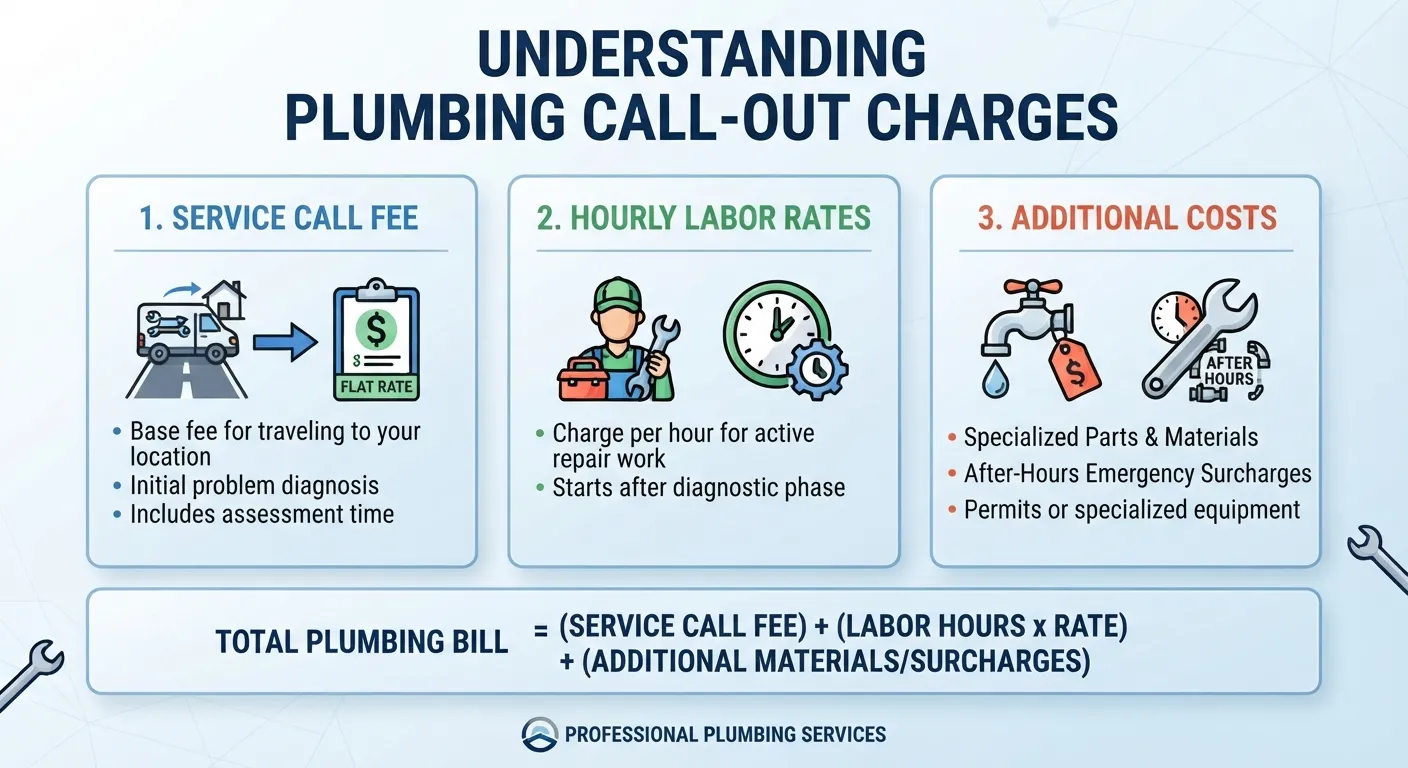
A service call fee is a baseline charge applied by plumbing contractors simply to visit your property, inspect the issue, and provide an initial diagnosis. This fee is completely separate from hourly labor or hardware costs, accounting for technician travel time and preliminary diagnostic assessment.
What Is a Service Call Fee?
The service call fee—often referred to as a trip charge or diagnostic fee—covers the operational overhead of dispatching a mobile service vehicle to your location. During this initial visit, the plumber assesses the problem to determine the necessary repairs and formulate a project estimate.
- Travel & Logistics: Compensates the technician for fuel, driving time, and vehicle wear-and-tear.
- Initial Diagnosis: Involves troubleshooting system components using specialized gear before actual repair work begins.
Average Call-Out Charge Range
Plumber service call fees typically range from $50 to $100 for standard business hours. However, this baseline pricing varies depending on several key regional and operational factors:
- Geographic Location: Urban areas with heavy traffic or high cost-of-living metrics often feature trip charges pushing toward $150.
- Urgency & Timing: Emergency dispatch calls requested late at night, on weekends, or during holidays frequently double the standard service call baseline.
Is the Service Fee Applied to Final Labor Cost?
Many plumbing companies credit the service call fee toward the final labor total if you choose to move forward with their repair quote. However, this is not an industry-wide standard policy.
- Credited Option: Some contractors deduct the trip fee from your invoice as an incentive for securing your repair business.
- Non-Refundable Option: Other companies treat the service fee strictly as a separate diagnostic charge, meaning you must pay it even if you decline the repair estimate. Always clarify this policy upfront before booking.
Emergency & After Hours Plumber Rates
Emergency plumber rates range from $150 to $300+ per hour, frequently running 1.5 to 3 times higher than standard weekday service fees. When plumbing failures happen outside normal business hours, homeowners face steep surcharges to secure immediate professional intervention.
Weekend, Night & Holiday Rate Multipliers
Plumbing companies enforce strict scheduling boundaries to separate standard operations from emergency dispatches. Service requested outside designated operating hours triggers special rate structures:
- Night & Evening Calls: Requests made late at night typically incur hourly markups or flat emergency dispatch fees.
- Weekend & Holiday Shifts: Saturday, Sunday, and statutory holiday appointments command premium multipliers because technicians must work overtime shifts.
Why Emergency Rates Are 1.5x–3x Higher
The elevated cost of emergency plumbing is driven by the logistical and operational challenges of after-hours dispatching. Contractors factor multiple risk and resource variables into emergency pricing:
- Overtime Labor Compensation: Plumbers working unsocial hours must be paid premium overtime wages to incentivize immediate availability.
- Disrupted Operations: Mobilizing a team, opening supply houses, and deploying emergency repair vehicles outside regular schedules involves high overhead.
When It’s Worth Paying Emergency Rates
Not every plumbing issue warrants paying triple-digit hourly surcharges. Homeowners must evaluate whether waiting until normal business hours will cause catastrophic property damage or health hazards:
- Call Immediately For: Major pipe bursts, active sewage backups, overflowing toilets that cannot be shut off, or total loss of water supply.
- Wait Until Regular Hours For: Slow-draining sinks, minor cosmetic leaks, dripping faucets, or running toilets where the shut-off valve can be safely closed.
Average Cost for Common Plumbing Repairs
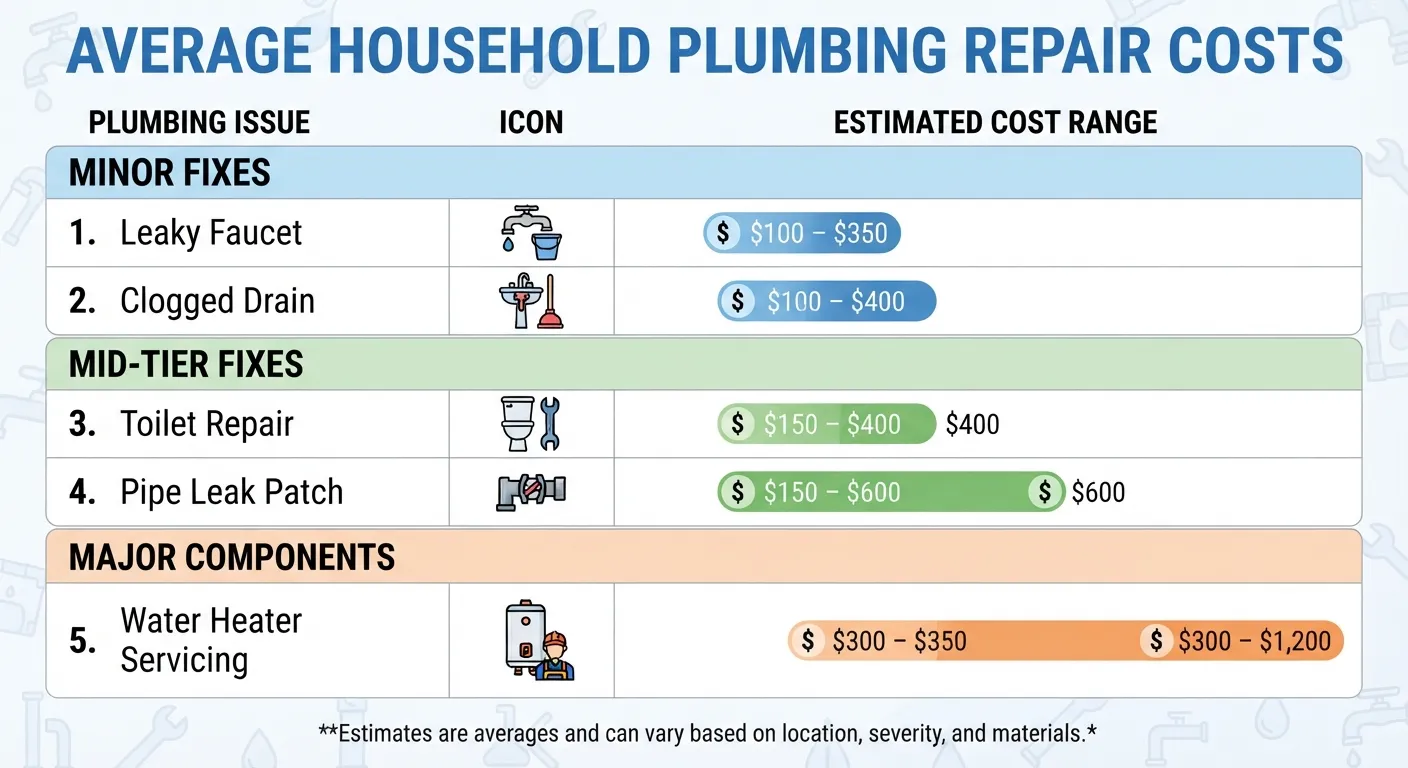
Plumbing repair costs vary widely depending on the specific fixture, complexity, and labor time required. Understanding task-based pricing helps homeowners evaluate contractor quotes accurately and budget effectively for minor household repairs.
Clogged Drain or Toilet Cost
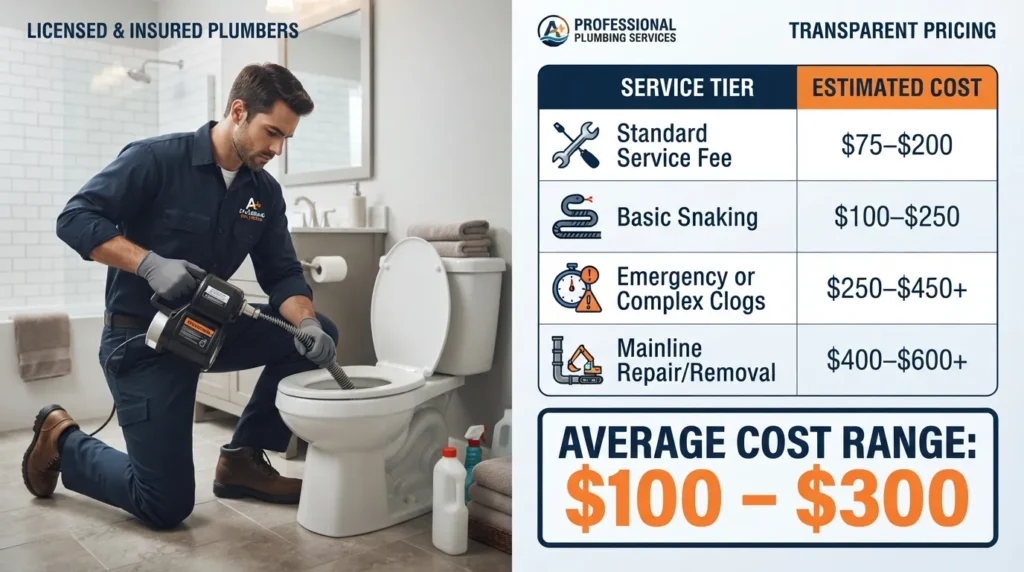
Clearing a standard clogged drain or overflowing toilet typically costs between $100 and $250. Simple blockages resolved quickly with a manual auger stay on the lower end, while stubborn mainline clogs requiring professional hydro-jetting cost significantly more.
- Standard Sink or Tub Clog: $100 – $200 for basic snake clearing.
- Main Sewer Line Clearing: $250 – $600+ depending on tree root intrusion or heavy sludge buildup.
Leaking Faucet Pipe Repair Cost
Fixing a leaking faucet or repairing a localized pipe leak ranges from $125 to $350. Surface-level joint leaks are fast to correct, whereas leaks hidden behind drywall or concrete slabs require costly access work [1.1.1].
- Visible Joint or Faucet Leak: $125 – $250 for washer replacement or cartridge swaps.
- Hidden Pipe Repair: $300 – $800+ due to structural cutting and surface restoration.
Toilet Installation or Replacement Cost
Replacing an existing toilet or installing a new unit averages $220 to $500 for total labor and standard hardware. This includes removing the old fixture, replacing the wax ring, and securing the new bowl.
- Labor Only: $150 – $350 depending on floor flange repairs.
- Total Project (Including Toilet Unit): $300 – $900+.
Water Heater Repair/Replacement Cost
Water heater repairs range from $150 to $500 for components like thermostats or heating elements, while total unit replacement runs $1,000 to $3,500. Gas and tankless systems generally command higher installation costs than standard electric tank models.
Bathroom Sink Replacement Cost
Replacing a bathroom sink basin and its associated p-trap assembly costs between $200 and $600. Vanity top replacements or complex stone countertop integrations can increase total expenses.
Kitchen Faucet Replacement Cost
Installing a new kitchen faucet ranges from $150 to $350. Pull-down sprayer faucets and commercial-grade touchless models take slightly longer to install due to under-sink weight adjustments and electronic connections.
Thermocouple Replacement Cost
Replacing a faulty gas water heater thermocouple costs between $150 and $250. Because the part itself is inexpensive, the total expense reflects the diagnostic time and safety testing required for gas appliances.
Push-Down Loo Handle Replacement Cost
Replacing a broken push-down toilet flush handle or lever is an affordable minor fix, typically costing $75 to $150 including parts. If you hire a plumber for this specific task, expect to pay their minimum service visit fee since the physical replacement takes under ten minutes.
Burst Pipe Repair Cost
Repairing a catastrophic burst pipe ranges from $350 to $1,500+ depending on the pipe material, location, and water damage extent. Emergency dispatch surcharges often apply if the pipe bursts during freezing winter conditions or after regular business hours.
Why Plumbers Charge More Than They Earn The Wage vs Price Truth
Homeowners often experience sticker shock when billed a high hourly or project rate, wondering why the quoted cost feels so disconnected from a standard trade worker’s paycheck. According to data from the U.S. Bureau of Labor Statistics, the median hourly wage for plumbers hovers around $30 per hour, yet companies typically bill clients between $90 and $200 per hour. This financial gap is not pure profit; it reflects the complex economics of running a licensed service business.
Insurance, Licensing, Tools & Van Costs
A plumber’s bill must sustain an entire operational infrastructure before a single dollar of personal income is realized. Maintaining a professional trade business involves substantial recurring overhead expenses:
- Commercial Insurance: General liability and bonding policies protect homeowners against property damage but cost thousands annually.
- Vehicle Fleet & Fuel: Service vans equipped with specialized shelving, ladders, and parts inventory require high monthly maintenance and fuel outlays.
- Licenses & Certifications: Master licenses, gas fitting credentials, and continuous safety training require ongoing state fees and testing costs.
Non-Billable Admin Time Explained
Plumbers do not get paid for every hour of their workday. A significant portion of a contractor’s week is spent on unpaid administrative tasks essential to keeping their business functional:
- Travel & Logistics: Driving between dispersed service calls across a metro area is entirely unbillable time.
- Estimates & Procurement: Visiting homes for free consultations, sourcing specialized parts at supply houses, and writing proposals generate zero direct revenue.
Taxes & Business Expenses Breakdown
Unlike traditional W-2 employees who receive corporate benefits, independent contractors and business owners carry the full financial burden of self-employment:
- Self-Employment Taxes: Contractors must pay double the Social Security and Medicare tax contributions compared to standard employees.
- Unpaid Leave: Plumbers receive no paid sick days, holiday leave, or employer-sponsored health insurance benefits; every day off is lost income.
Real Example Where Does the Money Actually Go?
When a customer pays a $200 service charge, only a fraction makes its way into the technician’s personal bank account. The breakdown illustrates how revenue is distributed across a working week:
- Direct Labor & Wages: Covers the technician’s take-home pay and worker’s compensation.
- Overhead Allocation: Absorbs van financing, tool amortization, fuel, and software subscriptions.
- Safety Net Reserve: Funds liability protection, taxes, and unexpected warranty callbacks for previous repairs.
Plumber Hourly Rate by State Including Michigan
Plumber hourly rates vary substantially depending on geographic location, state-specific licensing requirements, and local cost-of-living metrics. While national averages provide a useful baseline, regional economics dictate whether a plumbing project leans toward the higher or lower end of the pricing spectrum.
Plumber Rates by State Comparison Table Top 10 States
Plumber Hourly Rate in Michigan
In Michigan, professional plumbing contractors typically charge between $75 and $150 per hour for standard residential service calls. Rates tend to lean toward the higher end of that spectrum in major metropolitan hubs like Metro Detroit or Grand Rapids due to increased local operating expenses.
Is $30 an Hour a Good Plumber Wage in Michigan?
An hourly wage of $30 is competitive for a mid-level employee plumber or technician working in Michigan, aligning closely with state median wages for skilled trades. However, this figure represents the worker’s take-home pay rather than what a plumbing company charges customers, as business overhead accounts for the remaining balance.
Why Rates Vary by Location Cost of Living Demand Licensing
Plumbing prices fluctuate widely across different states and municipalities based on specific macroeconomic factors:
- Cost of Living: Regions with expensive real estate, high fuel taxes, and elevated commercial lease rates require higher service pricing to remain profitable.
- State Licensing Laws: States with rigorous continuing education, multi-tiered testing, and strict bonding mandates have fewer active contractors, driving up market rates.
- Climate Demands: Areas prone to freezing winter temperatures experience seasonal surges in emergency pipe burst repairs, which can temporarily elevate local service pricing.
What Is the 135 Rule for Plumbing?
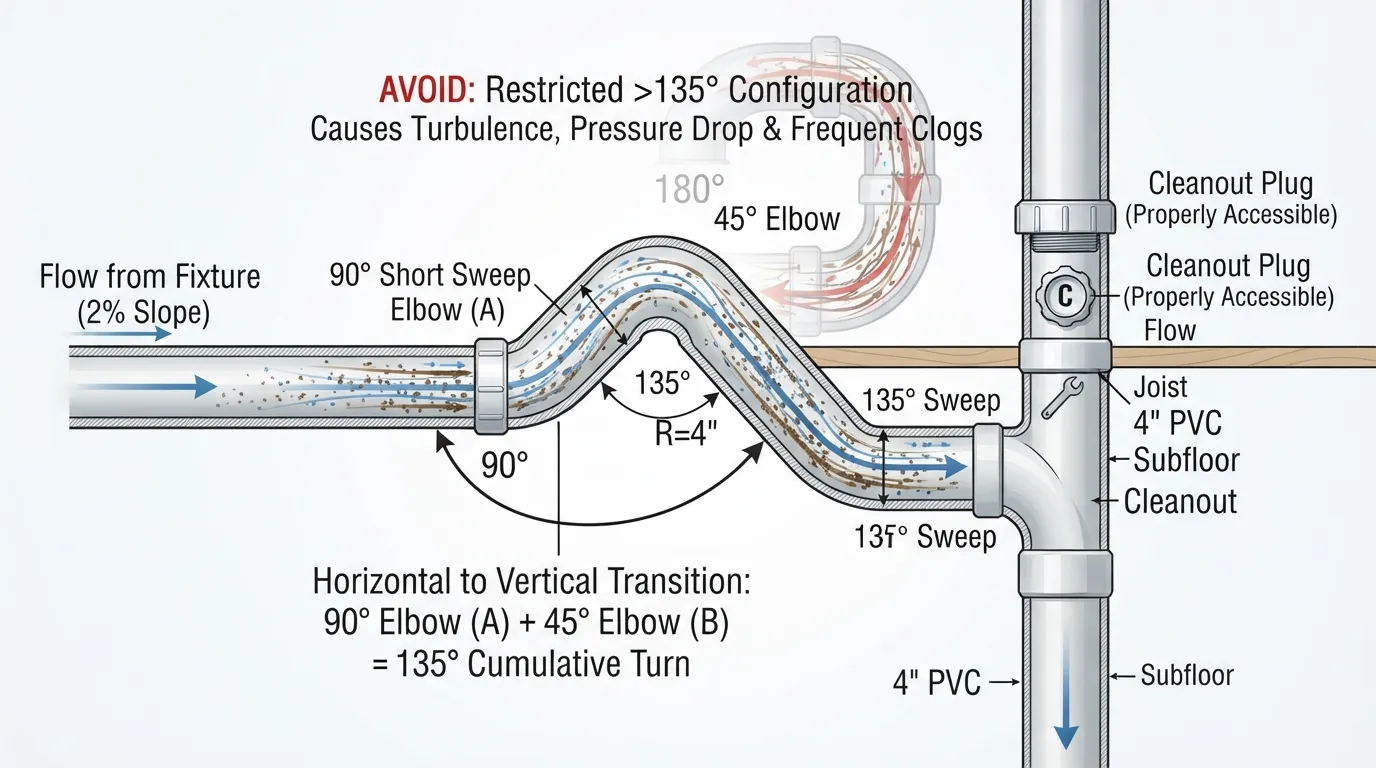
The 135 rule for plumbing is a standardized estimating and pricing heuristic used by trade professionals to calculate fair service charges by balancing labor time, material costs, and business overhead. It provides a structured framework to ensure that every repair job covers all operational expenses while remaining profitable.
Definition of the 135 Rule
In contractor estimating terminology, the 135 rule acts as a quick multiplier benchmark for scaling base service costs. While specific application methods vary by contracting company, it fundamentally ties together baseline dispatch fees, hourly labor increments, and material markups into a simplified mathematical formula.
- Cost Scaling: Helps contractors evaluate whether a complex multi-stage repair requires a flat-rate multiplier or traditional hourly billing.
- Transparency Benchmark: Gives plumbing estimators a reliable rule of thumb to keep client quotes competitive yet sustainable.
How It’s Used in Pricing Estimating
Plumbing estimators use pricing heuristics like the 135 rule to quickly evaluate project bids without underquoting complex labor requirements. When a customer requests an estimate over the phone or during an initial inspection, the rule helps structure the quote components:
- Baseline Separation: Separates immediate travel and diagnostic overhead from active repair time.
- Material Markup: Factors in parts handling, sourcing time, and warranty guarantees for installed plumbing fixtures.
Example Calculation
Consider a standard fixture replacement where parts cost a fixed amount and labor is estimated at a standard hourly rate. Applying an estimating framework like the 135 rule allows a contractor to structure the final invoice transparently:
- Base Service Component: Accounting for the initial trip charge and diagnostic time.
- Labor & Materials Scaling: Multiplying base labor hours by the established overhead factor to cover insurance, tools, and technician wages.
How to Tell If Your Plumber Is Overcharging You
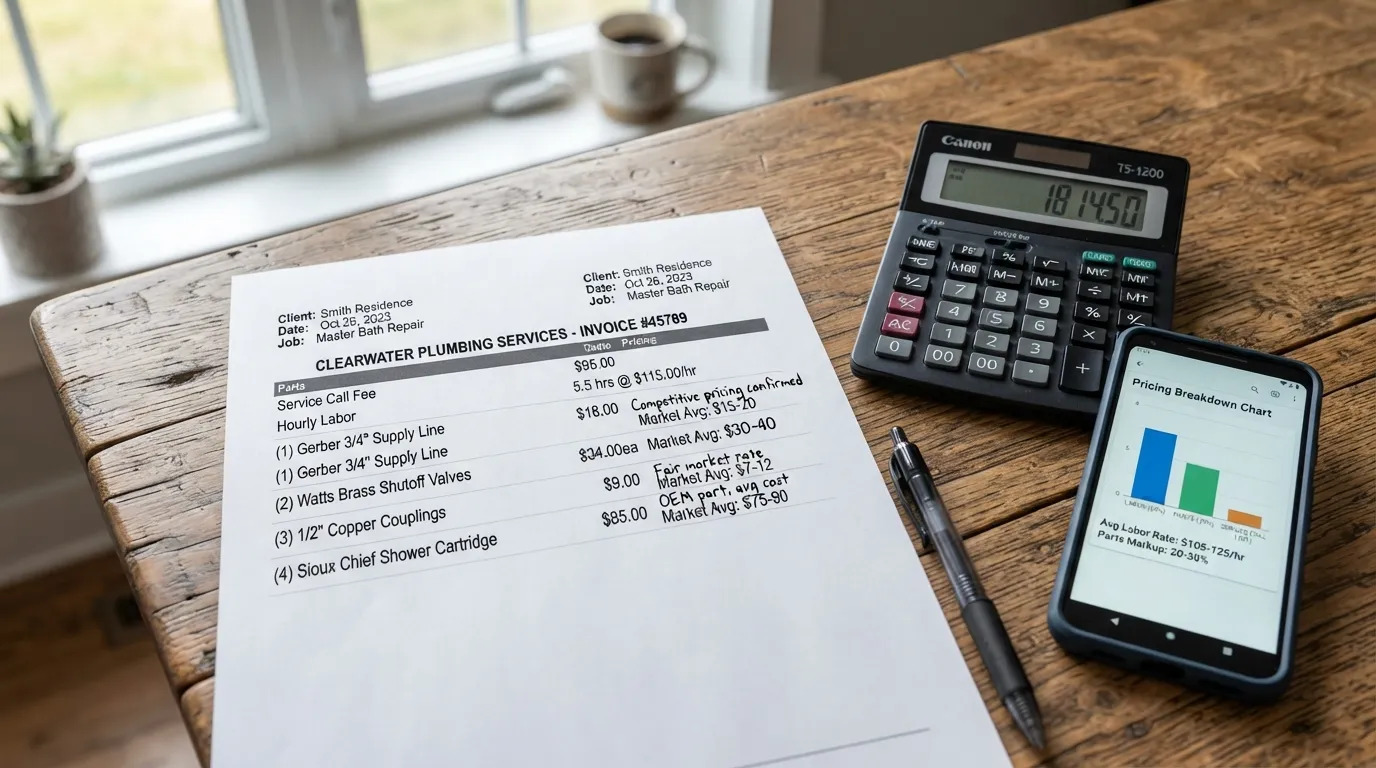
Protecting yourself from inflated bills or dishonest billing practices requires knowing how to spot common warning signs before you authorize a repair. While professional plumbing is a specialized trade that commands fair compensation, legitimate contractors operate with complete transparency regarding their pricing structure.
Red Flags of an Overpriced Quote
Unscrupulous contractors occasionally exploit urgent repair situations by introducing vague charges or unnecessary upsells. Watch out for these specific red flags when evaluating a quote:
- Vague Itemization: A lump-sum estimate that lacks any breakdown of labor hours, service call fees, or parts costs.
- High-Pressure Tactics: Pressuring you to sign immediately by claiming an urgent disaster will occur if you do not authorize the work on the spot.
- Refusal to Provide Written Estimates: Insisting on verbal-only quotes without a signed contract detailing the scope of work and warranty terms.
How to Compare Multiple Quotes Correctly
Obtaining multiple quotes from licensed local contractors is the most effective safeguard against overpaying. When reviewing competing estimates, ensure you are comparing equivalent service scopes:
- Match Pricing Models: Verify whether competing quotes are using flat-rate pricing or hourly billing so you can accurately contrast total costs.
- Check Included Fees: Confirm whether service call charges or diagnostic fees are baked into the estimate or billed separately.
Before Agreeing to a Price
Asking the right targeted questions before any wrench turns prevents misunderstandings and establishes firm financial boundaries. Always clarify these points with your contractor:
- Is the service fee credited? Ask if the initial trip charge will be deducted from your final bill if you approve the repair.
- What is the policy on overruns? Inquire how unexpected complications or hidden damage behind walls will impact the quoted price.
- Are parts marked up? Ask whether replacement fixtures or specialty valves carry a retail markup or distributor cost.
How to Negotiate Plumber Rates Practical Tips
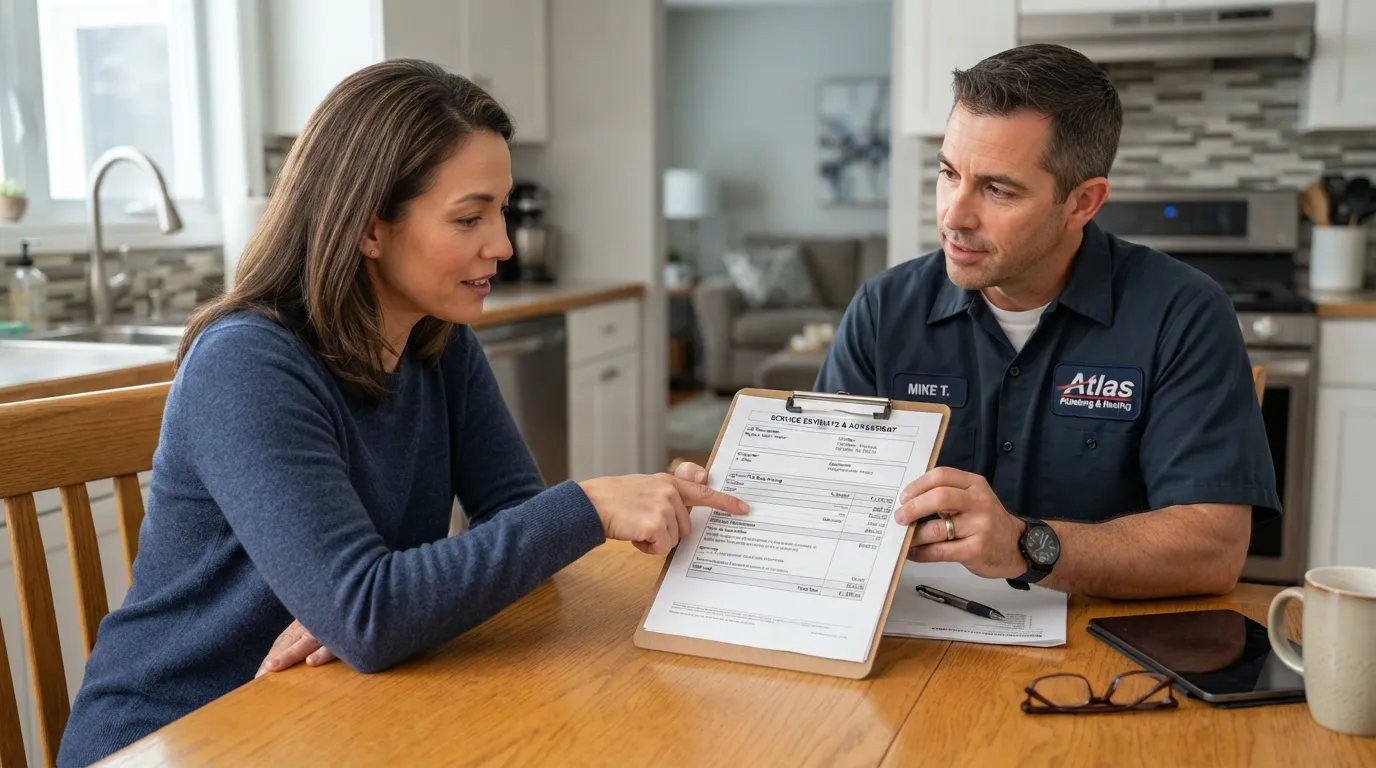
Negotiating plumbing expenses is not about haggling over fair professional wages; it is about leveraging smart scheduling, bundled tasks, and competitive quotes to minimize your total expenditure. Applying practical contracting strategies can help homeowners secure fair pricing without sacrificing quality workmanship.
Get Multiple Before Committing
Requesting detailed written estimates from at least three different local plumbing companies provides immediate market context. Contractors are often more willing to compete on pricing or waive minor service fees when they know you are actively comparing local bids.
- Leverage Competitor Pricing: Politely share if a competitor offered a more comprehensive flat-rate package for the same scope of work.
- Ensure Apple-to-Apple Comparisons: Verify that each quote covers identical materials, warranty terms, and labor assumptions before attempting negotiations.
Bundle Small Repairs Into One Visit
Plumbers charge a heavy baseline operational fee just to dispatch a truck to your home. Asking a technician to fix multiple minor issues during a single visit prevents you from paying multiple separate service call fees.
- Combine Household Fixes: Group a running toilet, a dripping faucet, and a slow-drain bathroom sink into one comprehensive service appointment.
- Maximize Dispatch Value: Contractors appreciate efficient scheduling and are often more flexible on total project pricing when multiple small tasks are bundled together.
Ask About Discounts Seniors Military First Time Customers
Many professional plumbing companies offer specialized promotional discounts that are not automatically advertised on their websites. Always inquire about available price reductions before signing a service agreement.
- Affiliation Savings: Check if the company provides designated discounts for senior citizens, military veterans, or active-duty service members.
- New Customer Promos: Ask if first-time client discounts or seasonal referral programs apply to your initial repair invoice.
Best Time to Schedule for Lower Rates
The timing of your service request directly impacts your vulnerability to surge pricing. Scheduling strategically keeps your costs tied to standard operating hours rather than emergency multipliers.
- Avoid Urgent Dispatches: Unless you are facing an active pipe burst or sewage backup, always schedule non-urgent repairs during standard weekday business hours.
- Plan Major Upgrades Off-Peak: Schedule plumbing renovations or water heater replacements during slow seasonal periods when contractors may offer promotional labor rates.
What If You Can’t Afford a Plumber? Budget Friendly Options
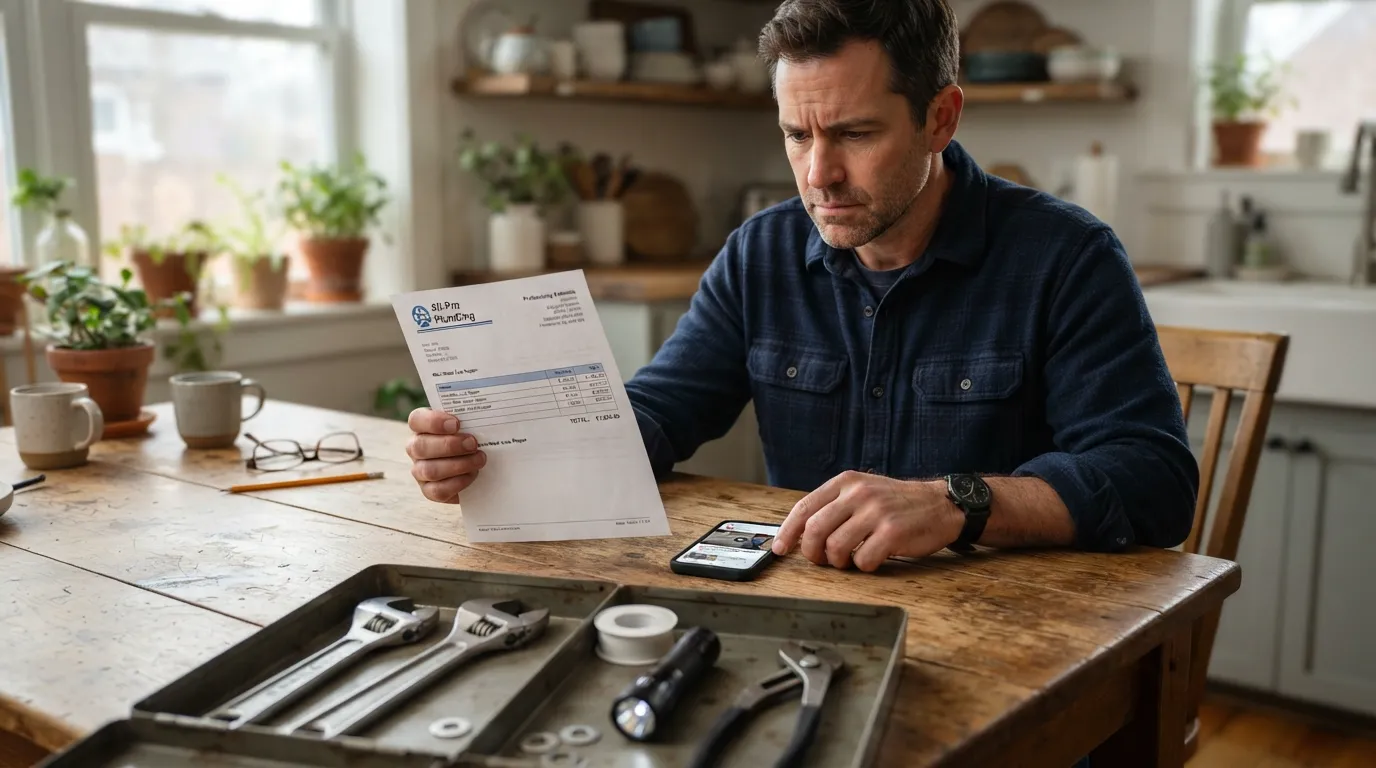
Facing a severe plumbing failure when funds are tight creates immense stress, but delaying critical repairs often leads to much higher water damage expenses later. Fortunately, several financial alternatives, community resources, and safe temporary fixes can bridge the gap until you can afford professional help.
Financing & Payment Plan Options
Many licensed plumbing companies and national contractors offer structured financing plans to help homeowners manage unexpected major repair costs without draining their savings accounts.
- Third-Party Financing: Programs like GreenSky or specialized home service credit lines allow you to spread repair expenses over 12 to 60 months, often with promotional low-interest periods.
- Contractor In-House Payment Plans: Some local plumbing businesses permit milestone-based payment structures for large projects such as sewer line replacements or water heater installations.
Local Assistance Programs
If you are experiencing severe financial distress, multiple community and government programs offer emergency grants or low-interest loans specifically for essential home repairs.
- Community Action Agencies: Local non-profits frequently administer emergency housing rehabilitation grants for low-income homeowners to fix failing sanitation systems or water heaters.
- USDA Section 504 Home Repair Program: Rural homeowners may qualify for federal grants or ultra-low-interest loans to repair health and safety hazards like broken plumbing infrastructure.
Simple DIY Fixes You Can Try First Safe Ones Only
When professional help is out of reach, tackling basic, low-risk plumbing issues yourself can save hundreds of dollars in labor fees, provided you follow safety protocols.
- Clearing Slow Drains: Use a manual plastic drain snake or a biological enzyme cleaner to clear hair and soap scum from sink traps instead of harsh chemical drain openers.
- Stopping Minor Leaks: Wrap leaking threaded pipe joints with plumber’s PTFE tape or tighten compression nuts gently with a wrench.
When DIY Is NOT Worth the Risk
Attempting advanced plumbing repairs without professional expertise can easily escalate a minor issue into a catastrophic home disaster. Never attempt DIY work on active gas lines, main sewer connections, or pressurized water supply pipes where improper seals could cause major flooding or structural mold growth.
What to Know Before Calling a Plumber + Signs of a Good Plumber
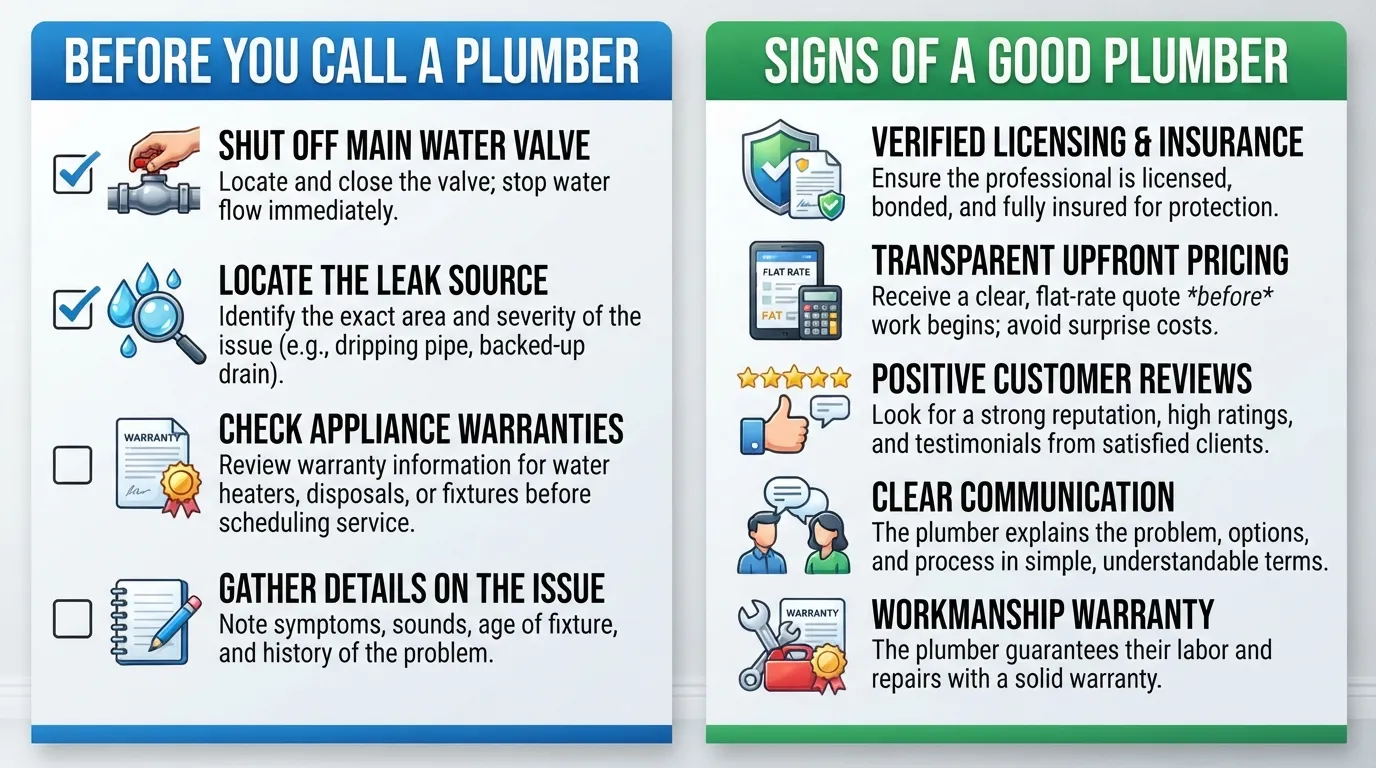
Preparing key information before contacting a plumbing professional saves time and prevents unnecessary service charges. Knowing how to vet contractors and gather essential details ensures your home repair runs smoothly from initial diagnosis to final invoice.
Checklist Before You Call
Having critical details ready before the technician arrives helps them diagnose the problem faster and reduces billable labor time. Review these essential preparation steps:
- Locate Shut-Off Valves: Know the exact location of your main water shut-off valve so you can stop active leaks immediately if an emergency occurs.
- Identify the Symptom: Note specific details—such as whether a drain backs up only when the washing machine runs or if hot water is completely absent.
- Document History: Keep a record of when the issue started and whether any previous DIY fixes or temporary patches were attempted.
License & Insurance Verification
Hiring an unverified contractor exposes your home to liability risks and substandard workmanship. Always verify these essential credentials before signing a service agreement:
- State or Local Licensing: Confirm that the contractor holds an active plumbing license recognized by your state regulatory board.
- General Liability Insurance: Request proof of active liability and worker’s compensation insurance to protect your property against accidental damage.
Signs of a Trustworthy, Skilled Plumber
Reputable plumbing professionals distinguish themselves through transparent communication and professional conduct. Look for these positive indicators when selecting a service provider:
- Clear Upfront Pricing: Provides a transparent written estimate or flat-rate breakdown before beginning any physical work.
- Guaranteed Workmanship: Backs their repairs with a solid warranty covering both labor and installed parts.
- Professional Demeanor: Arrives in a marked vehicle, wears identification, and treats your home with respect by cleaning up work areas.
Frequently Asked Questions About Plumbing Fittings
Common questions regarding plumbing costs, billing structures, and hiring best practices help clarify what homeowners can expect when budgeting for professional home repairs.
Do plumbers charge by the hour or for a job?
Plumbers utilize both billing structures depending on the nature of the project. They typically charge by the hour (ranging from $45 to $200 per hour) for open-ended diagnostics and troubleshooting, while using flat-rate pricing for standardized, predictable repairs like clearing a clogged drain or installing a faucet.
How much do plumbers charge per day?
A full-day rate for a residential plumber typically ranges from $400 to $1,000+, depending on the contractor’s experience level, geographic location, and whether the project involves standard maintenance or complex installation work.
How much does a plumbing service cost overall?
Overall plumbing service costs vary widely based on the complexity of the task, ranging from $100 to $250 for minor drain clearing up to $1,000 to $3,500+ for major system replacements like water heaters or sewer line overhauls.
How much do local plumbers charge on average?
Local plumbers charge an average hourly rate of $45 to $200, supplemented by a standard service call fee or trip charge of $50 to $100 just to visit your property and provide an initial diagnosis.
Why is it crucial to obtain a good plumber service?
Hiring a qualified, licensed, and insured plumbing professional ensures that repairs comply with local building codes, protects your home from catastrophic water damage, and guarantees that work is backed by valid warranties.

Oscar Vance | Master Plumber & Drainage Expert
Meet Oscar Vance, a licensed master plumber sharing practical solutions on residential repairs, preventive maintenance, and thoughtful home upkeep.
Pingback: How to Get Air Out of Plumbing Lines: 5 Safe Steps
Pingback: Why Is There No Water Coming Out of My Faucet? 11 Fixes