What It Really Costs to Install an HVAC System With Ductwork

Installing a complete HVAC system along with brand-new ductwork typically ranges from $7,000 to $16,000, with most homeowners spending an average total cost of $11,500. This comprehensive pricing reflects both the high-performance heating and cooling hardware and the extensive labor required to design and install custom air distribution networks.
Navigating a project of this scale requires understanding the primary variables that drive expenses. The exact total cost varies significantly based on critical property and equipment factors:
- Home Size and Layout Complexity: Larger square footage and multi-story floor plans demand higher-capacity HVAC units and longer runs of ductwork.
- Ductwork Installation Requirements: Retrofitting duct systems into older homes without prior infrastructure involves labor-intensive cutting, sealing, and patching.
- Equipment Efficiency Ratings: Selecting advanced variable-speed systems and high-SEER ratings increases initial equipment investment while maximizing long-term energy efficiency.
Complete Cost Breakdown Table 2026 Pricing
Investing in a complete HVAC system replacement alongside brand-new ductwork installation requires a comprehensive budget. Comprehensive home upgrades factor in heavy equipment sizing, extensive labor, and custom routing.
Ductwork Alone New or Replacement Cost
Installing new ductwork independently or replacing damaged existing infrastructure involves calculating linear footage and material choices. Flexible ducts provide cost-effective routing, while rigid sheet metal offers durability and superior airflow.
- Average Linear Foot Cost: Ranging between $15 to $35 per linear foot installed for standard residential layouts.
- Total Project Expense: Usually falls between $3,000 and $7,500 depending on accessibility in crawlspaces, attics, or walls.
- Material Selection Impact: Flexible ducting keeps initial expenses lower, whereas custom sheet metal fabrication increases labor and material costs.
Equipment-Only Cost Reusing Existing Ducts
Replacing just the central HVAC hardware while retaining sound, pre-installed ductwork dramatically lowers overall project expenses. Homeowners can focus their entire budget on high-performance heating and cooling machinery.
- Standard Replacement Range: Typically costs between $4,000 and $9,000 for the combined outdoor condenser and indoor air handler or furnace.
- Duct Inspection Prerequisite: Technicians must perform a pressure and leakage test on existing ducts to verify they handle modern airflow rates.
- Efficiency Gains: Upgrading units without changing ducts still delivers notable energy savings if the legacy network is properly sealed.
Cost by System Type Central AC Furnace Heat Pump
Choosing the appropriate HVAC system type heavily influences equipment baseline costs and regional energy efficiency performance. Each technology utilizes distinct mechanisms to regulate home climate.
- Central Air Conditioner with Furnace: Standard split systems average $5,000 to $10,000 for equipment and basic installation, ideal for moderate to cold climates.
- Modern Heat Pump Systems: High-efficiency electric heat pumps range from $6,000 to $14,000, offering dual heating and cooling capabilities with impressive SEER ratings.
- Boiler and Radiant Integration: Specialized heating systems vary widely, often exceeding $8,000 for advanced configurations paired with alternative distribution channels.
Cost Per Square Foot & Per Ton Sizing Your Budget
Calculating HVAC expenses per square foot gives homeowners a reliable baseline, with total installation costs averaging between $5 and $12 per square foot depending on whether new ductwork is included. This metrics-driven approach helps scale budgets precisely according to your property’s exact footprint and layout requirements.
How to Estimate Your Tonnage Needs
Accurate sizing requires a professional Manual J load calculation rather than simple square-foot guessing to prevent system short-cycling and inefficiency. Proper tonnage matching ensures optimal climate control and protects your long-term mechanical investment.
- Manual J Load Calculation: The gold-standard industry analysis that factors in local climate, insulation levels, window positioning, and ceiling heights.
- Evaluating a 2,000 sq. ft. Home: Typically requires a 3.5 to 4-ton cooling capacity, though thermal insulation performance can shift this requirement.
- Preventing Costly Errors: Guessing equipment tonnage based solely on square footage often results in severe humidity issues, uneven temperatures, and high utility bills.
New Construction vs. Retrofit vs. Existing Ductwork Cost Comparison
Project execution strategy dictates labor overhead, material usage, and architectural intervention. Comparing installation scenarios clarifies why costs shift drastically between an open framework and a finished structural environment.
Installing Ductwork in New Construction Unfinished Homes
New construction projects offer complete accessibility, allowing technicians to map out and install duct networks before drywalling. This eliminates labor-intensive cutting, patching, and creative routing.
- Streamlined Access: Open studs and exposed floor joists reduce total installation time significantly.
- Cost Efficiency: Labor costs are minimized because technicians do not need to tear down or repair existing structures.
- Design Customization: Straight runs and optimized airflow pathways maximize system efficiency from day one.
Retrofitting Ductwork in a Finished Existing Home
Retrofitting duct systems into older or finished properties requires navigating hidden obstacles behind walls, crawlspaces, and tight attics. Specialized labor and post-installation cosmetic repairs drive up overall pricing.
- Structural Obstructions: Installers must cut into drywall, drill through framing studs, and build custom chase ways to hide duct lines.
- Drywall and Painting Repairs: Homeowners must budget separately for patching, texturing, and painting surfaces disrupted during routing.
- Extended Timeline: Projects often stretch across multiple days due to the careful mapping required to avoid electrical and plumbing lines.
Installing AC With Existing Ductwork Already in Place
Replacing an HVAC unit while reusing sound, pre-installed ductwork provides the fastest and most cost-effective upgrade path. Technicians simply hook up the new air handler and condenser to legacy distribution channels.
- Reduced Labor Impact: Avoiding duct fabrication and wall cutting drops total project hours by half.
- Integrity Testing Mandate: Technicians must pressure test existing ducts to verify they handle modern blower speeds without leaking.
- Potential Modification Needs: Transitions may be required if the new equipment plenum size differs from the legacy duct opening.
Ducted vs. Ductless Mini-Split Which Costs Less Long-Term?
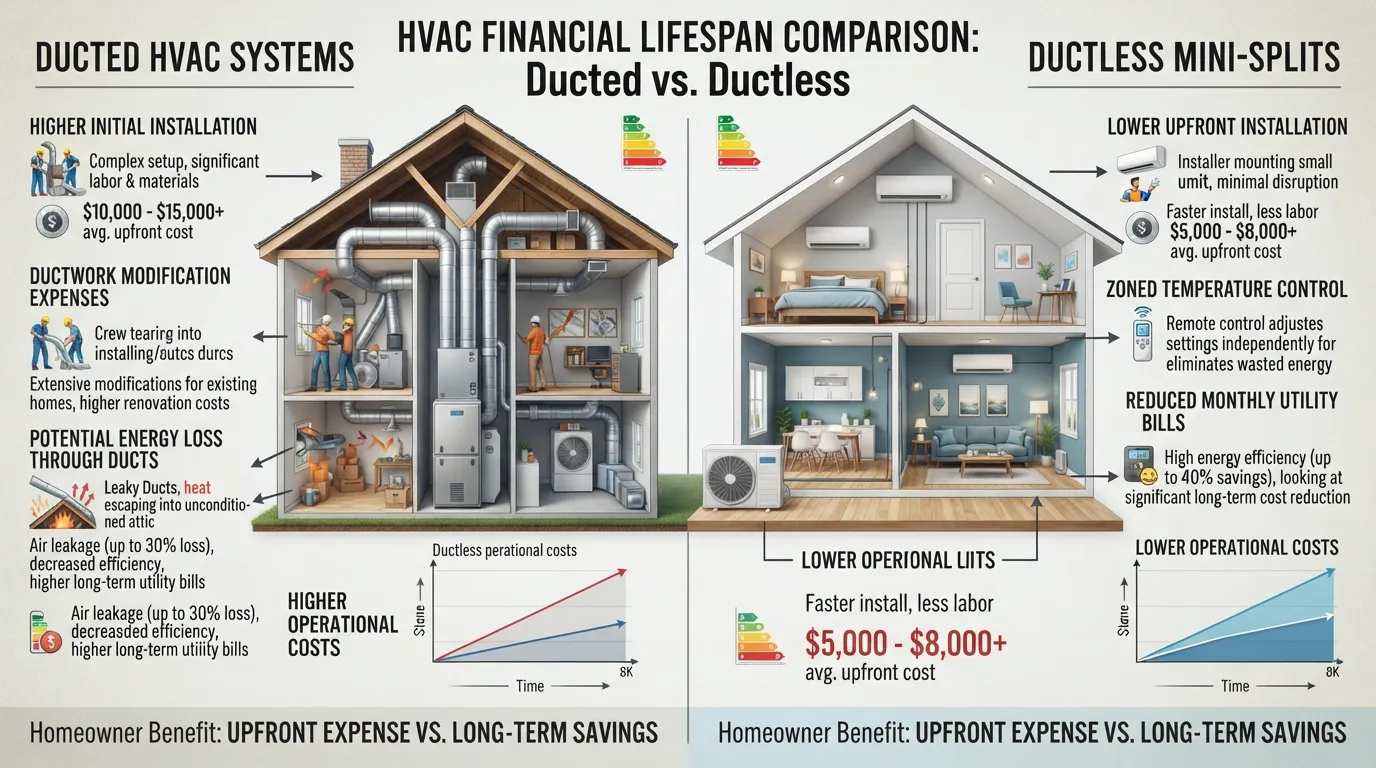
Evaluating whether to install a traditional ducted setup or opt for a ductless mini-split system involves weighing upfront equipment expenses against long-term energy efficiency and zoning flexibility. While ductless systems reduce messy installation hurdles, upfront costs per zone can rival central setups.
Ductless Mini-Split Installation Cost
Ductless mini-split systems typically range from $3,000 to $7,000 per zone (indoor air handler paired with an outdoor compressor), with multi-zone whole-home integrations often totaling $9,000 to $18,000. Avoiding extensive duct fabrication significantly cuts down structural labor time.
- Targeted Zoning Capabilities: Each indoor unit operates independently, allowing precise temperature control for individual rooms or additions.
- Minimal Structural Impact: Installation requires only a small three-inch hole through an exterior wall for refrigerant lines, power cables, and drainage.
- High-Velocity Alternatives: Compact high-velocity systems utilize flexible small-duct networks, offering another viable solution for historical homes with limited space.
When Ductless Makes More Financial Sense
Choosing a ductless approach provides distinct financial advantages when architectural constraints or lifestyle habits make conventional ductwork cost-prohibitive. Maximizing efficiency through targeted zoning reduces wasted energy.
- Historic and Older Properties: Homes lacking existing ducts avoid thousands of dollars in destructive drywall repairs and custom chase construction.
- Home Additions and Garages: Expanding climate control to converted attics, sunrooms, or detached spaces is much cheaper with mini-splits than extending old trunk lines.
- Targeted Energy Savings: Eliminating the energy losses associated with leaky ductwork—which accounts for up to 30 percent of energy consumption in standard systems—lowers monthly utility bills.
What Affects the Total Cost Key Factors Explained
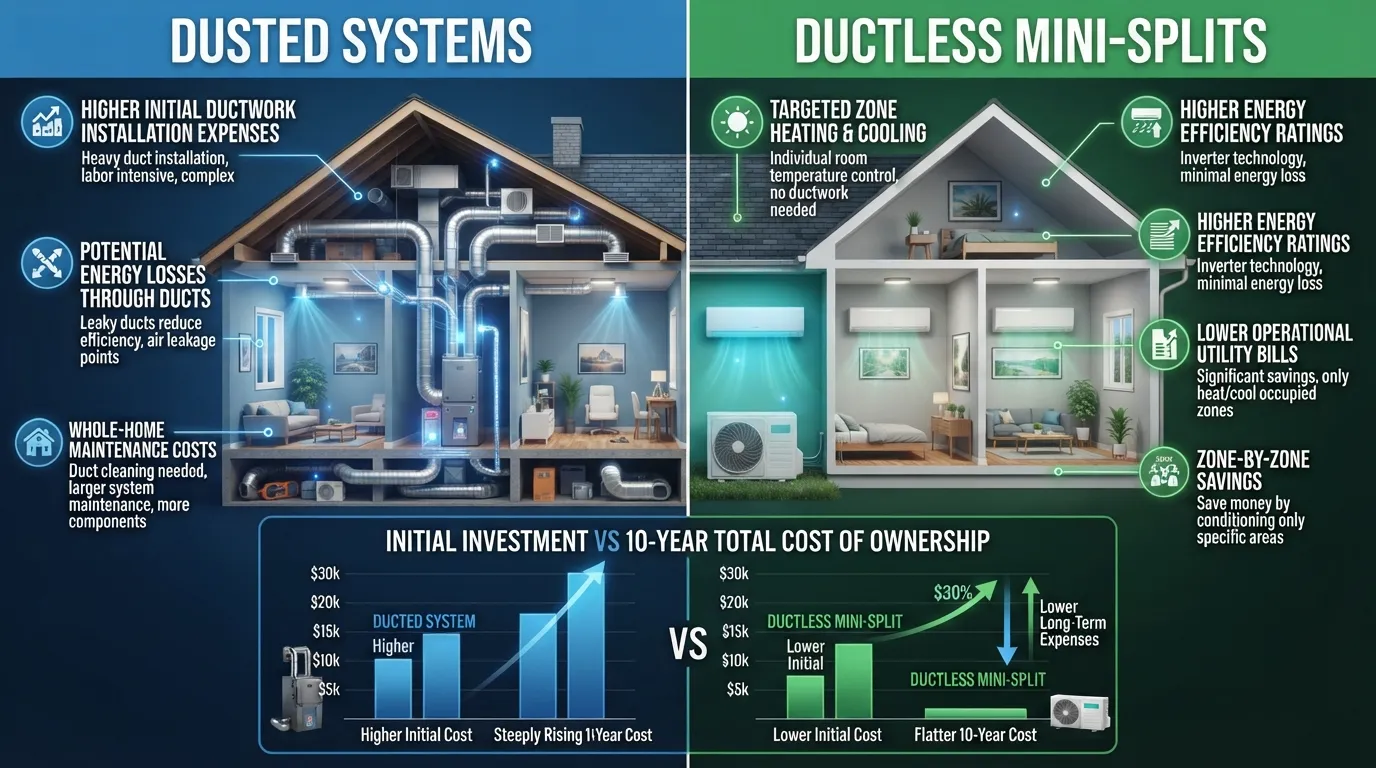
Understanding the variables that influence HVAC and ductwork installation pricing prevents unexpected budget overruns. Every component—from raw material selection to engineering compliance—plays a direct role in determining the final project investment.
Duct Material Flexible vs. Sheet Metal & Insulation R-Value
Choosing between flexible ducting and rigid sheet metal dictates both your upfront material budget and long-term thermal efficiency. Insulation ratings determine how effectively conditioned air is protected as it travels through unconditioned spaces like attics.
- Flexible Ductwork: Cost-effective and fast to route, flexible ducts range from $1.50 to $3.00 per linear foot for materials alone, but they are prone to kinking and airflow restriction.
- Rigid Sheet Metal: Custom-fabricated sheet metal offers superior durability, smoother airflow, and easier cleaning, though it demands higher labor and material overhead.
- Insulation R-Value Standards: Building codes typically mandate R-6 or R-8 insulation on ducts running through unconditioned attics or crawlspaces to prevent thermal loss.
Home Accessibility Attic Crawlspace Finished Walls
The physical layout and ease of access inside a home drastically impact total labor hours and specialized equipment requirements. Navigating tight structural spaces increases both physical strain and project complexity for technicians.
- Attic and Crawlspace Constraints: Cramped working conditions slow down installation speeds and require specialized compact hangers, sealing mastics, and safety gear.
- Finished Walls & Retrofitting: Cutting through plaster or drywall to run vertical drops requires careful repair work, adding significant cosmetic restoration labor.
- Multi-Story Complexities: Multi-level homes demand vertical chases and dampers to balance air pressure between floors, driving up labor expenses.
Brand & Equipment Efficiency SEER Rating
The manufacturer brand and seasonal energy efficiency ratio (SEER) of your outdoor compressor and indoor furnace set the equipment baseline budget. High-efficiency systems cost more upfront but yield substantial monthly utility savings.
- SEER Rating Impact: Upgrading from a standard 14 SEER unit to a high-efficiency 20+ SEER variable-speed system can increase equipment costs by $2,000 to $5,000.
- Premium vs. Standard Brands: Established manufacturers with extensive warranty coverage command higher price points than economy brands.
- Smart Thermostat Integration: Advanced communicating thermostats optimize multi-stage equipment operation, adding minor equipment cost for major efficiency gains.
Design & Engineering Manual J & Manual D
Professional engineering and load design eliminate guessing games, ensuring your system operates at peak capacity without premature wear. Proper calculations protect your investment and prevent chronic comfort issues.
- Manual J Load Calculations: Determines exact thermal requirements based on home orientation, window surface area, and regional climate data.
- Manual D Duct Design: Engineers the precise sizing and layout of trunk lines and supply branches to guarantee balanced static pressure and airflow.
- Avoiding Oversizing: Proper design prevents short-cycling, which wastes energy, degrades equipment prematurely, and fails to control indoor humidity.
Permit Costs by Region
Local municipal building departments require installation permits to ensure mechanical work adheres to building safety and energy codes. Permit and inspection fees generally range from $250 to $1,500 depending on regional jurisdiction.
- Mandatory Inspections: City or county inspectors verify duct sealing, electrical hookups, and venting safety before final sign-off.
- Contractor Responsibility: Licensed HVAC professionals typically pull permits on behalf of the homeowner and include fees in the total project estimate.
- Code Compliance Protection: Skipping permits can invalidate homeowner insurance policies and create major hurdles during future property sales.
Regional Cost Differences California Texas & Beyond
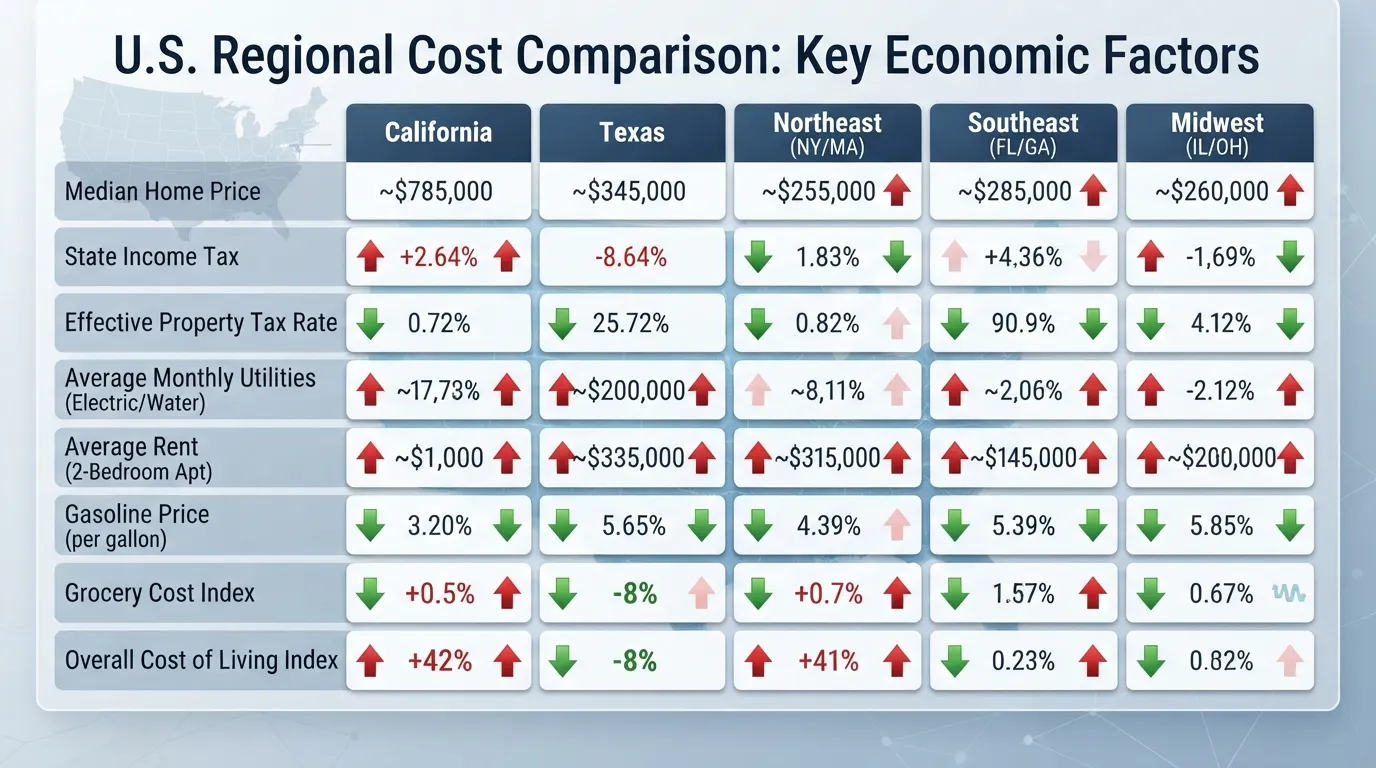
Geographic location exerts a major influence on total HVAC and ductwork installation expenses, primarily driven by regional labor rates, state energy efficiency mandates, and local climate demands. Local pricing variances can shift standard project totals by thousands of dollars between states.
HVAC Installation Cost in California
California features some of the highest HVAC installation costs nationwide, with full system replacements including ductwork frequently ranging from $12,000 to $22,000+. Stringent Title 24 energy efficiency building codes, high cost-of-living adjustments, and expensive municipal permit fees elevate baseline labor and equipment overhead.
- Title 24 Compliance Mandates: State regulations require high-SEER variable-speed equipment, strict duct-sealing verification tests, and mandatory HERS (Home Energy Rating System) ratings.
- Elevated Labor Rates: Certified HVAC technicians in major metro areas command hourly rates between $75 and $120+.
- Permit and Inspection Burdens: Local city permits often run toward the higher end of the spectrum, typically between $500 and $1,500.
HVAC Installation Cost in Texas
Texas generally offers more moderate pricing structures, with complete HVAC and ductwork projects averaging between $8,500 and $16,000. Intense summer cooling demands necessitate heavy-duty equipment sizing, but lower regional labor costs help keep overall contractor bids competitive.
- High Thermal Demand: Extended cooling seasons mean systems face heavy wear, often requiring robust multi-stage compressors and larger tonnage capacities.
- Competitive Labor Market: Average technician labor rates range between $50 and $80 per hour, reducing total installation labor bills compared to coastal states.
- Varying County Regulations: Permitting requirements fluctuate widely between major metropolitan areas like Houston or Dallas and unincorporated rural counties.
Why Labor Rates Vary by State
Contractor pricing is directly tethered to localized economic factors, operating expenses, and regional licensing prerequisites. Understanding these underlying market mechanics clarifies why quotes differ significantly across state lines.
- Overhead and Insurance Costs: General liability insurance, commercial vehicle fleets, and worker’s compensation requirements scale heavily with local cost of living.
- State Licensing Certifications: States with rigorous mechanical licensing criteria restrict the labor pool, which naturally drives up specialized contractor rates.
- Seasonal Demand Spikes: Regions facing extreme seasonal temperature swings experience contractor crunches during peak winter and summer months, influencing local bidding flexibility.
Installation Timeline How Long Does It Actually Take?
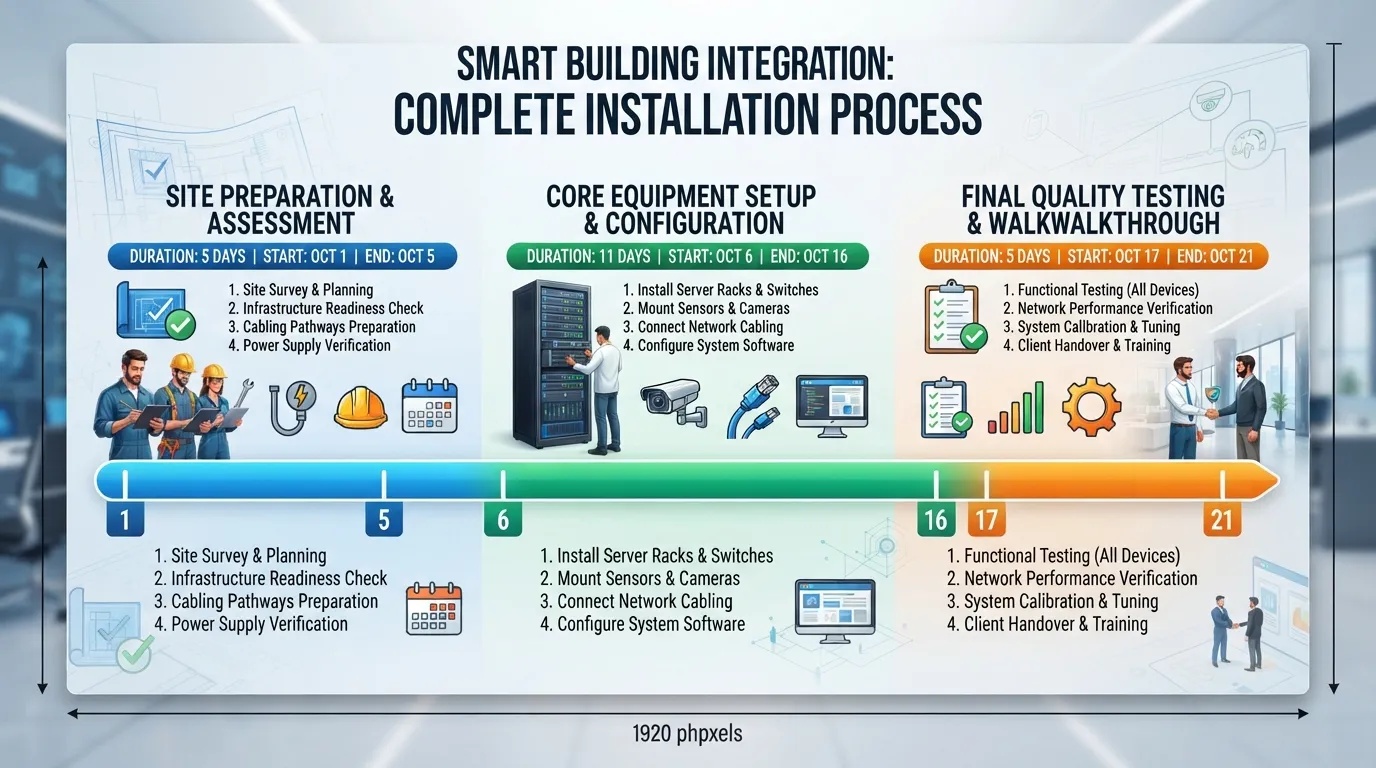
Planning an HVAC and ductwork project requires understanding the expected timeline to prepare your household for disruptions. Project duration ranges from a single rapid day for straight equipment swaps up to a full work week for complex, custom duct retrofits.
New Installation Timeline Days
Installing a complete HVAC system accompanied by brand-new ductwork in an existing home typically spans 3 to 5 business days. The extended timeframe accounts for meticulous layout design, structural routing, and careful patching.
- Days 1-2 (Duct Routing & Fabrication): Technicians map pathways through attics, crawlspaces, or walls, cutting necessary openings and securing trunk lines.
- Day 3 (Equipment Placement): The outdoor condenser, indoor air handler or furnace, and refrigerant lines are mounted, leveled, and connected.
- Days 4-5 (Testing & Sealing): Systems undergo comprehensive airflow balancing, static pressure checks, duct pressure testing, and municipal inspection coordination.
Replacement-Only Timeline Hours vs. Days
Replacing an existing HVAC unit while reusing sound, pre-installed ductwork is exceptionally fast, usually taking just 1 to 2 days (or 6 to 10 total labor hours). Streamlining the hardware swap minimizes downtime for your home climate control.
- Single-Day Changeouts: Standard like-for-like system replacements are routinely completed by a two-person crew within a single working day.
- Complex Retrofits: Upgrading from an old oil furnace to a modern heat pump with electrical panel adjustments can easily stretch the timeline to two full days.
- Post-Install Commissioning: Technicians dedicate the final hours to calibrating thermostats, charging refrigerant levels, and verifying maximum operating efficiency.
The $5,000 HVAC Rule Explained
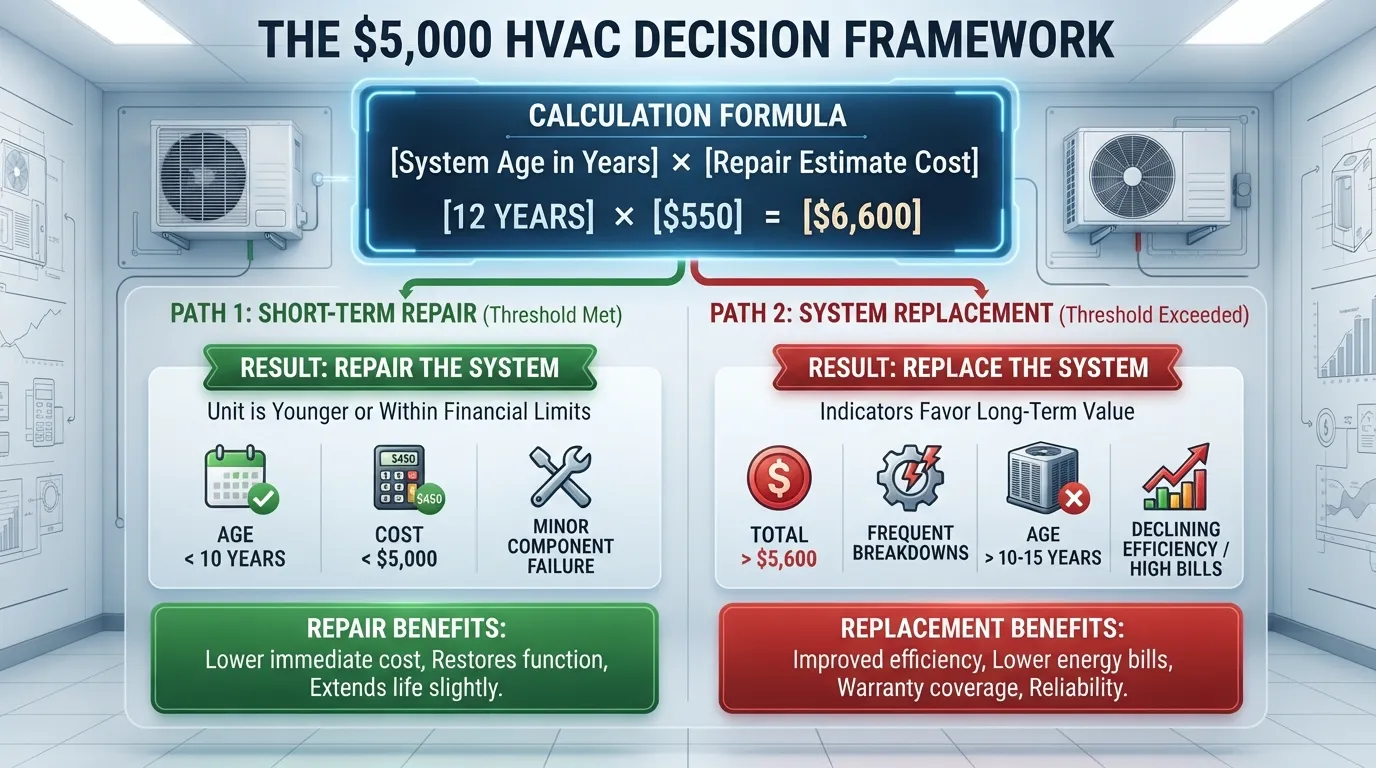
The $5,000 HVAC rule is a widely recognized financial guideline used by homeowners and technicians to determine whether it is more cost-effective to repair or completely replace an aging heating and cooling system. To apply this rule, multiply the age of your equipment (in years) by the estimated cost of the current repair.
If the resulting number exceeds $5,000, financial logic strongly favors investing that money toward a brand-new system installation rather than sinking funds into a failing unit.
- The Calculation Formula: Equipment Age $\times$ Repair Cost = Decision Metric. For example, a 10-year-old furnace requiring a $600 repair equals 6,000—signaling that replacement is the smarter long-term investment.
- Accounting for System Lifespan: Most conventional HVAC systems operate reliably for 12 to 15 years; sinking large sums into repairs past this threshold typically results in recurring mechanical failures.
- Warranty and Efficiency Protections: New systems feature comprehensive manufacturer warranties and drastically higher SEER ratings, eliminating the financial risk of frequent emergency service calls.
DIY Installation vs. Hiring a Professional

Attempting to install a residential HVAC system or ductwork network without professional credentials introduces severe safety hazards, code violations, and financial risks. While do-it-yourself projects save money in other home improvement sectors, complex mechanical installations demand certified expertise.
Why DIY Ductwork Installation Is Risky
Installing or modifying HVAC equipment and duct systems independently violates building regulations in nearly all jurisdictions and creates dangerous living conditions. Professional oversight is vital to protect structural integrity and occupant safety.
- EPA Section 608 Certification: Handling refrigerants like R-410A or modern alternatives is federally restricted; purchasing and handling refrigerants without an EPA license is illegal and carries heavy fines.
- Code Violations and Insurance Risks: Unpermitted DIY installations can invalidate homeowner insurance policies if an electrical fault or gas leak sparks a fire or property damage.
- Critical Efficiency Losses: Improper duct sealing and incorrect static pressure balancing lead to uneven room temperatures, excessive humidity, and premature equipment burnouts.
What a Licensed Contractor’s Quote Should Include
Hiring a reputable, licensed HVAC professional guarantees code-compliant execution and safeguards your investment through comprehensive documentation and warranties. A transparent contractor estimate should explicitly outline every phase of the project.
- Detailed Manual J & D Calculations: Written proof that sizing and duct design were calculated based on your specific home layout rather than rough square-footage estimates.
- Equipment and Labor Breakdown: Clear line items specifying the exact brand, model numbers, SEER ratings, tonnage capacity, and warranty terms for both parts and labor.
- Permits and Disposal Fees: Inclusion of local municipal permit acquisition, mandatory inspections, and responsible haul-away of old equipment and hazardous waste materials.
Ductwork Lifespan, Replacement Signs & Maintenance
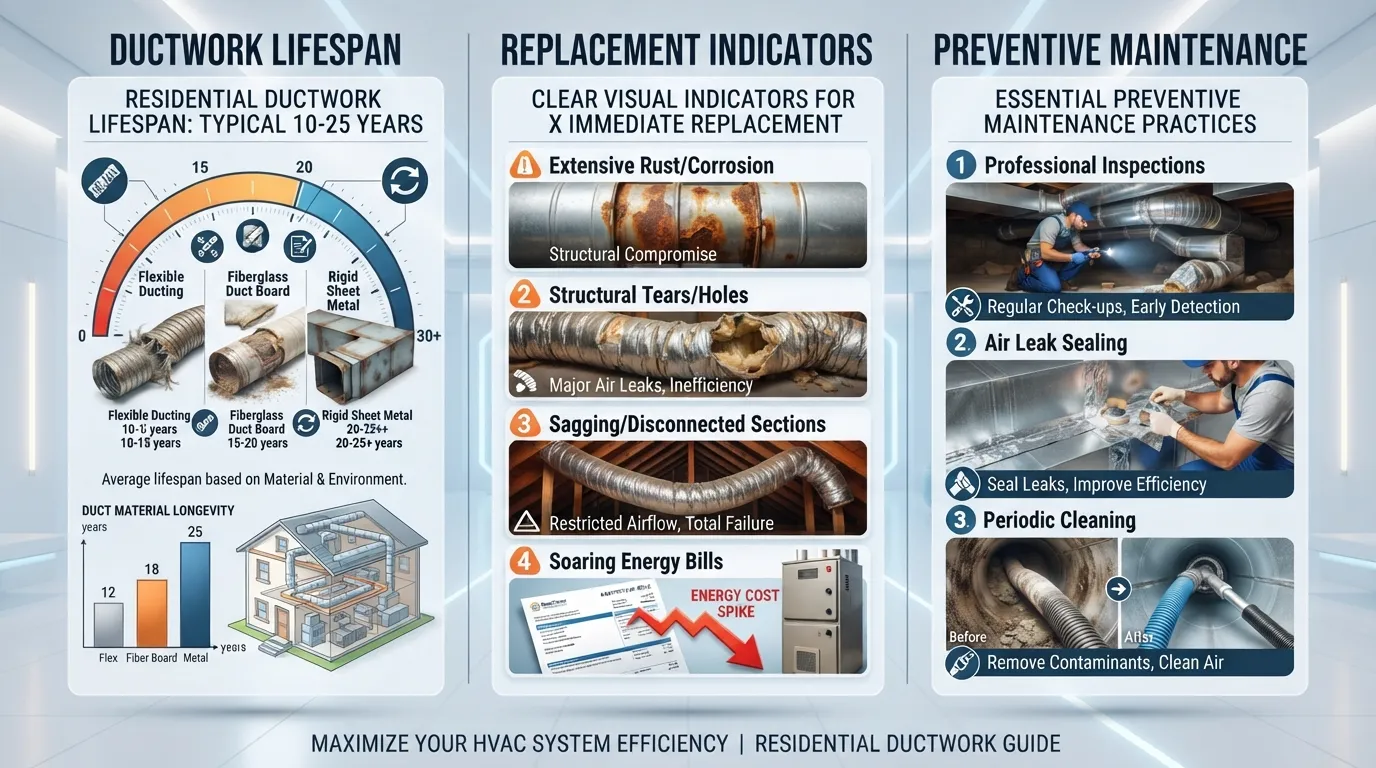
Maintaining optimal indoor air quality and system efficiency requires monitoring the health of your home’s duct distribution network. Recognizing the physical warning signs of degradation helps homeowners prevent severe energy waste and expensive premature failures.
How Long Ductwork Lasts
Residential ductwork systems typically last between 15 to 25 years, depending on the initial installation quality, material selection, and environmental conditions. Flexible ducting often degrades faster due to sagging or insulation breakdown, whereas rigid metal ducts can endure for decades if properly sealed.
- Flexible Duct Lifespan: Usually requires inspection and potential repairs or replacement around the 15-year mark as inner plastic liners become brittle.
- Rigid Sheet Metal Lifespan: Sturdy sheet metal can reach up to 25 or 30 years when protected from moisture and corrosive humidity in unconditioned attics.
- Environmental Stressors: Extreme attic temperature swings and high ambient moisture accelerate tape adhesive failures and insulation decay.
Signs Your Ductwork Needs Replacing
Damaged or deteriorating duct networks exhibit distinct operational symptoms that signal an urgent need for professional evaluation and targeted replacement. Ignoring these indicators leads to runaway utility bills and persistent indoor comfort issues.
- Unexplained Energy Spikes: Skyrocketing monthly power bills often indicate massive conditioned air loss through disconnected or severely torn duct runs.
- Uneven Room Temperatures: Rooms that remain uncomfortably hot or cold suggest airflow blockages, collapsed flexible ducts, or severe leaks.
- Excessive Dust and Odors: Musty smells or blowing dust particles point to mold growth, rodent infestations, or decaying insulation trapped inside the duct system.
Should You Replace 20-Year-Old Ductwork?
Replacing 20-year-old ductwork during a major HVAC hardware upgrade is highly recommended to protect your new equipment investment. Legacy duct networks at this age suffer from widespread sealant degradation, heavy dust accumulation, and inadequate insulation values.
- Modern Energy Standards: Older ducts rarely meet contemporary R-8 insulation requirements, causing substantial thermal loss in unconditioned spaces.
- Airflow Compatibility: High-efficiency variable-speed equipment requires clean, balanced airflow that legacy, undersized, or damaged ducts cannot deliver.
- Cost Synergy: Tearing out old ducts while technicians are already replacing the central air handler and furnace minimizes total labor overlap expenses.
Does Homeowners Insurance Cover Duct Replacement?
Standard homeowners insurance policies generally do not cover routine duct replacement caused by normal wear and tear, aging, or gradual deterioration. Coverage is typically restricted exclusively to sudden, accidental disasters.
- Covered Perils: Insurance providers may cover duct damage and replacement if it results directly from a sudden catastrophe like a fire, severe storm, or fallen tree.
- Exclusions for Neglect: Damage resulting from mold accumulation, long-term pest infestations, or deferred maintenance is strictly excluded from coverage.
- Reviewing Your Policy: Homeowners should consult their specific insurance agent or endorsement riders to understand exact coverage limits regarding internal home mechanicals.
Best Time of Year to Clean Air Ducts
Scheduling air duct cleaning during the shoulder seasons of spring and autumn secures the best contractor availability and pricing. Mild outdoor temperatures allow your home to remain comfortable with windows open while technicians service the system.
- Pre-Summer Maintenance: Cleaning ducts in early spring clears out winter dust accumulation before your air conditioner kicks into heavy seasonal operation.
- Pre-Winter Cleanup: Fall servicing removes allergens and debris before heating systems turn on, preventing burned dust odors from circulating.
- Off-Peak Scheduling Benefits: Booking outside of peak summer and winter rush periods often grants access to discounted promotional rates from local professionals.
Rebates Tax Credits & Financing Options 2026
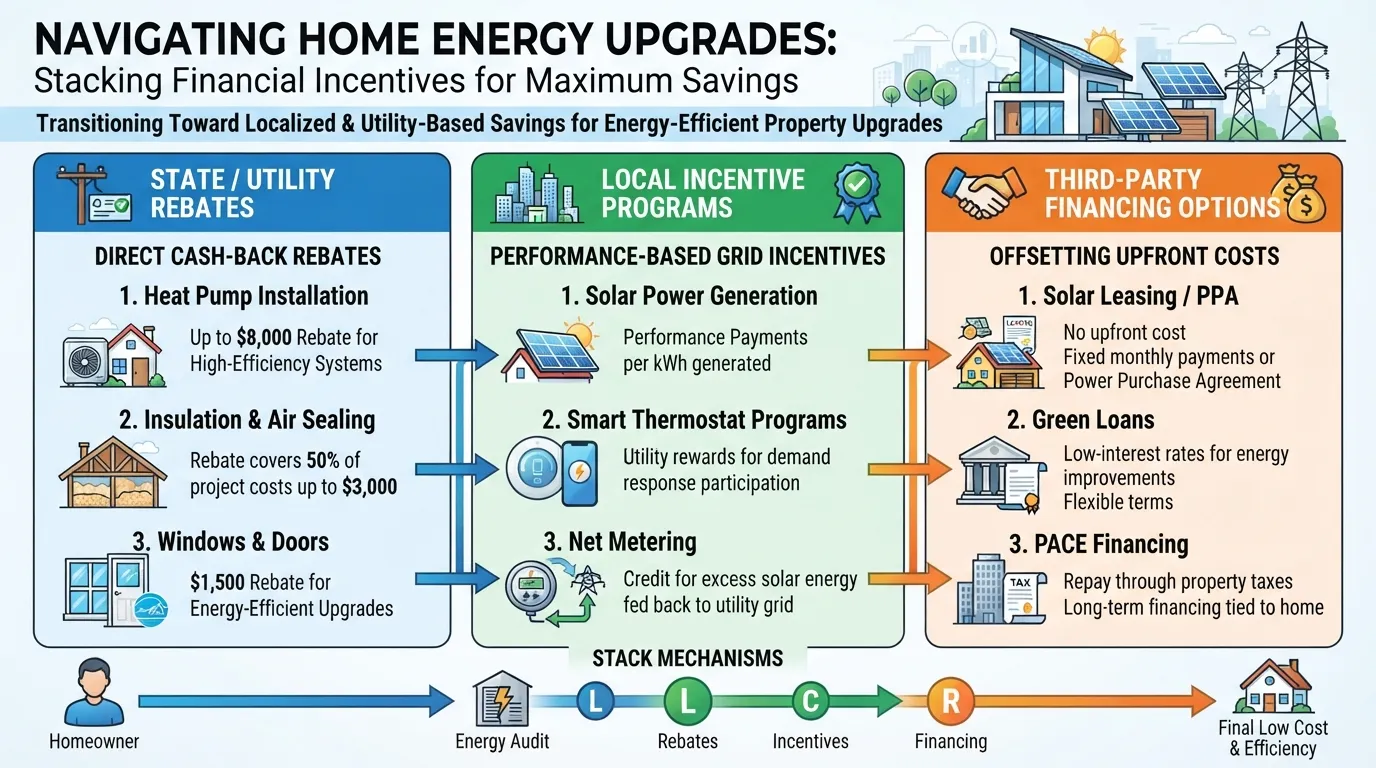
Offsetting the high upfront costs of a full HVAC and ductwork replacement involves leveraging available financial incentives, manufacturer promotions, and structured payment plans. Maximizing these programs can significantly reduce your total out-of-pocket investment.
Federal Energy Efficiency Tax Credits
While federal energy efficiency tax incentives have historically helped offset equipment purchases, checking official federal guidelines is essential to confirm what current programs apply to your specific installation timeline. Reviewing the latest criteria via the ENERGY STAR Federal Tax Credits Overview ensures you capture any active tax advantages for qualifying high-efficiency equipment.
- Equipment Tier Matching: Federal and state credits typically require certified matched systems, such as specific high-SEER2 central split units or advanced heat pumps.
- Local Utility Cash-Back Rebates: Regional electric and gas providers frequently offer instant or mail-in rebates for upgrading to variable-speed, energy-efficient comfort systems.
- Documentation Requirements: Always retain itemized contractor invoices, AHRI certificate numbers, and manufacturer certification statements for your tax records.
Manufacturer Rebates & Financing Plans
Major HVAC equipment manufacturers and certified local dealers frequently roll out seasonal promotions, mail-in cash rebates, and low-interest or zero-percent financing plans. Spreading project costs over manageable monthly installments makes comprehensive system and ductwork overhauls much more accessible.
- Promotional Financing: Many accredited contractors offer 12- to 60-month financing options with approved credit, easing the pressure of large lump-sum investments.
- Seasonal Manufacturer Incentives: Purchasing equipment during shoulder spring or autumn seasons often unlocks hidden manufacturer rebates or free accessory upgrades like smart thermostats.
- Combining Savings: Layering dealer promotions with local utility rebates creates a multi-tiered discount strategy that lowers your effective net project cost.
Cost Example Case Study
Analyzing an itemized contractor quote for a standard residential project removes guesswork and illustrates how individual line items scale. Reviewing a concrete scenario provides a transparent baseline for what a complete system and ductwork replacement entails.
2,000 Sq Ft Home Full System + Ductwork Quote Breakdown
For a typical 2,000-square-foot single-story home requiring a complete 3.5-ton 16 SEER heat pump setup alongside a total flexible duct network replacement, a realistic contractor bid averages around $13,500 total. An itemized invoice for this scale of work typically follows a predictable distribution of equipment, material, and labor expenses.
- Outdoor Condenser & Air Handler Unit: $5,200 covering a mid-to-high efficiency 3.5-ton split heat pump system.
- Ductwork Materials & Fabrication: $2,800 for insulated R-8 flexible ducts, trunk lines, starting collars, and ceiling registers.
- Specialized Installation Labor: $4,200 accounting for a 3-day crew removing legacy infrastructure, hanging new runs, and configuring electrical lines.
- Permits, Inspection & Disposal Fees: $1,300 allocated for municipal mechanical permits, mandatory pressure testing, and haul-away of old machinery.
How to Get an Accurate Quote
Securing a fair and accurate price for an HVAC and ductwork replacement requires gathering multiple competitive estimates and vetting prospective contractors thoroughly. Asking the right probing questions safeguards your investment and prevents costly mid-project surprises.
Questions to Ask Before Signing a Contract
Engaging contractors with targeted technical and administrative questions ensures transparency and verifies their professional credibility. Clear communication before work begins sets the right expectations for both parties.
- Did you perform a Manual J load calculation? Confirm that equipment sizing is backed by rigorous mathematical analysis of your home’s thermal profile rather than rough square-footage guesses.
- Are permits and post-installation inspections included? Verify that the contractor handles municipal filing fees and compliance sign-offs directly in their written bid.
- What exact warranty coverage is provided? Clarify the separation between manufacturer equipment warranties and the contractor’s workmanship labor guarantee.
Red Flags in a Cheap Quote
Unusually low contractor bids often signal corner-cutting, unpermitted work, or hidden fees that will surface later. Remaining vigilant against common warning signs protects you from poor workmanship and financial fraud.
- Refusal to Pull Permits: Contractors asking you to pull owner-builder permits usually intend to bypass building codes and mandatory safety inspections.
- Vague, Lump-Sum Estimates: Quotes lacking itemized breakdowns for equipment models, tonnage, duct materials, and labor hours make it impossible to compare bids accurately.
- High-Pressure Sales Tactics: Demanding an immediate signature by offering steep “today-only” discounts is a classic high-pressure tactic used by unreliable operators.
Frequently Asked Questions (FAQ)
What happens if you never clean air ducts?
Failing to clean your air ducts over many years leads to a heavy accumulation of dust, allergens, pet dander, mold spores, and debris inside the distribution network. This buildup circulates throughout your living spaces continuously, exacerbating allergies, reducing indoor air quality, and forcing your HVAC blower motor to work harder against restricted airflow.
How to tell if ductwork needs replacing?
Key indicators that your ductwork requires full replacement include skyrocketing monthly energy bills caused by massive air leaks, rooms that remain uncomfortably hot or cold, musty odors or visible mold growth inside vents, and physical damage like crushed flexible ducts or severe rust on metal trunk lines.
Can I install a new AC unit myself?
Installing a central air conditioning unit or complete duct network yourself is heavily discouraged and, in many cases, illegal. Handling refrigerants requires federal EPA Section 608 certification, and improper electrical wiring, gas connections, or unpermitted installations violate building codes and void equipment warranties.
How much does it cost to install ducted air conditioning?
Installing a complete ducted air conditioning and heating system along with brand-new ductwork typically ranges from $7,000 to $16,000. If your home already has sound, pre-installed ductwork, replacing just the central heating and cooling equipment generally costs between $4,000 and $9,000.
Is it cheaper to install ductwork or go ductless?
Installing traditional ductwork in an existing finished home is often expensive and destructive due to the extensive drywall cutting required, making ductless mini-splits a much more cost-effective alternative for targeted zoning or older properties. However, for new construction where framing is open, traditional ducted systems can be integrated affordably.
Conclusion Key Takeaways & Next Steps
Navigating an HVAC and ductwork installation project requires balancing upfront equipment and labor investments with long-term energy efficiency and comfort. Total costs typically span from $7,000 to $16,000 for full system replacements with new ducts, while equipment-only upgrades average between $4,000 and $9,000.
To ensure a successful and budget-conscious project, consider taking these actionable next steps:
- Request Multiple Detailed Quotes: Gather at least three itemized estimates from licensed contractors to compare equipment brands, SEER ratings, and labor guarantees accurately.
- Demand Load Calculations: Verify that prospective installers perform professional Manual J and Manual D calculations to guarantee precise system sizing and balanced airflow.
- Explore Incentives: Research current federal tax credits, manufacturer rebates, and local utility incentives to offset your overall out-of-pocket expenses.

Oscar Vance | Master Plumber & Drainage Expert
Meet Oscar Vance, a licensed master plumber sharing practical solutions on residential repairs, preventive maintenance, and thoughtful home upkeep.