How Long Does It Take to Get HVAC Certified?
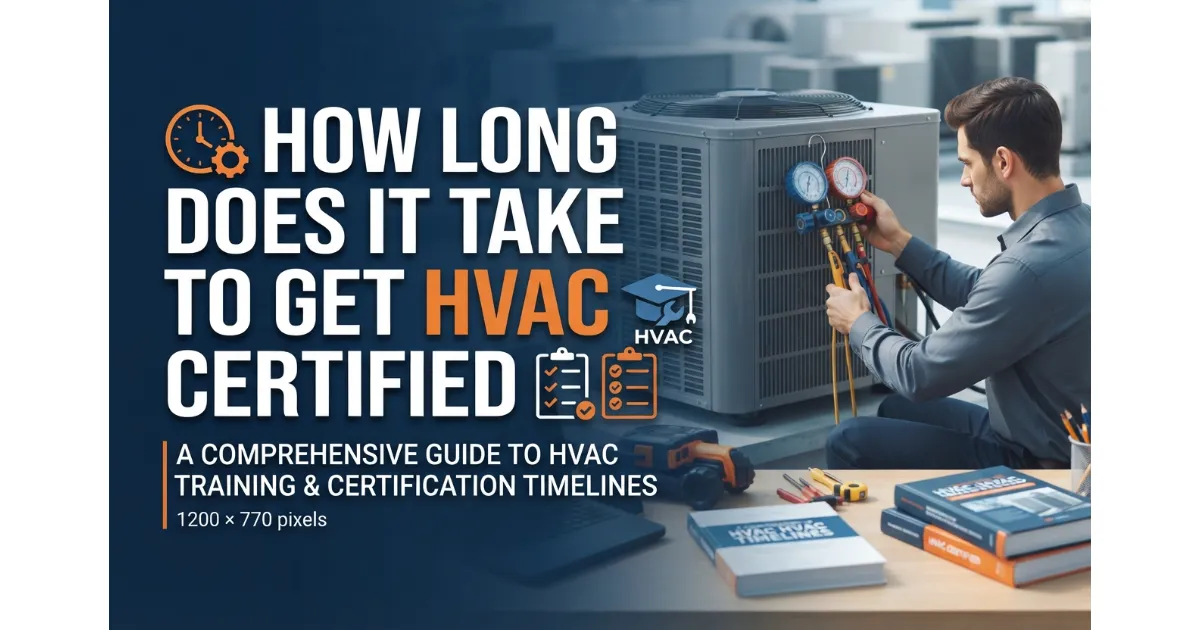
Earning an HVAC certification typically takes anywhere from 6 months to 5 years, depending on the educational path you choose. Certificate programs and trade schools usually take between 6 months and 2 years, whereas a formal union apprenticeship can span up to 4 to 5 years of combined paid on-the-job training and classroom instruction.
Whether you want to enter the workforce as quickly as possible or build a comprehensive foundation as a master technician, your timeline depends heavily on your career goals and chosen training format. Gaining basic credentials also requires passing mandatory federal exams like the EPA 608 certification, which can be completed in just a few weeks.
Key Pathways and Estimated Timeframes
- Certificate Programs: Fast-track technical courses that take 6 to 12 months to complete.
- Associate Degree Programs: Comprehensive community college education taking roughly 2 years.
-
Apprenticeships: Earn-while-you-learn programs lasting 3 to 5 years with extensive fieldwork.
- EPA 608 Universal Certification: Specialized refrigerant handling exam prep that can be accomplished in under a month.
HVAC Certification Timeline by Path
Choosing the right HVAC training path depends on how quickly you want to enter the workforce, your budget, and whether you prefer hands-on field experience over traditional classroom learning. Different program formats balance time investments and starting compensation in distinct ways.
Certificate Programs
A focused certificate program provides the fastest route to entry-level employment. These programs skip general education requirements to focus entirely on core heating, ventilation, air conditioning, and electrical fundamentals.
- Ideal For: Career switchers who want to get certified and hired rapidly.
- Core Focus: Hands-on troubleshooting, wiring diagrams, and safety protocols.
Diploma Programs
Slightly longer than basic certificates, HVAC diploma programs offer deeper technical training in specialized systems like heat pumps, commercial refrigeration, and automated climate controls.
- Ideal For: Students looking for a balanced mix of speed and comprehensive technical depth.
- Core Focus: Advanced diagnostics, duct design, and multi-zone system layouts.
Associate Degree Programs
Offered primarily through community and technical colleges, a 2-year associate degree combines technical coursework with general education classes. It often positions graduates for faster promotion into management or supervisory roles.
- Ideal For: Individuals aiming for long-term career advancement, project management, or business ownership.
- Core Focus: In-depth thermodynamics, system design, business management, and technical math.
Apprenticeships Earn While You Learn
A formal union or merit-shop apprenticeship combines paid on-the-job training under a master technician with mandatory evening classroom instruction. While it requires the longest time commitment, you earn a paycheck from day one.
- Ideal For: Earners who need immediate income while learning the trade.
- Core Focus: Real-world installation, code compliance, and direct mentorship leading to official journeyman status.
Key Certifications You’ll Actually Need
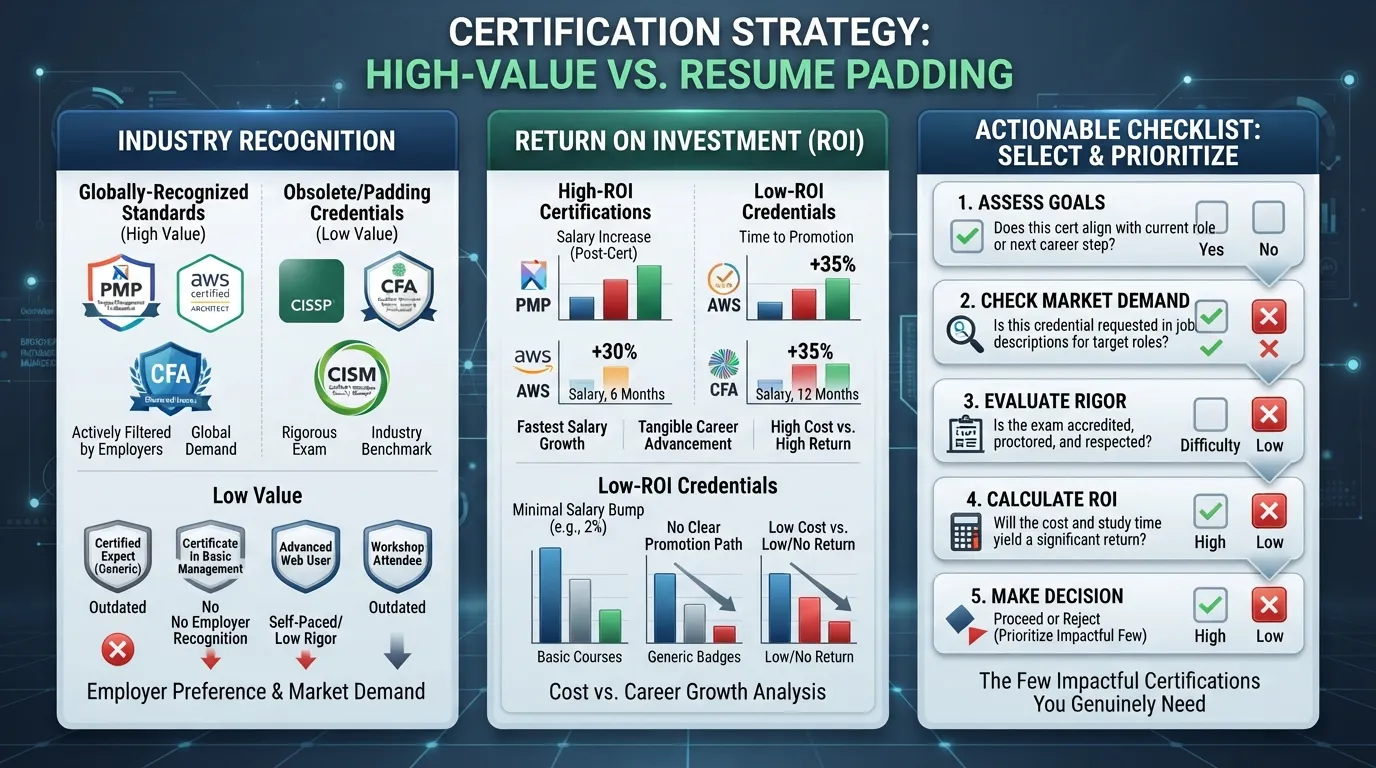
While trade school programs teach you the fundamentals, securing professional certifications is what legally authorizes you to work on equipment and significantly boosts your earning potential. Different credentials validate specific technical skills, regulatory compliance, and system mastery across the industry.
EPA Section 608 Certification Type I II III & Universal 1–2 Weeks
Mandatory under federal law for anyone who handles or purchases refrigerants, the EPA 608 certification is non-negotiable for HVAC technicians. It is broken down into separate categories depending on the scale of equipment you service.
- Type I, II, and III: Cover small appliances, high-pressure equipment, and low-pressure systems respectively.
- Universal Certification: Awarded when you pass all three core sections, giving you complete flexibility to work on any residential or commercial unit.
NATE Certification 2–4 Weeks Voluntary but Valuable
North American Technician Excellence (NATE) certification is widely regarded as the gold standard for validating a technician’s real-world knowledge and installation expertise. Although it is voluntary, top-tier employers heavily prefer or require NATE-certified professionals.
- Core & Specialty Tests: Requires passing a core general exam alongside specialized installation or service tests like heat pumps or gas heating.
- Industry Recognition: Serves as a proven differentiator that commands higher pay rates and client trust.
HVAC Excellence Certification 2–3 Weeks
Administered by the ESCO Group, HVAC Excellence offers professional-level credentials that test technicians across specialized domains like combustion analysis, light commercial air conditioning, and electrical troubleshooting.
- Professional Recognition: Validates foundational and advanced competencies in alignment with strict industry standards.
- Career Mobility: Helpful for proving verified skillsets when moving across state lines or changing specialized contractors.
Manufacturer-Specific Training Carrier Trane etc. Content Gap Fill
Major equipment manufacturers require technicians to complete proprietary training courses to install, service, and honor warranties on advanced systems. These brand-specific credentials ensure you master cutting-edge variable-speed technologies and smart thermostats.
- Brand Authority: Direct factory training from market leaders like Carrier, Trane, or Lennox.
- Warranty Compliance: Protects consumer warranties by ensuring units are serviced exactly to manufacturer specifications.
HVAC Certification Cost & State Licensing Requirements
Understanding the financial investment and regulatory milestones required for your credentials prevents unexpected roadblocks. Total expenses vary based on whether you choose a private technical institution, a community college program, or an independent apprenticeship route.
How Much Does HVAC Certification Cost?
The overall price tag fluctuates depending on your chosen path and whether you need to factor in local testing or state board registration fees. Entry-level certifications like the EPA 608 are relatively inexpensive, whereas comprehensive trade school diplomas involve higher tuition investments.
Do Certification and Licensing Timelines Differ by State?
Yes, regulatory standards vary drastically across the country. While federal guidelines mandate the EPA Section 608 Clean Air Act for refrigerant handling, individual states and municipalities dictate whether you need an independent contracting license to perform service work or pull local building permits.
- State-Mandated Licensing: States like Florida, Texas, and California require specific contractor licenses, background screenings, and proof of structured field experience before you can operate independently.
- Supervised Work Hours: Many jurisdictions require proof of 2,000 to 8,000 hours of active, supervised work history under a licensed master technician before testing for top-tier contractor status.
Example: Florida HVAC Certification Timeline
Meeting regional requirements efficiently requires a clear sequence of milestones. For instance, obtaining a state-certified air conditioning license in Florida typically involves a structured three-to-four-month processing window once educational prerequisites are met:
- Prerequisite Experience: Accumulate 4 years of verified active construction or technical experience (though approved trade school degrees can substitute for up to 3 years of this requirement).
- Exam Registration: Register and pass the Pearson VUE trade knowledge and business finance examinations.
- Application & Clearance: Submit fingerprints, pass a background review, secure liability insurance, and clear state board evaluation through the Florida Department of Business and Professional Regulation (DBPR).
Is HVAC Certification Hard? Difficulty Math & Real Experience
Earning an HVAC certification is entirely manageable for dedicated learners, though it does require a solid grasp of practical physics, electrical wiring, and basic algebra. Success relies less on advanced theoretical mathematics and more on systematic hands-on troubleshooting.
Does HVAC Require Math?
Yes, HVAC training involves basic mathematics, but you will not need calculus or advanced geometry. Technicians use algebra daily to calculate airflow velocity, voltage drops, superheat and subcool values, and proper duct sizing.
- Core Calculations: Basic formulas for Ohm’s Law ($V = I \times R$), British Thermal Units (BTU) sizing, and temperature conversions.
- Practical Application: Most equations are straightforward arithmetic applied directly to equipment specifications and diagnostic readings.
Refrigeration Cycle & Electrical Basics What You’ll Learn
The academic core of any HVAC program focuses heavily on electromechanical systems and thermodynamics. Mastering these foundational principles is essential for passing certification exams and safely servicing complex units.
- The Refrigeration Cycle: Understanding how compressors, condensers, expansion valves, and evaporators transfer heat.
- Electrical Troubleshooting: Reading schematic diagrams, testing capacitors, relays, and working safely with high-voltage circuits.
Real Technician Insight First-Hand Perspective
Experienced field professionals consistently emphasize that book knowledge alone will not make you a successful technician. According to veteran trade instructors, true mastery comes from combining classroom theory with hours of hands-on mechanical troubleshooting in real-world conditions.
- The Field Mindset: Learning to diagnose intermittent electrical faults and mysterious airflow blockages takes patience and repetition.
- Continuous Learning: Technology shifts rapidly toward smart thermostats and inverter compressors, making ongoing brand training vital for career longevity.
Is HVAC a Stressful or Dead-End Job? Career Reality Check
Working in the HVAC industry is far from a dead-end job; it is a high-demand, essential trade offering excellent financial upside, strong long-term job security, and clear pathways for career mobility. However, prospective technicians must weigh these professional rewards against real physical and scheduling challenges.
Physical Demands & Work Environment
HVAC work is physically active and requires comfort working in challenging environments. Technicians frequently find themselves lifting heavy components, climbing extension ladders, and squeezing into tight crawl spaces, hot attics, or chilly rooftops.
- Challenging Conditions: Dealing with extreme seasonal temperatures before a system is operational can test personal endurance.
- Safety First: Managing high-voltage electricity, pressurized refrigerant lines, and sharp sheet metal requires unwavering adherence to safety protocols.
Job Growth & Long-Term Career Outlook
The long-term outlook for certified trade professionals is exceptionally strong. According to the U.S. Bureau of Labor Statistics (BLS), employment for heating, ventilation, air conditioning, and refrigeration mechanics and installers is projected to grow much faster than the average for all occupations.
- Robust Expansion: The BLS projects double-digit employment growth over the decade, driven by constant infrastructure updates and the shift toward energy-efficient climate control.
- Consistent Openings: Tens of thousands of job openings are projected each year, largely driven by industry retirements and a growing nationwide shortage of qualified technical talent.
Job Satisfaction What Technicians Actually Say
Most field technicians report high career satisfaction due to tangible problem-solving, strong earning potential, and the recession-proof nature of the trade. Unlike desk jobs, HVAC professionals see the direct, immediate impact of their troubleshooting skills.
- Schedule Variations: Peak heating and cooling seasons often bring long hours, overtime pay, and emergency on-call rotations, balanced by more predictable hours during shoulder months.
- Entrepreneurial Freedom: With solid field experience and proper licensing, many technicians eventually transition into running their own successful contracting businesses.
HVAC vs Electrician vs Plumber Which Trade Pays More?
Choosing between the major technical trades involves balancing your personal mechanical interests, earning potential, and the time required to complete initial training. While all three career paths offer strong middle-class incomes, subtle differences separate their compensation structures and certification speeds.
Salary Comparison Table HVAC vs Electrician vs Plumber
Evaluating national earnings data from the U.S. Bureau of Labor Statistics demonstrates that skilled trades offer competitive salaries well above the national median for all occupations, with specialized experience driving significant top-tier earning potential.
Which Trade is Faster to Get Certified In?
When comparing speed-to-market, HVAC typically offers the fastest entry route into full-time employment compared to electrical or plumbing careers.
- HVAC Advantage: You can complete an intensive trade certificate or secure an entry-level position within 6 to 12 months, supplemented quickly by the mandatory EPA 608 exam.
- Electrician & Plumber Timelines: While both trades can be entered via short technical courses, reaching independent journeyman status heavily mandates structured 4-to-5-year apprenticeship tracks with rigorous state board oversight.
How to Get Into HVAC With No Experience
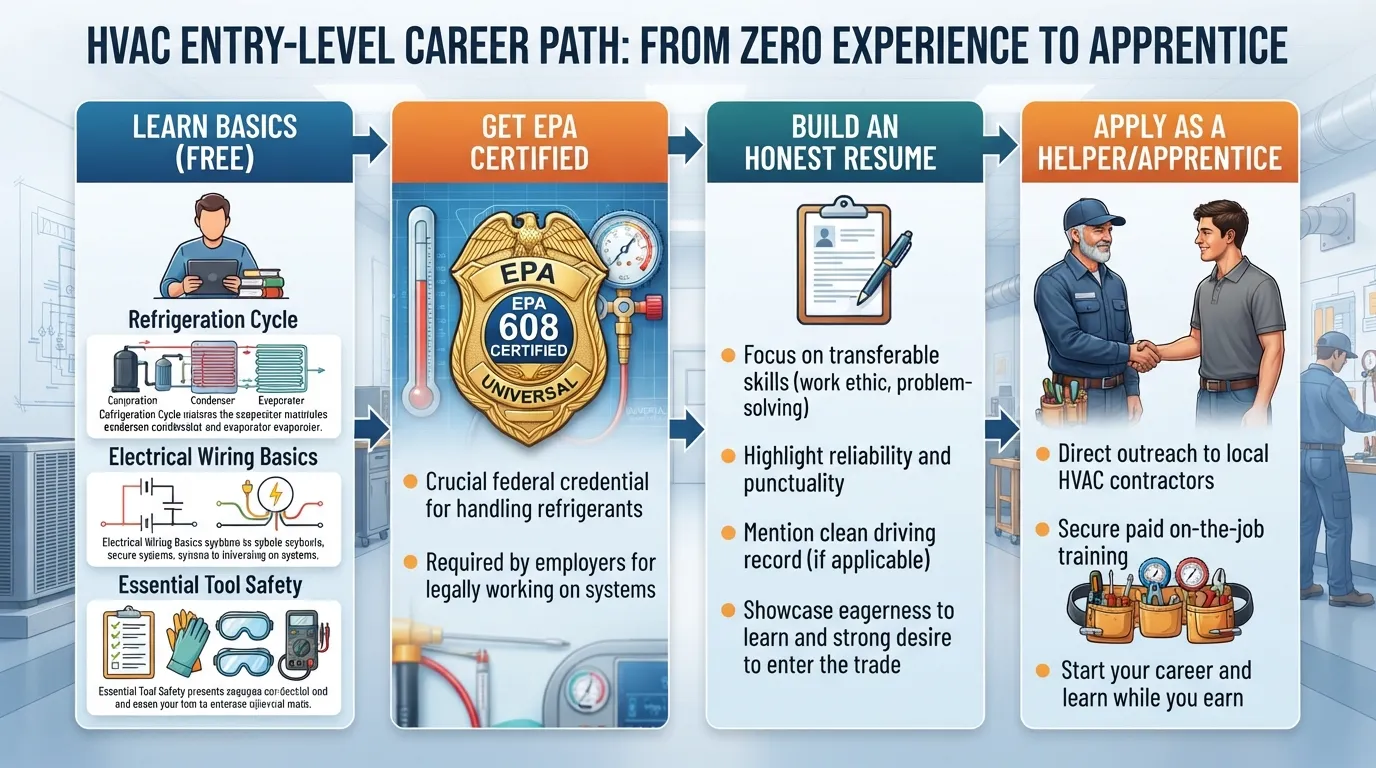
Breaking into the HVAC industry requires zero prior mechanical background or technical experience. Anyone can transition into this high-demand field by following a structured, step-by-step roadmap designed for absolute beginners.
Step-by-Step Path for Complete Beginners
Starting from scratch is straightforward if you follow a logical sequence from foundational learning to landing your first paid position in the field.
- Step 1 – Research Local Trade Options: Evaluate nearby community colleges, technical schools, or contractor-sponsored programs offering entry-level courses.
- Step 2 – Enroll in a Certificate or Apprenticeship: Choose a 6-to-12-month training program or apply directly to local union or merit-shop apprenticeship openings.
- Step 3 – Secure Your EPA 608 Certification: Study for and pass the federally mandated refrigerant handling exam early to boost your hireability.
- Step 4 – Apply for Helper or Installer Roles: Leverage your basic schooling to land an entry-level position as an HVAC helper, working alongside senior technicians.
Military Veteran Transition Path
Veterans transitioning out of the armed forces have a massive advantage when entering the HVAC sector. Military technical experience translates directly into trade credentials.
- GI Bill Utilization: Eligible veterans can use GI Bill benefits to cover tuition and housing stipends during trade school or apprenticeship programs.
- SkillBridge Programs: Programs like DoD SkillBridge allow service members to gain civilian HVAC work experience during their final months on active duty.
Can You Get HVAC Certified Online for Free?
While you can find plenty of free informational videos and study guides online, you cannot earn a fully recognized, legally valid HVAC certification entirely for free online.
- The Proctored Exam Rule: Credentials like the EPA 608 require official proctored testing, which incurs small test-administration fees.
- Hands-On Requirements: True technical mastery requires physical lab practice with actual equipment, making hybrid or in-person training components essential.
Frequently Asked Questions
What is the $5000 rule for HVAC?
The $5,000 rule is a quick industry formula used to decide whether you should repair or replace an aging heating or cooling system. You multiply the age of the system (in years) by the estimated repair cost. If the resulting total is under $5,000, paying for the repair is usually worthwhile; if it exceeds $5,000, investing that money into a brand-new system is typically the smarter long-term financial choice.
How fast can you become an HVAC technician?
You can complete basic entry-level training and enter the workforce in as little to 6 to 12 months through an accelerated trade school certificate program. Obtaining your mandatory EPA 608 certification can take even less time, often achieved within just a few weeks of focused study.
Is an HVAC certificate worth it?
Yes, an HVAC certificate is entirely worth it because legally mandated credentials like the EPA 608 are required before you can handle refrigerants. Furthermore, having formal credentials drastically increases your hiring potential, unlocks higher starting wages, and serves as a foundation for career advancement.
How long is an HVAC apprenticeship?
A formal HVAC apprenticeship typically lasts between 3 to 5 years. These programs combine structured, paid on-the-job training under veteran master technicians with weekly classroom instruction, culminating in official journeyman status.
How long are HVAC classes a day?
Daily class hours vary depending on your institution format. Full-time technical trade school programs usually run 4 to 6 hours per day (similar to a standard workday), while evening or part-time certificate classes often meet for 2 to 3 hours a few nights a week.
How long does it take to become a master HVAC technician?
Becoming a master HVAC technician generally takes 5 to 10 years of combined field experience, continued education, and advanced certifications (such as NATE specialty credentials). Many states also require a set number of documented journeyman work hours before you can test for a master contractor license.
Can you get HVAC certified online?
You can complete theoretical coursework and exam preparation online, but you cannot become fully certified entirely online. Exams like the EPA 608 require official proctored testing, and true technical proficiency requires mandatory hands-on training with physical HVAC equipment.
Conclusion & Next Steps
Embarking on an HVAC career offers a dependable route to high earning potential, strong job security, and hands-on professional fulfillment. Matching your timeline, budget, and learning style to the right training format ensures you enter the workforce with confidence and proper credentials.
Which HVAC Path Is Right for You?
Selecting your ideal training option depends heavily on your immediate personal responsibilities and long-term professional aspirations.
- Choose Certificate or Diploma Programs if your goal is to transition rapidly into the workforce with focused technical competence in under a year.
- Choose an Apprenticeship if you prefer earning an immediate paycheck while gaining extensive, hands-on mentorship directly from veteran master technicians.
- Choose an Associate Degree if you are aiming for future management positions, business ownership, or a deeply comprehensive foundation in thermodynamics.
Your Next Steps to Getting Certified
Translating your career goals into reality requires taking deliberate, sequential actions to secure your training and mandatory credentials.
- Step 1: Research accredited trade schools, community colleges, or union apprenticeship programs operating in your local area.
- Step 2: Enroll in your chosen program and immediately prioritize studying for your federally required EPA 608 refrigerant handling certification.
- Step 3: Build a professional network, apply for entry-level helper or installer positions, and begin tracking your hands-on field hours toward future licensing.

Oscar Vance | Master Plumber & Drainage Expert
Meet Oscar Vance, a licensed master plumber sharing practical solutions on residential repairs, preventive maintenance, and thoughtful home upkeep.