How Long Are HVAC Classes a Day?
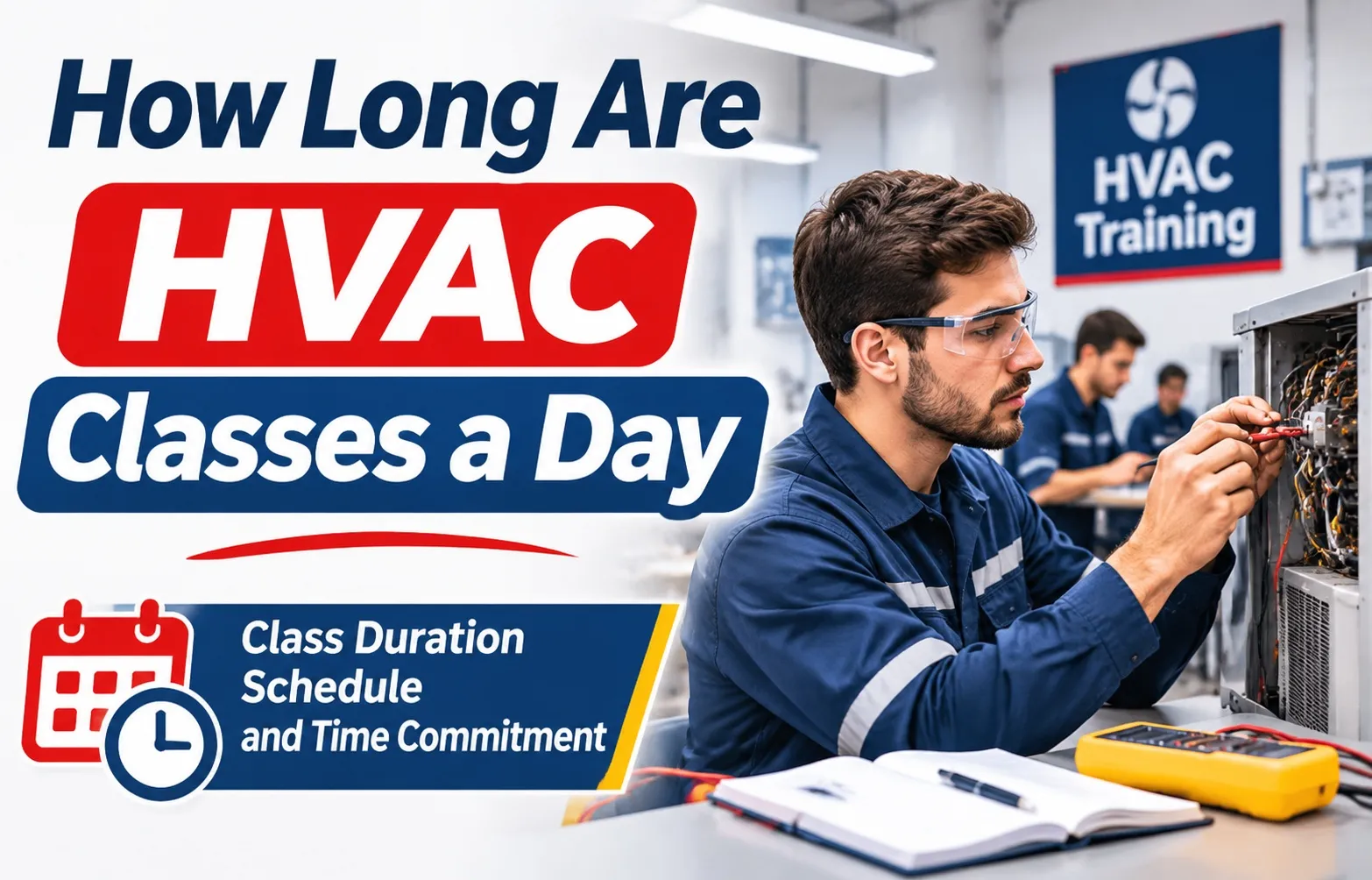 Most standard HVAC training programs run for 4 to 6 hours a day for full-time schedules, while evening options typically require 3 to 4 hours daily. This balance ensures students receive comprehensive instruction in heating ventilation and air conditioning systems without overwhelming their daily routines.
Daily Class Hours at a Glance
Knowing your daily time commitment makes it easier to plan work and personal obligations around trade school classes. Different institutional formats dictate how daily class hours are distributed throughout the week.
- Full-Time Day Programs: Usually span 5 to 6 hours daily, allowing students to complete their coursework efficiently.
- Evening and Night Classes: Run for 3 to 4 hours nightly, tailored for working adults building a career transition.
- Accelerated Formats: Feature intensive daily lab blocks to accelerate graduation timelines.
Why Daily Class Length Varies by Program Type
The daily duration of an HVAC training program varies based on institutional structure, credential requirements, and whether you choose a part-time or full-time schedule. Private trade schools, community colleges, and technical institutes approach daily timetables differently.
- Lab vs. Theory Split: Technical subjects require extensive hands-on practice, influencing how many hours are spent in the shop each day.
- Student Demographics: Schools offer flexible morning, afternoon, and night shifts to accommodate varied student lifestyles.
- Overall Program Speed: Daily hour allocations directly determine how quickly you move from foundational coursework to field readiness.
Comprehensive Breakdown of HVAC Class Schedules
Navigating technical education requires understanding how different programs manage daily time blocks, classroom theory, and hands-on shop training to match diverse student lifestyles.
Full-Time Daytime HVAC Programs (4 to 6 Hours Daily)
Full-time daytime HVAC programs typically run for 4 to 6 hours per day, offering immersive technical training for students dedicated to completing their education quickly. Established institutions like Ayers HVAC training and Pennco Tech structure these daytime blocks to combine intensive classroom lectures with practical shop work.
- Standard Timetables: Classes frequently run Monday through Thursday or Friday, covering 4-to-6-hour intervals such as 8:30 AM to 1:50 PM.
- Immersive Experience: Provides continuous, uninterrupted focus on complex mechanical, electrical, and refrigeration principles.
- Target Audience: Ideal for recent graduates or career changers who can dedicate their days entirely to academic and practical skill-building.
Part-Time and Evening HVAC Classes (3 to 4 Hours Nightly)
Part-time and evening night classes generally require 3 to 4 hours per evening, usually running from 5:30 PM to 9:30 PM. This schedule allows working adults to maintain full-time daytime employment while steadily acquiring essential trade credentials at a technical college.
- Nightly Routine: Sessions typically occur 3 to 4 nights a week to accommodate adult learners.
- Institutional Offerings: Programs at technical colleges like TCAT provide evening pathways specifically designed for working professionals.
- Balanced Pace: Spreads out coursework over a slightly longer timeframe to prevent burnout while juggling outside responsibilities.
Weekend and Accelerated Formats
Weekend and accelerated trade school formats condense instructional hours into intensive Friday evening or Saturday blocks. These flexible schedules suit individuals needing compressed timelines or unique weekly availability to master heating, ventilation, and air conditioning systems.
- Blended Learning: Frequently combines online theoretical modules with intensive weekend practical lab sessions.
- Fast-Track Progress: Allows motivated learners to acquire practical competence without disrupting existing weekday responsibilities.
- Customized Flexibility: Offers non-traditional pathways to accommodate niche student scheduling requirements.
The True Time Commitment: Beyond Just Classroom Hours
Evaluating an HVAC training program requires looking past the daily scheduled hours to account for essential shop labs, homework, and certification testing. Understanding these additional commitments prevents scheduling surprises and ensures proper preparation for technical training.
Classroom Theory vs. Hands-On Shop Lab Hours
Technical competency relies heavily on balancing classroom lectures with practical workshop experience. Daily schedules divide instructional time between learning electrical schematics and applying those concepts directly to equipment.
- Theoretical Instruction: Focuses on thermodynamics, electrical theory, and blueprints, usually taking up the first half of daily sessions.
- HVAC Lab Practice: Dedicates substantial daily hours to hands-on shop work, where students troubleshoot live AC units, furnaces, and refrigeration systems.
- Skill Mastery: Ensures graduates gain the physical dexterity required for brazing pipes, wiring components, and diagnosing mechanical faults.
Out-of-Class Study, Homework, and EPA Certification Prep
Beyond scheduled class hours, students must dedicate significant time to independent study, technical assignments, and exam preparation. Mastering complex heating and cooling systems requires consistent out-of-class commitment.
- Homework Load: Weekly assignments reinforce classroom lectures, covering schematic reading, load calculations, and code compliance.
- EPA Section 608 Certification: Requires dedicated study hours to pass mandatory federal exams covering refrigerant handling and environmental regulations.
- Self-Directed Learning: Supplemental reading and practice quizzes help solidify foundational concepts before practical evaluations.
Total Weekly Time Commitment (What to Expect)
Combining scheduled daily classes with homework and lab practice creates a comprehensive weekly schedule that mirrors a part-time or full-time job. Realistically planning for these hours guarantees a smoother educational journey.
- Full-Time Programs: Typically demand 20 to 30 hours of in-class time plus an additional 5 to 10 hours of homework and study per week.
- Part-Time Programs: Require 12 to 16 hours of evening class time weekly, supplemented by independent study during weekends.
- Work-Life Balance: Factoring in total weekly hours helps working professionals determine whether a daytime or evening format fits their routine.
The 10-Week Bootcamp vs. 1-Year Trade School Debate
Choosing between an intensive 10-week HVAC certification bootcamp and a traditional 1-year trade school diploma is one of the most heavily debated topics among aspiring technicians on industry forums. Deciding between speed and depth depends entirely on your financial situation, learning style, and immediate career objectives.
Fast-Track 10-to-12 Week Bootcamps: Pros and Cons
Fast-track HVAC certification bootcamps offer an expedited route into the workforce, focusing strictly on core technical fundamentals and immediate testing preparation. While they minimize time away from earning a paycheck, their compressed schedules demand intense daily focus and leave little room for deep mechanical troubleshooting practice.
- Pros: Quick entry into the job market, lower upfront tuition costs, and concentrated instruction focused strictly on passing immediate certification exams.
- Cons: Limited hands-on lab experience with diverse equipment, a high-pressure pace that can overwhelm complete beginners, and less comprehensive coverage of advanced electrical theory.
- Ideal For: Individuals with existing mechanical experience who want a rapid credential boost rather than a complete foundational pivot from scratch.
Comprehensive 9-Month to 1-Year Diploma Programs: Is the Extra Time Worth It?
A comprehensive 1-year trade school diploma or community college program provides a thorough education that covers complex electrical diagnostics, advanced refrigeration loops, and extensive workshop hours. Although it requires a heavier upfront time commitment, it builds deep mechanical fluency and long-term career readiness.
- Pros: Extensive hands-on shop time, deeper theoretical understanding, robust career placement services, and stronger foundational confidence in the field.
- Cons: Higher overall tuition investment, longer duration before entering full-time employment, and rigid daytime scheduling constraints.
- Ideal For: Complete career changers and beginners who need structured, step-by-step guidance to achieve complete technical competency.
What Employers Actually Prefer in the Field
Industry employers typically prioritize practical diagnostic skills, valid certifications, and a strong work ethic over the exact length of a candidate’s schooling. However, contractors frequently report that graduates from longer institutional programs possess better foundational problem-solving abilities when facing complex systems.
- Certification Focus: Holding a universal EPA card and relevant safety credentials often carries more weight during initial hiring evaluations than school duration alone.
- Apprenticeship Integration: Many local mechanical contractors prefer pairing new hires with structured on-the-job training, regardless of whether they completed a short bootcamp or an extended diploma.
- Real-World Adaptability: Employers value technicians who can safely troubleshoot live equipment and interact professionally with clients—abilities heavily shaped by extensive lab exposure.
Can You Work Full-Time While Attending HVAC School?
Working a 9-to-5 job while training for a new career is entirely feasible when utilizing flexible trade programs and evening classes. Structuring your routine around night sessions allows you to earn a steady income while systematically building high-demand technical skills.
Balancing Evening Classes with Daytime Employment
Enrolling in evening or weekend technical classes enables students to maintain daytime employment without facing financial disruption. Night programs typically schedule sessions after regular working hours, providing a reliable bridge between your current job and your future career.
- After-Hours Scheduling: Classes running from 5:30 PM to 9:30 PM fit cleanly after standard shift hours.
- Financial Stability: Continuing full-time work reduces financial stress and covers daily living expenses while studying.
- Gradual Transition: Provides a manageable pace to absorb complex electrical and refrigeration concepts without overwhelming your schedule.
Employer Sponsorship and Apprenticeship Options
Pursuing an HVAC apprenticeship offers a practical alternative by combining paid on-the-job training with structured classroom instruction. Many local contractors sponsor aspiring technicians, helping offset educational expenses in exchange for a commitment to their service team.
- Earn While You Learn: Get paid for daytime field hours while completing related instruction at night or on weekends.
- Direct Mentorship: Gain valuable insights from experienced master technicians in real-world residential and commercial environments.
- Tuition Assistance: Utilize employer-backed programs or union-sponsored training funds to minimize out-of-pocket school costs.
Time-Management Strategies for Working Students
Successfully juggling full-time employment and technical studies requires rigorous organization, strict scheduling, and dedicated study blocks. Establishing a predictable daily routine prevents burnout and keeps you fully prepared for written and practical exams.
- Dedicated Study Blocks: Carve out specific evening or weekend hours exclusively for homework and EPA exam review.
- Transparent Communication: Discuss your school schedule with employers early to secure predictable shift stability.
- Prioritized Rest: Maintain a healthy work-life balance by safeguarding sleep and personal time to ensure cognitive focus during lab work.
Frequently Asked Questions About HVAC Training and Careers
Evaluating trade school programs and future career paths raises common questions regarding learning speeds, curriculum difficulty, and daily work realities.
How quickly can you learn HVAC fundamentals?
Learning HVAC fundamentals typically takes anywhere from 10 weeks in an intensive bootcamp to 9 months or a full year in a comprehensive trade school diploma program, depending on daily classroom hours and hands-on lab practice. Mastering essential technical concepts requires balancing theoretical study with physical tool application.
- Core Subject Mastery: Programs quickly cover critical competencies like the refrigeration cycle, electrical schematics, and mechanical troubleshooting.
- Program Pace: Accelerated bootcamps compress foundational learning into rapid daily sessions, while diploma programs spread instruction over months for deeper understanding.
- Federal Regulations: Students must allocate study time to master environmental compliance and refrigerant handling standards, as outlined in the EPA Section 608 Certification Guidelines.
Is HVAC school hard to pass?
HVAC school presents moderate academic and technical difficulty, combining classroom study of electrical theory and thermodynamics with hands-on mechanical troubleshooting in shop labs. Success in the program depends heavily on consistent study habits and active participation in workshop training.
- Academic Demands: Students must learn electrical diagnostics, mathematical load calculations, and complex wiring diagrams.
- Practical Challenges: Developing physical dexterity for pipe brazing, meter testing, and component replacement requires regular shop practice.
- Supportive Environment: Instructors and lab assistants guide beginners through difficult technical barriers to ensure career readiness.
Is HVAC a traditional 9-to-5 job once certified?
Working as a certified HVAC technician rarely follows a standard 9-to-5 schedule because service, repair, and maintenance requests depend heavily on seasonal weather extremes, emergency equipment breakdowns, and commercial operational hours.
- Emergency On-Call Shifts: Field technicians often rotate on-call hours to handle urgent residential and commercial heating or cooling failures outside normal business hours.
- Seasonal Demand Spikes: Extreme summer heat and winter freezing temperatures create heavy workloads, high overtime opportunities, and dynamic daily schedules.
- Alternative Career Paths: Commercial installation, preventative maintenance contracts, and facility management roles offer more predictable daytime hours compared to emergency service positions.

Oscar Vance | Master Plumber & Drainage Expert
Meet Oscar Vance, a licensed master plumber sharing practical solutions on residential repairs, preventive maintenance, and thoughtful home upkeep.