Can a Plumber Fix a Washing Machine?
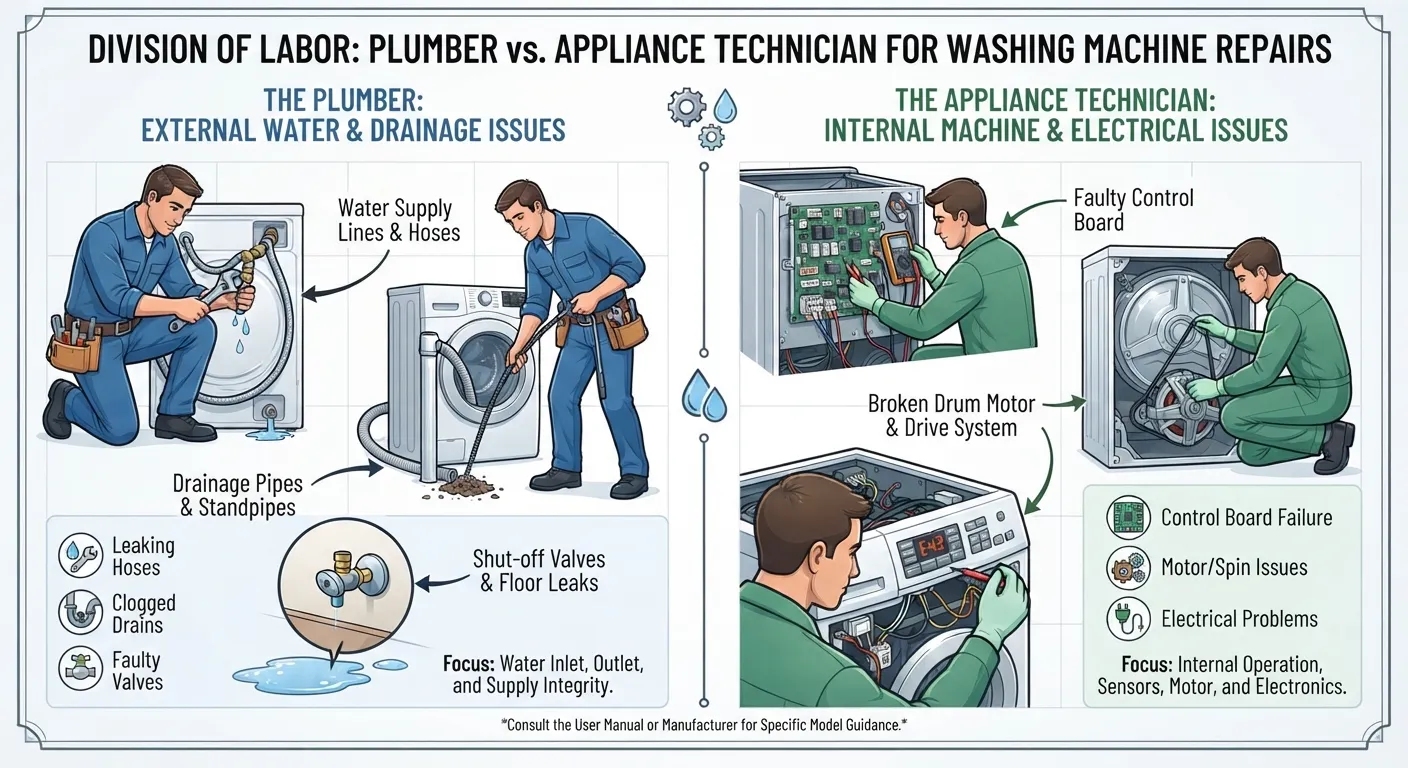
Yes, licensed plumbers can fix specific washing machine issues, but their expertise is strictly limited to external plumbing connections rather than internal mechanical or electrical components. While they excel at resolving leaks, supply line failures, and drainage blockages, internal technical breakdowns typically require a specialized appliance repair technician.
The Short Answer Yes But With Limits
Understanding the exact boundaries between plumbing work and appliance engineering helps property owners save time, avoid unnecessary service fees, and call the correct professional on the first try. Plumbers focus heavily on the infrastructure surrounding the appliance.
-
Water supply lines: Plumbers can repair, tighten, or replace leaking supply hoses and faulty wall shut-off valves.
-
Drain hoses and standpipes: They clear clogs in home drainage systems and secure loose discharge hoses.
-
Appliance limitations: Plumbers generally do not service internal components like control boards, motors, agitators, or heating elements.
What Can a Plumber Actually Fix in a Washing Machine?
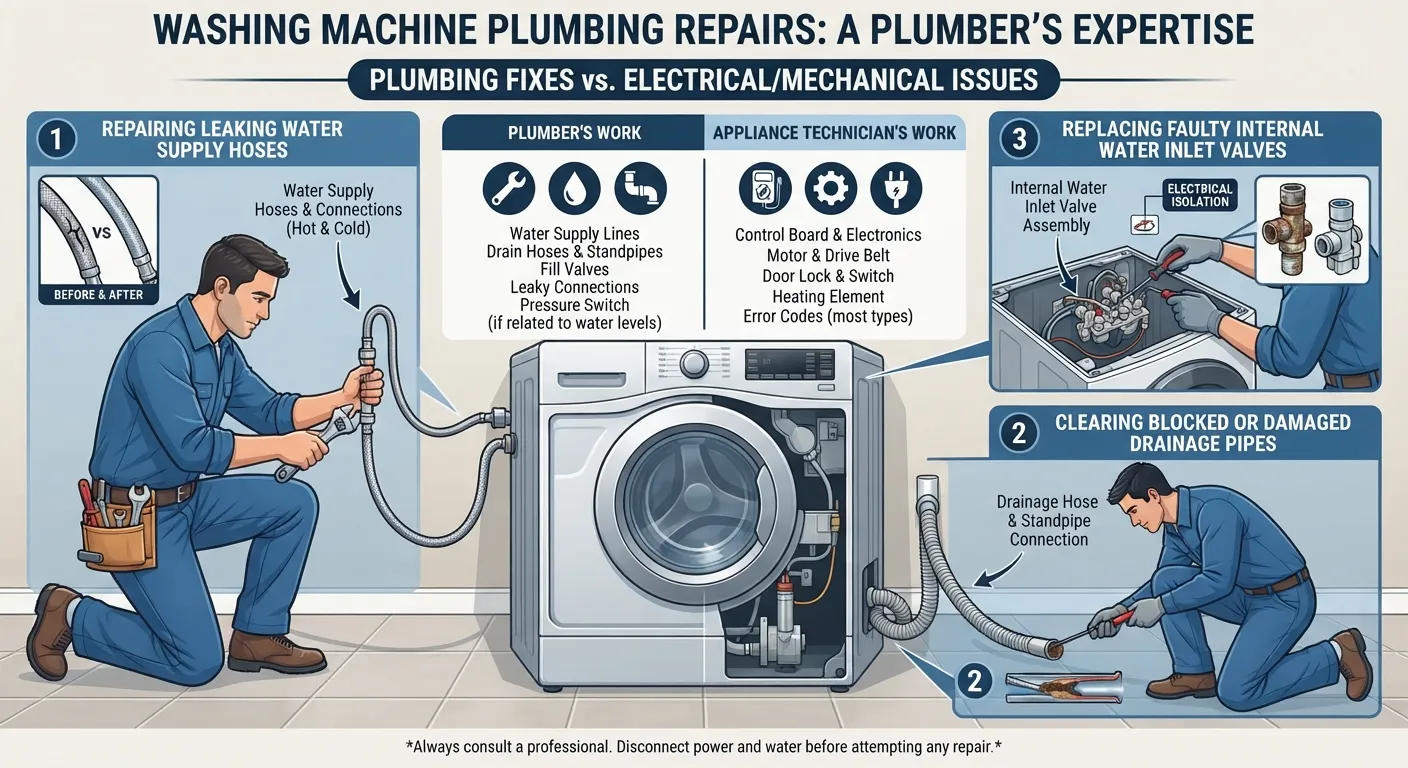
Plumbers possess specialized expertise in addressing the critical infrastructure that connects a washing machine to a home’s water and drainage systems. Understanding these specific boundaries ensures that homeowners enlist the right trade professional for water line leakage, drainage failures, and valve malfunctions.
Clogged or Backed Up Drain Lines
Washing machine drainage systems frequently experience backups due to lint accumulation, detergent residue, or blocked house traps. A licensed plumber can efficiently clear these obstructions to prevent localized flooding and water damage in the laundry room.
-
Standpipe blockages: Clearing deep clogs within the vertical PVC standpipe connected to the main drain.
-
Discharge hose alignment: Securing drainage lines to prevent wastewater from overflowing during high-speed spin cycles.
-
Drainage system inspection: Utilizing diagnostic tools to verify that home sewer lines can handle heavy effluent discharge volumes.
Leaking or Burst Supply Hoses
Rubber supply lines degrade over time due to constant water pressure and thermal expansion, making them prone to sudden ruptures. Plumbers routinely inspect these lines and upgrade home infrastructures to prevent catastrophic residential floods.
-
Hose replacement: Swapping out old rubber hoses for burst-resistant braided stainless steel lines.
-
Connection sealing: Replacing worn-out rubber washers and properly tightening threaded coupling nuts.
-
For professional guidelines on preventing water damage from laundry supply failures, consult the The Spruce Plumbing Safety Guide.
Faulty Wall Shut Off Valves Hot & Cold
When supply valves seize up, leak around the stem, or fail to completely shut off water flow during emergencies, plumbing intervention becomes necessary. Plumbers repair or replace these critical access points to restore immediate water control.
-
Valve replacement: Upgrading archaic gate valves to reliable quarter-turn ball valves for rapid emergency shut-offs.
-
Packing nut adjustments: Fixing slow leaks that seep out from the valve handle stem during regular operation.
Common Plumbing Related Washing Machine Calls
Residential service logs indicate that over sixty percent of emergency calls regarding washing machine floods stem from external plumbing fixtures rather than internal mechanical failure. Homeowners facing sudden puddles near the base of the machine should inspect external connections before assuming the appliance itself is broken.
What a Plumber Cannot Fix When You Need an Appliance Technician
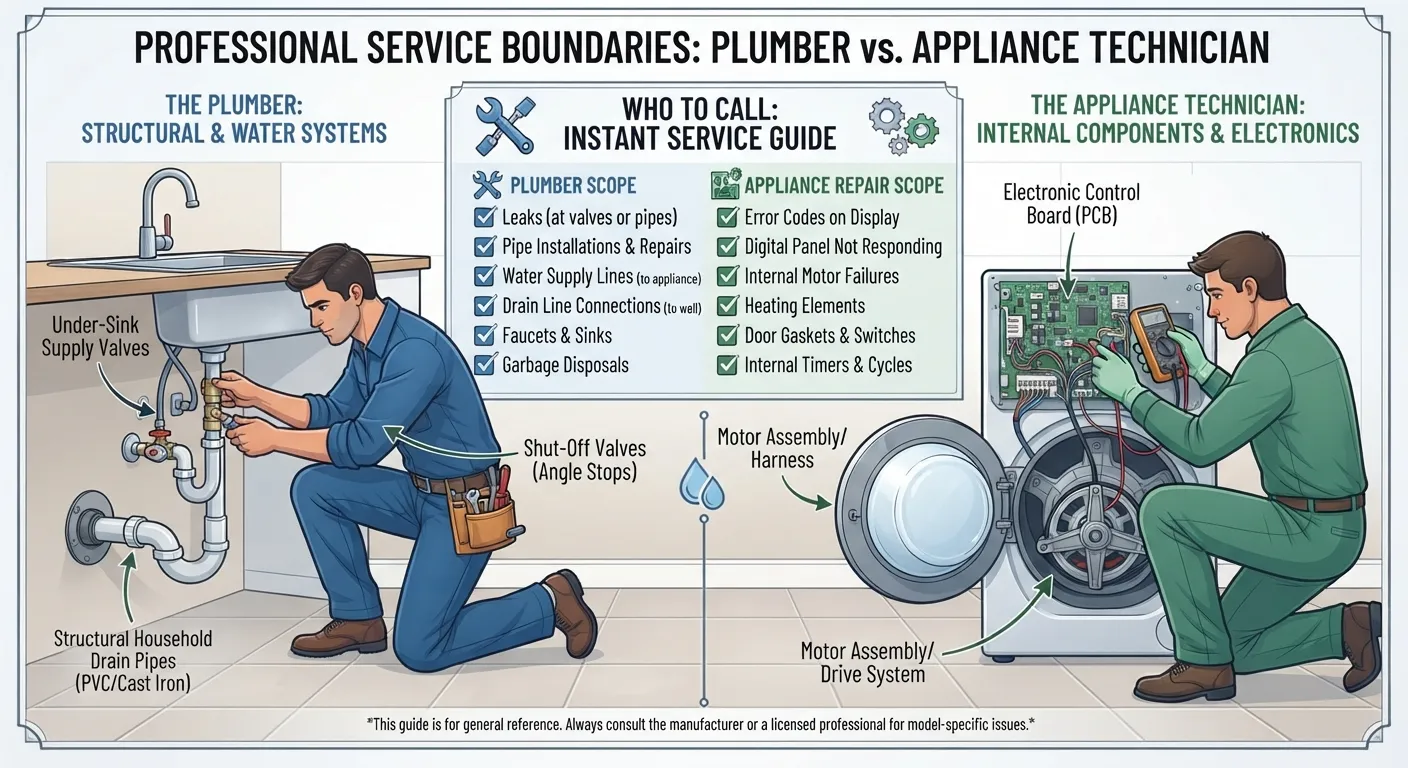
Plumbers focus exclusively on external water lines and home drainage, meaning they lack the specialized training required for internal mechanical or electrical issues. When a washing machine suffers from internal component failures or software glitches, an appliance repair technician is the necessary professional to call.
Won’t Spin or Drain Pump Motor Failure
When a washing machine fails to agitate, spin, or expel water despite clear external drain lines, the issue usually stems from a failing internal water pump or drive motor. Plumbers do not carry replacement parts or tools for internal appliance machinery.
-
Internal drain pump clogs: Coins, lint, or small garments trapped directly inside the machine’s internal pump filter.
-
Drive system failures: Worn-out motor belts, broken couplings, or seized transmission gears.
-
Switch malfunctions: Faulty lid switches or door latches that trick the machine into thinking it is open.
Internal Leaks Inside the Drum
Puddles originating from underneath the center of the appliance rather than the back water connections typically indicate internal component degradation. Appliance technicians must disassemble the outer casing to locate and repair these leaks.
-
Tub gasket tears: Ripped rubber door boots or perimeter seals in front-load washing machines.
-
Dispenser hose punctures: Split flexible lines connecting the detergent drawer directly to the wash tub.
-
Outer tub fractures: Cracks in the plastic outer drum assembly resulting from high-speed vibrations.
Electrical or Control Board Errors
Modern washers rely heavily on digital control boards, complex wiring harnesses, and electronic sensors to manage water levels and cycles. Plumbers are neither licensed nor equipped to diagnose or repair high-voltage or low-voltage appliance electronics.
-
Digital display errors: Unresponsive user interfaces or persistent error codes indicating board failure.
-
Sensor problems: Malfunctioning water-level pressure switches, thermistors, or optical speed sensors.
-
Power delivery issues: Blown internal fuses, tripped thermal cutoffs, or fried internal wiring harnesses.
Plumber vs Appliance Technician Side-by-Side Comparison
Choosing the correct professional depends entirely on whether the failure occurs within your home’s fixed plumbing infrastructure or inside the appliance itself. Reviewing a direct side-by-side comparison of job scopes, skillsets, and tools prevents costly misdiagnoses and wasted service fees.
Job Scope, Skillset, Typical Tools
Decision Checklist Bullet Format
Evaluate your washing machine issue against these specific criteria to determine whether you need to search for a plumber near me or an appliance repair technician near me.
-
Call a plumber if: Water is spraying from the wall, supply hoses are bulging, or wastewater is backing up into the standpipe during a cycle.
-
Call an appliance technician if: The machine will not spin, makes grinding noises during agitation, displays electronic error codes, or leaks directly from the middle of the cabinet floor.
-
When in doubt: Inspect the source of the water puddle; if it traces back to a pipe, valve, or drain, choose a plumber. If it traces back to the machine’s internal housing, choose a technician.
How Much Does It Cost to Fix a Washing Machine?
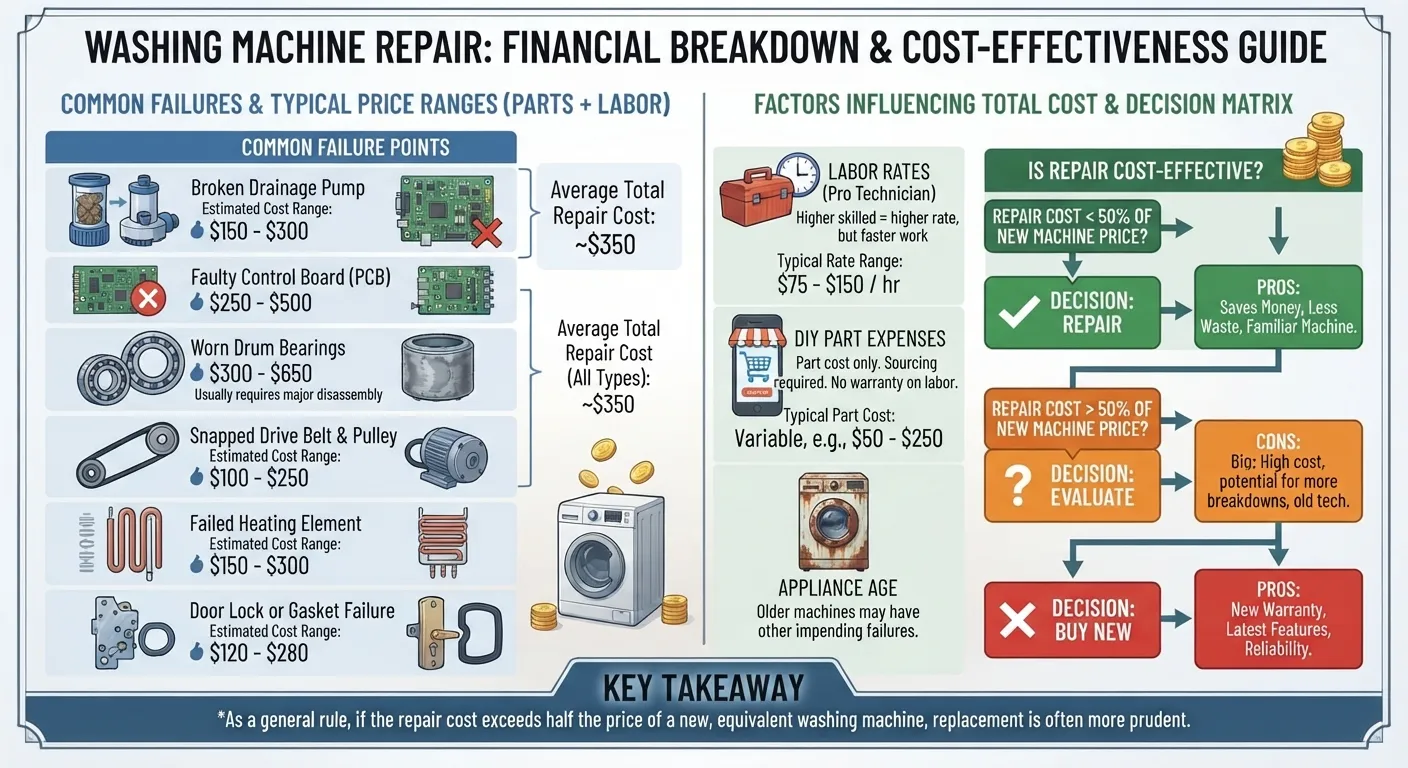
Understanding potential expenses helps property owners budget effectively when evaluating whether to hire a plumber or an appliance technician. Repair costs vary dramatically depending on whether the issue involves external plumbing lines or internal mechanical and electrical hardware.
Average Plumber Cost for Washing Machine Issues
Plumbers generally charge an hourly rate between $45 and $150, alongside a standard service trip fee of $70 to $130. Most minor external plumbing adjustments are completed within a single hour.
-
Supply hose replacement: Typically ranges from $150 to $350, including high-grade braided stainless steel materials.
-
Wall shut-off valve repair: Usually costs between $175 and $300 depending on pipe accessibility and corrosion.
-
Standpipe clearing: Standard drain snaking averages $150 to $250.
Average Appliance Technician Repair Cost
Appliance repair professionals typically charge total project rates ranging from $100 to $400 for common mechanical fixes, factoring in diagnostic fees and replacement components. Major internal overhauls require higher financial investments.
-
Drain pump replacement: Ranges from $150 to $350.
-
Drive belt or lid switch fix: Generally costs $100 to $200.
-
Control board or motor replacement: Higher-end fixes span from $300 to $700+.
Factors That Affect the Final Price
Multiple variables influence the total bill for laundry room repairs, dictating whether a fix remains cost-effective or pushes toward appliance replacement.
-
Accessibility: Units tightly wedged into custom cabinetry or stacked closets require extra labor hours to pull out safely.
-
Severity of water damage: Secondary issues like rotted subfloors or drywall patching add substantial construction costs.
-
Age of the unit: Appliances older than eight years experiencing motor or control board failures usually justify complete replacement rather than expensive repairs.
Symptom Based Troubleshooting Guide
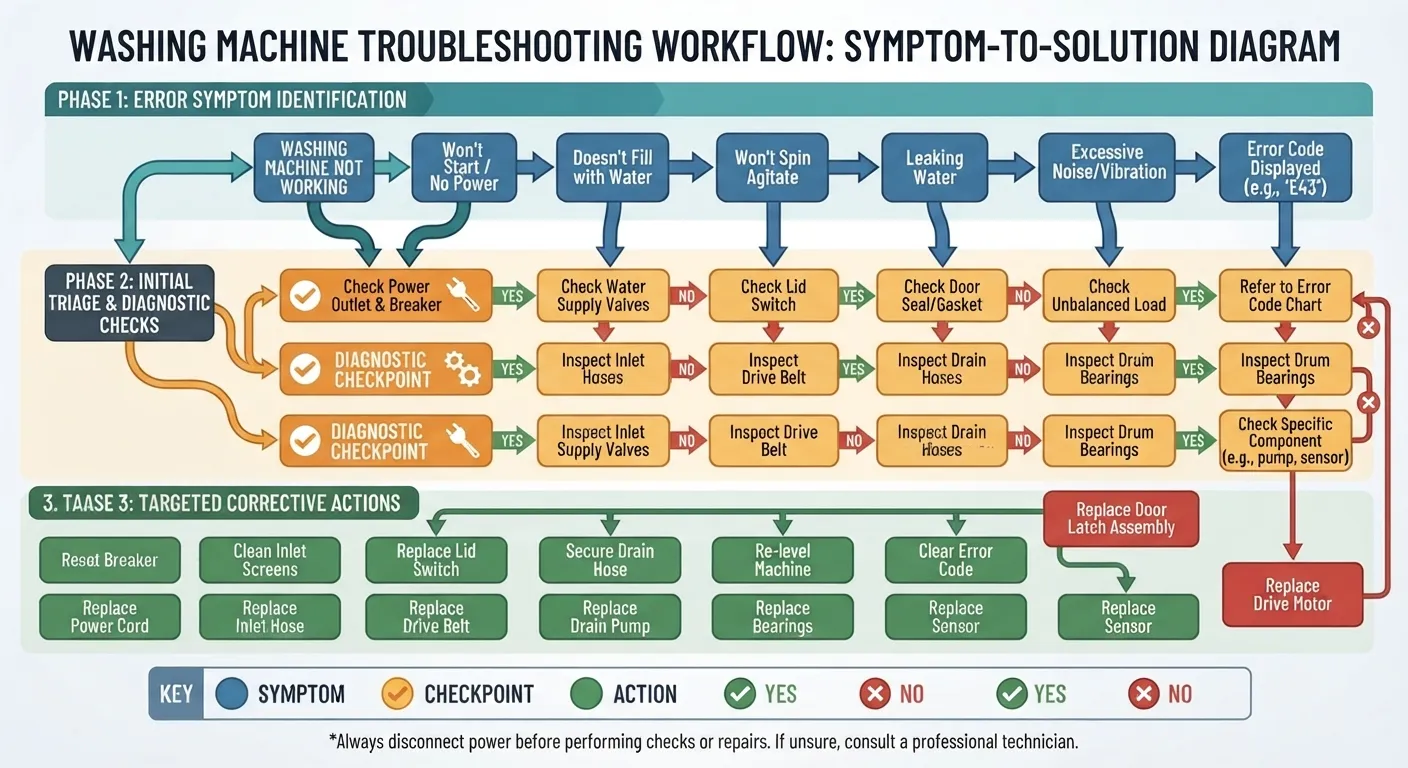
Diagnosing washing machine failures by analyzing specific symptoms helps property owners instantly identify whether the root cause stems from external plumbing or internal mechanics. Reviewing distinct operational failure markers ensures accurate problem isolation before requesting professional service.
Machine Leaking From the Bottom
Puddles forming beneath the appliance require careful tracing to determine if an external water line or an internal pump component is failing. Pinpointing the origin prevents unnecessary service disassemblies.
-
Plumbing source: Loose supply line connections or a cracked wall valve usually cause pooling directly behind the unit.
-
Appliance source: Ripped door seals, loose internal hoses, or cracked drain pumps trigger puddles directly under the center of the chassis.
Washing Machine Not Draining
Standing water left inside the drum at the end of a cycle indicates an obstruction within the discharge pathway. Obstacles can reside in either home plumbing or internal machine filters.
-
Plumbing source: Clogged vertical standpipes or blocked household sewer lines prevent wastewater from escaping safely.
-
Appliance source: Blocked coin traps, kinked internal discharge hoses, or burned-out internal water pumps halt evacuation.
Loud Banging or Grinding Noise
Unusual sounds during operation almost always point toward mechanical imbalances or failing internal hardware. Plumbers do not handle these specialized mechanical fixes.
-
Mechanical failure: Worn-out tub bearings, loose drive pulleys, or broken suspension rods require appliance technician intervention.
-
Load imbalance: Heavy items shifting out of place during high-speed spinning create loud transient thumping noises.
Water Not Filling Properly
When a drum fails to reach adequate water levels, flow restrictions along the supply chain must be inspected immediately. Both home valves and internal components can restrict water intake.
-
Plumbing source: Partially closed wall shut-off valves or severely kinked external braided hoses choke incoming water supply.
-
Appliance source: Clogged inlet valve screens, mineral scale buildup, or faulty electronic pressure sensors disrupt proper filling cycles.
DIY Checks Before Calling Anyone
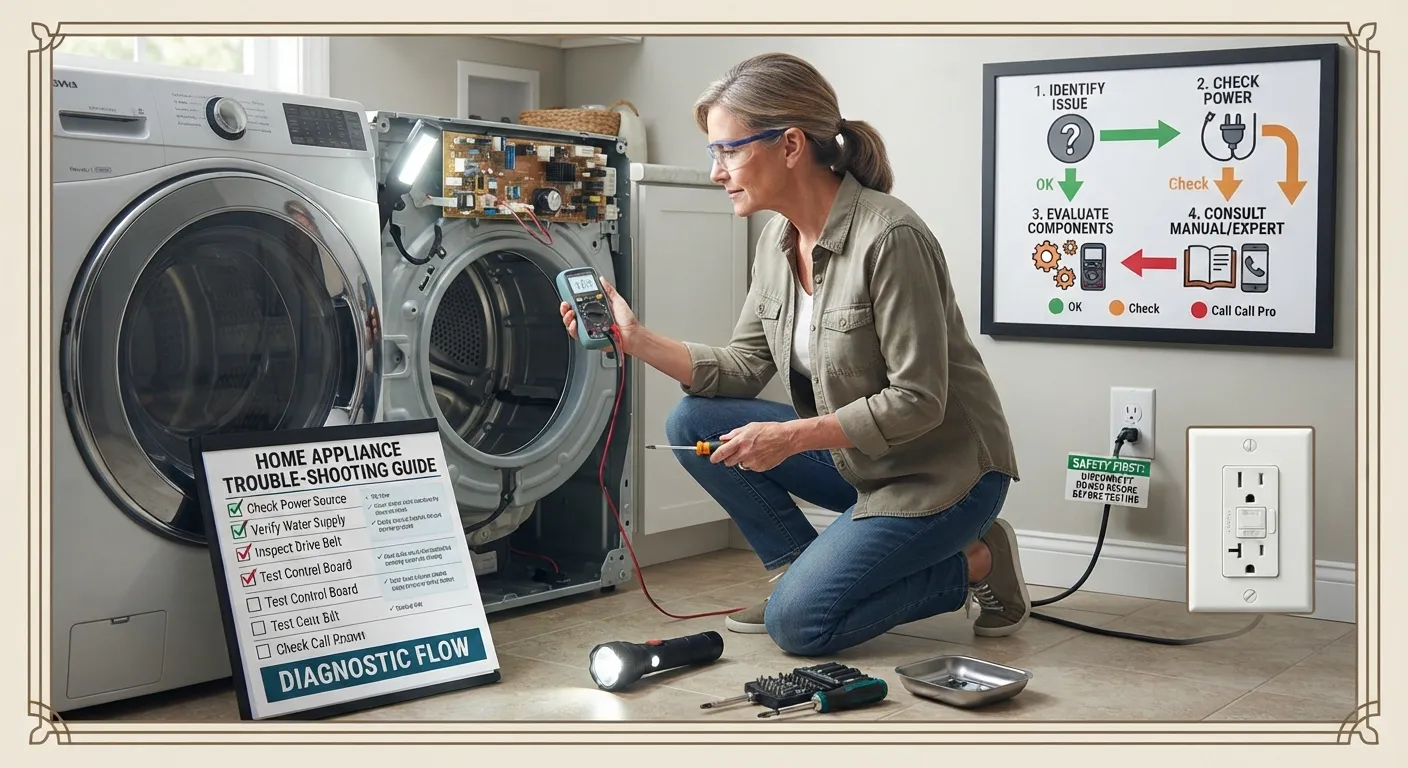
Performing basic inspections before scheduling a professional service visit can save property owners unnecessary diagnostic fees and wasted time. Simple physical checks often resolve minor laundry room disruptions without requiring professional intervention.
Check the Hose for Kinks or Loose Connections
Physical shifts during heavy spin cycles frequently cause washing machine supply or drain hoses to twist, pinch, or loosen. Inspecting the immediate rear of the unit takes minutes and immediately addresses unexpected flow restrictions or slow leaks.
-
Verify alignment: Ensure the flexible drain hose is not jammed too deeply into the vertical standpipe, which can cause siphon issues.
-
Feel coupling fittings: Hand-tighten or gently snug the threaded nuts on water supply lines if moisture appears near the threads.
-
Straighten bends: Smooth out any sharp kinks along braided steel or rubber supply hoses to restore unobstructed water flow.
Inspect the Wall Valve Position
Accidental bumps during routine room cleaning or loading tasks can partially or fully close the hot and cold water shut-off valves. Confirming that these manual controls remain fully open eliminates artificial supply shortages.
-
Quarter-turn handle alignment: Ensure the handle runs parallel to the water pipe, indicating an open position.
-
Gate valve checks: Turn older round handles counterclockwise as far as possible to ensure water pathways are fully engaged.
Reset the Machine Before Assuming It’s Broken
Modern electronic washing machines occasionally experience temporary software glitches or control board lockups during power surges or heavy load cycles. A simple electrical reset clears minor error states.
-
Unplug the unit: Disconnect the appliance from the wall outlet for at least one to two minutes to drain residual board capacitance.
-
Perform master resets: Follow specific manufacturer keypad sequences if the control interface remains locked or displays persistent fault codes after repowering.
Is It Worth Repairing or Should You Replace the Washing Machine?
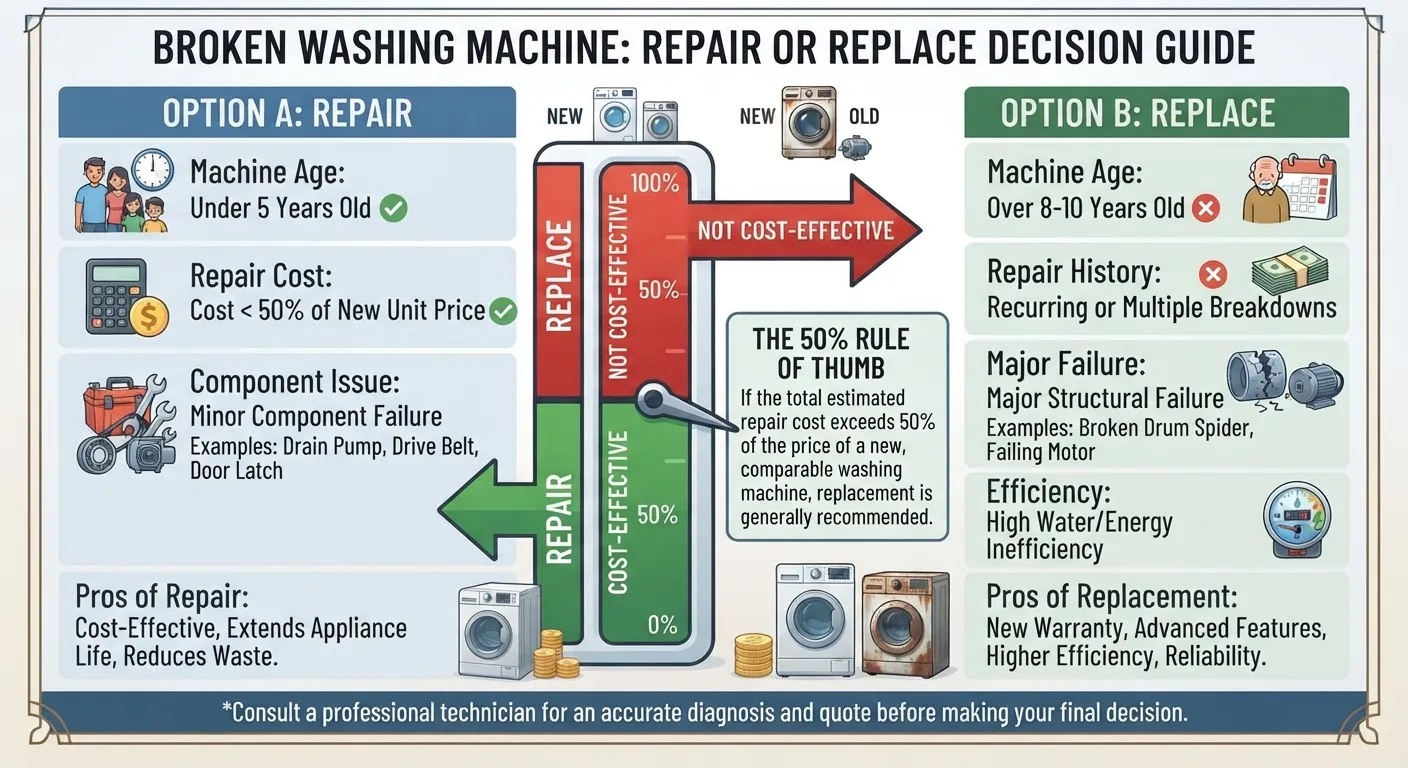
Deciding whether to repair a failing laundry appliance or invest in a brand-new unit requires balancing the current equipment age against rising maintenance costs. Evaluating repair expense thresholds prevents property owners from sinking money into aging hardware that will likely fail again soon.
Average Lifespan of a Washing Machine
Most modern residential washing machines operate reliably for an average of eight to twelve years, depending on manufacturing build quality and usage frequency. Top-load configurations often boast slightly longer service windows compared to complex, high-efficiency front-load units.
-
Top-load washers: Typically last between 10 to 14 years with basic routine maintenance.
-
Front-load washers: Generally maintain peak performance for 8 to 11 years before major components degrade.
-
Usage impact: Daily multi-load cycles in large households naturally shorten total operating expectancy by several years.
The 50% Rule Repair Cost vs Replacement Cost
Industry standards recommend applying the 50% rule when weighing plumbing or appliance repair bills against purchasing a brand-new machine. If the estimated repair cost exceeds half the price of a comparable replacement model, buying new is almost always the smarter financial choice.
-
Minor fixes: Repairs costing under $250 on a unit less than six years old heavily favor keeping the current appliance.
-
Major overhauls: Paying $400 or more for motor replacements on a ten-year-old machine wastes funds better allocated toward a modern, energy-efficient upgrade.
When Replacement Makes More Sense
Certain structural failures or recurring performance issues make sinking funds into an old washing machine completely impractical. Knowing when to walk away from a broken unit saves both time and continuous service fees.
-
Repeated breakdowns: Experiencing multiple major mechanical or plumbing part failures within a single 12-month period signals systemic wear.
-
Outer tub fractures: Cracked plastic wash drums require total unit replacement due to prohibitive labor and part costs.
-
Outdated efficiency: Upgrading appliances older than a decade drastically reduces household water and electricity consumption.
Who’s Responsible If You’re Renting?
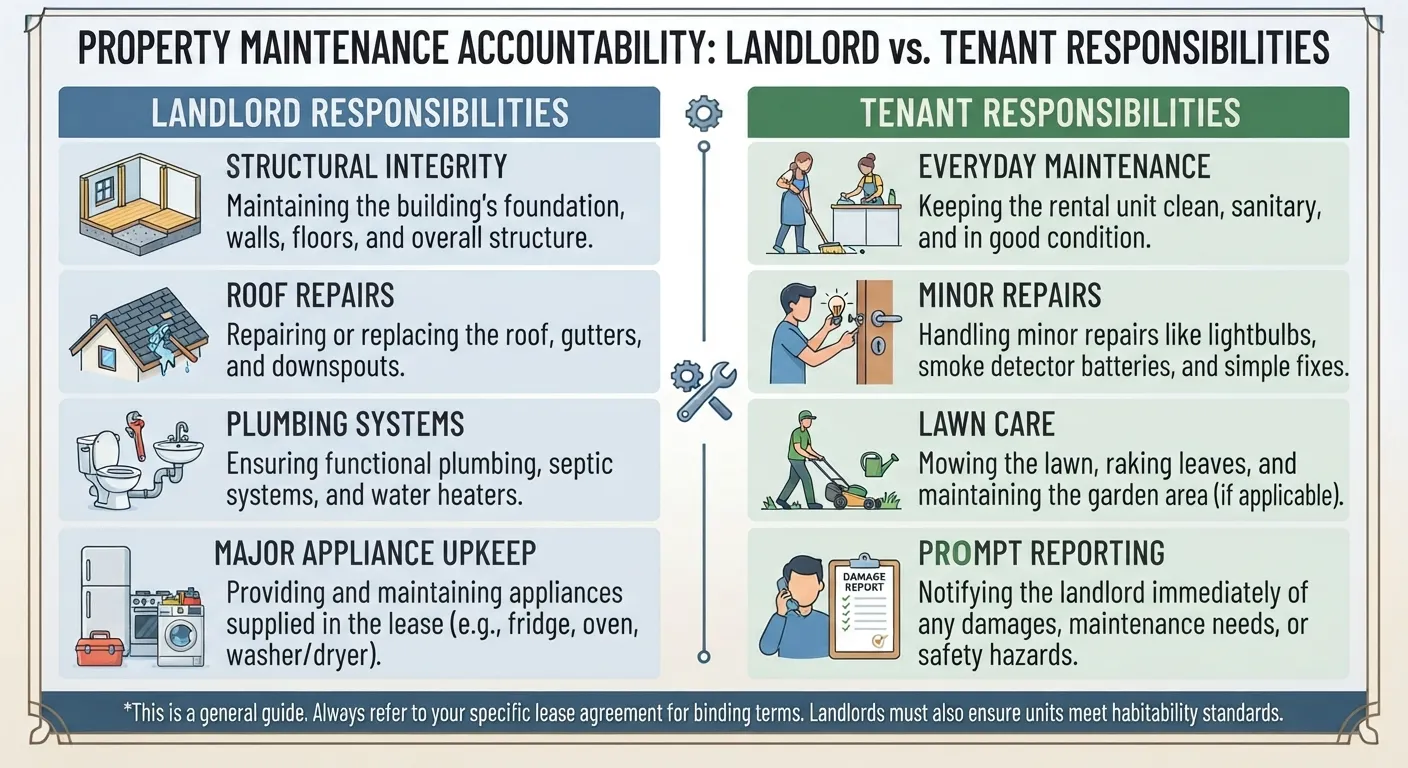
Determining liability for washing machine repairs in a rental property depends heavily on lease agreements, the origin of the damage, and whether the appliance was provided by the landlord. Understanding legal responsibilities prevents disputes and ensures timely resolution of maintenance issues.
Landlord vs Tenant Responsibility
Lease agreements typically dictate maintenance boundaries, but standard housing laws outline clear delineations between landlord obligations and tenant accountability regarding laundry appliances.
-
Landlord obligations: Property owners are generally responsible for maintaining structural plumbing infrastructure, integrated wall valves, and any appliances supplied directly with the rental unit.
-
Tenant accountability: Renters are usually liable for damages caused by negligence, overloading the machine, using improper detergents, or failing to report slow leaks promptly.
-
Tenant-owned machines: When tenants bring their own washing machines, they bear 100% of the financial responsibility for both appliance repairs and any accidental plumbing leaks caused by improper installation.
What to Do If Damage Occurred Before You Noticed It
Discovering a hidden leak or sudden plumbing failure that developed over time requires immediate action to protect the property and document the incident accurately for liability purposes.
-
Shut off water immediately: Turn off the hot and cold wall valves behind the machine to stop any active water flow instantly.
-
Notify management in writing: Send a detailed email or written notice to your landlord or property manager immediately, including photographs of the affected areas.
-
Avoid unauthorized repairs: Do not attempt DIY fixes or hire independent contractors without landlord authorization if the appliance and plumbing belong to the property owner.
Frequently Asked Questions
Reviewing targeted answers to common queries regarding washing machine repairs helps property owners resolve lingering doubts about professional scopes, costs, and equipment lifespans.
How much does a plumber cost to fix a washing machine?
Plumbers generally charge between $45 and $150 per hour, plus a service call fee of $70 to $130. Common external fixes like swapping supply hoses or clearing standpipe clogs usually total between $150 and $350.
What usually fails on a washing machine?
The most frequently failing components include worn-out rubber supply hoses, clogged drain pumps, broken lid switches, worn drive belts, and inlet water valves choked by mineral sediment buildup over time.
What are the signs my washing machine needs repair?
Key warning signs include pooling water beneath the unit, loud grinding or banging noises during spin cycles, clothes remaining soaking wet after a completed cycle, and persistent digital error codes.
Which washing machine brand is most reliable?
Consumer reliability data consistently rank brands like Speed Queen, Whirlpool, and LG among the most dependable for longevity, low repair frequency, and easy access to replacement parts.
How long does a typical washing machine repair take?
Most standard plumbing adjustments or minor component swaps, such as replacing a drain pump or water supply line, take between 45 minutes to two hours to complete.
Final Verdict & Next Steps
Navigating washing machine breakdowns becomes straightforward once you separate fixed plumbing infrastructure from internal appliance mechanics. Identifying the exact source of failure ensures you contact the right professional immediately.
Recap Checklist
Review this rapid diagnostic summary to confirm your next course of action before scheduling any service appointments.
-
Check external lines: Look at supply hoses, wall valves, and the vertical standpipe if you notice water pooling or drainage backups.
-
Assess internal mechanics: Focus on motors, drums, drain pumps, and control boards if the machine fails to agitate, spin, or execute cycles.
-
Evaluate equipment age: Apply the 50% rule before sinking money into expensive repairs on appliances nearing the end of their lifespan.
When in Doubt, Who to Call First
If water is actively leaking from a wall connection, valve, or drainage pipe, search for a licensed plumber near me to secure your home. If the leak originates from inside the machine cabinet or involves internal electronic errors, search for a certified appliance repair near me to service the unit directly.
Oscar Vance | Master Plumber & Drainage Expert
Meet Oscar Vance, a licensed master plumber sharing practical solutions on residential repairs, preventive maintenance, and thoughtful home upkeep.