Introduction & The HVAC Ownership Reality Check
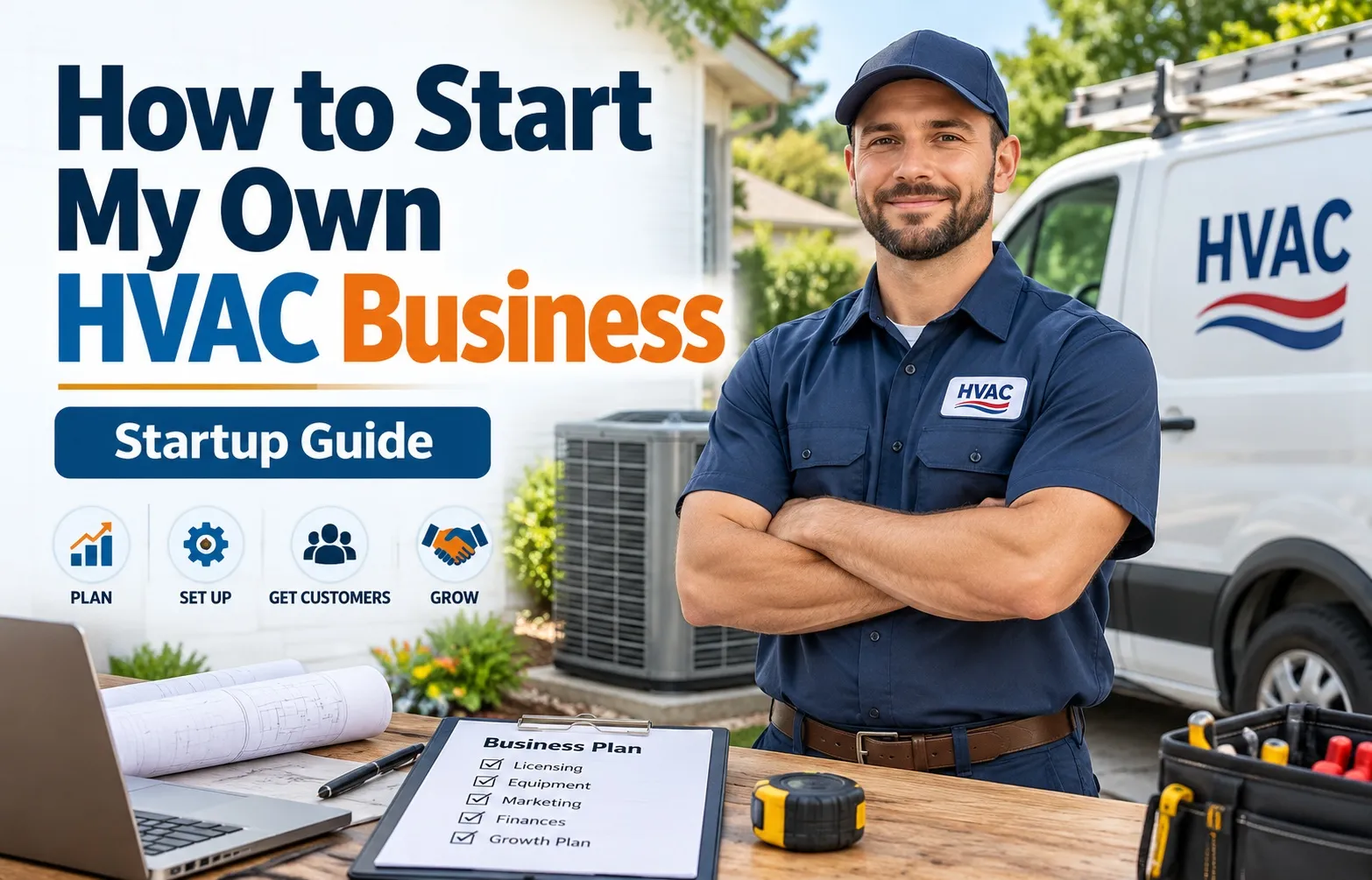 Launching a heating, ventilation, and air conditioning business offers skilled professionals one of the most reliable pathways to financial independence and enterprise ownership. However, turning technical expertise into a thriving contractor firm requires shifting from executing daily repair tasks to building scalable operational systems.
Why Starting an HVAC Business is a High-Margin Opportunity in 2026
Starting an HVAC business provides access to a recession-resilient market with average gross profit margins ranging from 45% to 55% on service calls and 30% to 40% on complete system replacements. Year-round demand driven by seasonal temperature extremes, combined with strict energy-efficiency mandates, creates continuous service revenue for prepared owners.
Key economic factors driving strong profitability for a modern HVAC startup include:
- Predictable Maintenance Cash Flow: Preventive service agreements generate recurring winter and summer revenue that stabilizes cash flow buffer requirements.
- High-Ticket System Replacement: Complex residential retrofits and heat pump installations yield substantial average ticket sizes per technician.
- Inelastic Market Demand: Heating and cooling failure directly impacts property habitability, making repairs a immediate priority for residential and commercial customers.
Employee vs. Owner Mindset: Transitioning from Field Technician to Business Architect
Transitioning from a field service technician to a trade entrepreneur requires handing over the daily wrench work to build repeatable business processes. While a top technician focuses on master-level diagnostic accuracy, a successful business owner focuses on client acquisition, operational capacity, overhead management, and workforce development.
Adopting a true business owner mindset involves mastering three critical operational shifts:
- Delegating Field Execution: Shifting focus from diagnosing faulty compressors to establishing quality-control protocols for your service crew.
- Prioritizing Overhead Accounting: Understanding true fully burdened labor rates rather than simply relying on hourly market rates.
- Systemizing Customer Care: Replacing ad-hoc scheduling with structured field management software and automated customer notifications.
Is HVAC Business Ownership Right for You? (Financial Physical & Mental Readiness Checklist)
Starting an HVAC company demands personal stamina, trade competence, and sufficient cash reserves to absorb early startup expenses before consistent revenue begins. Evaluating your readiness across financial, physical, and operational categories ensures your new business withstands the intense demands of its first year.
Before leaving your employment, systematically work through this operational launch preparation checklist:
- Assess Cash Flow Buffer: Save at least 3 to 6 months of living expenses in addition to your initial tool and vehicle investments.
- Evaluate Work-Life Balance Commitments: Establish strict schedule boundaries with family to handle initial 60+ hour work weeks safely.
- Verify Trade Competence: Confirm you possess at least 3 to 5 years of field experience handling diverse residential and light commercial equipment setups.
Technical Mastery, Certifications & Legal Prerequisites
Legally launching and operating an HVAC contracting business requires strict adherence to federal environmental mandates, state contractor licensing boards, and local municipal regulations. Bypassing these mandatory legal and technical hurdles exposes your new venture to severe regulatory fines, project shutdowns, and catastrophic liability lawsuits.
Essential Trade Certifications: EPA Section 608 (Universal vs. Type I/II/III) & NATE Credentialing
Under federal law enforced by the Environmental Protection Agency, anyone purchasing or handling refrigerants must hold an active EPA Section 608 Certification. Securing Universal certification—which covers Type I small appliances, Type II high-pressure systems, and Type III low-pressure systems—is mandatory for working with both legacy blends and modern, mildly flammable A2L refrigerants.
- Universal Certification Mandate: Permits you to legally recover, recycle, and handle all refrigerant categories without violating federal clean air regulations.
- NATE Credentialing Value: Pursuing NATE certification (North American Technician Excellence) provides immediate market credibility by proving advanced diagnostic and installation expertise.
- Distributor Verification: Major wholesale equipment distributors will refuse to open trade accounts or sell you split systems without verifying your active EPA card.
Navigating State & Local Licensing: Mechanical Contractor Licenses & Electrical Permits
Operating as a prime contractor requires obtaining a formal state mechanical contractor license, which typically mandates documented field experience and passing rigorous state trade exams. Because HVAC installations involve high-voltage electrical connections, many jurisdictions also require specialized credentials—such as an LLE (Limited Licensed Electrician) designation—to legally pull electrical permits for outdoor condenser replacements.
- State Board Requirements: Verify specific qualifying party rules with your state’s licensing board or contractor exam prep providers before filing applications.
- Municipal & County Permits: Cities and counties often require local privilege licenses and individual building permits for every major equipment swap.
- Legal Risks of Unlicensed Work: Performing HVAC work without proper licensing invalidates manufacturer warranties and exposes you to severe legal penalties or stop-work orders.
Ethical Transition Strategy: Departing Your Employer Without Violating Non-Solicitation Agreements
Transitioning from an employee technician to a business owner requires balancing entrepreneurial ambition with strict adherence to trade ethics and existing employment contracts. Before notifying your current boss, carefully review your onboarding paperwork to identify any active non-solicitation agreement or restrictive covenants.
- Reviewing Restrictive Covenants: Ensure you understand geographical radius limits and time restrictions regarding past client contact.
- Avoiding Conflicts of Interest: Refrain from using employer tools, servicing company leads on the side, or moonlighting during active employment.
- Preserving Industry Reputation: Announce your departure professionally, resign without burning bridges, and grow your initial client base through honest networking rather than poaching.
Business Structure, Insurance & Financial Foundations
Transitioning into trade entrepreneurship requires building a bulletproof legal and financial foundation. Establishing formal business structures and comprehensive insurance shields your personal wealth from the inherent high-risk nature of heating, ventilation, and air conditioning installations.
Choosing the Right Legal Entity: LLC vs. S-Corp for HVAC Contractors
Establishing a formal legal entity like a Limited Liability Company (LLC) or electing an S-Corporation structure is essential for shielding your personal assets—such as your home and family vehicle—from catastrophic lawsuits, property damage claims, and operational liabilities inherent in the HVAC trade.
- Asset Protection via LLC: Provides a distinct legal barrier separating your personal finances from business debts and unexpected liability claims.
- Tax Efficiency with S-Corp: Allows business owners to optimize self-employment tax burdens as net revenue scales upward.
- Client Trust and Credibility: Commercial and high-end residential clients routinely require proof of an incorporated entity before issuing service contracts.
Securing EIN Business Bank Accounts and Tax Infrastructure
Securing a federal Employer Identification Number (EIN) is the foundational step required to open dedicated business banking accounts, separate personal finances, and establish clean bookkeeping records for federal and state tax reporting. Never mix personal and business capital under any circumstances.
- Dedicated Business Bank Account: Ensures all customer revenue streams and vendor expense payouts flow through a single, auditable corporate account.
- IRS EIN Registration: Free federal identifier required for filing business tax returns, hiring employees, and opening wholesale supplier credit lines.
- Bookkeeping Software Integration: Linking your business accounts to QuickBooks or similar platforms simplifies tracking profit margins and deductions.
The Non-Negotiable Insurance Stack: General Liability Commercial Auto, Workers’ Comp & Errors & Omissions (E&O)
HVAC contracting carries immense physical and financial risks, making comprehensive business insurance mandatory to cover accidental property fires, severe water damage, workplace injuries, vehicle collisions, and technical oversights during complex mechanical installations.
- General Liability Insurance: Protects your company against third-party property damage and bodily injury claims occurring on job sites.
- Commercial Auto Insurance: Essential for covering service vans, utility trucks, and tools transported across busy municipal roadways.
- Workers’ Compensation: Mandated in most states to cover employee medical costs and lost wages resulting from workplace accidents.
- Errors & Omissions (E&O) Policy: Shields your enterprise against financial loss stemming from professional design errors or diagnostic miscalculations.
Hiring Your Advisory Team: Why You Need a CPA and Trade Lawyer on Day 1
Building a profitable trade contracting business requires immediate professional guidance from a certified public accountant and an experienced attorney to navigate complex tax codes, local compliance mandates, and binding customer agreements.
- Strategic Tax Guidance (CPA): Helps you structure quarterly tax withholdings, maximize equipment depreciation deductions, and prevent costly IRS penalties.
- Contract Protection (Trade Lawyer): Drafts bulletproof service agreements, customer waiver forms, and sub-contractor clauses that protect your bottom line.
- Long-Term Scaling Support: An expert advisory team ensures your corporate structure adapts smoothly as your technician headcount and fleet size expand.
Securing Wholesale Distributors & Trade Credit
Opening wholesale supply accounts and establishing trade credit is a crucial operational milestone for any new HVAC business. Securing reliable access to major equipment brands and favorable payment terms provides the purchasing power necessary to complete high-ticket residential and commercial installations without draining your initial cash reserves.
Approaching HVAC Distributors (Ferguson Baker Trane Carrier) as a New Startup
Securing direct dealer access with tier-one wholesale HVAC distributors requires demonstrating trade legitimacy, proper licensing, and business organization. Major distributors carefully vet new accounts to ensure they are selling to qualified, insured mechanical contractors rather than uncertified property owners or unlicensed technicians.
- Required Documentation: Present your active EPA Section 608 Universal certificate, state mechanical contractor license, business filing (LLC/S-Corp), EIN letter, and general liability insurance certificate when applying.
- Establishing Tier-1 Relationships: Build rapport with local territory managers at major distributors such as Ferguson, Baker Distributing, Trane Supply, Carrier Enterprise, and Johnstone Supply to gain access to proprietary equipment lines.
- Starting with COD Accounts: Most distributors initially place new contractors on Cash on Delivery (COD) terms, allowing you to establish a consistent purchasing history using a business credit card while preparing for formal trade credit applications.
Winning Approval for Credit Applications & Navigating Net 30/60 Terms
Transitioning from COD to formal trade credit allows your enterprise to order expensive heat pumps, air handlers, and ductless split systems, complete the installation, collect payment from the customer, and settle the vendor balance within a 30 to 60-day window without utilizing your own working capital.
To maximize your credit application approval chances without a multi-year commercial credit history, implement these specific steps:
- Submit a Personal Guarantee: As a startup owner, signing a limited personal guarantee gives the distributor’s credit department the confidence needed to issue an initial $5,000 to $25,000 credit limit.
- Provide Trade and Bank References: Supply verifiable references from secondary material suppliers, tool vendors, or your business bank to verify creditworthiness.
- Request Seasonal Limit Increases: After making 3 to 6 months of on-time payments, request higher credit limits prior to peak summer heat waves to handle multiple concurrent equipment installations.
Leveraging Distributor Programs: Warranty Claims Spiffs and Customer Financing Options
A strong distributor partnership extends far beyond simple equipment purchasing; it grants access to essential business growth tools, extended labor coverage plans, manufacturer rebates, and consumer financing platforms that help close high-ticket replacement deals.
- Automated Parts Warranty Claims: Modern distributors handle manufacturer parts warranty claims directly, issuing immediate counter credit for defective compressors, control boards, or coils without requiring upfront contractor payments.
- Manufacturer Dealer Spiffs: Take advantage of seasonal manufacturer incentive programs (“spiffs”) that pay cash rebates back to your business or technicians for installing high-efficiency SEER2 equipment.
- Dealer Customer Financing: Partnering with distributor-backed consumer financing providers allows you to offer homeowners low monthly payment plans, 0% APR promotional options, and instant credit approvals on the spot during sales presentations.
- Extended Labor Coverage Plans: Offer 5 to 10-year extended labor warranties backed directly by the distributor or manufacturer to differentiate your startup from unaccredited competitors and build long-term customer loyalty.
Essential Equipment Field Software & Vehicle Setup
Setting up your physical assets and digital infrastructure properly from day one directly determines your operational efficiency, professional image, and billable capacity. A well-organized service vehicle combined with specialized diagnostic tools and streamlined Field Service Management (FSM) software enables a single technician to execute service calls smoothly without costly downtime.
Service Vehicle Strategy: Why a Utility Van Outperforms a Truck for One-Man Operations
For a solo technician or new startup, a dedicated service van (such as a Ford Transit, RAM ProMaster, or Mercedes Metris) provides vastly superior security, weather protection, and organizational capability compared to a standard pickup truck. Keeping high-value diagnostic instruments, recovery machines, and stock parts locked and protected from rain or extreme heat prevents theft and equipment degradation.
- Interior Shelving and Part Bins: Outfitting your service van with modular shelving allows you to organize capacitors, contactors, relays, fan motors, and brass fittings by category for rapid job-site retrieval.
- Refrigerant Jug Racks: Install secure floor- or wall-mounted racking systems to transport R-410A, R-22, and A2L refrigerant jugs safely without risk of tipping or valve damage during transport.
- Heavy-Duty Ladder Racks: Equipping your roof with a drop-down or locking ladder rack ensures quick, safe access to extension ladders for rooftop unit (RTU) and multi-story residential inspections.
Core Tool Checklist: Diagnostic Instruments Recovery Machines Vacuum Pumps & Gauges
Investing in reliable, professional-grade diagnostic and recovery equipment ensures precise troubleshooting, fast evacuation times, and compliance with federal environmental standards. Using sub-standard or worn tools leads to inaccurate readings, callbacks, and compromised system performance.
To ensure system longevity and leak-free installations, structure your core setup around these mandatory diagnostic tools:
- Digital Manifold Gauges with Bluetooth Probes: Enable real-time calculation of target superheat and subcooling without liquid line loss.
- High-Precision Micron Gauge: Verifies deep vacuum evacuation down to 500 microns or below to ensure moisture and non-condensables are completely purged.
- Lightweight Recovery Machine: Accelerates refrigerant recovery rates during system changeouts while adhering to EPA Section 608 compliance.
- Essential Sheet Metal Fabrication Tools: Keep hand seamers, notches, drive cleansers, and snips on hand to fabricate custom duct plenum transitions directly on-site.
Selecting Field Service Management (FSM) & CRM Software
Relying on paper invoices and manual scheduling causes administrative bottlenecks, lost invoices, and delayed customer payments. Deploying modern Field Service Management (FSM) and Customer Relationship Management (CRM) software allows you to dispatch calls, capture digital signatures, take credit card payments, and sync financial data instantly from a smartphone or tablet.
- Enterprise All-in-One (ServiceTitan): Offers comprehensive dispatching, flat-rate visual price books, customer tracking, and automated marketing features, though its higher monthly cost makes it better suited for scaling multi-truck operations.
- Essential Financial Accounting (QuickBooks): The industry standard for managing business bank accounts, tracking profit-and-loss statements, issuing contractor 1099s, and handling end-of-year tax filing.
- Affordable Startup CRM Solutions (Project to Payments, Housecall Pro, Jobber): Cost-effective software options tailored for solo operators and small crews that deliver professional customer invoicing, mobile credit card processing, and automated job scheduling at a fraction of enterprise software fees.
Pricing Strategy & Profitability Guardrails
Setting sustainable pricing structures is the single most critical factor in preventing startup failure. Unrealistic pricing and undercharging for overhead are the primary reasons over 80% of new trade contractors struggle with cash flow. Implementing disciplined flat-rate pricing models and strict margin protection safeguards your enterprise from the hidden costs of field labor and operational overhead.
Flat-Rate Pricing vs. Hourly Billing: Calculating Your True Overhead Rate
Flat-rate pricing outperforms traditional hourly billing by providing customers with transparent upfront pricing while protecting your company’s profitability. Charging strictly by the hour penalizes efficiency and fails to account for your true overhead rate, vehicle expenses, insurance, and administrative costs.
- Upfront Transparency: Customers approve a fixed price before work begins, eliminating billing disputes and hesitation over technicians working slowly.
- Accounting for True Overhead: Your labor rate must factor in van payments, insurance, fuel, tools, and non-billable drive time rather than just technician wages.
- Maximizing Profit Margins: Flat-rate pricing rewards skilled technicians for fast, accurate diagnostics rather than keeping them tied to low hourly caps.
The Low-Margin Trap: Why You Should Avoid Bidding on New Construction
New construction bidding often lures HVAC startups with high-volume project opportunities, but it is a notorious low-margin trap that drains working capital. Tight builder deadlines, raw material price fluctuations, and delayed retainage payments routinely destroy startup cash flow.
- Thin Profit Margins: Competitive bidding wars on tract housing or commercial builds frequently compress your net profit margin down to unsustainable levels.
- Cash Flow Choke Points: Builders often delay payments for 60 to 90 days, leaving your startup struggling to cover weekly payroll and parts supplier invoices.
- Focusing on Retrofit Service Calls: Prioritizing high-margin residential replacement and retrofit service calls generates immediate cash flow and loyal recurring clients.
Setting Labor Warranties and Maintaining Premium Service Rates
Offering robust labor warranties while maintaining premium service rates builds instant market authority and reassures clients of your workmanship quality. Charging below-market rates signals poor quality and forces you into a high-volume, low-margin cycle that leads directly to burnout.
- Backing Work with Confidence: Offering a 1-year or extended labor warranty differentiates your startup from unaccredited competitors and justifies higher pricing tiers.
- Rejecting Low-Budget Clients: Refusing to compromise on price prevents you from getting bogged down servicing customers who do not value quality craftsmanship.
- Regular Rate Adjustments: Confidently raising your service rates annually ensures your business keeps pace with inflation, equipment cost hikes, and rising insurance premiums.
Low-Cost Marketing & Customer Acquisition Strategy
Scaling a new HVAC venture on a lean budget requires prioritizing hyper-local organic channels and direct relationship-building over high-cost paid advertising. By establishing a dominant local search presence, securing recurring business-to-business partnerships, and selling structured maintenance plans, you create a steady stream of high-margin service calls without draining your working capital.
Building Local Search Dominance: Optimizing Google Business Profile & Local SEO
Claiming and fully optimizing your Google Business Profile is the single most effective low-cost customer acquisition strategy for local trade contractors. Because high-intent homeowners search for immediate heating and cooling repairs, appearing in the local 3-pack search results drives direct phone calls without per-click ad fees.
- Complete Profile Verification: Ensure your exact business name, physical address, phone number (NAP), service categories, and emergency hours match across all online directories, including Yelp and local BBB accreditation listings.
- Systematic Review Harvesting: Implement an automated follow-up process requesting detailed customer reviews immediately after completing every installation or repair call.
- Local Citation Building: Earn high-authority organic backlinks by joining local chambers of commerce, sponsoring neighborhood events, and listing your business in trade-specific directories.
In-Person Networking & B2B Partnerships: Cold Calling Realtors Property Managers & General Contractors
Direct B2B networking unlocks consistent high-volume work that bypasses competitive consumer bidding. Property managers, real estate agents, and general contractors routinely need reliable mechanical technicians who can handle fast inspection repairs, tenant turnover calls, and equipment swaps on short notice.
- Partnering with Real Estate Agents: Reach out to local realtors to offer priority home inspection HVAC evaluations and rapid turn-around repairs during escrow closing windows.
- Targeting Residential Property Managers: Visit local property management firms in person to present your licensing, insurance coverage, and competitive multi-unit service rates.
- Leveraging Word-of-Mouth Marketing: Deliver exceptional, transparent service to early commercial clients to turn property decision-makers into active referral sources.
Establishing Maintenance Agreement Programs to Generate Recurring Revenue
Launching a structured commercial or residential maintenance agreement program establishes a predictable, recurring revenue baseline that stabilizes cash flow during spring and autumn shoulder seasons. Annual service contracts turn one-time service calls into long-term client relationships while filling your off-peak schedule with routine inspections.
Follow these operational steps to build and launch a profitable maintenance plan program:
- Define Your Tiered Plan Offerings: Package two annual visits (a spring A/C check and a fall furnace inspection) into an affordable monthly or annual fee structure.
- Automate Billing Cycles: Use your Field Service Management software to process recurring monthly credit card payments automatically.
- Train Field Technicians to Present Plans: Empower technicians to offer membership plans at the conclusion of every successful diagnostic or repair visit.
Frequently Asked Questions
Launching a heating, ventilation, and air conditioning enterprise involves critical financial, operational, and legal decisions. Below are concise, definitive answers to the most common questions regarding startup capital requirements, failure rates, profit potential, and industry demands.
How much capital do I need to start an HVAC business?
Starting a lean, single-truck HVAC enterprise requires between $10,000 and $50,000 in upfront startup capital. Establishing a fully equipped commercial operation with multiple technicians, an office lease, and advanced inventory typically demands $100,000 or more in initial funding.
- Essential Upfront Expenses: General liability insurance ($1,500–$3,000/yr), state licenses and EPA certifications ($500–$1,500), and business registration fees.
- Tools & Vehicle Costs: A reliable used service van ($15,000–$30,000) and essential core diagnostic instruments ($3,000–$7,000).
- Working Capital Buffer: At least 3 to 6 months of operating cash flow to cover overhead before consistent invoice collection begins.
Is owning an HVAC business profitable?
Yes, owning an HVAC business is highly profitable when utilizing flat-rate pricing structures. Well-managed residential contractors typically achieve gross profit margins between 45% and 55% on service calls, while maintaining net profit margins between 10% and 20% after accounting for all overhead expenses.
What percentage of HVAC businesses fail and why?
Approximately 20% of HVAC startups fail within their first year, and nearly 50% close within five years. High failure rates are rarely caused by a lack of technical mechanical skills; rather, they stem from poor business management and miscalculated pricing.
- Underpricing Services: Charging hourly rates that fail to cover true fully burdened labor and vehicle overhead costs.
- Inadequate Cash Flow Buffers: Running out of working capital during low-volume spring and fall shoulder seasons.
- Low-Margin Bidding Traps: Taking on low-margin new construction contracts with delayed 60 to 90-day payment terms.
Can you start an HVAC business with no prior experience?
While an investor with no mechanical background can launch an enterprise by hiring a licensed Master Mechanical Contractor to serve as the company’s qualifying party, operating without hands-on field experience is exceedingly difficult and risky.
- Licensing Barriers: Most state mechanical contractor licensing boards require 3 to 5 years of documented field experience to take contractor exams.
- Mandatory Technical Compliance: You must possess or employ someone with a valid EPA Section 608 Universal Certification to legally purchase and handle refrigerants.
- Quality Control Challenges: Lacking field knowledge makes it difficult to evaluate technician installation quality, estimate job costs accurately, or diagnose complex field callbacks.
Is HVAC a low-stress business to operate?
No, operating an HVAC business involves substantial operational stress, particularly during its initial years. Owners must manage extreme seasonal workload surges, physical labor demands, safety liabilities, customer emergencies, and rapid shifts in federal environmental regulations.
- Seasonal Demand Spikes: Balancing 60+ hour work weeks during scorching summer heatwaves with lower revenue during temperate spring and fall months.
- High Liability Exposure: Managing risks related to high-voltage electrical connections, flammable gas lines, carbon monoxide hazards, and refrigerant handling.
- Transitioning Roles: Shifting from an active field technician to a business manager requires wearing multiple administrative, accounting, and customer service hats simultaneously.
Conclusion & Next Steps Checklist
Launching a successful heating, ventilation, and air conditioning enterprise requires converting technical skill into a disciplined, system-driven business strategy. By systematically executing your legal setup, securing trade credit, establishing proper pricing, and focusing on organic client acquisition, you build a resilient, high-margin trade business designed for long-term growth.
Your Step-by-Step Launch Sequence Checklist
Use this chronological checklist to guide your launch sequence over your first 90 days of operation:
- Phase 1: Legal & Regulatory Setup
- Obtain or verify your EPA Section 608 Universal Certification.
- Secure your state mechanical contractor license and required electrical/permit credentials.
- Review non-solicitation agreements with previous employers to ensure an ethical departure.
- Phase 2: Entity & Financial Foundation
- Form an LLC or S-Corp to protect personal assets from business liabilities.
- Register for an IRS EIN and open a dedicated business bank account.
- Secure general liability, commercial auto, and workers’ compensation insurance policies.
- Hire a certified trade CPA and retain a business attorney.
- Phase 3: Wholesale Credit & Equipment
- Apply for trade accounts with major distributors (Ferguson, Baker, Trane, Carrier).
- Submit credit applications to secure Net 30 payment terms and distributor financing options.
- Outlay your service van with modular shelving, ladder racks, and refrigerant storage.
- Acquire digital manifolds, high-CFM vacuum pumps, micron gauges, and recovery machines.
- Phase 4: Software & Pricing Setup
- Implement a Field Service Management (FSM) platform (ServiceTitan, Jobber, or Project to Payments) synced with QuickBooks.
- Build a flat-rate pricing book that fully incorporates labor, vehicle overhead, and profit margins.
- Set 1-year labor warranties and avoid low-margin new construction bids.
- Phase 5: Marketing & Client Acquisition
- Optimize your Google Business Profile and local directory listings for local search dominance.
- Establish B2B referral partnerships with real estate agents, property managers, and general contractors.
- Launch structured bi-annual maintenance plans to build recurring off-peak cash flow.
Final Words on Building a Sustainable HVAC Legacy
Succeeding in trade entrepreneurship is a long-term commitment that requires continuously balancing quality craftsmanship with business discipline. Focusing on customer satisfaction, maintaining pricing standards, and reinvesting profits into continuous team training will ensure your HVAC startup grows into a sustainable, highly valuable business asset for years to come.

Oscar Vance | Master Plumber & Drainage Expert
Meet Oscar Vance, a licensed master plumber sharing practical solutions on residential repairs, preventive maintenance, and thoughtful home upkeep.