HVAC UV Light Cost Summary
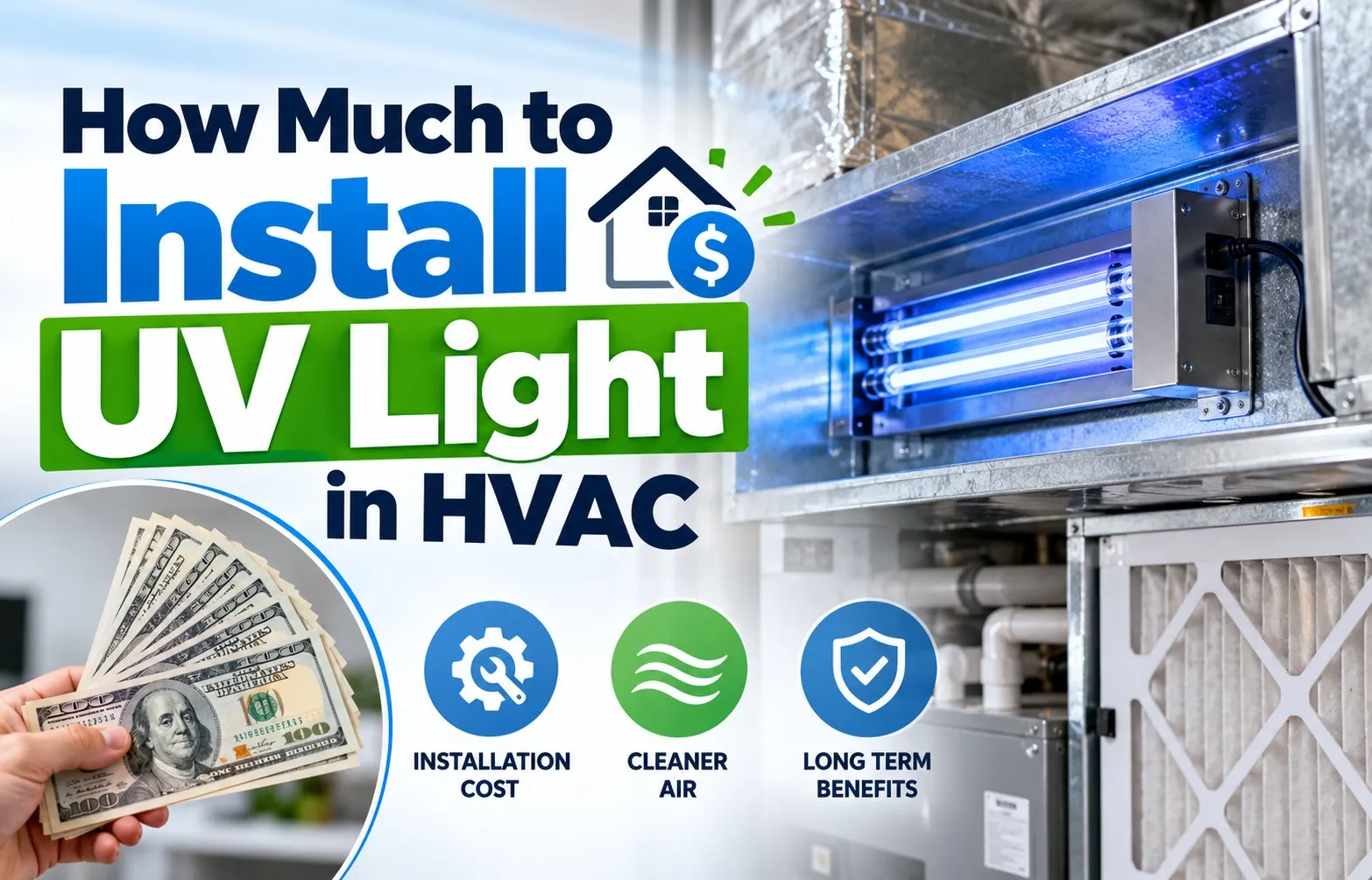 Installing a UV light in an HVAC system costs between $300 and $1,200 on average for equipment and professional installation. Basic coil-mounted lights start between $300 and $600, while whole-duct air-sterilization systems and dual-bulb PCO units range from $700 to $1,500.
Annual maintenance costs typically add $50 to $150 per year for replacement bulbs, depending on whether you install standard mercury vapor lamps or long-lasting LED technology.
Average National Installation Costs
Most homeowners spend approximately $650 for a professional installation. Prices vary depending on system type, local labor rates, and electrical requirements.
- Low-End Cost: $300 – $400 (Basic single-bulb coil-sterilization unit with straightforward installation)
- Average Cost: $500 – $800 (Standard high-output coil light or basic in-duct air handler light)
- High-End Cost: $1,200 – $1,500+ (Advanced dual-bulb Photocatalytic Oxidation (PCO) system with custom electrical wiring)
Cost Matrix by System & Installation Type
The overall price of an HVAC UV light depends directly on the technology used and whether you hire a licensed technician or complete the project yourself.
Coil-sterilization lights run continuously to prevent mold and bacteria growth on the evaporator coil. In-duct air-sterilization systems treat moving airflow to neutralize airborne viruses, pollen, and allergens across the entire home.
Equipment vs. Labor
The total price to install an HVAC UV light combines hardware expenses with technician labor fees. Equipment typically ranges from $150 to $700, while contractor labor costs between $150 and $500 depending on wiring complexity and air handler accessibility.
Understanding how contractors price equipment markup and service labor helps explain why quotes often range from $500 to $900 for a job that takes under an hour of physical installation time.
Equipment & Unit Costs by Technology
Base hardware costs vary according to lamp technology, power supply quality, and overall UV output capacity. Professional-grade units include specialized mounting brackets, internal ballast systems, and dedicated power safety switches.
- Standard Mercury Vapor Systems ($150 – $300): Utilize traditional mercury vapor bulb technology to emit continuous germicidal UV-C light, requiring annual bulb changes.
- Solid-State LED UV Systems ($350 – $700): Feature energy-efficient LED modules with lifespans up to 3 to 5 years, reducing ongoing replacement cycles.
- PCO & Ionization Combo Units ($400 – $900): Integrate photocatalytic oxidation matrices or carbon filters alongside high-output UV lamps for advanced odor and VOC removal.
Contractor Labor & Overhead Rates
HVAC contractor labor rates range from $75 to $150 per hour, with most technicians charging a minimum service call fee of $100 to $200. Even if physical installation takes 20 to 45 minutes, contractors must account for operating overhead, trip charges, and warranty obligations.
- Base Service Call & Setup: Covers travel, safety diagnostics, and airflow checks prior to cutting into duct sheet metal.
- Contractor Equipment Markup: Wholesale pricing accounts for stock maintenance, shipping fees, and immediate replacement warranties backed directly by the contractor.
- Workmanship Guarantee: Professional installation includes liability protection against improper wiring, accidental transformer burnout, or duct leaks.
Additional Installation Variables & Hardwiring Fees
Installing a UV light inside an air handler often involves extra electrical adjustments and structural sheet metal cuts that influence the final invoice.
- 24V Transformer Upgrades ($75 – $150): Low-voltage UV units require a dedicated 24V transformer if the existing air handler transformer lacks sufficient volt-ampere (VA) capacity.
- 120V/240V Hardwiring ($100 – $250): High-output lights require hardwiring directly into the main power handler circuit or installing a nearby dedicated electrical outlet.
- Ductwork Access Modifications ($50 – $150): Cutting mounting ports into rigid duct sheet metal or reinforced duct board requires custom sealing with foil tape and gaskets to prevent air leakage.
Standard Coil-Mounted vs. In-Duct Air-Sterilization Systems
Choosing the correct HVAC UV light depends on whether your primary goal is system maintenance or overall indoor air quality improvement. Coil-mounted units focus on surface cleanliness, while in-duct air systems target moving airborne pollutants.
Understanding the functional differences, exposure requirements, and targeted contaminants ensures you select the most effective system for your home’s specific heating and cooling setup.
Coil-Sterilization UV Lights: Prevention & Efficiency
Coil-sterilization lights are installed directly inside the air handler, pointing continuously at the indoor evaporator coil and condensate drain pan. These units operate 24/7 at a specific wavelength (253.7 nm UV-C) to destroy organic buildup on stationary surfaces.
- Drain Pan Biofilm & Mold Control: Prevents slimy bacterial growth, mold colonies, and fungi from forming in moist dark areas.
- Maintains System Efficiency: Clean coil fins ensure proper heat transfer, lower energy consumption, and eliminate “dirty sock syndrome” odors.
- Continuous Exposure Advantage: Because the light shines constantly on fixed components, lower-intensity lamps effectively sterilize surfaces over time.
Air-Sterilization (In-Duct) UV Systems: Pathogen Elimination
In-duct air-sterilization systems are mounted inside supply or return air ducts to treat moving air as it passes through your HVAC system. These high-output lamps deactivate airborne microorganisms in transit as air circulates through the ductwork.
- Rapid Airborne Pathogen Destruction: Requires higher intensity germicidal UV-C output due to extremely short microbe-to-UV exposure time (fractions of a second).
- Targeted Air Quality Control: Neutralizes circulating viruses, bacteria, floating fungal spores, and common household allergens.
- Blower Synchronization: Typically wired to illuminate only when the HVAC blower fan is actively moving air, preserving lamp life and energy.
Photocatalytic Oxidation (PCO) & Dual-Bulb Units
Dual-bulb systems and Photocatalytic Oxidation (PCO) air purifiers combine germicidal UV light with advanced chemical catalysts to deliver comprehensive surface and air purification.
- VOC Neutralization: PCO systems use UV-C light focused on a titanium dioxide matrix to break down volatile organic compounds, chemical fumes, and cooking odors.
- Dual-Bulb System Coverage: Combines a targeted coil lamp with an in-duct air purification module, such as popular systems like Fresh-Aire UV or Reme Halo units.
- Whole-Home Defense: Delivers simultaneous protection against organic surface buildup, circulating biological pathogens, and lingering chemical smells.
DIY vs. Professional HVAC UV Light Installation
Installing an HVAC UV light yourself can save between $150 and $500 in labor costs, but it requires basic electrical knowledge, sheet metal tools, and strict safety precautions. While simple plug-in models are manageable for experienced DIYers, complex hardwired installations carry significant safety and equipment risks.
Evaluating the required tools, step-by-step procedures, and potential safety hazards will help you decide whether a self-installation is right for your technical skill level.
DIY Installation Steps & Tool Requirements
A standard DIY installation on sheet metal ductwork typically takes 30 to 60 minutes. Before beginning, ensure you have a sheet metal hole saw, drill, wire strippers, voltage tester, self-tapping screws, foil tape, and safety goggles.
- Disconnect System Power: Turn off electrical power to the HVAC air handler at the main breaker panel and verify zero voltage using a reliable voltage tester.
- Cut Mounting Access Hole: Select a location above the evaporator coil or inside the return plenum, then use a sheet metal hole saw or step drill bit to cut a clean opening for the lamp base.
- Mount and Secure the Light: Insert the UV lamp assembly into the access port, securing the mounting bracket with self-tapping screws or the unit’s magnetic base.
- Wire Power Supply: Plug the ballast cord into a nearby 120V electrical outlet or connect low-voltage wires to the 24V terminal board inside the control panel.
- Seal and Test: Apply HVAC-grade aluminum foil tape around the mounting plate to prevent light leakage, restore system power, and verify operation through the integrated sight glass.
Safety Risks: UV-C Radiation & Electrical Hazards
Germicidal UV-C light operates at intensive wavelengths that cause rapid, severe tissue damage upon direct physical or visual exposure. Unprotected exposure to an active lamp poses immediate personal health risks.
- Ocular Damage & Photokeratitis: Looking directly at an illuminated UV-C bulb for even a few seconds can cause photokeratitis—a painful sunburn of the cornea that leads to temporary vision loss and severe eye pain.
- Skin Exposure Hazards: Direct skin exposure to high-output germicidal light causes rapid surface burns, cellular damage, and premature skin aging.
- Electrical Hazards: Wiring a light directly into high-voltage air handler circuits without proper grounding creates serious shock, short-circuiting, and transformer blowout risks.
When Professional Installation is Mandatory
Certain HVAC configurations and complex home requirements demand the experience and licensure of a professional HVAC technician or electrician.
- Duct Board & Fiberboard Plenums: Cutting into fiberglass duct board requires specialized framing, backing plates, and airtight sealants to preserve structural integrity.
- Hardwired High-Voltage Connections: Connecting a 120V or 240V system directly into internal blower wiring without an existing outlet requires a licensed electrician.
- Active Mold Remediation: If your evaporator coil or ductwork already contains thick bio-growth or black mold, professional cleaning and mold remediation are required before installing any light system.
- Warranty Protection: Many premium air purifier manufacturers require certified technician installation to keep the hardware warranty valid.
Long-Term Maintenance & 5-Year Ownership Costs
The upfront installation cost of an HVAC UV light is only part of the overall investment. Long-term operating expenses include routine replacement lamp purchases, gradual UV-C intensity degradation, and minor continuous electricity consumption.
Factoring in annual maintenance over a 5-year period ensures a complete understanding of total cost of ownership before committing to system installation.
UV Bulb Lifespan & Replacement Costs
While a UV lamp may remain visibly illuminated for several years, its germicidal effectiveness degrades over time. Mercury vapor lamps lose significant micro-watts output of UV-C radiation well before the filament actually burns out.
- Mercury Vapor Degradation: Standard mercury vapor lamps lose approximately 40% to 50% of their germicidal intensity after 9,000 hours (roughly 12 months) of continuous operation, requiring annual replacement costing $50 to $100 per bulb.
- Extended-Life & LED UV Lamps: Modern solid-state LED systems and high-output bulbs last between 18,000 and 24,000 hours (2 to 3 years), with replacement lamp costs ranging from $100 to $180.
- Sight Glass Monitoring: Technicians install a small external sight glass on the ductwork, allowing homeowners to safely check lamp illumination without risking visual eye damage.
Electricity Consumption & Annual Energy Bills
HVAC UV lights consume low wattage and run continuously or in tandem with the system blower, resulting in modest annual utility expenses.
- Wattage Requirements: Standard coil-sterilization lights draw 15 to 30 watts, while high-output in-duct systems draw up to 50 watts.
- Annual Operating Cost Calculation: A standard 30-watt unit running continuously consumes approximately 263 kilowatt-hours (kWh) per year, adding roughly $25 to $45 annually to electric bills based on average national energy rates.
- Blower Interlocking Savings: Air-sterilization systems wired directly to the system blower cycle on only during active airflow, reducing yearly electricity consumption by up to 50%.
5-Year Total Cost of Ownership (TCO) Matrix
Evaluating standard mercury vapor systems against extended-life LED units over 5 years highlights overall ongoing operational expenses.
Disadvantages Safety Risks & Ozone Warnings
While HVAC UV lights effectively control biological growth, improperly installed or substandard systems pose operational disadvantages, health risks, and potential damage to internal furnace components. Addressing safety standards, material degradation, and realistic limitations ensures a safe and effective setup.
Understanding these potential drawbacks helps homeowners select safe hardware and implement protective shielding before installation.
The Ozone Danger: UL 2998 Certification Explained
Certain light wavelengths generate ozone gas ($text{O}_3$), a powerful lung irritant that worsens asthma, causes chest discomfort, and degrades indoor air quality. Wavelengths operating near 185 nanometers split oxygen molecules to form ozone, whereas pure germicidal 254-nanometer UV-C lamps eliminate pathogens without creating harmful gas byproducts.
- Health Risks of Inhaled Ozone: Exposure to low concentrations of respiratory irritants leads to airway inflammation, coughing, throat dryness, and reduced lung capacity over extended periods.
- Verifying Zero-Ozone Standards: Homeowners should choose systems certified under the strict UL 2998 Zero Ozone Emission Standard, which guarantees ozone emissions remain below the safety threshold of 0.005 parts per million (ppm).
- Avoiding “Ozone-Generating” Purifiers: Avoid uncertified air purifiers marketed as “activated oxygen” or “super-oxygenating” units, as these actively release toxic gas into household ductwork.
Material Degradation: Ductwork Wiring & Plastic Drain Pans
High-intensity germicidal radiation breaks down organic bonds in non-stabilized polymers, plastics, and structural air handler components located near the lamp assembly.
- Plastic Drain Pan Degradation: Unshielded plastic drain pans exposed to constant UV-C light turn brittle, yellow, and crack within 12 to 24 months, leading to costly water leaks inside the home.
- Flex Duct Shielding & Liner Failure: Direct exposure degrades inner plastic liners of flexible ductwork and damages fiberglass duct board binders, breaking down air handler structural integrity.
- Wire Insulation & Filter Protection: Electrical wiring insulation, rubber gaskets, and standard air filters located within 12 inches of the light require protective shielding using aluminum foil tape or metal baffles.
When UV Lights Are NOT Worth the Investment
UV lights serve a specific purpose, but they are not a universal solution for every indoor air quality problem or HVAC configuration.
- Arid & Low-Humidity Climates: Homes in dry environments with low humidity rarely experience mold or microbial growth on evaporator coils, rendering coil-sterilization lights unnecessary.
- Lack of High-Efficiency Filtration: Installing a UV light without pairing it with a clean MERV 11 or MERV 13 air filter is ineffective, as light systems cannot capture dust, pet dander, or particulate debris.
- Short System Lifespan: Adding a high-end $800 UV purifier to an aging 15-year-old HVAC unit facing imminent replacement is economically impractical.
People Also Ask (PAA) & Frequently Asked Questions
Addressing common questions about HVAC UV lights helps clarify installation value, maintenance expectations, and operational safety before making a purchase decision.
Is a UV light in an HVAC system actually worth it?
Yes, an HVAC UV light is worth the investment for homeowners dealing with indoor air quality issues, severe seasonal allergies, or recurring mold growth on evaporator coils. It keeps coil surfaces clean, maintains airflow efficiency, and reduces airborne biological contaminants.
However, if your home is located in a very dry climate with minimal humidity or you already utilize high-efficiency air filtration systems, a coil-mounted UV light provides fewer noticeable benefits.
Can I replace an HVAC UV light bulb myself?
Yes, replacing an existing UV light bulb is a simple maintenance task that most homeowners can perform safely without hiring a technician. The process involves turning off system power, disconnecting the lamp wiring harness, removing the old bulb, inserting the replacement, and restoring power.
- Safety Precaution: Always disconnect power to the air handler before opening the unit to avoid high-voltage hazards.
- Avoid Bare Skin Contact: Wear clean gloves when handling replacement lamps; oils from fingers cause hotspots on the quartz glass that lead to premature bulb failure.
What is the life expectancy of an HVAC UV light system?
The main power housing and ballast of an HVAC UV light system typically last between 5 and 10 years, whereas individual UV-C lamps require routine replacement every 1 to 3 years.
- Standard Mercury Vapor Bulbs: Last roughly 9,000 hours (12 months) of continuous operation before germicidal UV-C intensity drops significantly.
- Extended-Life LED UV Systems: Last up to 18,000 to 24,000 hours (2 to 3 years) before replacement is required.
Does UV light kill mold on HVAC coils instantly?
No, UV light does not kill surface mold or biofilm instantly. Germicidal UV-C light inactivates organic growth gradually by disrupting the cellular DNA and RNA of microorganisms over continuous exposure.
While airborne pathogens passing through high-output in-duct lights are neutralized in seconds, stationary mold colonies on evaporator coils usually take several days of continuous 24/7 exposure to clear completely.
What is the $5,000 rule for HVAC systems?
The $5,000 rule is an industry guideline used to decide whether to repair an aging heating and cooling system or replace it entirely. You calculate this by multiplying the age of your HVAC unit in years by the estimated repair quote in dollars.
- Calculation Example: If a 12-year-old air handler requires a $500 repair or accessory installation, $12 times 500 = $6,000$.
- Decision Standard: Because $6,000 exceeds the $5,000 threshold, investing in major repairs or premium indoor air quality add-ons like UV lights is generally less cost-effective than replacing the entire HVAC unit.

Oscar Vance | Master Plumber & Drainage Expert
Meet Oscar Vance, a licensed master plumber sharing practical solutions on residential repairs, preventive maintenance, and thoughtful home upkeep.