Why Does My Bathroom Sink Smell When I Run Water? Quick Diagnostics
 When your bathroom sink smells when you run water, the odor typically stems from gases trapped inside the drain system or bacteria living in the water supply. Water entering the basin displaces air trapped in the pipes, pushing foul odors directly up into the room.
To identify the exact cause, follow this quick elimination method to isolate the source in under 30 seconds:
- Test the Drain: Fill a clean glass with water from another room, take it to the smelling sink, and pour it down the drain. If the smell rises immediately, the odor source is inside the P-trap or overflow drain.
- Test the Water Supply: Turn on the faucet, fill a separate glass, and immediately walk into a different room before smelling it. If the water itself smells like rotten eggs, the issue is in your water heater or water supply.
- Test the Overflow Channel: Plug the main drain, run water into the basin, and let it rise into the overflow hole near the top. If a musty or mildew-like scent releases, bacteria and biofilm are trapped inside the hidden overflow channel.
Diagnostic Test: Drain vs. Water vs. Overflow Hole
Distinguishing between drain odors, overflow buildup, and water contamination requires inspecting specific components beneath and inside your fixture. Most sink odors stem from decaying organic matter like hair, soap scum, and skin cells accumulating inside the plumbing system.
Running water acts as a catalyst by warming up dormant bacteria and activating the release of foul gases. Use these key diagnostic indicators to narrow down your sink issue:
- Rotten Egg Scent from Drain: Indicates a dry P-trap, a blocked vent stack, or heavy biofilm accumulation in the main drain line releasing hydrogen sulfide.
- Musty or Damp Odor from Basin Top: Points directly to fungal growth, mildew, or soap scum buildup hidden inside the sink overflow hole.
- Rotten Egg Scent from Water Only: Indicates sulfur bacteria colonizing the inside of your home water heater tank or well water supply.
The 5 Primary Root Causes: Why Your Sink Smells When Running Water
When water flows down your bathroom basin, it physically displaces the air trapped inside the drain plumbing. This displacement forces stagnant air, bacterial gases, or sewer odors directly up through the drain opening and into the room, revealing underlying plumbing or sanitation issues.
Biofilm & Slime Buildup in the Hidden Overflow Hole
The most common cause of foul odors during water flow is a thick layer of biofilm and bacteria colonizing the hidden overflow channel. As hair, soap scum, skin cells, and toothpaste accumulate inside this enclosed passage, they decay anaerobically.
When fresh water enters the main basin, it pushes warm air upward over this organic sludge, releasing a distinct musty or sulfurous odor. Key characteristics of overflow biofilm include:
- Continuous Slime Production: Bacteria thrive in the dark, damp environment just beneath the overflow rim.
- Activation via Warm Water: Running warm or hot water accelerates bacterial metabolism, intensifying the smell instantly.
- Unnoticed Accumulation: Because the channel is hidden from plain sight, standard surface cleaning fails to reach it.
Dry or Evaporated P-Trap Water Seal
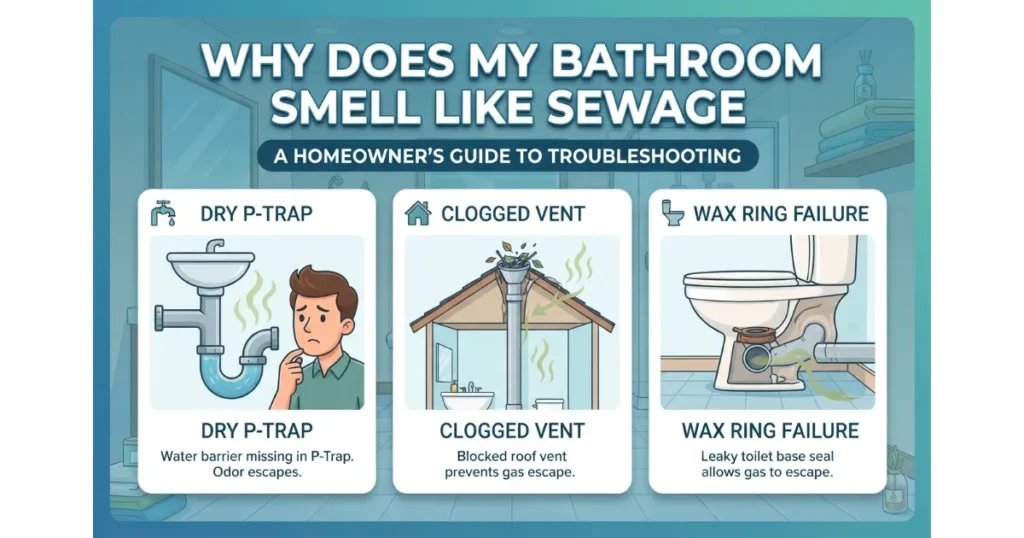
An empty or dry P-trap completely eliminates the vital liquid barrier designed to block sewer gases from entering your home. The curved U-shaped pipe underneath your sink is engineered to hold a standing pool of water that seals off gas lines.
If a bathroom goes unused for several weeks or months, this water seal evaporates entirely. Running water briefly disturbs the remaining air pockets or fails to reseal a fully dried pipe, allowing raw sewer gas to escape.
- Sewer Gas Escape: Without standing water in the curve, direct airflow connects your drain to the main sewer line.
- Infrequent Usage Trigger: Common in guest bathrooms or secondary sinks that experience low daily traffic.
- Immediate Resolution: Simply running the faucet replenishes the bend, restoring the airtight barrier instantly.
Failed Air Admittance Valve (AAV) Under the Sink
A malfunctioning Air Admittance Valve (AAV) under your vanity allows mechanical venting failure, releasing sewer vapors into your bathroom cabinet. AAVs are one-way mechanical valves that open to let air in during drainage and seal shut afterward.
When the internal rubber diaphragm inside an AAV wears out, sticks open, or collects debris, it fails to close securely. Every time water flows down the drain, sewer odors leak freely through the faulty valve.
- Mechanical Wear: Rubber seals degrade over years of exposure to atmospheric gases and temperature shifts.
- Cabinet Odor Concentration: Smells are often strongest when opening the under-sink storage doors.
- Easy Component Swap: Defective mechanical vents require a simple unscrew-and-replace procedure rather than complex repipe work.
Clogged Roof Vent Stack Creating Vacuum Displacement
A blocked roof vent stack disrupts the entire plumbing ventilation system, creating powerful vacuum pressure that empties drainage traps. Vent stacks run vertically through your roof to safely expel sewer gases outdoors and equalize atmospheric pressure.
When leaves, debris, or bird nests obstruct this exterior opening, running water creates a negative suction effect. This vacuum pulls the water right out of your P-trap, leaving an open channel for sewer gases.
- Trap Siphonage: Water rushing down the waste pipe drags the P-trap seal down with it due to lack of atmospheric air intake.
- Multi-Fixture Impact: Often accompanied by bubbling sounds in nearby toilets or slow-draining tubs.
- External Obstruction: Requires professional roof clearance or specialized snaking from above.
Hydrogen Sulfide Gas in the Water Supply or Heater
If the odor smells strictly like rotten eggs the moment liquid leaves the spout—rather than rising from an empty drain—the contamination originates in your water supply. Sulfur bacteria frequently colonize water heater tanks or well water systems.
These microorganisms feed on sulfates in the water, producing hydrogen sulfide gas as a byproduct. When you turn on the faucet, the pressurized gas is released directly into the air.
- Water-Source Origin: The scent emerges instantly before water even contacts the drain walls or stopper.
- Water Heater Reaction: Magnesium anode rods inside water heaters can react with sulfates to foster sulfur bacteria growth.
- Whole-House Symptoms: Multiple fixtures across the property exhibit the exact same rotten egg smell when hot water runs.
Odor Profiling & Specific Scenarios
Bathroom sink odors rarely manifest in identical ways. Pinpointing the exact scent profile and environmental triggers allows you to target the root cause without wasting time on incorrect fixes or unnecessary chemical treatments.
Decoding the Odor: What Does Your Sink Smell Like?
Categorizing the specific smell produced when running water instantly narrows down the biological or chemical source within your drainage infrastructure:
- Rotten Eggs or Heavy Sulfur: Indicates hydrogen sulfide gas created by sulfur bacteria inside your water heater or deep within organic waste in the drain line. Exposure limits and safety details for sewer-derived gases can be referenced via the EPA Drinking Water Guidelines.
- Musty Mildew or Moldy Earth: Signals fungal spores and bacterial biofilm proliferating in trapped moisture inside the sink overflow channel or popup stopper assembly.
- Urine or Strong Ammonia: Points to decomposed uric salts and organic waste trapped in hair clogs, or bacterial colonies reacting with stagnant water inside infrequently used P-traps.
Why the Smell Worsens in Hot Weather (Barometric Pressure & Heat)
High ambient temperatures and shifting barometric pressure significantly amplify sink odors during warm summer months. Hot weather accelerates the biological decay rate of hair, soap scum, and bacteria trapped in your pipes, releasing higher concentrations of gas.
Additionally, low atmospheric pressure systems allow trapped sewer gases to expand and travel upward more easily through dry or low-water P-traps. Combined with elevated indoor humidity, these rising gases become noticeably more pungent every time water flows.
- Accelerated Biological Growth: Heat converts minor organic accumulation into active, gas-producing bacterial colonies.
- Barometric Gas Expansion: Dropping atmospheric pressure permits sewer gases to push past weak trap seals.
- Enhanced Scent Volatilization: Running warm tap water into a hot basin rapidly vaporizes odor compounds into the surrounding air.
Guest Bathroom Dilemma: Why Seldom-Used Sinks Stink Fast
Guest bathrooms and secondary powder rooms are disproportionately affected by foul drain smells due to stagnant conditions. When a sink remains idle for extended periods, two distinct mechanical failures occur simultaneously:
First, the standing water seal inside the P-trap gradually evaporates, opening a direct highway for main sewer line gas to enter the room. Second, any lingering moisture left in the overflow channel turns stagnant, creating an ideal breeding ground for rapid bacteria growth.
- Rapid Evaporation: Dry climate or warm indoor conditions can dry out a P-trap in as little as two weeks.
- Stagnant Water Decay: Unused water trapped in pipe crevices loses oxygen, encouraging smelly anaerobic bacteria to multiply.
- Preventative Maintenance: Running water for 30 seconds once a week preserves the trap seal and prevents stagnation.
Step-by-Step DIY Cleaning and Sanitation Protocol
Eliminating sink odors permanently requires targeting the specific collection points where biofilm and bacteria multiply. Systematic cleaning restores proper sanitation to both the visible basin and hidden internal plumbing pathways.
How to Properly Sanitize the Hidden Overflow Channel (3-Step Method)
The overflow hole is the most neglected source of musty sink odors because slime builds up out of sight. Using the overflow funnel method with a flexible bottle brush scrubs away trapped organic debris effectively.
- Step 1: Plug and Pour Disinfectant: Seal the main drain with a stopper, then pour a mixture of hot water and liquid disinfectant or bleach down the upper overflow hole until full.
- Step 2: Scrub with a Bottle Brush: Insert a long, flexible bottle brush directly into the overflow opening and scrub back and forth to dislodge built-up biofilm and mold.
- Step 3: Flush and Rinse: Release the main drain stopper and flush both openings with copious amounts of hot tap water to wash away loosened debris.
Flushing the P-Trap and Drain Line
Performing routine P-trap cleaning clears out hair, soap scum, and decaying matter that accumulate in the lower U-bend. Regular chemical and physical flushes help maintain a clear, odor-free drainage pathway.
- Baking Soda and Vinegar Treatment: Pour half a cup of baking soda down the drain followed by one cup of white vinegar; let it fizz for 15 minutes to break down light organic grease.
- Manual P-Trap Removal: Place a bucket underneath the sink, unscrew the slip nuts on the curved P-trap, and manually wash out trapped hair and sludge using a pipe snake if necessary.
- Hot Water Flush: Finish by running a steady stream of hot tap water for at least two minutes to clear remaining residue and refill the water seal.
Clearing a Blocked Air Admittance Valve (AAV)
When drain odors concentrate inside your vanity cabinet rather than the basin, inspecting the Air Admittance Valve (AAV) is essential. A malfunctioning mechanical vent requires clearing or replacement to stop vapor leaks.
- Inspect Under the Sink: Locate the vertical pipe beneath your sink that terminates in a small mechanical cap or valve above the P-trap level.
- Check for Debris or Stickiness: Unscrew the AAV and inspect the internal rubber diaphragm for dust, corrosion, or a stuck open position.
- Replace the Valve: If the internal seal is worn out, screw on a new certified AAV hand-tight to restore an airtight mechanical barrier.
Plumber Insights & DIY Myth-Busting
Homeowners often turn to internet shortcuts to fix foul drain smells, but many popular remedies fail to eliminate the root cause. Understanding how common household substances interact with plumbing integrity helps protect your pipes while ensuring long-term odor control.
Myth vs. Fact: Does Baking Soda and Vinegar Actually Work on Drain Odors?
Combining baking soda (sodium bicarbonate) and vinegar (acetic acid) creates a foamy chemical reaction that yields water, carbon dioxide, and sodium acetate. While the fizzing action can physically loosen light surface debris, it lacks the chemical strength to dissolve dense grease or sanitize bacterial colonies deep inside the pipe.
Most plumbers recommendation guides favor commercial enzyme cleaners over acid-base reactions for ongoing maintenance. Enzyme treatments break down organic biofilm safely without neutralizing each other’s cleaning properties.
- Chemical Reality: The acid and base neutralize each other, leaving behind what is essentially saltwater and mild carbonation.
- Temporary Scent Masking: Vinegar temporarily covers sour smells, but the underlying biofilm remains intact inside the overflow or drain line.
- Safer Alternative: Professional plumbing technicians recommend biological drain cleaners that digest hair, skin cells, and soap scum organically.
Can You Safely Pour Bleach Down the Bathroom Sink Drain?
Concentrated liquid bleach (sodium hypochlorite) is a potent disinfectant, but pouring it straight down the drain poses safety hazards and potential pipe corrosion issues. Bleach can degrade rubber seals, plastic washers, and older metal pipe joints over time.
When using bleach for drain sanitation, prioritize proper dilution and ensure room ventilation. Never mix bleach with ammonia, vinegar, or acid-based chemical cleaners, as this creates highly toxic chloramine or chlorine gas.
- Bleach Safety: Always dilute bleach with warm water (1 part bleach to 10 parts water) before pouring it into a drain or overflow channel.
- Plumbing Integrity Risks: Repeated exposure to undiluted bleach can weaken rubber gaskets beneath pop-up stoppers and P-traps.
- Limited Reach: Pouring liquid straight down the main drain bypasses the overflow channel entirely, leaving hidden bacteria untouched.
Does Dish Soap (Dawn) Dissolve Biofilm in Plumbing Pipes?
Concentrated liquid dish soap effectively cuts through lipid-based grease and surface oils, making it useful for minor grease buildup. However, dish soap alone cannot break down the complex bacterial matrices that form mature plumbing biofilm.
Biofilm consists of bacteria protected by a sticky extracellular matrix that resists basic surfactants. To clear a smelly drain completely, dish soap must be combined with mechanical friction—such as a flexible pipe brush—or a specialized enzymatic cleaner.
- Surfactant Limitations: Dish soap breaks down simple fats but does not destroy bacterial cell walls or fungal mold.
- Best Supporting Role: Hot water mixed with dish soap works well to lubricate and flush out loosened hair clogs during manual cleaning.
- Overuse Warning: Excessive soap usage without sufficient water flow can contribute to soap scum buildup inside the P-trap bend.
When to Call a Licensed Plumber (Safety Thresholds)
While most bathroom sink odors stem from simple biofilm buildup or minor drain debris, certain symptoms indicate serious structural or systemic issues. Attempting complex DIY repairs on main sewer lines or pressurized water heaters can lead to property damage or exposure to hazardous gases, making professional intervention necessary.
Red Flags That Indicate a Main Line or Roof Vent Stack Blockage
A obstruction in your primary plumbing infrastructure goes beyond a single smelly sink, affecting how waste and gases move through your entire home. Persistent sewer gas hazard warnings arise when ventilation systems fail or main waste pipes become backed up with heavy debris or tree roots.
Contact a licensed plumber immediately if you observe any of the following systemic red flags across your household fixtures:
- Multiple Gurgling Fixtures: Hearing bubbling sounds from the toilet or shower drain when your bathroom sink drains indicates severe air displacement from a blocked vent stack.
- Widespread Sewage Odors: A heavy, rotten egg or sewer smell that persists across multiple rooms or floor levels points to a main sewer line clog or compromised main vent stack.
- Wastewater Backup: Water backing up into the bathtub or shower stall whenever you run water in the sink indicates an obstruction deep within the main branch line.
Water Heater Anode Rod Replacement for Sulfur Water
When running hot water produces a strong sulfur odor across every faucet in your house, the issue originates inside your water heater tank. Magnesium anode rods installed to prevent tank corrosion can react with sulfates in the water supply, producing hydrogen sulfide gas.
Replacing a depleted or reacting rod requires specialized tools, power shut-off procedures, and proper tank draining techniques that a certified plumbing technician should handle:
- Aluminum-Zinc Rod Swap: A professional plumber can replace a problematic magnesium anode rod with an aluminum-zinc alloy rod, which halts the chemical reaction that produces sulfur gas.
- System Sanitation: Professionals can safely flush and shock-chlorinate the water heater tank to destroy persistent sulfur bacteria colonies inside the unit.
- Pressure & Safety Checks: Expert technicians test temperature and pressure relief valves during the repair to ensure your water heating unit remains fully compliant and safe to operate.
Frequently Asked Questions About Smelly Bathroom Sinks
Addressing common questions about sink odors helps prevent recurring smells and maintains clear, sanitary drainage pipes. Below are quick, expert answers to high-frequency troubleshooting questions.
How do I stop my sink from smelling like sewer?
To implement an effective sewer smell fix, ensure your P-trap is filled with water by running the tap for 60 seconds to restore the liquid barrier. Next, sanitize the hidden overflow channel and drain line using a flexible bottle brush and a diluted disinfectant or enzymatic cleaner to eliminate odor-causing biofilm.
Why does my bathroom sink smell bad when I use the hot water only?
A hot water drain smell that occurs exclusively when heat is applied typically indicates sulfur bacteria multiplying inside your water heater tank. The reaction between sulfates and the tank’s magnesium anode rod releases hydrogen sulfide gas, which vaporizes into the room as hot water hits the open basin.
What is the best drain cleaner for smelly drains?
The best odor eliminator for persistent drain smells is an enzymatic or biological drain cleaner rather than harsh caustic chemicals. Enzyme formulations digest organic matter like hair, soap scum, and bacterial biofilm without damaging rubber gaskets, plastic P-traps, or plumbing joints.
How can I eliminate bad smells from my bathroom sink drain naturally?
For a natural drain cleaning solution, pour half a cup of baking soda into the drain, followed by one cup of distilled white vinegar. Allow the mixture to fizz for 15 minutes to break up surface residue, then flush the pipe thoroughly with a kettle of boiling water to wash away remaining debris.

Oscar Vance | Master Plumber & Drainage Expert
Meet Oscar Vance, a licensed master plumber sharing practical solutions on residential repairs, preventive maintenance, and thoughtful home upkeep.