What Does an HVAC Condenser Do?
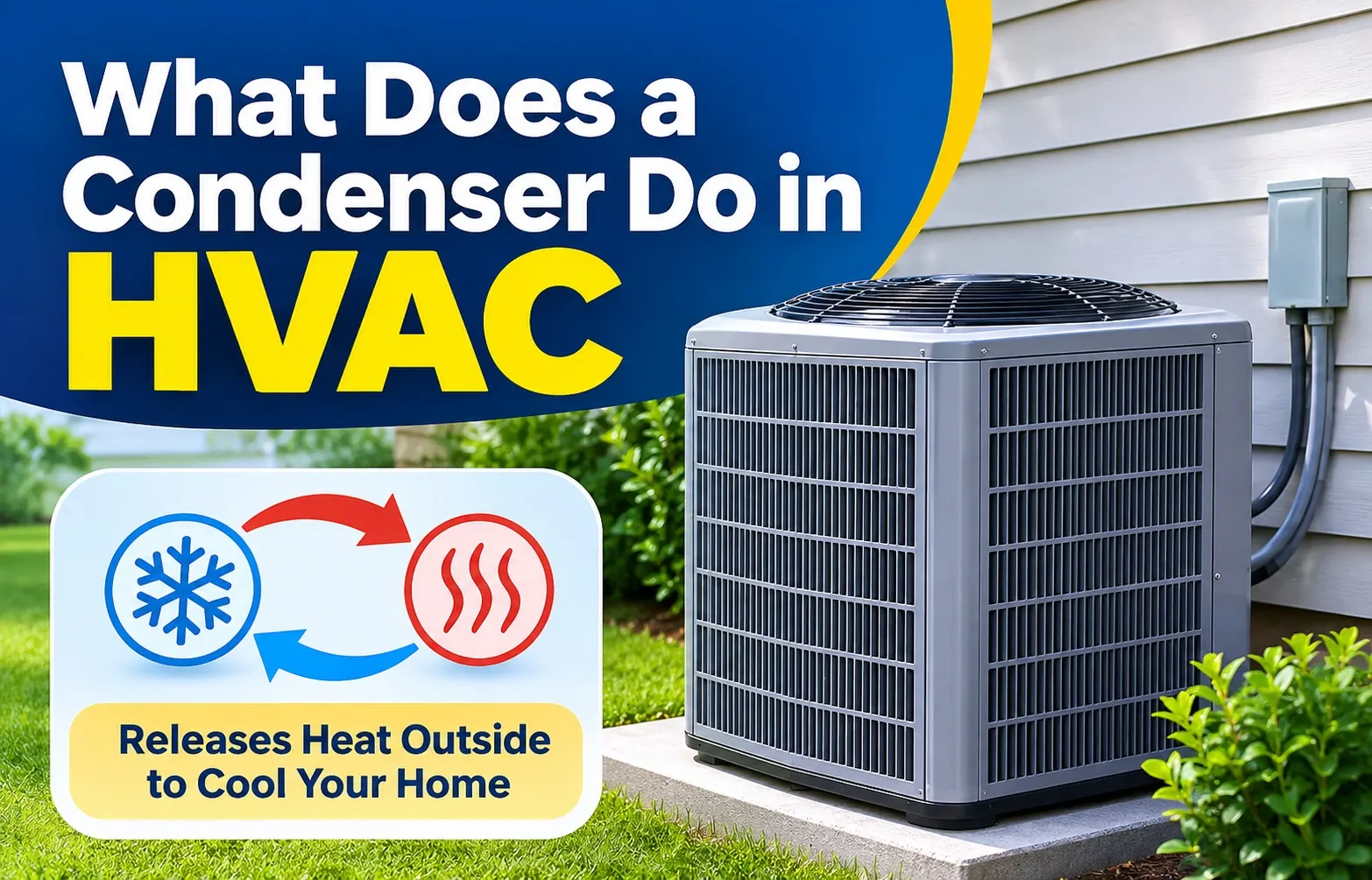 An HVAC condenser is the outdoor unit responsible for releasing heat absorbed from inside your home out into the exterior air, changing high-pressure refrigerant gas into a high-pressure liquid. It serves as the primary heat dissipation engine of your central air conditioning or heat pump system, driving the continuous refrigeration cycle that cools your living space.
The Core Function of an HVAC Condenser
The primary job of an HVAC condenser is executing a critical thermodynamic process: thermal heat transfer paired with a phase change. As superheated, high-pressure refrigerant gas enters the outdoor coil from the compressor, the condenser extracts heat from the gas and transfers it into the surrounding outside air.
During this heat dissipation phase, the cooling refrigerant undergoes a phase change, transitioning from a high-pressure gas back into a subcooled high-pressure liquid before circulating back indoors. You can review detailed system engineering metrics through the Carrier AC Condenser Specifications Guide.
- Heat Extraction: Transfers indoor heat energy collected by the refrigerant out into the exterior environment.
- Refrigerant Phase Change: Cools high-pressure gas until it condenses entirely into liquid refrigerant.
- System Pressure Management: Supports fluid movement across the liquid line toward indoor expansion devices.
Where Is the Condenser Located in Your Home?
The condenser is located outdoors, housed inside a heavy-gauge metal cabinet situated along an exterior side or back wall of your home, or mounted on a rooftop for commercial and select residential setups. Placing the unit outside ensures that rejected heat vents directly into the outdoor atmosphere rather than staying trapped inside your dwelling.
Inside this outdoor cabinet, three core components operate together to maintain steady cooling performance:
- Condenser Coil: A network of copper or aluminum tubing encased in thin aluminum fins designed to maximize surface area for rapid heat release.
- Condenser Fan Motor: Draws large volumes of ambient outdoor air across the coil fins to carry away thermal energy.
- Compressor: Pressurizes the gaseous refrigerant and pumps it through the closed loop system.
How an HVAC Condenser Works (Step-by-Step Cycle)
The closed-loop refrigeration cycle relies on continuous thermodynamic changes to extract thermal energy from indoor spaces and release it outside. Understanding this multi-stage process clarifies how the outdoor condenser unit drives your entire cooling system.
Step 1: Receiving High-Pressure, Superheated Gas
The cooling cycle begins as the compressor pumps high-pressure, superheated refrigerant vapor directly into the outdoor condenser coil. At this stage, the vapor carries all the thermal energy absorbed from inside your home.
Key Process Details:
- Refrigerant State: Enters the coil as an extremely hot, high-pressure gas.
- Source: Delivered directly through the discharge line coming from the compressor.
- Initial Objective: Prepares the refrigerant to release its gathered heat into the exterior atmosphere.
Step 2: Heat Exchange via Condenser Coils and Fins
As the hot vapor travels through the serpentine copper tubing, the condenser fan activates and pulls large volumes of ambient outdoor air across the surrounding aluminum fins. This forced airflow rapidly draws thermal energy out of the tubing.
Key Process Details:
- Airflow Dynamics: The condenser fan creates continuous cross-ventilation across the cabinet.
- Thermal Conduction: Aluminum fins maximize surface area to accelerate heat transfer away from the copper tubing.
- Energy Rejection: Heat energy is safely vented away from the property into the outdoor environment.
Step 3: Condensation (Gas-to-Liquid Phase Change)
As the refrigerant loses its thermal energy through continuous heat exchange, it undergoes a critical phase change driven by latent heat transfer. Cooling the vapor transforms it from a high-pressure gas into a high-pressure liquid state.
Key Process Details:
- Latent Heat Release: Energy absorbed indoors is completely dissipated into the outdoor air.
- Phase Transition: The gaseous vapor condenses entirely into liquid refrigerant within the lower coils.
- State Readiness: Prepares the fluid to absorb new heat once it returns indoors.
Step 4: Pumping Subcooled Liquid to the Expansion Device
Before leaving the outdoor unit, the liquid refrigerant experiences slight subcooling, lowering its temperature below its saturation point for extra cooling efficiency. This subcooled liquid then travels through the liquid line back indoors toward the expansion valve and evaporator coil.
Key Process Details:
- Subcooling Effect: Enhances overall system efficiency by lowering liquid refrigerant temperature.
- Liquid Line Transit: Pumped outward from the condenser service valves into indoor copper piping.
- Cycle Continuation: Reaches the expansion device where pressure drops, restarting the loop.
Essential Components Inside the Outdoor Condenser Cabinet
The outdoor cabinet is commonly referred to as the “condenser,” but it is actually a complete protective housing for several critical mechanical and electrical parts. A frequent point of confusion is the difference between a compressor vs condenser: the condenser is the entire outdoor system and heat-rejection coil assembly, whereas the compressor is just one internal component operating inside it.
1. The Compressor (“The Heart of the System”)
The compressor is the primary motor driving the entire cooling process. It pulls low-pressure vapor from the indoor evaporator, pressurizes it into a high-temperature gas, and pumps it continuously through the system coils.
- Pressurization: Squeezes low-pressure vapor into high-pressure superheated gas.
- Circulation Driver: Keeps refrigerant continuously moving between indoor and outdoor units.
- Overload Protection: Equipped with an internal thermal overload switch to shut off power if temperatures spike dangerously.
2. Condenser Coils and Aluminum Fins
The condenser coil consists of serpentine copper or aluminum tubing wrapped in hundreds of thin aluminum fins. This structural design maximizes heat dissipation surface area as thermal energy transfers out of the system.
- Heat Transfer Surface: Densely packed aluminum fins draw heat away from inner copper tubing.
- Phase Change Zone: Provides the cold surface area needed for gas vapor to condense into liquid.
- Airflow Path: Positioned along cabinet perimeter walls so ambient air passes through freely.
3. Condenser Fan Motor & Fan Blades
Mounted at the top of the cabinet, the fan motor drives large fan blades to pull outdoor air through the side coil grilles and exhaust hot air upward into the sky.
- Forced Air Convection: Accelerates heat removal by maintaining rapid airflow across fins.
- Overheating Prevention: Prevents extreme pressure buildup within the closed coil loops.
- Motor Reliability: Operates constantly alongside the compressor during active cooling cycles.
4. Run Capacitor and Electrical Contactor
The electrical contactor acts as a high-voltage switch triggered by the indoor thermostat, while the run capacitor stores and delivers electrical torque to keep the fan motor and compressor running smoothly.
- Voltage Distribution: The contactor closes electrical contacts to supply power to outdoor motors.
- Motor Torque Boost: The run capacitor maintains steady phase angle and voltage support.
- Common Wear Point: Electrical contactors can pit or burn, while capacitors weaken over time from summer heat.
5. High and Low-Pressure Switches
Safety pressure switches constantly monitor internal line pressure to protect expensive system components like the compressor from operating under dangerous conditions.
High-Pressure Cutoff: Di
Real-World HVAC Condenser Diagnostics & Troubleshooting
When your cooling system malfunctions, identifying whether the issue originates inside or at the outdoor unit saves time and prevents expensive secondary damage. Addressing common operational failures requires a systematic approach to electrical and thermodynamic diagnostics.
Problem 1: Indoor Unit Runs, Outdoor Condenser Is Completely Dead
When your indoor blower operates normally while the outside unit remains completely silent, the issue typically stems from interrupted electrical power, a tripped circuit breaker, or a failed electrical contactor. If the thermostat signals for cooling but no voltage reaches the outdoor cabinet, the outside unit not turning on becomes an immediate diagnostic priority.
- Tripped Circuit Breakers: Power surges or short circuits can trip the dedicated 240V breaker in your main electrical panel or the outdoor disconnect box.
- Blown Fuses: Cartridge fuses inside the outdoor safety disconnect box may blow due to electrical spikes or a failing component.
- Failed Contactor: A burned or stuck electrical contactor fails to close the circuit, preventing line voltage from reaching the compressor and fan motor.
Problem 2: Condenser Shuts Down and Only Starts After Pushing Reset
Needing to manually press a reset switch to restart your outdoor unit indicates a thermal overload or a high-pressure cut-off event triggered by severe airflow restrictions or electrical overheating. This safety mechanism protects the compressor from melting or seizing under extreme pressures.
- Dirty Condenser Coil Lockout: Thick layers of dirt, grass clippings, and cottonwood block heat dissipation, causing internal pressures to spike beyond safe operational thresholds.
- Failed Fan Motor: If the condenser fan stops spinning, heat accumulates rapidly inside the cabinet, tripping the thermal overload switch.
- High-Pressure Cut-Off: Built-in pressure switches actively shut down the system to prevent catastrophic line ruptures when thermal rejection fails.
Problem 3: Fan Spins, But Compressor Won’t Turn On (Warm Air Indoors)
If the outdoor fan runs continuously and blows room-temperature air because the compressor stays offline, you are likely dealing with a weak run capacitor, a faulty start relay, or a locked compressor rotor. The compressor requires substantial electrical torque to start against high head pressure.
- Weak Run Capacitor: Capacitors degrade under intense summer heat, losing their ability to deliver the electrical kick needed to start the compressor motor.
- Hard-Starting Compressors: Internal mechanical wear can cause the compressor motor to bind or draw excessive locked-rotor amperage before tripping breakers.
- Thermal Protection Trip: Overheated compressor windings cause internal safety switches to open, resulting in warm air blowing from your indoor vents.
Problem 4: Unit Runs Constantly Without Cooling the House
An HVAC system that runs continuously without achieving target indoor temperatures usually suffers from severe refrigerant leaks, low subcooling levels, or chronic airflow restrictions around the outdoor cabinet. When heat rejection is severely compromised, the cooling cycle cannot absorb enough thermal energy from your living space.
- Refrigerant Leaks: Low refrigerant charge reduces system pressure, dropping subcooling levels and preventing proper latent heat exchange.
- Restricted Outdoor Airflow: Shrubs, fences, or debris placed too close to the cabinet trap rejected heat, forcing the system to recirculate warm air over the coils.
- Impaired Heat Rejection: Clogged or flattened aluminum fins trap thermal energy, crippling the condenser’s ability to transition gas back into liquid.
sconnects power if coil airflow fails or severe blockages cause pressure spikes.
Low-Pressure Cutoff: Shuts down the system if a refrigerant leak drops pressure too low.
System Safeguard: Prevents catastrophic compressor damage and expensive mechanical failures.
HVAC Condenser Replacement Economics & System Compatibility
When an air conditioning unit fails after years of service, homeowners face major decisions regarding repair expenses versus full system replacement. Evaluating component compatibility, regulatory standards, and financial trade-offs ensures you make a cost-effective investment.
Can You Replace Just the Outdoor Condenser Unit?
Technically, you can replace the outdoor condenser unit by itself while leaving the indoor evaporator coil and air handler in place. However, professional HVAC contractors strongly discourage trying to replace outdoor AC unit only setups unless the indoor coil is exceptionally new and precisely matched.
- Efficiency Penalties: Pairing a high-efficiency outdoor unit with an older, restrictive indoor coil degrades overall cooling performance.
- Manufacturer Warranty Issues: Many major HVAC brands void equipment warranties if the outdoor condenser and indoor evaporator coil are not matched components.
- Premature Compressor Failure: Mismatched fluid capacities and flow rates place excessive physical stress on the compressor, leading to early mechanical breakdown.
The Danger of Mismatched Systems (SEER & Refrigerant Incompatibility)
A mismatched HVAC system creates severe technical hurdles that impact both your utility bills and regulatory compliance. Modern cooling systems operate under strict efficiency ratings and shifting environmental safety standards.
- SEER Rating Mismatch: Mismatched components fail to achieve their advertised Seasonal Energy Efficiency Ratio (SEER), resulting in higher monthly electricity bills.
- Refrigerant Phase-Out Regulations: The ongoing transition away from legacy refrigerants means older indoor coils built for R-410A cannot handle modern low-GWP alternatives like R-454B or R-32.
- Metering Device Conflicts: Indoor expansion valves must match the precise refrigerant volume and pressure requirements of the outdoor condenser.
Replacement Costs vs. Repair Expenses
Understanding typical replacing condenser cost parameters helps you evaluate whether investing in a major repair makes financial sense. As a rule of thumb, professionals apply the 50 percent rule: if a repair costs more than half the price of a brand-new unit and your system is over 10 years old, replacement is the smarter investment.
- Standalone Condenser Replacement: Expect to pay between $1,800 and $4,500 for a partial outdoor unit swap (assuming compatible indoor infrastructure).
- Complete System Overhaul: Replacing both the indoor and outdoor units ranges from $5,000 to $10,000+, depending on tonnage, efficiency tier, and labor complexity.
- Cumulative Repair Savings: Sinking money into recurring compressor or electrical repairs on an aging system often wastes funds better applied toward a modern installation.
Average Lifespan of an HVAC Condenser
An outdoor condenser is engineered to endure harsh weather conditions, but mechanical wear eventually catches up to core components. Understanding typical HVAC lifespan expectations helps you budget for future upgrades before catastrophic failure occurs.
- Expected Operational Window: Most well-maintained outdoor condensers last between 10 to 15 years under normal residential operating loads.
- Environmental Stress Factors: Units located in coastal saltwater environments or heavy industrial zones often experience accelerated coil corrosion and electrical degradation.
- Maintenance Impact: Routine annual coil cleaning and electrical tune-ups directly extend working life and protect your long-term capital investment.
Preventative Maintenance & Cleaning Best Practices
Regular preventative maintenance protects your cooling system investment, enhances energy efficiency, and prevents unexpected compressor lockouts. Keeping your outdoor unit clean ensures unhindered heat dissipation and maximum operating longevity.
How to Safely Clean an HVAC Condenser (Step-by-Step)
To safely clean an AC condenser coil without damaging delicate electrical parts or soft aluminum fins, follow a disciplined procedural routine. Proper preparation protects both the equipment and the technician.
- Step 1: Disconnect Box Safety: Always shut off electrical power completely at the outdoor disconnect box before opening the cabinet or introducing water near internal wiring.
- Step 2: Debris Clearance: Clear away fallen leaves, twigs, and accumulated grass clippings from the base and exterior grilles of the unit.
- Step 3: Garden Hose Cleaning: Gently spray water from the inside out using a standard garden hose—never a high-pressure power washer—to flush trapped dirt out through the fin channels.
Recommended Clearance Distance from Walls, Windows, and Debris
Proper airflow is essential for effective heat rejection. Restricting airflow forces the compressor and fan to work under extreme stress, driving up your utility bills and causing thermal cutoffs.
- Side Wall Clearance: Maintain a minimum clearance distance of 18 to 24 inches on all sides of the outdoor cabinet.
- Clearance Distance from Window: Ensure adequate separation from nearby living area windows and exterior walls to prevent noise disruption and hot air recirculation.
- Overhead and Airflow Obstruction: Maintain at least 60 inches of unobstructed vertical clearance above the top fan grille, and trim back overgrown shrubs or vines that cause airflow obstruction.
Straightening Bent Fins with a Fin Comb
Bent aluminum fins can severely restrict airflow across the condenser coil, reducing heat transfer efficiency. Restoring fin alignment requires precision tools and a gentle touch.
- Fin Comb Tool: Use a specialized HVAC fin comb matched to your unit’s fin density to gently align flattened sections.
- Gentle Technique: Stroke smoothly along the grain of the fins without puncturing or nicking the fragile internal copper tubing.
- Optimizing Airflow: Straightening bent fins re-establishes smooth airflow across the entire coil surface, restoring peak refrigeration efficiency.
Frequently Asked Questions About HVAC Condensers
Addressing common homeowner questions regarding system longevity, performance, and maintenance provides clear answers to frequent search queries. Reviewing these technical details helps optimize your cooling system’s daily operation and prevents unexpected breakdowns.
What is the most common failure on a condenser?
The single most frequent point of failure in an outdoor condenser unit is a degraded run capacitor, closely followed by severe coil blockages that trigger thermal cutouts. Electrical components and motors face intense thermal stress during peak summer operating cycles.
- Degraded Capacitors: Summer heat waves degrade internal dielectric fluid, causing electrical torque failure and preventing fan motors or compressors from starting.
- Dirty Condenser Coils: Accumulated debris, dust, and grass clippings trap heat inside the cabinet, leading to high-pressure thermal overloads.
- Contactor Pitting: Electrical arcing across contactor points can prevent 240V line voltage from reaching the outdoor compressor.
How long does it take for an AC to cool down a house?
Under normal operating conditions, a central air conditioning system typically drops the indoor temperature by 1°F to 2°F per hour. Extreme outdoor heat, poor insulation, or a dirty condenser can significantly extend this cooling timeframe.
- Standard Cooling Rate: Expect a steady temperature reduction of one to two degrees Fahrenheit every sixty minutes under regular load.
- Environmental Impact: High humidity and extreme outdoor ambient temperatures force the refrigeration cycle to work harder and slower.
- System Efficiency: Maintaining clean condenser coils ensures your cooling rate remains optimized during peak summer days.
Is an AC condenser the same as a car condenser?
While a car condenser and a home HVAC condenser operate on the exact same thermodynamic vapor-compression cycle, they differ significantly in power source, airflow management, and physical scale.
- Airflow Mechanics: Automotive units rely heavily on vehicle motion (ram-air cooling) and engine-driven auxiliary fans, whereas home units use dedicated electric line-voltage fan motors.
- Power Source: Home units run on 240V residential electricity, whereas car systems run on 12V DC automotive battery power.
- Core Function: Both serve the identical primary thermodynamic purpose of rejecting heat to transition refrigerant from gas into liquid.
How often should an HVAC condenser be professionally serviced?
You should schedule professional annual HVAC maintenance for your condenser system every spring before peak summer cooling demands begin. Certified technician tune-ups catch electrical wear, refrigerant charge issues, and airflow restrictions early.
- Spring Tune-Up Schedule: Annual servicing ensures electrical components, contactors, and refrigerant pressures are fully optimized before high heat sets in.
- Preventative Diagnostics: Technicians measure superheat and subcooling levels to catch minor refrigerant leaks before they cause compressor failure.
- Warranty Preservation: Regular professional maintenance satisfies manufacturer requirements to keep equipment warranties active and valid.

Oscar Vance | Master Plumber & Drainage Expert
Meet Oscar Vance, a licensed master plumber sharing practical solutions on residential repairs, preventive maintenance, and thoughtful home upkeep.