Does a Home Warranty Cover Electrical Panel Replacement?
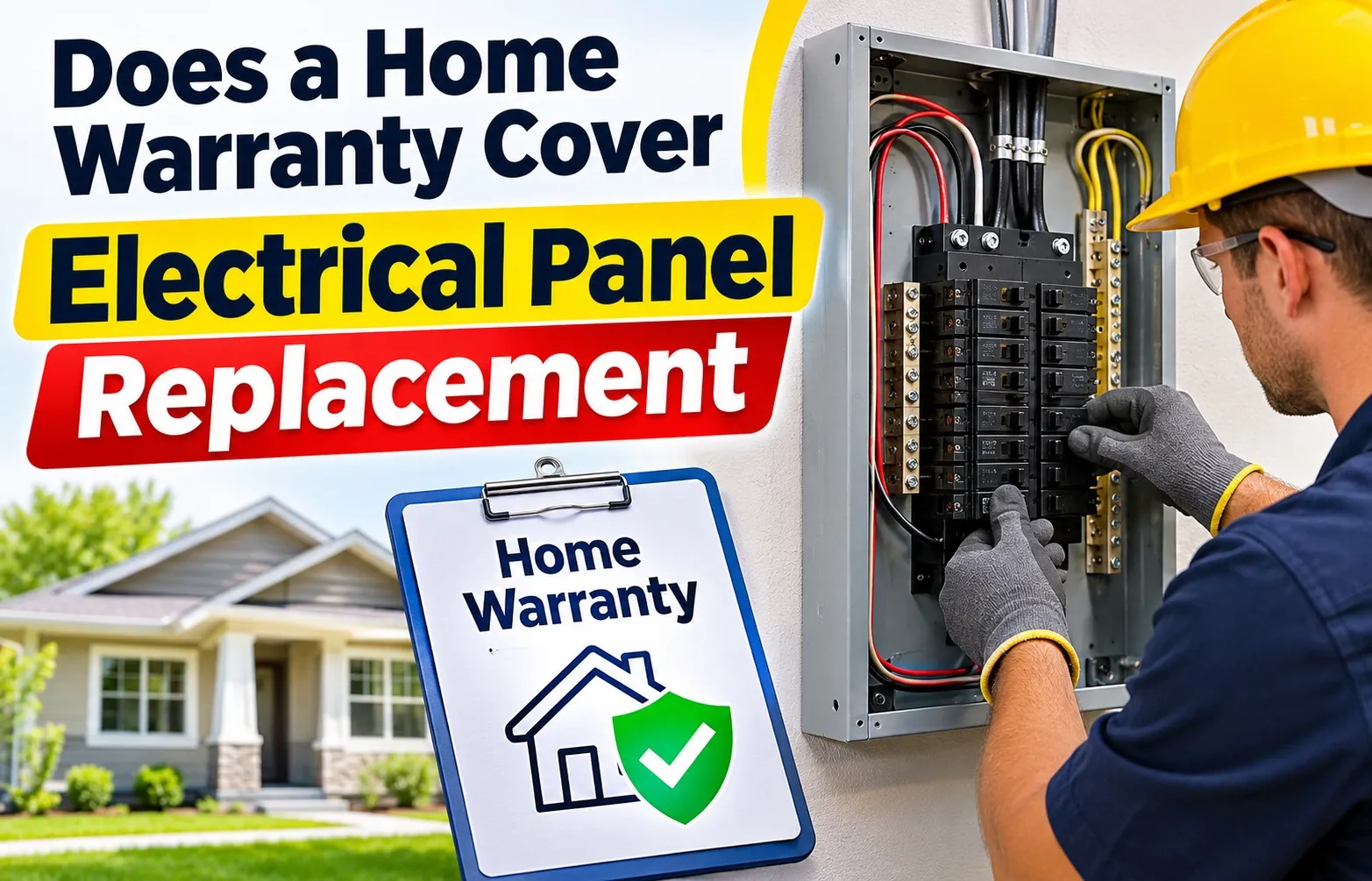 Yes, a home warranty covers electrical panel replacement if the unit fails due to normal wear and tear, provided the issue is not a pre-existing condition. Homeowners pay only their standard trade service call fee—typically $75 to $125—while the warranty provider covers parts and labor up to the contract’s specified dollar coverage cap.
However, full panel replacements come with strict policy boundaries. A home warranty contract protects against mechanical breakdowns during everyday household use, not preventative capacity upgrades or municipal building code modifications.
- Covered Breakdown Scenarios: Internal busbar corrosion from age, malfunctioning main circuit breakers, and worn-out wiring connections inside the box.
- Uncovered Upgrade Scenarios: Voluntarily upgrading from a 100-amp to a 200-amp panel to support an electric vehicle charger or central air conditioning system.
- Policy Cap Limitations: Most plans enforce an electrical system payout limit between $1,000 and $3,000 per contract term, leaving you responsible for any remaining balance.
Home Warranty vs. Homeowners Insurance: Which One Pays?
Many homeowners confuse service contracts with property insurance when a breaker box fails, yet the two policies cover completely opposite causes of damage. Knowing which policy applies prevents costly claim denials and delays during an electrical outage.
- When Your Home Warranty Pays: Your service contract handles internal mechanical and electrical failures caused by age and normal wear and tear, such as a worn-out main breaker that refuses to reset.
- When Homeowners Insurance Pays: Your dwelling coverage pays for sudden and accidental damage caused by an external covered peril—such as a lightning strike, house fire, falling tree limb, or severe utility power surge—minus your policy deductible.
- Equipment Breakdown Endorsements: Standard homeowners insurance excludes age-related wear unless you have added an optional equipment breakdown endorsement, which bridges the gap by covering sudden internal electrical arcing or mechanical failure.
Home Warranty vs. Insurance vs. Out-of-Pocket
Understanding how much you will actually pay for an electrical panel replacement depends entirely on what triggered the failure. While a home warranty covers mechanical breakdowns up to a set dollar cap, homeowners insurance only steps in after sudden external disasters, leaving routine upgrades and recalled panels entirely at your expense.
Side-by-Side Scenario & Cost Comparison
Reviewing real-world repair scenarios reveals how coverage rules directly impact your out-of-pocket cost. Use the breakdown below to see which policy absorbs the bill and where financial caps leave you paying the difference.
What Does a Full Electrical Panel Replacement Actually Cost?
Replacing an entire residential electrical panel costs between $1,500 and $4,000+ nationwide, with most homeowners spending around $2,200 for a standard installation. Because licensed electrician labor and municipal permits account for more than half of the total invoice, bills easily exceed standard home warranty payout limits.
- Like-for-Like 100-Amp Replacement ($1,500 – $2,200): Swapping a failed 100-amp box for a matching modern panel without altering the main utility service line represents the most affordable scenario and often fits within higher-tier warranty caps.
- 100-Amp to 200-Amp Service Upgrade ($2,000 – $4,500+): Increasing electrical capacity requires heavier gauge service entrance cables, a new meter base, and updated grounding rods, which home warranty companies strictly exclude.
- Subpanel Replacement ($500 – $1,200): Replacing a secondary subpanel in a garage, basement, or home addition costs significantly less and typically falls well inside standard electrical coverage limits.
- Additional Hidden Expenses ($200 – $800): City permit fees, utility company disconnect charges, and mandatory Arc-Fault Circuit Interrupter (AFCI) or Ground-Fault Circuit Interrupter (GFCI) breakers frequently add hundreds of dollars to the final bill.
What Home Warranties Actually Cover vs. Exclude
Home warranty contracts protect the core internal components that distribute electricity throughout your house, provided they break down from standard daily operation. Reading the fine print reveals a strict boundary between mechanical failure—which providers pay to fix—and installation defects or environmental damage, which result in immediate claim denials.
Covered Electrical Panel Components
Standard systems coverage includes the primary hardware inside your service box when parts wear out naturally over time. If a licensed contractor verifies that a component failed without external abuse or improper installation, your plan covers the repair or like-for-like replacement.
- Main Breaker Panel: The primary metallic enclosure housing your home’s main disconnect switch and branch circuit distribution, eligible for full replacement if the internal structure fails.
- Subpanels: Secondary electrical distribution boxes installed in garages, basements, workshops, or home additions that lose power due to internal component failure.
- Circuit Breakers: Individual single-pole and double-pole breakers that wear out, trip repeatedly under normal loads, or fail to latch properly.
- Busbars: The central copper or aluminum conductive strips inside the panel that distribute power to individual breakers, covered if they pit, arc, or burn out from normal aging.
- Internal Panel Wiring: Hardwired connections, neutral bars, and ground lugs located inside the panel cabinet itself, excluding external branch wiring running through walls.
- Fuse Boxes: Legacy screw-in or cartridge fuse panels that suffer mechanical failure, though providers only replace them with an equivalent standard-amperage breaker box rather than upgrading service capacity.
Common Exclusions That Lead to Claim Denials
Warranty providers dispatch technicians specifically trained to spot contract exclusions before approving expensive panel replacements. Even when your breaker box stops working, claim adjusters will deny coverage if the root cause traces back to any of the following conditions.
- Pre-Existing Conditions: Any scorched busbars, tripped breakers, or overloaded circuits that existed before your policy’s effective date, including unknown defects detectable during a standard home inspection.
- Double-Tapped Breakers & Improper Installation: Panels containing two branch wires forced into a single breaker lug—unless the breaker is specifically manufacturer-rated for two conductors—or violations caused by unlicensed DIY alterations.
- Rust, Corrosion, and Water Intrusion: Internal panel damage triggered by roof leaks, basement flooding, high humidity, or condensation seeping down the exterior service entrance cable.
- Capacity & Amperage Upgrades: Replacing a working 60-amp or 100-amp panel simply because it lacks enough breaker slots or amperage for modern appliances, hot tubs, or solar inverters.
- External Causes & Neglect: Damage caused by rodent nests inside the enclosure, physical impact, utility company voltage spikes, or failure to maintain clear access around the electrical box.
The 3 Hidden Traps When Filing an Electrical Panel Claim
Even when a home warranty provider approves your electrical panel claim, fine-print limitations frequently leave homeowners paying over $1,000 out of pocket. Understanding how dollar limits, local building codes, and uninsurable panel brands interact with service contracts prevents unexpected financial shocks when the electrician presents the final invoice.
Trap 1: Electrical Coverage Caps ($1,000 to $3,000 Limits)
Every home warranty contract enforces strict dollar limits on how much the company will pay for electrical system repairs per contract term. While basic circuit breaker swaps easily fit inside these limits, a full main panel replacement frequently exceeds standard payout ceilings.
- How the Out-of-Pocket Math Works: If a licensed electrician quotes $2,800 to replace a burned-out main panel and your policy carries a $1,500 electrical coverage cap, the warranty company pays $1,500 and you must pay the remaining $1,300 difference directly to the contractor—plus your initial service call fee.
- Aggregate vs. Per-Occurrence Caps: Some entry-level policies cap electrical payouts at $1,000 or $1,500 for the entire year, meaning a previous electrical repair earlier in your contract term reduces the funds left over for your panel.
Trap 2: Municipal Code Upgrades & Permit Fees
Replacing an outdated electrical panel almost always triggers mandatory municipal building code updates under the National Electrical Code (NEC). Standard home warranty plans cover only the direct replacement of the failed box and explicitly exclude the extra hardware and paperwork required to make the installation legal.
- Excluded Code-Required Hardware: Local inspectors routinely require electricians to install Arc-Fault Circuit Interrupter (AFCI) breakers, Ground-Fault Circuit Interrupter (GFCI) protection, whole-house surge protectors, and dual grounding rods when swapping a main panel.
- Permits and Haul-Away Charges: Municipal electrical permits ($100 to $350), utility disconnect fees, and old equipment disposal charges fall outside standard coverage unless you purchased an optional code violation or permit add-on endorsement before filing your claim.
Trap 3: The Recalled & Uninsurable Panel Dilemma
Homeowners frequently attempt to use their home warranty to replace legacy panels flagged during a homeowners insurance renewal inspection. Because warranty contracts require an active mechanical breakdown rather than a latent design defect, companies routinely deny preventative swaps for known hazardous brands.
- Uninsurable Legacy Brands: Property insurers routinely refuse to cover homes equipped with Federal Pacific Electric (FPE) Stab-Lok, Zinsco, Sylvania, Challenger, or Pushmatic panels due to documented breaker failure rates and overheating risks.
- Why Warranties Deny Pre-Emptive Replacement: According to electrical fire hazard guidance from the U.S. Consumer Product Safety Commission (CPSC), defective breakers that fail to trip under overload pose severe residential fire risks, yet a home warranty will not replace an FPE or Zinsco box simply because your insurer threatens to cancel your policy.
- When Coverage Applies: A home warranty only steps in if a specific breaker or busbar inside that legacy panel physically burns out during normal operation—and even then, the provider will cap the payout at your plan’s dollar limit.
How Top Home Warranty Companies Handle Electrical Panels
While nearly all major home warranty providers list electrical systems in their core service contracts, payout ceilings and municipal code allowances vary dramatically between brands. Comparing how leading companies structure their electrical coverage helps you anticipate out-of-pocket expenses before you file a service request.
Provider Policy Snapshot
Each major warranty company applies distinct rules regarding dollar limits, permit fees, and code violation upgrades when a main breaker panel fails. Review how the top providers handle full panel replacements under their current service agreements:
- American Home Shield (AHS): Stands out for covering unknown pre-existing conditions that could not be detected by a visual inspection or simple mechanical test, reducing the risk of claim denials on older homes.
- First American Home Warranty: Provides straightforward coverage for standard panel failures without low sub-limits on basic electrical parts, though homeowners must add the upgrade rider to avoid paying city permit fees out of pocket.
- Choice Home Warranty: Applies tighter fine-print exclusions on improper installation and corrosion, making accurate technician documentation critical when submitting a main panel claim.
- Old Republic & 2-10 Home Buyers Warranty: Both providers structure their base plans around strict like-for-like replacements, making their optional code-violation endorsements essential if your home still has a legacy 100-amp box.
How to Maximize Your Chances of Electrical Panel Claim Approval
How you report a failing breaker box and handle the initial service visit directly determines whether your home warranty provider approves or denies your claim. Following a disciplined claims process prevents accidental policy violations and ensures the dispatched contractor documents the failure accurately.
1. Do Not Hire Your Own Electrician First
Calling an independent electrician to open, repair, or replace your panel before filing a claim immediately voids coverage under virtually every home warranty contract. Providers require their own vetted network technicians to diagnose the failure first so they can verify eligibility and approve parts pricing.
- Obtain Prior Authorization: Always submit your service request through your warranty portal or phone line first, even during an urgent partial power outage.
- Request Out-of-Network Approval in Writing: If your provider cannot dispatch a contractor within 24 to 48 hours, ask a claims supervisor for written authorization to hire an outside licensed electrician before any work begins.
- Preserve Failed Hardware: Never allow an emergency technician to discard a burned-out breaker or damaged busbar until the warranty adjuster reviews the diagnostic report.
2. Document Symptoms of Mechanical Failure (Not Age)
Warranty adjusters routinely deny claims when homeowners describe their panel as “old,” “outdated,” or “needing an upgrade.” Focus your claim description strictly on sudden operational malfunctions that occurred during normal household use.
- Use Accurate Diagnostic Language: Report specific mechanical symptoms such as a main breaker that fails to reset, audible buzzing or humming from the enclosure, flickering circuits under normal load, or localized heat on a single breaker switch.
- Take Clear Photos Before the Visit: Photograph tripped breakers, tripped subpanel switches, or isolated busbar arcing marks so you have timestamped evidence if the issue is intermittent.
- Keep Your Home Inspection Report Handy: If you purchased your home within the past year, having a clean home inspection report proves the electrical panel was functioning properly before your policy took effect, defeating pre-existing condition denials.
3. Ask the Dispatched Technician About Itemized Billing
When a panel requires full replacement, the dispatched contractor submits a combined diagnosis and cost breakdown to your warranty company’s authorization department. Asking the technician to separate covered hardware from uncovered municipal requirements ensures you receive your full payout cap rather than an outright claim rejection.
- Separate Base Replacement vs. Code Upgrades: Have the electrician list the like-for-like panel box, standard breakers, and base installation labor separately from municipal permit fees, AFCI/GFCI upgrades, and grounding rod modifications.
- Apply Your Coverage Cap Toward Base Costs: By isolating the covered mechanical replacement on an itemized invoice, the warranty provider pays up to your plan’s dollar limit on the core hardware while you pay only the uncovered permit fees or cap overage.
- Request a Second Opinion if Denied: If the first contractor misclassifies normal wear and tear as improper installation, exercise your contractual right to request a second opinion dispatch from a different licensed electrical contractor.
Frequently Asked Questions
Can I upgrade my electrical panel (100-amp to 200-amp) without rewiring my house?
Yes, in most cases you can upgrade from a 100-amp to a 200-amp electrical panel without rewiring your entire house. Existing branch circuit wiring inside your walls remains intact as long as the conductors are safe and meet local code.
- Components Replaced: Electricians swap out only the main breaker box, exterior meter base, grounding rods, and heavy-gauge service entrance cable leading from the utility drop.
- When Rewiring Is Needed: Whole-home rewiring is only required if your existing branch circuits contain deteriorated knob-and-tube wiring, ungrounded cloth insulation, or unsafe aluminum conductors.
Should a 50-year-old electrical panel be replaced?
Yes, any electrical panel that is 40 to 50 years old has exceeded its safe operational lifespan and should be proactively replaced. Aging internal busbars and worn spring mechanisms inside half-century-old breakers frequently fail to trip during electrical overloads, creating serious residential fire hazards.
- Safety & Capacity Limitations: Panels installed in the 1970s typically offer only 60-amp to 100-amp capacity and lack modern Arc-Fault Circuit Interrupter (AFCI) protection required for today’s high-draw appliances.
- Insurance & Resale Roadblocks: Property insurance carriers and real estate home inspectors routinely flag 50-year-old breaker boxes or fuse panels, requiring replacement before issuing or renewing coverage.
What electrical panel brands are uninsurable or excluded?
Property insurers routinely refuse to cover homes equipped with Federal Pacific Electric (FPE) Stab-Lok, Zinsco, Sylvania, Challenger, or Pushmatic electrical panels. These legacy boxes carry documented mechanical defects where circuit breakers fail to trip or fuse directly onto the busbar under heavy electrical loads.
- Federal Pacific Electric (FPE) Stab-Lok: Manufactured from the 1950s through the 1980s, easily identified by distinctive red or orange breaker tips and a “Stab-Lok” label inside the door.
- Zinsco & GTE-Sylvania: Installed widely during the 1960s and 1970s, recognizable by vertical rows of colorful blue, red, and green breaker switches prone to melting onto aluminum busbars.
- Challenger & Pushmatic: Older residential panels known for overheating connections or stiff push-button breakers that lose spring tension over time.
Will home insurance pay for a new electrical panel if it’s outdated?
No, homeowners insurance will not pay to replace an outdated, recalled, or undersized electrical panel. Insurance policies classify replacing aging or hazardous equipment as routine home maintenance and preventative upgrades, leaving you 100% responsible for the replacement cost out of pocket.
- When Insurance Covers a Panel: Dwelling coverage only pays for panel replacement when sudden, accidental damage occurs from a covered external peril—such as a direct lightning strike, house fire, or falling tree limb.
- Policy Cancellation Risk: If an insurance inspection discovers an outdated or uninsurable panel brand, the carrier will typically issue a non-renewal notice requiring proof of replacement within 30 to 60 days rather than paying for the work.

Oscar Vance | Master Plumber & Drainage Expert
Meet Oscar Vance, a licensed master plumber sharing practical solutions on residential repairs, preventive maintenance, and thoughtful home upkeep.