How Much Does It Cost to Start an HVAC Business?
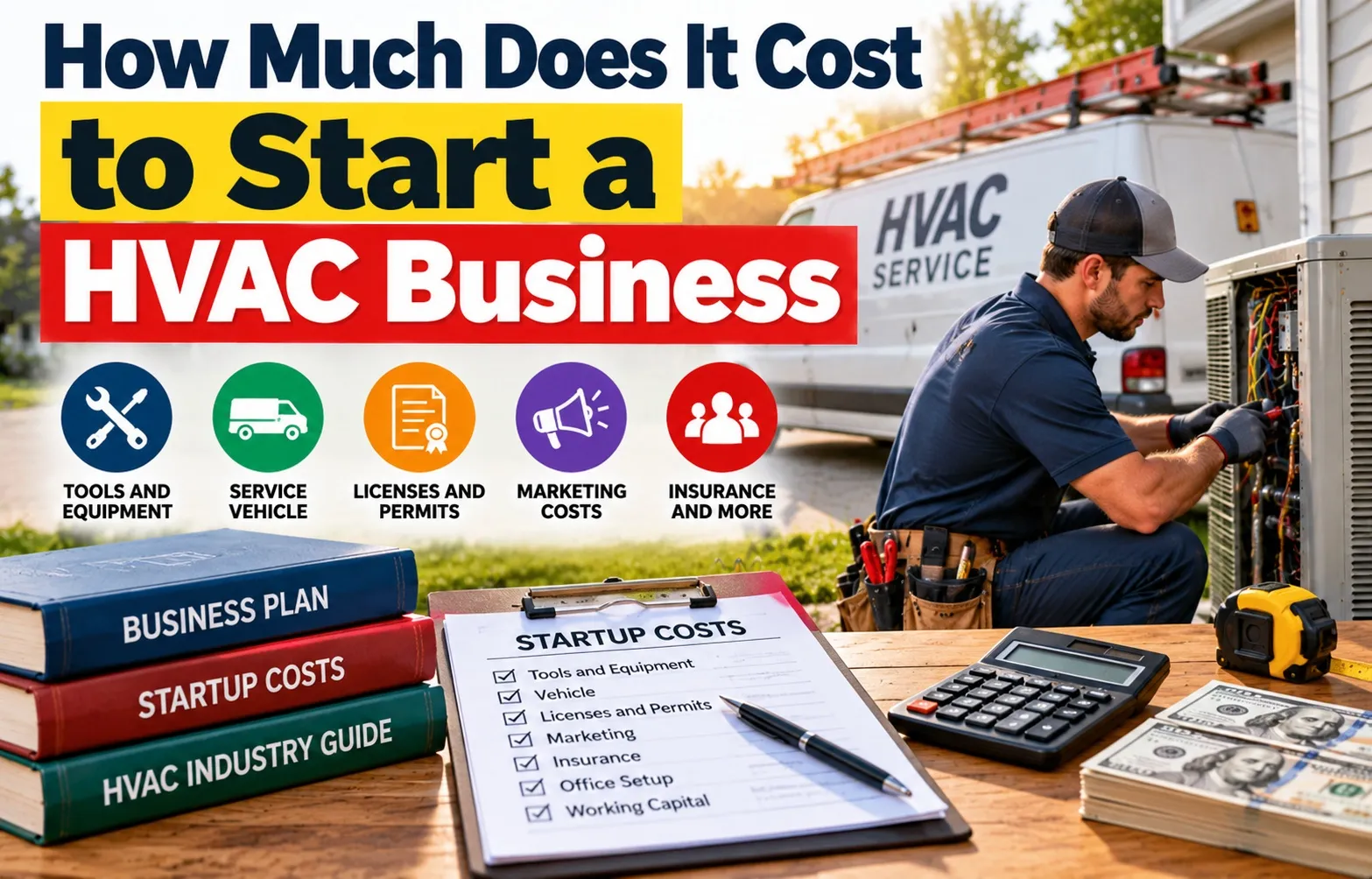 Launching a heating, ventilation, and air conditioning company typically requires an initial capital investment ranging from $8,000 to over $150,000. The exact financial threshold depends entirely on your chosen operational scale, equipment ownership status, and immediate hiring requirements.
Most independent contractors enter the market through one of three primary capital models:
- Minimal Entry ($8,000 – $20,000): A lean, solo residential setup utilizing an existing personal vehicle and essential diagnostic equipment.
- Standard Launch ($20,000 – $50,000): A professional single-technician operation equipped with a custom-wrapped service van, commercial-grade recovery tools, and a dedicated cash reserve.
- Immediate Scale ($50,000 – $150,000+): A multi-vehicle commercial or residential service fleet with hired staff, commercial-scale equipment, and substantial payroll reserves.
From Lean Solo Operator to Full-Service Fleet
Every prospective business owner must align their total initial expenditure with their long-term growth objectives and immediate risk tolerance. Selecting the correct entry model prevents premature cash flow depletion during early operational cycles.
Tier 1: Lean Solo Operator ($8,000 – $20,000)
The lean single-operator model offers the lowest barrier to entry for certified technicians making the transition to self-employment. This approach prioritizes immediate profitability by maintaining near-zero fixed monthly overhead.
Key operational characteristics of this tier include:
- Vehicle Setup: Utilizing a pre-owned truck or existing cargo van retrofitted with basic interior shelving.
- Tooling & Gear: Standard digital manifolds, core hand tools, leak detectors, and a basic vacuum pump.
- Service Focus: Light residential repair, seasonal maintenance tune-ups, and minor system component replacements.
Operating as a solo owner-operator at this level allows you to capture cash flow quickly, though growth remains strictly bound to your individual physical labor capacity.
Tier 2: Professional Solo Technician ($20,000 – $50,000)
The professional solo tier represents the industry benchmark for launching a sustainable, scalable heating and air conditioning business. It balances professional market positioning with controlled capital exposure.
Primary investments within this range cover:
- Branded Transportation: A dedicated commercial service van featuring a full vinyl wrap and customized interior bin systems.
- Advanced Equipment: High-CFM recovery machines, heavy brazing rigs, combustion analyzers, and recovery tanks for multiple refrigerant types.
- Financial Safety Net: A designated 90-day working capital buffer to cover wholesaler invoices before customer receivables are settled.
This model establishes instant credibility with residential homeowners and commercial property managers, enabling higher service margins and faster organic referral generation.
Tier 3: Multi-Truck Commercial/Residential Fleet ($50,000 – $150,000+)
Launching a multi-vehicle enterprise requires significant upfront capital to finance immediate infrastructure, staff salaries, and large-scale inventory acquisition. This model is built for rapid market expansion rather than solo trade work.
Core requirements for a fleet-based deployment include:
- Fleet Acquisition: Down payments or lease deposits for multiple service vehicles outfitted with standardized tool configurations.
- Payroll & Staffing: Reserve funds to cover certified technicians, dispatchers, and administrative personnel during the startup phase.
- Commercial Assets: Commercial-grade recovery units, heavy lifting gear, warehouse storage leases, and enterprise field management software.
While the capital requirement for a commercial HVAC fleet is substantial, it decouples business revenue from your personal tool time, creating an enterprise asset from day one.
Itemized Upfront Startup Expenses Breakdown
Establishing an operational heating and air conditioning business requires strategic allocation across five primary cost centers. Understanding how each dollar is deployed ensures your launch capital directly supports long-term field efficiency and regulatory compliance.
1. Service Vehicle & Custom Upfitting ($15,000 – $25,000)
Your service vehicle serves as both a mobile workshop and your primary local billboard. Sourcing a dependable used mid-size cargo van or dedicated service truck protects against costly roadside downtime while maintaining a professional image.
Key vehicle preparation expenses include:
- Interior Shelving Units & Bin Systems: Modular steel or aluminum van racks designed to secure refrigerant tanks, recovery cylinders, and organized small-parts hardware.
- Heavy-Duty Ladder Racks: Roof-mounted locking systems required to transport extension ladders and stepped access equipment safely.
- Professional Vinyl Fleet Wrapping: Custom graphics featuring your company logo, license numbers, and contact details to build local consumer trust on every job site.
2. Specialized HVAC Diagnostic & Installation Tools ($5,000 – $8,000)
Investments in commercial-grade diagnostic and recovery tools directly impact billable service speed and technical precision. Purchasing durable, trade-proven equipment prevents premature failures during peak summer and winter service cycles.
Core tool loadouts for a new service vehicle must include:
- Digital Manifold Gauges: Multi-refrigerant digital gauge sets for accurate system pressure and subcooling/superheat diagnostics.
- High-CFM Vacuum Pump: Deep-vacuum evacuators to clear moisture and non-condensables from system lines prior to charging.
- Refrigerant Recovery Machine: High-speed units essential for EPA-compliant EPA Section 608 recovery protocols.
- Leak Detectors & Multimeters: Electronic refrigerant sniffers, ultrasonic detectors, and True-RMS digital multimeters for electrical troubleshooting.
- Combustion Analyzers & Brazing Torches: Flue gas diagnostic analyzers for furnace safety testing alongside oxy-acetylene torch setups for copper line brazing.
3. Licensing, Certifications & Legal Setup ($500 – $1,500)
Navigating legal requirements protects your business from administrative fines and client disputes. Completing your business registration early establishes your enterprise as a qualified commercial entity.
Essential legal and compliance prerequisites encompass:
- EPA Certification: Mandatory compliance under federal regulations via recognized EPA Section 608 certification guidelines for legally purchasing and handling regulated refrigerants.
- State Contractor Licensing: Passing trade, business, and law examinations to earn an active state mechanical or HVAC contractor license.
- Corporate LLC Formation: Registering an LLC or C-Corp structure to separate personal assets from commercial operational liabilities.
- Municipal Permits & Registrations: Local city or county business licenses and local trade permit filing accounts.
4. Insurance & Commercial Risk Protection ($2,500 – $5,000)
Comprehensive trade insurance mitigates operational risks, property damage claims, and high-value equipment theft. Proof of adequate insurance is mandatory when bidding on municipal projects and securing commercial subcontracts.
Recommended coverage policies for new companies include:
- General Liability Insurance: Blanket protection against job-site property damage, utility strikes, and personal injury claims.
- Commercial Auto Coverage: Specialized vehicle insurance covering commercial driving risks, cargo, and mobile liability.
- Inland Marine Insurance: Specific coverage protecting high-value diagnostic instruments, recovery gear, and stock stored inside your service van.
- Workers’ Compensation: Mandated coverage protecting employees against trade-related injuries and lost wages.
5. Initial Parts Inventory & Truck Stock ($2,000 – $4,000)
Maintaining a well-stocked service vehicle eliminates mid-day wholesaler supply runs, directly increasing first-time fix rates and billable productivity. Focus your initial inventory budget on universal replacement components that experience high failure rates.
Essential initial truck stock should include:
- Electrical Components: Universal run/start capacitors, single- and double-pole contactors, hard-start kits, and universal fan motors.
- Piping & Fittings: Service valves, filter driers, copper tubing coils, braze fittings, and thermal expansion valves (TXVs).
- Refrigerant Cylinders: Factory-sealed cylinders of primary industry gases, including R-410A, R-32, and R-454B.
Working Capital & Managing Cash Flow
Technical expertise alone does not guarantee business survival during your first year of operation. Mismanaging cash flow management and underestimating the lag between purchasing equipment and receiving customer payments remains the primary cause of early trade business failures.
The Wholesaler Net-30 & COD Cash Flow Gap
Supply houses typically place new contractors on Cash on Delivery (COD) terms until a verifiable purchase history is established. This creates an immediate liquidity crunch when bidding on major system installations or emergency changeouts.
This operational cash flow gap manifests through specific wholesale friction points:
- Upfront Equipment Purchases: You must pay for expensive condensers, air handlers, and furnaces upfront before starting installation work.
- Delayed Client Receivables: Residential homeowner financing approvals or commercial invoice settlement terms often take 14 to 30 days to process.
- Transitioning to Credit: Securing Wholesaler Net-30 terms requires time and clean payment history, forcing you to float high equipment costs during early operations.
Why You Need a $10,000–$20,000 Capital Buffer
A dedicated liquid cash reserve acts as an operational shock absorber during off-peak seasonal dips and early growth phases. Maintaining an accessible capital pool ensures continuous operations without relying on high-interest credit lines.
Your working capital buffer directly funds these recurring operational commitments:
- Fuel & Vehicle Maintenance: Daily fuel outlays, regular tire rotations, and unexpected vehicle repairs.
- Marketing & Lead Generation: Consistent monthly budgets for Google Local Services Ads (LSA) to generate immediate pay-per-lead customer calls.
- Software Overhead: Monthly subscription costs for field dispatch software, mobile payment processing, and accounting platforms.
Pricing Strategy & The “HVAC $5,000 Rule” Explained
Accurate equipment markup and transparent consultation rules build immediate homeowner confidence while protecting operational gross margins. Mastering consumer decision frameworks helps convert emergency repair calls into complete system replacement sales.
The industry-standard HVAC $5,000 rule provides a clear threshold for client guidance:
- The Core Formula: Multiply the age of the system (in years) by the total cost of the proposed repair.
- The Decision Benchmark: If the resulting total exceeds $5,000, replacing the unit is economically superior to executing the repair.
- Practical Application: A $700 repair on a 12-year-old system equals $8,400 (12 × $700). Since $8,400 exceeds $5,000, you confidently advise the customer to invest that capital into a modern unit.
Business Insights & Video Walkthrough
Navigating the transition from field technician to independent contractor requires understanding common operational traps. Avoiding critical early missteps protects your capital and ensures long-term viability in a competitive service market.
Why Most HVAC Startups Fail in Year 1 (And How to Avoid It)
The high HVAC failure rate during the first twelve months typically stems from poor financial planning rather than a lack of technical skill. New operators frequently struggle because they fail to account for hidden overhead and administrative drag.
Common operational pitfalls that sink new companies include:
- Underpricing Labor Rates: Charging flat hourly rates that fail to cover vehicle depreciation, insurance, and administrative hours, leading to zero net profit per job.
- Accumulating Severe Tool Debt: Financing expensive specialty equipment prematurely before establishing steady residential or commercial contract cash flow.
- Improper Refrigerant Handling: Violating federal containment rules, which results in steep regulatory fines and license suspensions.
- Neglecting Workflow Automation: Relying on manual paperwork instead of adopting automated field management software for dispatch, invoicing, and customer tracking.
Should You Buy New or Used Equipment?
Balancing initial capital outlay against long-term maintenance costs is one of the toughest decisions for a new business owner. While brand-new assets offer warranties, pre-owned equipment significantly reduces upfront debt burdens.
Strategic asset acquisition guidelines include:
- Vehicles: Look for well-maintained used cargo vans with complete maintenance histories to avoid massive initial depreciation and high commercial insurance premiums.
- Core Diagnostic Tools: Invest in brand-new, high-precision electronic gauges, recovery pumps, and multimeters to ensure dependable field performance and manufacturer warranties.
- Installation Machinery: Rent or purchase certified pre-owned recovery units and heavy pressing tools until your recurring monthly service volume supports buying new inventory.
Video Guide: Real Cost Breakdown of Starting an HVAC Company
Watch this detailed practitioner walkthrough breaking down the real-world capital requirements, hidden expenses, and operational strategies needed to build a profitable HVAC business from scratch.
People Also Ask (PAA) & FAQ Hub
Addressing common industry questions provides quick clarity on operational costs, business profitability, and financial risks before launching your enterprise.
Frequently Asked Questions About HVAC Business Costs
1. What is the $5,000 rule in HVAC?
The $5,000 rule is a standard equipment replacement rule used by contractors to evaluate whether a client should repair or replace a system. Multiply the age of the HVAC unit (in years) by the total estimated repair cost. If the calculated product exceeds $5,000, replacing the system is economically superior to executing the repair.
2. Is owning an HVAC business profitable?
Yes, owning a service company offers strong HVAC profitability when managed effectively. Well-run contractors maintain net profit margins between 10% and 20%, allowing an experienced owner salary to reach between $80,000 and $200,000+ per year depending on fleet size and service focus.
3. Can an HVAC business owner make $100,000 a year?
Solo HVAC contractors consistently surpass $100,000 in net annual owner salary once they build a recurring residential customer base, control labor overhead, and secure steady recurring revenue through seasonal maintenance contracts.
4. What percentage of HVAC businesses fail?
The trade business failure rate sits at roughly 20% during the first year of operation, with approximately 50% closing within five years. The primary drivers of failure are mismanaged working capital, underpricing labor rates, and lacking off-season financial reserves.
5. What pays better, HVAC vs plumbing?
When comparing HVAC vs plumbing, both trade disciplines yield similar long-term earning potential. Plumbing companies often command slightly higher emergency off-hour rates, whereas HVAC businesses benefit from high-ticket seasonal installation surges and steady maintenance contracts.
6. How much capital do I need to start an HVAC company with one van?
Launching a single-vehicle professional solo operation requires between $20,000 and $35,000 in total capital. This budget covers a reliable service vehicle, vinyl branding, essential diagnostic tools, initial stock, licensing fees, and general liability insurance.

Oscar Vance | Master Plumber & Drainage Expert
Meet Oscar Vance, a licensed master plumber sharing practical solutions on residential repairs, preventive maintenance, and thoughtful home upkeep.