Can You Transfer Your Plumbing License to Another State?
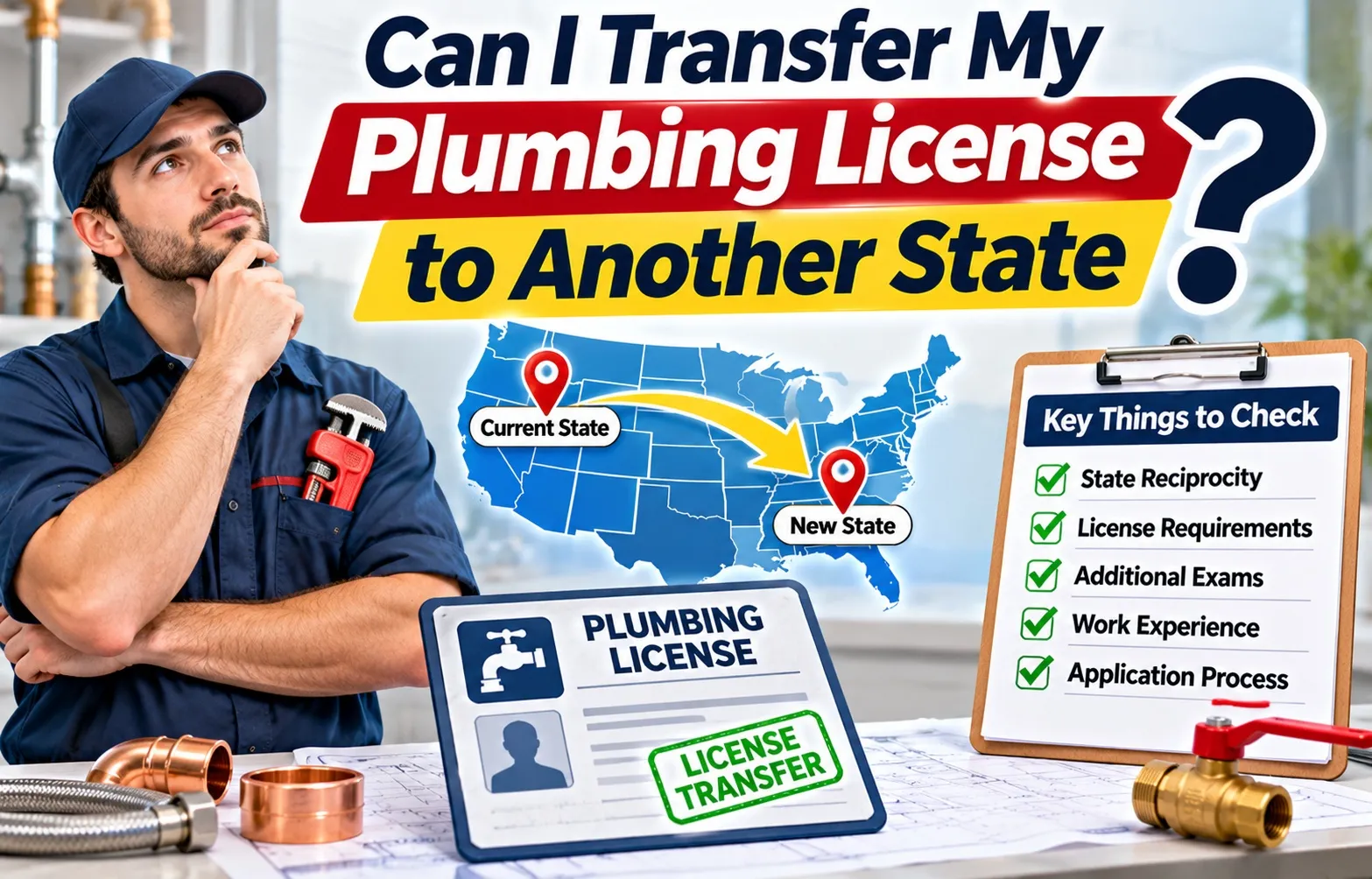 You cannot automatically transfer a plumbing license directly from one state to another because professional trade licenses are regulated independently by individual state boards. However, many jurisdictions offer licensing reciprocity or exam waivers, allowing experienced professionals to fast-track state-to-state plumbing license relocation without retaking the primary trade exam.
Navigating this transition successfully requires understanding that legal authority to practice plumbing is restricted to the specific region that issued your credential. Moving across state lines means fulfilling local administrative criteria before you can legally work on residential or commercial sites.
Understanding State-Level Regulatory Boundaries
Every state enforces its own statutory requirements for journeyman and master plumbers to protect public health and infrastructure safety. Because safety codes and apprenticeship standards vary widely, a credential earned in one region carries no inherent legal weight elsewhere until formally recognized.
- No Federal Oversight: There is no national or federal plumbing license that grants universal practicing rights across all fifty states.
- Independent Licensing Boards: Each state regulatory board sets its own prerequisite experience hours, background screening rules, and exam standards.
- Municipal Authority: Certain states delegate licensing governance entirely to local city or county departments rather than maintaining a statewide agency.
How Reciprocity and Exam Waivers Bridge the Gap
Although a direct, universal trade license transfer is unavailable, relocation is entirely achievable through mutual recognition agreements. When two states establish reciprocity, one jurisdiction agrees to waive its standard trade examination for plumbers licensed in the other, provided specific qualifying criteria are satisfied.
- Active Credential Status: You must prove your current license is fully active and in good standing with zero pending disciplinary actions.
- Verified Experience Thresholds: Most destination boards require documented proof of multiple years of active licensed field experience.
- Administrative Compliance: Applicants must still submit formal documentation, clear fingerprint background checks, and pay applicable state processing fees.
How Plumbing License Reciprocity and Exam Waivers Actually Work
Plumbing license reciprocity eliminates the need to retake comprehensive trade examinations when moving to a participating state. Instead of starting your career progression from scratch, eligible trade professionals leverage mutual state agreements to fast-track their legal authorization to operate.
Gaining out-of-state privileges requires navigating specific administrative mechanisms managed by regional regulatory agencies. Understanding how these pathways operate ensures you avoid costly delays during your professional relocation.
What is Plumbing Reciprocity?
Plumbing reciprocity refers to formal regulatory pacts established between state licensing boards that recognize equivalent trade qualifications. When two states hold an active agreement, they mutually honor each other’s testing standards, training hours, and examination rigor.
- Streamlined Cross-Border Practice: Allows licensed journeymen and masters to transition smoothly without repeating multi-year apprenticeships.
- Mutual State Recognition: Depends on whether the destination board views your original home state’s licensing criteria as equal or superior to its own.
- Restricted Geographic Scope: Reciprocal agreements are rarely nationwide, often applying only to specific neighboring or partner states.
Exam Waivers vs. Full Re-Testing: What to Expect
An exam waiver allows qualified out-of-state plumbers to bypass the practical trade exam while still satisfying administrative licensing mandates. However, waiver eligibility depends entirely on whether your originating state maintains a verified pact with your destination territory.
- Trade Exam Waivers: Waives the hands-on or written technical test if your previous exam score and state standards match local thresholds.
- Mandatory Code & Law Testing: Many boards that waive trade exams still require you to pass a brief local legal or regional plumbing code exam.
- Full Re-Testing Mandates: States without active reciprocity require applicants to complete the entire testing sequence as a new candidate regardless of past experience.
Core Prerequisites: Experience Hours, Active Status, and Clean Records
State plumbing boards enforce strict compliance thresholds before granting out-of-state endorsement privileges. Securing an exam waiver requires verifiable proof that your professional history meets or exceeds local statutory requirements.
- Official Letter of Good Standing: A certified document sent directly from your previous state plumbing board verifying your active license status and lack of violations.
- Verified Licensed Experience Hours: Documented proof of several years of active field practice as a registered journeyman or master plumber.
- Clean Disciplinary Records: Complete absence of revoked licenses, active suspensions, or unresolved legal citations related to building code violations.
Navigating the Codebook Divide: Uniform and International Plumbing Standards
Securing an exam waiver during interstate relocation does not automatically grant you immediate field authority. The most critical blind spot for migrating tradespeople is the fundamental divide between regional plumbing codebooks, which dictate legal piping methods, venting sizes, and fixture counts across different territories.
Failing to account for these code differences can lead to severe project delays, failed municipal inspections, and potential liability issues. Transitioning successfully requires treating code adaptation as an urgent professional requirement rather than a minor formality.
The Hidden Trap: Uniform Plumbing Code (UPC) vs. International Plumbing Code (IPC)
The United States plumbing landscape is split primarily between two major model codes. Operating successfully in your destination state requires mastering whichever system local municipalities have formally adopted and enforced.
- Uniform Plumbing Code (UPC): Developed by the International Association of Plumbing and Mechanical Officials (IAPMO) and heavily utilized across Western states, focusing strictly on public health protection and rigorous sizing tables.
- International Plumbing Code (IPC): Developed by the International Code Council (ICC) and widely adopted across Eastern and Midwestern states, emphasizing performance-based design and distinct material allowances.
- State-Specific Amendments: Even within standard UPC or IPC frameworks, individual state legislatures introduce independent local code amendments that override model text.
Why Waiving the Exam Doesn’t Mean Skipping Code Compliance
Many licensed professionals assume that bypassing a reciprocal trade exam means they are fully cleared to install systems locally. In reality, state licensing boards separate general trade competency from regional code enforcement.
- Local Code Endorsements: Many jurisdictions mandate a separate open-book code exam or jurisdictional questionnaire even when primary trade testing is waived.
- Legal Liability Risks: Installing drainage, waste, or vent systems under outdated codebook requirements can result in immediate inspection failures and regulatory fines.
- Inspection Enforcement: Local building inspectors enforce regional amendments stringently, regardless of how many decades of experience you hold from another territory.
How to Bridge Your Code Knowledge Before Starting Work
Proactively studying the destination state’s adopted codebook prevents costly installation errors and project delays. Transitioning plumbers should invest time in targeted code preparation before stepping onto a new job site.
- Acquire the Current State Edition: Purchase or review the exact code year and publishing body enforced by the state construction industry licensing board.
- Identify Divergent Regulations: Compare critical pipe sizing tables, wet-venting allowances, and drainage fixture unit calculations against your home state practices.
- Take Local Prep Courses: Enroll in short continuing education courses focused exclusively on local code modifications, administrative rules, and regional inspection protocols.
Navigating Licensing Tiers: Journeyman, Master, and Contractor Rules
Professional licensing requirements change dramatically depending on your career tier. Moving across state lines as a journeyman differs vastly from transferring credentials as an independent master plumber or plumbing contractor, requiring distinct compliance steps for each level.
Journeyman Plumber Transfer Rules
Transferring as a journeyman plumber focuses primarily on proving your technical experience hours and good standing. Destination boards rarely require business or financial credentials at this stage, prioritizing your direct trade background and verified apprenticeship records over corporate compliance.
- Apprenticeship Verification: Submission of official transcripts proving completion of a recognized multi-year trade program or structured field training.
- Experience Thresholds: Proof of at least two to four years of active, supervised field work under a licensed master plumber.
- Direct Board Endorsement: Streamlined review processes that evaluate hands-on trade competency rather than business management capability.
Master Plumbers: Navigating Higher Standards and Business Exams
Upgrading or transferring as a master plumber involves stringent verification of supervisory experience and mandatory administrative testing. Most state boards require master applicants to pass a specialized business and law exam in addition to proving advanced project management capabilities.
- Supervisory Experience Proof: Documentation proving years spent managing complex plumbing installations, pull permits, and directing trade crews.
- Business and Law Testing: Mandatory exams covering local contractor regulations, lien laws, tax obligations, and employment safety standards.
- Advanced Technical Review: Rigorous evaluation of hydraulic design, blueprint analysis, and advanced system compliance.
Contractor Bonds, Insurance, and Entity Registration
Operating independently as a licensed plumbing contractor requires establishing corporate compliance, financial protection, and legal entity registration. States mandate secure financial instruments and comprehensive coverage before granting commercial operational clearance to out-of-state operators.
- Contractor Bond Acquisition: Securing a state-mandated surety bond to protect consumers against incomplete work, code violations, or financial default.
- Liability Insurance Coverage: Maintaining minimum general liability and workers’ compensation insurance thresholds required by the destination regulatory agency.
- Business Entity Registration: Registering your foreign corporation, LLC, or sole proprietorship directly with the state secretary of state office.
State-by-State Breakdown of Plumbing License Reciprocity
Understanding plumbing license reciprocity by state is essential for planning a smooth professional relocation across regional borders. Jurisdictions nationwide fall into distinct regulatory categories, ranging from mutual agreement territories to localized municipal systems.
States with Active Reciprocity Agreements
States featuring active reciprocity agreements allow qualified out-of-state plumbers to bypass standard trade examinations if their home licensing body maintains matching credential standards. For example, specific regional territories offer targeted mutual recognition pacts that fast-track valid journeymen through simplified administrative channels.
- Direct Credential Recognition: Destination state boards evaluate your home jurisdiction’s exam rigor to determine if direct endorsement is permitted.
- Reduced Testing Barriers: Qualifying applicants skip hands-on trade exams while fulfilling local administrative registration steps.
- State-Specific Pacts: Agreements are frequently bilateral, meaning two specific states agree to honor each other’s licensed tiers mutually.
Non-Reciprocal States (Mandatory Retesting Required)
Non-reciprocal states require all incoming trade professionals to complete the entire state licensing and examination process from scratch, regardless of years of prior experience. Jurisdictions like Alabama, Colorado, and Rhode Island do not honor out-of-state credentials for direct exam waivers under any circumstances.
- Full Examination Mandates: Applicants must register for and pass both written and practical trade assessments administered locally.
- Experience Re-Verification: State licensing boards independently audit apprenticeship hours and historical work logs before granting test authorization.
- Independent Application Track: Out-of-state applicants are processed identically to first-time trade candidates entering the workforce.
States with Local or Municipal Licensing Only (e.g., Pennsylvania, Wyoming)
Several jurisdictions manage trade credentials entirely through municipal plumbing licensing instead of statewide boards. In states like Pennsylvania and Wyoming, plumbers must apply directly through individual city or county building departments rather than a centralized state agency.
- Decentralized Regulation: No statewide plumbing license exists, meaning rules, fees, and testing requirements change depending on the specific city or county.
- Local Permit Authority: Contractors must secure separate municipal approvals and local bond certificates for every distinct jurisdiction they work within.
- Reference Resources: Professionals seeking centralized regulatory compliance data can consult professional contractor directories such as NASCLA for structural guidance.
Step-by-Step Action Plan and Timelines for Relocating Your Plumbing License
Transitioning your plumbing credentials across state lines requires a methodical, step-by-step approach to navigate bureaucratic requirements smoothly. Securing authorization typically takes between three to six weeks from initial document requests to final board approval, provided all paperwork is submitted accurately.
Step 1: Requesting Your Official Letter of Good Standing
Your first priority is contacting your current state plumbing board to request an official letter of good standing. This document certifies that your license is currently active, fully valid, and free of any pending disciplinary actions or unresolved complaints.
- Contact Your Home Board: Submit a formal records request through your current licensing agency’s online portal or paper application.
- Verify Active Status: Ensure your current license has no pending renewals, lapsed fees, or safety violations attached to your file.
- Direct Agency Transmission: Many destination state boards require the letter to be sent directly from agency to agency to prevent tampering.
Step 2: Clearing Background Checks and Fingerprinting
Most destination state boards mandate a comprehensive criminal history background check and electronic fingerprinting before they will evaluate an out-of-state application. Completing this step early prevents unexpected administrative holdups.
- Schedule Fingerprinting: Book an appointment with approved state vendors using designated agency identification codes.
- Submit FBI and State Checks: Ensure both state and federal background clearances are processed and transmitted directly to the licensing board.
- Clear Disciplinary Records: Address any historical misdemeanors or code citations beforehand to avoid automatic application denials.
Step 3: Submitting Applications and Fees
Once your supporting credentials and background clearances are secured, compile your final application package for the destination agency. Pay careful attention to state-specific licensing application fees to prevent processing rejections.
- Complete the Reciprocity Application: Fill out the out-of-state endorsement or reciprocity form precisely as instructed by the board guidelines.
- Pay Application Fees: Submit non-refundable application, processing, and initial licensing fees via secure electronic payment methods.
- Attach Supporting Documentation: Bundle your letter of good standing, verified work hours, and background clearance receipt into a single submission.
Realistic Timeline Breakdown: How Long Does the Process Take? (3 to 6 Weeks)
Setting realistic expectations helps you coordinate your job search, living arrangements, and financial planning during the interstate move. A standard license transfer process typically requires three to six weeks from start to finish.
- Weeks 1 to 2: Requesting documents, securing your letter of good standing, and completing state fingerprinting appointments.
- Weeks 3 to 4: Processing background check clearances and submitting the final application package along with required fees.
- Weeks 5 to 6: Final board review, administrative verification, and issuance of your new state plumbing license card or certificate.

Oscar Vance | Master Plumber & Drainage Expert
Meet Oscar Vance, a licensed master plumber sharing practical solutions on residential repairs, preventive maintenance, and thoughtful home upkeep.