Is Your Roof Vent Actually Clogged?
 Diagnosing a clogged plumbing vent stack before climbing onto your roof prevents unnecessary labor and dangerous roof trips. A blocked vent stack restricts airflow, creating negative pressure inside your drainage system that leads to sluggish drains, bubbling fixtures, and foul sewer smells indoors.
How Plumbing Vent Stacks Work (The Straw Analogy)
A plumbing vent stack acts as the breathing mechanism for your home’s drainage network. Without proper air intake, wastewater struggles to flow smoothly through the main drain line.
To understand how air pressure affects water flow, think of holding a finger over the top of a liquid-filled straw:
- Trapped Vacuum: When the top opening of a straw is sealed, liquid refuses to flow out of the bottom regardless of gravity.
- Negative Pressure in Pipes: Without an open roof vent stack, rushing wastewater pulls air through indoor P-traps instead of the roof pipe.
- Restored Equalization: Unblocking the vent stack restores balanced atmospheric pressure, allowing wastewater to drain instantly without pulling air from fixture traps.
Top 4 Signs Your Roof Vent Pipe is Clogged
When debris, leaves, or animal nests seal your roof vent, distinct physical symptoms immediately manifest throughout your home’s plumbing fixtures.
Watch for these four primary indicators before attempting any physical clearing on the roof:
- Gurgling Drains: Deep bubbling or glug-glug noises originating from bathroom sinks, bathtubs, or showers while another fixture drains.
- Sewer Gas Odors: Foul, egg-like methane smells entering living spaces when negative pressure siphons water out of P-traps.
- Slow Drainage Across Multiple Fixtures: Simultaneous slow draining in toilets, sinks, and tubs despite clear local trap pipes.
- Bubbling Toilet Water: Water levels in the toilet bowl oscillating, rising, or releasing air bubbles when a nearby washing machine or sink drains.
The Simple Toilet Flush & Sink Test to Confirm a Vent Clog
You can verify whether a blockage stems from your main roof vent stack or a localized pipe clog using a basic two-person indoor diagnostic test.
Follow these simple steps to isolate the issue without using specialized tools:
- Fill a nearby bathroom sink completely with warm water while keeping the drain stopper closed.
- Position one person near the sink and another person at the toilet in the same bathroom.
- Pull the sink stopper to release the water, then immediately flush the toilet.
- Observe the sink drain closely; if the sink water stalls, gurgles, or pulls dry with a loud suction noise, negative pressure from a clogged vent stack is confirmed.
Essential Safety Precautions & Roof Inspection Checklist
Working on a roof to clear a plumbing vent carries inherent fall risks and safety hazards. Following fundamental ladder placement, roof inspection rules, and personal protective protocols ensures you clear the blockage safely without risking personal injury.
When to STOP: Roof Pitch and Weather Safety Rules
Never attempt to walk on a roof if environmental conditions or structural angles compromise your foot traction. Recognizing when a job exceeds safe DIY parameters is essential for fall protection.
Evaluate these critical safety thresholds before stepping onto any roof surface:
- Extreme Roof Pitch: Stop immediately if your roof pitch exceeds 6/12 (a rise of 6 inches for every 12 inches of horizontal run) unless you are fully equipped with a professional safety harness and roof anchor system.
- Wet or Icy Surfaces: Rain, morning dew, frost, or ice significantly reduce foot grip on asphalt shingles, metal, or tile, creating extreme slipping hazards.
- High Wind Conditions: Gusts over 15 mph can unbalance you while carrying tools or handling a bulky garden hose on top of a ladder.
- Brittle or Damaged Roofing: Old, cracking shingles or wet moss growth can slide out from underfoot, leading to sudden loss of stability.
Essential Safety Gear Checklist
Equipping yourself with appropriate personal protective equipment shields you from physical hazards, airborne sewer gases, and sharp roof debris.
Assemble these basic safety items before ascending to the roof vent stack:
- Slip-Resistant Shoes: Rubber-soled work boots with deep tread that grip asphalt shingles securely.
- Heavy-Duty Work Gloves: Thick leather or reinforced synthetic gloves to protect hands from jagged wire caps, debris, and dirty plumbing cables.
- Protective Eyewear: Impact-resistant safety goggles to guard your eyes against pressurized water splashback, dust, and nesting debris.
- Full-Body Safety Harness: A tethered fall-arrest harness securely anchored to a structural roof point for steep slope access.
How to Secure Your Extension Ladder (1-to-4 Rule)
Ladder instability causes the majority of residential roof access accidents. Setting up an extension ladder correctly creates a stable platform for mounting and dismounting the roof.
Follow these exact steps to position and secure your extension ladder before climbing:
- Place the ladder base on firm, level ground, avoiding soft mud, loose gravel, or uneven patio stones.
- Apply the 1-to-4 pitch rule: place the base 1 foot away from the house wall for every 4 feet of vertical ladder height to the roof eave.
- Extend the top of the ladder at least 3 feet (3 rungs) past the roof edge to give you a secure handhold when stepping onto and off the roof.
- Tie off the top of the ladder to the roof rafters or fascia board using heavy-duty straps to prevent side-to-side sliding.
Complete Tool & Equipment Checklist
Having the right tools ready before ascending your roof saves time and prevents dangerous trips up and down the ladder. Gather your equipment on the ground and place smaller hand tools in a tool belt for easy carrying.
Core DIY Clearing Tools
Most basic roof vent blockages caused by dry leaves, twigs, or shallow organic matter require only standard household maintenance items.
Assemble these essential hand tools for initial inspection and light clearing:
- LED Flashlight or Headlamp: Provides high-intensity illumination down the dark PVC vent pipe to pinpoint clog depth and type.
- Garden Hose with Spray Nozzle: Delivers high-pressure water streams to break down loose dirt, soft leaves, and organic debris.
- Shop Vacuum with Extension Hose: Extracts dry, brittle debris like dry leaves, pine needles, or twigs upward instead of pushing them deeper down the pipe.
- Wire Mesh Cap or Guard: A durable replacement cap placed over the pipe after cleaning to stop future debris and animal intrusion.
Advanced Equipment for Stubborn Blockages
If water alone does not break through deep, compacted bird nests, dense root intrusiveness, or sludge, specialized drain clearing equipment is required.
Select from these advanced tools based on the severity of the obstruction:
- Drain Cleaning Bladder (Expansion Bladder): Attaches directly to a garden hose, expanding inside the pipe under water pressure to deliver targeted, high-pressure water bursts against stubborn clogs.
- Plumber’s Snake / 25-ft Drain Auger: A flexible steel cable equipped with a rotating handle or bulb head that bores through thick physical obstructions, hooking or breaking up dense blockages deep inside the plumbing stack.
How to Clean a Plumbing Vent on the Roof
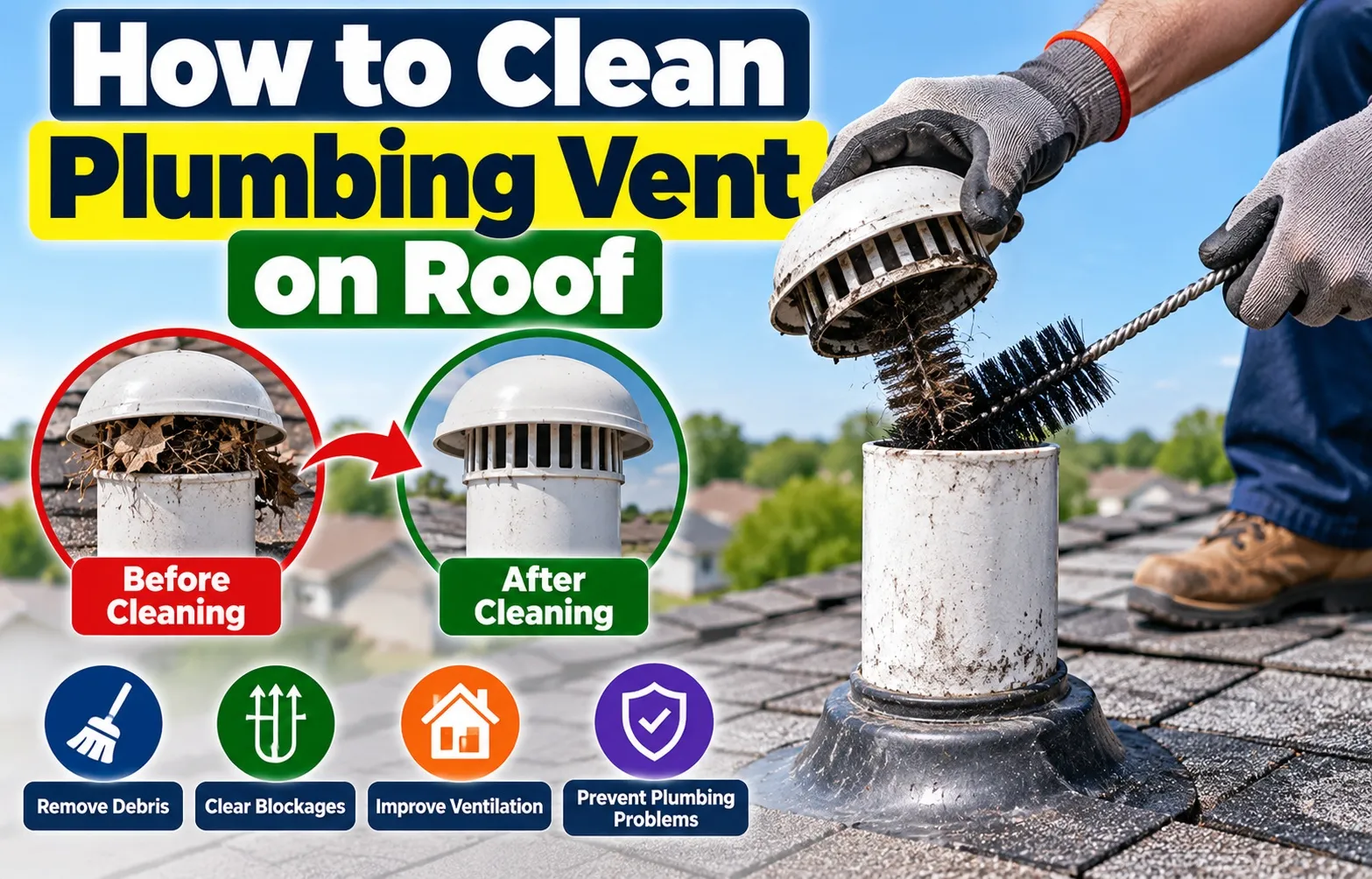
Cleaning a roof plumbing vent requires a systematic approach to clear blockages safely and effectively. Follow these sequential steps to restore proper airflow and drainage to your main sewer stack.
Step 1: Safely Locate and Inspect the Vent Stack
Pinpoint the correct vertical pipe protruding through your roof deck directly above the affected plumbing fixtures. Shine an intense LED flashlight down the opening to check for standing water or physical blockage.
Identify your pipe material and inspect the depth of the obstruction:
- Locate the Stack: Look for a vertical PVC vent stack or older cast iron pipe sticking out of the roof.
- Inspect the Opening: Check if standing water is trapped near the top or if light penetrates past a shallow obstruction.
Step 2: Remove Visible Top-Level Debris
Carefully clear away any leaves, dead twigs, or animal nesting materials sitting right at the rim of the pipe opening. Hand-cleaning prevents pushing loose matter further down into the tight network of the pipe.
Perform initial debris extraction with these careful practices:
- Gloved Hand Removal: Wear heavy work gloves to scoop out surface leaves and dirt by hand.
- Prevent Accidental Drops: Ensure no loose tools or large debris slip down into the main sewer stack during extraction.
Step 3: Flush the Pipe Using a Garden Hose or Drain Bladder
Insert a garden hose or a specialized drain cleaning bladder deep into the pipe opening to apply water pressure. This method dissolves organic sludge and pushes minor obstructions down the line.
Execute the water flush using these steps:
- Turn on Water Supply: Let a steady stream run down the pipe to test if water flows smoothly without backing up.
- Use a Drain Bladder: If standard flow fails, attach an expansion bladder that expands under water pressure to blast away stubborn sludge.
Step 4: Use a Plumber’s Snake for Deep, Compacted Clogs
Lower a flexible plumber’s snake or drain auger down into the pipe when water flushing fails to break the blockage. Turning the rotating handle helps the cable bore through deep, packed obstructions.
Clear deep blockages efficiently using this mechanical method:
- Feed the Cable: Slowly lower the auger cable down the PVC vent stack until you encounter firm resistance.
- Rotate and Break Up: Crank the rotating handle clockwise to hook or break apart dense bird nests or scale buildup.
Step 5: The Shop Vac Suction Method (For Dry Obstructions)
Use a wet/dry shop vacuum with a secure adapter hose to suck out dry, tightly packed organic matter. Suction is highly effective for removing dry pine needles, dirt, or insulation without compacting them further.
Vacuum out the pipe using these simple steps:
- Seal the Opening: Press a flexible vacuum hose tightly over the rim of the vent pipe to create airtight suction.
- Extract Dry Obstructions: Turn on the shop vacuum to pull out dry leaves, twigs, and debris upward into the canister.
How to Unclog a Plumbing Vent WITHOUT Going on the Roof
Clearing a clogged vent stack does not always require climbing onto a steep or dangerous roof surface. Homeowners facing winter weather, physical limitations, or high roof pitches can effectively clear vent blockages from ground level or lower access points within the home.
Method 1: Clearing via the Attic Cleanout Tee
Many modern homes feature an accessible cleanout tee installed along the indoor plumbing stack in the attic. Accessing the vent pipe from inside the attic bypasses roof hazards while providing direct entry into the stack.
Use these steps to clear the line safely from inside your attic space:
- Locate the Cleanout Plug: Find the threaded cleanout tee cap located along the vertical PVC pipe running through your attic.
- Unscrew the Cap: Place a bucket beneath the tee to catch any trapped condensation or debris, then loosen the cleanout plug with a pipe wrench.
- Feed a Drain Auger: Insert a flexible drain auger cable downward into the opening and rotate the handle to break through the obstruction.
Method 2: High-Pressure Snake from an Indoor Fixture
When an attic access is unavailable, you can snake the lower access point of the vent system directly through an indoor fixture connection. Removing a bathroom sink P-trap opens a direct line into the branch vent system.
Follow this procedure to clear lower-level vent obstructions indoors:
- Disconnect the P-Trap: Place a small bin under the bathroom sink and remove the slip nuts to detach the P-trap assembly.
- Insert the Cable: Feed a slim 1/4-inch plumber’s snake into the exposed wall pipe connection, directing it upward toward the main stack.
- Bore Through the Clog: Rotate the auger crank as you advance the cable to break up grease, hair, or minor soap scum buildup restricting air intake.
Method 3: Using a Ground-Level Cleanout Access
Exterior ground-level cleanout fittings allow you to clear main sewer stack blockages that mimic vent symptoms. Clearing deep main-line clogs from the ground restores normal system pressure across all connected fixtures.
Clear the line from the exterior ground level using these simple actions:
- Locate the Ground Cleanout: Find the PVC or cast iron cap protruding slightly above the soil near your home’s exterior foundation.
- Remove the Threaded Cap: Unscrew the square or slotted plug carefully using a wrench, standing to the side in case of built-up standing water.
- Run a Heavy-Duty Auger: Feed a long plumber’s snake through the opening into the main sewer line to clear heavy obstructions affecting drainage air balance.
Chemical Warning: Can You Pour Drano or Bleach Down a Vent Pipe?
Pouring chemical drain cleaners or bleach down a roof plumbing vent stack is ineffective and dangerous. Caustic products like Drano rely on standing water contact to dissolve organic matter, but plumbing vents are vertical air pipes where liquids rapidly slip past blockages or sit trapped above dense obstructions.
Why Chemical Drain Cleaners Fail in Vent Pipes
Unlike standard sink or tub drains, vertical vent stacks present unique physical conditions that render liquid drain openers completely useless against common roof blockages.
Consider these primary reasons chemical cleaners fail inside a vent pipe:
- Incompatible Clog Materials: Roof vent blockages typically consist of bird nests, twigs, pine needles, leaves, or animal carcasses—materials that liquid chemicals cannot effectively dissolve.
- Lack of Standing Contact: Liquid drain openers quickly slide past irregular dry debris without lingering long enough to break down the obstruction.
- Trapped Chemical Pools: If a solid clog completely blocks the stack, chemicals sit stagnant in the upper pipe, preventing mechanical tool access until the hazardous liquid is manually removed.
Safety Hazards: Chemical Splashback and Pipe Corrosion
Introducing harsh chemicals like sodium hydroxide, bleach, or sulfuric acid into an elevated outdoor pipe creates severe health risks and expensive plumbing damage.
Avoid chemical drain cleaners due to these critical safety and material risks:
- Severe Splashback Hazard: Inserting a plumber’s snake or running a garden hose into a pipe filled with trapped chemical cleaner can spray caustic liquid back onto your face, skin, and eyes.
- Toxic Chemical Fumes: Heat-generating chemical reactions inside the enclosed stack can force dangerous fumes down into living spaces through dry indoor P-traps.
- PVC Pipe Damage and Corrosion: Heat generated by concentrated chemical reactions can soften thin PVC pipes or corrode older cast iron joints, leading to costly leaks inside your walls.
- Safe Non-Chemical Clearing: Always rely on mechanical tools like drain augers, expansion bladders, or shop vacuums to clear vent blockages safely without chemical hazards.
How to Prevent Future Plumbing Vent Blockages
Taking proactive preventative measures protects your plumbing system from recurring blockages, structural water issues, and costly plumber callouts. Installing physical barriers and maintaining the surrounding roof environment keeps your vent stack open and functioning year-round.
Installing Stainless Steel Mesh vs. Plastic Vent Caps
Fitting a protective cap or guard over the exposed roof opening acts as the first line of defense against pest entry and falling debris. Choosing the right material ensures long-term protection against harsh outdoor elements.
Compare these common guard options to select the best protection for your roof pipe:
- Stainless Steel Wire Mesh Caps: Highly recommended for ultimate durability. Stainless steel screens resist rusting, prevent corrosion from sewer gases, and stop squirrels or rodents from chewing through to build nests inside the pipe.
- Plastic Vent Caps: Affordable and lightweight options, but prone to becoming brittle and cracking under intense UV sun exposure or freezing winter temperatures over time.
- Animal Guard Covers: Specialized louvered caps that permit maximum air flow while creating an impenetrable physical barrier against birds, bats, and small pests seeking warm nesting spots.
Seasonal Maintenance Checklist for Tree Branches and Leaves
Overhanging foliage is the primary source of organic debris accumulation inside roof vent pipes. Performing routine seasonal upkeep around your roof perimeter minimizes the volume of leaves and twigs reaching your stack.
Follow this quick preventative checklist during your annual home maintenance routine:
- Trim Overhanging Branches: Prune back tree limbs at least 6 to 10 feet away from the roof line to eliminate direct dropping paths for leaves, acorns, and pine needles.
- Clear Roof Valleys and Gutters: Regularly scoop out leaves trapped in roof valleys or gutters so high winds cannot sweep loose debris into the open pipe.
- Perform Fall and Spring Inspections: Shine a flashlight down the stack twice a year to spot minor debris accumulation before it turns into a dense, compacted clog.
DIY vs. Professional Costs: When to Call a Plumber
Deciding between a DIY approach and hiring a professional plumber depends on your comfort level on a roof, tool availability, and the complexity of the obstruction. While clearing a simple leaf clog yourself costs under $30 in basic equipment, hiring a professional eliminates hazardous fall risks and guarantees deep-line clearing.
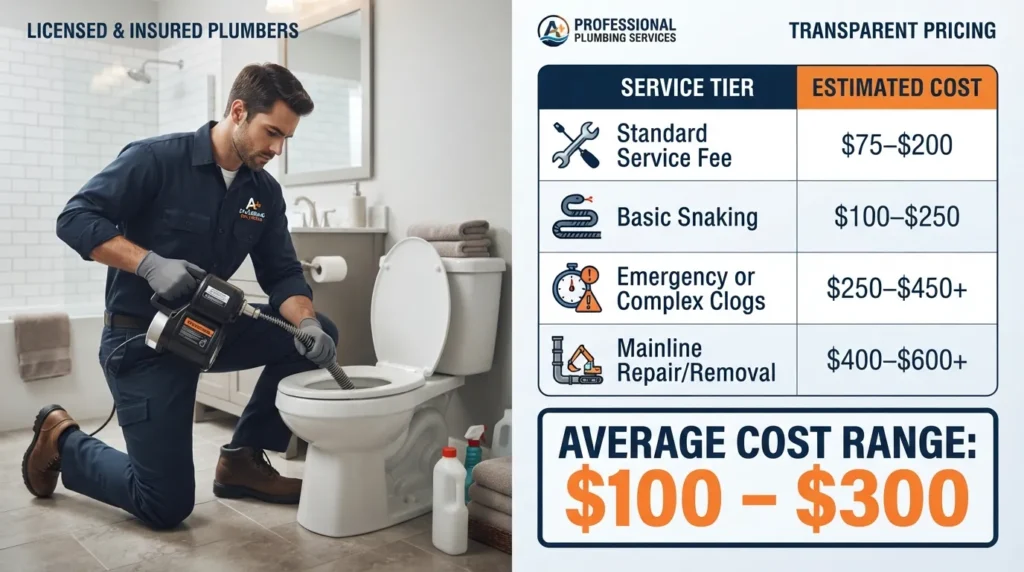
Average Professional Unclogging Costs ($150 – $400)
Professional plumbers typically charge flat-rate pricing or hourly labor rates to inspect and clear a clogged roof vent stack. Understanding standard industry pricing helps you set realistic budgeting expectations.
Consider these primary cost drivers when evaluating contractor quotes:
- Roof Height and Pitch: Multi-story homes or steep roofs require extra safety setup time, driving up overall labor rates to comply with strict OSHA Fall Protection Guidelines.
- Diagnostic Camera Work: Plumbers often run a fiber-optic sewer camera down the stack to confirm whether the pipe is cracked, corroded, or blocked by invasive roots.
- Geographic Location: Regional labor rates vary, with urban areas generally commanding higher service call fees than rural regions.
When the Clog is in the Main Sewer Line Not the Vent
Symptoms of a blocked roof vent often mirror a backing-up main sewer line. Recognizing the distinct red flags of a main line obstruction prevents wasted effort on the roof when the problem actually lies deep underground.
Call a licensed professional immediately if you notice any of these severe system warning signs:
- Water Sewage Backup in Showers: Flushing a toilet causes raw wastewater or raw sewage to back up into the lowest shower or bathtub drain in the house.
- Multiple Fixtures Overflowing Simultaneously: Running the washing machine causes the nearest toilet bowl to overflow or gush water onto the bathroom floor.
- Ground-Level Cleanout Leaks: Water is actively leaking or spilling out from the threaded cleanout cap located on your lawn or home exterior.
Frequently Asked Questions
Here are concise answers to the most common questions regarding plumbing vent stack maintenance, troubleshooting, and clog prevention.
Does rainwater get into a plumbing vent pipe?
Yes, rainwater naturally enters open roof plumbing vent stacks. However, it flows harmlessly down through your vertical drain lines into the main sewer system. Small amounts of rainwater drainage actually help keep the internal pipe walls clean by flushing away minor dust and debris buildup naturally.
What causes a plumbing vent stack to clog?
Roof vent stacks clog when exterior debris or pests block the top opening. Wind-blown tree leaves, pine needles, and twigs frequently collect inside. Additionally, birds, squirrels, and rodents often build bird nests or become trapped inside the warm pipe, creating dense, impermeable obstructions near the roof opening.
How do I fix a smelly sewer vent indoors?
Fix indoor sewer gas odors by refilling dried-out P-traps with water and clearing any blocked roof vent stack. If negative pressure from a clogged vent siphons water out of your sewer gas trap, clearing the roof opening restores proper atmospheric pressure and stops methane gas leaking indoors.
Can a clogged vent pipe cause a toilet to overflow?
Yes, a severe vent clog can indirectly cause a toilet to overflow. Trapped air inside the drainage system creates high backpressure when waste flows. Without proper venting, water struggles to drain smoothly down the main stack, causing incoming wastewater to surge back up and overflow from the bowl.

Oscar Vance | Master Plumber & Drainage Expert
Meet Oscar Vance, a licensed master plumber sharing practical solutions on residential repairs, preventive maintenance, and thoughtful home upkeep.