Is Drano Safe for Shower Drains?
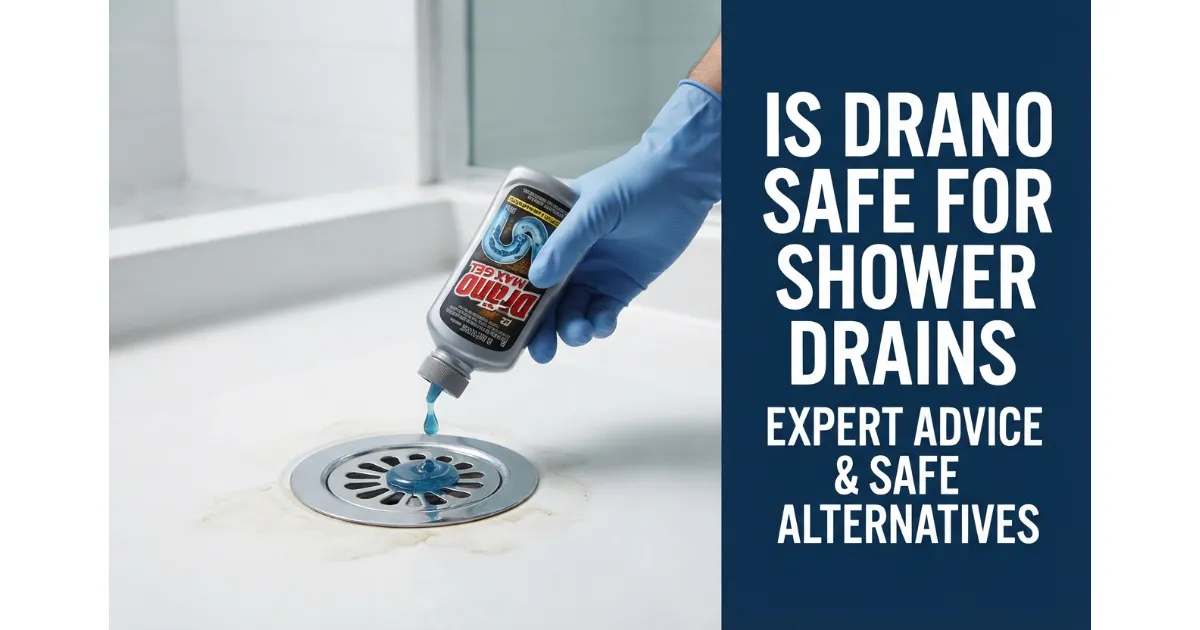
Yes, Drano Max Gel can be used in most shower drains featuring standard plastic or metal pipes when applied strictly according to the product label instructions. However, you must avoid using it on septic systems, old or damaged pipes, or completely stagnant, standing-water clogs to prevent severe plumbing damage.
What Safe Really Means
- Safe for Pipes: Formulated with specialized thickeners and active ingredients that cling to hair and soap scum without melting modern PVC or metal plumbing when used correctly.
- Safe for You: Engineered to dissolve organic blockages safely without boiling over, provided you follow protective gear and ventilation guidelines.
- Safe to Shower Afterward: Completely safe to resume regular showering once the treatment cycle is finished and the pipes have been thoroughly flushed with hot water.
Decision Checklist
- Use it if: You are dealing with a slow-running shower drain caused by a typical buildup of hair and soap scum in healthy, modern pipes.
- Use it if: Your plumbing system is connected to municipal city sewer lines rather than a private septic tank.
- Skip it if: Your shower is connected to a sensitive septic tank system, as harsh chemicals destroy beneficial bacteria.
- Skip it if: You have fragile, corroded, or ancient cast iron pipes that risk structural failure from chemical corrosion.
- Skip it if: The drain is 100 percent blocked with standing water, which can cause the chemical to splash back or pool dangerously.
What Safe Really Means Your Pipes Your Body Your Shower
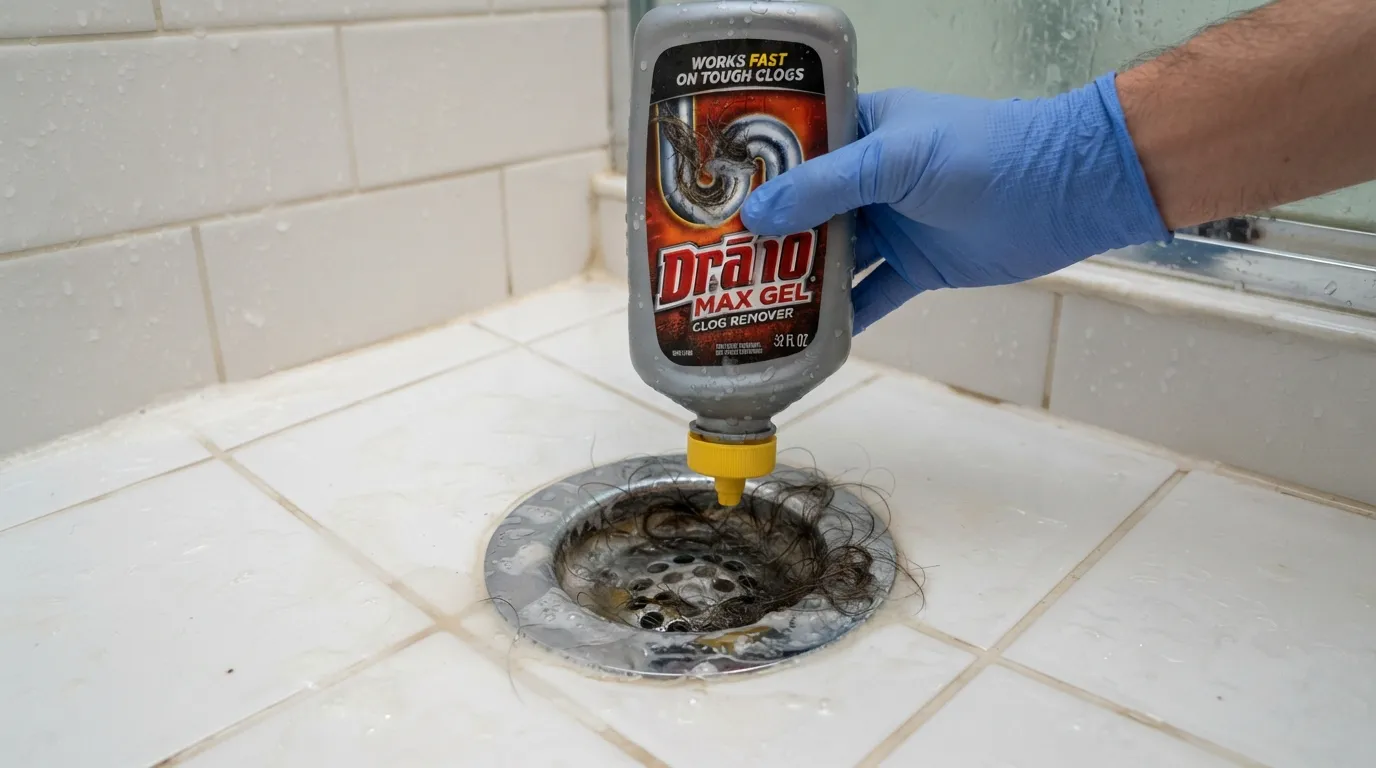
Drano Max Gel is generally safe for modern PVC and metal plumbing like copper when used occasionally. However, repeated, frequent applications can lead to chemical corrosion in older galvanized steel or aging cast iron pipes, potentially weakening structural integrity over time.
Is Drano Safe for You
Chemical drain cleaners pose significant health risks if handled carelessly in enclosed spaces. Always protect yourself and your environment during application by keeping these safety rules in mind:
- Skin and Eye Hazards: The primary active ingredient, sodium hydroxide, causes severe chemical burns upon contact with skin or eyes.
- Fume Inhalation: Harsh chemical fumes can irritate the respiratory tract, making proper ventilation essential.
- Bathroom Airflow: Always open bathroom windows and run exhaust fans during and after application to disperse hazardous fumes quickly.
Is It Safe to Shower After Using Drano
You can safely shower after using Drano only after completing the full treatment cycle and flushing the system thoroughly. Let the gel sit for the recommended 15 to 30 minutes, then flush the drain with plenty of hot water to wash away residual chemicals before stepping back into the enclosure.
Is Drano Safe for Septic Systems
Drano is generally not recommended for private septic systems. The powerful chemical agents kill the essential, beneficial bacteria inside the septic tank that break down household waste, leading to system failure and costly backups.
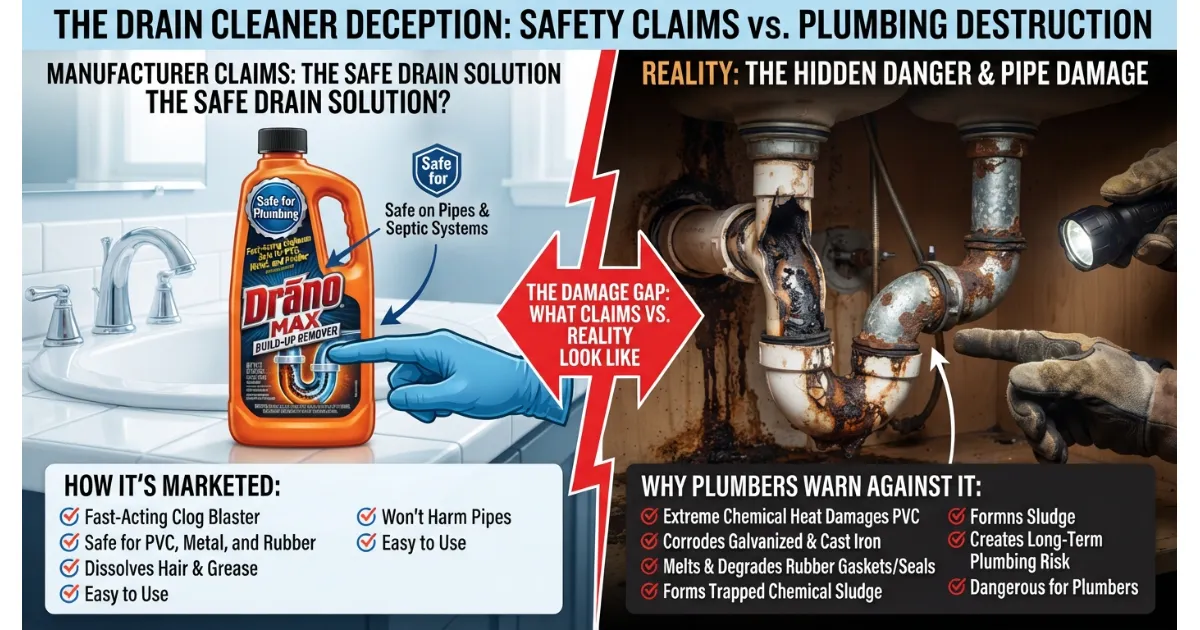
Why Do Plumbers Say Don’t Use Drano When the Label Says It’s Safe?
What the Label Claims
Product labels confirm that chemical drain openers are safe for specific plumbing materials when strictly following usage timelines. Manufacturers design these solutions to break down organic hair clogs and soap scum under controlled, ideal conditions without dissolving sound, modern pipes.
What Plumbers See in Real Homes
Professional technicians frequently encounter aging infrastructure, hidden pipe corrosion, and previous DIY chemical misapplications inside residential walls. Repeated, habitual pouring of harsh formulas causes chemical pooling in pipe offsets, risking catastrophic leaks and making physical snaking dangerous.
When Chemicals Fail and Make Things Worse
Unsuccessful treatments leave caustic, standing liquid trapped inside the drain trap, creating hazardous splashback risks for anyone working nearby. Plumbers arriving to clear a stubborn clog face severe chemical burns if they are unaware of residual gel trapped in the lines.
Who’s Right? A Balanced Verdict
- Occasional vs Habitual: Safe only as an occasional, last-resort intervention for minor hair blockages, never as a routine monthly maintenance habit.
- New vs Old: Acceptable in modern PVC systems, but highly risky in aging, compromised, or unverified home plumbing lines.
How Long After Drano Can a Plumber Work on Your Pipes
Professionals generally require at least 24 hours to pass, or demand that the system be completely flushed and neutralized with copious amounts of water. This waiting period prevents dangerous caustic chemical splashes and protects service technicians from severe skin or eye burns during manual snaking.
Which Drano Is Best for a Shower Drain
Drano Max Gel is the most versatile multi-purpose option, featuring a thick bleach formulation designed to sink straight through standing water and cling directly to stubborn hair and soap scum blockages. It begins working in 7 minutes and is safe for both plastic PVC and metal pipes.
Drano Hair Buster Gel: Best For
Drano Hair Buster Gel is engineered with professional-strength potency specifically targeted at bathroom clogs dominated by tangled human hair and organic bathroom residue. It dissolves hair on contact, making it a specialized choice when your shower drains slowly due to heavy hair accumulation.
Hair Clog vs Soap Scum vs Slow Drain Kaunsa Product Kab?
When a Non-Chemical Tool Is the Smarter Pick
- Physical Hair Removal: Use a plastic barbed hair snake or manual drain auger when you can see the hair clump right at the top of the trap.
- Eco-Friendly Alternative: Opt for boiling water, baking soda, and vinegar mixtures if your plumbing infrastructure is too delicate for harsh chemical clog removers.
- Stubborn Mechanical Blockages: Skip liquid solutions entirely if the blockage consists of hard foreign objects, toys, or construction debris that chemicals cannot dissolve.
How to Use Drano in a Shower Drain Step by Step
Protect yourself before handling caustic chemicals. Put on rubber gloves and safety goggles, open bathroom windows, and turn on exhaust fans to maintain proper ventilation.
- Clear the area of children and pets.
- Ensure no other chemical cleaners, plungers, or acids are present in the drain to prevent dangerous chemical reactions.
Step 1: Pour the Right Amount
Slowly pour 16 to 17 ounces (roughly half to three-quarters of the bottle) of Drano Max Gel directly down the shower drain opening. Avoid splashing the liquid onto the tub or shower floor finish.
Step 2: Wait 15 to 30 Minutes
Allow the thick gel to sit undisturbed for 15 to 30 minutes so it can sink through standing water and cling to hair and soap scum. For severe, stubborn blockages, you can leave it for up to 30 minutes max.
Step 3: Flush With Hot Water for 3 to 5 Minutes
Turn on the hot water tap and let it run continuously for 3 to 5 minutes to flush away dissolved residue and chemical traces. This step clears the loosened debris entirely out of your main pipeline.
How Long Until You Can Shower Again?
You can safely step back into your shower immediately after completing the hot water flush cycle. Just ensure that the chemical is completely washed down and the water drains smoothly before use.
Bathtub Drain vs Shower Drain Kya Farq Hai?
Bathtub drains feature an overflow plate near the top, whereas standalone shower drains do not. If you are using Drano in a combined bathtub-shower unit, be mindful that liquid can sometimes seep or shift toward the overflow pipe if water levels are extremely high.
Safety Rules Common Mistakes & First Aid
Never plunge a drain immediately after pouring chemical openers down the line. Plunging creates high-pressure backflow that causes caustic liquid to splash back onto your skin, eyes, and bathroom surfaces, resulting in severe chemical burns.
Never Mix Drano With Other Cleaners
Never combine chemical drain cleaners with bleach, ammonia, household acids, or vinegar. Mixing these agents triggers violent chemical reactions that release lethal, toxic chlorine gas or corrosive vapors into your enclosed bathroom space.
What If You Used Vinegar and Baking Soda First?
If you attempted a natural baking soda and vinegar flush first, wait at least a few hours and flush the pipes thoroughly with plain water before introducing Drano. Residual acidic or basic compounds can react unpredictably with commercial chemical gels.
What If It Touches Your Skin or Eyes?
Immediate action is mandatory if caustic solution contacts your body. Flush affected skin or eyes continuously with lukewarm running water for at least 15 minutes, remove contaminated clothing, and contact Poison Control or emergency medical professionals immediately for guidance.
Common Mistakes Checklist
- Dumping the Whole Bottle: Pouring excessive quantities beyond label directions overwhelms your pipes and increases the risk of concentrated pooling and pipe corrosion.
- Leaving Water Running: Failing to turn off nearby taps during the waiting period dilutes the active chemical formula, rendering it entirely ineffective against tough hair clogs.
- Ignoring Ventilation: Applying strong chemical treatments in a windowless bathroom without running an exhaust fan traps hazardous vapors around your breathing zone.
When You Should NOT Use Drano in a Shower Drain
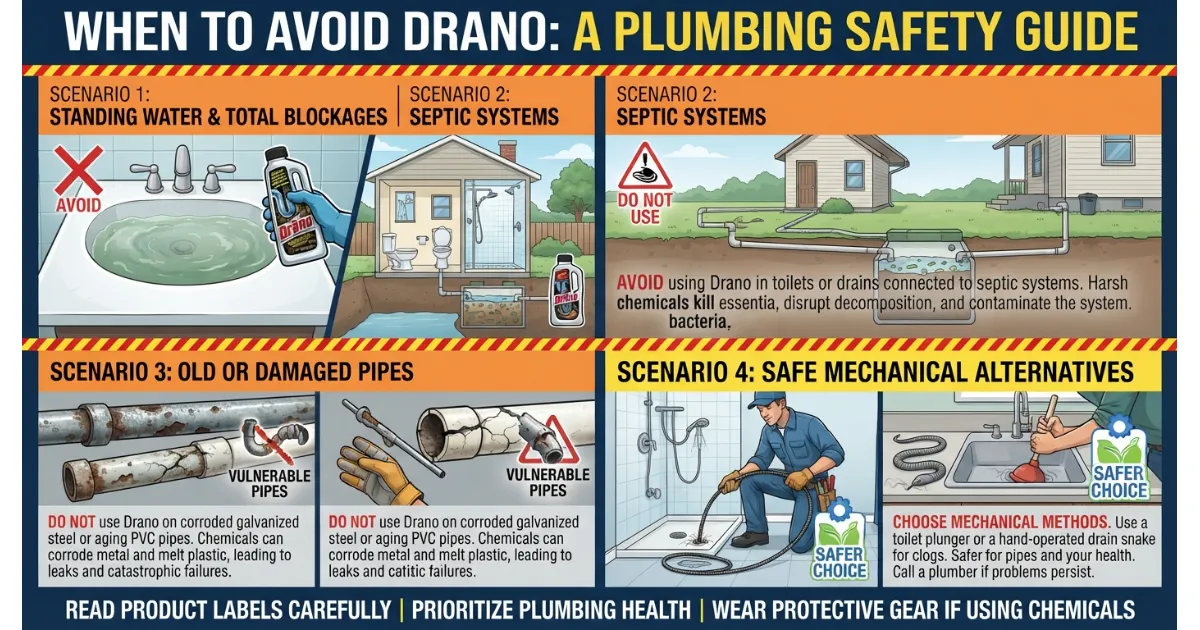
Never pour harsh chemical openers into a completely stagnant tub or shower filled with deep, standing water. The high volume of water excessively dilutes the active ingredients and creates severe splashback hazards when you try to clear or inspect the blockage later.
Septic Systems and Very Old or Damaged Pipes
Avoid chemical solutions if your bathroom connects to a private septic tank or features fragile, corroded cast iron plumbing lines. Strong caustic agents destroy essential tank bacteria and accelerate structural decay in aging pipes, risking catastrophic leaks.
After You Already Used Another Chemical
Never introduce chemical drain openers if you have recently poured commercial acids, bleach, or other proprietary cleaning products down the fixture. Unseen chemical residues can react violently, generating extreme heat or toxic gas inside your drainage lines.
If You Have Already Used Drano Recently
Skip additional applications if you already poured a dose down the same drain within the past few weeks without success. Habitual, repeated chemical dosing accelerates pipe wall corrosion and indicates a deeper mechanical obstruction that requires manual snaking.
Toilets, Vent Pipes and Other Places to Skip
Never use Drano in toilets, garbage disposals, dishwashers, or roof vent pipes. Product labels explicitly prohibit these applications because the chemical formula can trap heat inside toilet bowls, ruin porcelain finishes, or fail to reach clogs in vertical vent stacks.
Drano Didn’t Work What to Do Next
Leaving chemical drain openers in your pipes far beyond the recommended 15 to 30 minute window dramatically increases the risk of severe pipe degradation. Prolonged exposure to caustic ingredients can warp plastic PVC fittings and accelerate corrosion in metal plumbing lines.
Is It Safe to Shower If Drano Didn’t Work?
You should never step into a shower filled with untreated standing water that still contains active, unrinsed chemical solution. Always flush the drain completely with plenty of fresh water to dilute and wash away residual toxins before using the enclosure again.
Should You Use a Second Dose?
Most product labels strictly advise against pouring a second consecutive dose down a stubbornly clogged drain. Doubling up on harsh chemicals does not solve deep, compacted blockages and only heightens the risk of pipe damage or dangerous chemical splashback.
Hot Water Flush Manual Snake Plumber
- Hot Water Flush: Pour a bucket of hot tap water down the drain to clear out remaining diluted chemical residue.
- Manual Snake: Insert a plastic hair removal tool or a mechanical drain auger to physically grab and pull out the stubborn clump.
- Call a Professional: Contact a licensed plumber if the blockage remains completely untouched after trying mechanical solutions.
What to Tell Your Plumber
Always inform your service technician upfront if you poured chemical drain cleaner down the line before their arrival. This crucial warning allows the plumber to wear proper heavy-duty personal protective gear and avoid hazardous chemical splashes while opening the pipes.
Safer Alternatives to Drano for a Shower Drain
Professional plumbers consistently recommend mechanical intervention rather than harsh chemical dissolution. Using a physical drain snake or a flexible plastic hair-removal tool safely pulls the mass out of the pipe entirely, preventing chemical corrosion and residue buildup.
Does Boiling Water Unclog a Shower Drain?
Boiling water effectively melts minor soap scum and grease clogs, but you must use it with extreme caution. Avoid pouring boiling water directly into vulnerable PVC pipes or older ceramic basins, as thermal shock can crack porcelain or warp plastic pipe joints.
Is Baking Soda and Vinegar Better Than Drano?
A natural mixture of baking soda and vinegar offers a much safer, non-caustic alternative for gentle maintenance. While it lacks the aggressive dissolving power of commercial chemical gels against heavy blockages, it poses zero threat to fragile pipes or septic ecosystems.
Does Dawn Really Unclog Drains?
Dawn dish soap works well on greasy kitchen blockages by breaking down fat molecules, but it provides limited help in showers where clogs are primarily composed of tangled human hair. However, pouring a small amount followed by hot water can lubricate slow soap scum buildups.
Comparison Table
Shower vs Bathtub vs Bathroom Sink vs Kitchen Sink
Drano can be used in kitchen sinks with standard plumbing, but you must strictly avoid pouring it into garbage disposals. Chemical solutions pool inside disposal units and can corrode internal metal components or splash back dangerously when the unit is operated.
Can You Use Drano in a Bathroom Sink or Bathtub?
Bathroom sinks and bathtubs are ideal candidates for Drano Max Gel because their primary clogs consist of hair, toothpaste, and soap scum. However, always ensure the basin or tub has adequate ventilation and check that the pop-up stopper is removed to allow unobstructed access.
What If Drano Splashes on Dishes or Surfaces?
Immediately rinse any affected dishes, cutlery, or surrounding porcelain and acrylic surfaces with copious amounts of water. Never use contaminated dishware without thoroughly washing them with hot water and dish soap to eliminate caustic residue.
Quick Comparison Table
How to Prevent Shower Drain Clogs
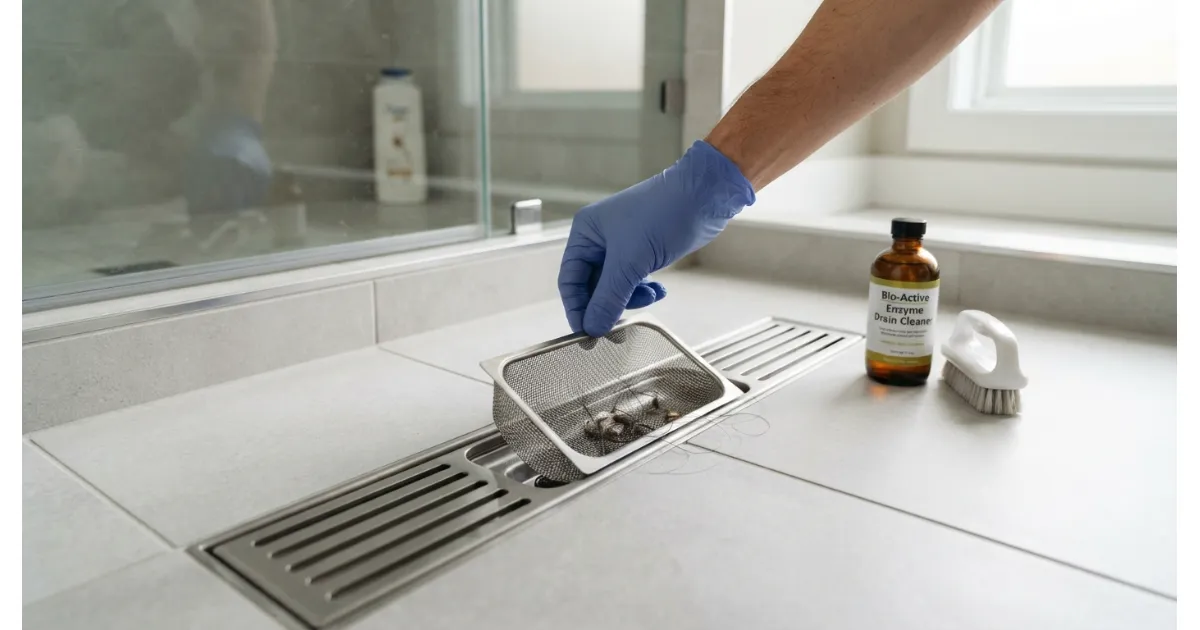
Installing a silicone or stainless steel hair catcher over your shower drain opening is the single most effective way to stop clogs before they start. It traps loose hair and debris on the surface, allowing you to wipe it clean after every shower instead of letting it slip down into the pipes.
Monthly Maintenance Routine
Establish a regular monthly maintenance habit to keep your shower lines flowing freely without relying on harsh chemicals. Flush the drain with a kettle of hot tap water once a month, and use a plastic hair snake every few weeks to clear out minor surface buildup.
Warning Signs of a Bigger Plumbing Problem
- Multiple Slow Fixtures: If your shower, toilet, and sinks are all draining slowly at the same time, the issue is a main sewer line blockage rather than a simple localized shower clog.
- Gurgling Sounds: Hearing strange bubbling or gurgling noises from the drain when you use other water fixtures points to trapped air caused by a blocked vent stack.
- Unpleasant Odors: Persistent foul smells coming up from the drain indicate decomposing organic waste and trapped biofilm deep inside the P-trap.
Frequently Asked Questions
Can I use Drano to clear a clogged shower drain?
Yes, Drano Max Gel can clear most shower drains when used according to label instructions. It cuts through hair and soap scum in PVC or metal pipes, but you must avoid it if you have standing water, fragile older pipes, or a private septic system.
Can you put drain cleaner in a shower?
Yes, commercial liquid drain cleaners are formulated for showers, tubs, and sinks. Always wear gloves and eye protection, ensure the bathroom is well-ventilated, and strictly adhere to the manufacturer’s recommended wait times before flushing the system with hot water.
What can I pour down a shower drain to unclog it?
For chemical methods, use specialized formulations like Drano Max Gel or Hair Buster Gel. For safer alternatives, pour a mixture of baking soda and vinegar followed by hot water, or use a manual plastic hair-removal tool to extract the clog physically.
What is the strongest drain unblocker for a shower?
Caustic liquid gels containing sodium hydroxide and bleach, such as Drano Max Gel or professional-grade lye formulas, are among the strongest chemical options. However, mechanical augers and professional hydro-jetting remain the strongest physical methods for severe blockages.
Will pouring boiling water down a shower drain unclog it?
Boiling water can melt mild soap scum and grease, helping clear minor slowdowns. However, you should avoid pouring boiling water directly into vulnerable PVC pipe joints or fragile porcelain fixtures to prevent thermal shock, cracking, or warping.
Is baking soda and vinegar better than Drano?
Baking soda and vinegar are much safer for your pipes, septic systems, and personal health, but they lack the aggressive chemical dissolving power of Drano. They work best as a regular monthly maintenance routine rather than a fix for heavy, compacted hair clogs.
Does Dawn really unclog drains?
Dawn dish soap excels at breaking down grease and fat in kitchen sinks, but it has limited effectiveness in showers where hair is the primary culprit. It can, however, lubricate soap-scum-lined pipes when paired with hot water flushes.
How long does Drano take to work?
Drano Max Gel typically begins working within 7 minutes, and labels usually recommend allowing it to sit for 15 to 30 minutes. Never leave the chemical solution in your pipes overnight or longer than the maximum recommended duration to prevent corrosion.
Why can’t you use a plunger with Drano?
Plunging a drain immediately after pouring chemical cleaner creates high-pressure backflow, causing caustic liquid to splash outward. This dangerous reaction can result in severe chemical burns on your skin, eyes, and surrounding bathroom fixtures.
Can you pour Drano down a vent pipe?
No, you should never pour Drano down roof vent pipes or toilets. Product labels explicitly prohibit these applications because the formula can fail to reach blockages in vertical stacks or generate hazardous heat concentrations in enclosed bowls.
Final Verdict
So Is Drano Safe for Shower Drains?
Drano is generally safe for modern shower drain pipes when used strictly as an occasional, last-resort remedy for hair and soap scum blockages. However, it requires careful handling, proper ventilation, and should be avoided entirely if you have aging pipes, standing water, or a private septic system.
Our Recommendation
- First Line of Defense: Always start with safer, mechanical solutions like a manual plastic hair snake or a surface hair catcher to protect your plumbing infrastructure.
- Conditional Chemical Use: If you must use Drano Max Gel, adhere strictly to the label instructions, wear protective gear, and limit applications to healthy PVC or metal pipes.
- Call the Professionals: Contact a licensed plumber immediately if the clog persists or if you suspect a deeper main-line obstruction.

Oscar Vance | Master Plumber & Drainage Expert
Meet Oscar Vance, a licensed master plumber sharing practical solutions on residential repairs, preventive maintenance, and thoughtful home upkeep.