Can a Plumber Fix a Dishwasher?
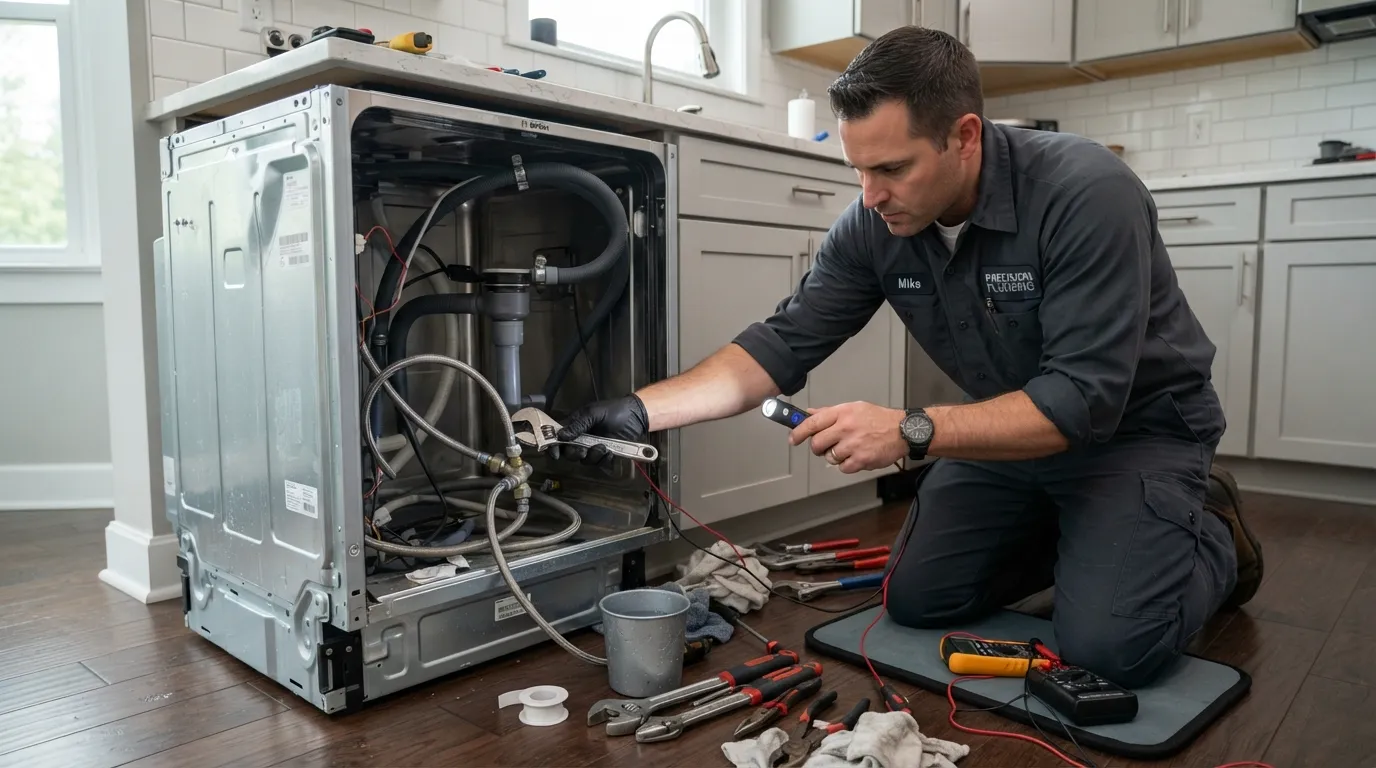
Yes, a licensed plumber can typically fix a dishwasher, particularly when the issue involves connected plumbing infrastructure like the water supply line, drain hose, or under-sink shutoff valve. While specialized appliance problems (such as electronic control board failures) often require an appliance technician, plumbers are fully equipped to handle leaks, drainage blockages, and water inlet malfunctions.
When to Call a Plumber for a Dishwasher
Hiring a licensed plumber is the most effective choice when your dishwasher issue stems from the surrounding plumbing infrastructure rather than internal electronic or mechanical components. Plumbers specialize in water delivery and drainage systems, making them uniquely qualified for specific installation and leak problems.
Water Supply Line Issues Not Getting Water Supply Leak
If your dishwasher fails to fill or leaves puddles beneath the unit, the issue often lies within the pressurized water supply line. A plumber can inspect, repair, or replace compromised copper or braided stainless steel lines that feed water into the appliance inlet valve.
- Inspects for cracks, pinhole leaks, or kinks in the supply line
- Tests water pressure and inlet valve connectivity
- Replaces degraded rubber lines with code-compliant braided steel
Faulty Shutoff Angle Stop Valve
A malfunctioning or leaking shutoff valve beneath your sink prevents you from safely cutting off water to the dishwasher during emergencies or repairs. Plumbers can quickly swap out stuck, corroded, or leaking angle stop valves to restore safe water control.
- Diagnoses seized handles or slow leaks at the valve stem
- Upgrades old multi-turn valves to reliable quarter-turn ball valves
- Ensures seamless integration with existing home water systems
Drainage Backup Into the Sink
When dirty wastewater flows backward from your sink into the dishwasher, or when the appliance fails to drain properly, the problem frequently involves your under-sink plumbing connections. Plumbers clear stubborn clogs in the tailpiece or branch tailpiece leading to the main drain.
- Clears blockages in the sink tailpiece inlet connection
- Inspects and clears out the garbage disposal knockout plug if newly installed
- Ensures proper slope and flow direction away from the appliance
Air Gap & High Loop Problems
Local building codes often mandate specific configurations to prevent contaminated sink water from siphoning back into your dishwasher. Plumbers ensure your setup correctly utilizes an air gap fixture on the countertop or a properly secured high loop under the cabinet.
- Installs or replaces clogged countertop air gaps
- Secures drain lines in an elevated high loop position to meet requirements
- Prevents cross-contamination between sink waste and clean dishes
Code-Compliant Drain Line Setup
Improper drain hose routing can cause premature pump failure and persistent standing water inside the dishwasher basin. Plumbers ensure every installation adheres strictly to local plumbing codes regarding hose length, securing methods, and connection angles.
- Verifies drain hose length does not exceed manufacturer limits
- Uses secure, clamp-tight connections to eliminate slippage and leaks
- Safeguards the unit against foul odors and sewer gas intrusion
When to Call an Appliance Repair Technician Instead
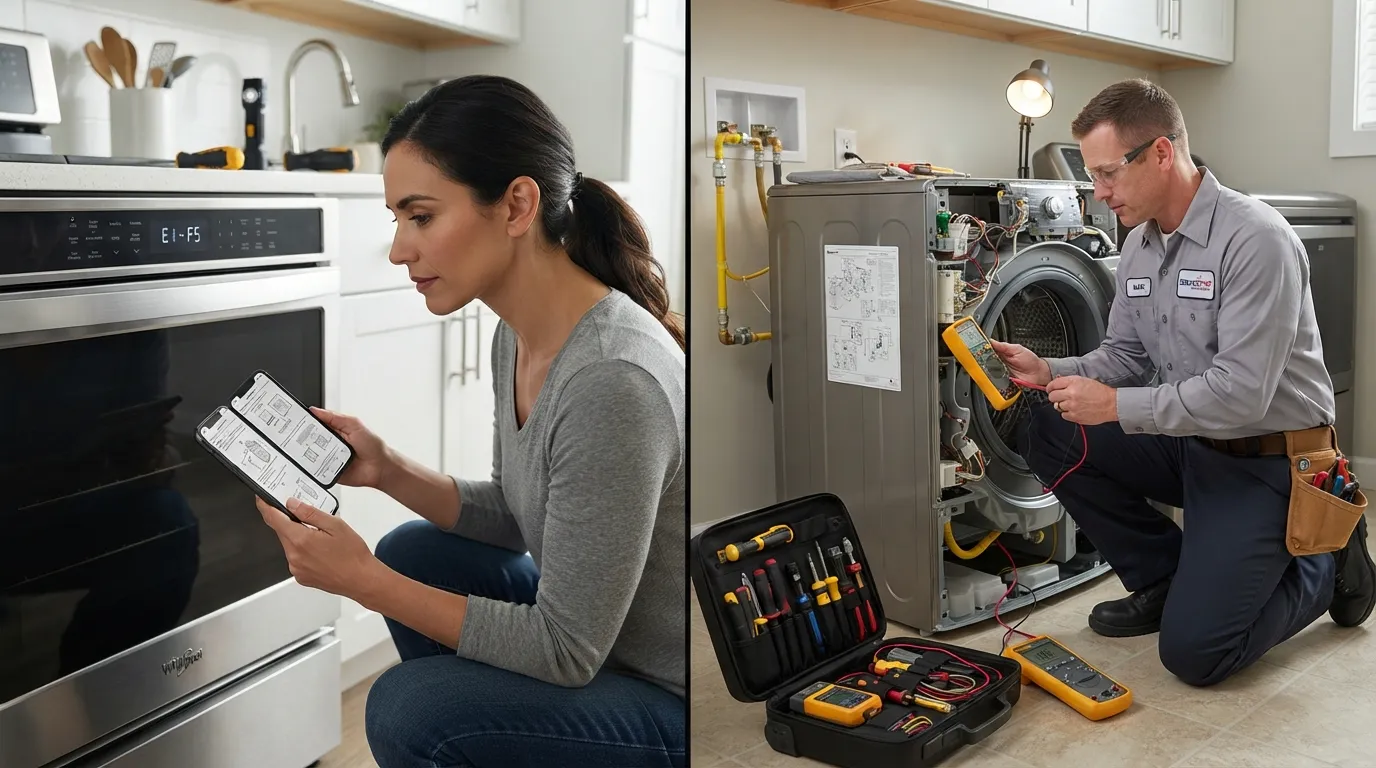
Call an appliance repair technician instead of a plumber when your dishwasher suffers from internal mechanical, electrical, or electronic failures. While plumbers handle the exterior water supply and drain infrastructure, appliance specialists troubleshoot and replace internal components like motors, heating elements, control boards, and wash assemblies that govern the actual washing cycle.
Broken Pump Spray Arm or Motor
Internal circulation issues—such as standing water inside the tub despite a clear drain hose or dishes remaining completely dry during a cycle—point directly to a failing wash pump, blocked spray arm, or seized motor that requires specialized appliance repair expertise.
- Diagnoses internal wash pump blockages and failing impellers
- Replaces clogged or cracked spray arms causing poor cleaning performance
- Tests electrical continuity for circulation and drain motors
Control Board Touch Panel Wiring Faults
Electrical malfunctions, such as an unresponsive touch panel, unlit indicator lights, or cleaning cycles that randomly freeze mid-wash, indicate a faulty electronic control board or internal wiring issue that appliance technicians are trained to safely diagnose and replace.
- Tests voltage and signal transmission across the main electronic control board
- Replaces unresponsive touchpads, buttons, and digital display interfaces
- Repairs or replaces compromised internal wire harnesses safely
Heating Element Not Working
If your dishes are consistently soaking wet at the end of a cycle or drying heat fails to engage, the internal heating element or associated thermostat has likely failed, necessitating an appliance technician for proper electrical testing and component replacement.
- Tests electrical continuity and resistance of the exposed heating element
- Checks high-limit thermostats and water temperature sensors
- Swaps out faulty heating components to restore proper drying cycles
When Warranty Coverage Applies
If your dishwasher is relatively new and protected by an active factory or extended warranty plan, contacting an authorized appliance repair technician is crucial to ensure repairs or parts replacements do not accidentally void your coverage policy.
- Fulfils official manufacturer service network requirements
- Installs genuine OEM parts covered under active warranty terms
- Prevents unexpected out-of-pocket expenses for internal mechanical failures
Plumber vs Appliance Technician Quick Diagnostic Checklist
Pinpoint the exact source of your dishwasher trouble before booking a service call by matching your specific symptom to the correct professional. This targeted decision checklist eliminates confusion between exterior plumbing failures and internal appliance malfunctions to save you time and unnecessary diagnostic fees.
Symptom-to-Professional Table
3 Quick Questions to Ask Yourself Before Calling
Evaluate your appliance’s behavior using these three fundamental diagnostic checks to narrow down whether your issue requires water infrastructure expertise or electronic component repair.
- Is water leaking outside the machine frame or trapped exclusively inside the wash tub basin?
- Does the appliance respond to digital controls and cycle selections, or is the control panel completely unresponsive?
- Did the problem start immediately after a new kitchen sink installation or garbage disposal replacement?
Common Dishwasher Problems Explained
Understanding the root causes behind frequent dishwasher failures helps you determine whether a quick DIY fix is possible or if professional intervention is necessary. Pinpointing specific symptoms like pooling water or drainage failure ensures you address the exact mechanical or plumbing breakdown immediately.
Why Is My Dishwasher Leaking From the Bottom?
A dishwasher leaking from bottom typically originates from compromised rubber seals, loose supply connections, or a stuck component preventing proper water level regulation. Inspecting the immediate perimeter of the base helps isolate whether water is escaping from the internal tub or external plumbing connections.
- Worn-out door gaskets or degraded lower door seals letting water escape during wash cycles
- Stuck or jammed float switches causing the appliance to overfill past the threshold
- Loose clamps or fractures along the incoming water supply line beneath the basin
Why Is My Dishwasher Not Draining?
Experiencing a dishwasher not draining issue usually points to a blockage in the filtration basket, a kinked drain hose, or an electrical drain pump failure. Leftover standing water creates stagnant odors and prevents the appliance from completing its designated cycles.
- Clogged fine filters or food debris buildup trapped inside the sump basin
- Blocked or collapsed drain hoses running from the unit to the sink disposal inlet
- Mechanical drain pump failure requiring complete component replacement
What Is the Most Common Failure on a Dishwasher?
The most frequent failure point in modern dishwashers involves drainage obstructions caused by food particles and improper garbage disposal setup. When user maintenance is neglected, minor clogs quickly escalate into standing water backups and premature pump strain.
- Unremoved garbage disposal knockout plugs blocking wastewater discharge
- Grease and calcium buildup restricting water flow inside internal hoses
- Normal wear and tear on rubber inlet and outlet seals over years of use
How Much Does It Cost to Have a Plumber Fix a Dishwasher?
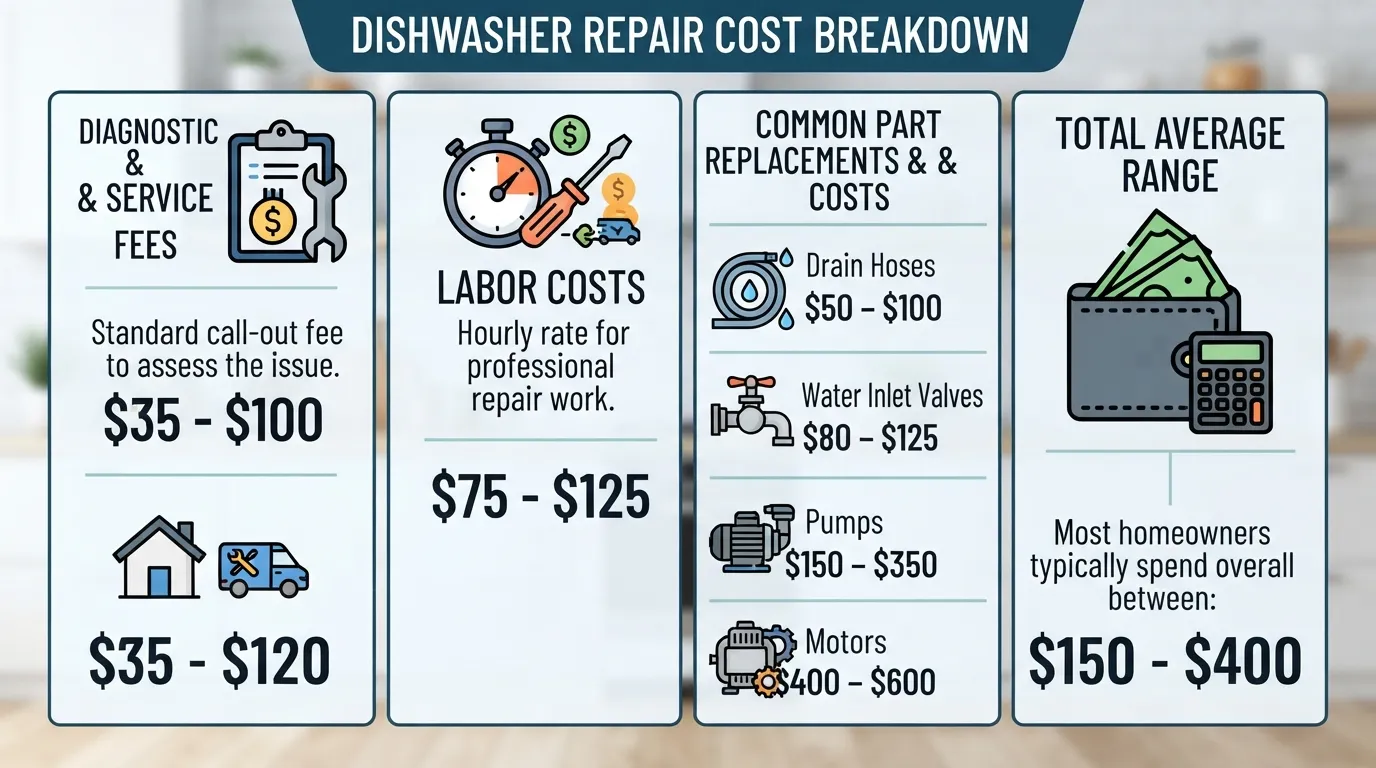
Budgeting for a dishwasher service call requires understanding the difference between hiring a plumber for external infrastructure work and an appliance technician for internal mechanical failures. Total expenses depend heavily on hourly labor charges, service call fees, and whether parts require replacement. Detailed benchmarks are tracked by resources like HomeAdvisor’s dishwasher repair cost guide.
Average Plumber Call-Out & Labor Cost
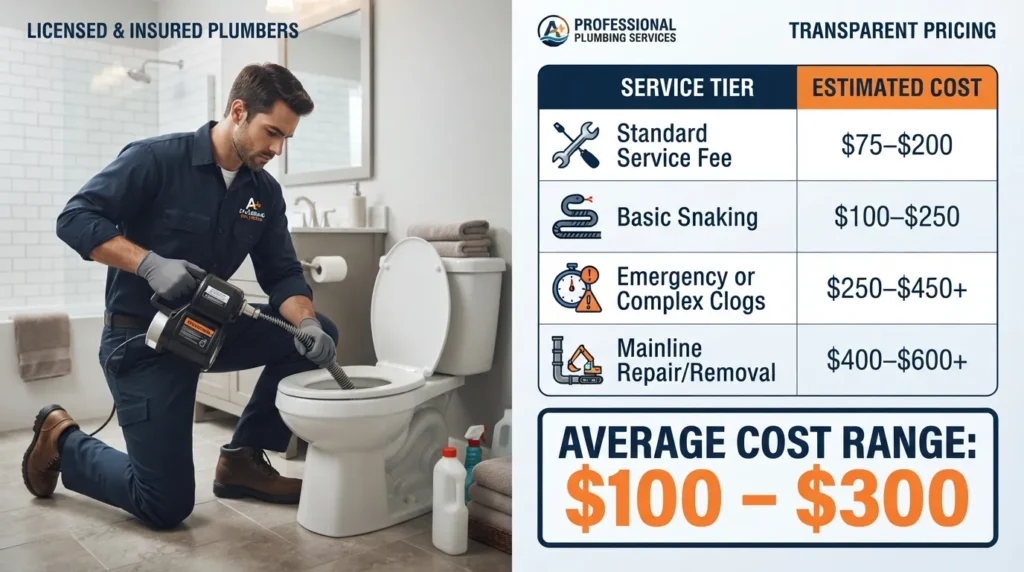
Hiring a licensed plumber typically incurs higher hourly rates than general handyman services due to specialized licensing and insurance requirements. Plumbers usually charge between $45 to $200 per hour, alongside an initial diagnostic or trip fee ranging from $50 to $150 to evaluate water supply or drainage setups.
- Standard service call or diagnostic trip fee: $50 to $150
- Hourly labor rates for plumbing infrastructure work: $45 to $200
- Average total cost for minor plumbing-related fixes: $180 to $490
Typical Dishwasher Repair Cost Range
Most homeowners spend between $160 and $300 for standard professional dishwasher repairs, with minor component adjustments starting around $70. Major internal overhauls or extensive plumbing modifications can occasionally push total project costs closer to $600.
- Minor adjustments, filter clearings, or hose clamps: $70 to $130
- Standard part replacements and leak sealing: $160 to $300
- Complex electrical or multi-component overhauls: $350 to $600
Most Expensive Parts to Replace Pump Control Board
Internal mechanical and electronic components represent the most expensive replacement items because accessing them requires pulling the entire appliance out from under the counter. Motors, drain pumps, and main control boards frequently demand professional technician labor.
- Drain pump or circulation motor replacements: $150 to $500 including labor
- Main electronic control board units: $200 to $450 depending on brand complexity
- Internal heating elements and thermostats: $200 to $350
Is It Worth Repairing or Should You Replace the Dishwasher?
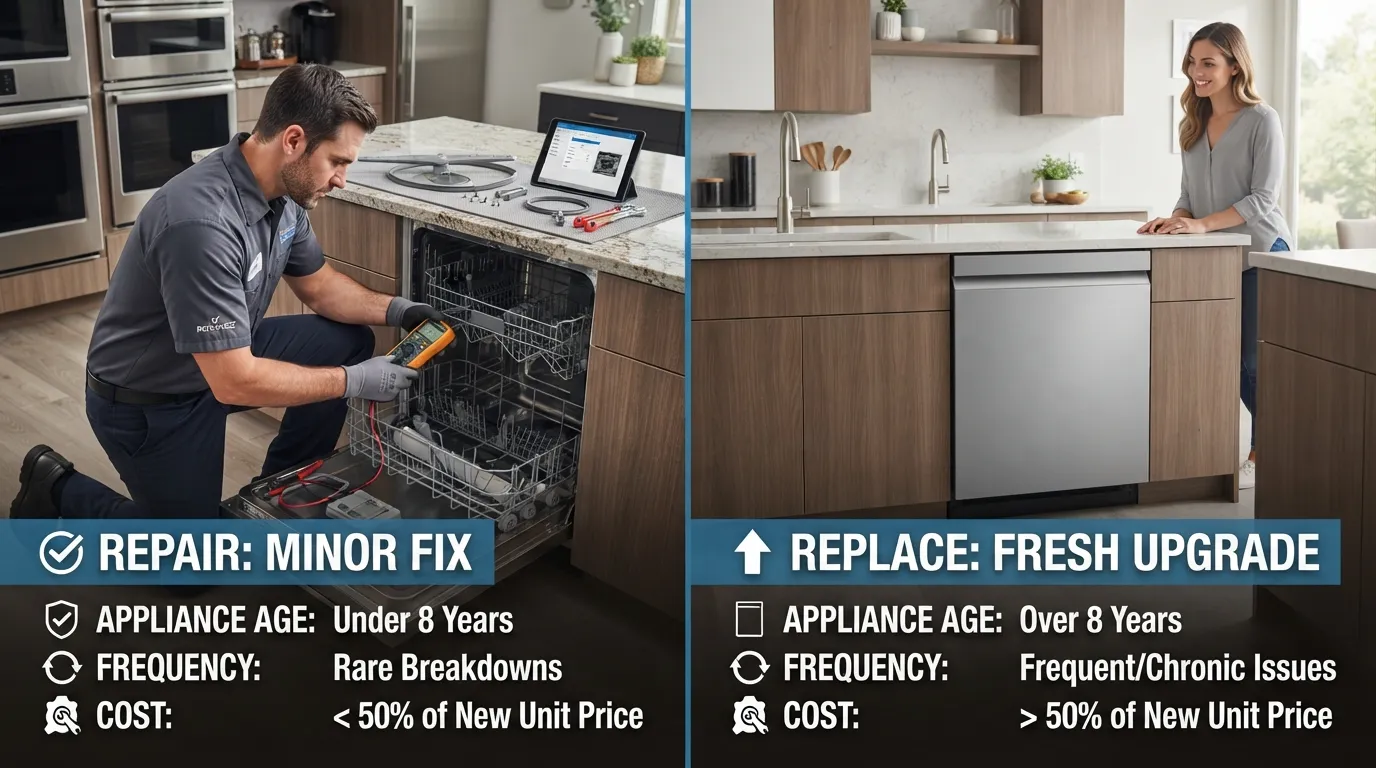
Deciding whether to repair or replace your dishwasher depends on the appliance’s overall age, the frequency of past breakdowns, and the projected cost of the current fix. Evaluating these factors prevents you from pouring money into a failing unit that is nearing the end of its useful lifespan.
Average Dishwasher Lifespan
Most modern standard dishwashers are designed to last between 9 and 12 years with proper maintenance, regular filter cleaning, and occasional minor upkeep. As an appliance passes the 8-year mark, internal components begin experiencing cumulative wear that increases the likelihood of frequent breakdowns.
- Typical operational lifespan: 9 to 12 years
- Peak performance window: Years 1 through 6
- Accelerated wear indicators after year 8: Seized motors, leaking tubs, and rust
The 50% Rule Repair Cost vs Replacement Cost
A reliable industry standard for appliance decisions is the 50% rule: if the repair estimate exceeds half the cost of purchasing a brand-new comparable model, investing in replacement is usually the smarter financial choice. This calculation prevents throwing good money after a aging appliance.
- Compare the total quote against the price of an equivalent new model
- Factor in the age of the unit alongside the repair quote
- Avoid expensive repairs on units that are already 8 to 10 years old
When Replacement Makes More Sense
Certain conditions make purchasing a new dishwasher far more practical than attempting continuous repairs, especially if safety or efficiency is compromised. Upgrading also lets you take advantage of modern water-saving technologies and quieter operating decibel levels.
- Structural tub leaks or cracked plastic/stainless basins that cannot be reliably patched
- Repeated electrical failures or multiple component breakdowns within a short timeframe
- Outdated energy efficiency models that drive up household water and electricity utility bills
Can You Repair a Dishwasher Yourself?
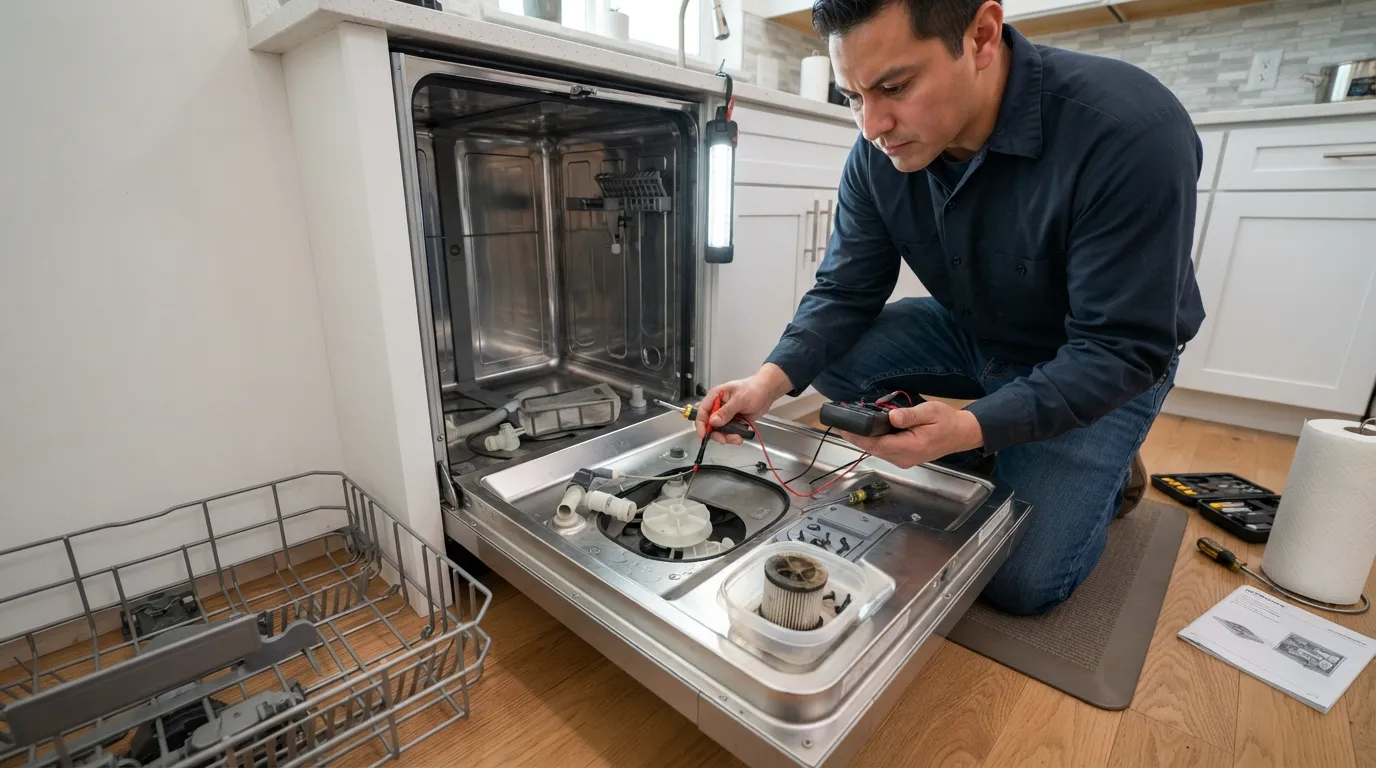
Performing basic troubleshooting on your own can save you money on unnecessary service calls, provided the issue is minor and manageable. Many routine drainage obstructions and performance hiccups can be safely resolved without professional help if you follow proper safety precautions.
Safe DIY Checks Filter Cleaning Door Seal Kinked Hose
You can easily tackle several common maintenance tasks using basic household tools before calling a professional. Checking these accessible areas often resolves pooling water or minor leaking instantly.
- Remove and scrub the lower filter basket to eliminate trapped food debris and grease buildup
- Wipe down and inspect the rubber door gasket for cracks, warping, or trapped residue
- Pull the unit forward slightly to ensure the flexible drain hose is not pinched or kinked behind the housing
When DIY Becomes Risky Electrical Water Line Work
While basic cleaning is safe, attempting advanced mechanical or plumbing repairs without proper expertise can lead to severe water damage, electrical shock, or voided warranties. Knowing your limits prevents costly accidents.
- Avoid modifying or splicing high-voltage internal wiring harnesses without professional training
- Refrain from replacing pressurized copper or braided water supply lines if you lack plumbing tools
- Leave complex electrical diagnosis and live component testing strictly to certified technicians
Can a Plumber Install a Dishwasher Too?
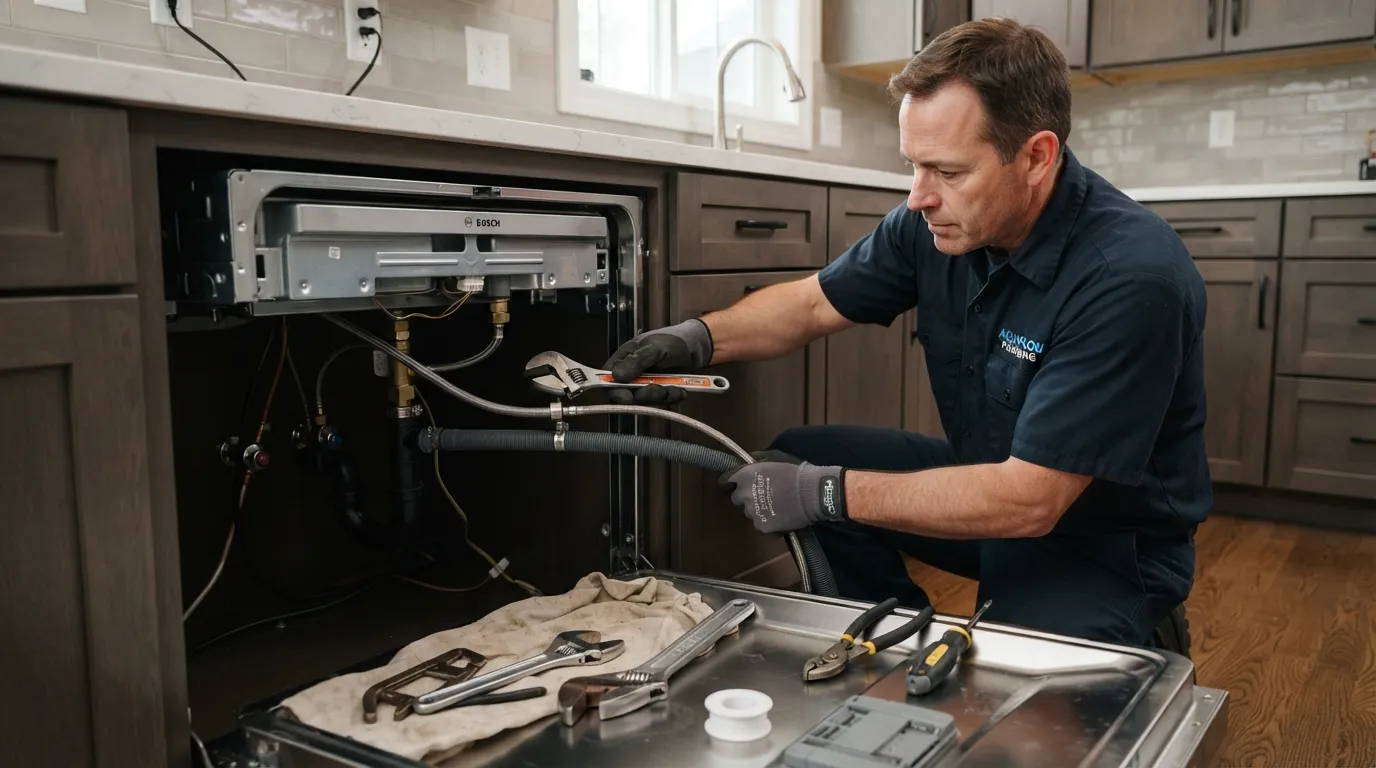
Yes, a licensed plumber is exceptionally well-qualified to install a dishwasher from scratch, handling all necessary connections safely and in full compliance with local building codes. Because a new dishwasher requires precise integration with your home’s water supply and wastewater lines, professional plumbing installation ensures you avoid leaks, backflows, and premature pump strain.
What’s Included in Dishwasher Installation
Professional dishwasher installation involves more than just pushing the unit beneath the kitchen counter. A plumber executes a complete sequence of technical steps to guarantee the appliance operates safely and efficiently from day one.
- Securing a reliable water line hookup to the hot water supply using code-approved braided lines
- Establishing a secure drain connection to the sink tailpiece or garbage disposal inlet
- Configuring a proper high loop or countertop air gap to prevent wastewater siphoning
Installation vs Repair Different Skill Same Professional
While installing a new dishwasher requires the exact same foundational plumbing expertise as repairing a supply line leak, it is fundamentally different from internal appliance troubleshooting. Plumbers manage the structural connections that bring water in and out of the machine, leaving electronic programming and motor mechanics to specialized appliance technicians.
- Focuses heavily on leak prevention at structural joints and valve fittings
- Ensures proper electrical grounding and physical anchoring under countertops
- Bridges the gap between home plumbing infrastructure and appliance integration
Frequently Asked Questions
Get direct, concise answers to the most common questions homeowners ask regarding professional dishwasher repairs, plumbing services, and appliance lifespans.
Do I Call a Plumber to Fix My Dishwasher?
You should call a plumber if your dishwasher issue involves water supply lines, shutoff valves, drainage hoses, or under-sink connections. If the problem stems from internal electrical components, heating elements, control boards, or circulation motors, an appliance repair technician is the correct professional to contact.
What’s the Average Lifespan of a Dishwasher?
The average lifespan of a standard dishwasher is between 9 and 12 years. Regular maintenance, such as cleaning filters and avoiding overloaded wash cycles, helps maximize operational efficiency throughout its lifespan.
What Common Issues Stop a Dishwasher From Working?
The most frequent issues preventing a dishwasher from working correctly include clogged filters, kinked or blocked drain hoses, unremoved garbage disposal knockout plugs, and worn-out door seals that trigger safety switches or leaks.
Can a Plumber Fix a Washing Machine Too?
Yes, a licensed plumber can easily fix external washing machine problems like leaking water supply valves, clogged standpipes, or damaged drain hoses. However, internal mechanical issues such as spinning drum failures, electronic control errors, or agitator malfunctions require a specialized appliance repair technician.
Final Verdict
Determining whether to call a plumber or an appliance technician for your dishwasher comes down to one simple distinction: is the problem exterior water and drainage infrastructure, or is it internal electrical and mechanical machinery? Plumbers handle the supply lines, valves, and drain hoses that connect your home to the appliance, while appliance technicians master the internal motors, control boards, and heating elements. By matching your specific symptom to the right professional, you avoid unnecessary diagnostic fees, streamline repairs, and keep your kitchen running efficiently for years to come.

Oscar Vance | Master Plumber & Drainage Expert
Meet Oscar Vance, a licensed master plumber sharing practical solutions on residential repairs, preventive maintenance, and thoughtful home upkeep.