What Is a Main Water Line?
The main water line is the primary pressurized pipe that delivers clean water from the municipal water supply or private well directly into a residential plumbing system. Understanding this infrastructure is essential for homeowners, especially when identifying who is legally responsible for maintenance and repairs.
Many homeowners confuse everyday household supply lines with the large exterior pipes running underground. Knowing the exact terminology helps you communicate effectively with plumbers and municipal authorities when diagnosing leaks or planning upgrades.
Main Water Line vs. Water Service Line Kya Farq Hai?
While the terms water service line and main water line are often used interchangeably in everyday conversation, they refer to slightly different segments of your property’s plumbing network. Recognizing this distinction is crucial for determining repair liability.
- Main Water Line: Generally refers to the primary interior distribution pipe (or the entire continuous conduit) that feeds water to all fixtures, appliances, and branch lines inside your home.
- Water Service Line: Specifically describes the underground lateral pipe that connects the public water main located under the street to your home’s indoor shut-off valve.
- Ownership & Responsibility: Municipalities usually maintain the public water main, whereas property owners are typically responsible for the private portion of the service line running onto their land.
Municipal Connection Se House Tak Ka Path
Water travels an intricate underground route before it ever reaches your kitchen faucet. The journey begins far from your property boundary and relies on a seamless transition of municipal and private assets.
- The Public Main: High-pressure water travels through large city mains buried deep beneath public streets and roadways.
- The Corporation Stop: A specialized control valve connects your private service line directly to the pressurized public main.
- The Meter Pit: Water passes through a utility-owned meter, usually located near the property line or sidewalk, to measure consumption.
- The Curb Stop: An emergency exterior shut-off valve allows utility workers or homeowners to cut off water supply to the entire lot.
- The Entry Point: The line finally penetrates your home’s foundation or crawlspace, terminating at the main indoor shut-off valve.
Average Cost Breakdown Per Linear Foot & Total
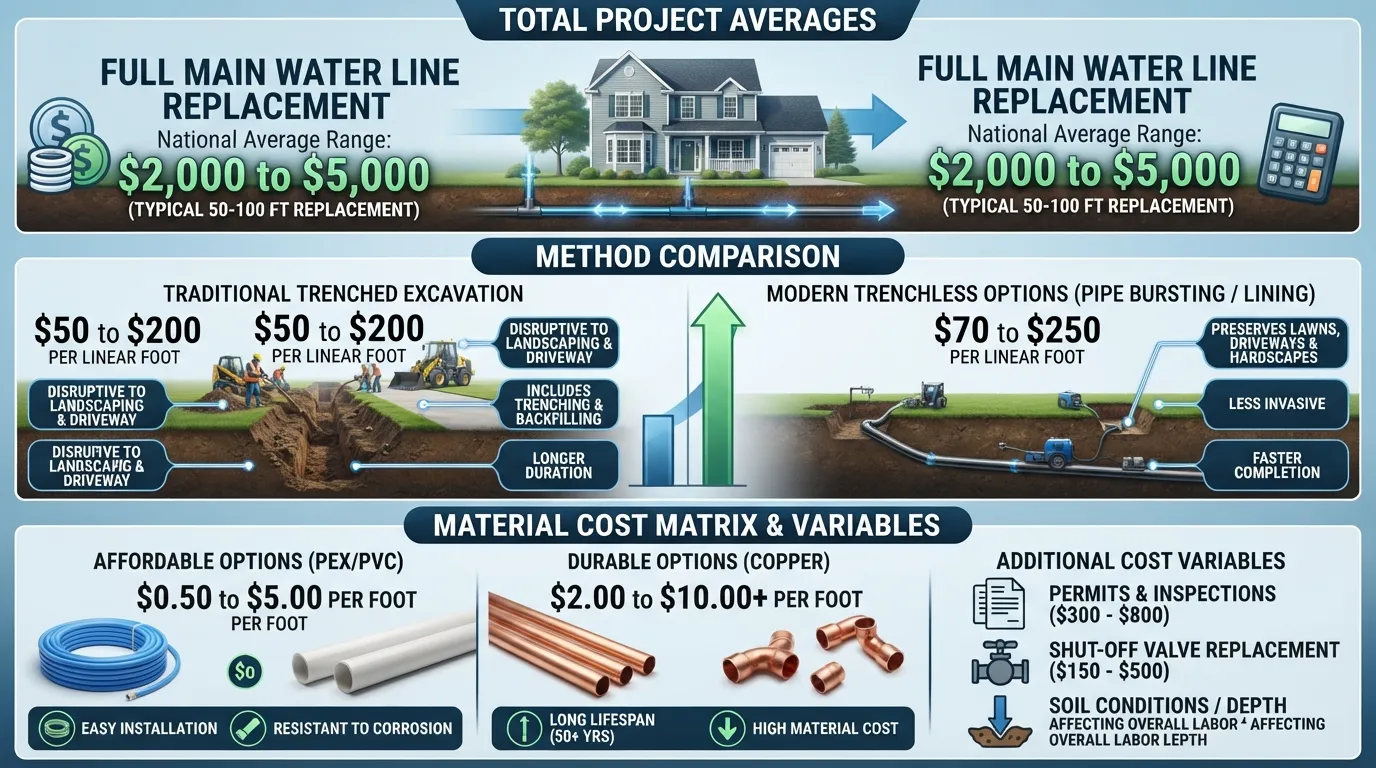
Calculating the expense to replace a water line from the street to your house depends heavily on total distance, local labor rates, and the excavation technique required. Industry tracking data from HomeGuide water line pricing metrics shows that total project spending typically ranges from $2,000 to $5,000 for standard residential lengths.
Understanding linear foot pricing helps you anticipate contractor proposals and budget accurately for site restoration. Reviewing these granular numbers ensures you can compare traditional excavation options against modern non-invasive techniques.
Cost Per Linear Foot Trenched vs. Trenchless
The chosen installation method dictates the primary linear foot cost, balancing upfront labor intensity against long-term property restoration expenses.
Total Project Cost Estimate Length-wise example calculation
Because properties vary significantly in depth from the municipal street main, total costs scale relative to the physical distance your service run covers.
- Short Run (30 Linear Feet): Typically ranges from $1,500 to $6,000 depending on whether standard trenching or complex boring is utilized under hardscapes.
- Standard Run (50 Linear Feet): Generally falls between $2,500 and $10,000 for full material procurement, municipal connection permits, and standard labor.
- Extended Run (100+ Linear Feet): Often scales from $5,000 to over $12,500, particularly on rural lots or deep-set commercial-residential properties.
Simple Cost Estimator
You can approximate your expected expenses using a quick baseline formula based on your total property run length and technique choice.
- Manual Formula: Estimated Total = (Total Linear Feet) $\times$ (Cost Per Foot by Method) + Permits ($100–$500) + Landscaping Repair.
- Example Calculation: For a 50-foot trenchless line at an average of $100 per foot, expect a baseline of $5,000 before specialized city tap fees or extra property restoration.
- Hidden Variable Warning: Always add a 15% contingency fund to cover unexpected obstacles like boulder fields, root masses, or obsolete municipal corporation stops.
Trenchless vs. Traditional Trenched Method Which Costs More?
Choosing between trenchless technology and traditional open-cut excavation is one of the biggest financial and structural decisions homeowners face during water line replacement. While trenchless techniques often have a higher upfront per-foot equipment fee, they frequently save thousands of dollars on post-project landscaping and concrete restoration.
Evaluating the true cost requires weighing immediate labor fees against long-term property preservation. Let’s break down how each technique operates, what they cost, and their respective trade-offs.
Trenchless Method: Process, Cost $75–$150 ft Pros & Cons
Trenchless replacement minimizes surface disruption by utilizing specialized hydraulic equipment to pull or push a new pipe through the path of the old one. This advanced approach preserves established yards and high-cost driveways.
- The Process: Technicians dig two small boring access holes at the connection points, then use pipe bursting or horizontal directional drilling to replace the line.
- Cost Range: Typically runs $75 to $150 per linear foot, driven largely by specialized machinery and technical expertise.
- Pros: Preserves landscaping, saves days of manual labor, and protects expensive hardscapes like concrete patios or asphalt.
- Cons: Requires clear underground access points and may not be feasible if severe line collapses or severe root encasements block the boring path.
Traditional Trenched Method Process Cost $1,500–$13,000 Pros & Cons
Traditional excavation relies on heavy earth-moving equipment to dig an open trench from the municipal street right to the foundation wall. It remains the most common method for complex layouts or total system redesigns.
- The Process: Heavy excavation machinery tears up topsoil and paving to expose the complete pipe length for direct manual replacement.
- Cost Range: Generally spans $1,500 to $13,000 depending on total run length and ground hardness.
- Pros: Allows direct visual inspection of the entire trench bed and accommodates complex multi-line configurations easily.
- Cons: Destroys lawns, gardens, and driveways, resulting in high secondary restoration and sod replacement costs.
Labor vs. Equipment Cost Split 60% labor insight
Understanding contractor pricing models reveals why water line replacement demands significant financial investment regardless of the chosen method.
- The 60% Labor Rule: Up to 60% of total project expenses are tied directly to skilled technician wages, mandatory municipal permitting, and safety compliance.
- Equipment & Materials: The remaining balance covers heavy machinery operation, specialty piping materials (like PEX or copper), and connection fittings.
- Restoration Overheads: With traditional trenching, hidden labor costs quickly compound because crews must spend extra days backfilling dirt and repairing concrete.
What Factors Affect the Cost?

No two water line replacements are identical, meaning final contractor quotes can fluctuate wildly based on site-specific hurdles. Understanding these underlying pricing levers helps you anticipate unexpected fees before work begins on your property.
Evaluating unique geographic and structural constraints ensures you are fully prepared for how physical variables influence your overall project investment.
Distance from Street to House up to $2,500 extra
The total linear distance between the public municipal main and your home’s indoor shut-off valve is the most significant pricing factor. Longer spans demand more piping materials, extended excavation windows, and increased labor hours.
- Short Runs: Properties set back under 30 feet from the street enjoy minimal material and labor charges.
- Extended Run Surcharges: Deep-set lots or long rural drives can add up to $2,500 or more in extra material and earth-moving costs alone.
- Permitting Variations: Extended street-side corridors sometimes trigger complex municipal right-of-way permitting fees.
Pipe Depth & Climate Frost Line 3+ feet in cold regions
Local building codes dictate how deep your water line must be buried to protect it from freezing during winter months. Colder climates require deeper excavation, driving up labor difficulty and machinery requirements.
- Frost Line Standards: In northern regions, pipes must often be buried 3 to 6 feet deep, requiring heavy shoring and excavation safety equipment.
- Warm Climate Advantage: Southern regions allow shallow burial depths (under 18 inches), substantially reducing manual digging times and labor expenses.
- Soil Stability: Deeper trenches in cold zones frequently run into heavy clay, rock beds, or frozen ground, adding hidden surcharges.
Driveway or Sidewalk Cutting Costs
If the path of your water line cuts directly underneath a concrete driveway, asphalt walkway, or stone patio, contractors must break through and later repave the surface. Hardscape barriers can dramatically inflate total project expenses.
- Concrete Sawing: Specialized concrete cutting and asphalt patching can add $1,000 to $4,000 depending on thickness and restoration requirements.
- Boring Alternatives: Utilizing directional micro-boring beneath hardscapes avoids surface destruction but adds specialized equipment rental fees.
- Municipal Right-of-Way: Breaking city sidewalks requires specialized bonding, permits, and approved concrete pour schedules.
Tree Removal & Landscaping Restoration $200–$2,000/tree, $50–$150/hr
Established yards with mature trees, sprinkler systems, and custom garden beds face substantial site-clearing obstacles when a trench must be cut across a property.
- Tree Removal Expenses: Removing large trees or cutting through massive root systems that block the pipeline costs between $200 and $2,000 per tree.
- Landscaper Hourly Rates: Post-project yard grading, sod re-laying, and plant replacement typically command hourly labor rates ranging from $50 to $150 per hour.
- Irrigation Repair: Damaged underground sprinkler lines require separate plumbing fixes before the soil can be permanently backfilled.
Pipe Material Copper PEX PVC HDPE
The choice of piping material dictates long-term durability, flexibility, and upfront material costs. Modern options offer enhanced resistance to mineral buildup and ground shifting.
- Copper: The traditional gold standard for longevity, but features high material costs and rigid installation requirements.
- PEX (Cross-linked Polyethylene): Highly flexible, freeze-resistant, and cost-effective, making it popular for modern retrofits.
- HDPE (High-Density Polyethylene): The primary choice for trenchless pulling due to its seamless strength, high pressure rating, and superior crack resistance.
- PVC: Generally limited to exterior service runs where permitted by local building codes for cold-water mains.
Signs You Need a Main Water Line Replacement
Spotting the early warning signs of a failing main water line can prevent catastrophic property damage, mold growth, and skyrocketing utility bills. Knowing whether to repair a localized leak or invest in a full system replacement is crucial for protecting your home’s foundation.
Recognizing these subtle red flags allows you to take proactive action before minor pinhole leaks escalate into complete pipe collapses.
Low Water Pressure
A sudden, unexplained drop in water pressure across multiple faucets and showers often points to a major restriction or rupture in the underground service line. Mineral scaling or pipe pinching restricts the steady flow of clean municipal water into your home.
- Symptom Check: If cleaning individual aerators doesn’t restore pressure, the restriction is likely happening at the main supply source.
- Diagnostic Tip: Compare your indoor pressure against an outdoor hose spigot connected directly before interior pressure regulators.
Discolored or Brown Water
Water that emerges from your taps with a rusty, brownish tint or muddy sediment signals interior pipe corrosion or dirt entering through a fracture. Aging galvanized steel or iron pipes break down over decades, shedding rust into your drinking supply.
- Symptom Check: Persistent discoloration that doesn’t clear after running taps for several minutes indicates pipe wall degradation.
- Health Warning: Avoid drinking discolored water until professional plumbing diagnostics confirm the source of contamination.
Unusually High Water Bills
When your monthly utility bill spikes without any changes in household consumption, a hidden underground leak is the most common culprit. A continuous leak wastes hundreds of gallons daily, silently draining your finances.
- Symptom Check: Monitor your water meter dials when all indoor plumbing fixtures are completely turned off to see if the flow indicator moves.
- Financial Impact: Unchecked leaks can cost hundreds of dollars in wasted water fees within a single billing cycle.
Wet Spots or Puddles in Yard
A lush, exceptionally green patch of grass or a muddy puddle in your yard during dry weather often marks a leaking service line bubbling up from below. Soil erosion around the break can eventually create dangerous sinkholes.
- Symptom Check: Look for unexplained soggy depressions, pooling water, or foul-smelling swampy spots along the path from the street to your foundation.
- Structural Risk: Escaping pressurized water can wash away crucial soil support beneath your concrete driveway or foundation slab.
How to Tell If a Water Pipe Is Broken Underground
Identifying a subterranean failure requires combining physical property observations with basic diagnostic isolation techniques. Professional underground leak detection equipment can pinpoint precise break zones without destroying your entire yard.
- Acoustic Listening Devices: Plumbers use sensitive ground microphones to hear the high-frequency hiss of pressurized water escaping through a cracked pipe wall.
- Main Shut-Off Test: Turn off your home’s main indoor valve and check if the utility meter continues spinning, confirming an exterior supply leak.
- Visual Inspection: Look for water pooling near your foundation wall, damp crawlspaces, or unusual shifting in basement floor slabs.
Is Main Water Line Replacement Covered by Insurance?
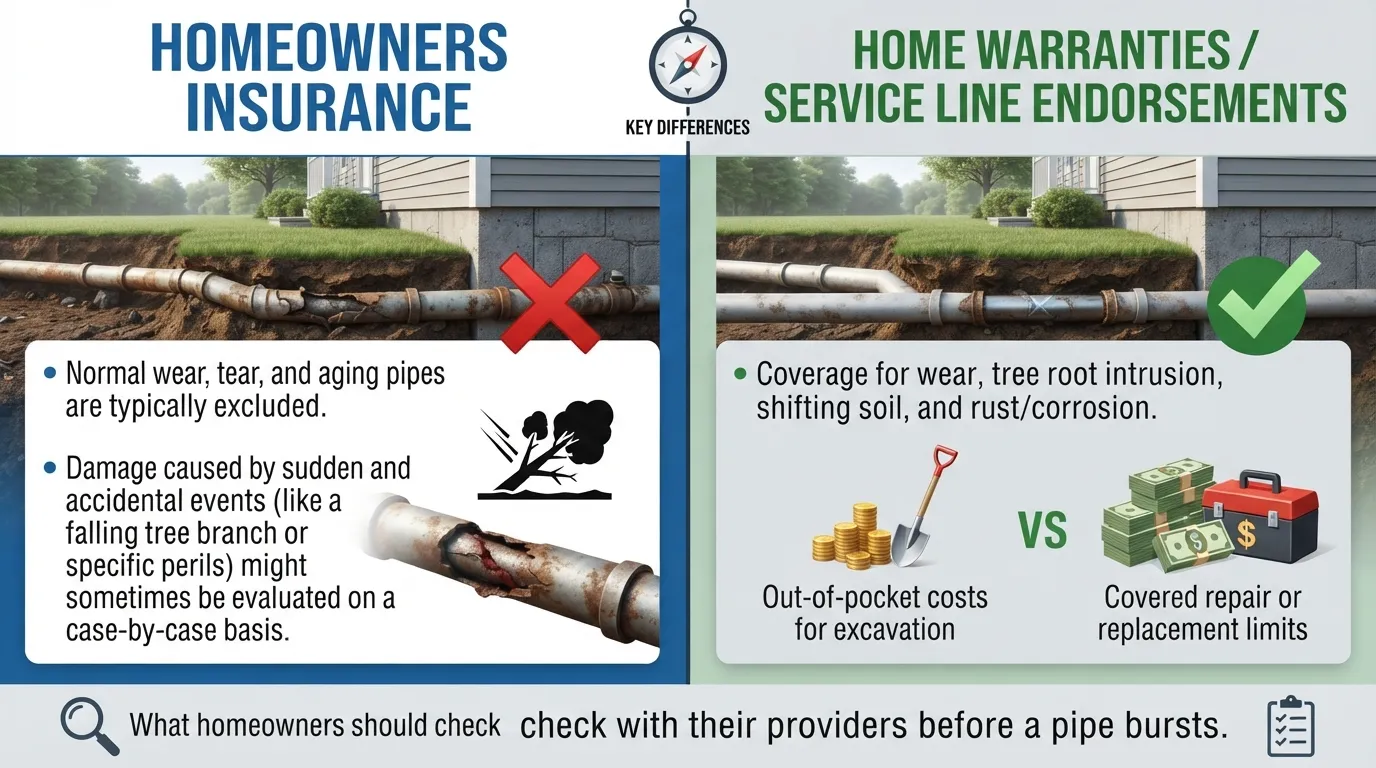
Navigating insurance policies regarding underground plumbing failures is one of the most confusing parts of managing a water line emergency. Standard homeowners insurance policies generally exclude exterior utility lines because they are classified as gradual wear-and-tear maintenance items rather than sudden disasters.
Understanding exact policy wording helps you determine whether filing a claim is worth your time or if you should explore secondary warranty alternatives.
Does Homeowners Insurance Cover This? General Answer Usually No Unless Sudden Accidental Damage
Standard home insurance policies typically exclude standard water service line replacements due to age, rust, or root infiltration. Insurance companies view exterior underground pipes as the ongoing maintenance responsibility of the homeowner.
- Standard Exclusions: Normal pipe degradation, corrosion, mineral buildup, and slow weeping leaks are almost never covered.
- The Core Rule: Coverage only triggers if damage stems from a sudden, accidental event explicitly named in your policy, such as a vehicle crashing into your yard and severing the pipe.
- Interior Damage Distinction: While the exterior pipe replacement is usually excluded, resulting water damage inside your home (like a ruined basement floor) may be covered depending on your specific endorsements.
When Insurance MIGHT Help
There are rare instances where auxiliary endorsements or specific hazard events can compel an insurance provider to approve part of your claim. Knowing these exceptions helps you advocate effectively with your adjuster.
- Service Line Endorsements: Many modern insurance providers offer optional, low-cost utility line riders that specifically cover underground water and sewer pipe failures.
- Consequential Damage Clauses: If a sudden catastrophic burst blasts through your foundation wall and floods finished living spaces, interior remediation may qualify for assistance.
- Third-Party Liability: If a municipal contractor or neighboring utility crew accidentally damages your water line during public roadwork, their commercial liability insurance should pay for repairs.
Service Line Warranty Programs Alternative Option
Because standard insurance leaves a massive coverage gap for underground piping, many homeowners turn to dedicated utility line protection plans. These low-cost monthly or annual subscriptions protect against sudden supply line failures.
- Municipal Utility Programs: Cities often partner with third-party providers (like HomeServe) to offer optional service line warranties billed directly through your monthly water statement.
- Independent Home Warranties: Many home warranty companies offer optional water and sewer line riders that cap your out-of-pocket expenses at a standard deductible.
- Policy Verification Check: Always read the fine print regarding maximum payout caps, pre-existing condition exclusions, and whether sidewalk or landscaping restoration is included in the plan.
What Is the 135 Rule in Plumbing?
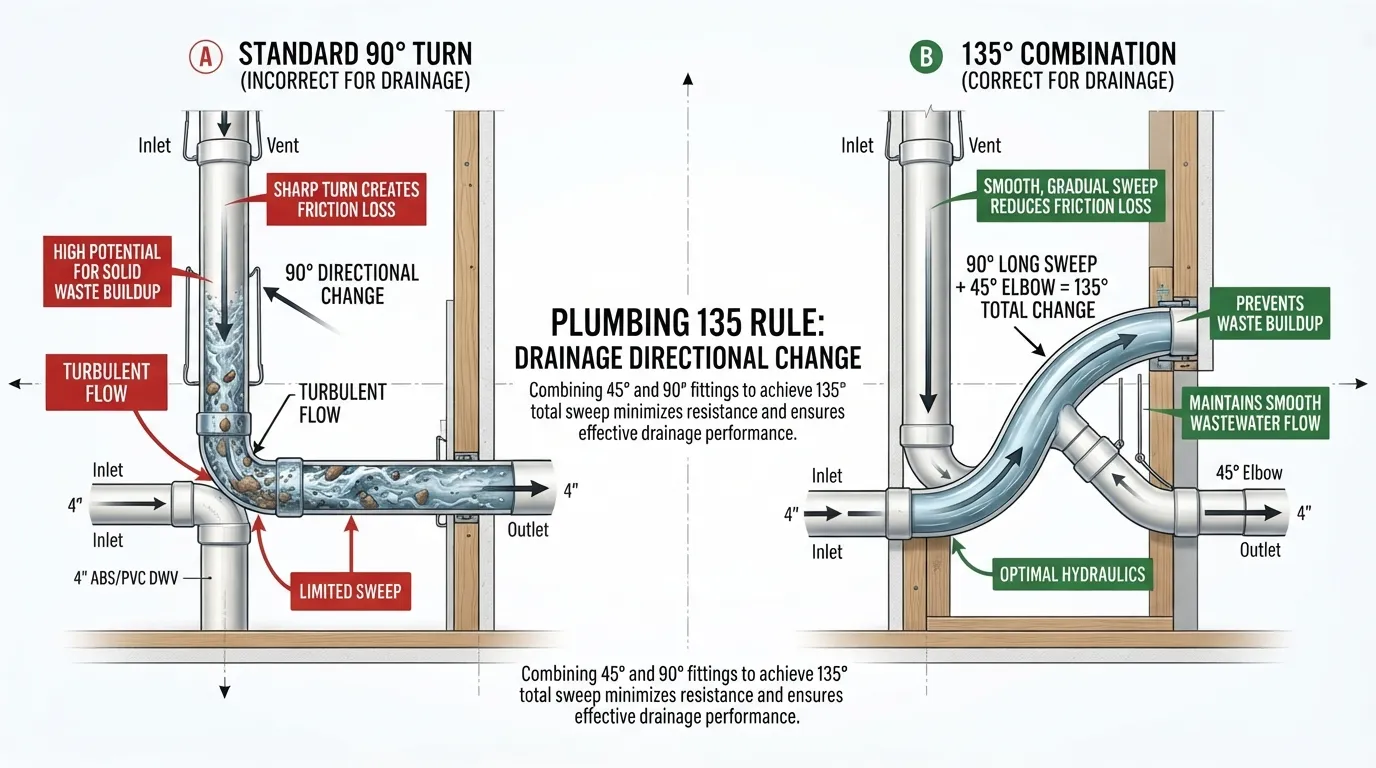
When planning a major plumbing layout or replacing pipe networks, licensed professionals often reference specific building geometry standards like the 135 rule in plumbing. While many homeowners focus exclusively on pipe length or material quality, directional changes play an equally critical role in long-term system performance.
Familiarizing yourself with this engineering standard helps you evaluate contractor proposals and ensures your new water supply or drainage layout meets rigorous municipal inspection codes.
Explaining the 135 Rule Directional Bends and Flow Safety
The 135 rule dictates that a section of piping should not exceed a cumulative total of 135 degrees in directional changes between access points or cleanouts. In practical terms, this usually limits combinations like a single 90-degree elbow plus a 45-degree bend before a service access point is required.
- Preventing Friction Loss: Sharp, compounding angles create excessive fluid turbulence, dropping water pressure and straining pipe joints.
- Code Compliance: Exceeding a cumulative 135 degrees of turn without a cleanout will often trigger an immediate failure during local plumbing inspections.
- Maintenance Access: Limiting tight turns ensures that future drain snaking or hydro-jetting equipment can successfully navigate the line without getting stuck.
Why This Matters During Water Line and System Work
Although the 135 rule is heavily emphasized in drainage and waste architecture, its principles directly impact how supply lines and main configurations are routed around foundation corners and obstacles.
- Minimizing Pressure Drop: Smooth, gradual routing prevents unnecessary pressure loss between the municipal main and your interior fixtures.
- Avoiding Sediment Traps: Keeping directional changes within safe thresholds stops mineral scale and debris from accumulating at sharp elbows.
- Contractor Accountability: Ensuring your installer adheres to proper structural angles prevents chronic flow restrictions and extends the overall lifespan of your plumbing investment.
DIY vs. Hiring a Licensed Plumber
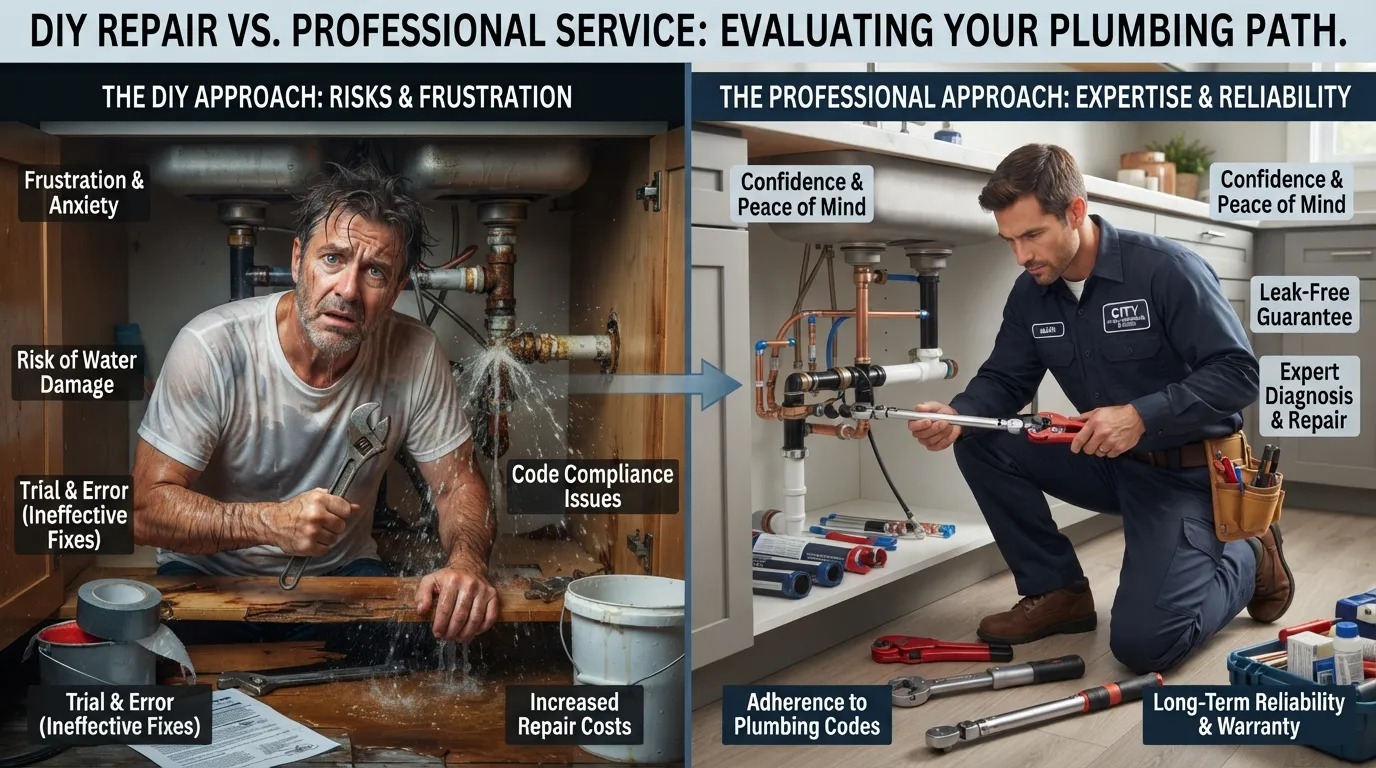
Attempting to replace your main water line as a do-it-yourself weekend project is rarely feasible or legal for most homeowners. Because this pressurized conduit connects directly to public utility infrastructure and handles high-pressure water, municipal authorities strictly regulate who is permitted to perform the work.
Balancing upfront labor savings against the catastrophic risks of property flooding, utility strikes, and code violations makes hiring a professional contractor the safest path forward.
Why DIY Is Not Recommended Legal Permits Safety Risks
While homeowners can easily handle minor cosmetic plumbing repairs inside the house, exterior main line replacement involves heavy civil work and high-liability hazards.
- Legal Permit Mandates: Cities almost universally require licensed, bonded plumbers to pull the excavation and utility connection permits.
- Utility Strike Hazards: Digging blindly without calling 811 to locate buried gas, electric, or fiber-optic lines can result in fatal accidents and massive liability fines.
- Specialized Heavy Equipment: Trenchless pulling rigs, industrial pipe cutters, and heavy shoring boxes require professional training to operate safely and effectively.
What a Licensed Plumber’s Quote Should Include
An honest, transparent contractor quote should provide an itemized breakdown so you know exactly what services, materials, and restorations you are paying for.
- Permit & Inspection Fees: Explicit line items covering local municipal paperwork and final building inspector sign-offs.
- Material Specifications: Clear details on the exact pipe type (e.g., SDR-9 HDPE or Type K copper) and diameter being installed.
- Restoration Terms: Specific guarantees regarding whether backfilling, trench compaction, and basic turf or concrete repair are included in the lump sum.
Real Job Example First-Hand Insight
Examining a real-world residential replacement project illustrates how these cost variables materialize on an active job site. For instance, a recent suburban replacement project involved a 55-foot service run from the street main to a home’s basement entry point.
- Method Selected: The contractor utilized trenchless pipe bursting to preserve a mature front lawn and a custom stamped-concrete walkway.
- Project Breakdown: Total expenses came to $5,800, which included $3,500 for the core trenchless labor and pulling, $800 for municipal connection and permit fees, and $1,500 for two small access pit restorations.
- Key Takeaway: Choosing trenchless technology added a slight premium over open trenching but saved over $2,000 in landscape and concrete repaving expenses.
How Long Does the Replacement Take?
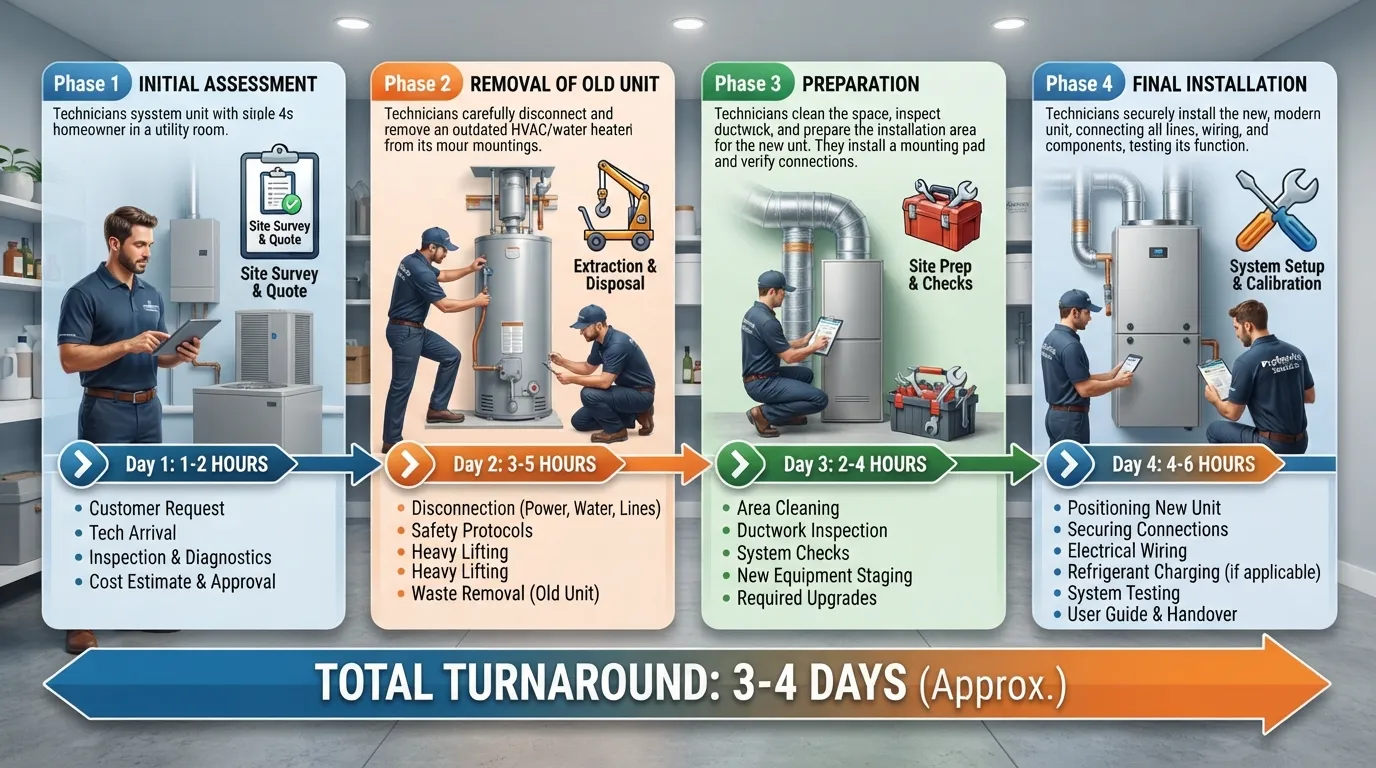
Planning for a major plumbing disruption requires knowing exactly how long your household will be without running water. Most residential main water line replacements are completed efficiently, but the overall project timeline varies based on the installation method and site complexity.
Understanding the expected daily schedule helps you arrange alternative water sources and manage household routines while your property is under construction.
Trenchless Timeline Typically 1 Day
Trenchless replacement is engineered for speed and minimal surface disruption, allowing crews to complete most standard residential projects in a single business day.
- Morning Phase: Technicians dig two small entry and exit pits, disconnect the old line, and set up hydraulic pulling or bursting equipment.
- Afternoon Phase: The old pipe is split or pulled while simultaneously dragging the new seamless HDPE line into place.
- Evening Phase: Final indoor connections are secured, water pressure is restored, and the small access pits are temporarily backfilled.
Traditional Trenched Timeline 2–3 Days + Restoration Time
Traditional open-cut excavation involves significantly more heavy earth-moving and physical manual labor, naturally extending the overall project schedule.
- Excavation Days (1–2): Heavy machinery cuts an open trench along the entire length of the service route, exposing the old piping for removal.
- Installation & Inspection (Day 2–3): The new pipe is laid, inspected by municipal building officials, and pressure-tested before backfilling begins.
- Restoration Period (Days 3+): Compacting soil, repaving concrete, and re-laying sod can take several additional days or weeks depending on weather conditions.
Frequently Asked Questions
Addressing common homeowner inquiries ensures you have clear, authoritative answers to finalize your replacement strategy. These answers target high-volume search queries and People Also Search (PAA) boxes.
Reviewing these targeted insights helps clarify lifespan expectations, long-distance pricing scales, and division of property responsibility.
How often do main water lines need to be replaced?
Most main water lines last between 50 and 70 years depending on the original pipe material used and local soil chemistry. Copper and modern HDPE pipes offer maximum longevity, whereas older galvanized steel or polybutylene pipes often fail prematurely within 25 to 30 years.
- Material Lifespan: Copper lasts 50+ years; HDPE and PEX last 50 to 100 years.
- Warning Factors: Aggressive acidic soils or high water pressure can accelerate structural degradation.
How much does it cost to install a 1000-foot water line?
Installing an exceptionally long 1,000-foot commercial or rural residential water line typically ranges from $50,000 to $250,000+. Total pricing varies dramatically based on trenching requirements, agricultural terrain, and local municipality tap fees.
- Scale Economics: While per-foot material costs may decrease on bulk orders, heavy civil excavation over long distances drives up total equipment and labor hours.
- Engineering Requirements: Long runs often require booster pumps and specialized backflow prevention assemblies.
How deep does a main water line need to be buried?
Main water lines must be buried below the local frost line to prevent freezing and bursting during severe winter freezes. This depth typically ranges from 12 inches in warm southern zones to 6 feet or more in northern climates.
- Regional Codes: Always consult your local municipal building department for exact frost line mandates.
- Insulation Options: In shallow rock zones where deep digging is impossible, specialized foam insulation sleeves or heat tape are sometimes mandated.
How do you tell if a water pipe is broken underground?
Key indicators of an underground break include unexpected spikes in your monthly water utility bill, unexplained wet spots or lush green patches in your yard, and a noticeable drop in indoor water pressure.
- Meter Test: Shut off all indoor fixtures and check if your utility meter flow indicator is actively spinning.
- Acoustic Detection: Professional plumbers use sonic listening equipment to detect the high-pressure hiss of escaping water.
How to install a new main water line?
Professional installation requires locating existing utilities, obtaining municipal permits, excavating or boring the service path, laying approved pipe material, passing local plumbing inspections, and restoring the surface.
- Step-by-Step Overview: Permits and 811 utility locates come first, followed by trenching, pipe laying, pressure testing, and final backfilling.
- Professional Requirement: This work must be completed by a licensed, bonded plumbing contractor to comply with local building codes.
Who is responsible for a broken water pipe?
Responsibility is split between the municipality and the property owner based on the location of the break relative to the property boundary or water meter. Cities maintain public mains, while homeowners own the private service line.
- Municipal Side: The city handles repairs from the public main up to the curb stop or water meter pit.
- Homeowner Side: You are fully responsible for the private service line running from the meter pit into your home’s foundation.
How much does a water main line repair cost?
Minor spot repairs for a localized pinhole leak typically range from $400 to $1,500 if the pipe is easily accessible. However, if the line is severely degraded, full replacement is often more cost-effective long-term than paying for repeated patches.
- Repair vs. Replace: Spot repairs work for isolated damage on newer pipes, but aging lines over 40 years old warrant complete replacement.
- Cost Comparison: While repairs save money upfront, repeated service calls quickly eclipse the cost of a brand-new installation.
Conclusion + CTA
Replacing your main water line is a major home investment, but understanding the costs, methods, and warning signs empowers you to make confident decisions. Proactively addressing failing infrastructure prevents catastrophic property damage and restores reliable water pressure to your home.
Partnering with certified professionals ensures your new water supply line meets rigorous building codes and stands the test of time
Get a Free Accurate Estimate
Ready to evaluate your home’s water line condition or secure a professional quote? Don’t let a hidden leak compromise your foundation.
- Expert Consultation: Connect with licensed and insured local plumbing experts to inspect your service line.
- Transparent Pricing: Request a detailed, itemized estimate covering permits, materials, and property restoration today.

Oscar Vance | Master Plumber & Drainage Expert
Meet Oscar Vance, a licensed master plumber sharing practical solutions on residential repairs, preventive maintenance, and thoughtful home upkeep.