What Is a Hose Bib in Plumbing?
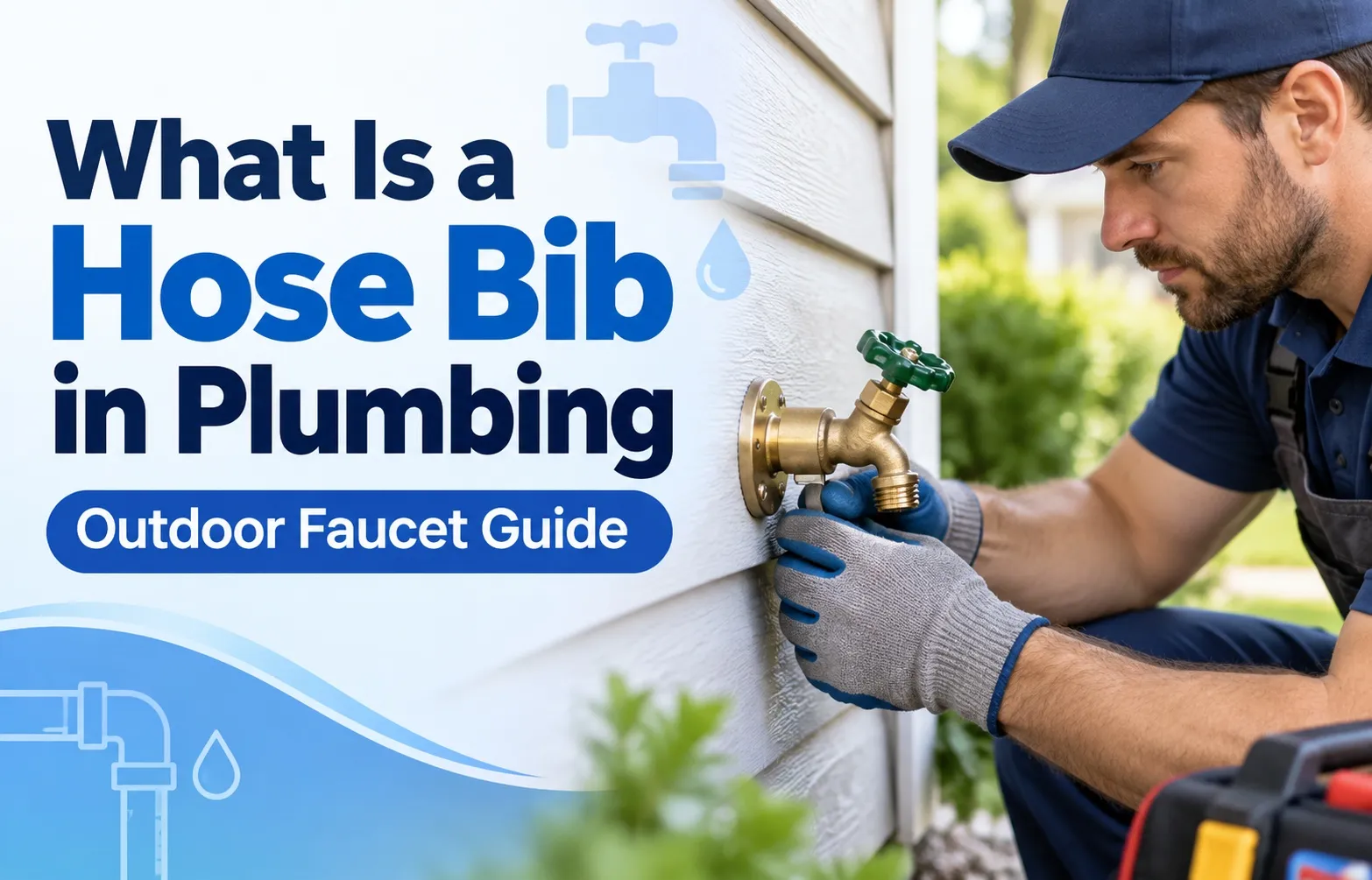 A hose bib is an outdoor water faucet mounted to the exterior wall of a building that features a threaded male outlet designed to attach garden hoses and outdoor watering attachments. It connects directly to a home’s internal water supply line, providing external access to pressurized water.
Plumbers often refer to this fixture as a hose bibb, sillcock, outdoor spigot, or wall hydrant. Despite varying regional terminology, its primary purpose remains consistent across residential and commercial plumbing systems: delivering controlled outdoor water pressure while isolating exterior lines from the building’s main distribution network.
Core Definition
A hose bib (also spelled hose bibb) is a specialized compression or quarter-turn valve installed on exterior wall framing to control municipal or well water flow to outside spaces.
Key defining structural characteristics of a hose bib include:
- Threaded Outlet Spout: Uses external Garden Hose Threading (GHT) rather than standard pipe thread (NPT) to form a watertight seal with hose fittings.
- Exterior Mounting Flange: Features a built-in metal plate secured flush against siding, brick, or concrete foundation walls.
- Internal Valve Stem: Houses an internal stem and seat washer mechanism operated by an exterior wheel handle or lever.
Primary Purpose and Where It Is Found on Your Home
The primary function of a hose bib is to supply dedicated, high-pressure water outdoors for lawn irrigation, vehicle washing, power washing, and outdoor cleaning without running hoses through windows or doors. Most residential properties feature two or more hose bibs positioned at key exterior access points around the building envelope:
- Front Elevation: Typically mounted near the driveway or main garden beds for convenient access during lawn maintenance and vehicle cleaning.
- Rear Elevation: Installed near back patios, decks, or outdoor living spaces to supply garden hoses, sprinklers, or outdoor kitchens.
- Utility Areas: Positioned near basements, garages, or janitorial washdown bays where high-volume water access is regularly required.
Inside the exterior wall structure, the valve body connects directly to an interior supply pipe made of copper, PEX, or galvanized steel. Turning the external handle rotates the internal valve stem, lifting the seat washer to allow pressurized water to flow out through the threaded spout.
Hose Bib vs. Spigot vs. Sillcock: Clearing Up the Terminology
Homeowners, plumbers, and hardware suppliers often use terms like hose bib, spigot, sillcock, and wall hydrant interchangeably to describe an outdoor water faucet. While these fixtures share the common goal of delivering exterior water, distinct structural designs and installation methods differentiate each term in professional plumbing.
Understanding these terminology differences helps ensure you select the correct valve type, thread sizing, and mounting hardware when purchasing replacement parts or requesting service from a plumber.
Key Terminology Breakdown
Plumbing professionals categorize outdoor valves based on their physical mounting method, thread type, and frost resistance:
- Hose Bib (or Hose Bibb): A general term for any exterior water valve fitted with male hose threads designed specifically to lock onto standard garden hose connectors.
- Spigot: A broad consumer term referring to almost any outdoor or utility valve that regulates liquid flow. The word is commonly used by homeowners rather than licensed trade plumbers.
- Sillcock: An outdoor valve engineered to mount flat against the home’s sill plate—the horizontal wooden beam anchored directly above the concrete foundation. Sillcocks typically feature a downward-canted spout to prevent hose binding.
- Wall Hydrant: A heavy-duty, recessed, or freeze-proof outdoor fixture often installed on commercial buildings or modern residential homes. They frequently feature flush-mount faceplates and loose-key access mechanisms.
Comparison Table: Term, Location, Best Used For
Why Is It Called a Hose Bibb?
The term “bibb” (spelled bib or bibb) comes from classical plumbing classifications used to distinguish downward-pointing valves from straight-through pipe fittings. Historically, standard indoor valves discharged straight ahead or upward, whereas a “bibb valve” curved downward like a cloth bib, directing water downward into buckets or basins.
As residential outdoor plumbing developed throughout the 20th century, the trade term evolved into “hose bibb” to specifically identify exterior downward-canted valves featuring dedicated hose threads designed to attach hoses securely under pressure.
Anatomy of a Hose Bib: How It Works Inside Your Wall
A traditional compression hose bib operates through a mechanical stem and washer assembly housed within a rugged brass or stainless steel body. When you turn the handle, the internal mechanism shifts to regulate water pressure and direct flow safely through standard hose connection threads (GHT).
Essential Components of a Standard Hose Bib
A standard compression hose bib consists of six primary mechanical parts working together to maintain a dependable, leak-free seal under constant household water pressure. Understanding these parts makes troubleshooting leaks significantly easier:
- Handle Wheel: The exterior wheel or lever operated manually by hand to open and close the internal valve assembly.
- Valve Stem: A threaded metal rod extending from the exterior handle all the way to the internal seating washer.
- Packing Nut & Washer: A threaded retaining nut that compresses a flexible gasket around the stem to stop water from leaking out through the handle.
- Brass Body / Housing: The durable outer casting typically made of forged brass or stainless steel engineered to withstand weather corrosion and heavy physical stress.
- Seat Washer: A heavy-duty rubber or neoprene disk located at the tip of the stem that creates a watertight seal against the internal valve seat.
- Hose Connection Thread (GHT): The male-threaded outlet engineered strictly for standard 3/4-inch garden hose and accessory fittings.
How the Valve Mechanism Controls Water Flow
The internal valve mechanism utilizes a basic linear screw action powered by a compression valve design to start, stop, and modulate water delivery through the exterior plumbing line.
When you turn the handle wheel counterclockwise, the threaded valve stem rotates and retracts outward, lifting the rubber seat washer away from the internal valve seat. This mechanical clearance opens a clear pathway for municipal water to rush through the brass body and out through the threaded spout.
Turning the handle clockwise advances the stem forward, pressing the seat washer tightly against the seat to shut off water flow completely. Regular wear on this rubber seat washer is the primary cause of minor drips from the spout over time.
Types of Hose Bibs: Choosing the Right Outdoor Faucet
Selecting the correct outdoor faucet requires balancing regional climate demands, building code regulations, and daily functional requirements. Choosing the wrong valve type for your geographic location can lead to frozen pipes or code violations.
Modern plumbing manufacturers engineer several distinct configurations designed to solve specific challenges like winter freezing, backflow contamination, and public vandalism.
Standard Hose Bibs (Non-Frost Free)
A standard hose bib houses its internal compression valve seat directly behind the exterior wall mount or handle. This design places water right at the outdoor surface, making these units ideal exclusively for warm-weather climates where freezing temperatures never occur.
Installing a standard non-frost-free valve in freezing regions creates a high risk of catastrophic pipe failure. Trapped water inside the exterior valve body expands as temperatures drop below freezing, splitting the metal housing and flooding walls once thawed.
Frost-Proof Freeze-Resistant Hose Bibs (How They Prevent Burst Pipes)
A frost-proof hose bib utilizes an extended valve stem ranging from 4 to 14 inches long to shift the shut-off seal deep inside the heated insulation envelope of the home. This freeze-resistant engineering prevents winter water freezing by keeping the standing water source inside a warm, conditioned space.
When you close a frost-proof valve, the washer seals against the seat inside the unheated vs heated space boundary, allowing any residual water in the long barrel to drain out freely. Review manufacturer guidelines and sizing standards via PRIER technical specifications to determine correct wall depth sizing.
Anti-Siphon Hose Bibs (Backflow Prevention)
An anti-siphon hose bib incorporates an integrated vacuum breaker and backflow preventer directly on top of the spout. This safety component protects municipal water systems against dangerous drinking water contamination.
Key operational features of anti-siphon valves include:
- Automatic Atmospheric Vent: Opens a tiny internal seal whenever water pressure drops, breaking suction to stop backflow.
- Chemical Isolation: Prevents garden chemicals, pesticides, or standing pool water from being sucked back into household supply lines.
- Code Compliance: Mandatory under modern plumbing codes for all exterior residential and commercial water connections.
Commercial & Security Hose Bibs (Loose-Key Vandal-Proof)
Loose-key hose bibs replace standard manual handwheels with a removable square socket key required to turn the water on and off. These tamper-resistant fixtures prevent unauthorized water usage, theft, and vandalism in public spaces, apartment complexes, and commercial buildings.
Hose Bibs in Showers & Bathrooms? Clearing Up Indoor Misconceptions
A common point of confusion in online plumbing searches is whether a hose bib can or should be installed in residential showers or bathrooms. Hose bibs are engineered strictly as exterior or heavy-duty utility fixtures and are never installed as standard bathroom or shower plumbing fixtures.
This misconception usually arises when homeowners mistake small interior shut-off valves, hand-shower connections, or utility washdown stations for exterior hose bibs due to their similar manual valve handles.
Are Hose Bibs Ever Used Indoors?
While standard hose bibs belong outdoors, modified bibb-style valves do appear in specific indoor utility environments where connecting a flexible hose is necessary:
- Utility Sink Faucets: Basements, garages, and laundry rooms frequently feature utility sink faucets with threaded spouts designed for bucket filling or short washdown hoses.
- Commercial Washdown Valves: Janitorial closets, commercial kitchens, and pet grooming stations use industrial washdown valves equipped with garden hose threads for heavy-duty cleaning.
- Water Heater Drain Valves: The drain valve at the base of a residential water heater is essentially a mini hose bib used periodically to flush sediment from the tank.
Hose Bib vs. Indoor Angle Stop Shut-Off Valve
Understanding the difference between an outdoor hose bib and an indoor shut-off valve prevents buying the wrong fixture during bathroom or shower repairs:
- Hose Bib: Features heavy-duty cast brass construction with external 3/4-inch Garden Hose Threading (GHT) designed for high water volume and outdoor attachments.
- Angle Stop Valve: A compact indoor shut-off valve installed beneath sinks or behind toilets featuring fine compression threads designed for narrow, flexible copper or braided supply lines.
- Shower Mixing Valve: Concealed behind bathroom tile walls, shower mixing valves blend hot and cold water supplies internally and regulate water pressure to overhead showerheads—lacking external hose threads entirely.
Frequently Asked Questions
Outdoor plumbing fixtures endure intense seasonal weather shifts, UV exposure, and frequent mechanical wear. Knowing how to diagnose leaks, estimate replacement costs, and prevent freeze damage saves homeowners hundreds of dollars in unexpected plumbing bills.
Do You Need a Plumber to Replace a Hose Bib?
Replacing a hose bib can be a manageable DIY project if your existing plumbing utilizes threaded connections, shark-bite push fittings, or accessible PEX lines in an unfinished basement or crawlspace. Basic tools like adjustable wrenches, plumber’s tape, and pipe cutters are all it takes for straightforward swaps.
However, you should hire a licensed professional plumber if your outdoor faucet is soldered directly onto rigid copper piping inside a finished drywall cavity. Improper torch heating can scorch wall studs, melt vapor barriers, or cause catastrophic behind-the-wall leaks.
What Does a Plumber Charge to Replace a Hose Bib?
Hiring a plumber to replace an outdoor faucet typically costs between $150 and $400 depending on regional labor rates, accessibility, and valve complexity:
- Standard Threaded Swap: $150 – $250 for a direct, accessible exterior replacement.
- Frost-Proof Stem Upgrade: $200 – $400 for cutting into interior lines and adjusting long freeze-resistant valve stems.
- Hard-to-Reach / Wall Opening: $350 – $600+ if drywall repair or crawlspace excavation is required to access supply lines.
How to Fix a Leaking Hose Bib?
Most hose bib leaks are easily repaired in under 15 minutes by targeting two common failure points:
- Packing Nut Leaks: If water leaks around the handle stem when the faucet is turned on, tighten the packing nut directly beneath the handle clockwise by a quarter-turn using an adjustable wrench to compress the internal packing washer.
- Spout Drips: If water continually drips from the spout nozzle when fully closed, the internal seat washer is worn down. Shut off your home’s main water supply, unscrew the bonnet nut, pull out the valve stem, and replace the rubber washer at the tip.
Why Did My Frost-Proof Hose Bib Burst?
Leaving a garden hose connected to a frost-proof hose bib during freezing winter weather is the number one cause of cracked and burst copper pipes. When a hose stays attached, surface tension traps standing water inside the long valve barrel, preventing the system from draining automatically.
When sub-freezing temperatures hit, this trapped water expands violently as it turns to ice, splitting the metal tube deep within your unheated exterior wall. The resulting split remains hidden until spring when turning on the valve releases water directly into your interior home framing.

Oscar Vance | Master Plumber & Drainage Expert
Meet Oscar Vance, a licensed master plumber sharing practical solutions on residential repairs, preventive maintenance, and thoughtful home upkeep.