What Is a Trap Primer in Plumbing?
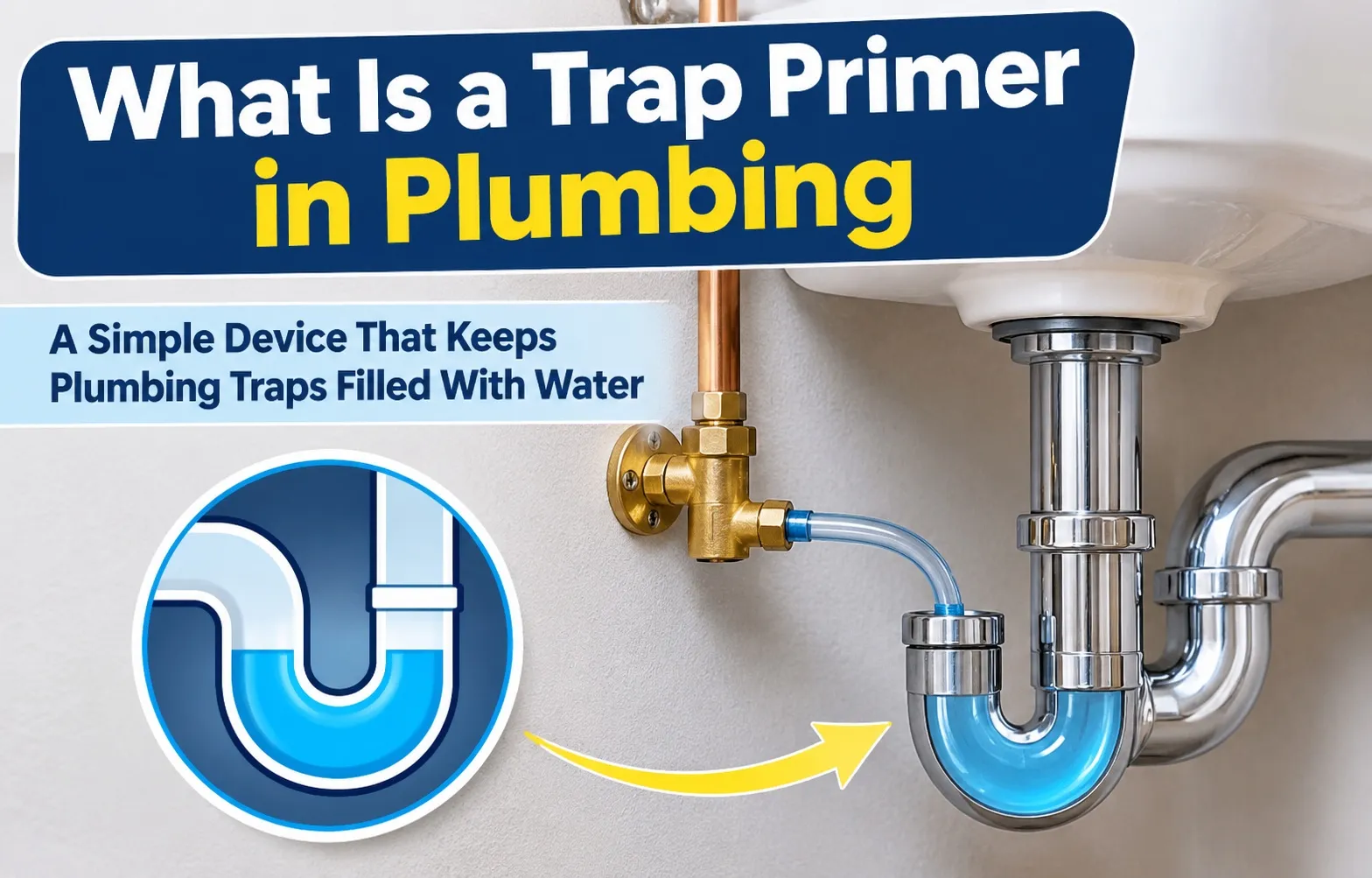 A trap primer is a specialized plumbing valve that automatically delivers a precise amount of fresh water into a drain fixture’s P-trap. By maintaining a constant water seal inside the trap, it prevents dangerous sewer gases like methane and hydrogen sulfide from evaporating out of dry floor drains and entering living spaces.
What Is a Plumbing Trap Primer?
A plumbing trap primer is an automatic maintenance device connected directly to a building’s potable water line. Its sole purpose is to feed small amounts of water into dry or seldom-used P-traps whenever a nearby fixture operates or a water pressure change occurs.
Without this continuous water replenishment, floor drains in basements, mechanical rooms, and laundry spaces gradually lose their standing water seal due to normal atmospheric evaporation.
- Core Purpose: Automatically replenishes evaporating P-trap water seals to preserve continuous barrier protection.
- Key Connection: Ties the clean potable water supply line directly to gravity-fed floor drain assemblies.
- Target Devices: Essential for infrequently used floor drains, mechanical room drains, and commercial restroom facilities.
Why Modern Plumbing Systems Rely on Trap Primers
Modern building designs and health codes require trap primers to eliminate the significant health hazards associated with dry P-traps. When standing water in an unused drain fully evaporates, the physical barrier separating the municipal sewer line from the indoor environment disappears.
This allows airborne pathogens, foul odors, and toxic compounds to back-draft freely through open floor drains. Installing an automated trap primer provides continuous protection without requiring manual bucket-pouring or routine intervention.
- Sewer Gas Containment: Blocks volatile gases such as methane, hydrogen sulfide, and ammonia from venting into indoor air.
- Pest Migration Prevention: Maintains a submerged fluid barrier that prevents rodents and insects from entering through drain lines.
- Code Compliance & Safety: Satisfies strict municipal health standards designed to safeguard indoor air quality in residential and commercial buildings.
How a Trap Primer Works: Mechanics & Physics
A trap primer bridges the gap between active water supply lines and isolated drain assemblies, using physical pressure dynamics to prevent dry drain traps. Understanding the mechanics behind water seal preservation highlights why automated systems outperform manual maintenance.
The Mechanics of P-Trap Water Seal Evaporation
P-traps maintain water seal integrity by holding a calculated volume of liquid at the bottom of their curved pipe. However, environmental factors and dynamic pressure shifts—such as induced siphonage from upper-floor discharges—accelerate liquid loss over time.
In climate-controlled mechanical rooms featuring high ambient temperatures and continuous air movement, evaporation rates double compared to standard, damp basement environments. This rapid vapor loss causes standing water levels to drop steadily.
- Atmospheric Evaporation: Dry HVAC airflow and elevated room temperatures rapidly vaporize standing water in unused floor drains.
- Siphonage and Pressure Pulls: Heavy fixture discharges on shared stacks can create suction forces that pull water out of the trap seal.
- Why Manual Pouring Fails: Pouring water manually into a drain is inefficient because rapid evaporation cycles easily outpace routine human maintenance.
How Water Moves from Supply Line to Floor Drain
Automatic water injection relies on pressure-activated valves tied directly to the potable water supply line. When a building plumbing fixture operates, a sudden change in line pressure triggers the internal valve mechanism.
This precise pressure shift overcomes internal spring resistance, releasing a metered charge of fresh water down a dedicated feeder tube to replenish the drain.
- Static Pressure Baseline: The system maintains stable line pressure until a nearby fixture like a sink or toilet opens and initiates flow.
- Dynamic Pressure Drop: The resulting flow fluctuation creates a momentary differential that unseats the trap primer valve diaphragm.
- Code-Compliant Delivery: A controlled volume of water flows through the distribution line to satisfy plumbing code standards without risking cross-contamination.
The 4 Primary Types of Trap Primers
Selecting the correct trap primer depends on your facility layout, local code requirements, and the number of drains needing coverage. Trap primers fall into four main categories based on their activation mechanisms and operating principles.
1. Pressure-Drop Actuated Trap Primers (Volumetric)
Pressure-drop actuated trap primers are mechanical valves connected to active potable water lines. When a nearby fixture like a faucet or toilet opens, the resulting dynamic pressure drop causes the valve’s internal piston or diaphragm to flex, releasing a metered volume of water into the floor drain.
These units are widely used in both residential and light commercial settings because they operate entirely without electrical connections or complex controls.
- Pros: Simple design, zero electrical power requirements, long operational lifespan, and cost-effective installation.
- Cons: Prone to clogging or sticking in areas with hard water minerals; requires a frequently used fixture on the same supply branch to trigger pressure drops.
2. Electronic Timed Solenoid Valve Systems (Commercial Distribution)
Electronic trap primers use a digital timer and an electrically controlled solenoid valve to inject water on a pre-set schedule. These systems often feature a multi-port manifold system, allowing a single assembly to serve dozens of floor drains simultaneously across large commercial facilities.
They are ideal for mechanical equipment rooms, commercial kitchens, and multi-story buildings where individual mechanical valves would be impractical to monitor and maintain.
- Pros: Highly precise water dosing, capable of feeding multiple floor drains via distribution manifolds, and independent of fixture usage patterns.
- Cons: Higher equipment costs, requires an electrical connection, and contains solenoid components that eventually require maintenance.
3. Gravity-Fed & Fixture-Diverted Systems (Tailpiece Primers)
Gravity-fed or fixture-diverted systems utilize waste water or clean water directly from a frequently used plumbing fixture, such as a lavatory sink or laundry tub. By using a specialized lavatory tailpiece adapter, a small portion of water diverts into a dedicated tube every time the sink runs, using gravity to feed the floor drain P-trap.
This design offers an exceptionally reliable, passive method for preserving the trap seal without relying on complex pressure valves.
- Pros: Highly reliable passive operation, low installation cost, zero moving parts, and fully compliant with energy-conscious designs.
- Cons: Limited to floor drains positioned in close physical proximity to and below the feeding sink fixture.
4. Continuous Flow Primers (Legacy Systems)
Continuous flow primers are legacy mechanical devices designed to deliver a slow, non-stop trickle of water into a P-trap. While effective at maintaining a water seal, they consume significant amounts of potable water continuously regardless of need.
Because of strict water conservation mandates and modern codes like UPC Section 1007.0, continuous drip systems are now largely prohibited in new construction and replaced by pressure-drop or waterless alternatives.
- Pros: Simple mechanism with continuous water delivery.
- Cons: Extreme water waste, higher utility costs, and banned under most modern municipal plumbing codes.
Waterless Trap Seals: The Modern Alternative
When installing a traditional mechanical trap primer is impractical or cost-prohibitive, waterless trap seals offer an effective modern alternative. These devices satisfy code requirements for floor drain protection without needing direct connections to a fresh water supply line.
What Is an Elastomeric Waterless Trap Seal Insert?
An elastomeric waterless trap seal is a specialized device designed for retrofitting floor drains. It features a self-sealing silicone membrane insert housed within an ABS or polypropylene frame that fits snuggly into the drain pipe body.
The flexible membrane acts as a one-way mechanical barrier, opening downward under gravity when drainage water enters and snapping firmly shut once flow stops. This automatic closure seals off sewer odors and evaporation without using a single drop of water.
- One-Way Valve Function: Opens under fluid weight to allow unrestricted drainage, then immediately closes to seal the pipe.
- Code Certification Standard: Products like the Green Drain carry official ASSE 1072 certification for barrier-type trap seals.
- Easy Retrofit Installation: Press-fits directly into existing floor drain throats without requiring plumbing line alterations or wall demolition.
Trap Primers vs. Waterless Trap Seals: Direct Comparison
Both trap primers and waterless trap seals protect indoor spaces from sewer gas infiltration, but their operational mechanics, upfront expenses, and ongoing maintenance profiles differ significantly.
Selecting the right solution depends on whether you are building new plumbing infrastructure or upgrading existing facilities on a restricted budget.
- Best Use for Mechanical Primers: New commercial construction where centralized water lines are accessible and permanent, zero-maintenance drain access is required.
- Best Use for Waterless Seals: Retrofit projects, remote floor drains, or environments aiming to minimize overall building water usage.
Plumbing Codes, Air Gaps & Safety Mandates
Because trap primers form a direct connection between clean drinking water lines and drainage systems, municipal codes enforce strict safety standards. Complying with building regulations ensures reliable P-trap operation while safeguarding public health against cross-contamination.
Building Code Requirements: UPC vs. IPC Specifications
Both major model plumbing codes—the Uniform Plumbing Code (UPC) and the International Plumbing Code (IPC)—mandate trap seal protection for drains subject to evaporation. Under these regulations, floor drains in emergency spaces, mechanical rooms, and commercial restrooms must feature an approved priming device or an certified barrier alternative.
To ensure system reliability, mechanical devices must comply with rigorous performance testing benchmarks. Specifically, pressure-drop valves must meet the ASSE 1018 standard for trap primer valves, while continuous or drainage-type feeders must conform to the ASSE 1044 performance standard.
- UPC Regulations: Requires automatic trap priming or code-approved trap seal primers for any drain fixture exposed to atmospheric drying.
- IPC Regulations: Mandates trap seal maintenance via potable water feeder lines, gravity waste drainage diversion, or ASSE-certified waterless inserts.
- Quality Standards: Ensures all installed valves resist internal pressure spikes and deliver metered volumes without failure.
Why Backflow Prevention & Air Gaps Are Mandatory
The primary safety concern with trap primer installation is preventing back-siphonage of contaminated drainage water into the clean supply line. Connecting a potable water pipe directly to a sewer-connected drain fixture creates a direct cross-contamination hazard if a sudden loss of main water pressure occurs.
To mitigate this risk, plumbing codes require an approved air gap fitting or built-in backflow preventer on the primer discharge outlet. An air gap creates an uninterrupted physical vertical space between the supply outlet and the feeder tube, ensuring that wastewater can never siphon back into the building’s drinking supply under any hydraulic condition.
- Potable Water Protection: Prevents bacteria, stagnant drain fluid, and chemical contaminants from flowing backward into main drinking lines.
- Physical Isolation: Uses an open-air gap fitting to break vacuum suction and isolate clean water feeds from drain assemblies.
- System Testing: Allows technicians to visually confirm water flow during periodic system inspections.
Trap Primer Costs, Installation & Placement Locations
Planning a trap primer project requires knowing where these valves belong and budgeting for both hardware and skilled labor. Correct location choice ensures consistent operation, while realistic cost expectations help prevent budgeting surprises during new construction or plumbing retrofits.
Where Do Trap Primers Need to Be Installed?
Trap primers belong in areas where floor drains sit unused for extended periods, leaving standing P-trap water vulnerable to drying out. Position the valve close to an actively used cold water supply branch—such as a line feeding a sink or toilet—so normal fixture use triggers the device routinely.
Plumbing codes mandate installation in specific building zones to prevent sewer gas backup and maintain health standards across residential and commercial properties.
- Mechanical & Utility Rooms: Keeps emergency floor drains filled near water heaters, boilers, and HVAC equipment units.
- Commercial Restrooms & Kitchens: Maintains main floor drains, mop basin lines, and washroom drainage networks.
- Residential Basements & Laundry Rooms: Prevents sewer odor backup in floor drains situated near washing machines and sump basins.
- Access Considerations: Must include a dedicated shut-off valve and an accessible wall panel for periodic inspection and maintenance.
Valve Units vs. Professional Installation
Total project expenses depend on whether you select a basic pressure-drop valve or a complex electronic manifold assembly. Material costs vary by valve mechanism, while professional installation charges reflect the labor needed to cut into existing copper lines or PEX piping.
Engaging a licensed plumber ensures correct line sizing, proper air gap placement, and full adherence to local building code standards.
- Material Cost Factors: Opting for multi-port distribution manifolds increases hardware prices but lowers per-drain installation costs in large projects.
- Labor Cost Factors: Retrofitting older copper piping systems requires more labor time than integrating modern PEX piping into new framing.
Troubleshooting Common Trap Primer Failures
When a trap primer malfunctions, it can lead to high water bills, noisy plumbing pipes, or unpleasant sewer odors inside your building. Identifying the root cause of valve or line failure allows you to restore proper drain operation quickly before health risks develop.
Why Is My Trap Primer Leaking or Running Constantly?
A trap primer that leaks or discharges water continuously usually suffers from internal mechanical wear or sediment buildup. Small debris, sand, or rust particles carried through clean water supply lines can lodge inside the valve’s delicate sealing diaphragm, preventing it from closing fully after a pressure cycle.
In addition, unmitigated water hammer—shock waves created by fast-closing appliances—can rupture internal seals, while electronic units may experience solenoid burnout that leaves the valve stuck in an open position.
- Debris Under the Seat: Foreign particles trap the internal valve open, creating a constant drip down the feeder line into the drain.
- Damaged O-Rings & Diaphragms: Pressure surges and water hammer cause rubber sealing components to tear over time.
- Solenoid Electrical Failure: Electrical short circuits or power surges can lock electronic valves in an open or closed state.
How to Unclog Mineral Buildup in Trap Primer Feeder Lines
In regions with hard water, dissolved calcium and magnesium gradually form mineral scale inside the narrow feeder tubing running from the primer to the P-trap. Over time, this hard water scale reduces water flow to a tiny trickle or blocks it completely, causing feeder line failure.
Clearing these small-diameter supply lines requires shutting off the main water feed, disconnecting the outlet line at the primer body, and manually flushing the feeder line to restore clear passage.
- Step 1: Shut Off Water Supply: Close the inline isolation valve controlling flow to the trap primer assembly.
- Step 2: Disconnect the Feeder Tube: Use a wrench to detach the small discharge line running to the floor drain.
- Step 3: Flush Mineral Scale: Carefully insert a small flexible drain wire or apply a descaling solution to clear mineral buildup inside the feeder tube.
Diagnosing Sewer Gas Odors When a Trap Primer Fails
If foul, sewer-like odors emerge near a floor drain, the P-trap water seal has likely evaporated because the trap primer stopped delivering fresh water. Conducting a systematic inspection helps determine whether the issue stems from a dead valve, line blockage, or lack of supply pressure.
Property managers and homeowners can perform a simple diagnostic flow test to confirm whether a pressure-drop trap primer actively fires during normal fixture usage.
- Visual Drain Inspection: Shine a flashlight directly down the floor drain grate to verify whether standing water is present in the bottom of the P-trap.
- Perform a Pressure-Drop Test: Turn on a nearby sink faucet or flush an adjacent toilet while observing the trap primer discharge outlet or air gap fitting.
- Verify Water Delivery: Confirm that a small, momentary burst of water releases into the feeder line during the fixture’s pressure drop; if no water flows, replace the valve core or clear line blockages.
Frequently Asked Questions About Trap Primers
Get quick, precise answers to common questions about trap primer requirements, operation, appearance, and maintenance checks.
Do I need a trap primer for a residential floor drain?
Yes, residential plumbing codes typically require a trap primer for any basement or laundry room floor drain subject to water evaporation. Installing one maintains the P-trap water seal automatically, protecting your home against hazardous sewer gas leaks.
Does a trap primer require electrical power?
Most standard residential trap primers operate entirely mechanically using water pressure drops, requiring zero electrical power. However, large commercial distribution systems use electronic solenoid valves that require a standard wired electrical connection or battery power.
What does a plumbing trap primer look like?
A standard trap primer usually looks like a small, cylindrical brass valve installed on a cold water supply line. It typically features a threaded brass body, an inlet connection, and a smaller outlet port leading to a thin copper or PEX distribution tube.
How do you test if a trap primer is working?
To test a trap primer, shine a light into the floor drain to check for standing water in the P-trap. Next, turn on an adjacent faucet or flush a nearby toilet while checking the primer’s air gap or drain feed tube to verify that a small burst of fresh water discharges.

Oscar Vance | Master Plumber & Drainage Expert
Meet Oscar Vance, a licensed master plumber sharing practical solutions on residential repairs, preventive maintenance, and thoughtful home upkeep.