What is a Running Trap in Plumbing?
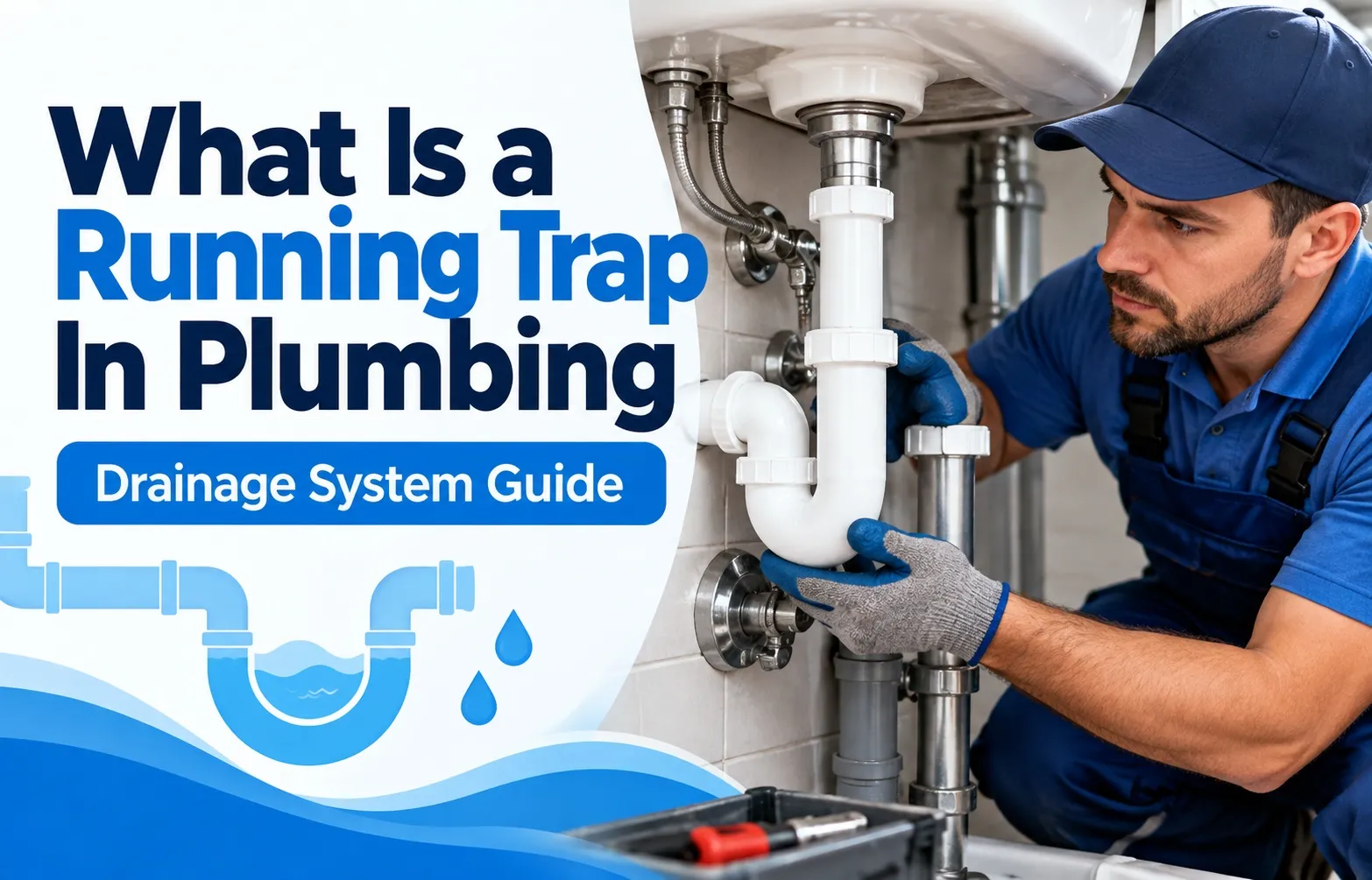 A running trap is a specialized plumbing fixture installed inline along a horizontal drain line, featuring a U-shaped dip that maintains a continuous liquid barrier. This water seal prevents harmful sewer gases, foul odors, and dangerous methane from escaping into a building while allowing wastewater to flow across the same horizontal plane.
Core Mechanics & Anatomical Structure of a Running Trap
Unlike standard fixture traps that receive wastewater vertically from a sink or tub drain, a running trap operates entirely on a horizontal axis. Wastewater enters through the horizontal inlet, drops into the central dip, and exits through the opposite horizontal outlet without changing vertical elevation.
- Horizontal Inlet & Outlet Alignment: Both connection points sit at identical elevations, maintaining a straight-line drainage trajectory through the plumbing branch or main sewer pipe.
- U-Shaped Trap Dip: The lower central curve holds standing water continuously, forming an air-tight barrier that blocks municipal sewer gas backflow.
- Dual Cleanout Points: Traditional running trap designs feature vertical access ports on the inlet and outlet sides to facilitate mechanical snaking and debris removal.
How a Running Trap Maintains Its Water Seal
A running trap maintains its protective water seal through static liquid head pressure within its U-shaped chamber. As wastewater enters the trap during normal fixture discharge, the incoming liquid displaces the existing trapped water, pushing effluent upward through the outlet side into the main drainage line.
When the flow of wastewater stops, gravity retains a precise volume of water inside the lowest section of the U-bend. This static volume fills the complete cross-sectional area of the pipe, creating a physical seal against atmospheric pressure variations and preventing volatile organic compounds or sewer odors from traveling upstream into occupied living spaces.
How Does a Running Trap Work?
A running trap functions through continuous horizontal hydraulic flow, balancing gravity and fluid displacement to maintain a permanent liquid barrier against municipal sewer odors without dropping wastewater vertically.
The Horizontal Entry and Exit Flow Path
During active discharge, hydraulic flow enters the trap horizontally, pushing wastewater through a U-shaped dip while maintaining constant elevation. Unlike standard vertical traps, running traps depend entirely on kinetic momentum and minimal static head pressure to push effluent out.
- Horizontal Trajectory: Wastewater moves continuously along a flat horizontal plane, which naturally decreases overall drainage velocity.
- Reduced Self-Scouring Velocity: Because the pipe slope is flat rather than vertical, running traps fail to achieve proper self-scouring velocity, leaving them highly prone to debris and sludge accumulation.
- Effluent Displacement: The incoming volume of water forces existing wastewater past the internal weir and into the connected outlet pipe.
Preventing Sewer Gas Backflow Under Static Pressure
When plumbing fixtures are idle, the trap relies on static head and atmospheric pressure to maintain its internal liquid barrier. This standing water seal acts as an airtight mechanical block preventing toxic municipal sewer odors from breaching the drainage system.
- Static Head Equilibrium: The standing water column in the U-dip creates a balanced pressure state matching atmospheric and sewer system loads.
- Backflow Prevention: The liquid barrier completely blocks harmful sewer gases and volatile organic compounds from escaping upstream into buildings.
- Evaporation Vulnerability: Without regular water flow, static head levels can evaporate, destroying the seal and allowing foul gas infiltration.
Running Trap vs. Standard P-Trap: Key Differences
The primary difference between a running trap and a standard P-trap lies in their entry orientation and fluid dynamics. While a P-trap accepts wastewater vertically directly from a fixture, a running trap operates entirely along a horizontal plane, significantly impacting flow velocity, cleaning efficiency, and code compliance.
Structural & Directional Differences (Horizontal vs. Vertical Drop)
A standard P-trap utilizes a direct vertical drop from a fixture tailpiece, harnessing gravity to rapidly plunge wastewater into the trap dip. In contrast, a running trap receives wastewater via horizontal displacement, which creates fundamentally different pressure zones and flow characteristics.
- P-Trap Design: Features a vertical inlet and a horizontal outlet, creating a 90-degree directional transition that maximizes downward kinetic force.
- Running Trap Design: Features in-line horizontal inlet and outlet ports that maintain a flat, continuous run across the drainage line.
- S-Trap Distinction: Unlike S-traps that route directly down into the floor and easily siphon dry, P-traps transition into a properly vented wall drain to protect the water seal.
Self-Scouring Ability and Maintenance Access
The self-scouring rate defines a trap’s ability to wash away solid waste and prevent grease or sediment buildup. P-traps excel at self-scouring because gravity accelerates water through the bend, whereas running traps struggle with chronic sludge accumulation due to sluggish fluid motion.
- Sludge Accumulation: The lack of a vertical drop reduces water velocity, allowing debris, hair, and grease to settle at the bottom of a running trap dip.
- Cleanout Plugs: Running traps require dedicated double cleanout plugs on both sides of the dip to allow mechanical drain snakes access in both directions.
- Fixture Traps Superiority: Modern individual P-traps sit directly beneath fixtures, making them easily accessible for quick disassembly, cleaning, and maintenance.
Historical Context & Where Running Traps Were Installed
Historically, running traps were the industry standard for blocking sewer gas from entering residential and commercial structures. During early 20th-century urban expansion, municipal sewer mains lacked proper venting infrastructure, forcing plumbers to install heavy cast-iron running traps directly on main building drains to isolate properties from centralized sewer lines.
The Era of the Main House Trap (Pre-1970s Construction)
In pre-1970s plumbing systems, a large running trap—commonly called a main house trap or building trap—was buried beneath the basement floor or installed along a crawl space main line. This single trap served as a central barrier for the entire structure before individual fixture venting became standardized under modern building codes.
- Unvented Municipal Sewers: Cities installed house traps to prevent sewer system pressure surges from forcing toxic methane back through residential plumbing branches.
- Cast-Iron Construction: Legacy main house traps were manufactured from heavy cast iron, featuring two vertical cleanout hub pipes extending up to ground level for sewer cleaning.
- Centralized Water Seal: Rather than relying on separate fixture traps under every sink or tub, the single running trap protected all upstream drainage branches simultaneously.
Secondary Applications: HVAC Condensate Lines & Floor Drains
Beyond main house drainage, specialized running traps found niche applications in auxiliary systems requiring compact horizontal water seals. Plumbers and mechanical technicians frequently integrated smaller running traps into tight spatial clearances where vertical drops were structurally impossible.
- HVAC Condensate Lines: Used along horizontal air handler drain pans to prevent negative air plenum pressure from sucking sewer odors or outdoor air back into the indoor unit.
- Low-Clearance Floor Drains: Installed beneath shallow concrete slabs, crawl spaces, or utility rooms where vertical P-trap clearances could not be accommodated.
- Commercial Utility Runs: Integrated into continuous horizontal trench drains and food processing discharge lines prior to modern code bans on inline traps.
Why Modern Plumbing Codes Ban Running Traps
Modern plumbing regulations, including the International Plumbing Code (IPC) and Uniform Plumbing Code (UPC), generally prohibit the installation of running traps on main building drains. While historically common, modern fluid dynamics and building science have proven that running traps introduce excessive blockage risks, disrupt proper line venting, and create severe double-trapping conflicts.
Failure of Self-Scouring Velocity and Chronic Clogging
The primary mechanical reason plumbing codes ban running traps on main drainage lines is their inability to maintain self-scouring velocity. Plumbing lines rely on gravity and adequate liquid speed to carry solid waste, paper products, and heavy debris completely through the pipe network without leaving sediment behind.
- Sluggish Kinetic Energy: Because a running trap sits along a horizontal plane without a vertical gravity drop, water rapidly loses momentum as it enters the trap dip.
- Sediment Deposition: Solid waste and organic sludge settle at the bottom of the horizontal U-bend, leading to chronic grease buildup and recurring mainline blockages.
- Obstacle for Drain Snakes: Clearing a running trap with a standard mechanical drain cleaning snake is notoriously difficult due to the tight double 90-degree bends inside the buried fitting.
Double-Trapping Conflicts and Venting Siphonage
Installing a main running trap downstream of modern fixtures creates a dangerous condition known as double-trapping. When wastewater must pass through two sequential water seals, air becomes trapped between the fixture trap and the main house trap, severely disrupting system hydraulics.
- Air Lock Formation: Trapped air between two water seals creates backpressure, causing sinks, showers, and toilets to drain sluggishly or gurgle during discharge.
- Venting Restriction & Siphonage: The pressure imbalances created by double-trapping can create a vacuum, siphoning the water seal dry out of upstream fixture traps and allowing sewer gas into the home.
- Backflow Hazard: If a main running trap clogs, sewage has nowhere to go and quickly backs up into the lowest plumbing fixtures inside the building.
IPC & UPC Code Compliance Standards
Under modern structural codes, individual plumbing fixtures must be protected by their own dedicated, vented P-trap placed as close to the fixture outlet as possible. Main building traps are restricted unless explicitly mandated by a municipal authority for legacy grid isolation.
According to section-level mandates in the International Plumbing Code (IPC) Traps and Interceptors Regulations, building traps are prohibited on main building drains except where local environmental conditions or existing municipal infrastructure specifically require them. When permitted as a grandfathered or special installation, double cleanout extensions accessible from ground level are strictly required on both the inlet and outlet sides.
Common Issues & How to Troubleshoot a Legacy Running Trap
Legacy running traps frequently collect organic waste and sludge due to their flat horizontal flow profile, making them prime locations for chronic blockages and severe plumbing bottlenecks. Recognizing early warning signs and applying proper mechanical maintenance protocols prevents total drainage failure in older buildings.
Signs Your Running Trap Is Clogged or Failing
When a running trap accumulates heavy grease and sediment, it disrupts overall fluid velocity throughout the entire drainage network. Early identification of system failures helps property owners address minor obstructions before they escalate into destructive wastewater backups.
- Foul Drain Odors: Persistent sewer smells inside lower living areas indicate that standing wastewater in the trap has evaporated or been compromised by pressure imbalances.
- Slow Drainage & Gurgling: Sluggish fixtures or gurgling floor drains signal an impending sewer line backup caused by restricted flow through the horizontal U-bend.
- Standing Wastewater: Effluent or standing wastewater pooling around basement cleanout ports points directly to a major downstream blockage within the running trap assembly.
How to Safely Snake or Flush a Running Trap via Double Cleanouts
Clearing a clogged running trap requires specialized equipment and precise handling due to its restrictive geometry and horizontal configuration. Professional technicians rely on dedicated access infrastructure to clear stubborn clogs safely without damaging aging pipe walls.
- Sewer Camera Inspection: Deploy a fiber-optic camera through the access port to visually inspect internal blockages, root intrusion, or structural cracking within the trap.
- Deploying a Heavy-Duty Drain Auger: Guide a motorized drain auger or cable snake through the double cleanout tees, carefully navigating the dual 90-degree turns to break up dense sludge.
- Hydro-Jetting Application: Utilize high-pressure water hydro-jetting to scour away stubborn scale, grease, and accumulated debris from the interior walls of the running trap.
How to Replace or Retrofit a Running Trap
Replacing or retrofitting an obsolete running trap eliminates chronic drainage bottlenecks, upgrades aging cast-iron infrastructure, and brings legacy building drains into full compliance with modern code standards. Converting a buried house trap into a dual-directional cleanout restores full hydraulic flow and ensures seamless maintenance access for long-term main line care.
Assessing Grandfathered Plumbing During Home Inspections
When a home inspection report identifies an active running trap on the main sewer drain, property owners should immediately schedule a licensed plumber assessment. While grandfathered installations may remain legally operational until altered, their structural age and physical limitations pose ongoing operational hazards.
- Sewer Camera Inspection: A video scope confirms the structural integrity of the trap, identifying cracks, heavy tuberculation in cast-iron walls, or root intrusion inside the U-bend.
- Evaluating Drainage Performance: Widespread fixture gurgling or slow drainage across lower floor levels often indicates an air lock or heavy sludge accumulation within the running trap.
- Local Municipal Requirements: Certain jurisdictions mandate the complete removal of main building traps prior to property transfer or during major residential renovations.
Converting a Running Trap to a Modern Vented Cleanout
Executing a main line plumbing retrofit involves removing the horizontal U-bend trap entirely and installing a modern, code-approved two-way cleanout tee assembly constructed from schedule 40 PVC or ABS pipe.
- Excavation and Isolation: Access the buried running trap by carefully excavating concrete around the basement floor slab or digging out the crawl space line, ensuring proper pipe support on both ends.
- Section Removal: Use a snap cutter or reciprocating saw to remove the old cast-iron or clay running trap fitting, cutting clean, square edges on the upstream and downstream pipe sections.
- PVC Conversion Fitting: Attach shielded flexible couplings (Fernco transition bands) to the cut pipe ends to transition smoothly from legacy material to modern plastic drain line fittings.
- Installing a Two-Way Cleanout Tee: Solvent weld a PVC two-way cleanout tee into the line, extending vertical riser pipes to finished floor level for unhindered directional access toward both the house and the municipal sewer line.
- System Testing and Backfilling: Flush multiple fixtures to verify leak-free fluid displacement and proper flow velocity before sealing access ports and backfilling the excavation zone.
Frequently Asked Questions About Running Traps
What is the main difference between a P-trap and a running trap?
The primary difference between a P-trap vs running trap is entry alignment and flow direction. A P-trap receives wastewater vertically from a fixture before exiting horizontally, while a running trap operates entirely on a horizontal plane along a continuous drain line.
Is a running trap allowed by current plumbing codes?
No, running traps are prohibited under modern plumbing code compliance standards like the International Plumbing Code (IPC) and Uniform Plumbing Code (UPC). They are restricted due to low self-scouring velocity, high clogging risks, and hydraulic double-trapping interference.
Does a main sewer line require a running trap today?
Modern building standards do not require a main sewer line trap. Instead, municipal plumbing systems rely on individual, properly vented fixture P-traps and main roof stack vents to isolate sewer gases while maintaining unrestricted waste flow to the city sewer.
What type of trap is required for a bathroom sink or floor drain?
A standard, code-compliant P-trap is required for a bathroom sink trap and floor drain installations. P-traps utilize direct vertical gravity drops to achieve continuous self-scouring velocity, preventing organic debris accumulation while maintaining a reliable water seal.
What is a running trap in HVAC systems?
An HVAC running trap is a compact horizontal U-bend installed on air handler condensate lines. It maintains a liquid water seal against negative static air pressure within the plenum, preventing outdoor air, debris, or foul odors from being drawn inside.

Oscar Vance | Master Plumber & Drainage Expert
Meet Oscar Vance, a licensed master plumber sharing practical solutions on residential repairs, preventive maintenance, and thoughtful home upkeep.