What Does UPC Stand For in Plumbing?
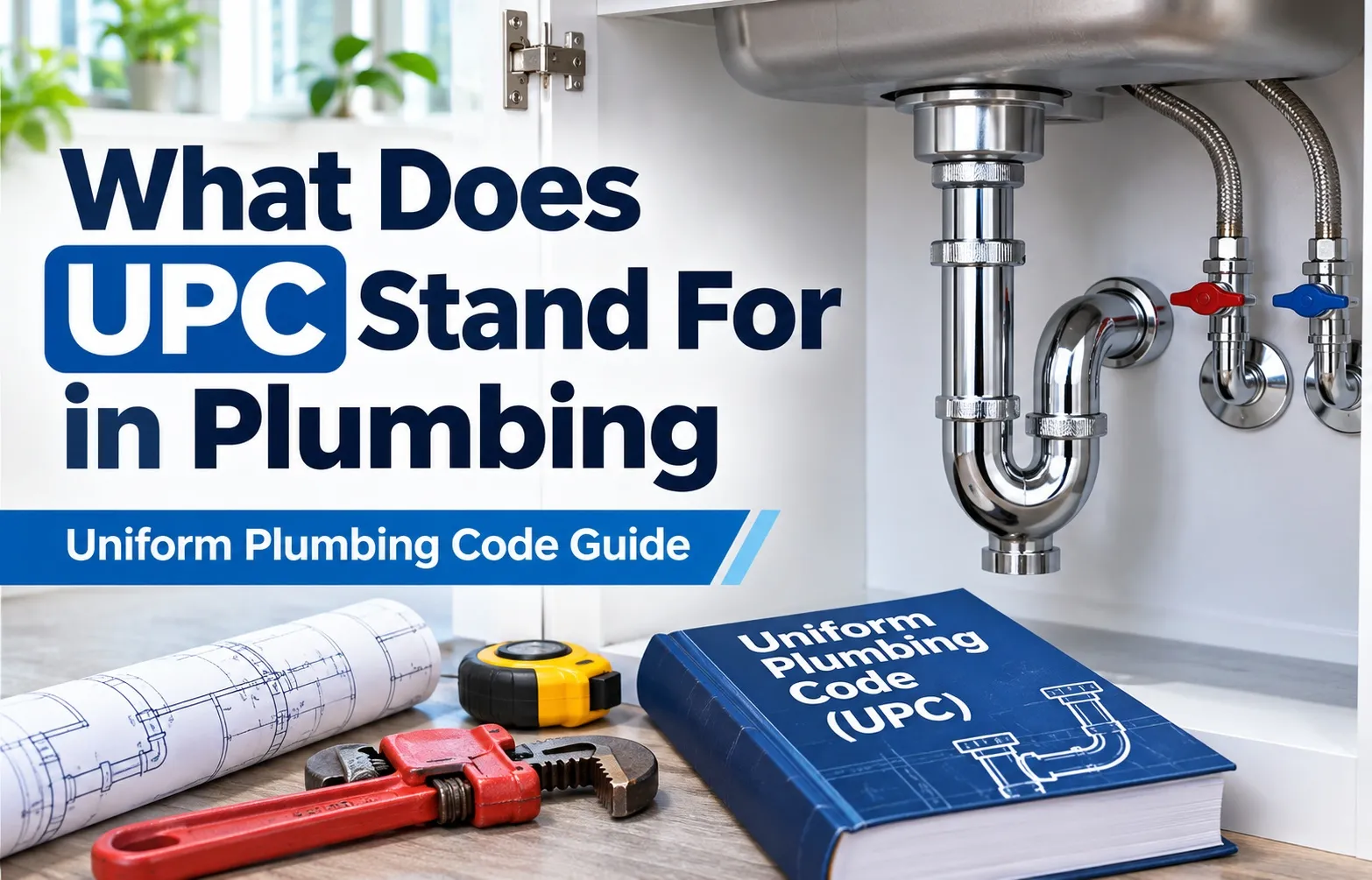 In the plumbing and construction industry, UPC stands for the Uniform Plumbing Code. It is a vital model code designed to govern the safe design, installation, inspection, and maintenance of plumbing systems in residential and commercial properties to safeguard public health.
Defining the Uniform Plumbing Code
The Uniform Plumbing Code is established as a standardized model code rather than a standalone federal law. Municipalities and state governments adopt or adapt these guidelines to build their local regulatory frameworks.
The framework establishes rigorous benchmarks for several key mechanical components, including:
- Proper potable water supply and distribution sizing
- Safe sanitary drainage and waste disposal systems
- Effective venting networks to prevent dangerous sewer gas leaks
- Mandatory material standards for pipes, fittings, and fixtures
Why This Acronym Matters on the Job Site
Recognizing what the acronym means helps property owners, contractors, and inspectors maintain strict regulatory alignment. Failing to adhere to these recognized standards can lead to failed building inspections, expensive plumbing retrofits, or structural insurance complications.
Key professional implications include:
- Ensuring complete compliance with local building codes
- Protecting buildings from cross-contamination and water damage
- Streamlining the municipal permitting and inspection process
Understanding the Dual Meaning: Regulatory Code vs. Product Mark
When searching for what UPC means in plumbing, users often encounter two entirely different contexts. Resolving this dual intent requires distinguishing between an administrative building code standard and a physical manufacturing mark stamped onto hardware components.
UPC as a Regulatory Building Code
In municipal planning and building compliance, the acronym stands for the Uniform Plumbing Code, serving as the legal rulebook governing entire plumbing systems. It establishes strict safety benchmarks for water distribution, venting layouts, and sanitation compliance across jurisdictions.
Key regulatory aspects include:
- Mandating minimum pipe sizing requirements for structural integrity
- Regulating safe cross-connection control and backflow prevention
- Establishing legal blueprints for municipal and commercial inspections
UPC as a Product Certification Stamp
On physical hardware, the UPC mark functions as a product certification stamp indicating that specific fixtures meet rigorous performance standards. Consumers and building inspectors look for this stamp on items like toilets, faucets, and valves to verify safety and durability.
Core elements of this certification include:
- Verifying structural load capacity and leak resistance under pressure
- Ensuring materials comply with lead-free and potable water standards
- Providing proof of independent laboratory testing by recognized agencies like IAPMO
Inside the Uniform Plumbing Code (UPC): Purpose and Scope
The Uniform Plumbing Code functions as a comprehensive regulatory blueprint designed to protect public health and building safety. It provides standardized engineering requirements that govern every physical phase of plumbing installation across commercial and residential structures.
Who Develops and Publishes the UPC?
The code is developed, updated, and published by the International Association of Plumbing and Mechanical Officials (IAPMO). This organization relies on a consensus-based code development process involving industry experts, mechanical engineers, and public health officials.
Key development aspects include:
- Regular code revision cycles to integrate advanced material technologies
- Rigorous peer-review panels focused on environmental sustainability
- Comprehensive safety standard enforcement across municipal frameworks
Core Systems Regulated by the Code
To maintain structural integrity and prevent sanitation hazards, the code dictates strict installation benchmarks for vital building utilities. These specifications eliminate risks associated with cross-contamination, structural water damage, and dangerous sewer gas infiltration.
The code enforces precise standards across primary network areas:
- Water supply systems: Controlling pressure and volume delivery for safe potable water distribution.
- Drainage networks: Managing sanitary waste removal efficiently away from properties.
- Venting structures: Balancing atmospheric pressure to protect vital drain trap seals.
- Pipe sizing specifications: Matching diameter dimensions to exact maximum fixture load demands.
What Does the UPC Mark Mean on Toilets, Faucets, and Pipes?
When stamped on everyday hardware, the UPC designation indicates that plumbing fixtures have passed rigorous safety evaluations. Seeing this mark on a toilet tank, faucet body, or pipe fitting confirms full compliance with established North American plumbing standards and code requirements.
The UPC Shield Mark Explained
The UPC Shield mark is an official certification symbol issued by IAPMO to guarantee that plumbing fixtures have undergone extensive laboratory testing. This mark verifies structural integrity, leak resistance, and operational durability under maximum water pressure conditions.
Key quality benchmarks verified by the shield include:
- Material safety, including lead-free brass and certified potable water polymers
- Optimal flow rates and high-efficiency flushing mechanisms for conservation
- Resistance to thermal shock, high pressure, and long-term mechanical wear
Why Inspectors Look for UPC Certification on Fixtures
Municipal building inspectors explicitly verify UPC-certified markings during new construction and renovation walkthroughs. Uncertified hardware often lacks the structural safety required by local building codes, presenting severe liability risks and increasing the likelihood of catastrophic water damage.
Core reasons inspectors require certified components include:
- Preventing failed inspections and expensive mandatory hardware replacements
- Protecting valid manufacturer warranties and contractor installation guarantees
- Ensuring seamless compatibility with standard municipal water lines and sanitary drainage
UPC vs. uPVC vs. IPC: Don’t Confuse the Terms
Plumbing terminology frequently features closely related abbreviations that represent entirely different concepts. Confusing an administrative building code with a physical pipe material or a competing regulatory standard can lead to costly design errors and failed municipal inspections.
UPC (Code) vs. uPVC (Plastic Pipe Material)
While the acronym UPC refers to a regulatory building code, uPVC stands for unplasticized polyvinyl chloride. This is a rigid, highly durable plastic polymer used extensively for manufacturing water supply pipes, conduit lines, and sanitary drainage fittings.
Key operational distinctions include:
- UPC: An administrative set of engineering rules governing system design and safety compliance.
- uPVC: A physical, chemical-resistant piping material selected for cold water distribution and waste removal.
- Code Interaction: The UPC explicitly outlines the approved installation methods, pressure limits, and sizing criteria for uPVC piping networks.
UPC vs. IPC (International Plumbing Code)
Another frequent point of comparison involves the UPC and the IPC (International Plumbing Code). These represent two separate model codes published by different organizations to regulate plumbing systems across North America.
Understanding regional code variations requires looking at several factors:
- Publishing Bodies: The UPC is managed by IAPMO, whereas the IPC is published by the International Code Council (ICC).
- Geographic Adoption: The UPC sees heavy adoption throughout the western United States, while the IPC is more widely implemented across eastern and midwestern states.
- Compliance Standards: Testing protocols and fixture calculations can differ between the two systems. Reviewing the official IAPMO Uniform Plumbing Code guidelines ensures complete adherence to local jurisdictional mandates.
Who Follows and Enforces the UPC Code?
The Uniform Plumbing Code is enforced through mandatory municipal adoption and regional building departments, primarily across the western United States. Local jurisdictions require plumbing contractors and property owners to comply with these rigorous standards to secure building permits and pass safety inspections.
Geographic Adoption in North America
While model codes serve as national benchmarks, their legal authority depends entirely on regional adoption. State legislatures and municipal governments review and enact the code to establish enforceable building laws tailored to local environmental and structural conditions.
Key geographic and regulatory adoption patterns include:
- Extensive state-wide and municipal adoption across the western United States, including California, Washington, and New Mexico.
- Integration of local jurisdictional amendments to address specific climate, seismic activity, or water conservation needs.
- Alignment with broader state-level mechanical and public health safety regulations.
Impact on Contractors, Plumbers, and Property Inspections
Professional plumbing contractors and property developers must design and install systems that satisfy every aspect of the code. Code compliance is verified at critical stages of construction through official municipal oversight and documentation.
Core operational impacts for industry professionals include:
- Mandatory acquisition of approved building permits before initiating pipe installation, fixture replacement, or major plumbing renovations.
- Rigorous on-site evaluations conducted by certified local inspectors to verify pipe sizing, venting layouts, and backflow prevention.
- Legal accountability for licensed contractors to maintain high standards of workmanship and avoid costly project delays or failed inspections.

Oscar Vance | Master Plumber & Drainage Expert
Meet Oscar Vance, a licensed master plumber sharing practical solutions on residential repairs, preventive maintenance, and thoughtful home upkeep.