How to Unclog a Toilet
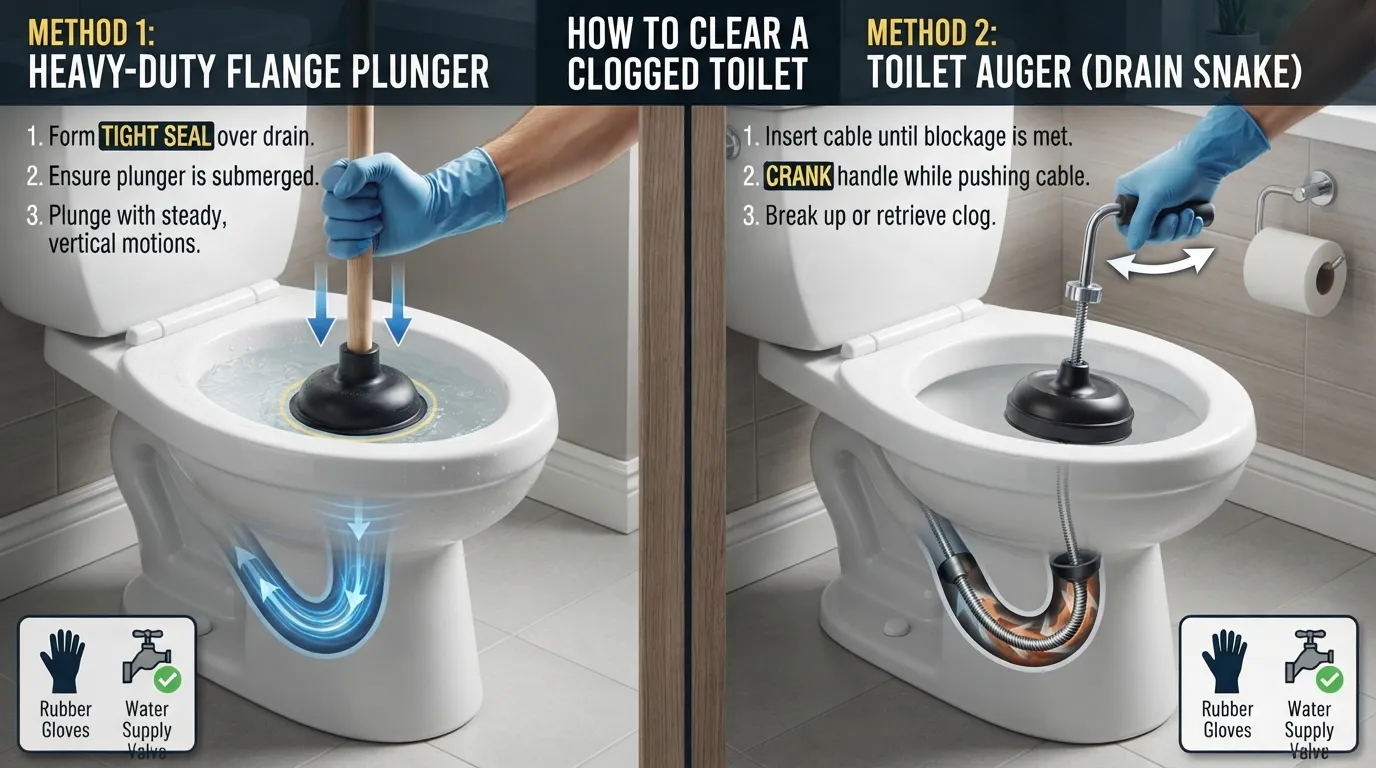
Unclogging a toilet requires immediate action using the right tools to prevent an overflow. The fastest way to clear a standard blockage is by using a heavy-duty flange plunger combined with warm water and dish soap, or a toilet auger for stubborn clogs.
- Stop the water: Turn off the shut-off valve behind the toilet immediately if the water level looks dangerously high.
- Apply lubrication: Pour hot water and a cup of dish soap into the bowl to loosen debris and lubricate the trap.
- Plunge effectively: Use a flange plunger to create a tight seal over the drain hole and push firmly up and down to dislodge the obstruction.
- Use an auger if needed: Feed a toilet auger down the drain and crank the handle counter-clockwise if the plunger fails to break the blockage.
- Check the components: Inspect the tank flapper and water level to ensure the flushing mechanism operates normally once flow is restored.
Before You Start Stop the Overflow & Prep
Panic is the biggest enemy when dealing with a rising toilet bowl. Taking immediate control of the water supply and preparing your workspace prevents minor bathroom mishaps from turning into costly water damage emergencies.
How to Stop a Toilet From Overflowing
Stopping an impending overflow takes less than five seconds if you know where to look. Leaving a clogged toilet unattended risks severe structural floor damage and hazardous wastewater spills.
- Close the water supply valve: Reach behind the toilet bowl and turn the oval or round shut-off valve clockwise until it stops completely.
- Close the tank flapper: Remove the toilet tank lid and manually push the rubber flapper down over the flush valve opening if the shut-off valve is stuck.
- Bail out excess water: Use a plastic cup to scoop out excess water into a bucket if the bowl is near the brim before attempting any unblocking tools.
Tools You’ll Need Before You Begin
Gathering your supplies beforehand ensures you can work efficiently without contaminating your bathroom floor. Proper preparation keeps the workspace hygienic and protects your flooring.
- Heavy-duty flange plunger: A standard cup plunger will not create the necessary seal for a toilet drain.
- Old towels and rags: Lay absorbent materials completely around the base of the fixture to catch stray splashes.
- Rubber gloves and safety glasses: Protect your skin and eyes from chemical splashes or contaminated water droplets.
- Toilet auger (snake): Keep a drain snake nearby for deeper clogs that a standard plunger cannot reach.
Unclog a Toilet With a Plunger Step by Step
Using a flange plunger correctly is the fastest, most effective way to clear a blocked toilet drain without professional help. According to American Standard’s official plunging guide, forming an airtight seal over the drain hole is the key to creating enough pressure to dislodge stubborn blockages.
Choosing the Right Plunger Flange vs Sink Plunger
Using the wrong type of plunger is the primary reason homeowners fail to clear a blocked toilet bowl. Standard flat-bottom sink plungers cannot form an adequate seal over curved porcelain traps.
- Flange plunger (toilet plunger): Features an extra soft rubber flap extending outward from the main cup, specifically designed to fit securely into the toilet drain hole.
- Cup plunger (sink plunger): Features a flat, shallow rubber bottom designed exclusively for flat surfaces like kitchen sinks and bathtubs, rendering it ineffective for toilets.
Step by Step Plunging Technique
Mastering the mechanical movement ensures you push water and air pressure directly into the blockage rather than splashing dirty water onto the floor. Proper form protects your bathroom hygiene and clears the pipe quickly.
- Submerge the rubber flap: Ensure the bell and extended flange are completely submerged in standing water, adding hot water from a bucket if the bowl is too low.
- Create a tight seal: Angle the tool gently into the drain hole so the rubber flap forms a complete, airtight seal around the opening.
- Initiate gentle push-pull strokes: Push down slowly on the handle to expel trapped air, then pull back firmly without breaking the seal to loosen the obstruction.
How Many Times Should You Plunge a Clogged Toilet?
Consistency and rhythmic pacing matter much more than raw physical force when clearing a stubborn plumbing trap. Overly aggressive hammering can damage the wax ring or splash contaminated water.
- Execute 10 to 15 rhythmic strokes: Maintain a steady, vigorous push-and-pull motion for 10 to 15 continuous strokes while keeping the rubber flap fully sealed.
- Break the seal and test: Pull the plunger straight up and watch if the water level rapidly drops, indicating the physical barrier has cleared.
- Repeat if flow is sluggish: Perform a second round of 10 to 15 strokes if the water drains slowly before performing a test flush with clean water.
Unclog a Toilet Without a Plunger
Clearing a blocked bathroom fixture without a traditional rubber tool requires leveraging everyday household items and basic physics. Using alternative techniques like thermal lubrication or mechanical retrieval can break up organic blockages safely.
Dish Soap Hot Water Method
Combining heavy-duty dish soap with hot water creates an effective lubricant that breaks down organic waste and grease. This thermal approach safely eases stubborn clogs down the drain trap without chemical damage.
- Pour liquid dish soap: Squirt half a cup of liquid dish soap or shampoo directly into the clogged bowl and let it settle for 10 minutes.
- Add hot water carefully: Heat a gallon of water until it is very hot but not boiling, then pour it into the bowl from waist height to force the blockage.
- Let the solution work: Allow the soapy water to lubricate the pipe trap for 15 to 20 minutes before checking if the water level drops.
Baking Soda and Vinegar Does It Actually Work?
Baking soda and vinegar create an effervescent fizz, but the chemical reaction is largely exaggerated for clearing dense toilet clogs. While it helps loosen light surface grease, the neutralizing reaction produces mostly water and carbon dioxide gas rather than powerful dissolving agents.
- Add baking soda first: Pour one cup of baking soda into the standing water to coat the blockage material.
- Pour vinegar slowly: Add two cups of white vinegar and watch the mixture bubble as it releases carbon dioxide gas.
- Manage expectations: Understand that this fizzy reaction lacks the heavy grease-cutting power of industrial solutions or mechanical pressure.
Wet Dry Shop Vacuum Method
A heavy-duty shop vacuum provides massive suction power capable of pulling stubborn blockages completely out of the trap. This advanced trick works exceptionally well when conventional plungers fail.
- Seal the wet/dry vacuum: Remove regular paper filters and wrap a thick towel around the vacuum hose nozzle to form an airtight seal inside the drain hole.
- Extract water and debris: Hold the hose firmly against the trap opening and switch the vacuum on briefly to suck the clogging mass up into the canister.
- Clean and sanitize: Empty the vacuum container immediately and sanitize all components thoroughly after successful extraction.
Wire Hanger Method Emergency Budget Fix
Straightening a wire coat hanger creates an improvised plumbing snake to punch through or pull out compact obstructions. Exercise caution to avoid scratching or cracking the delicate porcelain bowl lining.
- Unbend the wire: Straighten a wire coat hanger completely while leaving a small, secure loop at the end to prevent sharp metal points from piercing the ceramic.
- Wrap with electrical tape: Cover the tip and first few inches of the wire with duct tape or rubber to protect the porcelain bowl surface.
- Push and twist gently: Insert the wrapped end into the drain trap, gently probing and twisting until you feel the blockage break apart or hook onto the material.
Object Specific Clogs What’s Actually Blocking Your Toilet
Different types of blockages require completely different removal techniques, as organic waste responds differently than solid foreign objects. Identifying the source material ensures you apply the right mechanical or chemical approach.
How to Unclog a Toilet With Poop In It No Plunger
Organic waste blockages are structurally soft and respond exceptionally well to thermal lubrication and enzymatic breakdown. Letting hot water and detergent soften the mass eliminates the need for messy mechanical tools.
- Apply dish soap: Squirt a generous amount of liquid dish soap directly into the bowl to break down surface tension around the waste.
- Pour warm water: Add a bucket of warm water from waist height to push heavy mass down the pipe trap without splashing.
- Wait for natural degradation: Allow the mixture to break down the organic structure for 20 minutes before attempting a test flush.
How to Unclog a Toilet Blocked by Excess Toilet Paper
Massive clumps of paper absorb water rapidly and create a dense plug that blocks the narrowest part of the trap. Disintegrating the cellulose fibers allows the material to pass freely through the plumbing stack.
- Add hot water to saturate fibers: Pour hot water directly into the center of the paper clump to accelerate saturation and breakdown.
- Let the paper dissolve: Allow the paper to soak for 15 minutes so the bonded cellulose fibers start separating naturally.
- Break up with a brush: Use a toilet brush with a gentle churning motion to mechanically shred the remaining paper mass.
How to Unblock a Toilet Clogged by Wipes
Flushable wipes do not disintegrate like toilet paper and weave together to form a tough, rope-like structural net. Pulling these synthetic materials out manually or with an auger is mandatory because they never dissolve.
- Avoid pushing further: Stop plunging immediately, as air pressure packs synthetic wipes tighter into the bend of the pipe.
- Retrieve with an auger: Feed a toilet auger into the drain hole to catch the woven fabric fibers and pull them back out.
- Dispose of properly: Remove the retrieved wipes with gloved hands and throw them in the trash bin instead of trying to flush them again.
How to Remove a Flushed Cardboard Toilet Paper Roll
A cardboard inner tube creates a rigid, watertight blockage that completely blocks water flow and traps subsequent waste. Solid foreign objects must be hooked and extracted rather than pushed down.
- Do not use a plunger: Plunging pushes a rigid cardboard cylinder sideways against the pipe walls, wedging it tighter into place.
- Use a wire hook or auger: Insert a modified wire coat hanger or toilet snake to snag the interior of the cardboard roll.
- Pull the object out: Carefully draw the cardboard tube back up into the bowl for sanitary disposal in your trash can.
What NOT to Do When Unclogging a Toilet
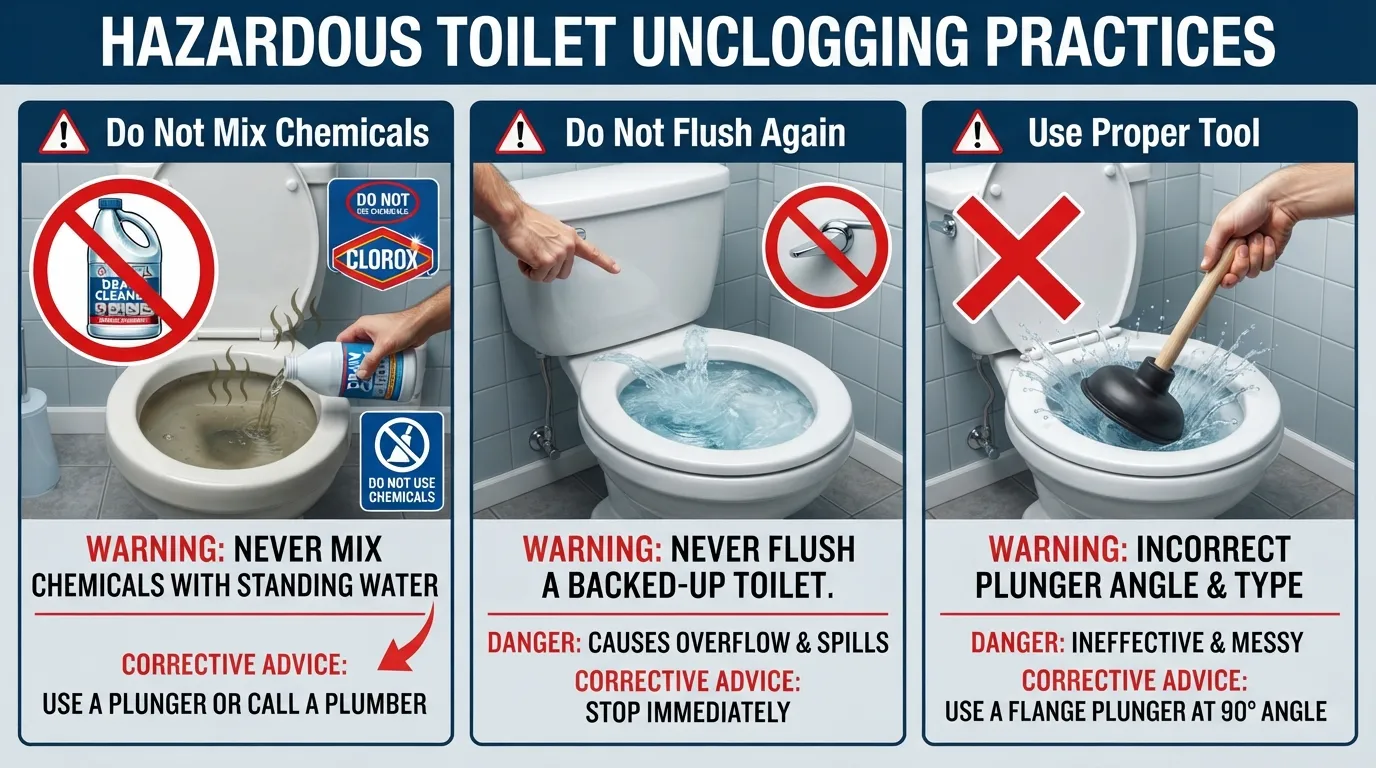
Making common operational mistakes while attempting to clear a blocked drain can escalate a simple DIY plumbing fix into a costly household emergency. Knowing what methods to avoid protects your health, plumbing fixtures, and home environment.
Never Mix Bleach With Other Chemical Cleaners
Mixing chlorine bleach with household products containing ammonia or acidic drain openers produces highly toxic chlorine gas. Inhaling these dangerous fumes poses severe respiratory hazards and requires immediate ventilation.
- Check product labels: Read chemical warning labels thoroughly before introducing any liquid cleaning products into standing toilet bowl water.
- Avoid reactive combinations: Never pour commercial drain openers into a bowl that contains residual bleach or toilet bowl cleaners.
- Ventilate immediately: Open nearby bathroom windows and doors right away if you detect a sharp, irritating chemical odor.
Is It Practical to Use Bleach or Caustic Soda on a Clogged Toilet?
Using harsh chemical drain cleaners or caustic soda on a toilet clog is highly impractical and often ineffective for solid blockages. These chemicals cannot dissolve physical obstructions like toys, wipes, or compacted toilet paper.
- Risk of thermal cracking: Caustic chemicals generate high heat inside the porcelain bowl, which can crack the ceramic lining and cause permanent fixture damage.
- Inability to clear physical barriers: Chemical liquids bypass solid foreign objects or compact paper masses without providing the mechanical force needed to shift them.
- Splash injury hazards: Standing caustic liquids pose severe chemical burn risks to your skin and eyes if a plunger splashes the solution upward.
Should You Flush Again If It’s Already Clogged?
Re-flushing a toilet when the water level is already high is a dangerous gamble that almost always results in a messy overflow. The incoming flush volume adds gallons of fresh water to a blocked drain trap that cannot handle the outflow.
- Triggers instant overflowing: Pushing the flush handle adds an extra 1.28 to 1.6 gallons of water to a bowl that is already near the rim.
- Creates dangerous wastewater spills: Contaminated greywater floods across bathroom tiles, creating severe slip hazards and expensive flooring damage.
- Wastes diagnostic time: Relying on repeat flushing prevents you from diagnosing the root cause of the blockage safely.
Can You Use a Regular Drain Cleaner in a Toilet?
Standard liquid drain cleaners designed for sinks and showers are rarely formulated for the unique siphon trap design of a toilet. Using them wastes money and creates unnecessary chemical hazards.
- Designed for straight pipes: Sink cleaners rely on gravity through narrow vertical tailpipes rather than navigating complex porcelain siphon bends.
- Harms internal components: Prolonged chemical exposure deteriorates rubber flappers, tank seals, and wax rings located at the base of the toilet.
- Ineffective on bulk waste: Liquid formulas dilute quickly in standing toilet water, losing the concentration required to dissolve dense organic blockages.
Escalation Guide When Nothing Is Working
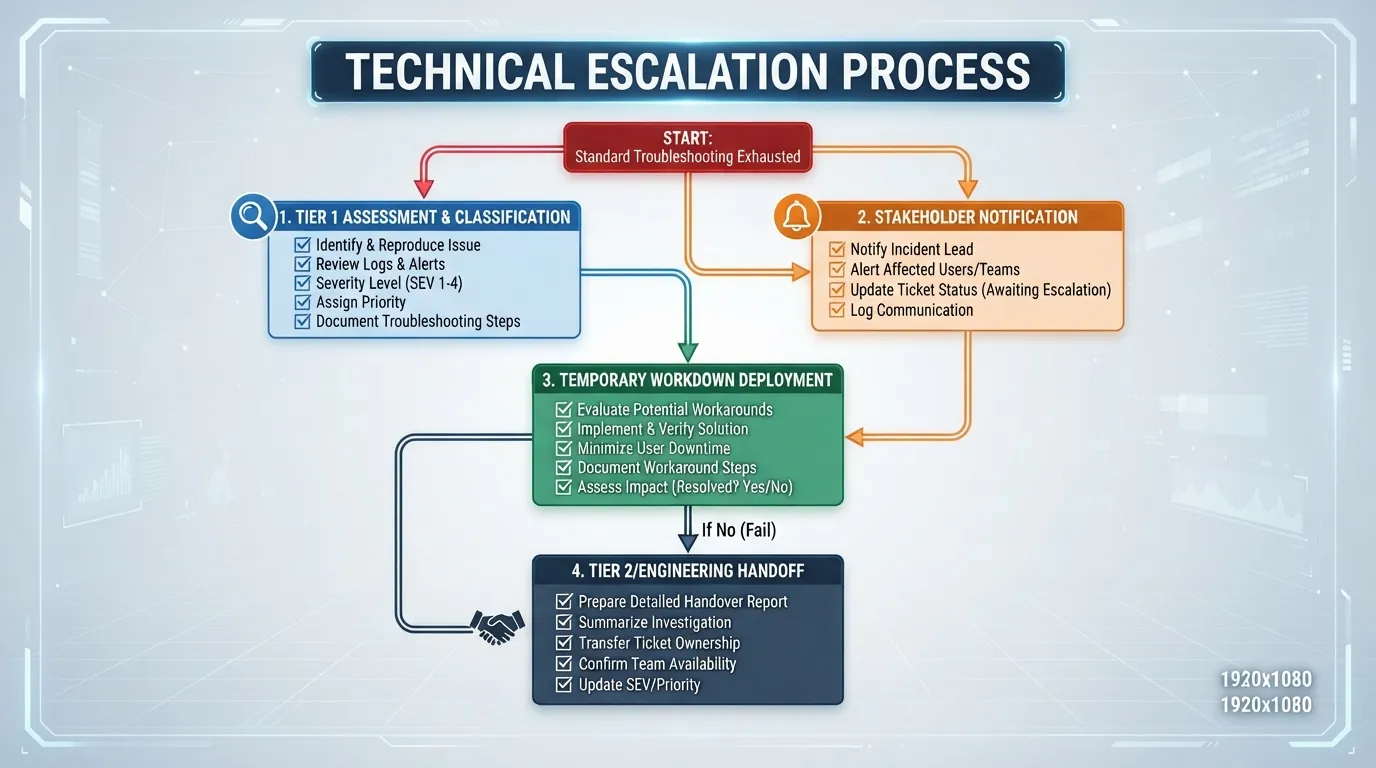
When basic plunging and household remedies fail to clear a stubborn blockage, you need a systematic troubleshooting ladder. Knowing how to escalate your intervention prevents wasted effort and identifies when professional plumbing assistance is required.
Escalation What to Try Next Decision Flow
Following a structured diagnostic path ensures you tackle the blockage with increasing levels of mechanical force without damaging your plumbing. Move methodically down this decision tree:
- Level 1 — Lubricate and Soak: Apply dish soap and warm water to soften organic waste if the water level allows.
- Level 2 — Heavy-Duty Plunging: Use a flange plunger for 10 to 15 rhythmic strokes to create necessary pressure.
- Level 3 — Mechanical Retrieval: Deploy a toilet auger or wire tool if the clog resists air pressure or consists of solid items.
- Level 4 — Professional Intervention: Contact a licensed plumber immediately if multiple fixtures in your home back up, indicating a main sewer line issue.
Why Won’t My Toilet Unclog With a Plunger?
If a plunger repeatedly fails to clear the line, the obstruction is likely positioned beyond the reachable reach of the porcelain trap. Understanding the physical limitations of a plunger prevents endless, exhausting repetition.
- Solid foreign objects trapped: Toys, plastic bottles, or cardboard rolls wedge sideways inside the bend, blocking water flow entirely.
- Main sewer line blockage: Tree roots or structural pipe collapses further down the drain stack prevent any water from exiting.
- Blocked plumbing vent stack: A blocked roof vent creates a vacuum lock in your plumbing pipes, stopping wastewater from draining properly.
How to Use a Toilet Auger Snake The Next-Level Fix
A toilet auger features a specialized vinyl guard to protect your porcelain bowl while extending a flexible steel cable deep into the trap. This tool reaches past standard plunger depths to break up or hook dense blockages.
- Insert the cable tip: Place the rubber-coated end of the auger into the bottom of the toilet drain hole.
- Crank the handle clockwise: Turn the handle slowly to feed the flexible steel cable deeper into the plumbing trap until you feel resistance.
- Retrieve or break the obstruction: Rotate the crank to hook the material or break up paper masses, then pull the cable back out carefully.
How Long Will a Clogged Toilet Eventually Unclog Itself?
While paper and organic waste can theoretically break down over time, waiting for a toilet to clear itself is rarely a practical strategy. Relying on natural disintegration depends entirely on the composition of the blockage.
- Pure paper clogs: Soft toilet paper clumps may dissolve naturally within 3 to 6 hours if saturated with warm water.
- Synthetic or solid blockages: Wipes, feminine products, and hard plastic objects will never dissolve and require active physical removal.
- Risk of permanent water damage: Leaving standing water in the bowl for extended periods increases the risk of fixture leaks, odors, and bacterial growth.
How Much Does It Cost to Unclog a Toilet?
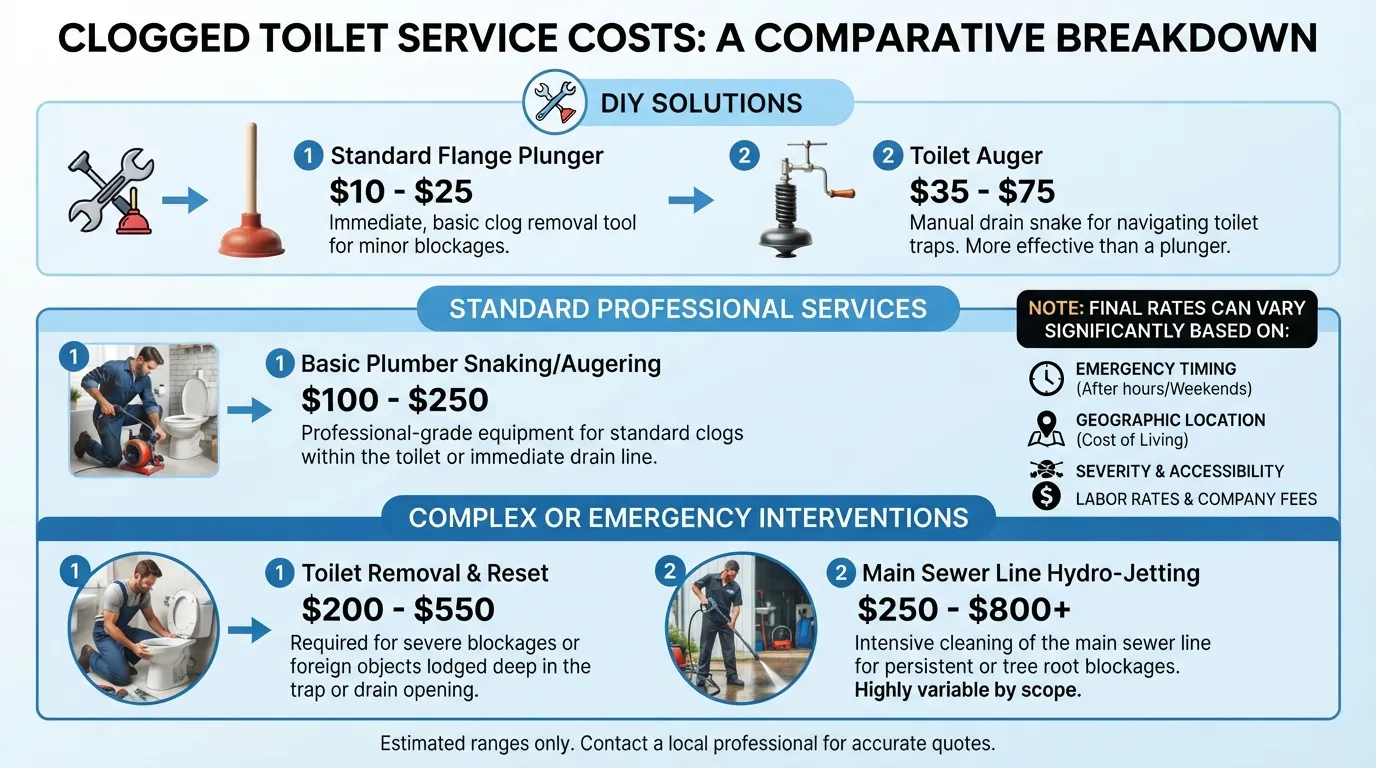
Understanding the financial contrast between do-it-yourself fixes and hiring a professional helps you set realistic expectations before calling for help. Labor fees vary based on the complexity of the obstruction and whether emergency dispatch is required.
DIY Cost Plunger Soap Baking Soda vs Professional Plumber Cost
Fixing a minor blockage using household items or basic hardware store tools costs a fraction of professional plumbing service fees. Tackling the job early prevents small traps from escalating into expensive main-line interventions.
- DIY supply expenses ($10 to $30): Purchasing a quality flange plunger or a manual hand auger requires minimal investment.
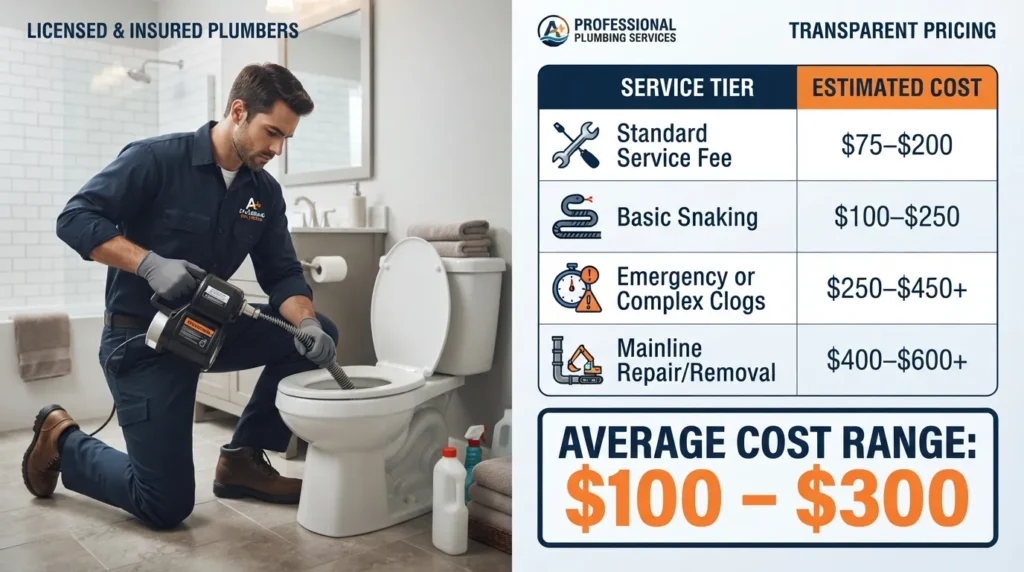
- Standard professional service ($100 to $300): Hiring a licensed plumber for standard trap snaking or minor clearing typically falls within this range.
- Emergency or complex repairs ($350 to $800+): Off-hours callouts, main sewer line snaking, or pulling the porcelain fixture off the floor drive up labor costs significantly.
When Is It Worth Paying a Plumber?
Recognizing when a plumbing issue exceeds DIY capabilities protects your home from severe wastewater damage and structural pipe failures. Professional intervention becomes mandatory under specific conditions.
- Multiple draining fixtures backing up: Gurgling shower drains or bubbling sinks simultaneously indicate a blocked main sewer line rather than a single toilet trap.
- Persistent, unyielding blockages: Failing to clear the line after multiple rigorous attempts with both a flange plunger and a hand auger means the obstruction is locked deep within the stack.
- Suspected structural pipe damage: Old, cracked, or root-invaded pipes require professional camera inspections and specialized hydro-jetting equipment.
When to Call a Plumber Warning Signs
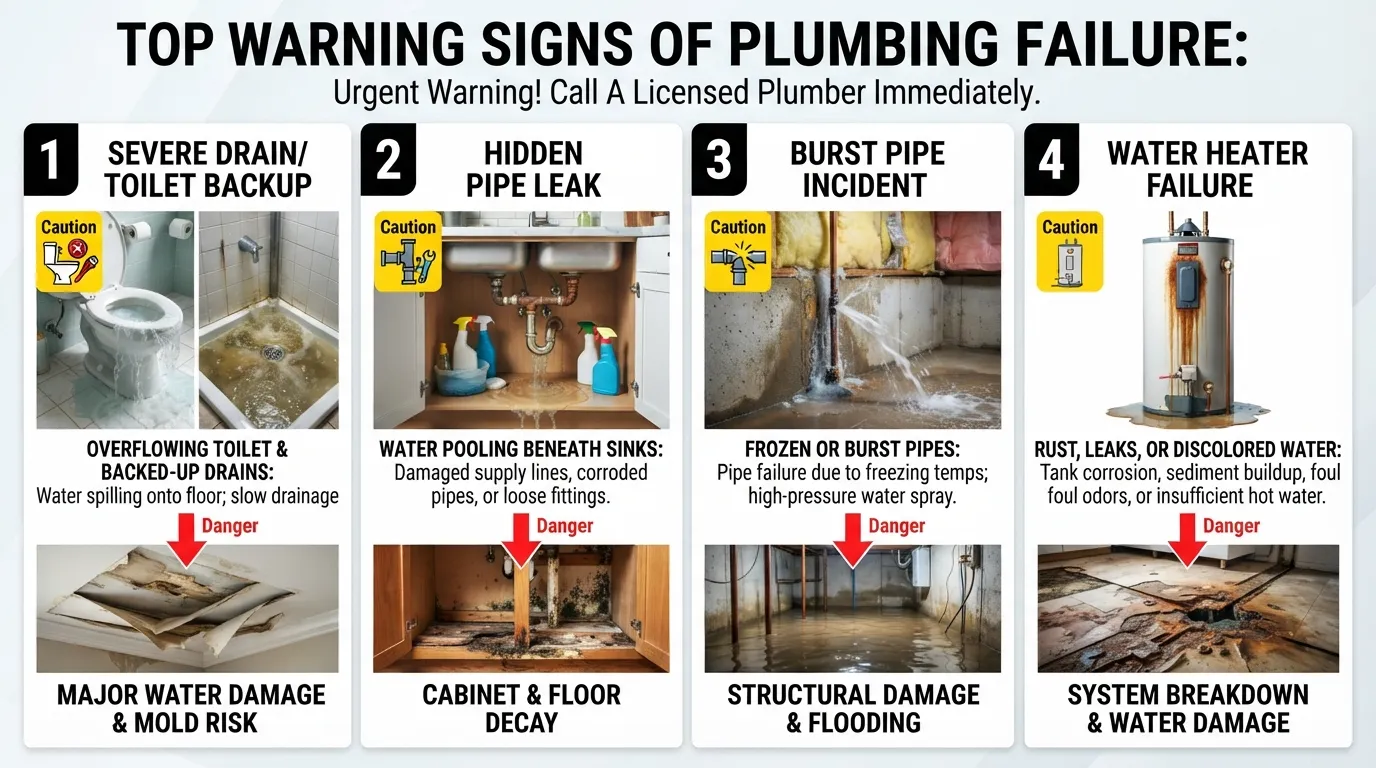
Knowing when to stop DIY troubleshooting and call a professional licensed plumber prevents major property damage and protects your home’s wastewater system. Certain plumbing symptoms indicate deep structural issues that standard household tools cannot fix.
Signs of a Sewer Line Clog Beyond DIY Fix
Main sewer line obstructions occur outside the individual toilet trap, meaning plungers and hand augers will have zero effect on the blockage. Recognizing these deep system failures early prevents raw sewage from backing up into your living spaces.
- Unexplained gurgling sounds: Hearing bubbling noises in your bathtub or bathroom sink when flushing the toilet points to trapped air in the main drain stack.
- Foul sewage odors: Persistent, sulfur-like sewer gas smells lingering around floor drains indicate a broken or severely blocked vent stack and main line.
- Slow-draining fixtures throughout the home: Water pooling in your shower or sinks whenever the washing machine runs proves the primary sewer line is compromised.
Multiple Clogged Drains at Once A Red Flag
When two or more plumbing fixtures fail simultaneously, the problem resides deep in your home’s drainage infrastructure rather than a localized fixture trap. Attempting to plunge multiple connected lines is ineffective and risky.
- Simultaneous backups: If water rises in your bathtub when you flush the toilet, wastewater is trapped in the main branch lines.
- Basement floor drain overflows: Wastewater backing up through lowest-level floor drains during a toilet clog signals a severe main stack blockage.
- Immediate professional dispatch: Call a licensed plumbing contractor equipped with camera inspection tools and heavy-duty hydro-jetting machinery immediately.
How to Prevent Future Toilet Clogs
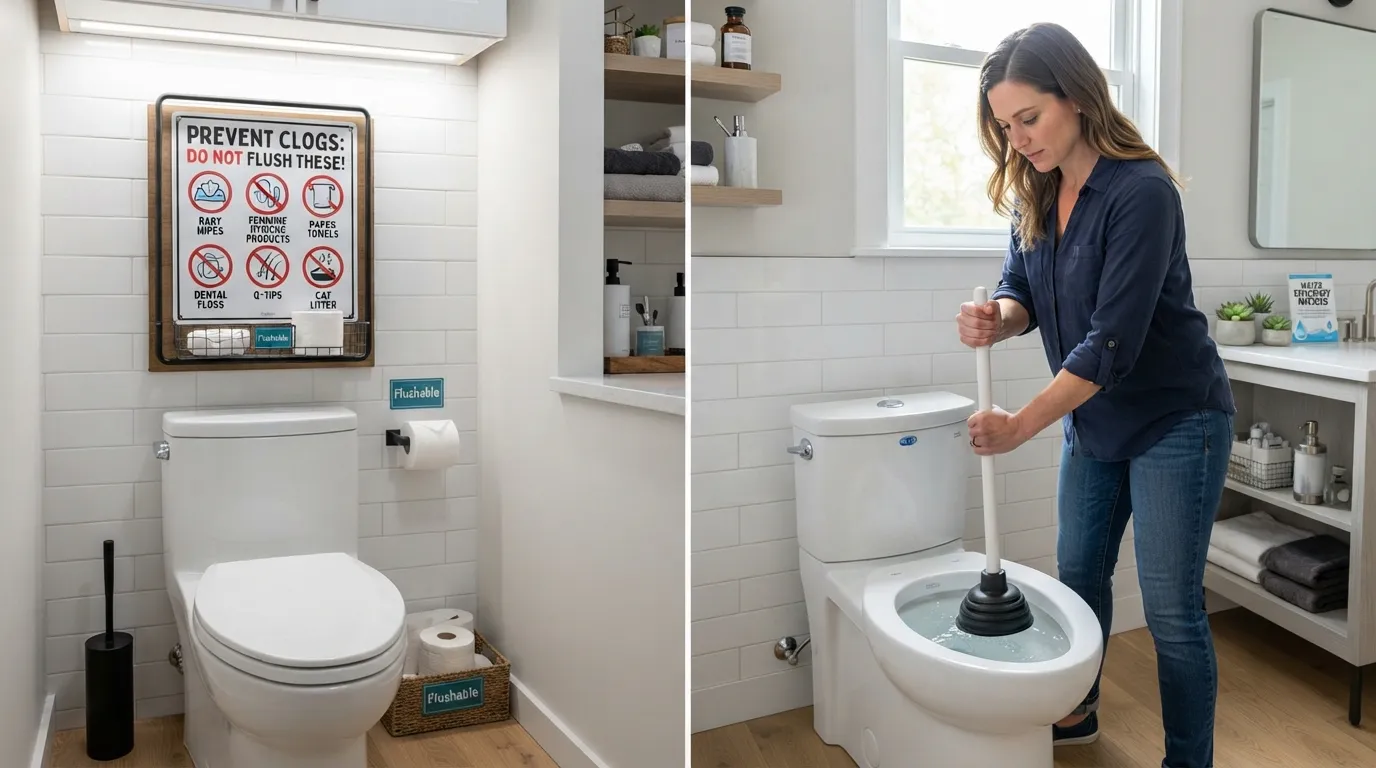
Preventing future plumbing blockages saves you time, money, and the hassle of emergency cleanups. Adopting simple, consistent bathroom habits protects your toilet trap and main drain lines from unnecessary damage.
What You Should Never Flush
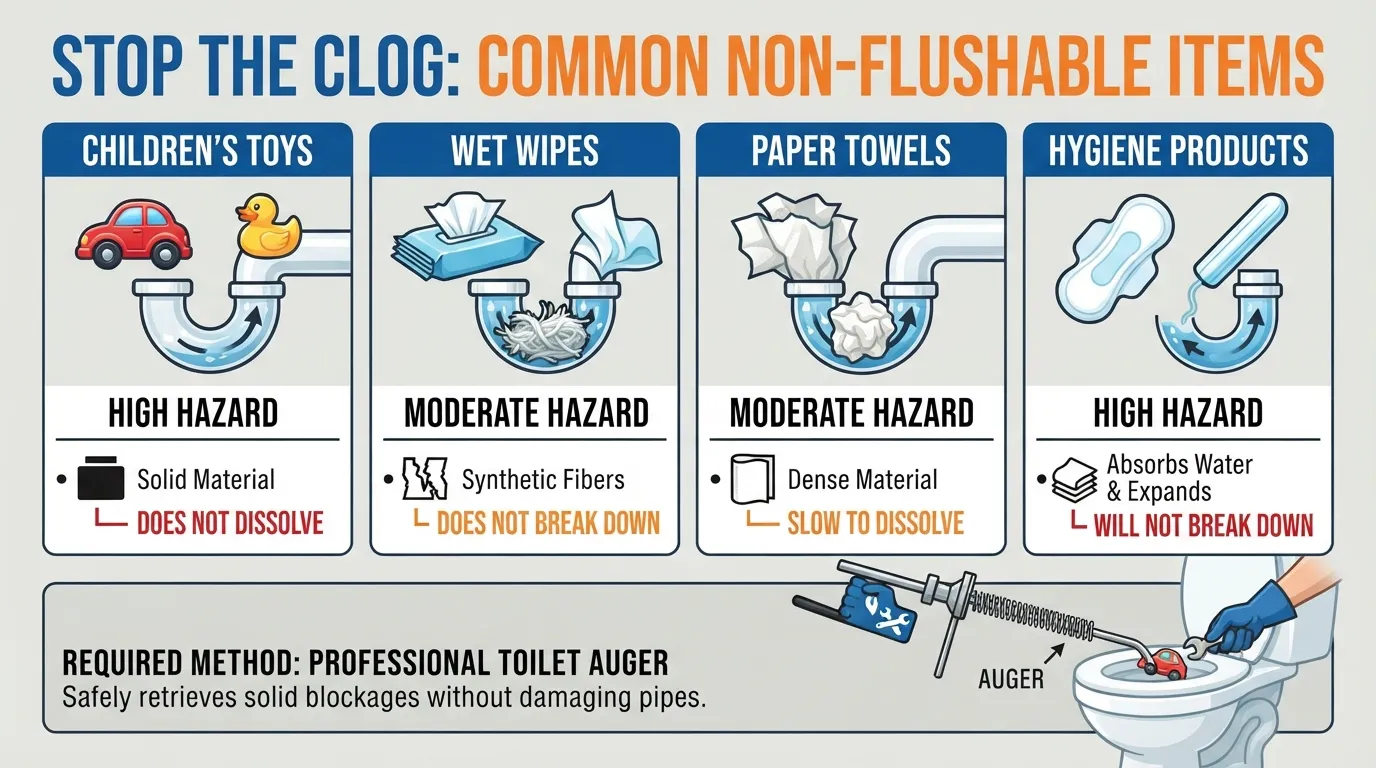
Many household items marketed as flushable actually fail to disintegrate in wastewater systems, forming stubborn ropes and nets inside your pipes. Keeping these items out of the toilet bowl prevents 90% of common household clogs.
- Baby wipes and makeup removers: Synthetic fibers weave tightly together, never dissolving like organic paper.
- Paper towels and facial tissues: Extra thick cellulose sheets absorb maximum water and expand rapidly inside narrow pipe bends.
- Feminine hygiene products: Designed to expand upon contact with fluid, trapping waste and blocking the siphon trap completely.
- Dental floss and hair: These stringy materials wrap around internal pipe structures and catch passing waste over time.
Low Flow Toilet Maintenance Tips
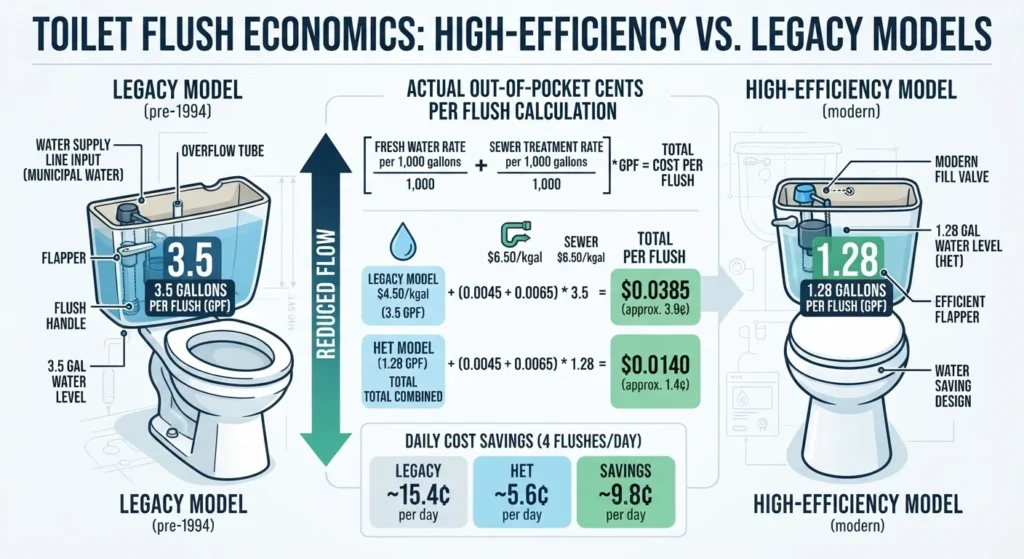
Modern water-saving toilets use less volume per flush, meaning they rely heavily on clean, unimpeded water velocity to clear waste efficiently. Regular upkeep ensures your flushing mechanism operates at peak performance.
- Check tank water levels: Adjust the float mechanism so the tank fills to the manufacturer’s recommended water line for maximum flushing force.
- Clean rim jets periodically: Use a small wire brush or vinegar solution to clear mineral scale buildup from the tiny holes under the toilet rim.
- Perform routine hot water rinses: Pour a bucket of warm water down the bowl monthly to wash away minor soap and mineral accumulations before they harden.
Frequently Asked Questions About Unclogging a Toilet
Find direct answers to the most common questions homeowners ask about diagnosing, troubleshooting, and resolving stubborn toilet blockages safely and effectively.
When I Flush My Toilet, It Fills Up With Water Then Slowly Drains — What Does This Mean?
A toilet that fills up and drains slowly indicates a partial clog in the siphon trap or a venting issue restricting airflow. This sluggish behavior means the passage is narrowed by paper or waste, allowing water to slip past slowly rather than flushing freely.
Why Won’t My Toilet Unclog With a Plunger?
If a plunger fails to clear the line, the obstruction is likely a solid foreign object like a toy, wipe, or cardboard roll wedged firmly past the reach of the trap. Alternatively, a blockage deep in your main sewer line will prevent air pressure from shifting the material.
How Long Will a Clogged Toilet Eventually Unclog Itself?
Pure paper clogs may dissolve naturally within three to six hours if thoroughly saturated with warm water, but synthetic items or solid objects will never clear on their own. Relying on natural disintegration risks prolonged standing water and potential overflow damage.
What Can You Pour Down a Toilet to Unblock It?
Pouring half a cup of liquid dish soap followed by a gallon of very hot (not boiling) water safely lubricates and breaks down organic waste blockages. Avoid pouring harsh chemical drain openers, as they can crack porcelain fixtures and ruin internal seals.
What Is the Strongest Thing to Unclog a Toilet?
A mechanical toilet auger (or plumbing snake) is the strongest and most effective tool for physically breaking up or hooking stubborn, deep-seated blockages. Heavy-duty plunging combined with thermal lubrication serves as the strongest non-mechanical method.
Can You Put Anything in a Toilet to Unclog It Safely?
You can safely put liquid dish soap, enzyme-based drain cleaners, or baking soda into a toilet to help dissolve organic waste and grease. Never introduce chlorine bleach alongside other cleaners or pour boiling water directly into the bowl, as extreme thermal shock cracks porcelain.
Do Baking Soda and Vinegar Really Unclog A Toilet?
Baking soda and vinegar create an effervescent fizz, but the chemical reaction lacks the heavy grease-cutting or pressure-building power needed to clear dense toilet clogs. While it helps loosen light surface buildup, it rarely resolves a true physical blockage on its own.
Conclusion Quick Recap
Clearing a blocked toilet successfully comes down to using the right tools, maintaining safety precautions, and following a systematic troubleshooting ladder. Starting with immediate overflow prevention, progressing from a flange plunger to a toilet auger, and knowing when to call a licensed professional ensures your bathroom remains functional and protected from costly water damage.

Oscar Vance | Master Plumber & Drainage Expert
Meet Oscar Vance, a licensed master plumber sharing practical solutions on residential repairs, preventive maintenance, and thoughtful home upkeep.