Understanding Plumbing Pipe Materials A Comprehensive Guide
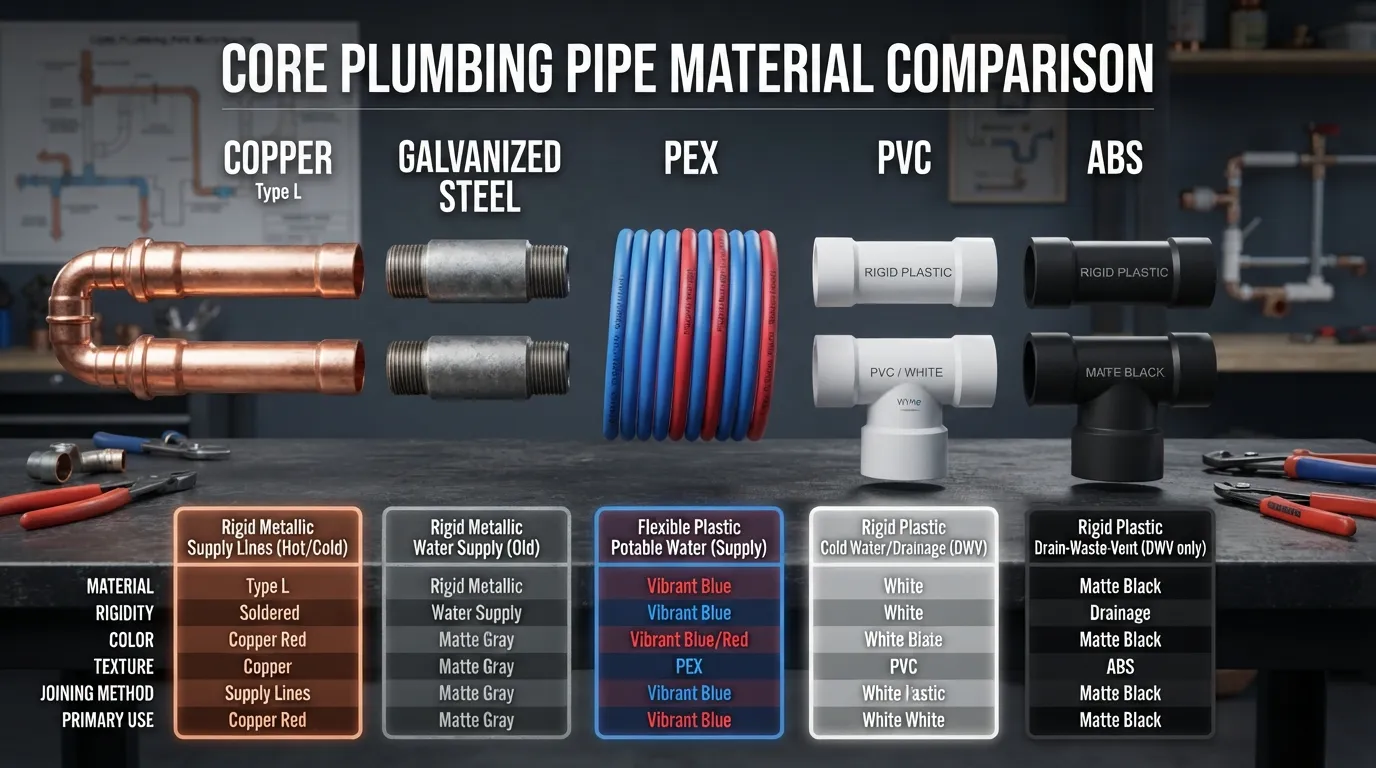
Selecting the right plumbing pipe material is critical for ensuring water safety, longevity, and structural integrity in residential and commercial buildings. Modern plumbing systems rely on a variety of materials tailored for specific applications, ranging from municipal water supply lines to residential drainage systems.
Each material possesses unique structural characteristics, temperature tolerances, and pressure ratings that dictate its suitability. Understanding these core differences prevents costly infrastructure failures and ensures full compliance with local plumbing codes.
The Main Types of Plumbing Pipes Detailed Breakdown
Selecting the ideal material requires evaluating structural demands, fluid dynamics, and environmental exposure. Below is a comprehensive, deep-dive analysis of the five primary plumbing pipe categories utilized in modern construction.
Copper Pipe Durability Meets Tradition
Copper tubing is a rigid metallic asset historically recognized as the gold standard for residential water supply lines. It features exceptional thermal tolerance and natural antimicrobial properties that keep drinking water safe and clean.
- Best Use Case: Main interior hot and cold water supply lines, exposed basement runs, and high-end custom homes.
- Pros: Exceptional lifespan, high heat resistance, UV stability, and 100% recyclability.
- Cons: High material cost, vulnerable to pinhole leaks in acidic (low pH) water conditions, and labor-intensive installation requiring soldering or professional press tools.
- Price Range: $2.00 to $8.00 per linear foot (material and basic costs).
- Plumber’s Real-World Insight: “We still love copper for exposed runs because it won’t sag over time and looks professional, but the material cost prices it out of many whole-house repipes.”
PEX Pipe Cross-Linked Polyethylene The Modern Standard
Cross-linked polyethylene is a flexible plastic pipe engineered to handle extreme temperatures and variable pressure inside residential water supply systems. Its pliability allows it to weave seamlessly through wall cavities with minimal fittings.
- Best Use Case: Whole-house repiping, residential water supply lines, and retrofits where cutting into drywall must be minimized.
- Pros: Highly flexible, resistant to scaling and corrosion, superior freeze-expansion protection, and significantly faster installation.
- Cons: Susceptible to degradation if exposed to direct UV sunlight for prolonged periods; vulnerable to certain types of aggressive chemicals or rodent damage.
- Price Range: $0.50 to $2.00 per linear foot.
- Plumber’s Real-World Insight: “PEX is the undisputed king of modern residential installs. It cuts labor times in half and handles freezing temperatures far better than rigid metal.”
PVC Pipe Polyvinyl Chloride Best for Drainage
PVC is a rigid, white plastic pipe manufactured for high-pressure handling and environmental durability. While commonly associated with outdoor lines, it serves critical roles within specific indoor plumbing frameworks.
- Best Use Case: Main water supply stacks, cold-water main supply lines, vent stacks, and outdoor irrigation or drainage networks.
- Pros: Smooth interior walls prevent friction loss, highly resistant to chemical corrosion, lightweight, and inexpensive.
- Cons: Degrades rapidly under high heat, making it completely unsuitable for hot water supply lines.
- Price Range: $0.50 to $3.00 per linear foot depending on diameter and schedule rating.
- Plumber’s Real-World Insight: “Never run hot water through standard PVC or it will warp and fail. Stick strictly to cold supply lines, venting systems, and drainage runs.”
ABS Pipe Acrylonitrile Butadiene Styrene The Black Drain Pipe
ABS is a tough, impact-resistant rigid black thermoplastic pipe designed explicitly for gravity-fed waste management infrastructure. It performs exceptionally well in low-temperature outdoor environments.
- Best Use Case: Underground drain, waste, and vent (DWV) systems, main sewer lines, and vent stacks penetrating the roof.
- Pros: Extremely resilient in cold weather, single-step solvent cement installation process speeds up rough-ins, and maintains structural rigidity underground.
- Cons: Can warp or distort under direct, prolonged UV exposure if stored or installed outdoors without protective painting.
- Price Range: $1.00 to $4.00 per linear foot.
- Plumber’s Real-World Insight: “ABS makes building a drain stack fast because you don’t need purple primer—just the black cement. Check local building codes, though, as some municipalities mandate PVC over ABS.”
Galvanized Steel Pipe The Legacy Pipe
Galvanized steel consists of heavy-duty iron piping dipped in a protective zinc coating to prevent premature rusting. Found primarily in homes built before the mid-1960s, it was the historic standard for interior supply lines.
- Best Use Case: Historical restoration projects or structural sleeves (no longer recommended for potable water supply lines).
- Pros: Exceptional structural strength and impact resistance.
- Cons: Prone to internal rust accumulation over decades, leading to severe water pressure drops, discolored water, and eventual pipe blockage.
- Price Range: Varies; typically replaced rather than newly installed.
- Plumber’s Real-World Insight: “If you open up a wall and see galvanized steel pipes choked with brown rust buildup, budget for an immediate repipe with PEX or copper.”
Bonus Pipe Type CPVC Chlorinated Polyvinyl Chloride
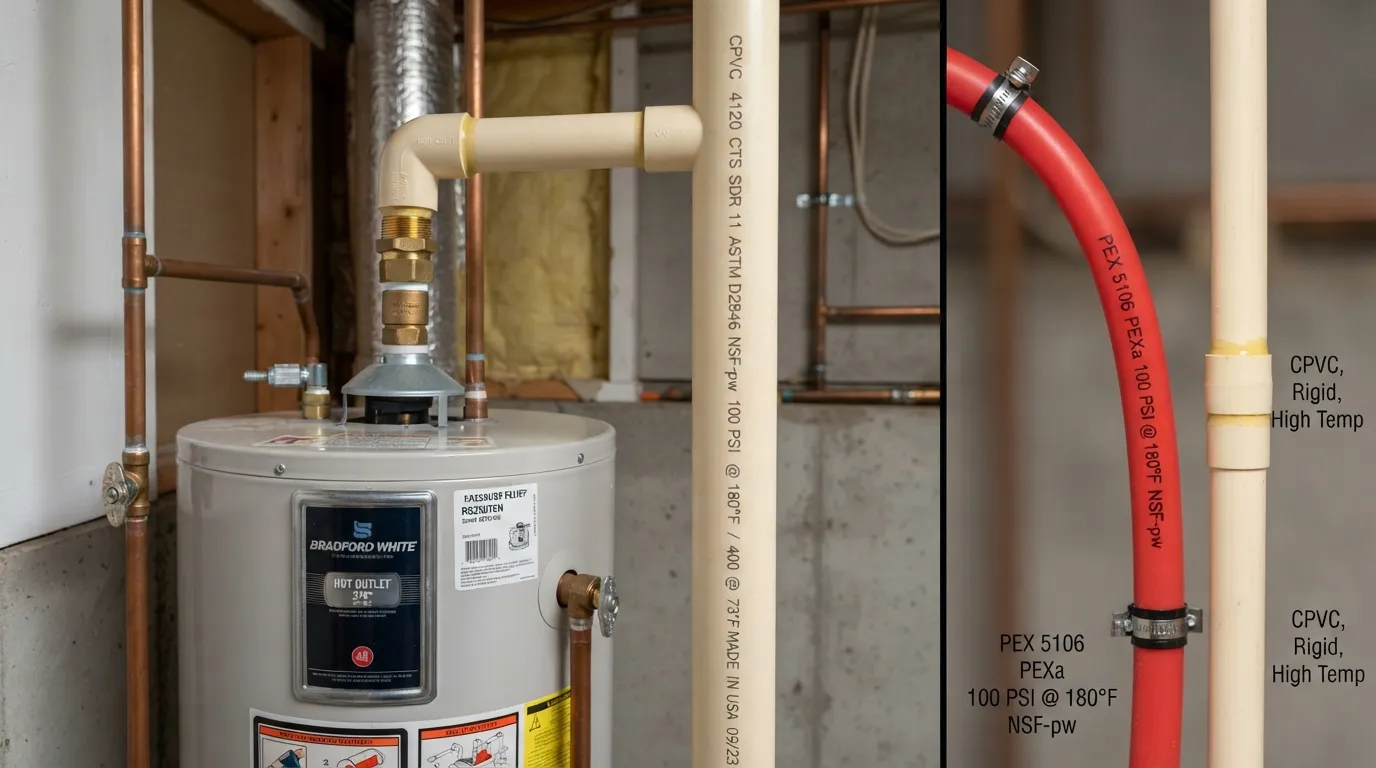
Chlorinated Polyvinyl Chloride (CPVC) is a specialized rigid thermoplastic pipe engineered specifically to withstand significantly higher temperatures and pressures than standard PVC. By subjecting the polymer to an additional chlorination reaction during manufacturing, CPVC bridges the gap between affordable plastic piping and high-performance metallic supply systems.
What Is CPVC Pipe?
CPVC is a cream-colored or yellowish rigid pipe widely utilized in residential and commercial plumbing networks for carrying potable drinking water. It shares similar joining techniques with PVC via solvent cement, but its enhanced chemical structure allows it to safely manage hot water delivery.
- Best Use Case: Interior hot and cold water distribution lines, residential fire sprinkler systems, and water heater connection risers.
- Pros: Excellent resistance to high heat (up to 200°F or 93°C), immune to mineral scaling and internal corrosion, and highly cost-effective compared to copper.
- Cons: Becomes brittle over extended periods, making it prone to snapping under physical stress or accidental impacts during remodeling.
- Price Range: $0.75 to $2.50 per linear foot.
- Plumber’s Real-World Insight: “CPVC is great for handling hot water supply, but you have to be extremely careful working with older lines because they dry out and shatter easily if you bump them.”
CPVC vs PEX for Hot Water Lines Which Should You Choose?
When designing a modern hot water supply network, contractors frequently weigh CPVC against PEX tubing. While both carry NSF-PW certifications for safe drinking water, their mechanical behaviors differ significantly during installation and long-term use.
- Flexibility & Installation: PEX bends easily around framing members, drastically cutting down the number of required fittings and potential leak points. CPVC is entirely rigid and requires 90-degree elbows and solvent welding for every directional change.
- Thermal Performance: CPVC maintains its structural shape better under high pressure and intense direct heat, whereas PEX can expand slightly under continuous maximum temperature thresholds.
- Durability and Longevity: PEX withstands freezing temperatures and accidental impacts far better than CPVC, which tends to embrittle as plasticizers degrade over decades.
- Plumber’s Real-World Insight: “Unless a specific local code or homeowner preference dictates otherwise, we almost always default to PEX over CPVC today because its flexibility saves hours of labor and eliminates joint failures.”
Plumbing Pipe Sizes & Dimensions
Navigating plumbing dimensions requires understanding nominal pipe size (NPS) systems, where standard measurements often reflect approximate inner values rather than exact outer dimensions. Knowing the correct pipe diameter parameters prevents severe pressure drops, flow restrictions, and drainage bottlenecks throughout residential and commercial building frameworks.
Standard Water Supply Pipe Sizes ½ to 2
Standard residential water supply lines typically range from half-inch to two inches in diameter, carefully balancing optimal water pressure with adequate volumetric flow. Main municipal service lines entering a house are usually one inch or three-quarters of an inch, stepping down to smaller feeds for individual fixtures.
Using undersized supply piping restricts overall flow volume, causing noticeable pressure drops when multiple household appliances run simultaneously. Always consult local plumbing codes to match correct inner diameters to peak load demand.
Standard Drain Pipe Sizes Including 6-Inch Drain Pipe
Gravity-fed drain, waste, and vent (DWV) systems require significantly larger pipe diameters than supply lines to prevent clogs and ensure smooth waste disposal. Residential branch drains typically start at 1.5 inches, while main building drains expand up to 4 inches or more.
- 1.5-Inch Pipes: Standard for bathroom sinks, bathtubs, and shower basin waste lines.
- 2-Inch Pipes: Utilized for kitchen sinks, laundry washing machine discharge, and multi-fixture branch connections.
- 3 to 4-Inch Pipes: Dedicated strictly to toilet waste lines and main horizontal building drains.
- 6-Inch Drain Pipe: Heavy-duty infrastructure sizing utilized for large commercial property main sewers, high-capacity industrial waste management, or major stormwater runoff networks.
What Is CTS Pipe? Copper Tube Size Explained
CTS stands for Copper Tube Size, a specialized standardized dimension system used specifically for modern water supply tubing. Unlike Iron Pipe Size (IPS), CTS dimensions measure slightly larger than their nominal designation to ensure exact compatibility with PEX tubing and standard copper fittings.
- Applies uniformly to both flexible PEX and rigid copper piping systems.
- Ensures that push-to-connect and crimp fittings interchange seamlessly across different material types.
- Standardizes outside diameters so mechanical tools and expansion rings fit precisely without guesswork.
Common Plumbing Pipe Fittings
Plumbing pipe fittings are essential structural components designed to connect straight pipe sections, change directional flow, adapt dimensions, and seal fluid networks securely. Selecting the correct fitting type ensures leak-free joints, optimal hydraulic performance, and full compliance with structural building codes.
Elbow, Tee, and Coupling Fittings
Standard plumbing networks rely on a handful of geometric fittings to route water supply lines and drainage channels around structural framing members. Each fitting serves a distinct mechanical purpose within the system layout.
- Elbow Fittings: Manufactured in 90-degree and 45-degree angles to safely alter the directional path of a pipe run around studs and joists.
- Tee Fittings: T-shaped connectors featuring three openings that allow plumbers to branch a secondary line off a main continuous water supply or drainage pipe.
- Coupling Fittings: Straight, cylindrical connectors used to join two linear pipe sections together seamlessly during repairs or long runs.
What Is a U-Pipe (P-Trap)?
A P-trap, sometimes colloquially referred to as a U-pipe or S-trap depending on its exact structural configuration, is a curved drainage section positioned immediately beneath plumbing fixtures like sinks and tubs. Its primary function is to trap a small amount of standing wastewater, creating an airtight liquid seal that blocks noxious sewer gases from entering living spaces.
- Maintains a continuous water barrier inside the curved lower bend after every fixture use.
- Features a cleanout plug at the base to easily retrieve dropped valuables or clear hair clogs.
- Mandated by universal building codes on every individual waste-producing plumbing fixture.
Matching the Right Fitting to Each Pipe Material
Every plumbing material requires specific joining methods and matching connector types to maintain structural integrity under pressure. Mixing incompatible connection methods can lead to sudden joint failure or galvanic corrosion.
Always verify that transition fittings are utilized when joining two dissimilar pipe materials—such as transitioning from copper supply lines to PEX tubing—to prevent leaks and chemical breakdown over time.
How to Identify Which Pipe You Have Practical Guide
Accurately identifying existing plumbing infrastructure is vital before initiating any repair, modification, or whole-house repiping project. Different materials require specialized tools, fittings, and joining methods, meaning misidentification can lead to costly water leaks or building code violations.
Identify by Color and Flexibility
Visual inspection offers the fastest preliminary method for distinguishing between various plumbing pipe materials in residential and commercial buildings. Pipe color-coding and structural flexibility reveal immediate clues about whether a line handles pressurized water supply or gravity drainage.
- PEX Tubing: Highly flexible and pliable; commonly manufactured in vibrant red (hot water), blue (cold water), or neutral white/clear tones.
- PVC & CPVC: Rigid plastic pipes; standard PVC is bright white or gray (drain/cold water), whereas CPVC is distinctively off-white, cream, or light yellow.
- ABS Plastic: Completely rigid, impact-resistant solid black plastic used strictly for drain, waste, and vent (DWV) networks.
- Copper & Steel: Metallic piping where copper features a bright or oxidized reddish-brown sheen, while galvanized steel appears dull, metallic silver with threaded joints.
Check for Printed Markings and Stamps ASTM NSF-PW
Manufacturers stamp essential certification data, material standards, and safety ratings directly onto the exterior surface of plumbing pipes at regular intervals. Inspecting these markings provides indisputable verification of the pipe’s pressure limits and regulatory compliance.
- NSF-PW Stamp: Indicates that the polymer material is certified safe for potable drinking water transmission.
- ASTM Standards: Look for specific code numbers like ASTM F876/F877 for PEX or ASTM D1785 for Schedule 40 PVC to verify precise manufacturing specifications.
- Pressure Ratings: Printed PSI ratings and temperature thresholds tell you exactly how much environmental stress the pipe can safely handle.
Identification Checklist Table Format
When in doubt, examine the connection joints and local building access panels, as professional installations always feature clear labeling and code-compliant transition fittings near shut-off valves and water meters.
Drain Waste & Discharge Pipes Beyond Supply Lines
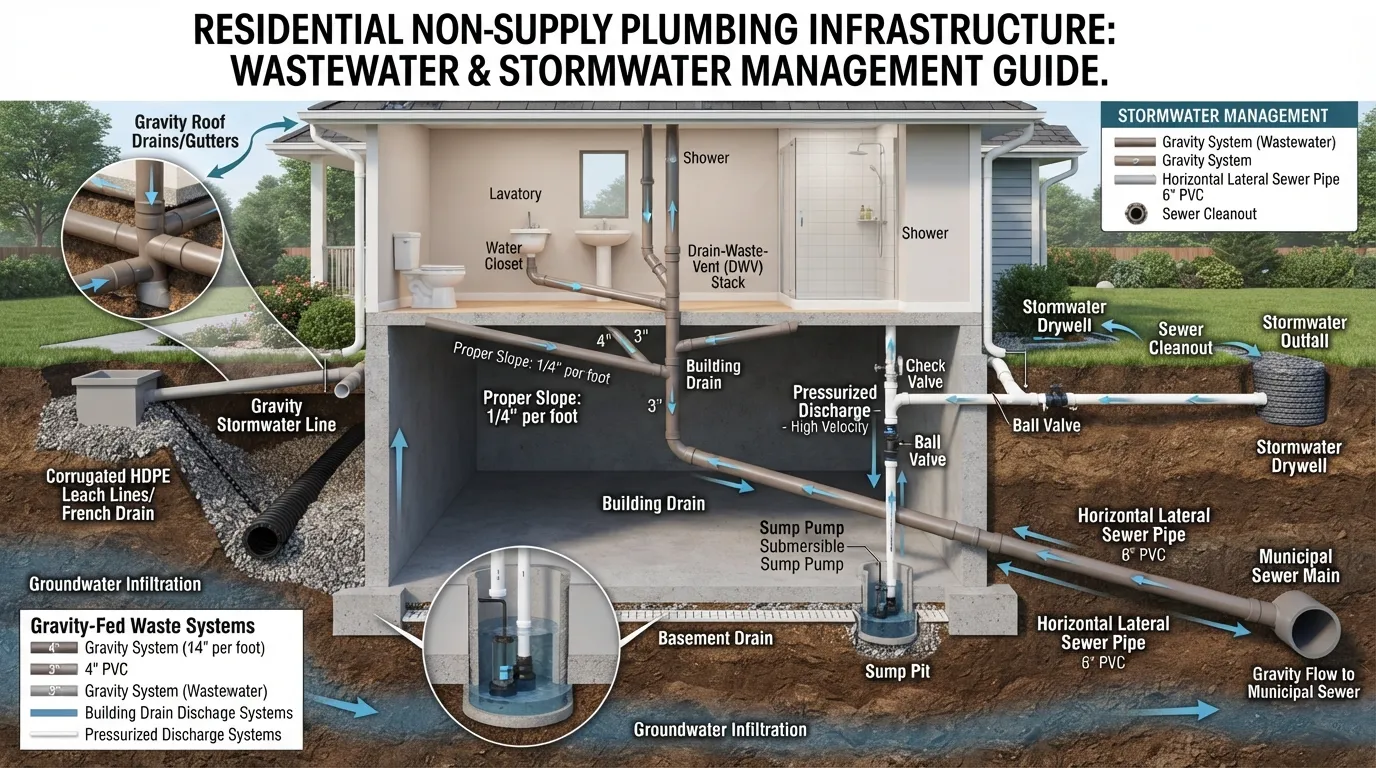
While supply piping delivers clean water under pressure, wastewater and stormwater management rely on a completely separate network of gravity-fed and specialized discharge channels. Mastering these non-supply conduits is essential for designing comprehensive plumbing and drainage systems that prevent flooding and structural damage.
Water Drain Pipe & Drain Pipes Overview
Water drain pipes are large-diameter conduits engineered to transport wastewater, graywater, and stormwater away from plumbing fixtures and building foundations safely. Unlike supply lines, drain systems operate primarily under gravity rather than high internal pressure, requiring downward slopes and specialized venting.
- Constructed primarily from PVC, ABS, or heavy-duty cast iron depending on local municipal building codes.
- Engineered with gentle downward slopes (typically one-quarter inch per foot) to maintain steady waste velocity without clogging.
- Connected directly to sanitary sewer mains or private septic tanks through well-sealed subterranean networks.
Corrugated Drain Pipe When It’s Used
Corrugated drain pipe is a flexible, ribbed plastic pipe manufactured from high-density polyethylene (HDPE) designed specifically for exterior ground drainage and stormwater management. Its ridged exterior profile provides immense crush resistance when buried underground.
- Best Use Case: Foundation perimeter French drains, downspout runoff extensions, landscape yard drainage, and agricultural runoff diversion.
- Pros: Highly flexible around obstacles, lightweight, resistant to soil settling stress, and available in perforated variants for groundwater absorption.
- Cons: Unsuitable for indoor pressurized applications or direct connection to sanitary sewer systems due to interior ribbing that can trap solid waste.
- Plumber’s Real-World Insight: “Use solid corrugated pipe to move gutter water away from your foundation, but always keep it entirely outside the house—never tie flexible corrugated pipe into interior household plumbing drains.”
Discharge Pipe vs Lateral Pipe What’s the Difference?
Understanding the distinction between discharge pipes and lateral pipes ensures correct hydraulic sizing for pumps and municipal connections. Each serves a unique mechanical role in moving water horizontally across a property.
- Discharge Pipe: A pressurized conduit connected directly to a sump pump, sewage ejector pump, or washing machine exit that forces wastewater upward or outward against gravity.
- Lateral Pipe: A gravity-fed horizontal underground pipe that carries household wastewater from the building’s main cleanout out to the public municipal sewer main or septic tank.
What Is a Boiler Drain?
A boiler drain is a specialized heavy-duty brass valve fitted with a threaded hose connection, installed near the base of water heaters, boilers, or low-pressure heating systems. Despite its name, it serves multiple practical functions beyond servicing heating equipment.
- Provides a secure attachment point for garden hoses to completely drain sediment and mineral scale out of water heater tanks.
- Acts as a convenient auxiliary water withdrawal point during domestic plumbing repairs or winterization.
- Constructed from rugged brass to withstand elevated water temperatures and continuous thermal expansion cycles.
Spiral Pipe Clarifying the Term HVAC Duct vs Plumbing Context
The term “spiral pipe” frequently causes confusion because it refers primarily to structural metal ductwork in heating, ventilation, and air conditioning (HVAC) systems rather than standard liquid plumbing pipes. Recognizing this distinction prevents costly specification errors during architectural planning.
- HVAC Context: Formed from a continuous strip of galvanized steel, aluminum, or stainless steel wound into a rigid, helical tube used for high-velocity air distribution.
- Plumbing Context: Not utilized for water supply or drainage channels; instead, heavy-duty spiral-wound metal sleeves occasionally act as structural conduit encasements in commercial retrofits.
- Key Takeaway: If you see spiral ductwork overhead in a basement ceiling, it carries conditioned air—do not mistake it for a water supply or drainage line.
Technical & Industrial Pipe Specs Mini Glossary
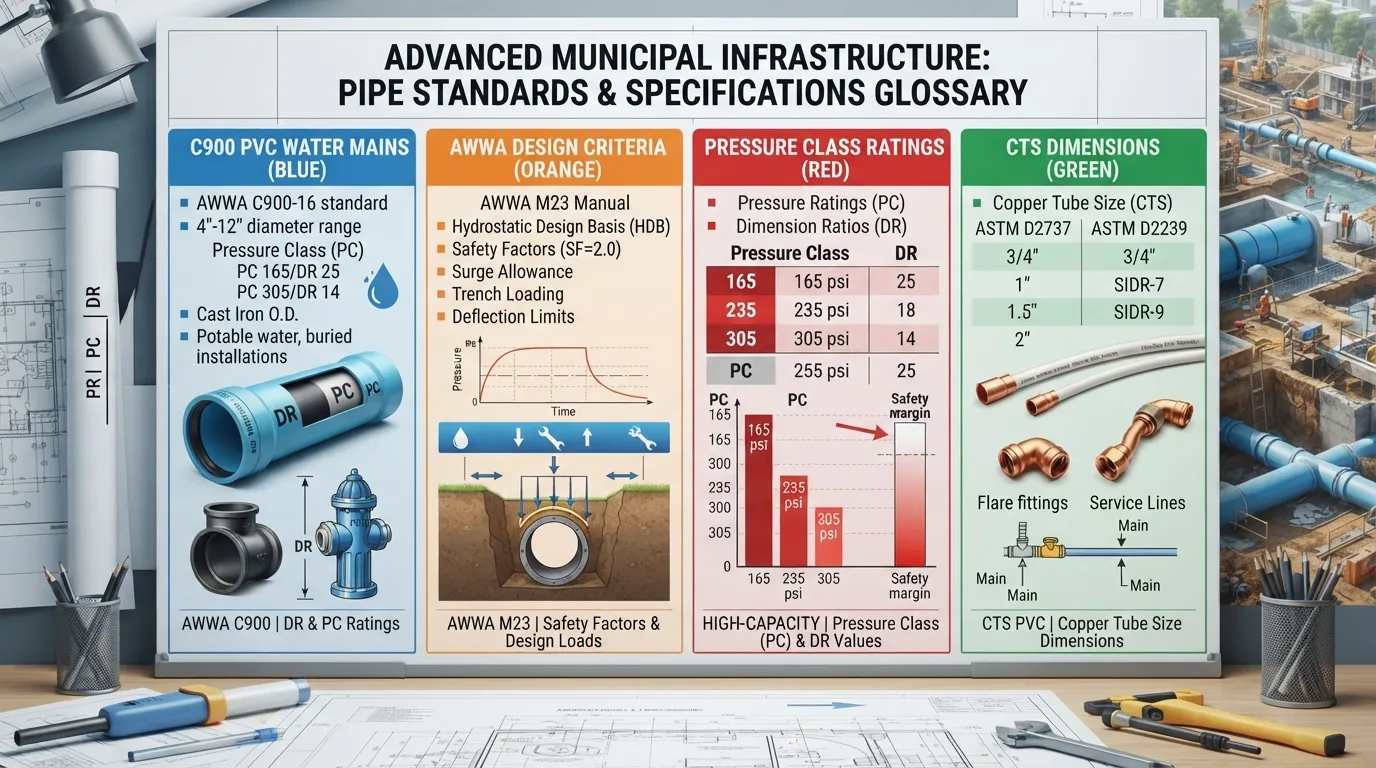
Advanced municipal infrastructure and large-scale commercial civil projects require heavy-duty piping standards that exceed standard residential specifications. Understanding specialized industrial pipe designations ensures absolute compliance with engineering standards and long-term utility performance.
What Is C900 Pipe? PVC Water Main Standard
C900 pipe refers to a specialized, high-capacity polyvinyl chloride pipe manufactured strictly to American Water Works Association (AWWA) standards for underground municipal water distribution mains. Unlike standard residential PVC, C900 piping is engineered with thick walls designed to withstand massive external soil loads and high internal surge pressures.
- Primary Application: Municipal water transmission mains, commercial fire suppression loops, and large private subdivision water supply feeds.
- Sizing Standards: Utilizes Ductile Iron Pipe Size (DIPS) OD dimensions, allowing it to integrate seamlessly with standard municipal valves and mechanical fittings.
- Pressure Ratings: Standardized with high pressure class ratings (typically PC 150, PC 200, or PC 305 PSI) to handle aggressive water hammer events.
CTS Pipe Recap for Reference
Copper Tube Size (CTS) is the definitive sizing standard used across modern residential supply systems. Keeping its core parameters in mind ensures seamless integration between modern plastics and traditional metals.
- Measures outside diameter slightly larger than nominal sizing to maintain uniform compatibility with push-to-connect and crimp fittings.
- Applies universally to flexible PEX tubing, CPVC, and rigid copper supply lines.
- Eliminates guesswork when transitioning between different manufacturers during complex repiping installations.
Types of Plumbing No Longer Used History Section
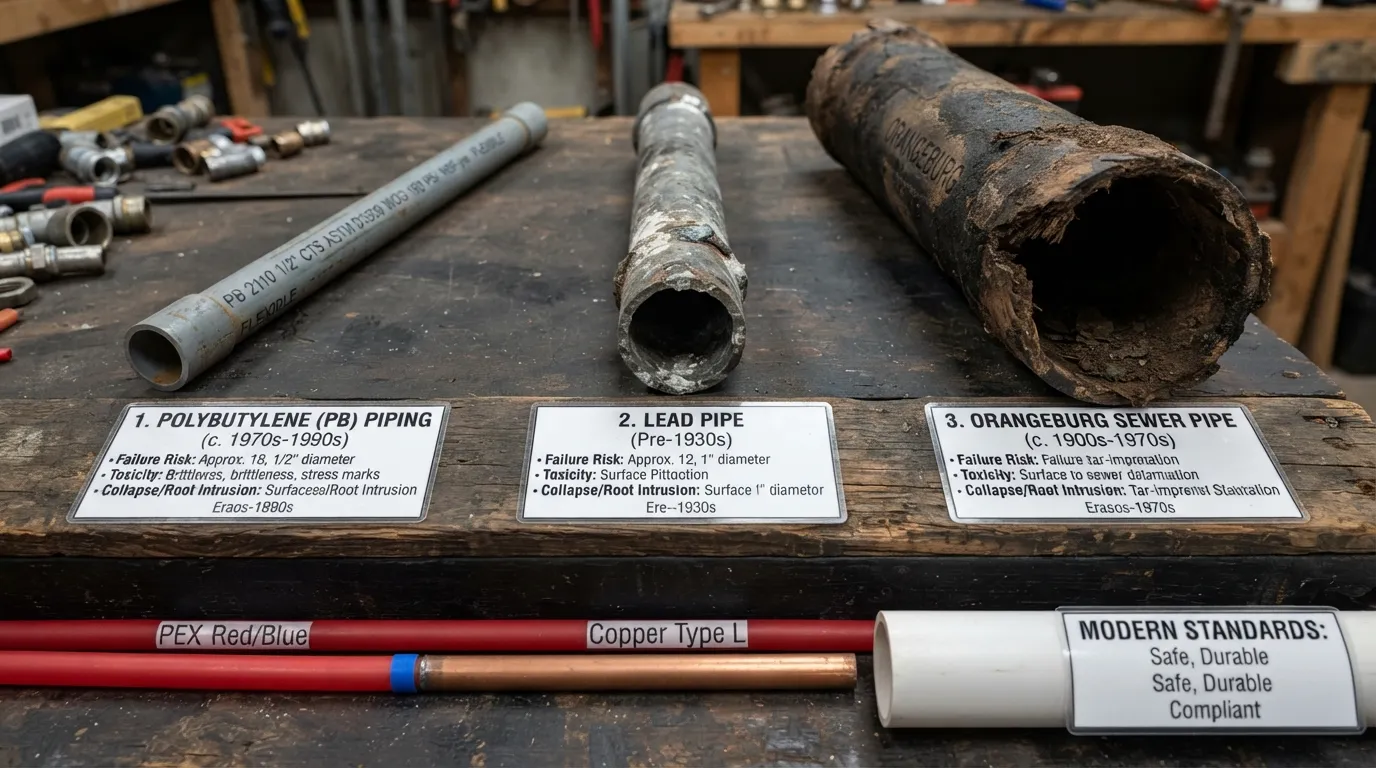
Plumbing material standards have evolved dramatically over the past century as engineering research uncovered long-term health risks and structural durability flaws. Recognizing legacy materials is crucial when inspecting older properties to prevent catastrophic leaks, water contamination, and unexpected code violations.
Lead Pipes Why They Were Banned
Lead tubing was widely used for centuries due to its remarkable malleability and corrosion resistance, serving as a primary material for municipal water supply services and household goosenecks. However, decades of toxicological research proved that lead leaches steadily into drinking water, causing severe neurological damage, cognitive developmental delays, and chronic health disorders.
- Active Era: Antiquity through the mid-20th century (gradually phased out by building codes in the 1970s and 1980s).
- Failure Mode: Chemical corrosion from acidic water breaks down the interior walls, releasing dangerous heavy metals directly into potable household water.
- Regulatory Action: Governments banned lead in plumbing solders in 1986 and instituted strict replacement mandates, reinforcing safety standards highlighted by the EPA’s guidance on lead service line replacement.
Polybutylene Pipes 1978–1995
Polybutylene (PB) is a flexible gray or blue plastic piping material installed in millions of homes during the late 1970s through the mid-1990s as an affordable, easy-to-install alternative to copper. Unfortunately, public water oxidants like chlorine react with the plasticizers over time, causing the pipes to become extremely brittle and rupture without warning.
- Active Era: 1978 to 1995 (widespread residential use, particularly across the Southern US and suburban developments).
- Failure Mode: Plastic fittings and pipe walls degrade from the inside out, leading to massive class-action lawsuits and mandatory whole-house repipes.
- Plumber’s Real-World Insight: “If you walk into a house built in the 1980s and see gray plastic pipes with plastic insert fittings, assume it’s polybutylene and budget for an immediate repipe before it floods.”
Orangeburg Pipe Old Sewer Lines
Orangeburg pipe is a vintage subterranean sewer and drain conduit manufactured from wood fibers compressed and heavily impregnated with hot coal-tar pitch. Marketed as a lightweight, cheap alternative to cast iron, it performed adequately for a few decades before rotting away under ground pressure.
- Active Era: 1940s through the 1970s.
- Failure Mode: The fibrous material absorbs moisture over time, softening, flattening out under soil loads, and welcoming root intrusions that completely collapse the sewer line.
- Plumber’s Real-World Insight: “Orangeburg is basically heavy-duty cardboard soaked in tar. If a sewer camera reveals an Orangeburg line, rooters won’t save it—you have to trench and replace it with Schedule 40 PVC.”
Why Did Plumbing Switch From Copper to Plastic Pipes?
While copper remains an elite, durable metal for custom homes, the residential plumbing industry shifted heavily toward flexible plastics like PEX for several economic and structural reasons.
- Labor Efficiency: PEX tubing installs in a fraction of the time required to measure, cut, flux, and solder rigid copper pipe runs.
- Material Costs: Fluctuating global copper commodity prices make large-scale metal installations prohibitively expensive for budget-conscious builders.
- Freeze Resistance: Unlike rigid copper or steel that splits easily when trapped water turns to ice, flexible PEX expands safely under freezing conditions.
Worst Pipes to Avoid Separating History From Active Hazar
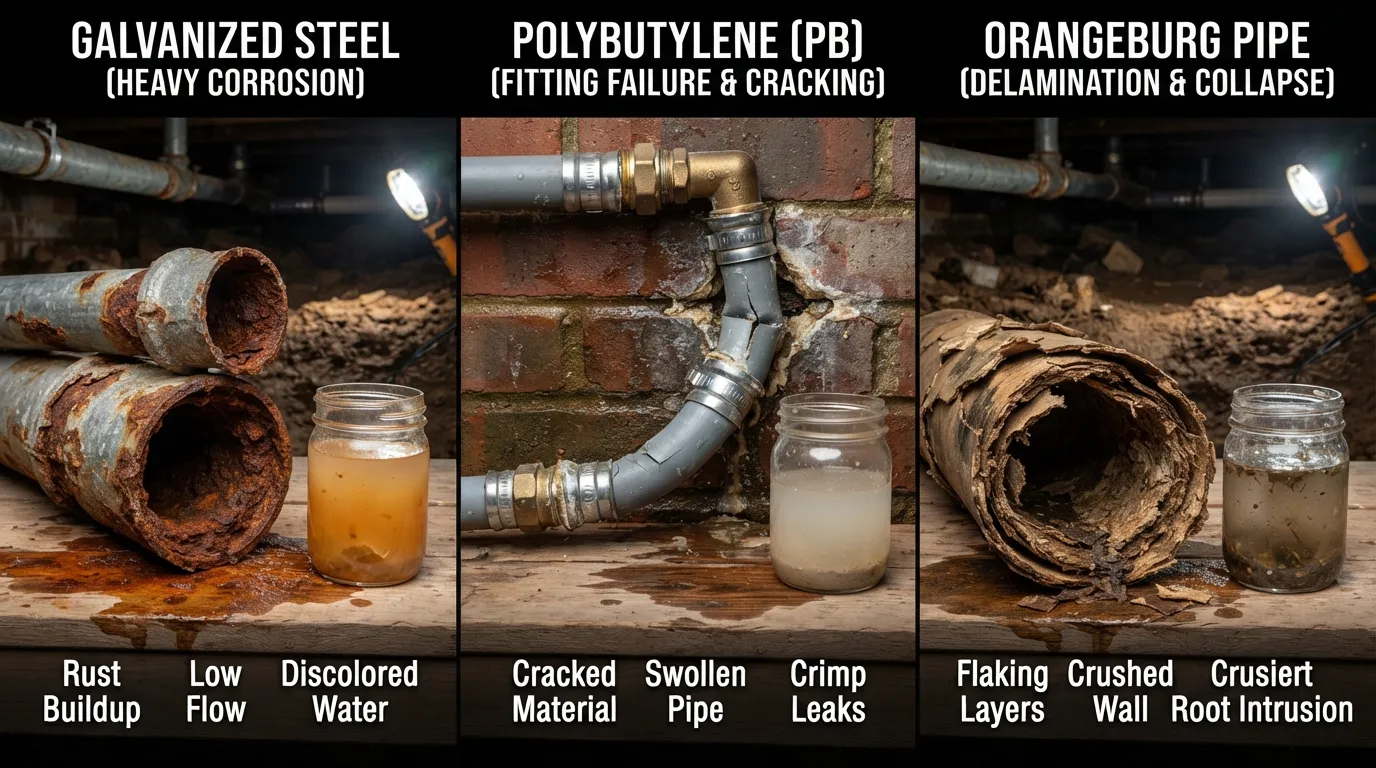
While historic piping materials have largely been phased out of modern construction, legacy infrastructure still lurks within millions of existing homes. Identifying high-risk plumbing materials currently active in older residential real estate prevents catastrophic water damage, expensive emergency repairs, and severe health hazards.
Why Polybutylene and Lead Are Still a Risk in Older Homes
Many homes built between the 1940s and 1990s still contain original plumbing lines that were grandfathered in under older building codes. Because these legacy systems are well past their engineered design lifespans, they represent active hazards that can fail catastrophically without prior warning.
- Active Failure Risk: Polybutylene piping degrades chemically from exposure to common municipal water oxidants, resulting in sudden, unpredictable wall ruptures.
- Continuous Health Threat: Undetected lead service lines and legacy lead-soldered joints continue to leach toxic heavy metals into drinking water every time a faucet is opened.
- Insurance and Resale Complications: Many home insurance providers refuse coverage or require immediate professional repiping before issuing policies on homes with active polybutylene or lead infrastructure.
Red Flags to Check For During a Home Inspection
Conducting a thorough visual audit of your basement, utility room, and crawlspaces helps uncover dangerous plumbing materials before they cause structural failure. Knowing what warning signs to look for empowers homeowners to take proactive corrective action.
- Discolored Water: Persistent brown or reddish tap water indicates advanced interior corrosion and rust buildup inside aging galvanized steel pipes.
- Low Water Pressure: Restricted flow volume across multiple fixtures typically points to severe mineral scaling or collapsed interior pipe diameters.
- Gray Plastic Flexible Tubing: Spotting dull gray flexible pipe lines connected with plastic or metal crimp rings signals the presence of high-risk polybutylene.
- Flaking or Cracking Tar Conduits: Soft, deformed, or collapsing underground sewer cleanouts suggest deteriorating vintage Orangeburg material requiring trenchless replacement.
Pipe Lifespan & When to Replace
Every plumbing material has a finite structural lifespan determined by environmental exposure, water chemistry, and internal pressure stress. Understanding how long different pipe types last helps homeowners plan proactive maintenance, budget for whole-house repiping projects, and avoid catastrophic indoor flooding.
Average Lifespan by Pipe Material Table
Different plumbing materials degrade at vastly different rates depending on their chemical composition and installation environment. The reference table below outlines the expected service life and replacement intervals for standard residential pipe categories.
When pipes approach or exceed these expected timelines, structural fatigue significantly increases the risk of sudden joint failures and hidden leaks behind drywall.
Warning Signs You Need a Repipe
Waiting for a catastrophic pipe burst can result in thousands of dollars in water damage and mold remediation costs. Recognizing early warning signs allows property owners to schedule systematic repiping before an emergency occurs.
Sudden Water Pressure Drop: Gradual or abrupt decreases in fixture pressure often indicate severe internal mineral scaling or rust blockage restricting pipe flow.
Discolored or Rust-Tinged Water: Brown, yellow, or reddish tap water points directly to advanced interior corrosion inside aging metallic supply lines.
Frequent Pinhole Leaks: Experiencing multiple leaks in different locations means the entire pipe network has thinned and reached structural exhaustion.
Pipe Materials vs. Plumbing Systems Clearing Up the Confusion
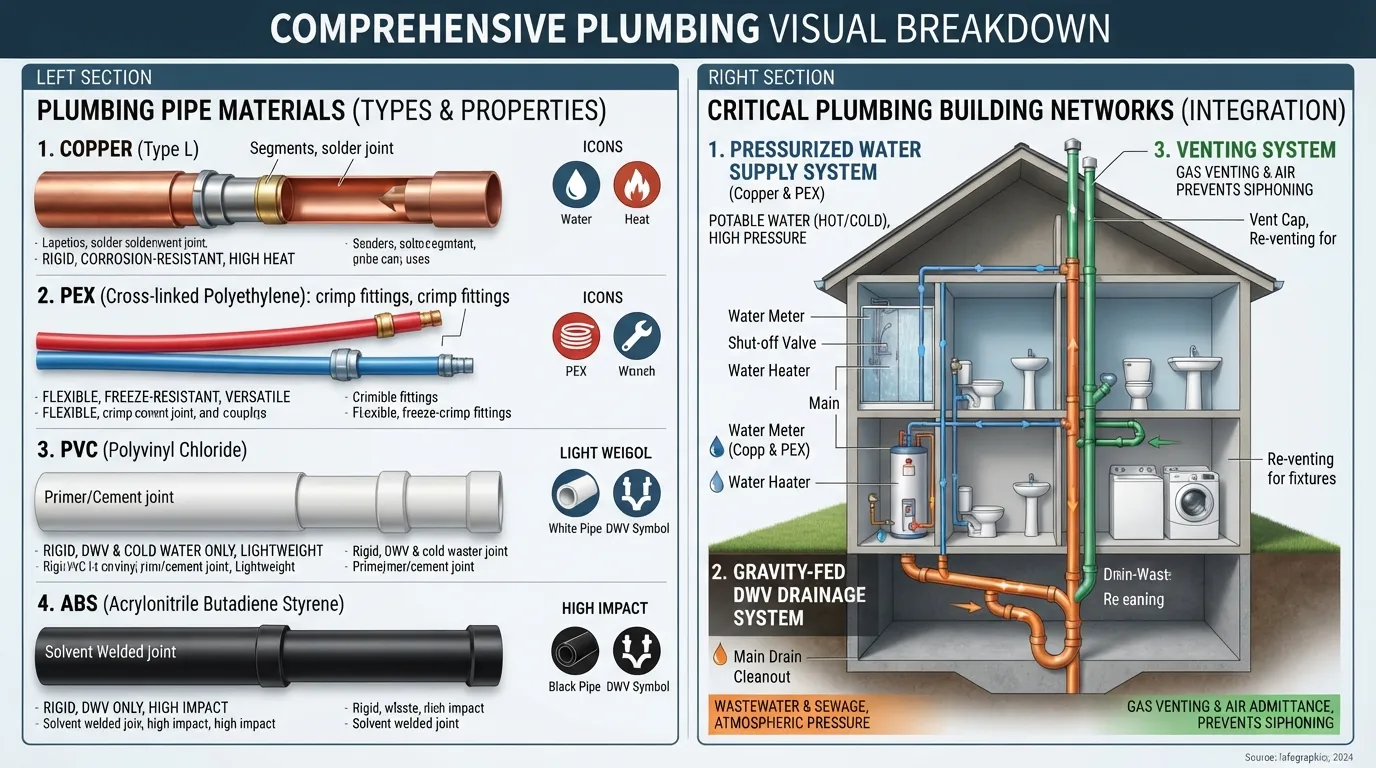
Homeowners and DIY researchers frequently confuse individual plumbing pipe materials with overarching plumbing system networks. While materials dictate what conduits are made of, plumbing systems define how water, waste, and air circulate safely through a multi-story building.
Water Supply System
The water supply system is a pressurized network responsible for delivering clean, potable water from municipal mains or private wells to every fixture in your home. This vital infrastructure must withstand constant internal pressure and rigorous safety standards.
- Operates under high pressure (typically 40 to 80 PSI) to push water upward and across long horizontal runs.
- Utilizes high-integrity materials like copper, PEX, and CPVC that are certified safe for drinking water.
- Controlled by main shut-off valves and pressure-reducing regulators right where service enters the building.
Drainage System DWV
The drain, waste, and vent (DWV) system manages the removal of used greywater and blackwater from sinks, showers, toilets, and laundry appliances. Unlike supply networks, drainage conduits rely entirely on gravity to transport wastewater downward.
- Operates without internal pressure, utilizing oversized pipes (1.5 to 4 inches in diameter) to prevent clogs.
- Constructed from rigid plastics like PVC and ABS, or traditional cast iron.
- Requires precise downward slopes of one-quarter inch per foot to maintain consistent waste velocity.
Venting System
The venting system consists of vertical pipes that extend upward through the roof of a building, connecting directly to the main drainage stacks. Vents perform an essential aerodynamic balancing act within residential plumbing architecture.
- Supplies outside air into the drainage network to prevent negative pressure siphoning water out of P-traps.
- Allows sewer gases and unpleasant odors to escape safely above the roofline rather than backing up into living spaces.
- Uses standard PVC or ABS piping sized to match building code ventilation requirements.
Frequently Asked Questions
Navigating plumbing terminology and material choices often raises specific questions regarding safety, modern building standards, and maintenance schedules. Below are authoritative, direct answers to the most frequently asked plumbing questions.
What are five common types of pipes used in plumbing?
Modern and traditional plumbing infrastructure primarily relies on five core pipe materials: copper, PEX (cross-linked polyethylene), PVC (polyvinyl chloride), ABS (acrylonitrile butadiene styrene), and galvanized steel. Each material serves a specialized function ranging from high-pressure water supply to underground waste management.
- Copper and PEX dominate interior hot and cold water supply lines.
- PVC and ABS manage drainage, venting, and underground waste stacks.
- Galvanized steel represents legacy supply piping found primarily in older homes.
How do I tell if I have PEX or PVC?
Distinguishing between PEX and PVC is straightforward when evaluating physical flexibility and color properties. PEX tubing is highly flexible, bends easily by hand, and is typically colored red, blue, or white.
- PVC is completely rigid, cannot be bent, and is usually bright white or gray.
- PEX uses push-to-connect, crimp, or expansion fittings, whereas PVC requires primer and purple or clear solvent cement.
What kind of plumbing pipes are used today?
Current residential and commercial new construction heavily favors flexible PEX tubing for water supply lines due to its rapid installation times and freeze resistance. Rigid copper remains popular for exposed runs and luxury custom homes.
- Schedule 40 PVC and ABS are the universal industry standards for interior drain, waste, and vent (DWV) systems.
- CPVC is frequently selected for specialized hot water lines and residential fire sprinkler networks.
What pipes do you not want in your house?
Homeowners should avoid legacy materials that present active health hazards or high risks of catastrophic failure. Lead pipes are entirely unacceptable due to severe heavy metal toxicity and neurotoxic health risks.
- Polybutylene (gray plastic pipes from the 1980s and 90s) is prone to sudden, unpredictable ruptures.
- Corroded galvanized steel severely restricts water flow and discolors tap water with heavy rust accumulation.
What are the worst types of plumbing pipes?
The worst plumbing pipes are those that degrade structurally from the inside out or pose direct environmental and health threats. Orangeburg pipe—a compressed wood-fiber and tar conduit used for sewer lines—is notorious for flattening and collapsing under soil loads.
- Polybutylene pipes fail because municipal water oxidants make the plastic brittle over time.
- Lead pipes leach dangerous contaminants directly into potable drinking water supplies.
What is the 135 rule in plumbing?
The 135-degree rule in plumbing drainage design dictates that changes in horizontal drainage direction cannot exceed a cumulative total of 135 degrees within a single fitting assembly or bend sequence. This structural limit ensures that solid waste and wastewater maintain adequate velocity without causing internal clogs.
- Prevents solid waste accumulation at sharp directional turns in DWV systems.
- Ensures smooth hydraulic transitions between horizontal branch drains and vertical stacks.
Should old water pipes be replaced?
Older water pipes should be systematically replaced if they have exceeded their manufacturer-rated lifespans, show signs of active corrosion, or leak frequently. Maintaining aging infrastructure prevents catastrophic indoor flooding and costly structural mold remediation.
- Galvanized steel pipes older than 40 years should be replaced due to internal rust clogging.
- Homes with active polybutylene or lead lines require immediate repiping to ensure safety and property value.
What are the 8 most common plumbing problems?
Residential plumbing systems encounter recurring mechanical and environmental issues that require prompt professional attention. Understanding these frequent failures helps homeowners mitigate damage quickly.
- 1. Clogged Drains: Hair, grease, and soap scum buildup in sink and shower lines.
- 2. Leaking Faucets: Worn internal washers or O-rings causing continuous drips.
- 3. Running Toilets: Faulty flapper valves wasting hundreds of gallons daily.
- 4. Low Water Pressure: Mineral scaling or pipe corrosion restricting flow.
- 5. Water Heater Failure: Sediment buildup, pilot light issues, or tank corrosion.
- 6. Burst Pipes: Freezing temperatures or structural fatigue splitting pipe walls.
- 7. Sump Pump Failure: Mechanical jams or power loss leading to basement flooding.
- 8. Sewer Line Backup: Root intrusion or collapsed underground drainage conduits.
How often should plumbing be replaced in a house?
Plumbing replacement timelines depend entirely on the specific material installed within the building framework. Copper supply lines generally last 50 to 70 years, while PEX tubing provides a service life of 40 to 50 years.
- PVC and CPVC drainage and hot water lines typically require inspection or replacement after 25 to 40 years.
- Galvanized steel often requires full replacement after 20 to 50 years due to progressive internal rust clogging.
What type of plumbing is no longer used?
Several legacy plumbing materials have been phased out by modern building codes due to severe health hazards and structural vulnerabilities. Lead piping is completely banned for potable water use.
- Polybutylene plastic supply lines are no longer installed due to widespread chemical degradation failures.
- Orangeburg tar-paper sewer pipes are no longer utilized in modern civil construction.
Why did plumbing switch from copper to plastic pipes?
The plumbing industry transitioned heavily from copper to flexible plastics like PEX primarily due to labor efficiency and material cost stability. PEX installs in a fraction of the time required to solder rigid copper joints.
- Flexible plastics expand safely when water freezes, whereas rigid copper splits easily under sub-freezing temperatures.
- Global fluctuations in copper commodity pricing make plastic a more economically predictable building material.
Why were copper pipes replaced in plumbing?
While copper has not been entirely abandoned and remains popular in luxury construction, it has been widely supplemented by PEX in standard residential builds. The shift was driven by the high cost of raw copper materials and the labor-intensive torch-soldering required for metal installations.
- PEX eliminates hundreds of soldered joints, drastically reducing potential leak points.
- Pastic tubing resists acidic water conditions that cause pinhole leaks in aging copper lines.
Conclusion & Quick Decision Summary
Choosing the correct plumbing pipe material requires balancing installation costs, structural longevity, and specific application requirements. Whether designing a new construction project or planning a whole-house repipe, selecting the right conduit ensures long-term reliability and water safety.
Comparison Table: Material vs. Cost vs. Lifespan vs. Best Use
By evaluating the specific hydraulic demands, local building codes, and structural environments of your property, you can successfully implement durable plumbing pipe solutions that protect against leaks and maintain optimal water pressure for decades

Oscar Vance | Master Plumber & Drainage Expert
Meet Oscar Vance, a licensed master plumber sharing practical solutions on residential repairs, preventive maintenance, and thoughtful home upkeep.
Pingback: How to Plumb a Water Pressure Tank: Step-by-Step Guide
Pingback: What Are the Four Types of Fittings in Plumbing? Explained
Pingback: Sewer Line Repair and Replacement Cost: 2026 Cost Guide