What Is a Plumbing Cleanout?
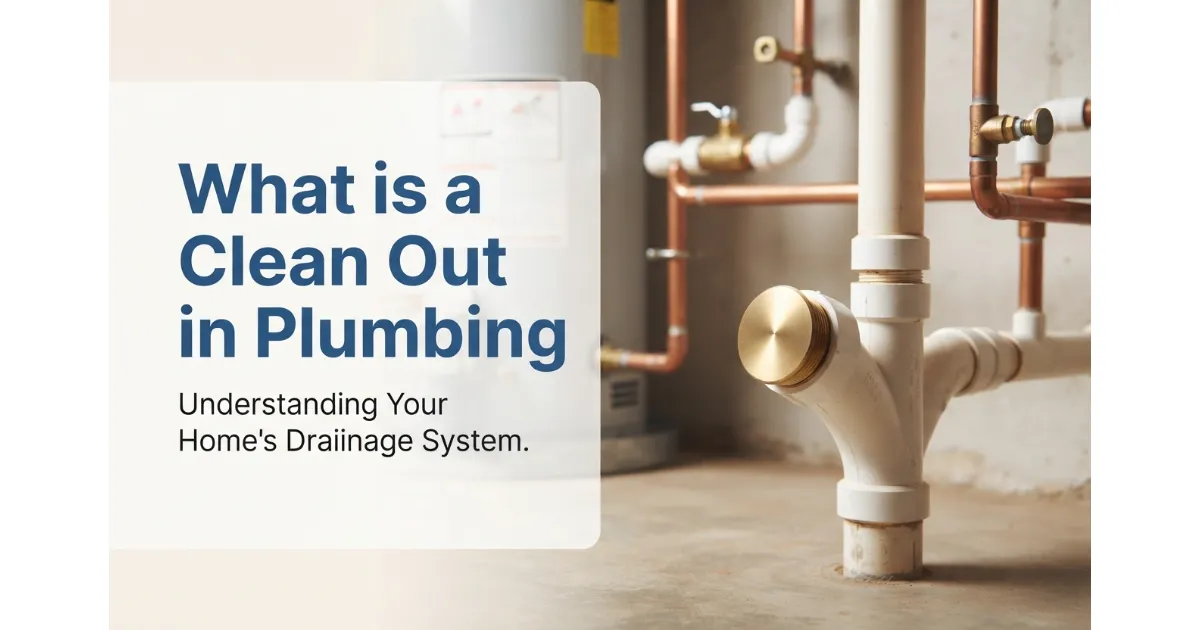
A plumbing cleanout is a vital access point in a residential or commercial drainage system designed to let plumbers quickly reach the main sewer line. It typically consists of a pipe fitting featuring a removable cap or threaded plug that provides direct entry to clear stubborn clogs or perform routine maintenance.
What Is a Plumbing Cleanout?
Positioned strategically along your drainage network, a plumbing cleanout is a specialized plumbing fitting engineered to give technicians unobstructed entry into hidden drain pipes. By removing the threaded plug, professionals can run inspection cameras or augers directly into the system without tearing up floors or walls.
- Primary Component: A durable T-fitting or Y-fitting integrated into the drain pipe network.
- Seal Mechanism: A secure, removable cap or threaded plug that prevents sewer gas leaks and wastewater overflows.
- Accessibility: Usually located near the foundation, in the basement, yard, or crawlspace for fast emergency access.
Why Every Home Needs One
Without a proper access point, clearing a deep blockage in your main sewer line requires cutting into pipes or tearing up landscaping. A dedicated cleanout simplifies diagnostics, reduces labor costs during repairs, and protects your property from severe wastewater backups.
- Fast Diagnosis: Allows technicians to feed video snake cameras straight into the sewer line to pinpoint damage or root intrusion.
- Efficient Clearing: Provides a straight shot for motorized rooters and hydro-jetting equipment to blast away grease, scale, and tree roots.
- Preventative Maintenance: Makes routine line cleaning hassle-free, extending the overall lifespan of your home plumbing infrastructure.
Purpose & Uses of a Plumbing Cleanout
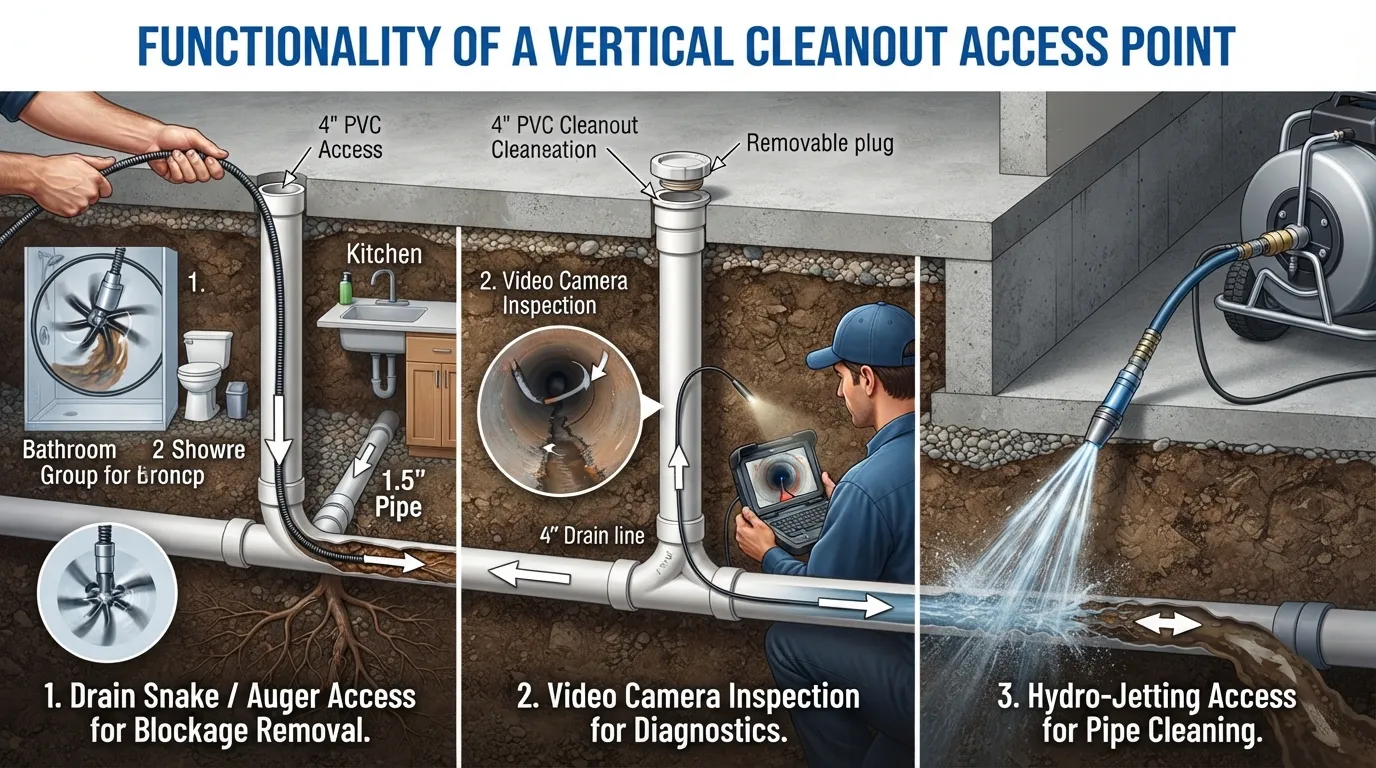
A plumbing cleanout serves as the primary strategic access gateway for maintaining residential and commercial drainage networks. Its core function is to allow plumbers and homeowners to clear stubborn blockages, inspect internal pipe integrity, and handle emergency overflow relief without invasive structural demolition.
Clearing Blockages Auger Snake & Hydro-Jetting Access
Drainage lines frequently accumulate heavy grease buildup, scale deposits, and invasive tree roots over time. A cleanout provides an open entry corridor where technicians can effortlessly deploy a motorized snake or high-pressure hydro-jetter to scour pipe walls clean.
- Motorized Snake Integration: Enables heavy-duty mechanical cables to punch through dense clogs and physical blockages safely.
- Hydro-Jetting Efficiency: Allows high-pressure water nozzles to be fed directly into the sewer lateral to flush away residual grease and sludge.
- Targeted Clearing: Directs tools straight to the point of obstruction rather than forcing entry through interior household fixtures.
Camera Inspections Without Digging or Demolition
Diagnosing mysterious sewer line failures used to require destructive trenching or excavating concrete slabs. Modern plumbing leverages cleanout points to thread flexible fiber-optic sewer cameras straight into the underground network for real-time visual assessment.
- Non-Destructive Diagnosis: Pinpoints cracks, joint offsets, and root intrusions visually without ripping up drywall or tearing apart pristine landscaping.
- Precise Locating: Transmits surface signals that let technicians map the exact depth and location of underground pipe damage.
- Post-Repair Verification: Confirms that a blockage or cleanout procedure successfully restored full inner pipe diameter and flow.
Emergency Overflow Relief During Sewage Backup
When municipal lines choke or main household drains fail entirely, raw wastewater seeks the path of least resistance. An exterior cleanout cap can act as a controlled pressure-relief valve, directing hazardous sewage overflows safely outside the living space rather than backing up into bathtubs and showers.
- Basement Protection: Diverts rising wastewater away from interior living quarters, minimizing costly structural water damage.
- Pressure Mitigation: Releases trapped air and hydro-static pressure surges during massive municipal or lateral clogs.
- Rapid Emergency Response: Gives emergency plumbing crews immediate physical access to vent and relieve backed-up systems on arrival.
Plumbing Code Compliance Property Line Connection
Municipal infrastructure guidelines strictly mandate the installation of cleanouts at specific intervals and junctions to protect public health and safety. According to the International Plumbing Code (IPC), cleanouts must be positioned near the building drain and sewer junction, at every major change of direction exceeding 45 degrees, and at defined horizontal intervals.
- Jurisdictional Boundaries: Often establishes the exact point of ownership division and maintenance responsibility between private property and public sewer mains via a property line cleanout.
- Mandatory Intervals: Ensures long horizontal drainage runs remain serviceable by enforcing access points typically every 100 feet or less.
- Inspection Readiness: Guarantees that local municipal building inspectors can verify proper drainage slope, venting, and trap configurations during new builds or major renovations.
Where Is a Plumbing Cleanout Located?
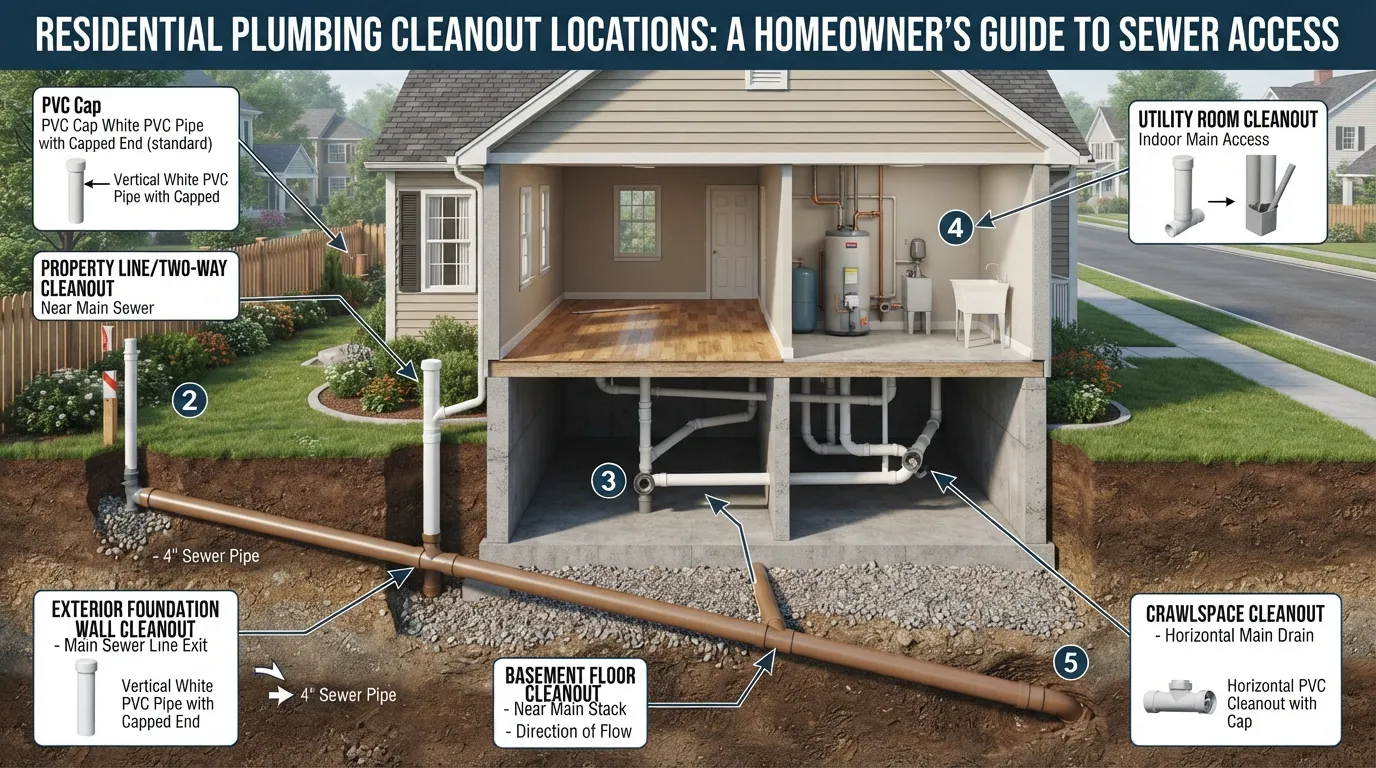
Locating your plumbing cleanout quickly is essential during a sewer emergency. While placement varies depending on the age of the home and local climate, cleanouts are universally installed to provide straight-line access to the main sewer lateral before it leaves the property.
Outdoor Cleanout Locations Near Foundation Yard Property Line
The most common location for a main sewer cleanout is outside the house, offering plumbers immediate access without entering the living space. These are typically installed flush with the ground or slightly extended above grade, often marked by a round plastic or metal cover.
- Near Foundation: Look for a capped pipe emerging from the ground or foundation wall, usually within a few feet of where the main bathroom or kitchen plumbing exits the house.
- Yard Riser: In many regions, the cleanout is located several feet out in the yard, positioned along the projected path between the house and the street sewer connection.
- Property Line Cleanout (PLC): Some municipalities require a separate cleanout installed precisely at the property line, defining the boundary between homeowner and municipal maintenance responsibility.
- Buried Access: Older homes may have cleanouts covered by shallow soil, mulch, or overgrown landscaping, sometimes requiring a metal detector to locate if the cap is missing.
Indoor Cleanout Locations Basement Crawl Space Utility Room Garage
In colder climates where freezing is a risk, or in homes built on slabs without exterior access points, cleanouts are strategically placed indoors. Plumbers prioritize areas providing easy access to the main horizontal drain lines.
- Basement Walls/Floor: Often found near the main stack (the large vertical pipe) as it exits through the concrete floor or goes into the wall heading toward the municipal sewer.
- Crawl Space Access: Frequently located just inside the crawl space entry point, where the plumbing system transitions from vertical drops to horizontal runs under the floor joists.
- Utility Areas: Commonly situated near water heaters, laundry hookups, or sump pump pits, providing convenient access to major drain junctions.
- Garage Slabs: In slab-on-grade construction, a flush-mounted cleanout cover might be visible in the garage floor near an interior wall shared with a bathroom or laundry room.
Labeled Diagram: Cleanout Locations in a Typical Home
Understanding the relationship between interior plumbing fixtures and the exterior sewer line helps visualize where cleanouts are placed. This diagram illustrates common access points in a residential setup.
The illustration above highlights that while specific locations vary (e.g., a yard riser vs. a basement floor cap), the system is designed to provide strategic entry points to the main horizontal drain line. Identifying these before an emergency occurs saves critical time and prevents sewage overflow inside your home.
What Does a Cleanout Look Like? Visual Identification
Recognizing the visual characteristics of a plumbing cleanout ensures you can locate your system quickly during a drainage emergency. Cleanouts vary in appearance depending on whether they are installed outdoors in the yard or indoors within a finished space.
Identifying an Outdoor Cleanout Cap
Outdoor cleanouts usually consist of a vertical pipe riser terminating just above or flush with ground level, sealed with a prominent threaded plug or cover. They are engineered to withstand weather elements and foot traffic while protecting the sewer line from dirt and debris.
- Standpipe Risers: A white or gray PVC pipe sticking up a few inches out of the ground near the foundation, capped with a removable screw-on lid.
- Flush Ground Boxes: Plastic or cast-iron utility boxes installed flush with the lawn, housing a low-profile cleanout plug underneath.
- Cap Design: Typically features a raised square nut or plug head designed to be gripped with large pliers or a wrench.
Identifying an Indoor Cleanout Cap
Indoor cleanouts are built directly into vertical stack pipes or horizontal runs beneath floors and walls. Because they reside indoors, their design prioritizes a watertight seal to prevent noxious sewer gases and wastewater leaks from entering living quarters.
- Basement/Garage Walls: A threaded brass or PVC plug screwed directly into a sanitary tee fitting on a main drain stack.
- Floor Drains & Cleanouts: Often integrated into concrete slabs with a heavy chrome or brass round cover secured by a central machine screw.
- Crawl Space Risers: Short vertical pipes pointing upward from the main suspended drainage line, sealed with a tight-fitting plug.
Quick Visual Checklist Round vs Square Cap Material Types
Different eras of home construction utilize distinct materials and hardware for cleanout caps. Reviewing these variations helps you instantly identify access points across older and newer properties.
- Material Types: Modern systems use white or gray PVC/ABS plastic, while older homes feature heavy cast iron or brass fittings.
- Cap Shape: Round screw-in caps are standard for plastic and metal pipes, while square-headed plugs are common on traditional brass and iron lines.
- The Square Nut Feature: Most cleanout plugs feature a prominent square knob on top, specifically designed for wrench turning rather than standard screwdriver slots.
Do All Houses Have a Sewer Cleanout?
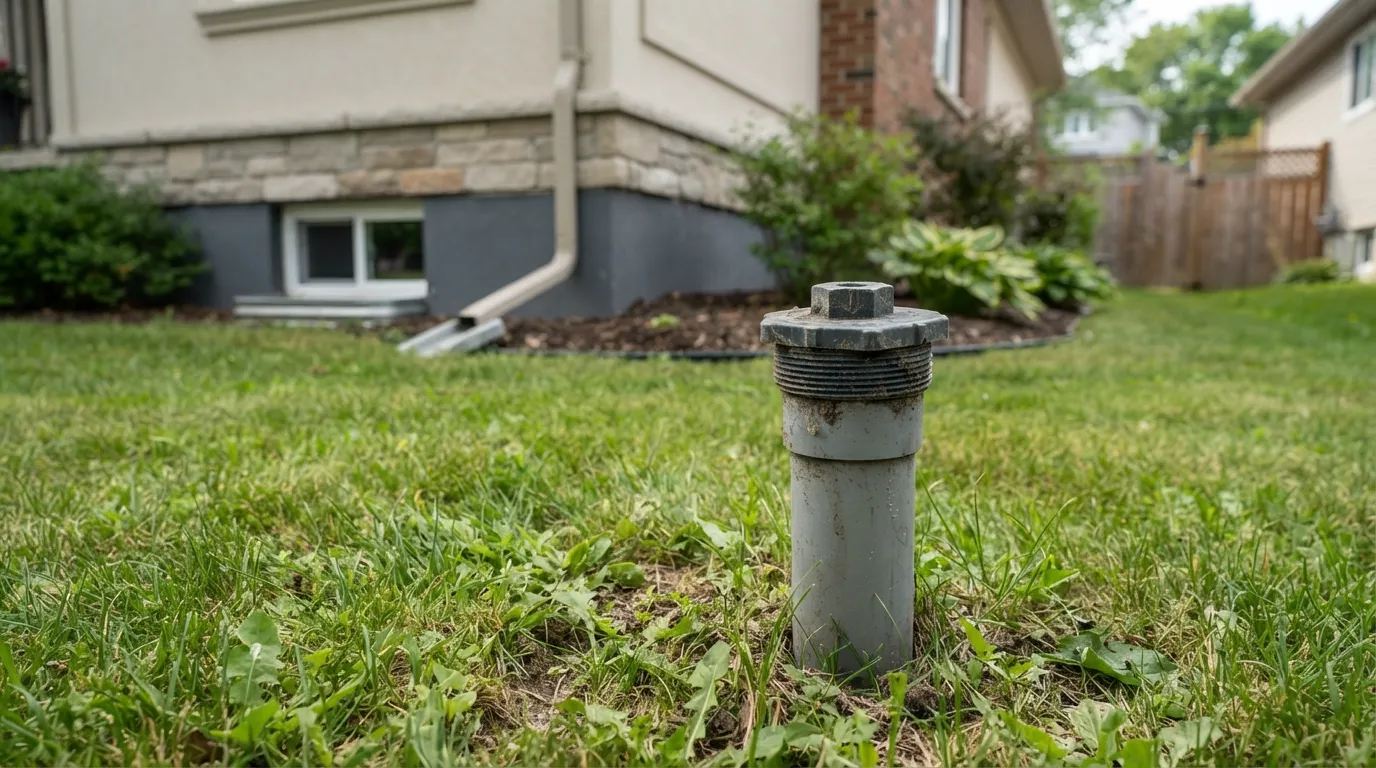
Not every home is equipped with an easily accessible exterior or interior sewer cleanout. While modern building codes universally mandate cleanouts, older properties constructed decades ago frequently lack these convenient access points altogether.
Older Homes vs Newer Homes Cast Iron vs PVC Systems
The presence of a plumbing cleanout is heavily dictated by the age of the property and the original materials used for its drainage infrastructure. Construction standards have evolved significantly over the years regarding accessibility.
- Newer Construction: Homes built within the last few decades almost always feature multiple cleanouts installed by default to comply with strict municipal plumbing codes.
- Older Homes (Mid-20th Century): Properties built prior to the widespread adoption of modern codes often rely on vintage cast-iron pipes that terminate directly into municipal mains without intermediate access ports.
- System Upgrades: Many older homes that have undergone major plumbing repipes or sewer line replacements will have modern PVC cleanouts retrofitted during the process.
How to Check If Your Home Has One
Verifying whether your home has a cleanout requires a systematic physical inspection of both the interior and exterior perimeter. Knowing what to look for saves time before a plumbing emergency strikes.
- Inspect the Foundation Perimeter: Walk the exterior walls where your main bathrooms and kitchen are located, checking for vertical white, grey, or cast-iron pipes sticking out near ground level.
- Scan Yard Paths: Look across your lawn in a straight line extending from your main sewer exit point toward the street or septic tank for flush-mounted plastic caps.
- Check Basements and Crawl Spaces: Examine the base of main vertical drain stacks and low-hanging horizontal pipe runs for threaded cleanout plugs.
What to Do If Your Home Doesn’t Have a Cleanout
Discovering that your property lacks a cleanout can complicate maintenance, but professional plumbers have alternative methods to service your drainage system. Addressing the absence proactively prevents costly emergency delays.
- Roof Vent Access: Plumbers can run snakes and cameras down through your roof plumbing vent stacks, though this method is more labor-intensive and weather-dependent.
- Toilet Removal: Technicians can temporarily pull a ground-floor toilet off its flange to feed an auger directly into the main drain line.
- Retrofit Installation: Hire a licensed plumber to cut into your existing main drain line and install a dedicated PVC cleanout fitting, permanently solving future access issues.
Cleanout vs Floor Drain vs P-Trap What’s the Difference?
Homeowners often confuse plumbing cleanouts with floor drains or P-traps because they all involve visible caps or drainage components. However, each serves an entirely different mechanical purpose within your home plumbing infrastructure and cannot be used interchangeably.
Cleanout vs Floor Drain Key Differences
While both provide entry points into the subterranean drainage network, their primary design intent and engineering function vary drastically. A cleanout is sealed tightly to handle mainline clearing, whereas a floor drain is open to capture surface water.
- Primary Function: Cleanouts are dedicated access ports solely for clearing clogs and inspecting sewer lines; floor drains are active fixtures designed to channel spilled water off concrete floors.
- Trap Integration: Floor drains feature a built-in trap holding standing water to block sewer gases, while cleanouts are direct, untrapped lines requiring a tight mechanical seal.
- Maintenance Role: You cannot effectively run a heavy main sewer auger through a standard floor drain without risking severe damage to its internal trap bend.
Does a P-Trap Count as a Cleanout?
A P-trap is the curved section of pipe located directly beneath sinks or behind showers designed to trap debris and maintain a water seal against sewer gases. Although many P-traps feature a small threaded plug at the bottom curve, they do not function as a main sewer cleanout.
- Limited Reach: Removing a P-trap only gives you access to the immediate fixture branch line, not the deep main sewer lateral.
- Reassembly Risks: P-trap cleanout plugs use delicate slip-joint washers that easily warp or leak if over-tightened or used for heavy snaking.
- Size Restrictions: The narrow diameter of a fixture trap cannot accommodate commercial-grade sewer snakes or camera heads meant for main lines.
Comparison Table: Cleanout vs Floor Drain vs P-Trap
How to Open a Cleanout Cap Tools & Method
Opening a stubborn or tightly sealed cleanout cap requires the correct selection of plumbing tools and proper technique. Applying excessive force incorrectly can crack brittle plastic pipes or strip rusted metal threads, leading to costly repairs.
Tools You’ll Need Pipe Wrench vs Tongue-and-Groove Pliers vs T-Handle
Having the right equipment on hand prevents damaged hardware and ensures you can grip raised nuts or flush plugs securely. Different cleanout designs demand specialized gripping power.
- Tongue-and-Groove Pliers: Ideal for grasping standard PVC cleanout plugs with raised square nuts, offering adjustable jaw capacity and strong leverage.
- Heavy-Duty Pipe Wrench: Essential for gripping large round metal or stubborn brass caps that require maximum torque to break loose.
- Specialty Cleanout T-Handle Tool: Designed specifically to fit recessed or flush-mounted plugs without slipping and stripping the square socket.
How to Safely Remove a Cleanout Cap
Approaching a cleanout safely protects you from sudden pressure releases or splashing wastewater. Follow a controlled sequence to break the seal without damaging your plumbing system.
- Prepare for Spillage: Place towels, a bucket, and waterproof gloves nearby, as trapped wastewater or pressure may escape immediately upon opening.
- Turn Counterclockwise: Position your wrench or pliers securely onto the square nut and turn counterclockwise (lefty-loosey) to loosen the threads.
- Release Pressure Gradually: If you hear hissing or see water seeping past the threads, stop turning immediately and let internal pressure equalize before removing the cap completely.
What to Do If the Cap Won’t Budge Rusted Stuck Caps
Older metal caps frequently seize up due to corrosion, mineral buildup, or over-tightening during previous maintenance. Applying strategic techniques helps free stuck plugs safely.
- Apply Penetrating Oil: Spray a generous amount of professional-grade penetrating oil around the threaded seam and let it sit to dissolve rust and scale.
- Tap Gently with a Hammer: Lightly tapping the sides of a metal cap with a hammer can break apart brittle corrosion bonds locking the threads together.
- Avoid Excessive Heat: Never use a propane torch on plastic pipes, and use extreme caution with metal lines to prevent warping or igniting trapped sewer gases.
What Happens If You Don’t Have a Sewer Cleanout?
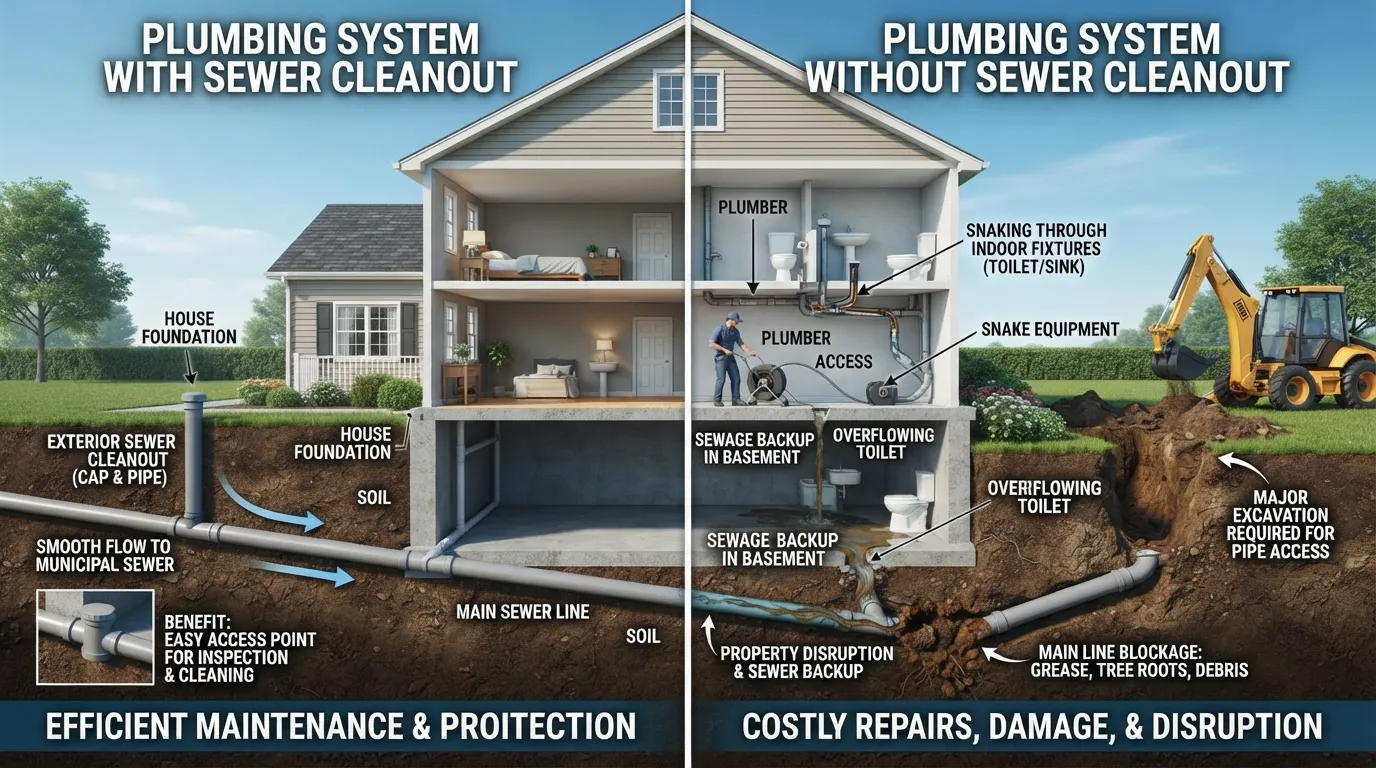
Operating a home without a dedicated sewer cleanout introduces significant financial and operational vulnerabilities during a plumbing emergency. Without a direct exterior access port, routine maintenance and emergency clearing become substantially more complex and destructive.
Increased Risk of Indoor Sewage Backup
When a main sewer line clogs and no exterior cleanout exists to vent or relieve pressure, rising wastewater must find an alternative exit. This forces contaminated sewage to back up through the lowest fixtures in your home.
- Basement and Bathroom Flooding: Wastewater routinely discharges out of basement floor drains, shower pans, and lowest toilets, creating hazardous indoor living conditions.
- Uncontrolled Pressure Buildup: Trapped air and hydro-static pressure cannot escape safely outside, leading to messy, forceful overflows.
- Property and Health Hazards: Severe backups ruin flooring, drywall, and personal belongings while exposing occupants to dangerous waterborne pathogens.
Higher Repair Costs Toilet Removal for Access
Plumbers faced with a clogged system and no cleanout cannot easily introduce clearing cables into the main lateral. They are forced to utilize destructive or labor-intensive alternative access points.
- Fixture Demolition or Removal: Technicians often have to unbolt and pull ground-floor toilets off their wax rings just to gain a temporary access point.
- Vent Stack Complications: Running heavy motorized equipment down through roof vent stacks requires specialized safety gear and increases total labor hours.
- Inflated Service Bills: The extra time and physical labor required to bypass the missing cleanout translate directly into higher emergency service invoices.
Delayed Emergency Response Time
In plumbing emergencies, every minute counts to minimize structural water damage. The absence of a clear access point slows down the initial diagnostic and intervention phases.
- Troubleshooting Delays: Plumbers spend valuable time locating internal stack lines or evaluating alternative entry strategies rather than immediately tackling the clog.
- Prolonged Exposure: The longer it takes to establish entry, the longer your home is subjected to active sewage flooding and pipe stress.
- Preventative Deterrence: Homeowners without cleanouts often delay routine annual maintenance because the process is too disruptive, allowing minor root and grease issues to become catastrophic failures.
How to Use a Cleanout to Clear a Clogged Drain
Utilizing your outdoor or indoor plumbing cleanout to clear a stubborn main line clog is a powerful way to take control of basic property maintenance. With the right tools and safety measures, you can tackle minor blockages before they cause severe wastewater backups.
Before You Start: Safety Precautions
Working with main sewer lines requires strict adherence to personal safety protocols due to the presence of biohazards and pressurized wastewater. Proper preparation protects both you and your property during the clearing process.
- Gear Up: Wear heavy-duty rubber safety gloves, protective eyewear, and old clothing to shield yourself from contaminated splashing water.
- Relieve Pressure: Open the cleanout cap slowly and cautiously, allowing any trapped air or standing liquid to drain out into a bucket before full removal.
- Secure the Workspace: Clear away surrounding debris, mud, or landscaping around outdoor access points to give yourself unhindered leverage while operating heavy tools.
Clearing a Clog Through the Cleanout
Executing a DIY snake or auger run through an open cleanout requires patience and a methodical approach to avoid damaging internal pipe walls. Follow these steps to work the blockage free safely.
- Feed the Auger Cable: Insert the head of your manual or motorized drain snake directly into the open cleanout pipe, pointing it toward the main sewer line direction.
- Crank and Push Gently: Rotate the drum handle clockwise while feeding the cable forward, letting the tool’s cutting head bite into accumulated grease, sludge, or tree roots.
- Retreat and Clear Debris: Once you feel resistance give way, pull the cable back out incrementally, wiping away trapped hair and debris before flushing the line with clean water.
When DIY Isn’t Enough Signs You Need a Professional
While basic hand augers work wonders on localized buildup, many severe main line issues exceed the capabilities of consumer-grade equipment. Knowing when to call certified professionals prevents catastrophic pipe fractures and ongoing property damage.
- Stubborn Obstructions: If your snake hits a solid, unyielding wall repeatedly or gets stuck in the pipe, stop immediately to avoid puncturing old lines.
- Structural Pipe Collapses: Recurring clogs accompanied by soggy patches in your yard or foul odors usually indicate broken, sagging, or crushed sewer laterals requiring professional hydro-jetting or trenchless repair.
- Multiple Fixture Backups: If clearing the cleanout fails to drain multiple backed-up toilets and bathtubs simultaneously, the blockage likely resides deep within the municipal connection zone.
Professional Cleanout Service Cost & Time
When DIY methods fail or main line blockages prove too severe, hiring a licensed plumber is the safest route to restore proper drainage. Understanding the expected timelines, pricing factors, and service procedures helps you prepare for professional intervention.
How Long a Professional Cleanout Service Takes
Most standard residential cleanout and clearing operations are completed relatively quickly, though severely compromised lines require extended diagnostic procedures. Efficient service minimizes disruption to your daily routine.
- Standard Snaking: A typical motorized auger clearing session through an existing cleanout takes between 45 minutes to 1.5 hours.
- Comprehensive Video Inspection: Adding a fiber-optic camera run to verify internal pipe condition adds approximately 30 to 45 minutes to the total appointment.
- Hydro-Jetting and Repairs: High-pressure water scouring or complex root-cutting jobs can span 2 to 4 hours depending on the extent of pipe scaling.
Rough Cost Expectations Factors That Affect Price
Plumbing service costs vary based on geographical location, time of emergency, and the complexity of the blockage. Knowing key pricing factors keeps service estimates transparent.
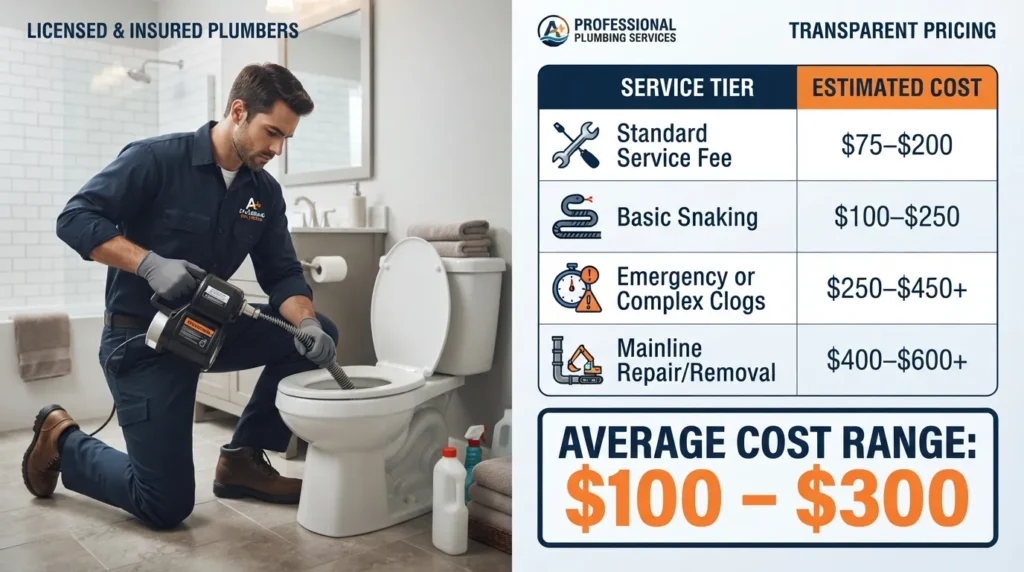
- Standard Service Calls: Routine mainline snaking during regular business hours generally ranges from $150 to $350.
- Advanced Services: Hydro-jetting packages or comprehensive sewer camera inspections typically range from $300 to $600+.
- Pricing Variables: Costs increase for after-hours emergency dispatches, severely compacted tree root intrusions, or jobs requiring excavation to locate buried cleanouts.
What to Expect When a Plumber Arrives
Professional plumbing technicians follow a structured diagnostic workflow to ensure your sewer system is cleared safely and efficiently. Knowing the process helps facilitate a smooth repair.
- Initial Assessment: The plumber evaluates your symptoms, locates the primary cleanout access point, and checks for active indoor backups.
- Targeted Execution: Technicians deploy commercial-grade snakes or hydro-jetters through the cleanout while protecting surrounding interior or exterior surfaces.
- Verification and Cleanup: Professionals finish by running a camera check or testing household fixtures to guarantee full flow restoration and a tidy workspace.
Cleanout Maintenance Tips
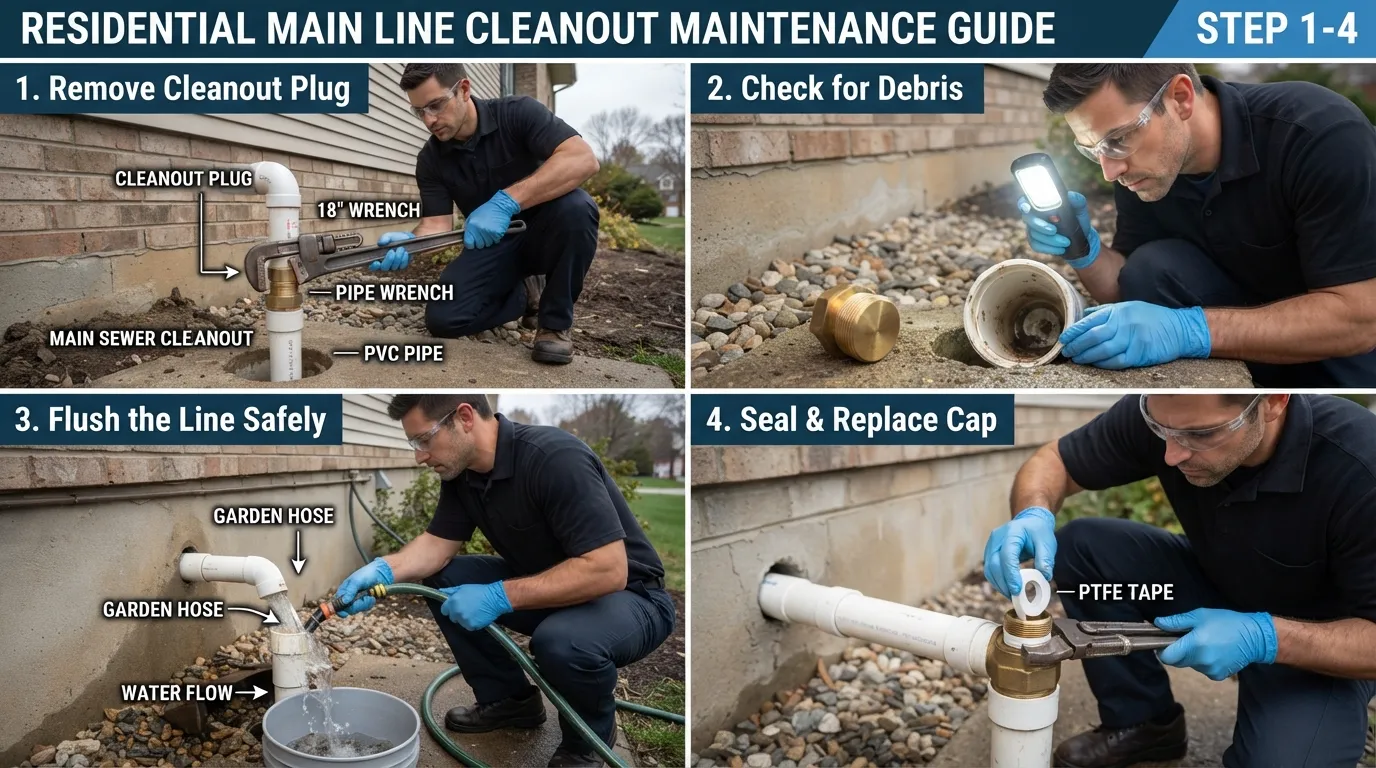
Proactive maintenance of your plumbing cleanout helps prevent catastrophic sewer backups and costly emergency repairs. Implementing a simple inspection routine ensures your entire drainage infrastructure remains clear and fully functional year-round.
How Often to Inspect Your Cleanout
Establish a regular schedule to check your cleanout access points, especially if your property features mature trees or older drainage pipes. Routine seasonal checks catch small issues before they escalate into major plumbing failures.
- Bi-Annual Checks: Inspect outdoor and indoor cleanout caps every six months to verify they remain tightly sealed and free of cracks or corrosion.
- Post-Storm Inspections: Check outdoor yard risers after heavy downpours or freezing winters to ensure shifting soil or frost heaves have not damaged the capped riser.
- Annual Professional Audit: Consider scheduling an annual camera inspection through your cleanout if your neighborhood is prone to invasive tree roots or shifting clay soils.
Signs Your Cleanout Needs Attention
Your plumbing system often provides subtle warning signs before a main sewer line completely fails. Recognizing these indicators allows you to service the cleanout before an indoor sewage backup occurs.
- Slow Drainage Across Fixtures: If multiple sinks, showers, and toilets drain sluggishly at the same time, your main sewer line is likely accumulating a heavy blockage.
- Unpleasant Sewer Odors: Foul gas smells lingering near outdoor cleanout caps indicate a loose seal or a cracked plug that needs immediate replacement.
- Soggy Yard Patches: Unexplained wet, pooling spots in your lawn directly along the sewer line path point to a cracked pipe or leaking cleanout junction.
Simple Preventive Maintenance Habits
Adopting smart daily household habits drastically reduces the strain on your main drainage system and keeps your cleanout clear of avoidable debris. Prevention is always more cost-effective than emergency unblocking.
- Watch What You Flush: Never dispose of grease, coffee grounds, wet wipes, paper towels, or hygiene products down household drains, regardless of labeled “flushable” claims.
- Keep Caps Clear: Maintain clear landscaping around outdoor yard risers so you can access them instantly during an emergency without digging through thick mulch or shrubs.
- Install Root Barriers: Apply approved root-inhibiting treatments or professional barriers around sewer laterals if fast-growing trees are planted nearby.
Frequently Asked Questions
Find direct, expert answers to the most common questions regarding plumbing cleanouts, maintenance, and system identification to help you manage your home drainage network efficiently.
What happens if you don’t have a sewer cleanout?
Without a dedicated cleanout, clearing main line clogs becomes significantly harder and more destructive. Plumbers may have to pull toilets off their flanges or work through roof vent stacks, increasing labor costs and raising the risk of indoor sewage backups during emergencies.
Do all houses have a plumbing clean out?
No, not all houses feature a cleanout. While modern building codes universally require them, older properties built before widespread code adoption often lack these access points, requiring retrofitting or alternative entry methods for maintenance.
How long does a sewer cleanout take?
A standard professional cleanout and snaking service generally takes between 45 minutes to 1.5 hours. More complex procedures involving hydro-jetting or high-definition camera inspections can extend the service time to 2 to 4 hours.
How do I know if I have a sewer cleanout?
You can verify if you have a cleanout by inspecting your exterior foundation walls for protruding capped pipes, walking your yard along the path to the street for flush ground boxes, or checking basement/crawl space walls near main drainage stacks.
Where is the sewer cleanout located on a house?
Outdoor cleanouts are typically located near the foundation wall or out in the yard along the sewer lateral path. Indoor cleanouts are usually found in basements, crawl spaces, utility rooms, or garage floors near the lowest horizontal pipe runs.
Do all floor drains have cleanout plugs?
No, standard floor drains feature internal P-traps designed to hold standing water and block sewer gases rather than serving as dedicated cleanout access ports for heavy main-line cables.
Can a floor drain act as a cleanout?
Floor drains cannot serve as main sewer cleanouts. Their internal trap bends and narrow fixture branch lines prevent the safe passage of commercial-grade sewer snakes and camera inspection equipment.
What does a cleanout drain look like?
A cleanout drain consists of a vertical pipe riser sealed with a removable screw-on cap or threaded plug. Outdoor versions often feature white PVC standpipes or flush ground boxes, while indoor versions use brass or plastic plugs fitted into drainage stacks.
What is the best tool for removing sewer cleanout caps?
The best tool depends on the cap type: tongue-and-groove pliers work best for standard raised square plastic nuts, heavy-duty pipe wrenches are ideal for seized metal caps, and specialty T-handle tools are designed for flush-mounted recessed plugs.
What does a sewer cleanout cap look like?
A sewer cleanout cap is typically a round or square plastic, brass, or cast-iron lid featuring a prominent square nut or plug head designed to be gripped and turned counterclockwise with wrenches or pliers.
Conclusion
Understanding your home plumbing cleanout is one of the most effective ways to protect your property from unexpected sewage backups and costly emergency repairs. Whether your access point is located neatly in the yard or positioned near your basement foundation, knowing how to identify, access, and maintain it gives you a distinct advantage as a homeowner.
Key Takeaways
Mastering the fundamentals of your drainage system ensures long-term reliability and peace of mind. Keep these core principles in mind when managing your plumbing infrastructure:
- Know Your Access Points: Locate your outdoor and indoor cleanouts before an emergency strikes so you can act quickly when trouble arises.
- Respect the Limits of DIY: Routine snaking through a cleanout can clear minor blockages, but severe root intrusions or broken sewer lines always require professional intervention.
- Prioritize Prevention: Maintain clear caps, watch what goes down your household drains, and schedule routine inspections to keep your sewer line flowing smoothly for years to come.

Oscar Vance | Master Plumber & Drainage Expert
Meet Oscar Vance, a licensed master plumber sharing practical solutions on residential repairs, preventive maintenance, and thoughtful home upkeep.