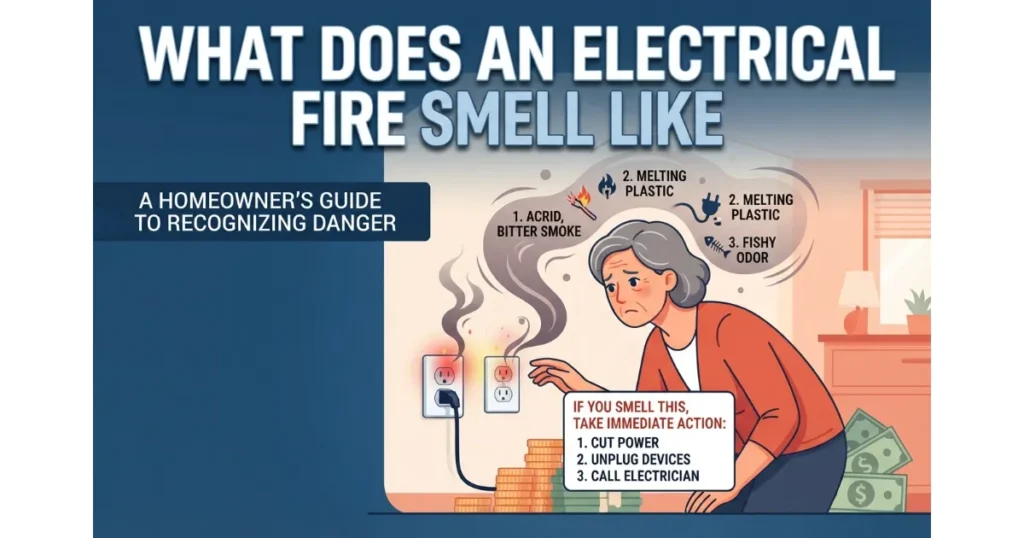
How to Put Out an Electrical Fire
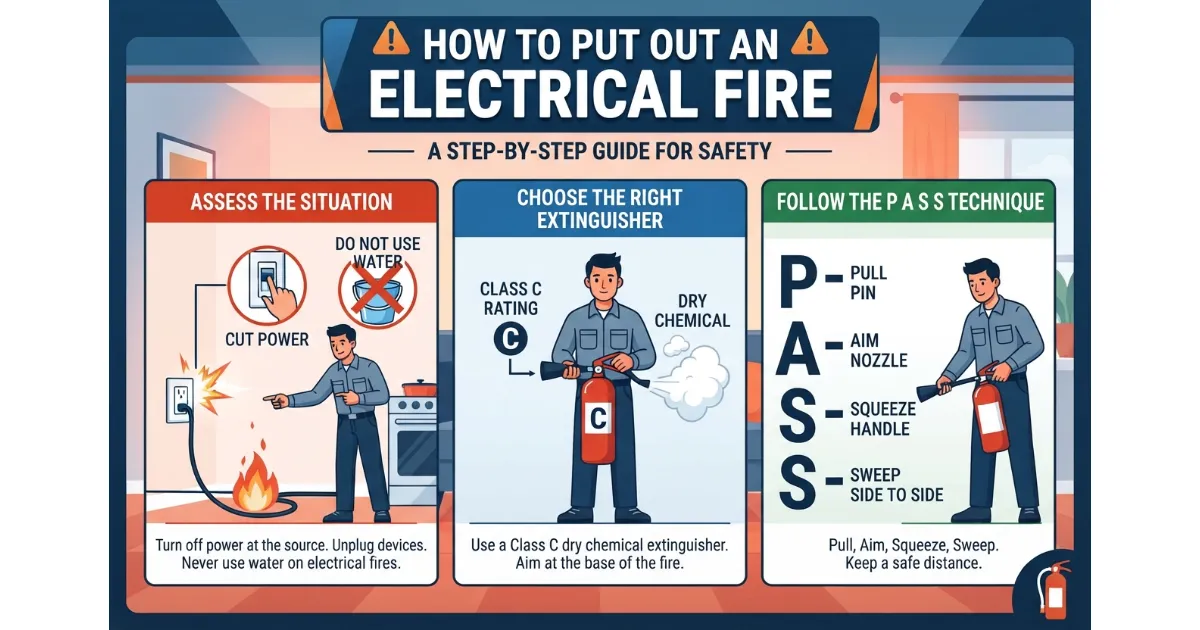 When facing an electrical fire, immediate action is critical to prevent electrocution and contain the hazard. Understanding the exact sequence of steps and knowing what to avoid can protect lives and property during an emergency.
The 4 Steps in 15 Seconds
In high-pressure situations, quick and methodical execution is vital. Follow this urgent, four-step sequence to manage the incident safely:
- Cut the power: Immediately shut off the circuit breaker or unplug the appliance if it is safe to reach without risking shock.
- Use the right extinguisher: Apply a Class C, ABC, or carbon dioxide (CO₂) extinguisher directly at the base of the fire.
- Smother small flames: If an extinguisher is unavailable and the flame is very small, smother it using baking soda.
- Evacuate and call emergency services: If the fire spreads beyond a tiny area or persists, immediately evacuate the building and call emergency services.
The One Rule Never Use Water
Never throw water on an electrical fire. Water acts as a conductor for electricity, meaning that pouring water on live circuits can result in severe or fatal electrocution and can even cause the fire to spread further.
Only Fight a Fire That Is Small and Contained
You should only attempt to tackle an electrical fire if it remains contained to a small area, you possess the correct extinguisher, and your escape route is completely clear. Review the critical safety protocols below to understand when it is time to evacuate immediately.
Should You Fight an Electrical Fire or Leave?
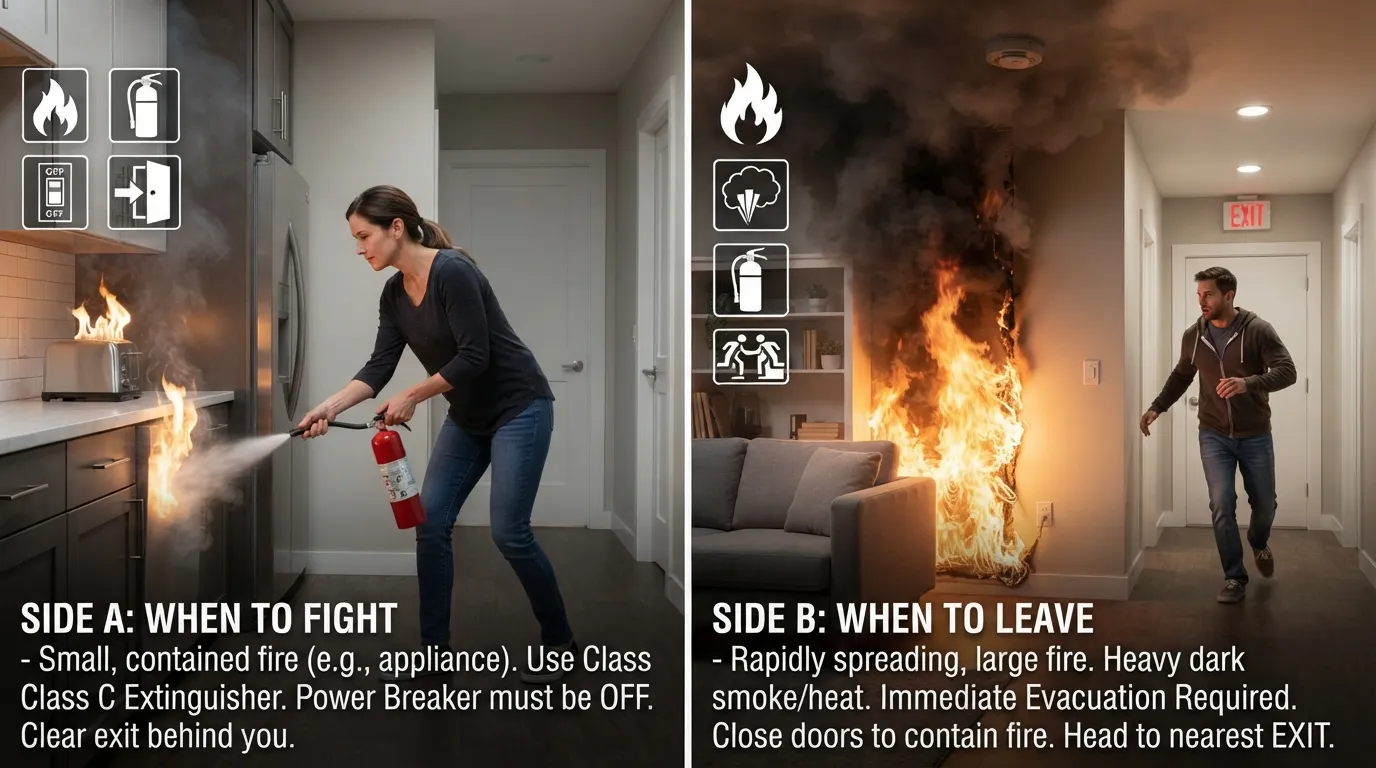 Deciding whether to fight an electrical fire or evacuate immediately is a critical judgment call that can prevent severe injury or smoke inhalation. Assessing environmental factors instantly helps determine your safest course of action.
When It Is Safe to Try Fighting the Fire
Attempting to suppress an electrical fire is only appropriate under strictly controlled conditions. Verify all of these criteria before using an extinguisher:
- Size: The fire is smaller than a standard waste bin.
- Exit access: Your escape route is completely clear and located directly behind you.
- Equipment: You have the correct Class C, ABC, or CO₂ extinguisher ready in hand.
- Air quality: There is no heavy smoke filling the room, allowing you to breathe and see clearly.
When to Evacuate Immediately
Many fires escalate rapidly beyond safe control parameters. If you notice any of the following conditions, abandon any attempt to fight the fire and evacuate at once:
- Rapid spread: The flames are spreading quickly beyond the initial point of ignition.
- Blocked paths: Your primary exit route is compromised by fire, debris, or intense heat.
- Smoke buildup: Heavy toxic smoke is accumulating rapidly, threatening visibility and breathing.
- Hidden ignition: The fire is burning inside a wall, ceiling, or electrical panel.
- Uncertainty: You feel hesitant, lack the right extinguisher, or are unsure of what to do.
The 2-Minute Rule of Thumb
Time is of the essence when dealing with live electrical hazards. If a single fire extinguisher does not clearly and rapidly control the flames within two minutes, stop immediately, leave the area, and let emergency responders handle the situation.
What to Do as You Leave
Safe evacuation requires disciplined execution to minimize structural fire spread and protect your life. Follow these steps as you exit the premises:
- Close doors: Shut doors behind you as you leave to help starve the fire of oxygen and slow its spread.
- Leave belongings: Do not waste precious seconds retrieving personal items or valuables.
- Call for help: Contact emergency services and the local fire brigade immediately once you are safely outside.
Do Not Fight It at All If
Certain scenarios render firefighting efforts entirely unsafe from the start. Never attempt to put out an electrical fire if the active electrical panel or burning outlet is directly in your path, or if the flames have already penetrated the building’s walls.
How to Put Out an Electrical Fire Step by Step
Successfully managing an electrical incident requires a precise, methodical approach. Following structured safety steps protects you from electrocution while ensuring the fire is effectively extinguished.
Step 1: Cut the Power Only If You Can Do It Safely
Disconnecting electricity eliminates the primary shock hazard and converts a live circuit fire into a standard material fire. Proper execution prevents catastrophic injury:
- Reaching the breaker box: Ensure your hands are completely dry, stand to the side of the electrical panel to shield your body, and flip the main or area switch off.
- When NOT to cut power: Do not attempt to reach the circuit breaker if the electrical panel is engulfed in flames, your evacuation route is blocked, or smoke and sparks are directly surrounding the outlet.
- Unplugging a device: Only pull the plug from the wall if the cord, plug, and outlet are entirely free of active flames and heavy smoke.
Step 2: Extinguish the Fire
Once power is safely cut, deploy the correct Class C, ABC, or carbon dioxide extinguisher. Use the proven PASS method for efficient suppression:
- Pull: Pull the pin locking the extinguisher handle.
- Aim: Point the nozzle directly at the base of the fire rather than the flames.
- Squeeze: Squeeze the handle firmly to release the extinguishing agent.
- Sweep: Sweep smoothly from side to side until the fire appears completely out.
Step 3: Smother a Very Small Flame
If you do not have an extinguisher and are dealing with a microscopic, contained spark on an appliance, you can smother it. Use a specialized fire blanket or pour a generous amount of baking soda over the area to cut off its oxygen supply.
Step 4: Stay Back and Watch for Re-ignition
Never walk away immediately after the flames disappear. Internal wiring, insulation, or components can retain high heat and cause the electrical fire to flare up again unexpectedly.
Step 5: Call Emergency Services Even If the Fire Looks Out
Always notify professional responders following an electrical fire incident. Hidden thermal energy inside walls or melted wiring harnesses can easily restart a hidden blaze hours later.
Do Not Touch: Smoking Appliances Frayed Cords and Nearby Metal
Treat all damaged electrical components as live and dangerous until inspected by a professional. Never touch smoking appliances, exposed or frayed cords, or metal enclosures near the incident zone to prevent secondary shocks.
What NOT to Use on an Electrical Fire
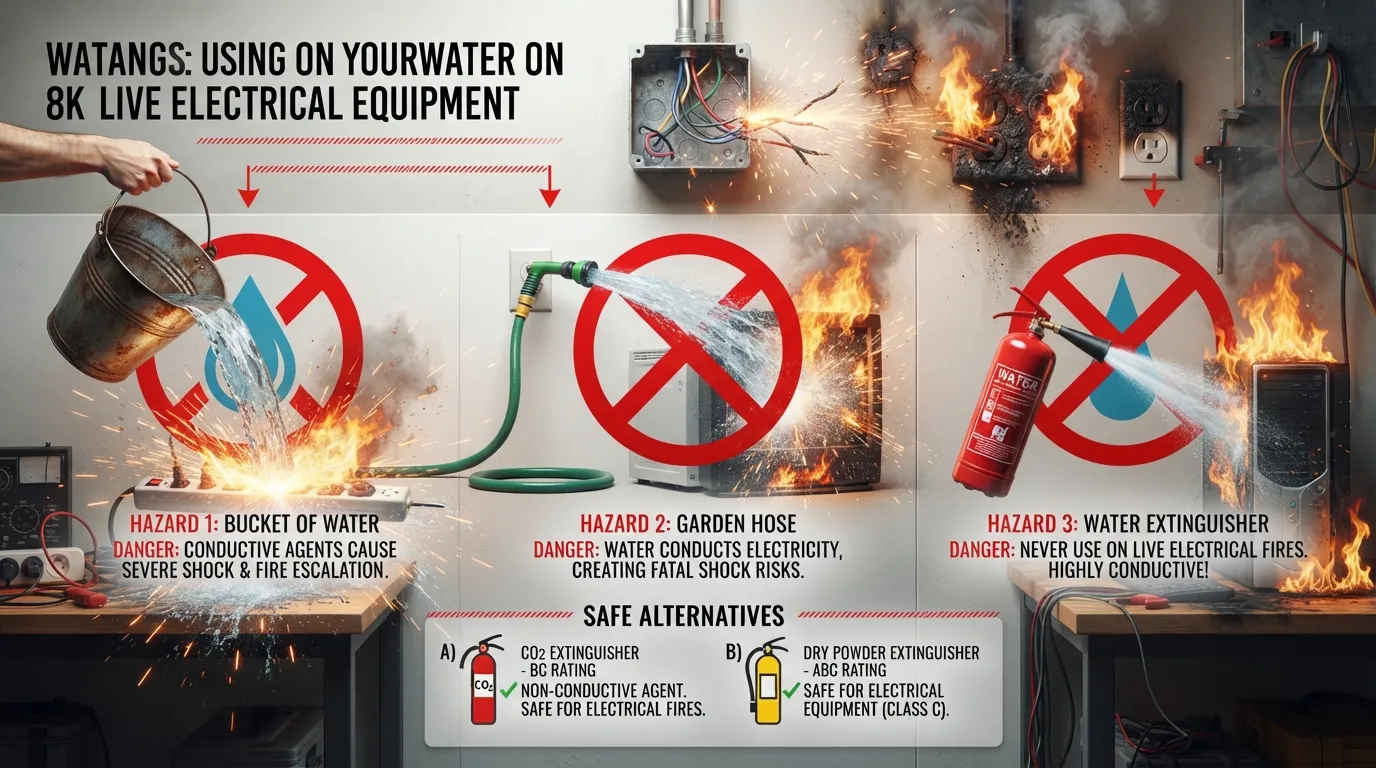 Using incorrect extinguishing methods during an electrical emergency can instantly escalate a minor spark into a fatal accident or a structural disaster. Knowing what substances to avoid is just as crucial as knowing what equipment to use.
Why Water Is Dangerous
Water is an exceptional electrical conductor due to dissolved minerals and impurities. Pouring water on live equipment creates an immediate pathway for electrical current to travel back through the stream, resulting in severe electrocution or death. If someone has already thrown water on an electrical fire, stay completely clear of any puddles, shut off the power at the main breaker panel only if safe to do so, and call emergency services immediately.
Can You Use Salt or Sand?
No, avoid both. Salt is unreliable and contains moisture, which can still cause conductive shock hazards around live wiring. While sand is non-conductive, it is completely impractical for indoor home fires, as it ruins sensitive electronics and fails to smother vertical or overhead surfaces effectively.
Can You Use a Regular Water Extinguisher?
No. Standard Class A extinguishers utilize pressurized water designed exclusively for ordinary combustibles like wood and paper. Using them on live equipment guarantees a dangerous shock hazard.
Can You Use a Fire Extinguisher Marked Class A Only?
No. Always check the safety label on the cylinder before use. An extinguisher marked strictly for Class A fires lacks the chemical composition required to suppress energized electrical components safely.
Is Using a Bucket of Water Effective?
No. A bucket of water delivers a high-volume surge that drastically increases your exposure to electrical conductivity, risking massive shock feedback and dangerous steam expansion.
Common Mistakes Checklist
Avoid these critical errors that frequently turn a manageable electrical incident into a catastrophe:
- Opening walls: Never rip open drywall or ceilings to look for hidden wires while the circuit is still live.
- Leaving fires unattended: Never walk away from a seemingly extinguished appliance without monitoring for thermal re-ignition.
- Ignoring lingering smells: Never dismiss a persistent burning plastic or electrical odor once the flames appear out; hidden short circuits can flare up again.
The Best Fire Extinguisher for an Electrical Fire
Choosing the correct fire extinguisher is essential when managing energized electrical equipment. Using the wrong agent can result in severe electrocution or allow a hidden spark to re-ignite rapidly.
Which Extinguisher Is Best for Electrical Fires?
The most effective extinguishers for electrical fires are carbon dioxide (CO₂) and dry chemical (ABC) extinguishers. Never use water-based devices on live circuits due to extreme shock risks.
Will an ABC Extinguisher Put Out an Electrical Fire?
Yes. An ABC dry chemical extinguisher effectively suffocates electrical fires by blanketing the flames and interrupting the chemical reaction. However, it leaves behind a dense powder residue.
ABC vs CO₂: Which Is Better?
Comparing these two primary types helps determine which fits your specific environment and equipment sensitivity:
What Kinds of Fires Is ABC Not Good For?
While versatile, ABC dry chemical extinguishers are not universally applicable. They are ineffective and potentially dangerous for cooking oil and fat fires (Class K) and certain combustible metal fires (Class D).
Class C Class E or No Class? Why Labels Differ by Country
Extinguisher classification labels vary significantly across international regulatory standards. For detailed insights, consult the official fire service electrical safety guidance:
- United States: Class C designates energized electrical equipment; once power is cut, it transitions to a Class A or B fire.
- United Kingdom and Europe: Class C denotes flammable gases, while electrical equipment has no separate class designation, making pictogram symbols on the label essential.
- Australia and others: Class E is commonly used specifically to designate electrical equipment risks.
How to Check Your Extinguisher Before You Need It
Routine inspection ensures your equipment operates reliably during a crisis. Verify these critical parameters regularly:
- Pressure gauge: The indicator needle must rest firmly in the green operational zone.
- Safety pin and seal: The tamper seal must be intact and the locking pin firmly in place.
- Inspection date: Check the maintenance tag to ensure professional servicing is up to date.
Can a Regular Dry Powder Extinguisher Be Used?
Yes, under specific conditions. Standard dry powder extinguishers are acceptable for electrical equipment because the powder is non-conductive. However, the heavy residue can permanently corrode internal components of electronics long after the fire is out.
How to Put Out an Electrical Fire Without an Extinguisher
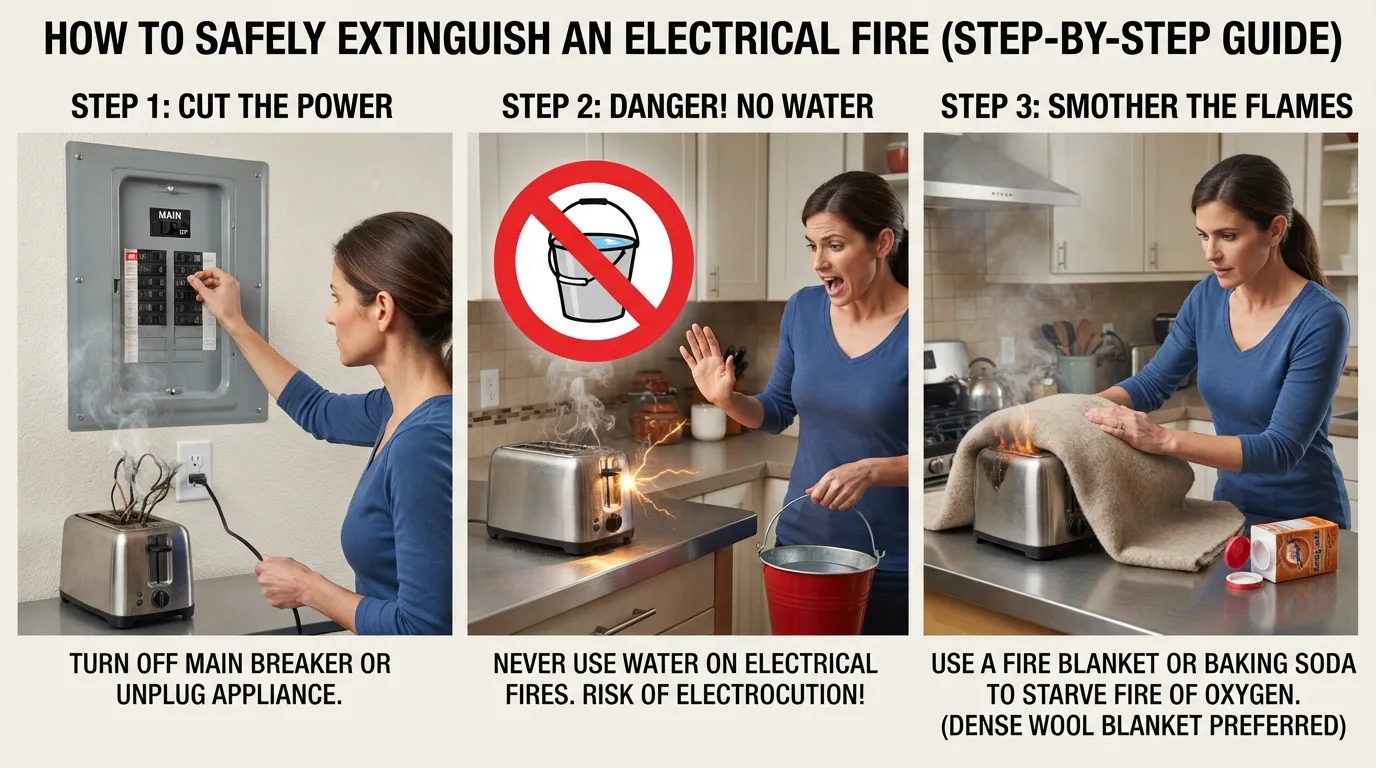 Faced with an electrical fire when no fire extinguisher is nearby requires improvising with safe, alternative suppression methods. Immediate action combined with proper material selection prevents the flames from escalating out of control.
Step 1: Cut the Power If Safe
De-energizing the circuit remains the absolute mandatory first step regardless of whether you possess an extinguisher. Shutting off the main breaker or unplugging the device stops the continuous supply of electrical current feeding the hazard.
Step 2: Baking Soda: When It Works and When It Does Not
Baking soda (sodium bicarbonate) releases carbon dioxide when heated, effectively smothering tiny flames. Apply these rules carefully:
- When it works: Use it exclusively for very small, localized sparks on an appliance or outlet. Pour the powder gently over the base of the fire rather than throwing it loosely.
- When it does not: Never use baking soda on a spreading fire, inside an appliance cavity, or on flames larger than a small waste bin.
Step 3: Using a Fire Blanket
A heavy fiberglass fire blanket can starve a small fire of oxygen. Only deploy a fire blanket after the electrical device has been successfully unplugged or de-energized, holding the corners to shield your hands and laying it carefully over the flames from the front.
Step 4: Covering With a Lid or Heavy Non-Flammable Cover
For small appliance fires (such as a toaster or kitchen gadget), you can cut off oxygen by placing a metal lid or heavy ceramic plate over the source. Only attempt this at arm’s length if you can do so safely without risking burns or smoke inhalation.
Step 5: What to Do If None of These Are Available
If you lack an extinguisher, baking soda, a fire blanket, or a suitable cover, do not attempt improvised firefighting. Immediately evacuate the building, close doors behind you to contain the smoke, and call emergency services from a safe location outside.
How to Put Out an Electrical Fire Without Baking Soda
If baking soda is unavailable, your only safe options are cutting the power immediately, deploying a fire blanket, or using a heavy metal lid for small appliance fires. If none of these methods are feasible, your sole recourse is to evacuate immediately and let professional responders handle the incident.
Special Situations: Outlet Wall Appliance Computer and Battery Fires
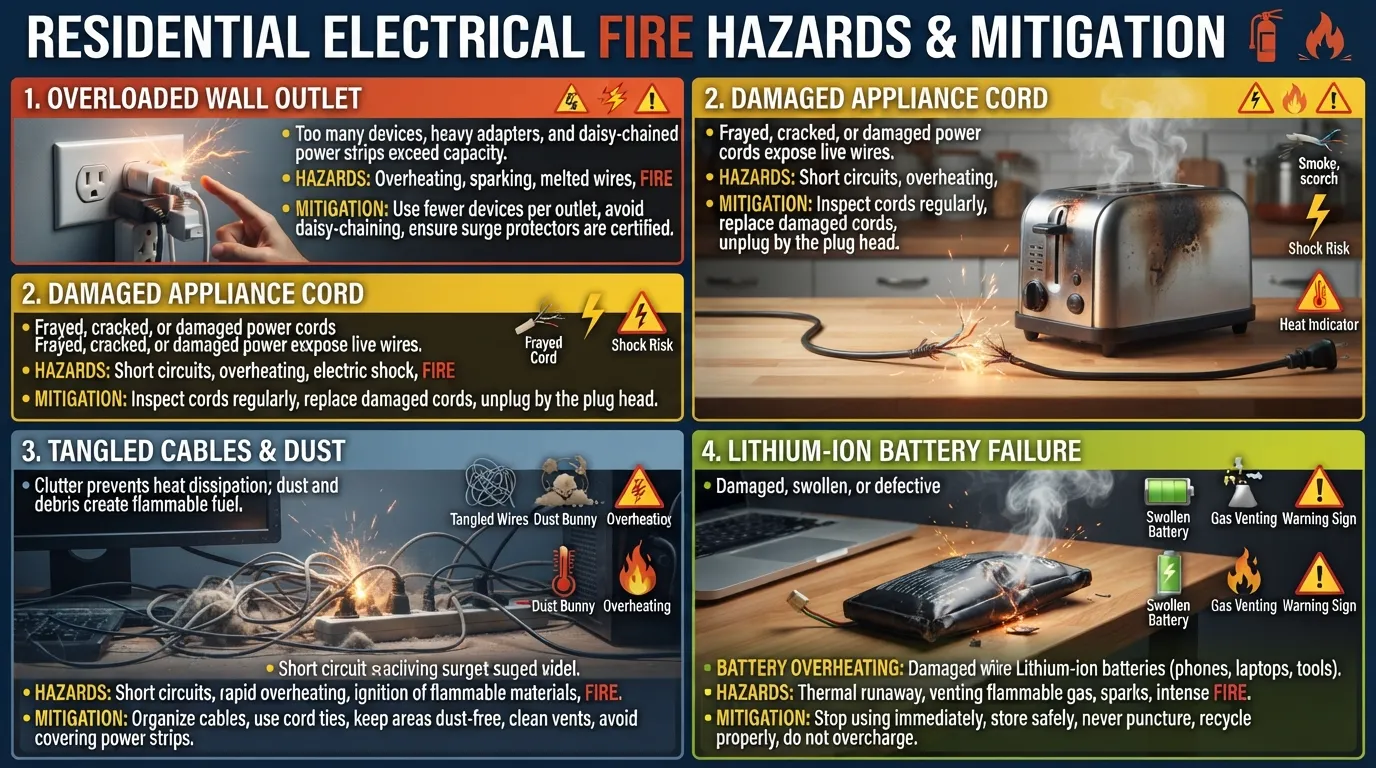 Different electrical equipment requires specialized handling during a fire to avoid catastrophic shock hazards or thermal explosions. Understanding these context-specific tactics ensures maximum safety across unique emergency scenarios.
Fire at an Electrical Outlet or Socket
To manage an electrical fire at a wall outlet or socket safely, immediately shut off power at the main circuit breaker if accessible. Never use water on live sockets; instead, deploy a Class C, ABC, or carbon dioxide extinguisher from a safe distance while keeping clear of the terminal.
- Cut the power: Switch off the corresponding breaker instantly to stop live current flow before attempting suppression.
- Extinguish cautiously: Use CO₂ or dry chemical ABC extinguishers without placing your body directly in front of the active terminal.
Fire Inside a Wall or Ceiling
Never attempt to break open a wall or ceiling to locate an in-wall wiring fire. Doing so introduces oxygen and can cause a sudden flashover; instead, shut off the main breaker if safe, close all room doors, evacuate immediately, and call professional emergency services.
- Do not open drywall: Ripping open walls fuels the hidden fire with fresh oxygen and risks fatal structural collapse or shock.
- Evacuate and notify: Get outside immediately and alert the fire brigade to investigate hidden electrical conduits safely.
Appliance Fire Toaster Microwave Heater TV
For burning appliances like toasters, microwaves, space heaters, or televisions, unplug the unit immediately if the plug is safely reachable. If a microwave catches fire inside, keep the door tightly shut to smother flames, unplug it, and never open the door to inspect.
- Keep microwaves closed: Opening a burning microwave feeds it oxygen and causes instant, dangerous flare-ups.
- Unplug safely: Disconnect power only if the cord and plug remain entirely clear of direct flames and heavy smoke.
Computer Server or Electronics Fire
Protect high-value tech infrastructure by prioritizing CO₂ or clean-agent extinguishers for computer or server fires. While ABC dry chemical powder puts out flames effectively, its corrosive residue permanently destroys circuit boards, hard drives, and sensitive server components.
- Use CO₂ or clean agents: Prevent residue damage to electronics by choosing non-damaging gaseous suppressants.
- Power down racks: Disconnect uninterruptible power supplies (UPS) and rack power distribution units instantly if accessible.
Lithium-Ion Battery Fires Phones Laptops E-Bikes Power Banks
Lithium-ion battery fires in phones, laptops, e-bikes, or power banks undergo thermal runaway and can violently reignite even after appearing extinguished. Evacuate rather than fight growing battery fires, stay clear of toxic smoke, and call emergency services.
- Beware thermal runaway: Damaged lithium cells generate internal chemical heat that causes explosive, unpredictable re-ignition.
- Prioritize evacuation: Avoid breathing toxic battery fumes; get outside and let professionals handle the hazard.
Electric Vehicle or Charger Fire
Never approach a burning electric vehicle (EV) or high-voltage home charger due to extreme voltage risks and rapid thermal runaway. Immediately leave the surrounding area, keep onlookers back, and call emergency services to manage high-voltage battery hazards.
- Maintain safe distance: High-voltage EV systems require specialized firefighter intervention and massive water volumes to cool.
- Alert authorities: Report vehicle or charger fires instantly to emergency responders for specialized high-voltage protocols.
After the Fire Is Out: What to Do Next
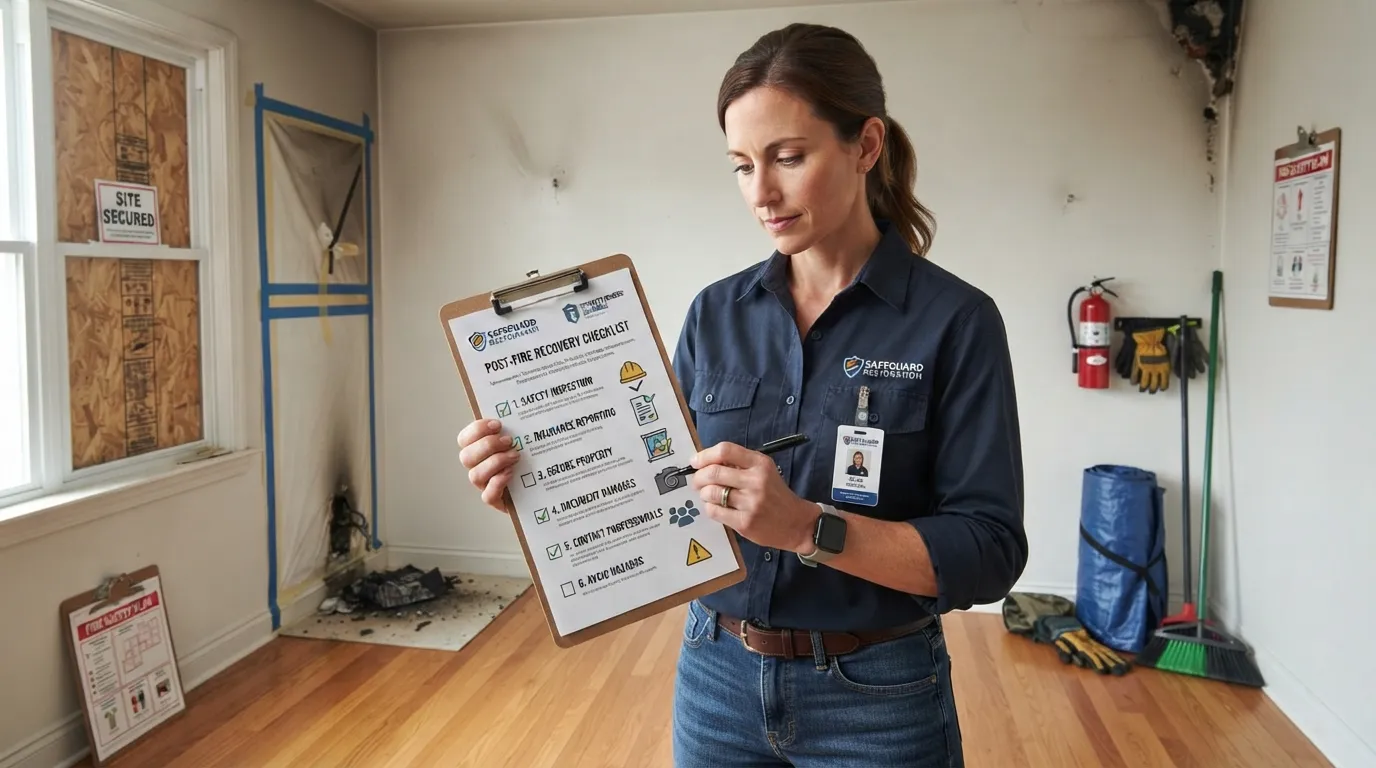 Successfully suppressing an electrical fire is only the first part of the emergency response. Taking systematic safety precautions during the aftermath prevents hidden heat sources from triggering a devastating secondary blaze.
Keep the Power Off and the Area Clear
Leave the circuit breaker tripped and keep the damaged appliance or outlet completely disconnected. Restrict access to the affected room, keeping children and pets away until safety professionals clear the environment.
Watch for Re-ignition for at Least 30–60 Minutes
Monitor the incident site continuously for a minimum of 30 to 60 minutes. Carefully inspect nearby walls, switches, and wiring for residual heat, wisps of smoke, or faint burning plastic odors.
Call Emergency Services to Confirm It Is Out
Always contact emergency responders even if the visible flames have been completely extinguished. Firefighters use thermal imaging cameras to detect invisible, high-heat shorts hidden within wall cavities.
Get a Licensed Electrician to Inspect Before Restoring Power
Never flip the circuit breaker back on or attempt to use the wiring until a licensed electrician conducts a full safety inspection. Professional testing ensures internal wire insulation has not melted or created latent short-circuit risks.
Replace or Service the Extinguisher You Used
Once a fire extinguisher has been discharged—even if only partially—its internal pressure drops and it loses reliability. Have the cylinder professionally recharged or replace it immediately to maintain home safety readiness.
Notify Your Landlord or Insurer and Document Damage
Take clear, timestamped photographs of all burnt components and affected surfaces before starting any cleanup. If you rent your home, notify your landlord immediately, or contact your insurance provider to initiate damage documentation and repair claims.
Warning Signs and How to Prevent Electrical Fires
Preventing electrical fires before they start is the ultimate defense against property loss and injury. Recognizing subtle warning signs and maintaining proper home safety habits drastically reduces your long-term electrical risks.
8 Warning Signs of Faulty Wiring
Electrical hazards often provide subtle warning signs long before open flames appear. Stay vigilant for these eight indicators:
- Burning smell: A persistent odor of melting plastic or fishy smells near outlets and appliances.
- Warm or discolored outlets: Switchplates or wall outlets that feel warm to the touch or show yellow/brown discoloration.
- Flickering lights: Bulbs that dim or flicker unexpectedly when large appliances turn on.
- Frequent breaker trips: Circuit breakers that shut off repeatedly for no obvious reason.
- Buzzing sounds: Audible humming, crackling, or buzzing coming from walls, switches, or outlets.
- Sparking: Small sparks or a mild shock when plugging in devices.
- Scorch marks: Black or dark brown charring around plugs, sockets, or appliance cords.
- Melted plugs: Plugs or cords that show signs of thermal warping or deformation.
Top Causes of Home Electrical Fires
Understanding what triggers electrical incidents helps you target household vulnerabilities. The leading culprits include:
- Overloaded sockets: Plugging too many high-wattage devices into a single outlet or power strip.
- Damaged cords: Frayed, pinched, or cracked insulation on power cables and appliance wires.
- Old wiring: Outdated aluminum or knob-and-tube wiring unable to handle modern electrical loads.
- Faulty appliances: Defective internal components, worn heating elements, or aging motors.
- Improper extension cords: Relying on temporary extension cords as permanent, in-wall wiring solutions.
Prevention Checklist
Implement these proactive prevention rules to keep your living space safe from electrical hazards:
- Avoid daisy-chaining: Never plug multiple extension cords or power strips into one another.
- Replace frayed cords: Instantly discard and replace any damaged, cracked, or worn appliance cords.
- Use surge protectors: Protect sensitive electronics and prevent power spikes using certified surge protectors.
- Keep cords clear: Never run electrical cords underneath carpets, rugs, or heavy furniture where heat can trap.
- Inspect older homes: Have a licensed professional evaluate the wiring if your home is more than 30 to 40 years old.
Keep a Fire Extinguisher and Know Where the Main Breaker Is
Accessibility is crucial during an emergency. Ensure a multi-class fire extinguisher is mounted in an easy-to-reach location (such as the kitchen or hallway), and make sure every adult in the home knows exactly how to access and flip the main circuit breaker.
A Simple Household Fire Plan
Prepare your household for rapid, calm execution in case an emergency occurs. Establish a clear escape route, designate a safe outdoor meeting place, and ensure children, elderly family members, and renters all understand the evacuation protocol.
Emergency Numbers by Country
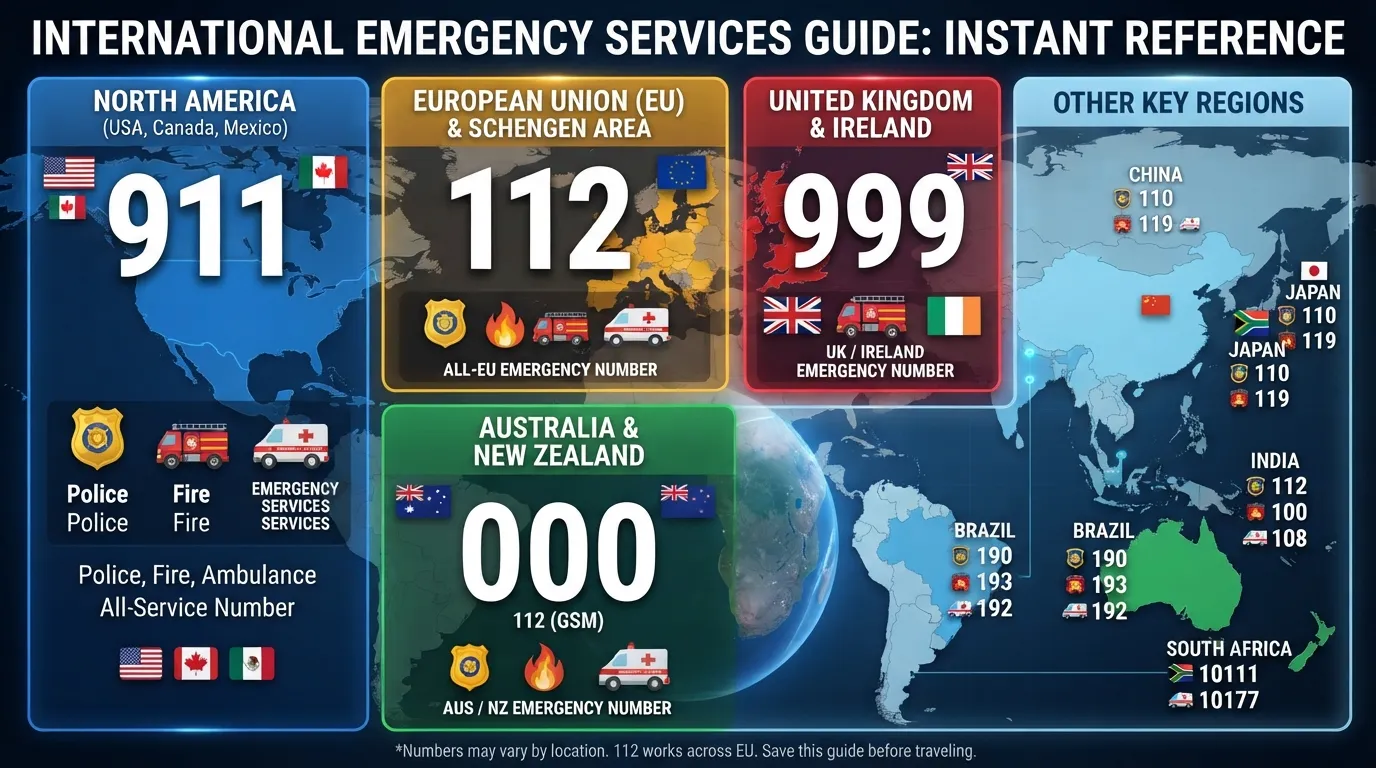 When an electrical fire escalates beyond safe containment, knowing the correct emergency services number for your specific region is vital. Quick communication with emergency dispatchers ensures rapid deployment of professional firefighters.
What to Tell the Operator
When you connect with an emergency dispatcher, speak calmly and clearly. Provide these essential details immediately:
- Exact location: Give your full address, building name, floor level, and apartment or office number.
- Nature of the emergency: State clearly that you are dealing with an active electrical fire.
- What is burning: Specify the source if known (e.g., wall outlet, appliance, meter box, or battery).
- Occupant status: Inform the dispatcher whether everyone has safely evacuated or if anyone remains trapped inside.
- Your contact info: Provide your name and phone number in case dispatch needs to call you back.
Frequently Asked Questions
Find quick, direct answers to the most common questions regarding electrical fire safety, emergency response protocols, and extinguishing techniques.
What is the best way to put out a small electrical fire?
The best way is to first cut the power at the circuit breaker if safe. Then, use a Class C, ABC, or carbon dioxide (CO₂) fire extinguisher by aiming at the base of the flames using the PASS method. For tiny, contained appliance sparks without an extinguisher, baking soda can smother the flame.
What is the first thing to do in an electrical fire?
The absolute first thing to do is disconnect the electricity by shutting off the circuit breaker or unplugging the appliance. Removing the power source eliminates the electrical hazard, turning a dangerous live circuit fire into a standard, manageable material fire.
Can I use flour to put out an electrical fire?
Never use flour to put out an electrical fire. Flour is a fine, organic powder that is highly combustible when airborne, meaning that throwing it onto flames can create a suspended dust cloud and trigger a violent secondary explosion.
What do you put on an electrical fire to put it out?
You should use a carbon dioxide (CO₂) or dry chemical ABC fire extinguisher on an electrical fire. If an extinguisher is unavailable and the flame is extremely small and contained, you can smother it using baking soda or a specialized fiberglass fire blanket.
Will an ABC fire extinguisher put out an electrical fire?
Yes, an ABC dry chemical extinguisher will successfully put out an electrical fire. It works by blanketing the flames and interrupting the chemical reaction, though it does leave behind a dense, corrosive powder residue that can harm sensitive electronics.
What is the best fire extinguisher for an electrical fire?
Carbon dioxide (CO₂) and dry chemical ABC extinguishers are the best choices. CO₂ is ideal for server rooms and electronics because it leaves zero residue, while ABC dry chemical extinguishers work well for general home and office use across multiple fire classes.
Which is better ABC or CO₂ fire extinguisher?
Neither is universally better; it depends on your environment. ABC extinguishers offer broader multi-class coverage and a longer range but leave a corrosive residue. CO₂ extinguishers have a shorter range but leave no residue, making them superior for delicate electronics and server rooms.
What kinds of fires is an ABC extinguisher not good for?
ABC dry chemical extinguishers are ineffective and dangerous when used on cooking oil and fat fires (Class K), which require wet chemicals, and certain combustible metal fires (Class D), which require specialized dry powder agents.
Can baking soda be used to extinguish an electrical fire?
Baking soda can be used exclusively on tiny, contained electrical sparks or minor appliance flames. When heated, sodium bicarbonate releases carbon dioxide to smother the fire, but it must never be used on large, spreading, or in-wall electrical fires.
How do firefighters put out electrical fires?
Firefighters first de-energize the circuit or utility lines. They then use appropriate extinguishing agents like CO₂ or dry chemical extinguishers, deploy thermal imaging cameras to check for hidden heat, and apply water only after the power is verified off.
What should you never use to put out an electrical fire?
You must never use water, a regular water extinguisher, a bucket of water, flour, salt, or sand on an energized electrical fire. Water and moisture conduct electricity and risk fatal electrocution, while flour can explode as airborne dust.
How do I put out an electrical fire in a wall?
Never attempt to open or break drywall during an in-wall electrical fire, as fresh oxygen causes dangerous flashovers. Instead, shut off the main circuit breaker if safe, close room doors, evacuate the building immediately, and call emergency services.
How do I put out an electrical fire from an outlet?
Instantly shut off the breaker controlling that outlet. If safe and small, use a CO₂ or ABC extinguisher from a distance. Never throw water on a socket, keep clear of the terminal, and evacuate immediately if the flames spread.
Can you leave an electrical fire unattended after putting it out?
Never leave an electrical fire unattended after the flames disappear. Internal wiring and melted components can retain high heat and cause the fire to reignite unexpectedly. Monitor the area continuously for 30 to 60 minutes and call professionals.

Oscar Vance | Master Plumber & Drainage Expert
Meet Oscar Vance, a licensed master plumber sharing practical solutions on residential repairs, preventive maintenance, and thoughtful home upkeep.