What Does IPS Stand for in Plumbing?
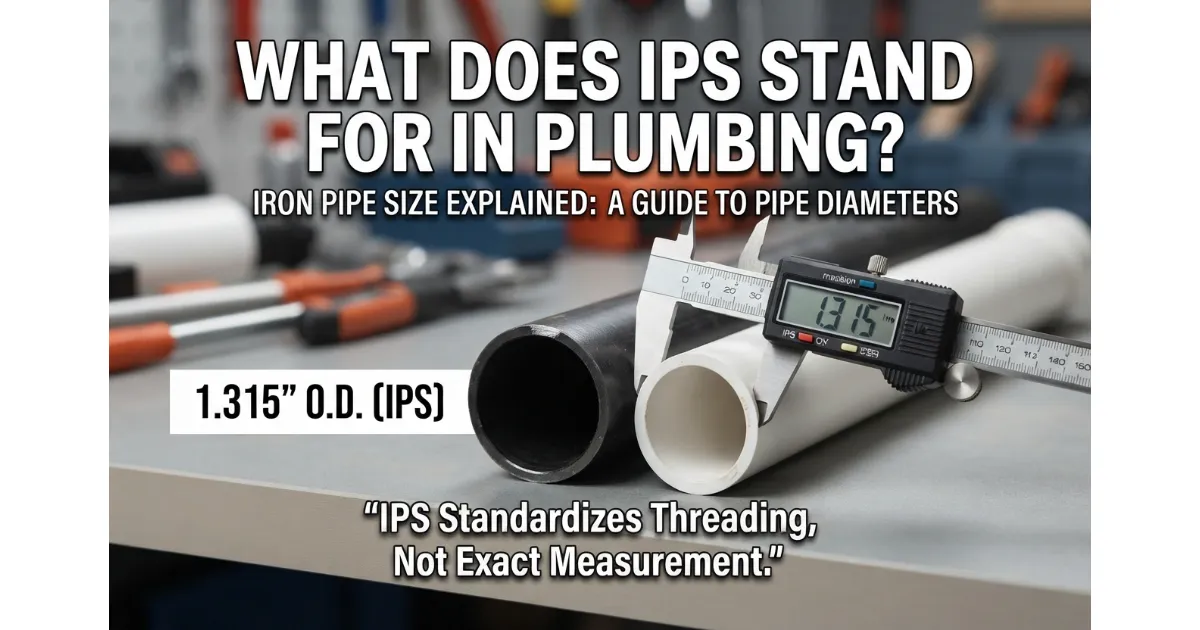 IPS stands for Iron Pipe Size, a standardized nominal sizing system used universally for plumbing pipes and fittings. Originally developed for traditional iron and steel infrastructure, this foundational plumbing standard now extends to modern thermoplastic materials like PVC and CPVC piping systems.
Why This Matters
Understanding the Iron Pipe Size standard is critical for every residential or commercial plumbing project. Using incorrect measurements or mismatched pipe standards inevitably leads to improper connections, structural component failure, and costly water leaks.
What You’ll Learn Below
- IPS vs. NPT: Key distinctions between nominal pipe dimensions and tapered thread standards.
- IPS vs. CTS: Direct comparisons between Iron Pipe Size and Copper Tube Size dimensions.
- Identification Methods: Practical, field-tested techniques to measure and identify pipe sizes accurately.
- Size Reference Chart: Detailed breakdowns of standard outer diameters and specifications.
What Is IPS Pipe Size and How Does It Work?
The Iron Pipe Size standard originated during the early eras of industrial manufacturing when nearly all heavy-duty plumbing infrastructure relied on thick-walled iron and steel. Although modern plumbing has largely transitioned to synthetic polymers, the original nominal labeling convention remains the universal standard for pipe manufacturing.
Nominal Size vs Actual Size: Why 1/2 IPS Isn’t 1/2 Inch
The term nominal size is a historical designation rather than a literal measurement of the inside diameter (ID) or outside diameter (OD). For instance, a standard 1/2 IPS pipe does not measure exactly 0.5 inches across its outer or inner wall; instead, its actual outside diameter measures consistently at 0.840 inches, with the inner diameter fluctuating based on wall thickness or schedule rating.
Why IPS Matters for Compatibility
The primary brilliance of the IPS system lies in interchangeability across different manufacturing brands. Because the outside diameter is strictly standardized:
- Fittings from one manufacturer lock seamlessly onto pipes produced by another.
- Threading standards align perfectly regardless of whether the material is schedule 40 PVC or black iron.
- Contractors can mix and match components without worrying about proprietary sizing mismatches.
What Does IPS Mean in Water Supply?
In residential and commercial water supply lines, IPS specifications dictate how main distribution arteries and heavy-duty supply runs are assembled. While flexible supply lines often use alternative sizing metrics, rigid supply risers and main shut-off valve assemblies heavily depend on Iron Pipe Size specifications to handle high-pressure flow safely.
Real-World Insight
When measuring a 3/4-inch schedule 40 PVC pipe on a residential job site using digital calipers, I frequently notice field technicians get confused when the outer diameter reads 1.050 inches instead of 0.75 inches. Always rely on an industrial pipe sizing chart rather than a direct tape measure when ordering threaded adapters to prevent installation delays.
IPS vs NPS vs SPS: What’s the Difference?
Nominal Pipe Size (NPS) is the North American standard designation for pipe sizes used for high and low pressures and temperatures. It is technically the modern, broader umbrella term that supersedes older historical labels like IPS for inch-based pipe sizing.
What Is SPS Straight Pipe Size and Where Do You See It?
Straight Pipe Size (SPS) refers to non-tapered pipe dimensions, most commonly found in specialized industrial mechanical applications, drainage configurations, or specific fluid-transport setups requiring parallel thread engagement rather than wedging tapered seals.
Are IPS and NPS the Same Thing?
Yes, for all practical purposes in modern plumbing and construction, IPS (Iron Pipe Size) and NPS (Nominal Pipe Size) are used interchangeably to describe the exact same outer diameter dimensions and sizing schedules.
IPS vs NPT: Size Standard vs Thread Standard
No, IPS and NPT are not the same thing. IPS defines the physical dimensions and sizing standard of the pipe, whereas NPT (National Pipe Thread) defines the geometry, angle, and sealing mechanism of the threads cut into that pipe.
What Is NPT National Pipe Thread?
National Pipe Thread (NPT) is a US standard for tapered threads used on threaded pipes and fittings. Unlike straight machine threads, NPT threads feature a slight taper along their length. As you screw an NPT male fitting into an NPT female fitting, the tapered flanks wedge tightly together to create a mechanical seal against fluid leaks.
How IPS and NPT Work Together
While they govern different characteristics, they are closely intertwined in real-world plumbing. A pipe manufactured to IPS outer diameter specifications will frequently have NPT threads machined onto its ends. The sizing standard provides the robust wall thickness necessary to support the tapered thread cutting process without compromising structural integrity.
Why People Confuse Them
Homeowners and apprentice plumbers often mix up these terms because pipe manufacturers frequently stamp or label components using both designations simultaneously (e.g., calling a threaded connector an “IPS fitting” when they are actually referring to its NPT thread compatibility). When inspecting hardware store bins, remember that you are checking the size of the pipe against IPS charts and verifying the threads against NPT standards.
IPS vs CTS vs PEX: Choosing the Right Standard
CTS stands for Copper Tube Size, a specialized sizing standard designed specifically for copper tubing systems. Unlike Iron Pipe Size, which scales based on legacy industrial iron dimensions, CTS dimensions closely align with actual outer measurements historically used for copper water lines.
IPS vs CTS: Why They Don’t Match
IPS and CTS use completely different outside diameter scales for nominal measurements. For example, a 1-inch IPS pipe has an outer diameter of 1.315 inches, while a 1-inch CTS copper tube measures 1.125 inches outside. Because their dimensions differ significantly, you cannot directly connect an IPS fitting to a CTS pipe without using a transition adapter or specialized union.
Is IPS Pipe the Same as PEX?
No, IPS pipe is not the same as PEX. While PEX tubing is often sized according to CTS dimensions for residential supply lines, cross-linked polyethylene operates as a flexible polymer rather than a rigid structural standard. PEX requires insert fittings and cinch clamps or expansion rings rather than rigid threaded connections.
Which One Do You Need?
- Choose IPS for rigid main supply lines, threaded industrial runs, and PVC or iron drainage structures.
- Choose CTS when working with traditional copper residential water supply branches or CTS-compatible CPVC distribution lines.
- Choose PEX for modern, flexible retrofits and fast residential repiping projects that minimize rigid joint connections.
IPS Connection on Faucets: IPS vs FIP Explained
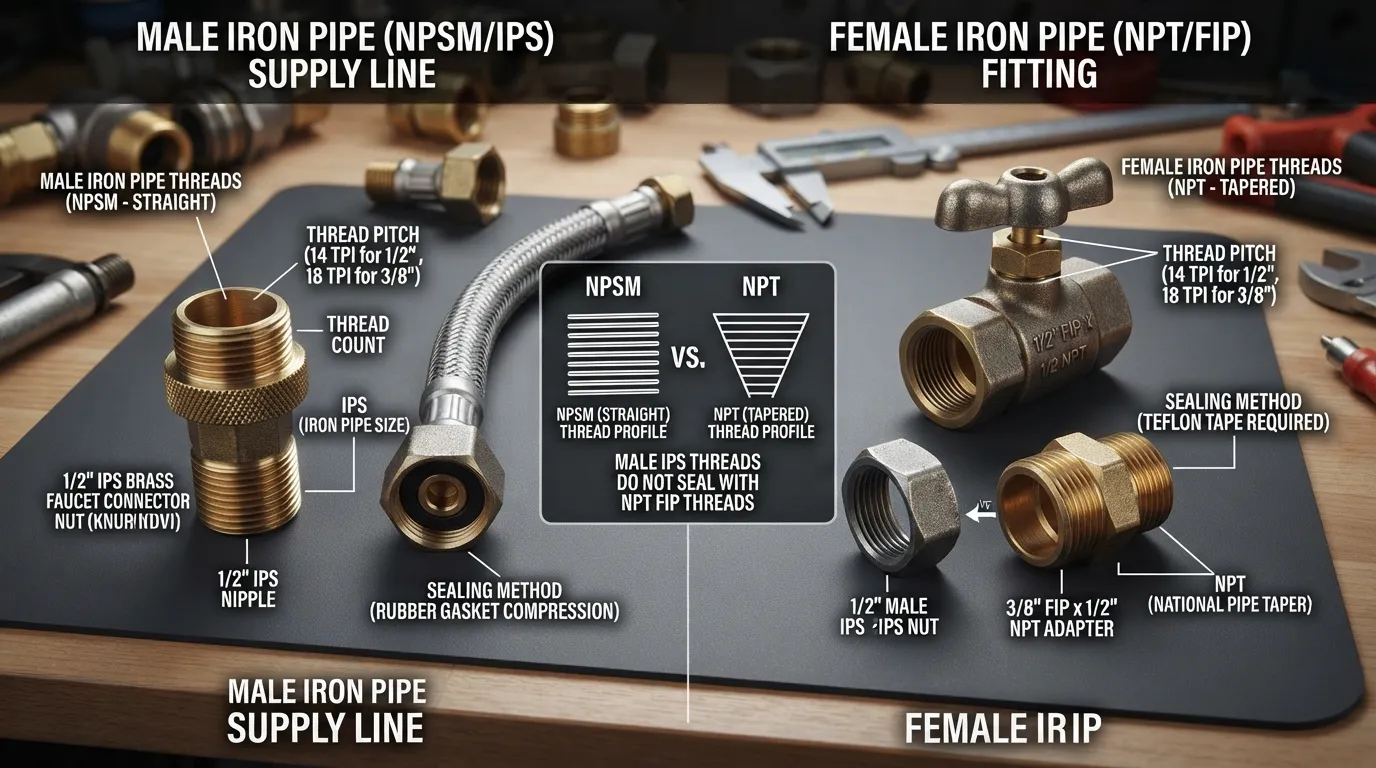 An IPS connection on plumbing fixtures refers to a threaded connection built to Iron Pipe Size standards. When shopping for faucets, bathroom fixtures, or water supply hoses, seeing an IPS designation means the connection follows standard outer diameter and thread counts derived from heavy-duty iron piping specs.
What Is an FIP Female Iron Pipe Connection?
An FIP connection stands for Female Iron Pipe, which is a specific subtype of threaded fitting. The “female” designation indicates that the internal threads are cut on the inside of the fitting, allowing it to screw directly onto a male threaded pipe or nipple.
IPS vs FIP: Difference and How to Tell Them Apart
Comparing these two terms highlights a common point of confusion because they describe different aspects of the same connection:
- IPS specifies the sizing system and thread pitch standards.
- FIP specifies the gender (internal threads) of that specific connection.
- In short, a faucet connection labeled as an “IPS connection” is typically an FIP threaded inlet designed to attach to standard male pipe nipples.
What to Check Before Buying a Faucet or Supply Line
- Verify whether your existing wall supply valve features male or female threads before ordering replacement hoses.
- Check the thread size dimensions using a caliper, keeping in mind that a 1/2-inch nominal IPS connection measures roughly 0.84 inches across.
- Confirm whether your plumbing uses standard tapered pipe threads (NPT/IPS) or straight parallel thread connections to prevent cross-threading.
Hands-On Tip
When installing a new kitchen faucet supply line, I always check the manufacturer’s gasket seat inside the FIP swivel nut. If the swivel nut is designed for an IPS straight thread connection rather than a tapered pipe thread, relying on Teflon tape alone won’t stop leaks—you must ensure a proper rubber washer or conical seal is seated inside to compress against the mating surface.
IPS by Material: PVC CPVC Steel and HDPE
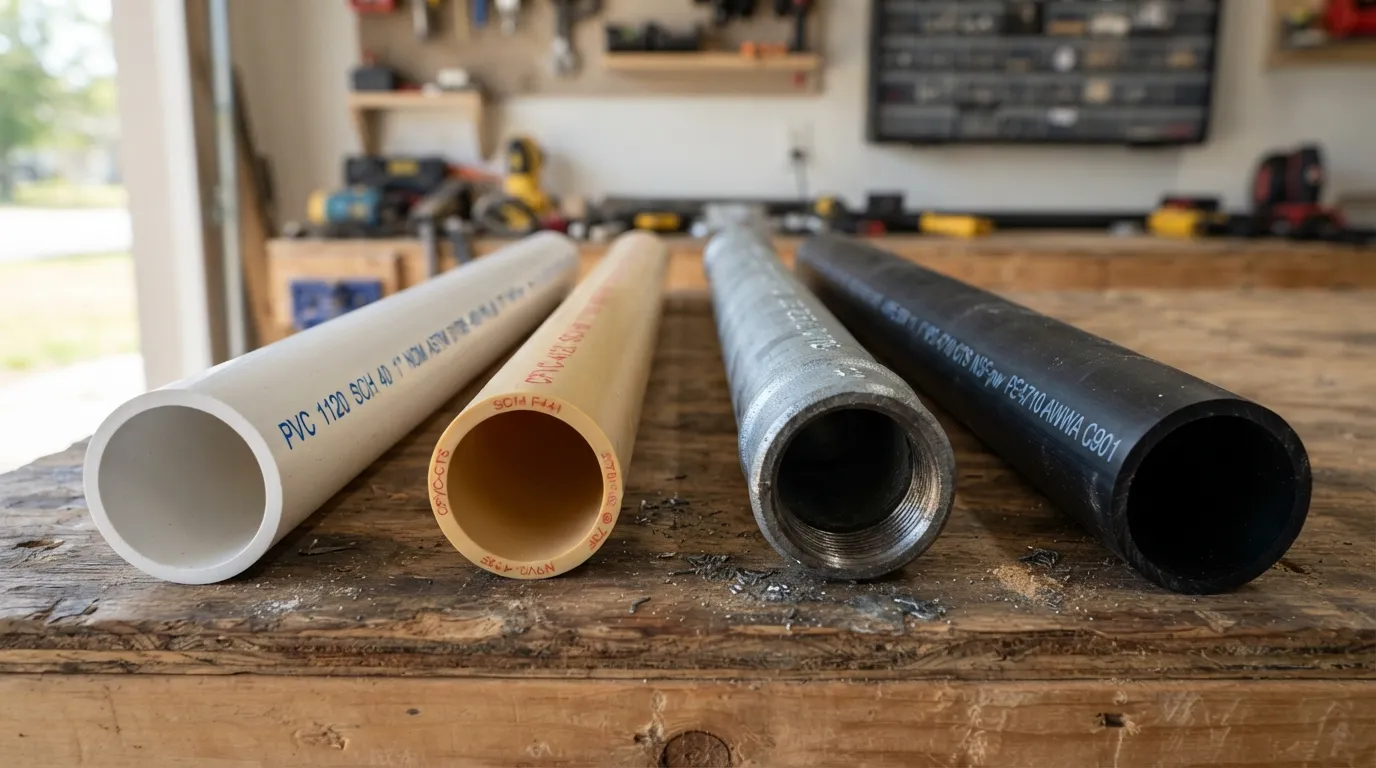 No, IPS is not the same as PVC. IPS represents a dimensional sizing and standard system (Iron Pipe Size), whereas PVC (Polyvinyl Chloride) is a specific plastic polymer material used to manufacture the pipe itself.
IPS in PVC and CPVC Pipes
In modern thermoplastic plumbing, PVC and CPVC pipes are frequently manufactured using IPS dimensions. This means that a rigid plastic water line or drain pipe retains the exact outside diameter and wall thickness ratios of legacy iron pipes, allowing plumbers to use standard metal or plastic threaded fittings interchangeably.
IPS in Steel and Galvanized Iron Pipes
Steel and Galvanized Iron Pipes (GIP) represent the literal origins of the Iron Pipe Size standard. Because steel and iron possess high structural rigidity, these pipes are heavily threaded at the ends to screw directly into heavy-duty fittings, valves, and distribution manifolds in industrial and commercial settings.
What Does IPS Mean in HDPE Pipe?
When working with High-Density Polyethylene (HDPE) piping, the term IPS refers to standard dimension ratios matching iron pipe outer diameters. However, field technicians must distinguish between IPS and DIPS (Ductile Iron Pipe Size), as HDPE pipes can be manufactured in both sizing standards, and mixing them up will cause fusion or mechanical fitting failures.
What Is IPS Pipe Used For?
- Residential and Commercial Water Supply: Transporting pressurized potable water through rigid main distribution lines.
- Drainage and Vent Systems: Handling gravity-fed waste and sewer water using schedule 40 PVC or ABS.
- Industrial Fluid Transport: Moving chemicals, compressed air, and gases through durable steel or CPVC infrastructure.
- Irrigation Networks: Managing high-volume agricultural and landscape sprinkler feeds safely under pressure.
IPS Pipe Size Chart Nominal Size vs Outside Diameter
Reading an Iron Pipe Size chart requires looking past the nominal label to examine the exact outside diameter (OD). Because wall thicknesses vary depending on the pipe schedule (such as Schedule 40 or Schedule 80), the inner diameter changes while the outer diameter remains completely uniform across all matching sizing designations.
IPS Pipe Size Chart Table
Downloadable Printable Version Note
Keep a printed copy of this IPS reference table near your workbench or tool caddy. Having exact millimetric and decimal inch dimensions on hand prevents costly ordering mistakes when mixing rigid thermoplastic or metal pipes with threaded fittings on active job sites.
How to Identify IPS Pipe or Fittings
Manufacturers typically stamp, ink-jet print, or mold identification data directly onto the exterior surface of the pipe or fitting. Look for standard stamps indicating the nominal size, material type (such as PVC Schedule 40), and compliance standard like ASTM or IPS designations before measuring manually.
Step 2: Measure the Outside Diameter with a Caliper or Tape
Because nominal sizes do not match direct measurements, wrap a tape measure around the outer circumference or use digital calipers to measure the exact outside diameter (OD). For example, if your measurement reads precisely 1.315 inches, you are holding a 1-inch IPS pipe.
Step 3: Check the Thread Type Tapered or Straight
Examine the profile of the threads to distinguish between standard pipe threads and machine threads. If the threads narrow slightly toward the end in a wedging angle, you are looking at tapered NPT threads designed to create an airtight and watertight mechanical seal under compression.
Step 4: Compare with the Size Chart
Match your measured outside diameter against a standard Iron Pipe Size reference chart. Disregard your initial assumption that a half-inch measurement means a half-inch nominal size, and rely strictly on the standard decimal conversion numbers.
Step 5: Confirm with a Fitting Match Test
When in doubt during a store visit or repair job, thread a verified test fitting onto the component. A proper IPS-sized fitting will spin smoothly for several turns before tightening down snugly without forcing or cross-threading.
Quick Identification Checklist
- Visual Inspection: Read stamped manufacturer text and schedule ratings on the pipe body.
- Precision Measurement: Capture the exact outer diameter using digital calipers rather than guessing.
- Thread Evaluation: Verify whether the connection features tapered threads or straight parallel threads.
- Chart Cross-Reference: Compare your recorded OD against verified nominal sizing tables.
My Hands-On Test
Whenever I service legacy threaded lines where markings have faded away completely, I rely on a pocket thread pitch gauge combined with my caliper. Measuring an outer diameter of 2.375 inches immediately confirms a 2-inch IPS system, saving hours of guesswork and preventing unnecessary trips back to the supply warehouse.
IPS Meaning Outside Plumbing: Lighting Parts
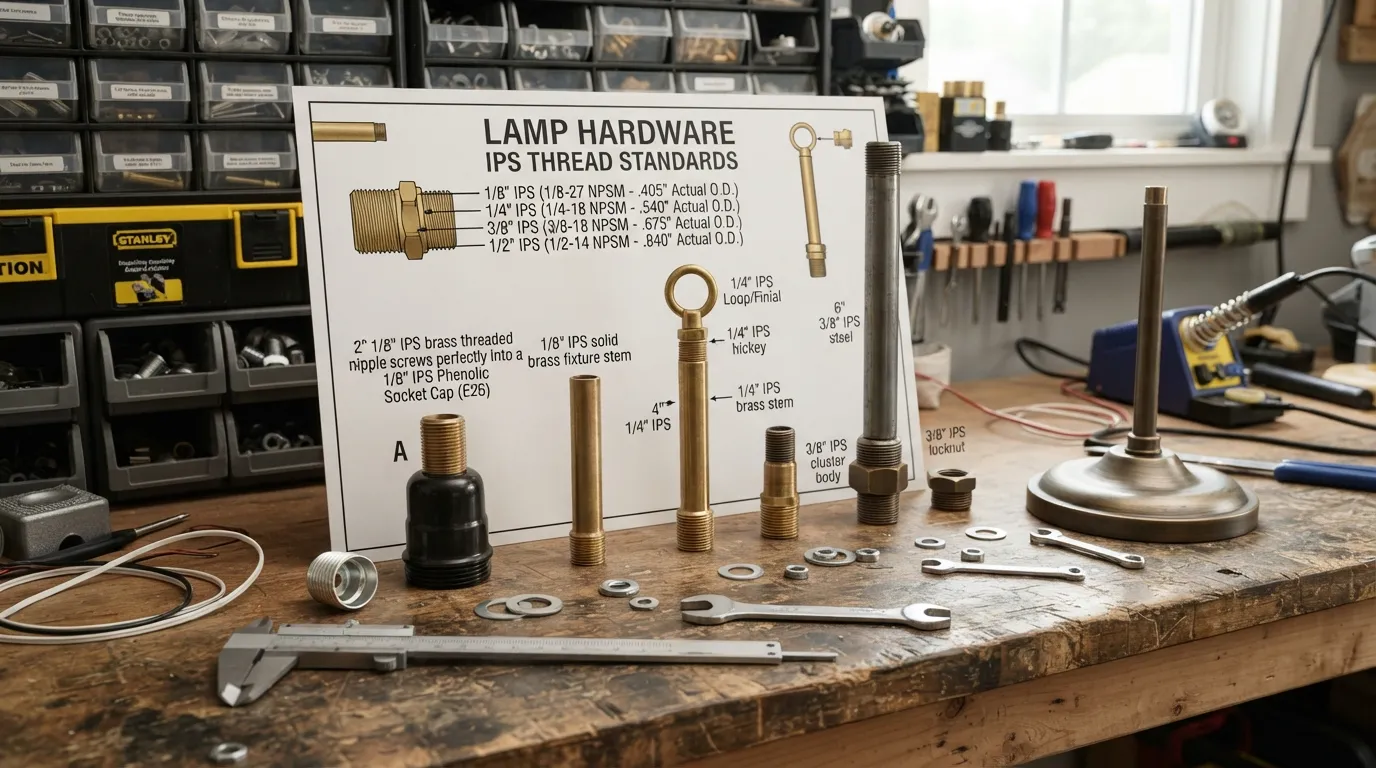 While Iron Pipe Size originates in heavy-duty plumbing and fluid transport, the exact same threading standard is widely used throughout the lighting and lamp-making industry. When restoring vintage fixtures or assembling custom pendant lights, hobbyists and electricians frequently encounter “1/8 IPS” or “1/4 IPS” threaded brass tubing and hollow nipples.
In lighting applications, these hollow Iron Pipe Size tubes serve a dual purpose: they provide rigid structural support for the lamp body while acting as a safe protective channel to run electrical wires through the center. Despite their smaller diameters in lighting hardware, they follow the exact same historical thread count and pitch standards derived from iron pipe specifications.
Why the Same Term Shows Up in Different Places
The widespread adoption of IPS across both plumbing and electrical lighting stems from historical manufacturing uniformity. Because standard dies, taps, and threading machines were already universally tooled for iron pipe sizes during the industrial revolution, early electrical and hardware manufacturers adopted the exact same dimensions to ensure hardware compatibility across different trades.
Common Mistakes When Dealing with IPS Sizes
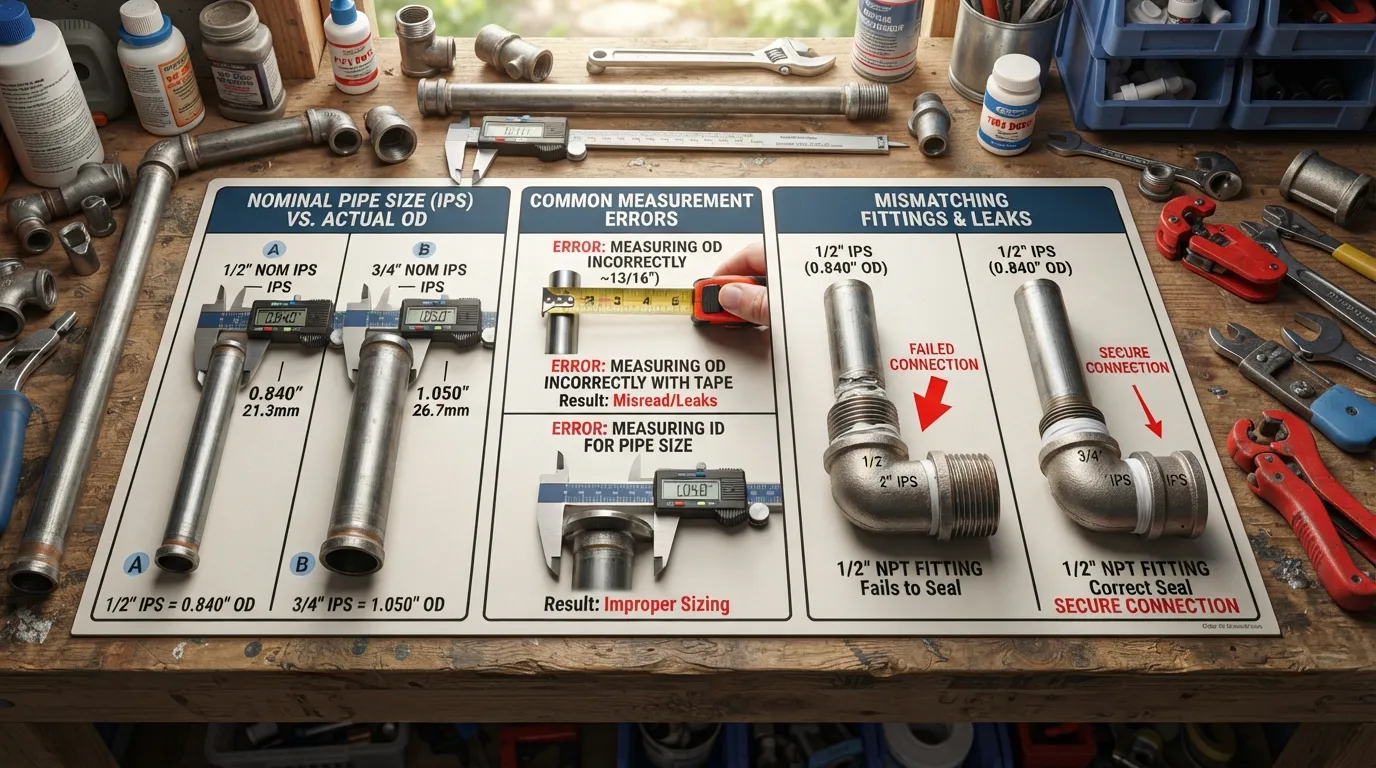 One of the most frequent errors plumbers and DIYers make is assuming that IPS and NPT represent the exact same thing. Buying an IPS-sized component without verifying whether its thread pattern matches NPT requirements often leads to cross-threading, ruined fittings, and persistent water leaks under pressure.
Mistake 2: Assuming Nominal Size Equals Actual Diameter
Relying on a direct tape measure reading of the inner or outer wall can lead to costly mistakes. Assuming a 1-inch nominal pipe measures precisely 1 inch across causes installers to order wrong replacement parts. Always consult a standardized chart because nominal sizing reflects historical naming conventions rather than literal dimensions.
Mistake 3: Mixing IPS and CTS Fittings
Attempting to force an IPS-sized fitting directly onto a CTS (Copper Tube Size) pipe or vice versa will never create a reliable seal. Because their outer diameters differ significantly, forcing mismatched components together ruins the connection points and requires complete replacement of the joint.
Mistake 4: Confusing Pipe Material with Pipe Size Standard
Assuming that purchasing a plastic PVC pipe means you no longer have to worry about IPS standards creates sizing confusion. Because PVC, CPVC, and steel pipes can all be manufactured to IPS outer diameter specifications, you must evaluate both the material type and the sizing standard independently.
Mistake 5: Skipping the Thread Check Before Buying
Ordering replacement shut-off valves or faucet supply hoses online without double-checking thread counts is a recipe for project delays. Always verify whether your existing infrastructure uses standard pipe threads or specialized compression threads before finalizing your purchase.
What I’d Do Differently
Early in my plumbing projects, I wasted countless hours trying to force mismatched threaded adapters because I judged fittings strictly by eye rather than verifying their sizing standard. Now, I always keep a digital caliper and a thread pitch gauge in my tool bag, saving myself from frustrating return trips to the hardware store.
IPS in Plumbing FAQs
What does IPS mean in plumbing?
IPS stands for Iron Pipe Size, a standardized sizing system originally developed for iron and steel pipes. Today, it serves as the universal nominal sizing and outer diameter standard for rigid plumbing materials, including PVC, CPVC, and black iron piping systems.
What does 1 2 IPS mean in plumbing?
A 1/2 IPS designation refers to a nominal pipe size classification rather than a literal half-inch measurement. While it represents a nominal 1/2-inch flow category, its actual outside diameter measures exactly 0.840 inches across, adhering strictly to standard iron pipe dimensions.
What is IPS in pipe size?
IPS in pipe sizing represents the standardized outer diameter and wall thickness guidelines derived from historical iron manufacturing. It ensures that pipes and threaded fittings produced by different manufacturers maintain complete physical compatibility across industrial and residential applications.
What is an IPS water pipe?
An IPS water pipe is a rigid pipe—typically constructed from PVC, CPVC, steel, or iron—manufactured to match Iron Pipe Size outer diameter specifications. These pipes are widely used in pressurized main water supply lines, commercial risers, and drainage systems.
Are IPS and NPT the same thing?
No, IPS and NPT are not the same thing. IPS defines the physical sizing and outer diameter dimensions of the pipe, whereas NPT (National Pipe Thread) defines the tapered angle and geometry of the threads cut into that pipe.
Is IPS the same as PVC?
No, IPS is not the same as PVC. IPS is a dimensional sizing standard (Iron Pipe Size), while PVC is a specific thermoplastic polymer material. Many PVC pipes are manufactured using IPS dimensions to allow compatibility with standard metal fittings.
Is IPS pipe the same as PEX?
No, IPS pipe is not the same as PEX. IPS refers to rigid pipe sizing systems, whereas PEX is a flexible cross-linked polyethylene tubing. PEX typically follows CTS (Copper Tube Size) dimensions and relies on expansion or crimp fittings rather than rigid threads.
What is the difference between an IPS and FIP faucet connection?
An IPS connection specifies the sizing and thread pitch standard based on iron pipe specifications, while an FIP (Female Iron Pipe) connection specifies that the fitting features internal threads designed to screw onto a matching male pipe nipple.
What does CTS stand for in plumbing?
CTS stands for Copper Tube Size, which is a sizing standard specifically designed for copper tubing and corresponding CTS-compatible CPVC water lines. Its outer diameter dimensions differ from IPS and require transition adapters to connect.
What does IPS stand for in HDPE pipe?
In High-Density Polyethylene piping, IPS stands for Iron Pipe Size, indicating that the HDPE pipe is manufactured to match traditional iron pipe outer diameters rather than alternative standards like DIPS (Ductile Iron Pipe Size).
Conclusion: Key Takeaways
- IPS Definition: IPS stands for Iron Pipe Size, serving as the foundational sizing and outer diameter standard for rigid plumbing materials.
- Size vs. Thread: Nominal IPS dimensions define the outer diameter, while NPT governs the tapered thread geometry and sealing mechanism.
- Sizing Standards Differ: IPS, CTS, and PEX use distinct dimension scales and require proper adapters to connect safely.
- Accurate Identification: Always use digital calipers, manufacturer markings, and standard conversion charts rather than relying on a direct tape measure.

Oscar Vance | Master Plumber & Drainage Expert
Meet Oscar Vance, a licensed master plumber sharing practical solutions on residential repairs, preventive maintenance, and thoughtful home upkeep.