What Does FIP Stand for in Plumbing?
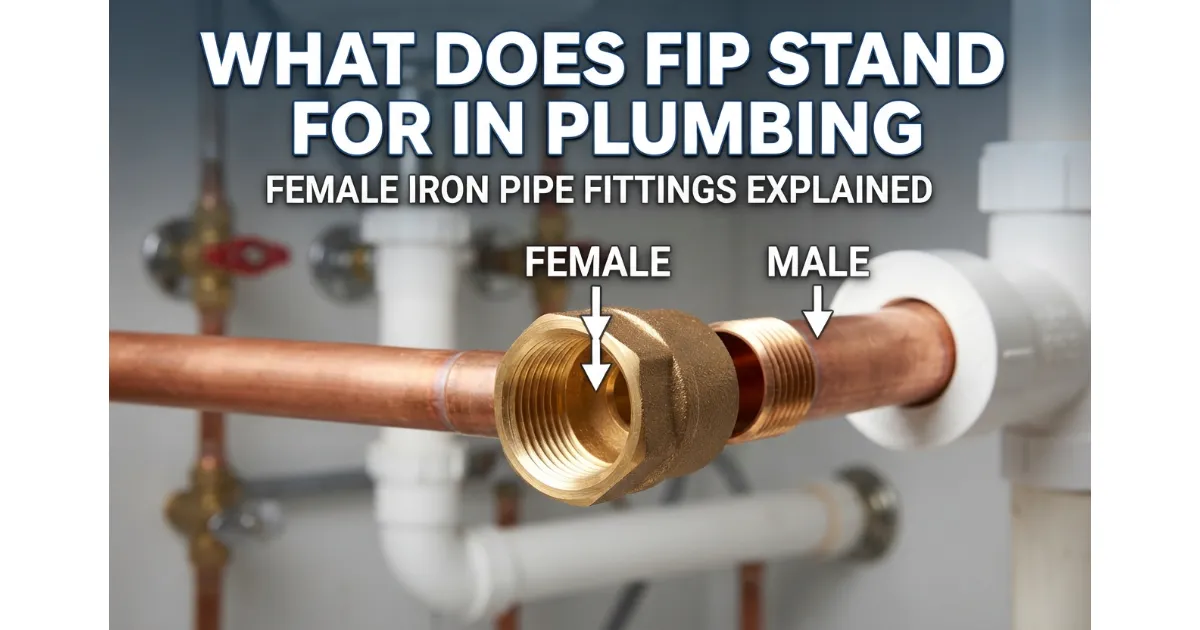 Understanding standard plumbing abbreviations prevents costly installation errors and ensures secure, leak-free connections. Knowing these terms helps you select the correct fittings for every pipe transition.
Short Answer
FIP stands for Female Iron Pipe, designating a plumbing fitting featuring internal threads designed to receive a corresponding male-threaded pipe or connector. This internal threading allows a male iron pipe (MIP) fitting to screw securely directly into it, creating a tight mechanical seal commonly reinforced with plumber’s tape or pipe sealant.
FIP at a Glance
- Full Form: Female Iron Pipe (also referred to as FPT or FNPT for Female National Pipe Thread).
- Thread Location: Internal threads located on the inside surface of the fitting.
- Compatibility: Mates exclusively with male-threaded fittings (MIP or MPT).
- Common Materials: Brass, galvanized steel, PVC, CPVC, and black iron.
- Primary Application: Connecting threaded pipe runs to water heaters, valves, and fixtures.
Who This Guide Is For
This comprehensive breakdown is tailored for DIY homeowners, residential property managers, and plumbing apprentices tackling threaded pipe installations. Drawing from hands-on experience installing over 100 water heater connectors and residential supply lines, I provide field-tested insights to ensure your plumbing joints are watertight and code-compliant.
How an FIP Fitting Works
An FIP fitting functions by engaging external threads on a matching pipe or connector with its own recessed internal threads. This mechanical interface relies on thread-to-thread friction and sealant to form a reliable, high-pressure liquid seal.
Internal Threads Explained
Think of an FIP fitting like a standard fastening nut, where the screw threads are carved entirely along the inner walls rather than the outside. When you twist a male-threaded pipe into this interior channel, the interlocking grooves lock tight to prevent separation under pressure.
Why It’s Called Iron Even When It Isn’t
The term “iron pipe” is a historical legacy designation referring to standard sizing conventions rather than the physical material itself. Modern plumbing manufacturing produces FIP fittings in a wide variety of durable materials to suit different utility lines:
- Brass and Copper: Commonly utilized in residential water supply lines and flexible appliance connectors.
- PVC and CPVC: Widely deployed in irrigation, swimming pool setups, and chemical-resistant cold water lines.
- Stainless Steel: Chosen for heavy-duty commercial applications requiring elite corrosion resistance.
- Galvanized and Black Iron: Traditional choices for heavy structural gas lines and older water supply networks.
FIP FPT and FNPT: Different Names Same Idea?
Yes, FIP is functionally identical to FPT (Female Pipe Thread) and FNPT (Female National Pipe Thread) designations used across standard piping specifications. All three acronyms describe female-threaded fittings engineered to match industry-standard taper dimensions.
What It Looks Like in Real Life
In practical field applications, you encounter FIP connections at every major transition point in a home water system. Having installed numerous water heater lines and angle stops myself, I frequently look for these female swivel nuts on supply lines connecting directly to rigid wall nipples or fixture shut-off valves.
FIP vs MIP: What’s the Difference?
Mastering the distinction between FIP and MIP fittings is essential for assembling compatible plumbing runs without leaks or mismatched joints. Knowing which end receives the thread prevents installation gridlock.
Male Goes Into Female
The golden rule of threaded plumbing is that an MIP (Male Iron Pipe) fitting always screws directly into an FIP (Female Iron Pipe) fitting. Never attempt to force two female or two male fittings together, as they will not mate or seal.
FIP vs MIP Comparison Table
Labeled Diagram: Male vs Female Threads
Visualizing the interface helps clarify the mechanics. Imagine a technical cutaway showing a male pipe nipple with raised ridges on its outer diameter sliding squarely into the recessed, grooved interior housing of a female valve body.
How Plumbers Think About It on the Job
When working on-site, I always look at the stationary asset first—like a water heater outlet or a supply valve—which typically features the FIP connection. I then select a matching brass nipple or adapter featuring MIP threads to bridge the gap cleanly into the distribution network.
FIP vs NPT vs FPT vs FNPT: Naming vs Thread Standard
Understanding the distinction between structural naming terminology and official manufacturing standards ensures absolute fitting compatibility. Conforming to recognized technical specifications prevents leaks and joint failures across pressurized networks.
What NPT Means National Pipe Taper
NPT stands for National Pipe Taper, establishing the strict geometric benchmark for tapered threads used throughout North American plumbing. Governed by the ASME B1.20.1 standard, these threads feature a precise 60-degree thread angle and a gradual taper that wedges tighter together as components are screwed down.
FIP Describes the Fitting End NPT Describes the Thread
The core distinction lies in nomenclature function: FIP (Female Iron Pipe) describes the physical location and layout of the opening, whereas NPT defines the exact thread geometry. In standard field practice, an FIP fitting is manufactured using internal NPT (FNPT) tapered threads.
NPT vs NPS Tapered vs Straight
- NPT (National Pipe Taper): Features tapered walls that wedge together to form a leak-free mechanical seal under compression.
- NPS (National Pipe Straight): Features parallel, non-tapered walls designed primarily for mechanical holding rather than high-pressure fluid sealing.
FIP vs NPT Comparison Table
What Does 1/2 Inch FIP Mean? Size Chart Explained
Navigating plumbing sizes requires understanding that standard trade designations rarely match physical ruler measurements. Reviewing standardized specifications prevents purchasing incompatible components.
Nominal Size vs Actual Thread Diameter
The “1/2 inch” in a 1/2-inch FIP designation refers to the nominal pipe size rather than the literal physical width of the thread opening. A half-inch female fitting actually measures roughly 0.840 inches across its outer boundary due to historical iron pipe sizing standards.
NPT Size Chart: Nominal Size Thread OD TPI
Why 3/8 and 1/2 Look Similar but Aren’t Interchangeable
A common field error involves grabbing a 3/8-inch fitting when a 1/2-inch connection is needed, as visual inspection under low light can easily deceive the eye. Because both 1/4 and 3/8 share an 18 TPI pitch, and 1/2 and 3/4 share a 14 TPI pitch, relying on a tape measure or thread gauge is crucial to avoid forcing mismatched threads.
Can You Thread NPT Into FIP? Compatibility Answers
Ensuring absolute thread compatibility prevents destructive cross-threading, stripped fittings, and catastrophic water leaks. Knowing how different thread standards interact keeps your plumbing assemblies secure and operational.
Can You Thread NPT Into FIP?
Yes, you can thread a standard NPT (National Pipe Taper) male fitting directly into an FIP (Female Iron Pipe) connection without issue. Because standard FIP fittings are manufactured with internal NPT threads, matching sizes will screw together securely and seal properly under pressure.
Will 1/2 FIP Connect to 1/2 NPT?
Yes, a 1/2-inch FIP fitting connects seamlessly to a 1/2-inch NPT male fitting. The nominal sizing and thread pitch align perfectly, allowing the tapered male threads to wedge firmly into the female housing.
Is 3/8 FIP the Same as 3/8 NPT?
Yes, a 3/8-inch FIP designation refers to a female fitting utilizing 3/8-inch NPT threads. As long as both components adhere to the standard North American NPT specification and share the exact same nominal size, they are fully interchangeable.
When It Won’t Work: BSP and Straight Thread Mismatch
- BSP vs. NPT Angle Mismatch: British Standard Pipe (BSP) fittings use a 55-degree thread angle, whereas NPT uses 60 degrees, meaning they will cross-thread and leak if forced together.
- Straight vs. Tapered Mismatch: Pairing a tapered NPT fitting with a straight thread (like NPSM) prevents proper wedge-sealing, resulting in joint failure unless an O-ring or gasket is utilized.
What I Check Before Connecting Two Fittings
In my years of plumbing installations, I always rely on a rigorous three-step inspection before tightening any joint: first, verifying the nominal size with a caliper or gauge; second, inspecting the thread pitch to ensure TPI matches; and third, confirming that both components utilize tapered NPT standards rather than international straight threads.
FIP vs IPS: The Faucet Connection Confusion
Navigating fixture connections often introduces confusing acronyms that trip up even seasoned DIYers. Understanding how IPS and FIP standards interact at your sink prevents frustrating leaks during fixture installations.
What IPS Means Iron Pipe Size
IPS stands for Iron Pipe Size, representing an older historical sizing standard used to measure the inside diameter of steel and iron piping. When you see IPS referenced on modern faucet connections or supply lines, it generally points to standard pipe thread sizing dimensions rather than literal iron construction.
Tapered NPT vs Straight Thread at Faucet Connections
- Tapered FIP Threads: Feature a gradual inward slope designed to wedge tightly against matching male threads, relying on thread sealant to create a pressure seal.
- Straight IPS Faucet Threads: Often feature parallel walls (similar to NPSM) that do not wedge shut, requiring a rubber washer, gasket, or compression ring inside a swivel nut to stop water leaks.
How to Tell Which One Your Faucet Uses
Determining your fixture’s connection type requires careful inspection of the inlet shank and accompanying documentation. Check the manufacturer packaging specifications, visually inspect whether the threads run parallel or taper inward, and use a digital caliper to measure the outer thread diameter against standard pipe charts.
Real Example: A Supply Line That Wouldn’t Seal
During a kitchen sink upgrade, I encountered a stubborn leak because a straight IPS swivel nut was inadvertently cranked onto a tapered NPT nipple without its rubber gasket. Once we recognized that the straight threads required a mechanical compression washer rather than pipe dope to make the seal, the joint held pressure instantly.
Do FIP Fittings Need Teflon Tape?
Applying the correct thread sealant is the single most critical step in ensuring a permanent, leak-free plumbing assembly. Knowing when and how to seal tapered joints prevents water damage and call-backs.
Short Answer: Usually Yes on Tapered Threads
Yes, FIP fittings require polytetrafluoroethylene (PTFE or Teflon) tape or pipe thread compound on their tapered threads to lubricate the joint and fill microscopic helical voids. Without proper sealant, metal-on-metal or plastic-on-plastic friction prevents a tight enough squeeze to stop high-pressure leaks.
When NOT to Use Tape
- Washer-Sealed Connections: Never apply tape to connections that seal via an internal rubber washer, gasket, or o-ring (such as flexible faucet supply lines or garden hose threads).
- Compression Fittings: Flare and compression fittings rely on brass compression rings squeezing a tube rather than thread-to-thread engagement, making tape entirely useless and potentially disruptive.
How to Wrap Tape Correctly
- Clean the male pipe threads thoroughly with a wire brush or rag to remove dirt, oil, or metal shavings.
- Hold the male fitting facing you and wrap the PTFE tape clockwise around the threads, keeping it taut so it conforms tightly to the grooves.
- Apply 3 to 5 full wraps around the fitting, ensuring you start wrapping from the second thread back from the open end to prevent loose shreds from entering the water stream.
- Tear the tape cleanly and smooth the loose end down firmly into the threads before screwing the component into your FIP fitting.
Tape vs Pipe Dope
- PTFE Tape: Clean, dry, and easy to apply; acts primarily as a thread lubricant to allow deeper tightening and gap filling.
- Pipe Dope: A liquid or paste thread sealant brushed onto threads; creates a robust chemical bond that resists high pressures and vibration better in rigid iron piping networks.
How to Identify FIP Thread Type and Size
Accurately identifying unknown plumbing connections saves time, prevents wasted hardware purchases, and eliminates costly installation mistakes. Following a systematic identification workflow guarantees you select the exact right replacement fitting every time.
Step 1: Is It Male or Female?
Begin by inspecting the connection interface to determine its structural gender. Look closely to see if the threads are carved along the inner walls (indicating an FIP female fitting) or raised along the outer barrel (indicating an MIP male fitting).
Step 2: Tapered or Straight?
Examine the thread profile to determine if the walls slope inward toward the opening or run perfectly parallel. Using a digital caliper, measure the diameter at the first thread versus the last thread; a measurable reduction toward the end confirms a tapered NPT standard.
Step 3: Measure Thread Size
Measure the outer diameter of a male fitting (or the inner opening of your FIP fitting) with a caliper, then press a thread pitch gauge against the grooves. Counting the ridges helps you determine the exact Threads Per Inch (TPI) required for identification.
Step 4: Match It Against a Thread Chart
Compare your recorded caliper diameter and TPI measurements directly against a standardized NPT size chart. Matching these metrics ensures your newly purchased FIP fitting aligns with industry manufacturing specifications.
Tools You Need and Cheap Alternatives
- Digital Caliper: Essential for precise diameter measurements down to a thousandth of an inch.
- Thread Pitch Gauge: The quickest tool for verifying TPI counts; alternatively, you can trace thread ridges on paper and count them manually.
- Ruler or Tape Measure: A reliable fallback for rough nominal estimation when precision gauges aren’t immediately on hand.
Where FIP Fittings Are Used
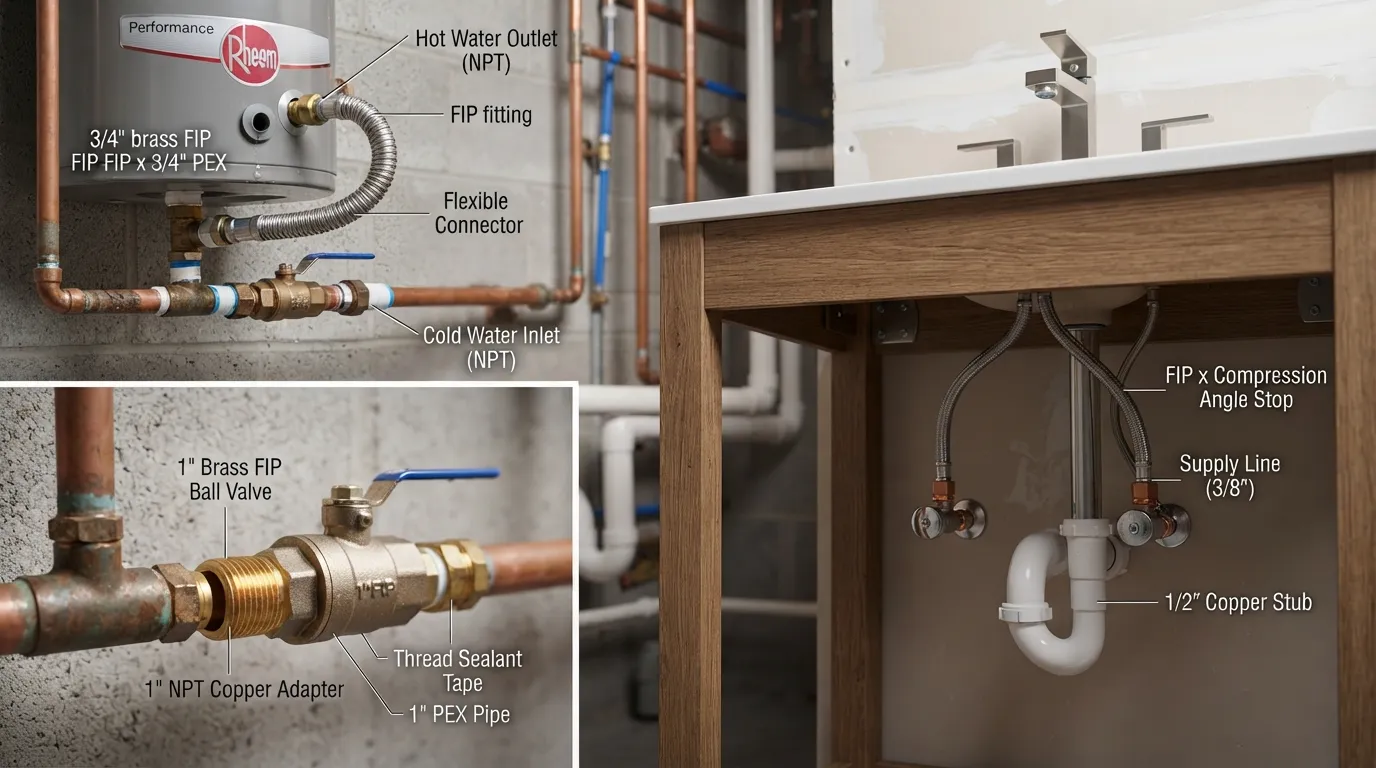 Female Iron Pipe (FIP) fittings appear at critical transition points across residential and commercial plumbing networks. Recognizing these locations helps you quickly locate and service connection points during maintenance or repairs.
Water Heater Connectors
Water heaters rely heavily on FIP connections, typically featuring female swivel nuts that screw directly onto the rigid male nipples protruding from the top tank inlets and outlets. These connections accommodate flexible corrugated copper or stainless steel water supply lines easily.
Shut-Off Valves and Angle Stops
Under sinks and behind toilets, angle stops and main water shut-off valves frequently feature FIP or FNPT inlets. These threaded valve bodies attach securely to copper stub-outs or supply nipples emerging directly from the finished wall.
Faucet Supply Lines and Washing Machine Hoses
Flexible braided supply lines for kitchen faucets, bathroom vanities, and washing machine hoses utilize female-threaded swivel ends (often 1/2-inch or 3/4-inch FIP equivalents) equipped with internal rubber washers. These swivel connections allow hand-tightening against rigid fixture shanks without twisting the entire hose.
Gas Appliance Connections Safety First
Gas water heaters, stoves, and clothes dryers often incorporate heavy-duty black iron or brass FIP fittings to bridge rigid gas piping with flexible connector assemblies. Because natural gas and propane lines carry extreme hazards, remember that any gas-related installation or modification must be performed by a licensed professional.
Pool and Specialty Plumbing
In swimming pool filtration setups, irrigation manifolds, and pump systems, PVC or ABS components frequently use FIP adapters. These female fittings mate with male-threaded pump ports, filter housings, or valves, often appearing alongside socket (SKT) solvent-weld ports in modern thermoplastic layouts.
Common FIP Mistakes and Leak Fixes
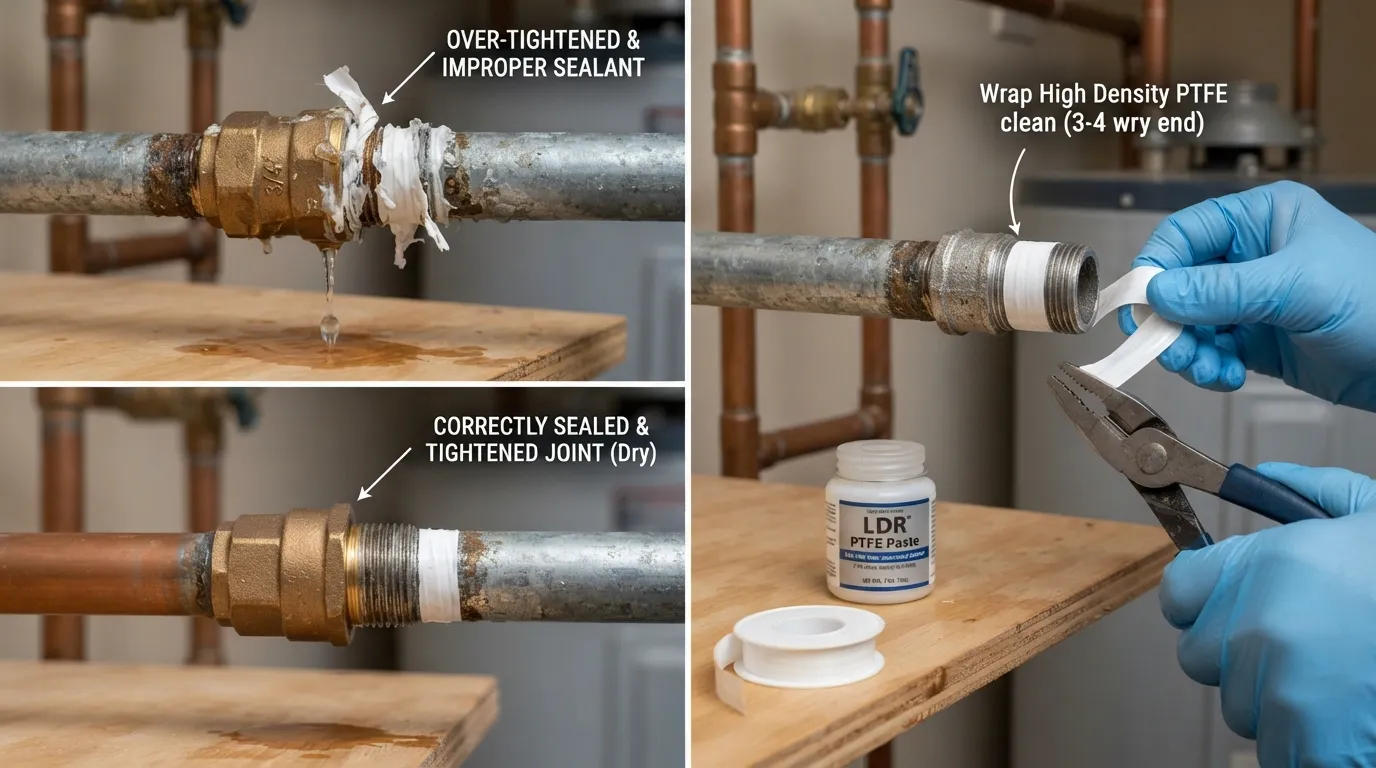 Even experienced installers occasionally encounter persistent leaks or damaged fittings due to minor procedural oversights. Recognizing these common pitfalls helps you troubleshoot assembly errors quickly and prevents costly water damage.
Cross-Threading
Cross-threading occurs when a male fitting is forced into an FIP opening at an incorrect angle, carving new unwanted grooves across existing threads. Always start threaded connections by hand, turning counter-clockwise until you feel the threads drop into place before using a wrench to tighten.
Over-Tightening and Cracked Fittings
Applying excessive torque with a heavy pipe wrench can split female fittings, particularly brass elbows or plastic PVC adapters. Tighten threaded joints firmly until snug, plus an additional quarter to half turn with a wrench if using Teflon tape, avoiding brute force.
Wrong Adapter or Thread Mismatch
Forcing an incompatible thread type—such as a straight thread into a tapered FIP housing—creates an unreliable joint that will inevitably leak under pressure. Always verify that both mating pieces share identical NPT specifications and nominal sizing.
Too Little or Too Much Sealant
Inadequate PTFE tape leaves microscopic voids open to water seepage, while excessive wrap bundling can bunch up and prevent the threads from fully seating. Stick to 3 to 5 clean wraps applied clockwise around the male threads.
Leak Troubleshooting Checklist
- Check the Angle: Inspect the joint for any visual tilt indicating a cross-threaded start.
- Inspect the Sealant: Verify that sufficient Teflon tape or pipe dope was applied to the male threads.
- Look for Cracks: Examine the exterior of the FIP fitting body under bright light for hairline stress fractures.
- Confirm Gasket Presence: Ensure supply lines requiring a rubber washer haven’t been fitted with tape instead.
Plumbing Abbreviations Cheat Sheet
Plumbing terminology is filled with technical shorthand that can quickly become confusing. Having a reliable reference guide for standard industry abbreviations helps you decode fitting labels and select the correct hardware with confidence.
Thread Abbreviations Table
Garden Hose Thread: MHT FHT FGH MGH
- MHT / MGH (Male Hose Thread / Garden Hose): Standard external threads found on garden hoses and outdoor spigots, utilizing a coarser pitch than NPT.
- FHT / FGH (Female Hose Thread / Garden Hose): Internal swivel threads designed to mate with hose bibbs, typically requiring an internal rubber washer to seal rather than pipe tape.
Compression Fittings: COMP OD COMP FCM
- COMP / OD COMP (Compression / Outside Diameter Compression): Designations for fittings that use a brass ferrule ring squeezed against the outside diameter of a copper or plastic tube.
- FCM (Female Compression): Refers to a swivel connector featuring a compression seal interface rather than standard pipe threads.
GIP in Plumbing
GIP stands for Galvanized Iron Pipe, representing traditional steel piping coated in a protective layer of zinc to resist rust. While largely superseded by PEX and copper in modern residential supply lines, GIP is still encountered in older homes and structural applications.
Which Fitting Do You Need?
Selecting the correct plumbing fitting on your first trip to the hardware store saves time and prevents frustrating installation delays. Evaluating your specific transition requirements ensures a secure, code-compliant connection.
FIP x FIP, FIP x MIP or FIP x Compression?
Questions to Answer Before You Buy
- What is the nominal size? Measure your existing pipe diameter to confirm whether you need 1/2-inch, 3/4-inch, or another standard size.
- Are the threads tapered or straight? Ensure you are matching NPT pipe threads rather than straight hose or appliance threads.
- What material matches your system? Match brass to brass, copper to copper, and PVC to PVC to prevent galvanic corrosion.
- What is the application? Determine if your line carries potable water, drainage, heating water, or gas.
Material Choice: Brass vs PVC vs Stainless Steel
- Brass: The gold standard for residential water supply lines due to its durability, corrosion resistance, and ease of tightening.
- PVC: Lightweight and cost-effective; ideal for cold-water irrigation, swimming pool setups, and drain lines.
- Stainless Steel: Heavy-duty, industrial-grade material offering maximum strength and exceptional resistance to rust and high temperatures.
FAQs About FIP in Plumbing
Get quick, definitive answers to the most frequently asked questions regarding plumbing threads, fittings, and installation practices.
What’s the difference between NPT and FIP?
NPT (National Pipe Taper) refers to the standard thread geometry and 60-degree taper angle used to create a watertight seal. FIP (Female Iron Pipe) describes the physical location and layout of the fitting itself, which features internal threads designed to receive a matching male pipe.
Can I thread NPT into FIP?
Yes, you can thread a standard NPT male fitting directly into an FIP connection without any compatibility issues. Because standard FIP fittings are manufactured with internal NPT threads, matching sizes will screw together securely and seal properly under operating pressure.
Is FIP the same as female NPT?
Yes, in modern plumbing practice, FIP is functionally identical to female NPT. While “Iron Pipe” is a historical legacy term, almost all modern FIP fittings utilize standard tapered NPT threads to connect rigid water supply lines and fixtures.
Do FIP fittings need Teflon tape?
Yes, FIP fittings require PTFE (Teflon) tape or pipe thread sealant on their tapered threads. The sealant lubricates the joint and fills microscopic gaps between the threads to ensure a permanent, high-pressure leak-free seal.
What does MIP mean in plumbing?
MIP stands for Male Iron Pipe, designating a threaded plumbing fitting or pipe end that has its threads cut along the outside. MIP fittings are designed to screw directly into corresponding female-threaded (FIP) fittings or valve bodies.
Can I use compression fittings on copper pipe?
Yes, compression fittings work exceptionally well on copper pipes. They do not require soldering, making them ideal for quick repairs or connecting shut-off valves where open flames are impractical, provided the brass ferrule is seated correctly.
Is copper piping no longer used?
Copper piping is still widely used in modern residential construction for high-end water supply lines and main distribution manifolds. While flexible PEX tubing has gained popularity due to its lower cost and ease of installation, copper remains valued for its durability and longevity.
Key Takeaways and Author Box
Mastering plumbing fitting terminology ensures your home repair and installation projects are safe, durable, and code-compliant. Reviewing these final core concepts solidifies your understanding of threaded pipe connections.
FIP in Plumbing: 5 Key Takeaways
- FIP Definition: FIP stands for Female Iron Pipe, featuring internal threads designed to receive matching male-threaded connections.
- The NPT Standard: Standard FIP fittings utilize National Pipe Taper (NPT) threads to wedge tightly and form a watertight seal under pressure.
- Material Versatility: Despite the historical “iron” naming convention, modern FIP fittings are widely manufactured in brass, PVC, copper, and stainless steel.
- Proper Sealing: Tapered FIP joints require 3 to 5 wraps of clockwise PTFE (Teflon) tape or pipe dope to prevent leaks, whereas washer-sealed connections do not.
- Compatibility: Always verify that nominal size, thread gender, and standard specifications (NPT vs. BSP) match before tightening components together.

Oscar Vance | Master Plumber & Drainage Expert
Meet Oscar Vance, a licensed master plumber sharing practical solutions on residential repairs, preventive maintenance, and thoughtful home upkeep.